Entertainment
Karol G at Coachella was a global hit. Yet other foreign acts fear touring the U.S.

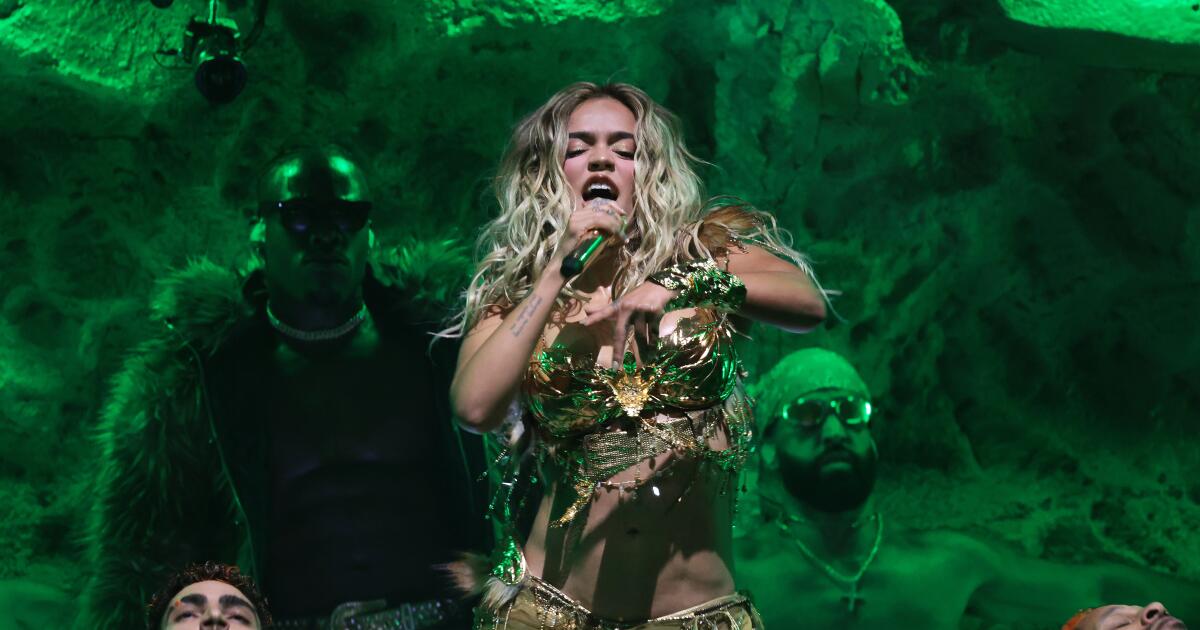
On the first Sunday night of Coachella, headliner Karol G told her American fans, and her global audience, to keep fighting.
“This is for my Latinos that have been struggling in this country lately,” the Colombian superstar told the tens of thousands watching her in person, and many more on the fest’s livestream. She’d recently criticized ICE in a Playboy interview, but this set was about her fans’ resolve. “We want everyone to feel welcome to our culture, so I want everyone to feel proud of where you come from. Don’t feel fear — feel pride!” she said.
Any artist would be proud to play that caliber of headline slot. But right now, many foreign acts also feel fear — or at least wariness — about booking substantial tours in the United States. A year of brutal ICE raids, tensions at border crossings and policed political speech, coupled with sky-high prices for expedited visas, fuel and other touring logistics, could push international acts away from the U.S.
“The fears that ICE would raid shows didn’t really materialize, but there is a chilling effect,” said Andy Gensler, editor of the touring-biz trade bible Pollstar. “Trump’s only been back in office a year, so we haven’t fully seen the effects, but it does send a message that if you’re a political artist you won’t get a visa. With the economic shock of gas prices and tourism way down, the signifiers are out there.”
The music economy is still thriving in SoCal. Coachella sold out with record spending from fans, and fears that ICE might show up for a prominent Latin headliner proved unfounded. (The agency did not respond to a request for comment on Coachella, and Lt. Deirdre Vickers of the Riverside County Sheriff’s office said that their office “does not participate in immigration enforcement operations.”)
But in smaller venues featuring emerging and mid-tier global acts, some see trouble ahead.
Pollstar’s Gensler estimates that the total number of concerts in the U.S. they tracked for the first quarter of 2026 was down about 17% from last year. That could be due to many economic factors — but slower international touring could be contributing.
“The U.S. is still incredibly lucrative market, the arena and stadium level buildings are vast and you can make more money here than any market in the world,” Gensler said. “But I’ve heard anecdotally that fewer people are going to South by Southwest, and tourism from Canada is way down, and that includes music tourism to California. As barriers go up, and the economic shock of gas prices impacts touring, it’s hard to know how that will all shake out.”
Talent firms who specialize in bringing young acts to the U.S. began noticing pullback before this year’s festival season. Adam Lewis is the head of Planetary Group, a marketing agency that produces and promoting musician showcases in the U.S., with a significant roster of artists from abroad. He said that performers who ordinarily would leap at the chance to play U.S. festivals are taking hard looks at the payoffs and risks.
“Artists are thinking twice, based on what the government is doing right now,” Lewis said. “You can look at the economics — the fees are cost prohibitive to get a visa. People are scared, at the bottom line. Artists and industry people are afraid to come to the U.S. for any music event. The money is going elsewhere.”
South by Southwest, the March Texas confab for music, film and tech, was among the first festivals to feel a pinch this year. Several sources said they saw fewer foreign showcases and acts amid a broader culling of music. In 2025, Canada canceled its popular annual showcase, after deciding that hostile policies made the risks not worth the rewards. Many still pulled off successful events, but acknowledged the mood has shifted.
“The perception of how hard it’s gotten has taken root, and that has meant that not as many acts will take the chance on the threat of being turned away or risking future entry,” said Angela Dorgan, the director of Music From Ireland, the Irish Music Export office (which is funded by Culture Ireland). That organization has helped break acts like CMAT (a hit at Coachella this year) and Fontaines DC in the U.S.
“Artists want to continue to come here in spite of the trouble and not stay away because of it. There’s a unique pull to America for all Irish people, so we don’t want to see you hurting,” Dorgan said. ”Irish artists feel that their U.S. fans need music more than ever now and want to continue to connect with and support their fans.”
Takafumi Sugahara, the organizer of “Tokyo Calling X Inspired By Tokyo,” a Japanese showcase at South by Southwest, agreed: “Bringing artists to the United States has always been challenging when it comes to obtaining visas, but it feels like the process has become even more difficult than before — perhaps due to the current political climate under the current administration.”
Fans watch Karol G perform at the Coachella stage last weekend. “We want everyone to feel welcome to our culture, so I want everyone to feel proud of where you come from. Don’t feel fear — feel pride!” the Colombian superstar said.
(Christina House / Los Angeles Times)
After high-profile incidents of tourist detainments and fear of reprisals for political speech, those worries and long-dreaded expenses may shift their priorities. “From my point of view, the impact of global conflicts or wars does not seem to be affecting artists’ decisions very strongly for now,” they said. “However, if the current situation were to worsen, it’s possible that we could begin to see that change.”
Coachella usually hits a few visa snafus every year (this year, the English electronic artist Tourist had to cancel. Last year, it was FKA Twigs). Yet the Grammy-winning Malian Algerian group Tinariwen had to cancel a major tour this year, after the Trump administration placed severe new travel restrictions on 19 countries, including Mali. Folk legend Cat Stevens scotched a book tour after visa problems. Outspoken acts like the U.K.’s Bob Vylan have been denied U.S. visas for criticizing Israel, and the Irish rap group Kneecap faced hurdles after their visa sponsor, Independent Artist Group, dropped them for similar reasons last year.
The Times spoke to one European band (who asked not to be named, for fear of reprisals from the U.S. government) who had a substantial tour of U.S. theaters booked last year, before their visas were denied just days before the tour was due to begin. They were forced to cancel those dates and reschedule for spring 2026, losing tens of thousands of dollars in up-front costs and non-refundable fees. (A performance visa routinely costs $6,000 with now-necessary expedited processing.)
“Our manager said, ‘This has never happened before, but even though you paid lot of money and the check cleared, you won’t have visas,’” the band said. They wondered if their pro-Palestinian advocacy might have played a role, but now believe it was due to changes in their application forms.
That small discrepancy “meant we lost tens of thousands of [dollars], which for a mid-tier band with a loyal cult following, was quite ruinous,” they said. “We had to put on fundraising shows to get to zero, then re-apply for visas, and paid four grand extra to expedite them. We took out a loan to pay it. We felt relentlessly fleeced,” they said. “We love the U.S., but now there is a reality in which we have to cut our losses and stop coming. A lot of bands are giving up on the U.S., for sure.”
“It’s a different feeling now where the U.S. government can do anything to us, and we just have to take it,” they added. “They’re moving the goalposts the whole time. It’s scary.”
That fate can befall even major acts, particularly those from Latin America.
Last year, superstar Mexican singer Julión Álvarez canceled his concert for a planned 50,000 fans in Arlington, Texas, when his touring visa was revoked. Grupo Firme faced a similar fate at the La Onda festival in Napa Valley. Los Alegres del Barranco saw their visas canceled after they projected an image of drug kingpin “El Mencho” during a concert.
“That was a moment where people realize how serious or scary it can get for promoters with this administration when comes to the visa situation, how quickly things can change and you can lose millions,” said Oscar Aréliz, a Latin music expert at Pollstar.
An act the caliber of Karol G might not face quite the same risks, though she told Playboy that “If you say the thing, maybe the next day you’ll get a call: ‘Hey, we are taking your visa away.’ You become bait, because some people want to show their power.”
If it can happen to a stadium-filler like Álvarez, it can happen to anyone. That might make some Latin acts prioritize other regions.
Bad Bunny demurred on touring the continental U.S. for fear of ICE raids at his shows, opting for a lengthy residence in his home territory of Puerto Rico instead.
Local Latin music hubs like Santa Fe Springs and Pico Rivera have suffered greatly under recent ICE raids and have seen fans retreat in fear. Las Vegas is a major touring destination for acts during Mexican independence celebrations in September, but now “it feels different,” Aréliz said. He expects the city — typically boisterous with Latin acts then — to lose a big chunk of music tourism from the north and south.
“Vegas’ top tourist countries are Canada and Mexico, so we’re going to see other countries benefit from this. If acts struggle to tour here because of the visa situation, they’re going to tour Mexico and Latin America instead,” he added.
Tours typically book a year in advance, so the full effects of the visa issues and ICE fears may not be felt until later in 2026 or 2027. The results of the midterm elections may change global perception of America’s safety. The country is still an incredibly valuable touring market for acts that can make it work.
But the world’s music community now looks at the U.S. like an old friend going through a rough patch: They’ll be happy to see us once we pull it together.
“Certainly over the last number of years in the U.S., we have been thinking of where we could find these new audiences for Irish music,” Dorgan said. “The unofficial theme of our at home showcase Ireland Music Week was, ‘America. We are not breaking up with you, but we are seeing other people.’”

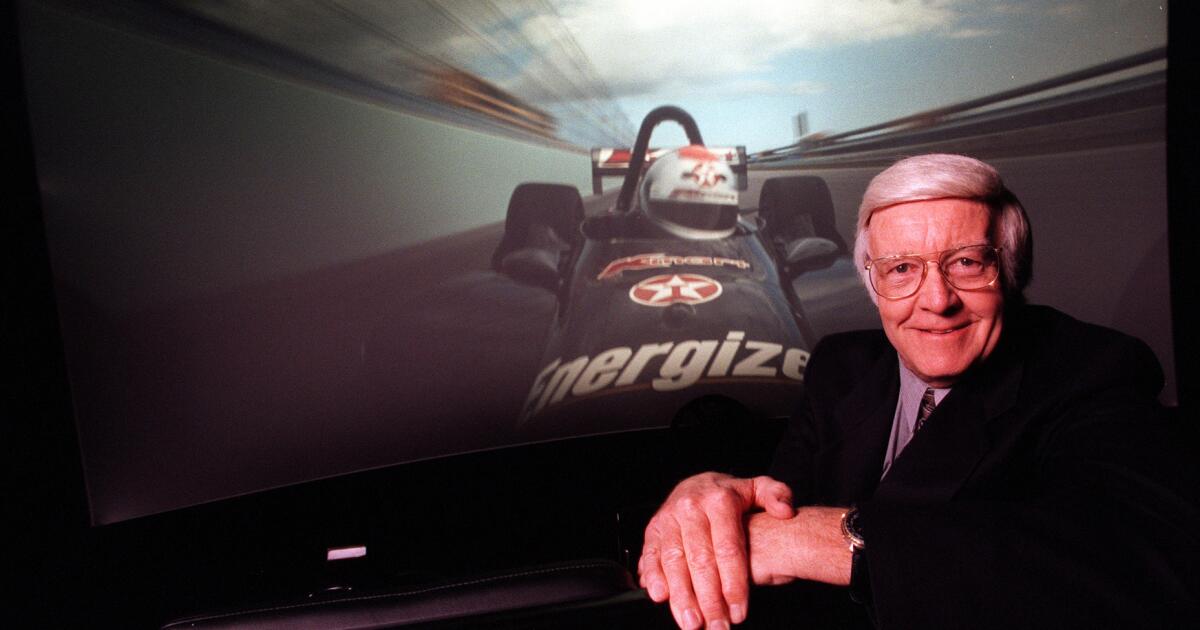
Don Iwerks, an Academy Award-winning special effects pioneer whose innovations transformed film and Disney theme parks, died peacefully Thursday at the age of 96, the Walt Disney Co. announced.
For Disney and his own studio, Iwerks Entertainment, Iwerks helped develop technologies and techniques like Circle-Vision, the 360-degree camera behind “America the Beautiful” and other early Disney attractions, and the 3-D effects used in attractions like Captain EO and the Star Tours ride.
“There was a ‘can-do’ attitude I learned from Walt and my father,” Iwerks said, according to a statement shared by the Disney Co. “Walt gave everyone a feeling that they were creating things that others had never thought of before, of being a part of history.”
Born July 24, 1929, Iwerks received his first camera at age 14 as a gift from his father, animator Ub Iwerks.
The elder Iwerks met fellow artist Walt Disney when both men were teenagers working at a Kansas City, Mo., art studio. They would go on to work together at the Disney Brothers Cartoon Studio, where Iwerks designed and animated “Plane Crazy,” the first Mickey Mouse cartoon.
After a stint at his own animation studio, Ub returned to Disney as a special effects engineer, pioneering techniques like the 360-degree motion-picture camera.
“He was absolutely my inspiration because he was technically minded. He made my childhood and formative years one of the greatest times of my life,” Don Iwerks told The Times in 1998.
The Iwerks family moved to the San Fernando Valley in 1936, where Don graduated from Van Nuys High School in 1947.
He served as a photographer in Germany during the Korean War and joined his father at Disney following his 1952 discharge from the U.S. Army. An allergic reaction to chemicals used to develop film led to his transfer to the company’s Studio Machine Shop, where he spent the next 34 years.
Don spent three months in the Bahamas manning underwater cameras for the 1954 Disney film “20,000 Leagues Under the Sea.” He then worked as the camera technician on “A Tour of the West,” an original Tomorrowland attraction at the soon-to-be opened Disneyland. The immersive 360-degree film was shot on the Circarama camera system his father invented.
Together, Don and Ub developed technologies like the “endless loop” system that enabled a single film print to run for up to 10,000 performances with minimal intervention and refinements to the photography processes used in “Mary Poppins” (his favorite of the Disney films) and other movies.
His own hands were used as the model for those of the Abraham Lincoln Audio-Animatronics figure in “Great Moments with Mr. Lincoln,” which opened at Disneyland in 1965. The “Iwerks Hands” now appear on similar figures at Disney parks around the world, according to his family.
In 1998, Don Iwerks received the Academy of Motion Pictures’ Gordon E. Sawyer Award for “technical contributions” that “brought credit to the industry.” In 1999, he received an Oscar for Scientific and Technical Achievement.
(Iwerks Family)
In 1986, he co-founded Iwerks Entertainment, which soon became a major player in the film and theme park industries. The company specialized in large-format films and created the 3-D projection system used in the Terminator rides at Universal Studios parks in Hollywood and Florida.
His innovations were honored with the Academy of Motion Picture Arts and Sciences’ honorary Gordon E. Sawyer Award and an Academy Scientific and Technical Award, among other prizes.
“It’s very obvious that computers are playing a big role in motion pictures today. The digital technology in film is able to put elements of scenes together on a film and have them look lifelike. It’s hard to know where that will go,” Iwerks said in a 1998 interview.
“My view is that technology should support a good story and add to it. Technology for technology’s sake?” he said with a shrug. “You still need good films.”
Iwerks is survived by his wife of 54 years, Betty; his sons, Larry and John; John’s wife, Chris; his daughter Leslie, and great-nephew,Mike, both of whom have also worked for Disney, according to an obituary shared by his family. His daughter Tamara preceded him in death.
“Like his father, he was a humble genius, a consummate problem solver, and delighted in sharing knowledge, encouraging others, and approaching every challenge with confidence and grace,” his family said in the statement from Conejo Mountain Funeral Home in Ventura.
Both Don and Ub Iwerks are commemorated in a storefront window on Main Street U.S.A. in Disney World’s Magic Kingdom. Located above the Main Street Bakery, the window is a lasting tribute to a family who made some of the park’s magic possible.
“Iwerks-Iwerks Stereoscopic Cameras,” the lettering reads. “No Two Exactly Alike.”

Earnest, preachy and melodramatic to a fault, “Mississippi Scholar” is exactly the sort of movie that the independent cinema was born to create.
Director and co-writer Marcus Bleecker’s film may traffic in tropes and cliches. But it has a vivid sense of place and a clear notion of the message it wants to send, and that message’s relevence.
Set in an unnamed small Mississippi city — it was filmed in Baldwyn, Saltillo and Fulton — the film is “a mind is a terrible thing to waste” in cinematic form. Our “Scholar” was born into a world of substance abuse, the racist legal traps of the country’s remaining marijuana laws and has a baby-mama-in-waiting and a drunken parent whom our teen hero is responsible for as his burdens.
But he has a world of promise that one dedicated teacher, his dead father (whom he still converses with) and even he himself can see if he can just “stay focused” and keep his eyes on this very personal prize — college and a better life beyond Ole Miss.
Shannon Brown is James, a kid with great grades and an ill-tempered mother (Gisla Stringer) who crawled into the bottle a long time ago and has no interest in crawling out.
But he’s got an ad hoc support system helping him through his senior year. His aunt (GiGi Marie Gaines) feeds him and keeps him advised of his mother’s latest tumbles. His dead dad (co-writer Obba Babatundé) passes on wisdom about his mother in fortune cookie-sized bites when father and son chat — at the cemetary or elsewhere.
“Hurt people hurt people.”
His English teacher, Mr. Keating (Sonny Marinelli) has high hopes for him, hopes he’s willing to nag the kid to achieve — “It takes only five seconds to get in trouble, and 25 years to get out of it!”
His school principal (Lance E. Nichols) expects greatness, but has learned to never get his hopes up over any Black boy at his integrated high school.
Even Ray-Ray (Jeremy Isaiah Earl), the ex-con drug dealer, takes a brotherly interest in the kid who is his “best distributor.” That money is what keeps a roof over James’ and his mother’s heads, and pays for his Jordans.
His white boy bestie (Dominic Arvielo) may act “Black,” but will he have James’ back when things get real?
And girlfriend Tammy (Aysa Branch) may be far and away the prettiest girl in school. But she’s taking the easy route, relying on her looks to achieve the limited goals the script sketches out for her.
“We’re gonna have ourselves a baby as soon as we graduate!”
Bleecker’s film covers all of the bases, all of the tropes and most of the cliches as James faces Big Choices with perils to his plan at every turn. Maybe taking him to visit the football-mad University of Mississippi isn’t the deal-maker his teacher hopes it is, as James doesn’t “see anybody who looks like me.”
Only a real civil rights hero (Dr. Donald Cole) can set him straight, relating the story of what James Meredith and generations before him did to give James this chance. Or can he?
“Mississippi Scholar” is well-crafted and an easy film to like, with relatable if “stock” characters and decent performances from all but the most amateurish (James’ classmates) cast members. But it’s entirely too predictable to surprise and too pre-digested to have an edge.
Worthy subject and novel setting aside, we’ve seen this story on the big screen and the small one too many times to count, seen this kid’s hand played out in every variation the cards have to offer.
But it makes a fine calling card for its cinematographer turned director, and let’s hope we see Bleecker’s name and hear his voice in another Deep South indie film, and soon.

Rating: TV-14, violence, profanity
Cast: Shannon Brown, Gisla Stringer, Sonny Marinelli, Jeremy Isiaah Earl, Aysa Branch and
Obba Babatundé
Credits: Directed by Marcus Bleecker, scripted by
Obba Babatundé, Marcus Bleecker and P.J. Leonard. A Narrative Distribution release on Amazon Prime.
Running time: 1:24

Entertainment
Dan Finnerty profaned Bonnie Tyler’s hit in ‘Old School.’ He regrets the f-bombs at her shows

For a certain swath of millennials, Dan Finnerty’s rendition of Bonnie Tyler’s “Total Eclipse of The Heart” in the frat comedy “Old School” is its definitive performance.
In the 2003 film, the Dan Band’s sweaty, inappropriately exuberant version of the ’80s power ballad upstages Will Ferrell’s wedding. The scene forever changed the lyrics of Tyler’s hit to something much more profane, but no less yearning.
After Tyler’s death at 75, Finnerty (who played a similar role in “The Hangover,” among many other comedies) reflected on his sideways journey into Tyler’s career, and how one quick scene on a two-decade-old comedy still endures.
You’ve had a pretty unique relationship to Bonnie Tyler’s music, how are you feeling after she passed?
It’s definitely sad. Everybody is texting me. I never met her, but what an impact she had on me. I grew up right when “Total Eclipse” came out in the ’80s, and it was such a huge song at the time. It had never left my head. I was always just belting that song out because it’s so epic, from Jim Steinman’s writing to Bonnie’s performance.
Why does that moment from “Old School” still endure? It arrived at the last cusp of the DVD era before culture transitioned into the internet and streaming video.
Without YouTube and the internet, you really had to grab pop culture moments from your memory. That’s definitely one of the reasons why pulling it out seemed obscure when we did “Old School.” People were like, “Oh my God, yes, I love this f— song.” Which is so different now because everything’s at your fingertips, so you can’t really rely on like pulling back some nostalgia moment because it’s always around anyway now with the internet. But people were reacting as much to me dropping the f-bombs as the nostalgia of the song, and rediscovering it and realizing that the song kicks ass and never stops kicking it.
Was the song already in your repertoire when you filmed “Old School?”
I was doing my show with the Dan Band in Los Angeles, and [director] Todd Phillips ended up coming to one of the performances. I met him afterwards, and he was like, “There’s actually a wedding scene in this movie. What song would you sing at a wedding?” I had just started working on a medley of “Total Eclipse,” and I think at the time I was going to do “Holding Out for a Hero,” but then I just merged it with “Private Dancer,” and he was like, “Oh my God, I love it.” The following Monday, he called and he’s like, “Can you put that together?”
The bit works because you totally commit to the song’s hugeness, and the profanity slips by like it’s spontaneous. You can tell you love the song on the merits.
I had never done it before. But Todd had seen my show, and when we went to do the first take, I didn’t think I was allowed to swear. But I obviously was swearing during my live show in all my little medleys. He came running up and he’s like, “Are you gonna swear like you do in the show?” I’m like, “Am I allowed to?” And he’s like, “Yeah.” So I’m like, “Buckle the f— up.”
But basically, what I was doing was honestly trying to match Bonnie’s commitment at the level she did with her voice, which is what I loved about all of her performances and Jim Steinman’s music. It’s just over-the-top commitment and drama. The swearing was just me being like, “How can I bump this up one notch when they’ve already just nailed it?”
Did you ever hear from either of them about what they thought about the film?
I’d tried to get Bonnie to do a duet of “Total Eclipse,” and I reached her management. He was like, “Well, Bonnie’s willing to do the song as long as there’s no profanity because she’s not a profane person.” I was like, “Well, neither the f— am I. I was an altar boy.” It didn’t end up working out, because I knew if I did the song without the swearing, people would be like, “What the f—?” But later, met Jim Steinman. I mentioned it to Steinman, and he was like, “Oh, I wish they called me because I can make Bonnie do anything, she’d love the swearing,” which killed me.
You did kind of alter her song forever for a certain generation.
I was just picturing them both hating how I bastardized their song. So when I finally met Steinman, he was like, “No, no, no! I f—ing loved it. In fact, I’ve always thought of all those epic booms, the Kurzweil, all the big hits in ‘Total Eclipse,’ those were musical f—s.”
Mostly I wanted to just find Bonnie and apologize to her for all the drunk guys I have pictured over the years at her concert screaming “F—” ever since that movie.
That song became your biggest hit as a comedian. How’d it change your life?
It got funnier the older we got. When I would do “Total Eclipse” right after “Old School” came out, it would get the biggest reaction. There was one set early on at the Playboy Mansion, we were hired to play some party there. There were just a bunch of drunk guys at the mansion and a couple Playboy bunnies that were contractually hired to walk around and wave. They’re like, “Play ‘Total Eclipse,’” and so I did. Then they’re like, “Play it again.” I’m like, “OK.” Then “Play it again.” I was like, “Here we go, give them what they want.” It was the least amount of work I had to do for a song that was pre-loved from a moment in a movie.
God, I hope she knew how much I loved her and apologize for all the drunk guys that had probably f-bombed the hell out of her concerts.
Before that song, people were like, “Do you have a flier for your next show?” I’m like, “For what?” But once “Old School” happened, suddenly a record label was like, “We want to do a live album.” I’m like, “Who’s gonna buy it?” But my manager is like, “Don’t say s— like that. There’s a record label that wants to make an album with you, dumbass.”
The whole thing has just been a surprise, but it’s been a good one. We’re playing this festival in Canada next weekend, and God, that song’s going to be such a big moment.
-
 Lifestyle43 minutes ago
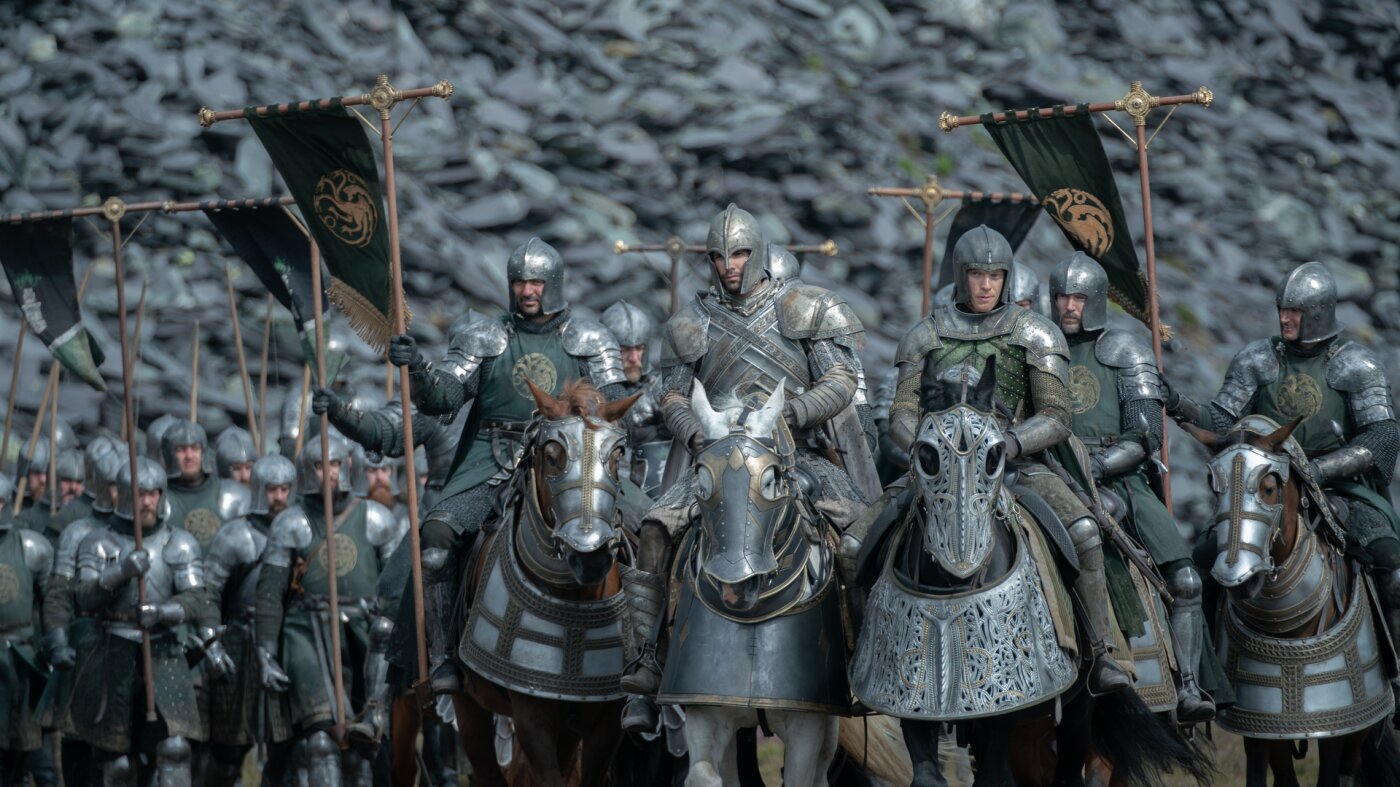
‘House of the Dragon,’ Season 3, Episode 4: “Now we begin?” It’s Season 3!
-

 Technology55 minutes ago
Lorde says Ray-Ban Meta AI glasses are ‘not sexy’
-

 World1 hour ago
Four Americans caught in horrific Mexico highway pileup that killed at least 10
-

 Politics1 hour ago
Medical examiner releases preliminary findings in Lindsey Graham’s death as death certificate remains pending
-

 Health1 hour ago
Terminally ill man marries longtime love in hospital as final wish comes true
-

 Sports1 hour ago
Stefon Diggs, still seeking new NFL home, insists no team has a better No 2 receiver ‘than me’
-

 Technology1 hour ago
Google may use your photos and voice to train AI
-
 Business2 hours ago
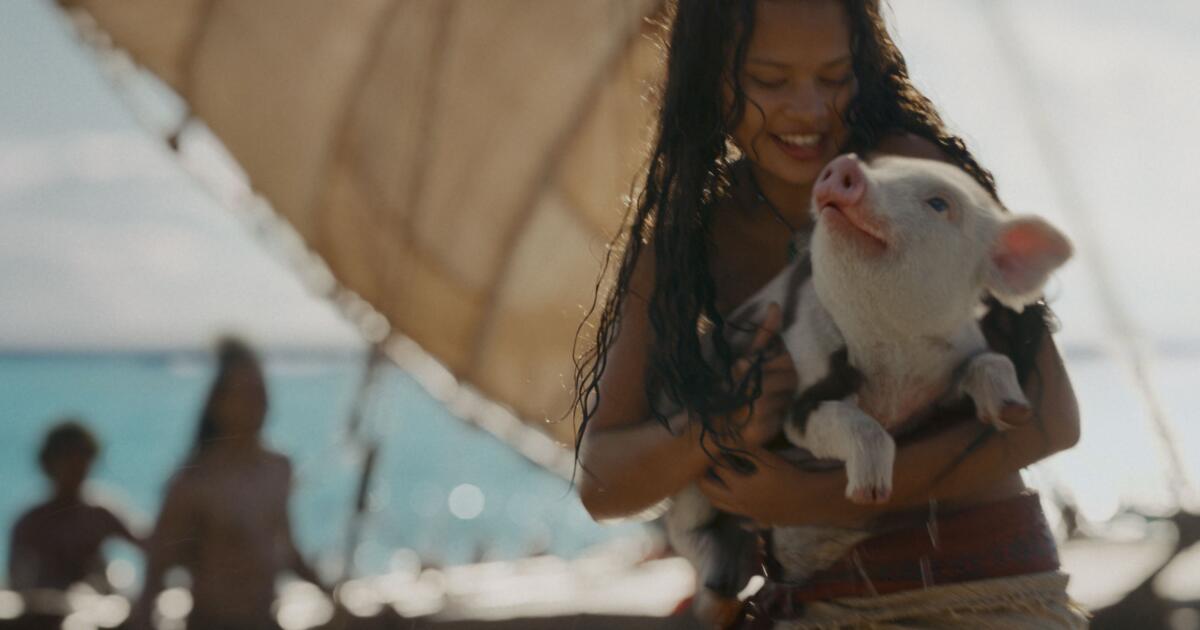
‘Moana’ loses its way at the box office with a $43-million domestic opening

