Movie Reviews
Movie Review: 'Madame Web' – Catholic Review


NEW YORK (OSV News) – As origin stories for Marvel Cinematic Universe characters go, “Madame Web” (Sony) is notable for being particularly abrasive, sour and gloomy. That’s surprising given that this fourth film in the Spider-Man series is meant to be something of a conversion story.
In need of attitude adjustment is misanthropic New York City emergency medical technician Cassandra “Cassie” Webb (Dakota Johnson). She gets her opportunity for uplift when she becomes a reluctant mentor to three teen girls: Julia (Sydney Sweeney), Mattie (Celeste O’Connor) and Anya (Isabela Merced).
Under her guidance, Cassie’s trio of proteges will eventually become the second and third Spider-Woman and Araña, respectively.
Director S.J. Clarkson, who co-wrote the screenplay with Matt Sazama, Burk Sharpless and Claire Parker, is at great pains to show Cassie as essentially mature and moral. The script also charts Cassie’s efforts to cope with the emotional damage caused by the foster-care childhood she was forced to endure after her mother died in childbirth.
Back in 1973, pregnant mom Constance (Kerry Bishé) was exploring the Peruvian jungle for a spider whose venom was thought to have the potential to heal various neuromuscular diseases. No sooner had she captured one, though, than she was shot and killed by fellow explorer Ezekiel Sims (Tahar Rahim).
Sims’ motive was his belief that the toxin Constance was after would give him the power for world domination. Sound familiar? Before dying at Sims’ hands, however, Constance was bitten and the poison altered Cassie’s DNA.
Some 30 years later, a near-death experience during one of her rescue missions reveals that Cassie has two superpowers. The first is, of course, the beloved ability to shoot out silken threads. The other is the capacity to see into the future, thereby anticipating danger. But this latter gift is limited to a period of just five minutes.
Cassie’s clairvoyance ultimately turns out to be nothing short of annoying for viewers as they bounce back and forth between being able to see what she sees and being abruptly returned to current reality. After the first three instances of such shuttling, the stunt loses all appeal.
Ezekiel, meanwhile, has resurfaced in the guise of a dark and very evil Spider-Man. He’s being tormented by visions of Cassie’s young charges who, he’s convinced, will somehow be the cause of his death. Using his access to every security camera on the planet, he hunts them down in the hope of slaying them first.
Before settling into its paces as a conventional thriller filled with car crashes and bad decisions by all involved, the movie takes on an ugly foreboding tone. Every small noise is amplified into a portentous creak or explosion. Yet the explanation of their supposed significance never arrives.
As for Cassie’s transition from cynic to nurturing role model, it’s too hurried to be convincing.
The film contains pervasive physical and gun violence, including a scene of mortal peril for an infant, fleeting profanity and at least one rough term. The OSV News classification is A-III – adults. The Motion Picture Association rating is PG-13 — parents strongly cautioned. Some material may be inappropriate for children under 13.
Read More Movie & TV Reviews
Copyright © 2024 OSV News

Movie Reviews
BAFTA Film Awards Review of Tourette’s Fiasco Finds “Weaknesses” in Planning and Crisis Procedures, But No “Malicious Intent”

An independent review of the BAFTA Film Awards has found a “number of structural weaknesses” in planning, escalation procedures, and crisis coordination before John Davidson‘s Tourette’s outburst.
Davidson, an executive producer on the BAFTA-winning I Swear, dominated headlines for weeks after involuntarily shouting the n-word as Michael B. Jordan and Delroy Lindo presented the award for best visual effects at the 79th British Academy Film Awards on Feb. 22.
The BBC has had its own questions to answer after airing the slur despite the two-hour tape delay, and just this week also ruled the incident a breach of the broadcaster’s editorial standards. Chief content officer Kate Phillips has maintained the breach was “not intentional,” though former director-general Tim Davie was unable to say why the ceremony remained available to stream on BBC iPlayer 15 hours after the event.
On Friday, a review commissioned by the BAFTA board and carried out by RISE Associates concluded its findings on what happened and what must change. Sent to The Hollywood Reporter, the review identified “a number of structural weaknesses” across the British Academy’s planning and crisis management.
“However,” said a note from the BAFTA board, “it did not find evidence of malicious intent on the part of those involved in delivering the event. We accept its conclusions in full.”
The board continued: “We apologize unreservedly to the Black community, for whom the racist language used carries real pain, brutality, and trauma; to the disability community, including people with Tourette Syndrome, for whom this incident has led to unfair judgement, stigma, and distress; and to all our members, guests at the ceremony and those watching at home. What was supposed to be a moment of celebration was diminished and overshadowed.”
The statement added: “We have written to those directly impacted on the night to apologize.”
The review is clear that while it is “not a failure of intent,” BAFTA’s planning and processes “have not kept pace with its diversity and inclusion goals.” The board also admits they did not “adequately anticipate or fully prepare for the impact of such an incident in a live event environment and as a result our duty of care to everyone at the ceremony and watching at home fell short.”
Work is already underway to address the specific areas of improvement recommended in the review to reduce the risk of this happening again. This includes improving the escalation process and the chain of information sharing around BAFTA Awards ceremonies, strengthening how they plan for and deliver access, inclusion, and support at their events, and addressing any internal cultural gaps or lack of knowledge that “may prevent BAFTA from meeting its commitment to diversity, equity, and inclusion across all our work.”
The BBC, too, has vowed to learn from their mistakes and prevent history from repeating itself. The corporation has set out measures to improve event planning, live production, and the iPlayer takedown processes.
The backlash from the incident lasted weeks. Davidson claimed he was “deeply mortified” if anyone thought his tics were “intentional.” It became a topic of discussion at the NAACP Image Awards, as well as the subject of a bad-taste SNL sketch that had The Hollywood Reporter asking: Is there a U.S.-U.K. gap on Tourette’s education?

How do you follow up a movie that begins with a woman being impregnated by a Cadillac and then travels so far from that point that by the end it could reasonably be described as tender? For Julia Ducournau—the sick, twisted, and, yes, French mind behind instant body-horror classics Raw (2016) and Titane (2021)—you retreat inward instead of expanding outward: more personal, more small-scale, and much, much more baffling.
Her third feature film, Alpha, could be described as an AIDS allegory, a sci-fi fable about familial trauma, or maybe an unsentimental addiction drama if you really want to get understated about it. In no world, however, is this the same brand of horror film on which Ducournau built her reputation. The title character is a 13-year-old girl who in the opening scene is given a stick-and-poke tattoo with a dirty needle while high at a party. The tattoo is a jagged “A” for “Alpha,” on her bicep, and while she’s anxious about the visible infection and accompanying oozing, her mother is much more concerned about an incurable autoimmune disease that has been spreading via bodily fluids since the mid 80s. If this unnamed virus sounds eerily familiar, then you already know the symptoms: Patients begin coughing up red dust, then their skin turns to craggly stone, and over time their entire body solidifies into polished marble. As Alpha waits for her test results, her classmates begin to viciously excommunicate her as a possible disease vector, and, to complicate things further, her mom’s heroin-addicted brother moves into Alpha’s bedroom for the indefinite future to detox for good.
As we hopscotch back and forth in time, eventually building to a climax that takes place in both the past and the present at once, things get unwieldy. Narrative coherence starts to slip away, and the bonk-you-over-the-head literary references begin to bonk with ever-greater force. This is a movie in which a young woman is literally branded with a scarlet letter “A” that turns her community against her, and that’s before the mysterious figure in red from Edgar Allan Poe’s “The Masque of the Red Death” makes a blink-and-you’ll-miss-it cameo. You may find it all a bit pretentious.
But subtlety is passé, and even if the pieces that make up Alpha never quite fit together, it’s still extraordinary on a scene-by-scene basis. I scoffed at the AIDS-but-they-turn-into-rocks virus, but when Alpha makes eye contact with her teacher at a clinic, arm-in-arm with his dying boyfriend, there’s a sense of gutting reality that cuts through any genre trappings. Ducournau is making an AIDS film, a COVID film, a grief film, and a film about her Berber identity, and she’s doing it all in a way no other director would ever think to do it.
More than anything, it’s thrilling to be blindsided by a film that dares to take big swings in 2026, when only the most risk-averse filmmakers survive and everyone else gets chewed up and spat out by one of the five remaining studios. When given the choice between an interesting mess and a safe success, I know my answer. R, 128 min.
Limited release in theaters
Our critics review the best on the big and small screens and in the media.
The Serpent’s Skin is a beautiful film, one that fits perfectly into Alice Maio Mackay’s ever-growing oeuvre.
In Kristoffer Borgli’s The Drama, the questions raised are more interesting than the attempts to answer them.
Romanian filmmaker Radu Jude’s Kontinental ’25 is the movie of the moment.
Meredith Alloway’s Forbidden Fruits is a horror-comedy cult classic in the making.
In Miroirs No. 3, Christian Petzold expertly explores character, grief, and fate.
Project Hail Mary is an immersive and occasionally unoriginal science-fiction spectacle.
Reader Recommends: FILM & TV


Movie Reviews
Film Review: Faces of Death – Santa Monica News, Events & Local Politics | Santa Monica Mirror

By Dolores Quintana
Faces of Death is a film that is both terrifying and exhilarating. It is intelligent, perceptive, and gory filmmaking that shows you both sides of the coin, the victim and the serial killer, the consumer of online “content” and the rapacious creator through the lens of today’s world, when everyone is whipping out and living through their phone camera. When everyone is trying to score the attention they crave on the internet.
Faces of Death is impressive in its immediacy and its insistence on the damage that our “attention economy” is doing to humanity, because “business is booming”, is incalculable and being enabled without thought to where it might lead us. You can acquire tickets here.
Creating a new film around the original Faces of Death is quite difficult because it is a revered curio of the horror genre’s past, with a fearsome reputation, and you are updating it in a world where you can watch real people die on social media. It is not a remake. What Isa Mazzei and Daniel Goldhaber have done is miraculous; they have updated the mondo movie in an intense way that drags the viewer into the action, even though it does not claim to be real life.
You can watch the trailer here, and the film comes with my highest recommendation:
It merges the narrative film with the immediacy of found footage and the viral video. It has an incredible brevity as a film, in that the central premise is quickly but accurately sketched, and then the story hits with one crucial incident after another, with requisite moments of ironic levity, and the actors take on the characterization on through their performances. There are only brief explications of character backstory, so it doesn’t get in the way of the high-speed rail locomotion of the tale.
Barbie Ferreira and Dacre Montgomery’s performances are excellent. No one in this movie is a cartoon monster, and even the people you don’t like are shown to be human beings who feel, choke on their own fear, and bleed just like we do. Josie Totah, Aaron Holliday, Kurt Yue, Ash Maeda, and Jermaine Fowler give lived-in performances. When they fight for their lives and breathe their last breath, you can feel it.
Every time you see a video in which someone is injured or dies, that is a real person. The filmmakers don’t want you to have the dissociative protective layer that grows on your soul the longer you scroll, and the film pushes your face towards the horror and compels you to look. You can’t look away.
You can be the person who cares about others or the person who considers other human beings as a means to an end.
I have seen someone die on camera. During the Iranian Green Revolt, Twitter was refreshing so fast that the servers almost couldn’t keep up. I had seen hints about a woman named Neda, and the video crashed into my feed. In the video, you see the joy of freedom in her face until you hear the crack of a rifle, and her face goes slack as the life starts to bleed out of her body, and the light dies in her eyes.
Neda Agha Soltan. I will never forget her, and when you are privileged or damned enough to see the moment someone leaves their body, you shouldn’t reduce it to a moment of entertainment. We are all endlessly and morbidly curious about death, which is where the original inspiration and popularity of the original Faces of Death from 1978 came from, but it is the one thing we can’t escape.
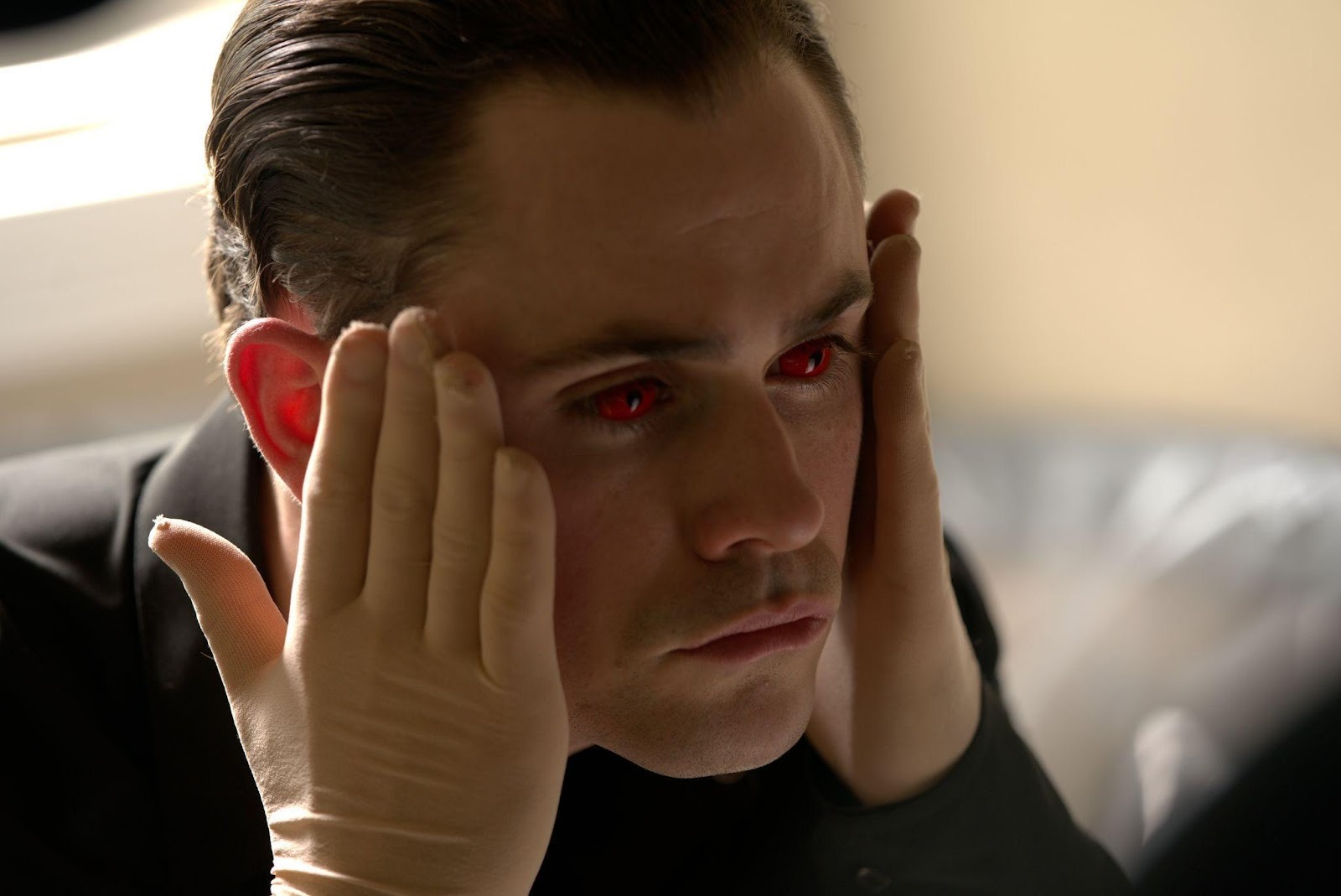
Dacre Montgomery is really frightening during his bouts of rage and his moment of sheep-like duplicity. His gaze, when you can see the wheels and levers turning in his head, is disturbing on a different level. So, he is scary pretty much all of the time. The worst thing is that I knew someone a lot like him. Montgomery has a fearsome level of dedication to this role.
Arthur is an empty house: forlorn rooms, echoing hallways, and windows covered in dust filled only with free-floating rage. Arthur is a pitiless yet pitiable person who doesn’t seem to engage with life unless it is on screen or filming another gruesome murder. He’s locked into a loneliness that is eternal.
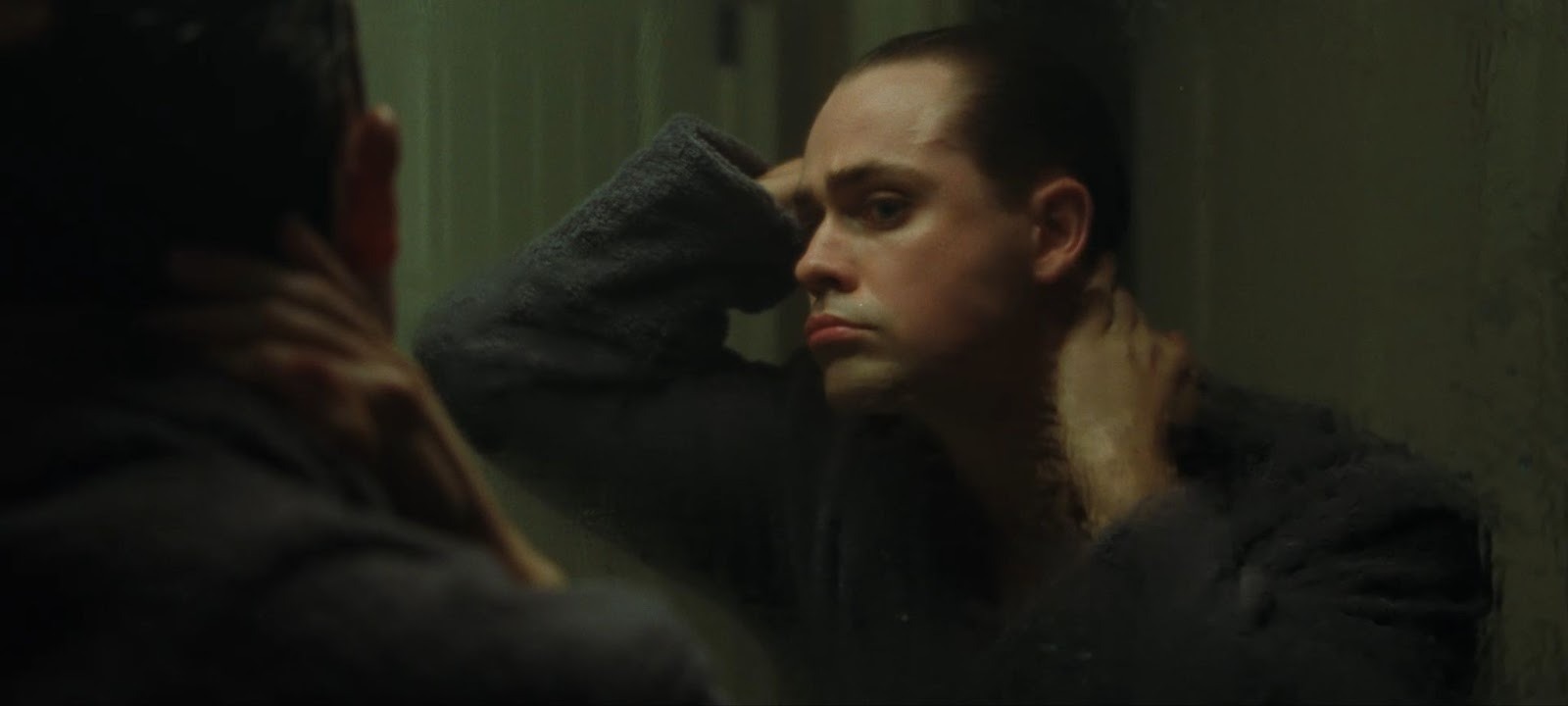
You can see who Arthur and Margot are and the impulses and needs that drive them to do what they do. The exceptionally talented cast does a wonderful job of making sure you can see them think the second before the killer strikes.
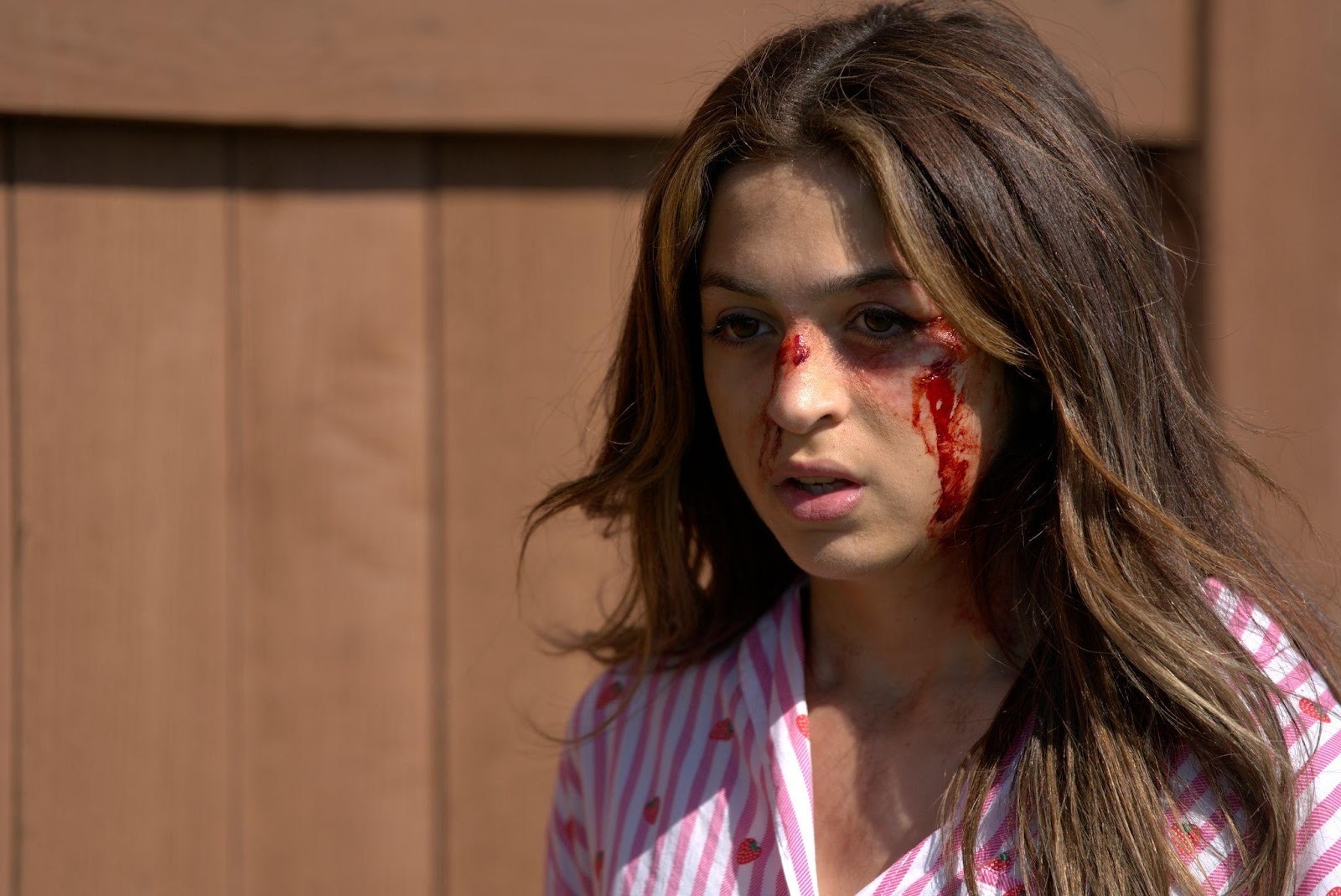
Barbie Ferreira’s Margot Romero (love that last name) is a final “girl” for the digital age. After her initial actions that set the plot in motion, she thrums with lightning and uses her brain to stay alive, but even then, what she has done and survived brings her out of her online infamy and shame back into the real world. Ferreira has not only a firm grasp on the role but a deep well of empathy for others that is crucial to Margot.
She goes from a guilt-ridden person who plays the scene of her mistake in her mind over and over to someone who knows that something is wrong and won’t stop until she has convinced the authorities, and failing that, takes the disturbing matters into her own hands. All of that hyperawareness and ability to problem-solve that came out of her tragedy becomes an asset rather than a liability.
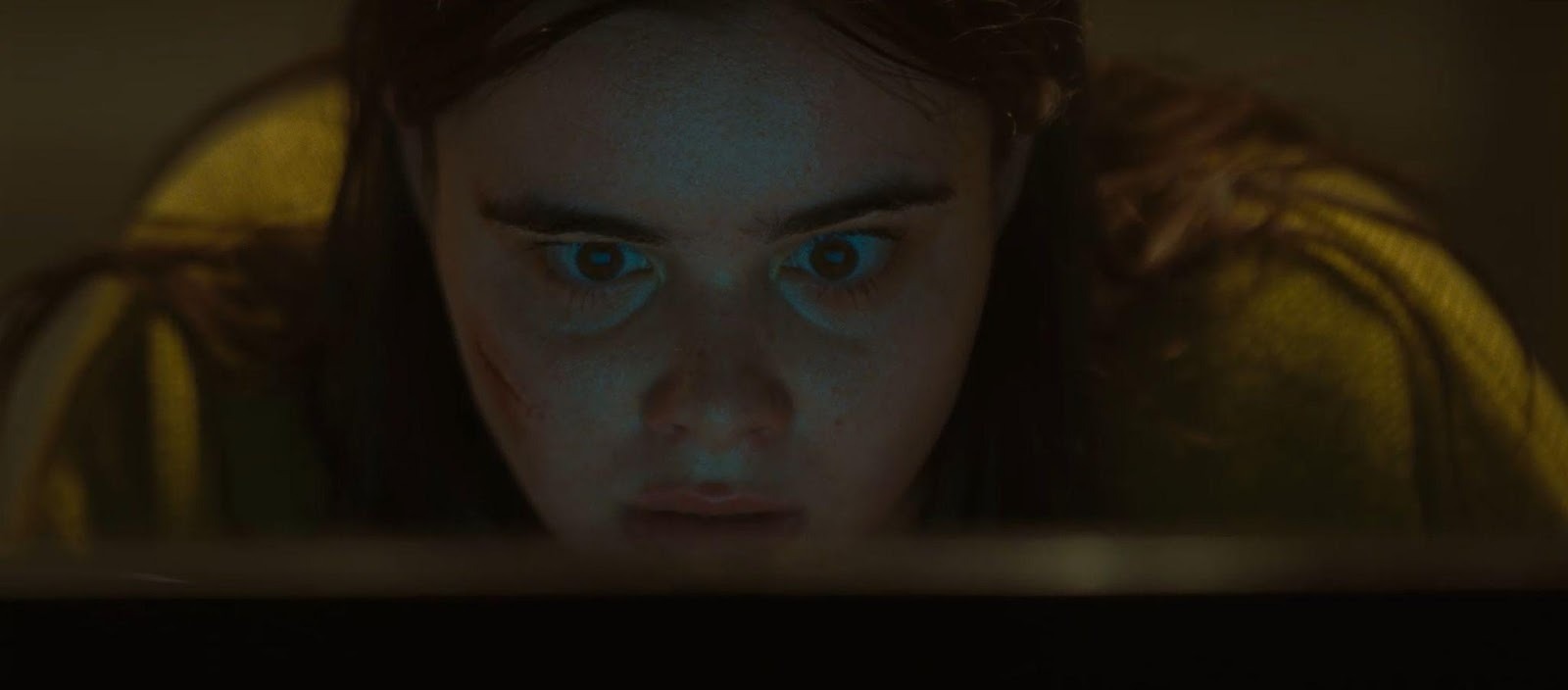
Goldhaber and Mazzei use their film to hold up the mirror of our society’s growing online narcissism up to our own faces and give us a glimpse of the skull beneath the skin, which syncs with the original FACES OF DEATH’s aims.
Curious about death? Here you go. Everything we watch changes us, and we can either change into bored thrill seekers, apathetic drones, or people who know what’s up and won’t stand for it anymore.
Faces of Death is a rage-fueled leap into a blood-drenched hell of being “too online,” a grotesquerie of human destruction that runs on likes and comments that does not judge you, but simply stares into you, knowing that one day, your time will be up.

BAFTA Film Awards Review of Tourette’s Fiasco Finds “Weaknesses” in Planning and Crisis Procedures, But No “Malicious Intent”

‘Behind the Mask’ Sequel Set After 20 Years, Reuniting Original Director and Cast for ‘The Return of Leslie Vernon’ (EXCLUSIVE)

What’s Inside NASA’s Mission Control

Move over, Mr. Ripley. ‘I Am Agatha’ is a delightfully duplicitous debut

Microsoft starts removing Copilot buttons from Windows 11 apps

Florida High School Football Rankings: Top 25 teams – Oct. 21

How old is Bo Nix? What to know about Oregon quarterback ahead of 2024 NFL Draft

Cleary's 21 help Le Moyne down Central Connecticut State 69-64 in OT

99th annual Pony Swim held in Virginia

Indiana Members Credit Union announced as new anchor tenant at Bottleworks District

Rep Randy Fine joins House Freedom Caucus: ‘Strongest group of conservative patriots in Congress’

Trump issues NATO ultimatum to reopen Strait of Hormuz ‘within days’

Women are getting most of the new jobs. What’s going on with men?

Video: How Trump’s Advisers Felt About Going to War With Iran

Unearthed clip exposes shocking claim by Newsom’s wife about inmates at violent California prison
-

 Atlanta, GA5 days ago
1 teenage girl killed, another injured in shooting at Piedmont Park, police say
-

 Education1 week ago
Video: We Put Dyson’s $600 Vacuum to the Test
-

 Movie Reviews1 week ago
Vaazha 2 first half review: Hashir anchors a lively, chaos-filled teen tale
-

 Georgia3 days ago
Georgia House Special Runoff Election 2026 Live Results
-

 Pennsylvania3 days ago
Parents charged after toddler injured by wolf at Pennsylvania zoo
-

 Education1 week ago
Video: YouTube’s C.E.O. on the Rise of Video and the Decline of Reading
-

 Education1 week ago
Video: Toy Testing with a Discerning Bodega Cat
-
 Milwaukee, WI4 days ago
Potawatomi Casino Hotel evacuated after fire breaks out in rooftop HVAC system