Movie Reviews
‘Bedford Park’ Review: Two Lonely Souls Navigate Familial Burdens and Korean American Identity in Stephanie Ahn’s Delicately Poignant Debut


There is nothing obviously wrong with Audrey (Moon Choi). The 36-year-old has a physical therapist job she cares about, with coworkers she mostly likes. Her Brooklyn apartment looks small and a bit shabby, but comfortable. She’s single, but seems to enjoy an active, lightly kinky sex life on the apps.
It’s just that she seems adrift, somehow — as if she’s not only lost her way but forgotten where she was trying to go in the first place, if indeed she ever knew.
Bedford Park
The Bottom Line Tender but unsentimental.
Venue: Sundance Film Festival (U.S. Dramatic Competition)
Cast: Gary Foster, Chris S. Lee, Nina Yang Bongiovi, Theresa Kang, Son Sukku
Director-screenwriter: Stephanie Ahn
1 hour 59 minutes
Bedford Park, Stephanie Ahn’s poignant directorial debut, follows Audrey on her path toward something like self-actualization, sparked by a chance encounter with a similarly lonely soul. Though its unflashy style and delicate emotionality are unlikely to sweep viewers off their feet, its eye for fine detail and bittersweet tone make it an absorbing experience worth seeking out.
This transformative relationship enters Audrey’s life through the unlikeliest of avenues. Eli (Son Sukku), a rough-around-the-edges ex-wrestler, is the other party in a car accident that leaves Audrey’s mom (Won Mi-kyung) with an injured wrist. The incident forces Audrey back into her childhood home in suburban New Jersey to help take care of her, and into Eli’s orbit to help square away the insurance information and repair bills.
Audrey and Eli’s first meeting is a contentious one, with accusations and rude words and eventually pieces of fruit getting thrown around in all directions. (Between this and Netflix’s Beef, there’s apparently no better outlet for Korean American Millennial angst than car-based tantrums.) But a second encounter takes a turn when Audrey finds herself in a vulnerable position, and Eli, a decent guy underneath his prickly exterior, steps up to help. The mutual thawing turns into a mutually beneficial carpool arrangement, which warms into friendship and eventually more.
The script, also by Ahn, leans slightly too much on contrivances to nudge the relationship along. And while Eli’s solitude is explained by his circumstances (he’s laying low from a shady situation engineered by a toxic relative), it’s harder to tell whether we’re meant to understand Audrey as having no other friends whatsoever, or if it’s just more convenient for the screenplay that whatever pals she does have forget to text her the entire time she’s in New Jersey.
But it helps make up for these minor missteps that Ahn has such a firm grasp on who her characters are and where they’re coming from. Combined with her eye for small but telling details — an introductory scene of Eli eating peanut butter directly out of the jar with his fingers speaks volumes about where this man is in his own life, before he even speaks a word — it ensures that even when certain plot beats feel a bit engineered or random, the emotions rippling out from them are wholly believable.
As the central not-quite-couple, Son and Choi are intriguingly unpredictable together at first, like a pair of stray cats sizing each other up, ready to pounce or run as needed. When they finally begin to let their guards down, one awkward car-ride convo or hesitant food court meal at a time, the connection is more profound and more tender for being so hard-won.
What brings Audrey and Eli together, other than a slow-burn attraction, is a sense of stuckness — of being trapped between the heavy expectations of their families and the dissatisfaction they harbor about lives that haven’t quite turned out as they’d hoped (even if they themselves probably couldn’t articulate what exactly it was they did want).
Audrey, the single and childless and PhD-less product of a stable but unhappy home, has fallen short of the life planned out for her by her parents. In the present, her mother lies to her church friends about Audrey’s nonexistent medical career, pressures her to date a nice and rich but hopelessly boring divorcé and guilt-trips Audrey into extending her stay. Eli, whose childhood was fractured by tragedy, dodges a mother who seems more interested in asking him for money than offering him love, and hides out from an ex and young daughter whose life he apparently fears ruining.
No wonder they feel that in each other, they’ve finally found the one person around whom, as Audrey puts it, they can finally breathe — someone who comes to them with no preconceptions or expectations, who see them for the person they actually are and not the person they want them to be.
Woven through this entire messy tangle of relationships is the issue of their shared Korean American identity, in all its variously beautiful and burdensome complexities. It is a gift that Bedford Park grants its leads the space to navigate that complex terrain on their own terms, rather than falling back on stereotypes that position it solely in opposition to a “mainstream” (white) culture.
It empathizes with Audrey, who is unwilling to be the dutiful girl her mother wants her to be, but isn’t ready to entirely reject the role, either. It’s gentle about Eli, born in Korea but raised by a white mother, feeling self-conscious because he prefers forks to chopsticks and barely understands the language of his birth parents.
And it understands that the umbrella of that identity might cover even those who’d rather reject it — like Audrey’s mother, who moved to the U.S. in search of a better life for her children but now bemoans the fact that they’re too American; or her father (Kim Eung-soo), whose pride has never recovered from the loss of status he suffered when he traded his cushy office job in Korea for blue-collar grocery store work in the States.
Almost inevitably, Bedford Park makes its way to the Korean concept of han, defined here by Audrey as “an ancient heartache when a person carries their family’s trauma.” Is it “carried voluntarily, like a sense of duty,” she and Eli wonder over beers and bar food, or do they have no choice in the matter?
The film doesn’t have any firm answers to counter these questions, let alone any easy reassurances or even a tidy happy ending. But in its nuance, its curiosity and its deep affection for its characters, it offers anyone familiar with burdens like Eli and Audrey’s the same thing they give to each other — the chance to sit down and take a breath, with someone who really gets it.



New Year’s Absolution, 2024
Directed by Nick Leisure.
Starring Michael Copon, Joel Brady, Josh Gilmer, Rafael Siegel, Shala White, Victoria Brandart, Siddalee Diaz and Lamondo Hill II.
SYNOPSIS:
Four longtime friends reunite for their traditional New Year’s Eve party. But things start to go awry with the arrival of a mysterious resolution: Kill Someone.

The amateur production values of New Year’s Absolution leak off the screen from the opening frame, as a cheap-looking title card appears over stock drone footage, followed by the actors’ names in a bold yellow font, dancing on and off the screen with only the flashiest of iMovie transitions. It’s effective, in letting you know exactly what kind of ride you’re in for.
We get the first sense of this film’s ‘humour’ as we meet Stuart and Travis, a couple played by Rafael Siegel and Lamondo Hill II. As Travis drives toward the home of Damon (Joel Brady), who’s hosting this year’s annual New Years’ Eve party, director Nick Leisure attempts to shock us with a rude joke, as Stuart bends down towards Travis’ crotch, a visual that would almost work if Travis didn’t have a small dog sitting on his lap. Turns out Stuart was just reaching down to pick up his phone. Hilarious.

Stuart and Damon are both members of ‘the five of ’99’, a friend group who met in 1999, of which only four remain (watch for the shocking revelation to this mystery). Damon is more concerned with arranging the coasters, and bickering with his wife Clare (Shala White) over the canapés, than making sure his friends have a good time. Don’t worry, Damon, we’re not having any fun either.
As everyone starts trickling in, the lack of chemistry between the cast members becomes increasingly apparent. ‘Lifelong friends’ Stuart and Damon interact like coworkers at an after-hours event, while ‘best friends’ Travis and Clare stand around rehearsing dialogue. This involves a lot of bitching about the others, especially the next arrivals Jacob (Josh Gilmer), an off-duty cop, and his wife Misty (Victoria Brandart). They are both vain and image-obsessed, showing off their bodies while the others snigger behind their backs about how fat they used to be.

The last to arrive are narcissistic surgeon Roy (Michael Copon), and his new girlfriend Kira (Siddalee Diaz), a shallow parody of Gen Z shallowness, whose entire character is constructed around her social media presence, and who physically cannot stand being separated from her phone. That’s the caliber of subtle social satire you can expect here.
What with the vanity, body shaming, and some casual racism and homophobia, it becomes clear that these are not nice people. There’s an obscenity to their wealth; Stuart blew 50k on a vintage car that can’t drive in the rain, and Damon forked out for a pool that he’s never swam in. Yet Leisure fails to make any kind of satirical point about the superficiality on display, because his approach to filmmaking lacks any depth of its own.

Damon’s hesitancy to get into his own pool is a key point, as his friends jokingly threaten to throw him in, and Stuart later threatens to drown him if he harms his dog Cookie, whom Damon fears will crap on his precious floors. It’s not much, but it’s nice to get some foreshadowing in a plot that’s mostly lacking in structure or craft.
Said plot eventually coughs and sputters to life when Jacob picks his new year’s resolution out of a ceremonial hat, and reads – kill someone. You might expect the group to laugh this off, but Jacob flips out, and deeper, sinister connotations are revealed. Jacob, who has been doing coke with Roy all night, then draws a loaded firearm in his drug-fueled haze, which he accidentally fires, injuring a member of the party.

This leads to some impromptu bathtub surgery from the coked-up doctor, that further highlights the film’s disconnection from reality. None of the characters react in a normal way to this development, continuing the party as if there isn’t a dude with a gunshot wound in the tub.This could’ve been an interesting satirical point about the hollowness of the upper class, except so little has been established about these characters and their relationships, that it just comes across as lazy writing.
However, it’s after this point that the film finally begins to find some (admittedly ironic) entertainment value, as the plot descends into a chain reaction of over-the-top carnage, with each character blaming another for the night’s misfortunes, and perpetuating them in grisly fashion. It’s in this last half hour that Nick Leisure’s vision of a bloody dark comedy begins to come through, and the kills are as exaggerated as they are unexpected, sparing no amount of fake blood. That said, it’s too little too late, as we’ve already wasted an hour watching these unbearable characters exchange dialogue that’s in turn laughable and dull.

New Year’s Absolution is a tonally confused, poorly put-together piece of work that is unclear in its goals, and fails to achieve them. Director Nick Leisure seems to be going for a broad black comedy, but the only laughs I found were from the piss-poor acting, ridiculous deaths, dumb editing gimmicks, and the autogenerated subtitles while rewatching the surgery scene – “It’s bleeding!” “Boobs tend to do that.”
It’s supposedly a horror/thriller, but it’s not scary or thrilling, because there’s no singular antagonistic force, and the deaths are too random, while the characters are so flat and unlikable that we neither feel nor fear for them. Though it’s possible Leisure is going for some kind of ‘eat the rich’ social satire, his approach is too bland for this to come through, and we don’t get any grounded perspective outside of these awful characters.
One question remains, however – who wrote the resolution? Don’t know. Don’t care.
Flickering Myth Rating – Film: ★ / Movie: ★
Dan Carville
https://www.youtube.com/watch?v=embed/playlist
Movie Reviews
‘Fruit Gathering’ Review: A Factory Worker Falls for Her Female Colleague in a Delicate Burmese Debut

Caught between rural roots and urban opportunities, familial duty, friendship and forbidden carnal desire, young San Kyi (Nandar Myat Aung) struggles to find her place in Fruit Gathering, a sensitive Myanmar-Czechia-France co-production that just won Karlovy Vary’s top prize.
That’s an impressive achievement for Burmese writer-director Aung Phyoe, making his feature debut after several shorts. His flair for blending realist drama with more poetic, painterly imagery makes for a dreamy, hypnotic viewing experience, eased along by a confident, open-hearted performance from Nandar Myat Aung in the lead role. Fruit Gathering will be ripe for picking at further festivals, especially ones specializing in Asian and/or LGBTQ+ fare, possibly followed by niche distribution.
Fruit Gathering
The Bottom Line Juicy but not too sweet.
Venue: Karlovy Vary Film Festival
Cast: Nandar Myat Aung, Nandar Myint Lwin, Tin Tin Ei, Thida Soe Khant, Wutt Yeet Kyaw, Htet Aung Lynn, Khet Suu Myat, Min Nyo, Zun Pwint Phyu
Director/screenwriter: Aung Phyoe
1 hour 37 minutes
Self-transplanted with her mother (Tin Tin Ei) and grandmother from the countryside to industry-rich Yangon, San Kyi has so far managed to resist the pressure from her mom to get married or pursue a career in something upmarket like tech. Instead, eager for a job that doesn’t demand too much thinking, San Kyi works in a massive clothing factory, sewing seams all day in a ferociously noisy, scrap-strewn environment where the supervisor gets snotty if she takes a bathroom break without seeking permission first.
Incidentally, while the factory hardly looks inviting, the conditions don’t seem to be too bad compared to those seen in older documentaries about East and South Asian sweatshops. They’re comparable to what’s on display in, say, Chinese director Wang Bing’s doc Youth but without the company-owned residential housing. At least the workers are allowed to submit petitions circulated by labor organizers requesting better pay and more safety measures, although tellingly San Kyi refuses to sign lest she might get fired for it. A union leader (Wutt Yee Kyaw) pours scorn on her for not showing more solidarity with her colleagues.
Later, after she’s injured herself by a sewing accident, San Kyi will rethink her position on workers’ rights, but industrial relations in the textile industry are not the film’s main focus. It’s all background color, as much a part of the vivid landscape as the interludes where we see San Kyi back home visiting the mango farms and spirit-dance ceremonies of her agrarian childhood.
At least it’s at this factory that San Kyi meets Theint Theint Oo (Nandar Myint Lwin), a young co-worker around the same age as San Kyi with a radiant smile and street sense to burn. The two young women start out just hanging together during their lunch breaks but soon grow inseparable. The script suggests early on that Theint Theint may be the kind of pal who always forgets to bring enough cash for dinner. A darker interpretation might posit that she sees San Kyi as little more than a mark, but the truth probably falls somewhere in a grayer area.
Either way, by the time San Kyi is buying nearly identical blouses for the two of them to wear on strolls around town, it’s pretty clear that she’s smitten with Theint Theint. The latter is ambiguously flirtatious and keen to have languid girls’ night sleepovers in the same bed, but also open about the fact that she’s got a man in the background, who is conveniently always away working in another country. Afraid of losing her new limerent object of desire, San Kyi entertains the thought of going abroad with Theint Theint to work as housekeepers or factory workers in somewhere affluent like Singapore or Malaysia.
Clearly, things are heading for a smash up when San Kyi lends Theint Theint a substantial amount of money. Somehow the tension is heightened by the fact that Theint Theint gets closer to San Kyi’s family, even accepting a job offer that comes through the local guy whom San Kyi’s mom was trying to set San Kyi up with as a potential husband. It all serves to underscore how narrowly female relationships are usually defined in highly traditional, painfully patriarchal Myanmar society. The intense feeling between these two young women could never be openly romantic, although no one bats an eye when they walk hand and hand through the streets, much the way Queen Victoria is said to have refused to sign legislation banning lesbianism because she wouldn’t acknowledge such a thing even existed.
Aung Phyoe suggests the messy, uncontrollable nature of desire via some slightly heavy-handed imagery of flooded apartments and generally juicy, watery, somewhat soluble imagery. But the story surprisingly shifts tack halfway through and becomes less interested in the two women’s relationship and more in San Kyi’s personal development, especially after some hard knocks change how she sees the world.
Every so often, the camera will linger on a tiny detail like a vase that has some emotional significance, or the light coming in a window. There’s a tiny hint that these cinematic still life pictures are being seen through San Kyi’s eyes, like scenes in a book told through limited third-person point of view. Indeed, there’s a faintly literary quality to the filmmaking, as if inspired by romance and high-brow fiction, but Aung Phyoe’s touch is feathery soft, as gentle as the soft thud of a mango falling from a tree.

Olivia Wilde, Seth Rogen, Edward Norton and Penélope Cruz star in The Invite.
A24
hide caption
toggle caption
A24
The new comedy film The Invite centers on an unhappy married couple who host another couple — they live upstairs — for an uncomfortable, and revelatory, evening of dinner and charcuterie. The film’s screenwriters, Rashida Jones and Will McCormack, are actors who are also longtime writing and producing partners.
Jones and McCormack met decades ago, when McCormack’s sister (actor Mary McCormack) set them up on a date. It didn’t work out as a romantic pairing. Instead, it was the start of a long-running creative partnership.

“We’re really like brother and sister who dated briefly, which is not weird,” McCormack jokes. “I think we both knew right from the very beginning that we were connected and that we had to be in each other’s lives. And it took us a minute to sit down to write, but finally we did, and I’m so glad we did.”
Jones says she and McCormack share a voice: “The two of us have the same clip, the same rhythm, and we’re so different in so many ways, but we just kind of like fit like puzzle pieces conversationally very quickly, which is a wonderful thing to have with a writing partner.”
Inspired by the 2020 Spanish film The People Upstairs, The Invite takes place over the course of one night in a chicly appointed apartment in San Francisco. Two couples gather for dinner, and as the evening unfolds, the stories they’ve been telling themselves about their relationships and about themselves fall apart.
McCormack describes the film as a sex comedy that’s not really about sex. “It’s about wanting to be seen and heard and valued,” he says. “You live with someone for so long and it’s really hard.”
Jones says it’s no accident that their work tends to focus on relationships and middle age: “Selfishly, it’s great that we can channel the thing we’re most interested in, which is relationships, living with other people, being parents, losing parents, being alive, getting older, being middle-aged, looking straight down the barrel of the back half of life. All these things we got to bring to this script.”
Interview highlights

Will McCormack and Rashida Jones attend the Los Angeles premiere of The Invite on June 23, 2026.
Valerie Macon/AFP via Getty Images
hide caption
toggle caption
Valerie Macon/AFP via Getty Images
On their working relationship
Jones: We write separately. We write together. We’re in an open relationship as writers, a very healthy, open relationship. But when we come together, there’s a thing that happens.
McCormack: I think we always found the same things funny. … And I think also the same things sort of broke our hearts, and I think that we wanted to try to say something together. There were movies that appealed to us both, and there was a voice that we shared from the beginning. There was just an easy rapport.
On acting out the dialogue together as they’re writing it
Jones: Well, we act while we’re writing, but that’s our discovery process of dialogue because we’re lucky, we both started as actors and can do a good job with that. So often we act out the scenes and if it’s not working, it doesn’t feel right … that’s easy to fix.
On why they’re drawn to stories about heartache

McCormack: Life is really just a series of losses. It’s one loss and one heartbreak after another. When your little summer ends and you don’t want it to end, and then you get your heart broken, and then you have kids, and they’re gonna break your heart, and then your parents die and then [you] start to lose bone density. …
Those moments can actually be the funniest because they’re so raw. And it’s when we feel connected, right? Like, heartbreak is the thing that binds us. Like, no matter who you are or no matter where you are or no amount of how old you are, like you’re gonna go through heartache. … And to be able to dig into some of those moments with Rashida has just been such a gift, and I don’t take that for granted to be able to do that for a living.
On Quincy, her documentary about her dad, Quincy Jones, and experiencing anticipatory grief
Jones: I filmed for six years, and the second to last year of filming, he went into a diabetic coma, and we stopped filming, and luckily my brother filmed a little bit in the hospital because we were going to kind of show him what he had been through if and when he came out and we were so lucky he did come out at 82. … But having that moment where he was that close to death, and then deciding to put that in the film and show him overcoming that, I think was my way of sort of preparing for the inevitable, you know? And I was so lucky to have him for another nine years after that, but ultimately, I knew what was coming, and it was really a love letter to my dad, but also a way to hopefully reach out to other people and say, listen, we’re all going to go through this and we want to be honest about what it’s like for our family to come to the other side of this.

My dad is obviously an icon and a culture shifter, and he had been documented a lot before. And what I felt like people missed, because he’s so successful at what he did, was they missed his personality. They missed the personal side of him, which is a very important part to why he was successful. It’s not just his talent and his hard work, but he had this gift with people. And he had a way of relating and being honest and getting to the heart and the honesty of something and the intimacy of something so fast with a stranger, with his kids, with the people who loved him, the people didn’t know him. And I really wanted that to be on screen.
On what they bring out in each other
Jones: Will is like my closest chosen family in a way. … I don’t wanna get emotional, but I feel like Will, and I see the child versions of ourselves and can really take care of that little kid in each other, because we’re both very hard on ourselves. … We sort of like, very kind of gently, love and respect each other and give each other the benefit of the doubt that we might not give ourselves. And then, I think, born of that is this sort of thing that lives in the intersection between pain and humor, and maybe hopefully something divine, like hopefully we leave some room, as my dad always said, “for God to walk in the door,” because that’s really our job ultimately is to channel. And so hopefully there’s something about us coming together that allows that to happen.
McCormack: I don’t want to get emotional either, but what she said.
Ann Marie Baldonado and Susan Nyakundi produced and edited this interview for broadcast. Bridget Bentz, Molly Seavy-Nesper and Meghan Sullivan adapted it for the web.
-
 Lifestyle16 minutes ago
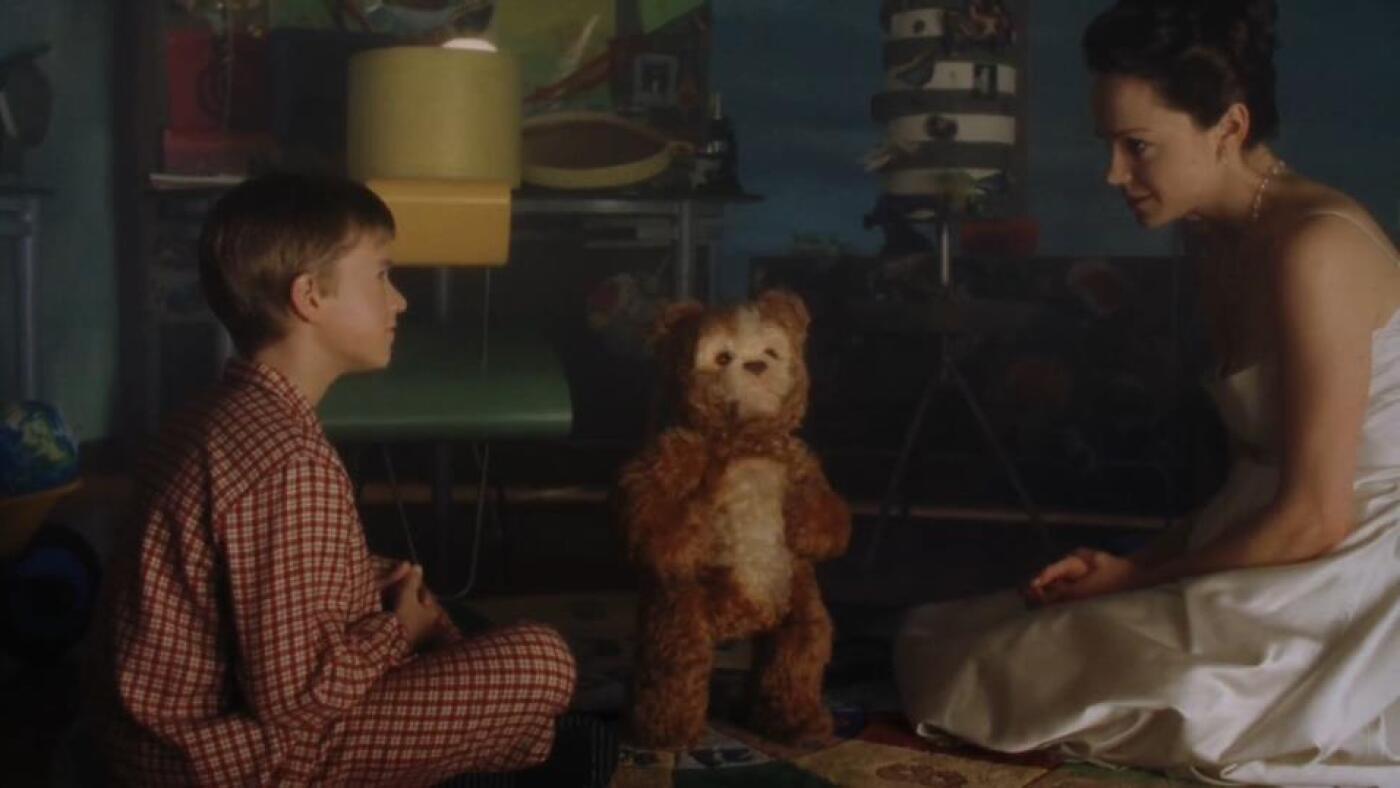
‘The Trojan Teddy Bear’: The promise and peril of childhood in the age of AI
-

 Technology28 minutes ago
Google and Epic give up fighting — third-party Android app stores are coming next week
-

 World34 minutes ago
FBI snares an American heir indicted for allegedly bankrolling anti-cop, pro-Hamas communist revolution
-

 Politics40 minutes ago
Biden special counsel’s ‘runaway train’ scooped up sensitive lawmaker info: ‘Abuse of power’
-

 Health46 minutes ago
‘Miracle on the Hudson’ hero Captain ‘Sully’ Sullenberger reveals Alzheimer’s diagnosis
-

 Sports52 minutes ago
American League stars outshine National League in 96th MLB All-Star game
-

 Technology58 minutes ago
Before you connect another smart TV, tablet or phone, lock it down
-
 Business1 hour ago
Commentary: Trump greenlights California’s dumbest water project

