Entertainment
Jeffrey Wright wonders what's next. The Pacific Ocean, for starters

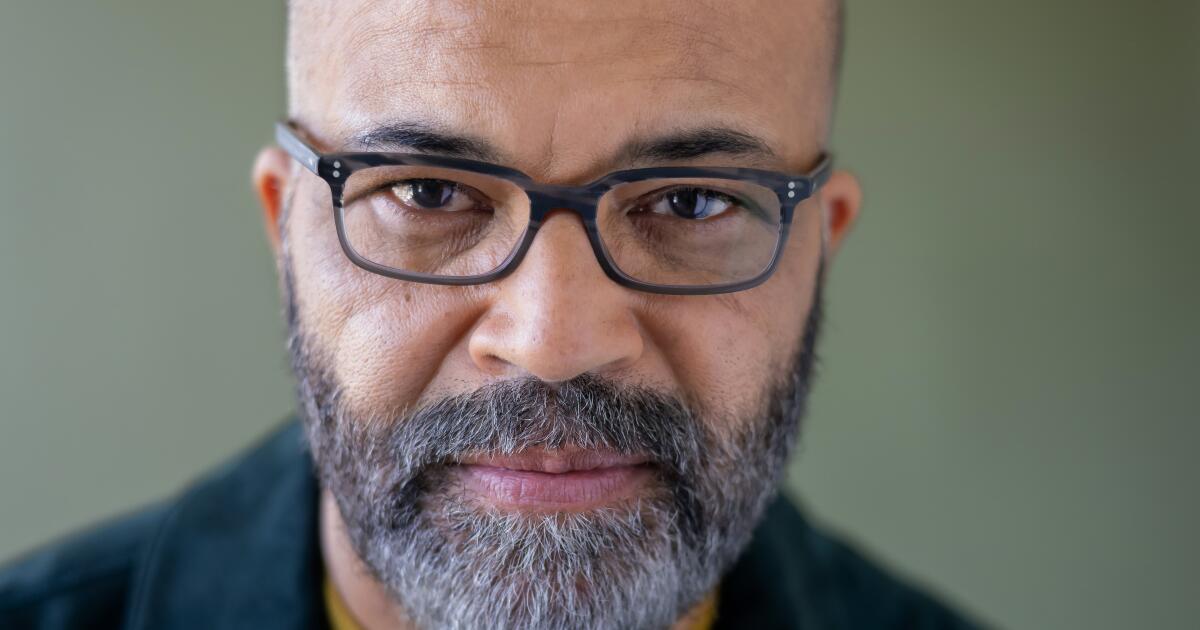
“I’d never had a meeting like that before in my career for any film that I’ve been a part of, and certainly not one that I was the lead in,” Jeffrey Wright says of a post-actors’ strike meeting that was filled with people planning out his promotional schedule for “American Fiction.”
(Christina House/Los Angeles Times)
Jeffrey Wright finished shooting “American Fiction” two Septembers ago and immediately, happily transitioned to becoming what he calls his daughter Juno’s “executive assistant,” helping her navigate her way through college applications and all the other stresses of a high school senior year. When she went off to school in the fall, Wright thought he’d feel liberated, that he’d enjoy, as he puts it, “a new phase of freedom.”
“But I realized that I’ve been doing the father thing for 22 years now, and I think I’m finally good at it,” Wright says, punctuating the thought with a laugh. (He also has a son, Elijah, with ex-wife Carmen Ejogo.) “Being a father has kind of been the primary thing I’ve been … and now I miss it.” He pauses, as he does often in conversation. Wright is a man who considers every word. “Yeah … I wonder what’s next.”
We’d just met 15 minutes ago. Being a father is how you see yourself, I ask. More than an actor?
“Oh, f— yeah,” Wright responds without hesitation.
“So, in a way, my life seems purposeless now,” Wright continues. “It certainly seems empty in multiple ways.”
This sounds serious. And it is, though two things should also be noted up front. First, pretty much everything Wright says in his deliberate, resonant voice echoes with meaning, with contemplation, with weight. He could read the Taco Bell menu — chalupa su-preme — and convince you that it’s a lyrical wonder.
Second: Wright’s doing OK. Really. He’s just a man given to introspection.
In the fall, Wright had time, too much time, really, to reflect. The actors’ strike prevented him from taking a job or going to the Toronto International Film Festival, where “American Fiction” premiered and won the event’s audience award. Wright would have loved to be there and talk about playing Thelonious “Monk” Ellison, an author and professor, who, frustrated with his career, drunkenly cranks out “My Pafology,” a pandering book that fully embraces cliches about the urban Black experience. Improbably or maybe naturally — the film lets you decide — it becomes a bestseller. Monk, an artist, doesn’t know how to feel about its success. After all, he wrote it in a fit of pique.
Jeffrey Wright, left, as Thelonious “Monk” Ellison and Sterling K. Brown as his less responsible brother Cliff Ellison in “American Fiction.”
(Orion Pictures)
So, yes, much to discuss — only Wright couldn’t say a word. So instead he headed west from his Brooklyn home to a Malibu rental just down the coast from fried seafood destination Neptune’s Net, where he keeps his surfboards, truck and bicycle. Time to work on himself. Mind. Body. Spirit. Find some decent waves. Power through eight-mile bike rides through the hills. (“I’ve got a little e-assist,” he says of his electric ride. “I try to use it in moderation … but it is uphill.”) Regular workouts at a wellness center, doing Pilates, acupuncture and weight training.
“I was trying to get back to the old ways a little bit, to the extent that that’s possible in these older times,” Wright, says. He recently turned 58. He knows he’s not going to get back to the shape he was in when he played lacrosse in high school and college. He couldn’t, even with all the training in the world. That’s because when he was 24, Wright was playing Puck in a touring production of “A Midsummer Night’s Dream,” and at the end of the first act, he leaped offstage and tore his ACL.
“The loudest silent scream in the history of theater,” Wright says.
Did you return to stage?
“Limping,” Wright says. “But, yeah, there was a second act to do.”
Being “young and foolish,” he never got the knee fixed until eight years later when it locked up on a backswing playing golf. It’s still not great, but being out in the ocean helps. Wright started surfing about a dozen years ago and became passionate about the sport when he moved to Los Angeles after getting cast on the HBO series “Westworld” in 2015. For the show’s first two seasons, he lived in Santa Clarita. Then he moved downtown. Then to Marina del Rey. Finally he got this seasonal rental, just south of the Ventura County line. It’s his through March.
“The single advantage of living out here is the Pacific Ocean,” Wright says. “It’s just a magnificent creature. I could never leave it.”
The morning after the actors’ strike ended in November, Wright opened his email and found a message from one of the “American Fiction” producers. You want to come in for a meeting? When? Tomorrow morning, 10 a.m. at MGM. When Wright showed up, he was taken aback. There were two dozen people in the room brimming with energy and ideas, spitballing how to support the film. One person handed him a tentative promotional schedule. It ran through March.
“I’d never had a meeting like that before in my career for any film that I’ve been a part of, and certainly not one that I was the lead in,” Wright says.
Really? Not with the three Bond movies, the “Hunger Games” trilogy or the last “Batman” reboot? Or with “Westworld” or the two movies he made with Wes Anderson?
“Nope,” he answers. “Never.”
“The single advantage of living out here is the Pacific Ocean,” Jeffrey Wright says. “It’s just a magnificent creature. I could never leave it.”
(Jason Armond/Los Angeles Times)
When Wright earned his first Oscar nomination a couple of weeks ago, that tentative schedule they gave him became permanent, including more post-screening Q&As, more career retrospectives (“it’s like your life passing in front of your eyes”), more interviews like this lunch conversation we’re having, all of which inspire the kind of “intense self-reflection” that Wright hopes might end up being a constructive exercise somewhere down the line.
After he heard he was nominated, the first person Wright called was his 94-year-old aunt, the woman who helped his late mother raise him. (Wright’s father died when he was 1.) She lived with Wright for a couple of years until Wright had a house built for her near the Chesapeake Bay, where the sisters grew up.
“I called her and asked, ‘Did you hear any news this morning?’ ” Wright says, smiling. He made the call because his aunt’s eyesight isn’t so good. “She said, ‘Oh, I heard. Congratulations.’ ” Pause. “ ‘But you know, you should have been nominated a long time ago. You should have been nominated for “Basquiat.’ ” Wright laughs. “That’s the way she is.”
The aunt was the first person he called, but not the first person he talked to that morning.
“I was in my lounge/office area in Brooklyn. I actually grabbed some dumbbells that my son had in there for whatever reason,” Wright remembers, pantomiming doing bicep curls at a furious pace. “And I glanced at my phone and a message pops up. ‘Congratulations.’ And then I looked up and saw the picture of my mom on the bookshelf.” He smiles. “We had an exchange.”
Wright’s mother, Barbara Whiting-Wright, had come up several times during our conversation. An attorney, she was the first Black woman to serve as customs law specialist for the U.S. Customs Service, where she began her legal career in 1964. She also had season tickets to Washington’s professional football team and a record collection that included Miles Davis’ “Live-Evil.” She died four years ago from colon cancer.
“As far as my life goes, she was a visionary,” Wright says. “My mom basically lined up a series of doors around me from a very early age. And they all led to someplace good.”
“Pretty tough too,” Wright adds, making sure he painted a full picture. “She had expectations.”
Did you feel like you met them?
“When I described to a very good friend of mine how I had taken care of my mom at the end of her time, he said, ‘Her investment paid off,’ ” Wright says. “He knew my mom pretty well. I think what I had described to him, what was reasonably comforting to me, was that she trusted me. And that was cool.”
Wright looks down. Our table has been cleared. We’re well past the time we said we’d talk, and he’s had adequate introspection for the day.
“All right, enough of this,” he says, rising, extending his hand. Time to head home.
Too late to surf? Probably. But Wright already has one session circled on his calendar.
“I’ll be out in the Pacific on the morning of the Oscars,” he tells me. “It calms the system.”



2.5/5
01 Hrs 59 Mins | Romantic Comedy | 27-02-2026
Cast – Sree Vishnu, Nayana Sarika, Satya, Brahmaji, Praveen, Murali Sharma, Srikanth Iyyengar, Satyam Rajesh, Srinivasa Reddy, Goparaju Ramana and others
Director – Yadunaath Maruthi Rao
Producer – Sumanth Naidu G
Banner – Sree Subrahmanyeshwara Cinemas
Music – Radhan
Since 2023, with three commercial hits and one critically acclaimed film, Sree Vishnu has established himself as a minimum guarantee hero and built a loyal audience. To continue the success streak, he chose yet another romantic comedy film, directed by debutant Yadunaath Maruthi Rao. ‘Aay’ fame, Nayana Sarika, played the female lead role and Radhan, scored the music for the film. After creating enough curiosity among the audience with the teaser and trailer, the film was finally released in theatres today. Did Sree Vishnu, deliver yet another hit with a romantic comedy film? Did Nayan Sarika, score a hit in Telugu, after AAY & KA? How does the debutant director, Yadunaath Maruthi Rao, do? Did the music director, Radhan, come up with memorable songs and score? Let’s figure it out with a detailed analysis.
What is it about?
Vishnu(Sree Vishnu), works as a junior lecturer at a college, where Manisha(Nayan Sarika), works as the head of the department(HOD/faculty). Manisha, with her eccentric characteristics, intrigues Vishnu and both of them eventually fall in love with each other. When everything is going well for the couple to get married, Manisha informs Vishnu about a flaw in her Jathakam. What was the Dosham(flaw) in Manisha’s jathakam? How did it impact her prospects of getting married before meeting, Vishnu? Why did Vishnu initially get reluctant to marry Manisha, after hearing about her Jathaka Dosham? Will the couple sort out all the issues and get married eventually? Forms the rest of the story.
Performances:
Sree Vishnu, with his comedy timing generated a few fun moments that worked in favour of the film. However, in an attempt to appear effortless, he went overboard at times and appeared monotonous at a few places. Nayana Sarika got a good role and she delivered a good performance. She looked good throughout the film and appeared confident.
Satya, got a full-length role and he was able to generate a few laughs here and there with his comedy timing. Srikanth Iyyengar’s performance looked over the top and his portions looked rushed and very artificial. Srinivasa Reddy played a role similar to Mallikarjuna Rao’s role in Raviteja’s movie, Venky. He did an ok job but it seemed like he did dub for his role in the film? The film had Brahmaji, Praveen, Murali Sharma, Satyam Rajesh, Goparaju Ramana and a few others, in character roles. All of them made their presence felt but none of their roles gave the desired impact and extra mileage.
Technicalities:
Cinematography by Sai Sriram, is a major plus to the film. The visuals looked colourful, vibrant and gave a pleasant look to the film throughout. Radhan’s music should have been better. The songs scored by him were below par and the background score was pretty standard. Editing by Karthikeyan Rohini, was alright. He tried to cut the film with a very crisp runtime of around two hours and yet, ended up having a few repetitive sequences. Production values by, Sree Subrahmanyeshwara Cinemas, were decent and were within the limitations of a midrange romantic comedy film. Let’s discuss the work of the writer and the director, Yadunaath Maruthi Rao, in detail in the analysis section.
Positives:
1. First Half
2. Comedy Portions
3. Sree Vishnu & Satya’s Timing
4. Cinematography
Negatives:
1. Second Half
2. Lack of Strong Emotions
3. Music
Analysis:
The debutant writer and the director, Yadunaath Maruthi Rao, wrote a so-called peculiar characterisation of the female lead in the film and tried to generate enough fun moments using the comedy timing of his lead actor, Sree Vishnu and the lead comedian, Satya. Right from the word go, the writer intended only to make the audience laugh at any cost, and in doing so, he succeeded in parts but would have done a better job in other parts, especially the latter part of the second half. The film had at least five to six notable actors but for some reason, the director only concentrated on generating fun by using his lead actor.
The entire first half of the film unfolded without any major complaints. There were enough comedy sequences in the first half that engaged the audience in a fairly decent manner and the revelation of the conflict point during intermission, worked as well. However, after the initial few minutes of the second half, the film got into repetitive mode and the drama during the last thirty minutes was the film was written and executed in a very unexciting manner without any proper emotional depth. The twist during the climax was very predictable and it was narrated in a bland and rushed manner. Better care in writing and execution during the second half would have elevated the film’s overall graph.
The bare minimum that the audience expects from debutant writers and directors is original characters and characterisations, isn’t it? In Vishnu Vinyasam, to a crucial character, it was surprising to see a debutant director use the characterisation of ‘Jagadamba Chowdary’, a character from Ravi Teja’s movie Venky. Also, at just around two hours of runtime, the film makes the audience feel monotonous with a few repetitive sequences. One of the major negative points of the film is the songs. For a romantic comedy film to work, it is necessary to have at least one or two chartbuster songs. Unfortunately, none of the songs composed by, Radhan, helped the film in any way.
Overall, the core point of, Vishnu Vinyasam, has enough potential to become a very engaging romantic drama film. But, the half-hearted effort from the writer, director and the music director, ended up making it a decent watch. You may give it a try watching for a few well-executed comedy portions, Sree Vishnu and Satya’s timing.
Final Verdict – Partly Entertaining
Rating – 2.5/5
Related
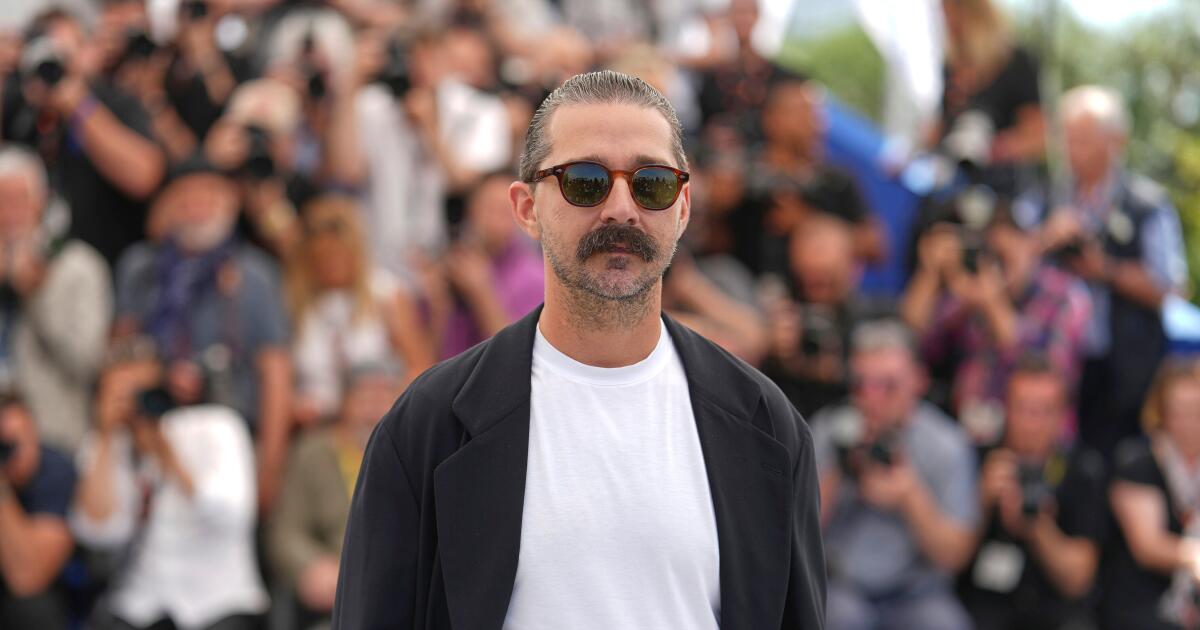
Actor Shia LaBeouf’s raucous Mardi Gras episode in New Orleans earlier this month has now earned him court-ordered drug and alcohol treatment.
A New Orleans judge on Thursday ordered the former Disney Channel star, 39, to begin substance abuse treatment and undergo weekly drug testing after he was arrested on suspicion of assaulting two men in the city’s famed French Quarter. He was charged with two counts of simple battery, the Associated Press reported.
“Transformers” and “Honey Boy” actor LaBeouf agreed to the updated terms of his release, including posting bond of $100,000, and underwent a drug test during his court appearance on Thursday. His attorney said the test did not show illegal substances in the actor’s system.
Orleans Parish Criminal Court judge Simone Levine criticized LaBeouf for his behavior during the Mardi Gras celebrations. In addition to striking the two men at a bar, LaBeouf allegedly yelled homophobic slurs. Levine expressed concern for “the safety of this larger community” and said LaBeouf “does not take his alcohol addiction seriously.”
A legal representative for LaBeouf did not immediately respond to a request for comment but said during the actor’s court appearance that “being drunk on Mardi Gras is not a crime.”
The actor has yet to enter a formal plea to the charges.
The New Orleans Police Department said its officers responded to a report of an assault in the 1400 block of Royal Street. The former “Even Stevens” child star was “causing a disturbance” at the business, leading staff to remove him from the premises, police said. The actor allegedly “used his closed fists” on one of the victims “several times.”
Authorities said LaBeouf left the business but returned, “acting even more aggressive.” According to the incident report, an unspecified number of people tried to subdue him and eventually let him go “in hope that he would leave.” Instead, police said, LaBeouf began assaulting the same man as before, hitting his upper body with closed fists. The actor is accused of punching the second man in the nose.
People held down LaBeouf until officials arrived. He was transported to a hospital and treated for unknown injuries and was arrested and charged upon his release.
An additional police report identified a local entertainer as one of LaBeouf’s alleged victims. The “Megalopolis” actor, whose history of violent behavior has led to previous arrests and other legal troubles, allegedly threatened the man’s life and shouted homophobic slurs.
Levine ordered that LaBeouf refrain from contacting the two victims and visiting the bar at the center of the brawl. She also denied his travel requests.
Hours after news of the brawl and his arrest spread, LaBeouf issued a brief statement on social media.
He posted to X: “Free me.”
Movie Reviews
‘Scream 7’ Review: Neve Campbell Returns for a Back-to-Basics Sequel That’s a Little Too Basic

The “Scream” movies, at their best, are delectable booby-trapped entertainments, and part of that is how cleverly they stay a step ahead of us. But there’s a moment in “Scream 7” that typifies the sensation this new movie gives you: that it’s leading the audience and lagging behind it at the same time.
We’re watching a homicidal pursuit through the home of Sidney Prescott (Neve Campbell), who is not only back but once again the central character (let’s call her the Final Girl as Mom). Sidney and her teenage daughter, Tatum (Isabel May), a kind of Final Girl in Training, are attempting to elude the blade of Ghostface. There’s a good bit where they inch along a catwalk behind the living-room wall, with Ghostface stabbing it from the other side. He misses, and they wind up on the street outside, where the killer gets smashed by a car that comes barreling out of nowhere (the driver, in fact, turns out to be an old friend).
The killer’s costume-shop Edvard Munch mask gets pulled off, revealing his identity, and this is followed by some chatter about how Ghostface often turns out to be more than one person. You don’t say! Considering that we’re only 45 minutes into the movie, that’s kind of a super duh. “Scream 7” is inadvertantly revealing its true theme, which is: Does anyone even care anymore who Ghostface is? Once all the obvious suspects have been eliminated, the answer is destined to be as arbitrary as it is forgettable.
The last two “Scream” films were nothing if not busy — nearly antic at times, stuffed to the bloody gills with backstory and mythology and schlock trivia. Yet there’s no denying that that was part of what kept the pulse of the series alive. In the lead-up to “Scream 7,” however, the busy quality seemed to transfer over to the drama offscreen: the firing of Melissa Barrera after comments she made that some judged to be antisemitic; the bowing out of Jenna Ortega; the fight over Neve Campbell’s salary (she sat out “Scream VI”); the fact that the directors who’d taken over the franchise, Matt Bettinelli-Olpin and Tyler Gillett, opted out, and their replacement, Christopher Landon, then quit after he started getting death threats over Barrera’s firing.
As if to calm the waters, the reins were handed back to Kevin Williamson, who 30 years ago wrote and created the original “Scream.” He was the series’ true auteur: the one who devised the whole concept of a meta slasher movie, a trash thriller maze that would be equal parts straight horror and a hack-’em-up version of Trivial Pursuit.
But Williamson returns to the “Scream” franchise, now directing one of the films for the first time, with a weirdly restricted agenda. The whole slaughter-movie scholarship side of the “Scream” films — “Look! We’re deconstructing the prospect of our own deaths like horror-film-class geeks!” — has basically been played out. And the series is all too aware of that. Williamson knows that he can’t just go back to that age-of-VHS ’90s drawing board. So what he’s done instead is to return the series to its “roots” in a straightforward, analog, Jamie Lee Curtis-in-the-rebooted-“Halloween”-franchise sort of way. “Scream 7” has enough shocks and yocks to keep the product churning and the audience, at least for a weekend, turning out. Williamson has gone back to basics, but the result is a “Scream” sequel that, while it nods in the direction of being seductively convoluted, is really just…basic.
The teenage Tatum, named for Sidney’s late lamented bestie (the Rose McGowan character from the original “Scream”), has a boyfriend, Ben (Sam Rechner) who smirks too much, along with a minor circle of friends who could all, theoretically, be suspects. But they get bumped off with a regularity that lets us know the mystery is elsewhere. One of the murders is a grisly piece of showmanship: Hannah (Mckenna Grace), flying around on a harness as she rehearses the high-school play, gets slashed with Ghostface’s knife until her innards fall out. But that scene is the exception to the film’s rule of routine “sensational” killings. Simply put, “Scream 7” isn’t very scary, and it isn’t very inventively gory (which some of the sequels have been).
The film opens with a fun variation on the ritual Ghostface phone call: Scott and Madison (Jimmy Tatro and Michelle Randolph) are visiting the former home of Stu Macher, which has been turned into a slasher museum. Among the nostalgic artifacts is a life-size Ghostface model that turns its head via movement sensors. Roger L. Jackson is once again the voice of Ghostface (the aggro psycho as AM radio DJ), and all of this erupts into a satisfyingly incendiary prelude.
But once “Scream 7” settles into its main story, Williamson adopts a tone of mordant sincerity regarding Sidney and the trauma she can’t seem to outrun. Courteney Cox’s Gale Weathers shows up, and she too becomes a major player, though the “media” commentary is strictly pro forma. The film has better luck reviving Matthew Lillard’s Stu, a character we were certain was dead‚ and he may in fact be. But then how is Stu, with mottled skin, calling up Sidney and conducting threatening live video-phone chats with her? Lillard’s raging performance could almost be his answer to Quentin Tarantino’s dis of him. The actor, like the character, is saying, “I’m still here,” and that’s true even if Stu is just a deepfake.
As Mindy, the aspiring TV news reporter who’s working for Gale, Jasmin Savoy Brown gets to deliver the film’s few token snippets of horror-snob geekery, and she’s so good at it that she made me wish Williamson had included more of it. Maybe the reason this stuff got so played out is that the series, creatively speaking, could actually use a more expansive vision of what horror movies are. But that’s not about to happen, because the “Scream” films are so successful they’re now effectively trapped in a genre that can’t risk being too smart about playing dumb.

Robert ‘Fish’ Jenkins helped Detroit students soar in sports and life

San Francisco court clerks strike for better staffing, training

Mavericks vs Kings Final Score: Dallas falls to Sacramento, 130-121

Red Sox insider hints Boston may have Pablo Sandoval problem with Masataka Yoshida

David Fountaine Black Obituary | The Denver Post

Florida High School Football Rankings: Top 25 teams – Oct. 21

Cleary's 21 help Le Moyne down Central Connecticut State 69-64 in OT

How old is Bo Nix? What to know about Oregon quarterback ahead of 2024 NFL Draft

99th annual Pony Swim held in Virginia

Indiana Members Credit Union announced as new anchor tenant at Bottleworks District

Read Judge Schiltz’s Order

Vulnerable House Dem lashes out at Trump’s ‘racist’ SOTU challenge: ‘That was uncomfortable’

Italy calls for suspension of EU carbon market

Chicagoans pay respects to Jesse Jackson as cross-country memorial services begin

DHS shutdown triggers TSA ‘emergency measures’ as lawmaker warns airports could feel economic pain
-

 World1 day ago
Exclusive: DeepSeek withholds latest AI model from US chipmakers including Nvidia, sources say
-

 Massachusetts2 days ago
Mother and daughter injured in Taunton house explosion
-

 Montana1 week ago
2026 MHSA Montana Wrestling State Championship Brackets And Results – FloWrestling
-

 Oklahoma1 week ago
Wildfires rage in Oklahoma as thousands urged to evacuate a small city
-

 Louisiana4 days ago
Wildfire near Gum Swamp Road in Livingston Parish now under control; more than 200 acres burned
-

 Technology6 days ago
YouTube TV billing scam emails are hitting inboxes
-

 Denver, CO2 days ago
10 acres charred, 5 injured in Thornton grass fire, evacuation orders lifted
-

 Technology6 days ago
Stellantis is in a crisis of its own making