Entertainment
Is ‘Blue Dot Fever’ a real problem for the concert industry?


Over the last few weeks, acts like Post Malone, Zayn, Meghan Trainor, the Pussycat Dolls and Kid Cudi have canceled major tour dates. Whatever their reasons behind the scenes (they range from finishing new music to spending time with family), some have cited “Blue Dot Fever” as a possible cause — a tour staring down too many unsold seats to make the numbers work.
It’s a tough environment for all but the biggest acts right now — gas is eye-wateringly expensive, fans’ concert habits changed post-COVID, ticket prices are higher than many would like, and social media fame doesn’t guarantee a crowd in person.
The Times spoke to Michael Kaminsky, the founder of music management firm KMGMT, Inc, a partner in the Vans Warped Tour and an instructor in USC’s music industry program, to gauge if “Blue Dot Fever” is real, what expenses acts are facing on the road now, and how a digital audience is no guarantee of a packed house anymore.
Is this phenomenon of “Blue Dot Fever” real, or is it just a coincidence for specific artists amid a tough economy?
I’ve represented artists for 20 years, and a lot’s changed. There used to be a lot of steps up the ladder — you’d play clubs at your band’s start, then theaters, then go onto bigger things. What I see now is the middle class eroding, and it’s harder for everyone there. Expenses are way up, some have tripled from even a few years ago.
For a lot of artists, it’s increasingly difficult to tour and have a healthy business. A lot of this is fans’ sensitivity to ticket prices, but kids also have a lot of options now, and going to concerts is not as ingrained in their culture.
Is this in part a generational shift for kids that grew up in the pandemic?
I meet a lot of 18- to 21-year-olds at my university. Growing up, kids going to concerts was a rite of passage. As a teen, friends took you to shows and it was cheap to learn to love live music. Over COVID-19, kids were not able to have that experience. Instead, it was making friends online.
Now, for lot of people, they’ll go to one or two big events a year, it’s like going on vacation for them. I’m a small part of a big festival (the Vans Warped Tour), and I’d say a third of people tell us it’s their first concert they’ve ever been to.
What feels different about the calculations acts have to make about touring now?
What I’m seeing is a lot of bands deciding not to tour in the first place. It’s too expensive, too risky, and there’s not as much upside as there used to be. You see some acts canceling tours, which is a bit systemic, but you’re also not seeing all the things behind that decision — the erosion of the middle class of artists and higher expenses.
Gas prices spiking has to play a role there.
It’s not just gas. A bus used to be $1,000 per day to rent, now it’s $3,000 per day. If you take one night off, for a midsized band, that’s very difficult to absorb now. You see bigger artists playing just 10 cities, but doing multiple nights. They’re essentially saying “If you want to see us, fly out.” That traditional way of thinking about touring is changing or has already changed.
You hear a lot griping about high ticket prices, but artists and promoters set those prices as a reflection of what their costs are. Is there a disconnect with fans’ expectations there?
It’s complex. If you’re Taylor Swift or Beyoncé, there’s still lots of profit to be made. But a big dilemma for artists is that fans feel like art needs to be accessible and valued as such, and tickets should be priced below what their value is to be fair. Then they watch tickets get bought by scalpers and flipped for multiples, so the person making the most money on a ticket is the scalper. But as soon as an artist charges fair value, fans get upset and say they’re being greedy.
It’s hard to watch the person doing the least work, who has not contributed anything to the tour, reaping the biggest rewards. You’re finally seeing artists saying “I can’t price a ticket just because it’s fair. I can’t price it below what someone will pay.”
At the advent of streaming, everyone said that you can make your money on tour. If touring is no longer profitable, how will artists survive? Is every band just a T-shirt company now?
Everyone wants to move to the superfan model. Everyone already pays $10-$15 month for streaming services, so there is new emphasis on merch and VIP experiences. What’s more exciting to me is seeing a whole new subculture develop — all-cash shows at nontraditional venues, and releasing your own music offline. We’re seeing a lot of analog consumption and fashion come back, which ties to an overall broader need for artists to endear themselves to fans, so they find more ways to appreciate meaningful art. We’re seeing the fringes of electronic music rise, and very heavy rock music rise. There’s a tidal change happening in youth culture that is tied to inaccessibility, a response to the devaluing of making art, that’s exciting to see.
I have kids who come through our school and their aspirations are not to play club shows. They want to play backrooms at record stores with 500 kids paying $15 and it’s only prominently advertised in a Discord group. They’re listening to music on cassette. Kids are sick of this AI-accelerated push, and they want to enjoy real art again, and see an appreciation for it as political and subversive.
Is it damaging for artists’ careers to pull down dates over low sales? You see some acts being more candid about that, which is surprising and honest.
When artists are having these problems, they know why these tickets come down. That’s OK, the economy has changed, culture has changed and there’s not much you can do about that. They’re pushed into it.
I’m sure it’s embarrassing, but I don’t know if fans think so. Yet a big part of being famous is people acting like they’re famous. You need momentum and hits to stay famous.
These are obviously fraught times politically and economically. How do these macro-level challenges impact on touring?
It’s getting very hard. I have a lot of tours on sale now, and the day the Iran war started, my daily ticket counts took a huge dip. Gas was up, and even for low-priced tickets it was difficult for people to say that three months from now they’ll have money, so they’re not gonna buy a ticket.
Even with all these new digital metrics and tools, is it getting harder to know what an act’s real, ticket-buying audience is?
It’s extremely difficult to tell what will move tickets. You can have a hit song or be huge on TikTok and sell zero tickets, but I’ve got artists who have played for 20 years, and put them in the right rooms and price appropriately, they’ll sell out.
Tickets are more disconnected from album sales than ever before. Some artists stream like crazy and can’t sell, others stream low numbers but super-serve a touring audience and have fans that want to come back over and over. Data can make you informed, but it takes a smart, dedicated team with history and knowledge.
There are lots of new tools, but there’s still an old-school mentality that’s resistant to new tools. I’m excited by whats happening with the next generation that communicates differently, and you can go to where they are.
All these seem like compounding trends for all but the biggest acts. How do you keep a fan base invested in seeing you live?
At the end of the day, people value art and artists need to value fans equally. More than ever, it’s very important to build and find unique relationships. It isn’t just putting out a song and having them perform. Be respectful, be appreciative. You have to find new ways to speak to them. All my artists make 100% of their living from being artists. Part of that job is understanding the fan base and showing that you value them, and every time you show up you knock their socks off and keep them coming back.


In the Grey, 2026.
Written and Directed by Guy Ritchie.
Starring Henry Cavill, Jake Gyllenhaal, Rosamund Pike, Eiza González, Fisher Stevens, Jason Wong, Carlos Bardem, Emmett J. Scanlan, Christian Ochoa, Rana Alamuddin, Kristofer Hivju, Kojo Attah, and Gonzalo Bouza.
SYNOPSIS:
A covert team of elite operatives are living in the shadows. When a ruthless despot steals a billion-dollar fortune, they’re sent to take it back-an impossible heist that erupts into a deadly game of strategy, deception and survival.

Right at the top, In the Grey begins in medias res, with an under-fire Rachel (Eiza Gonzalez) narrating the legal-illegal tightrope she walks while recovering assets for clients from crooked billionaires, literally stating that she works in a grey area. Writer/director Guy Ritchie is also operating in that area as a filmmaker; he remains serviceable at staging action and is technically proficient, but there isn’t much motivation felt behind it. As I have said before reviewing some of his latest films, Guy Ritchie is just making films to make films at this point, apparently inspired by nothing but a paycheck and collaborating with new and old faces.
With a crack team of experts covering a wide range of skills, Rachel, employed by Rosamund Pike’s Bobby, has crafted an elaborate plan (a pincer movement) to expose Manny Salazar’s (Carlos Bardem) crimes and flush out details of his financial dealings and the whereabouts of his money through his equally shady lawyer, William Horowitz (Fisher Stevens, adding some light touches of humor profusely sweating more and more after each encounter). This multi-step operation also includes deploying her muscle, Henry Cavill’s Sid, to Saudi Arabia on an undercover mission to expose corruption with building renovations (and because that’s where some of the funding for the film came from), whereas Jake Gyllenhaal’s Bronco is the intimidator, heading off to Manny’s personal island to prepare for an inevitable meeting between all parties, which also includes creating evacuation routes through all modes of transportation and directions.

They work alongside demolition experts and stunt drivers, while hackers and other individuals with remote skill sets work elsewhere. Essentially, no stone is left unturned, and there is no avenue Rachel won’t take, moral or immoral, to amass crucial information and put the pressure on Manny. Admittedly, it is also fun to take in just how much effort the filmmakers have put into setting up and showing off the escape routes, which we know will come into play even if we don’t quite know how or why. Between this and the constant snappy editing depicting brief glimpses of Rachel getting what she needs in a court of law against William and other snippets of Sid and Bronco pulling off their part, there is something stylishly breezy here, in what is ultimately an hour of setup before an extended third act of nonstop action, making use of every set piece the film has set up prior.
For a film that has nearly no story or characterization (all that’s learned is that Rachel broke Sid and Bronco out of jail to work for her, seizing assets from criminals for reasons that are never explained why she got into), and that is once again another Guy Ritchie exercise in visual flair, double crosses, and destruction, he almost pulls it off as a slice of mindless fun that constantly moves at such a rapid clip that there is no time to dwell on the empty narration, and one that is aware not to take itself seriously even for a minute.

The big issue is that, while the action is moderately effective, there’s no real payoff or even much of an ending. When the credits for In the Grey roll, one practically feels annoyed for having been semi-invested in these games. It’s as if Guy Ritchie and everyone involved went to shoot with a sloppy rough draft of a script, with no intention of elevating it into anything memorable or worthwhile beyond a couple of well-executed action scenes. The hollowness hits like a grenade launcher once that ending comes, doubling as another reminder that Guy Ritchie may technically be making movies, but they possess almost no trace of a filmmaker actually excited about making movies. He is simply sleepwalking through his signature style. There’s nothing grey about that assessment.
Flickering Myth Rating – Film: ★ ★ / Movie: ★ ★ ★
Robert Kojder
https://www.youtube.com/watch?v=embed/playlist
Entertainment
Claudine Longet, the French starlet who fatally shot Olympic skier Spider Sabich, dies at 84
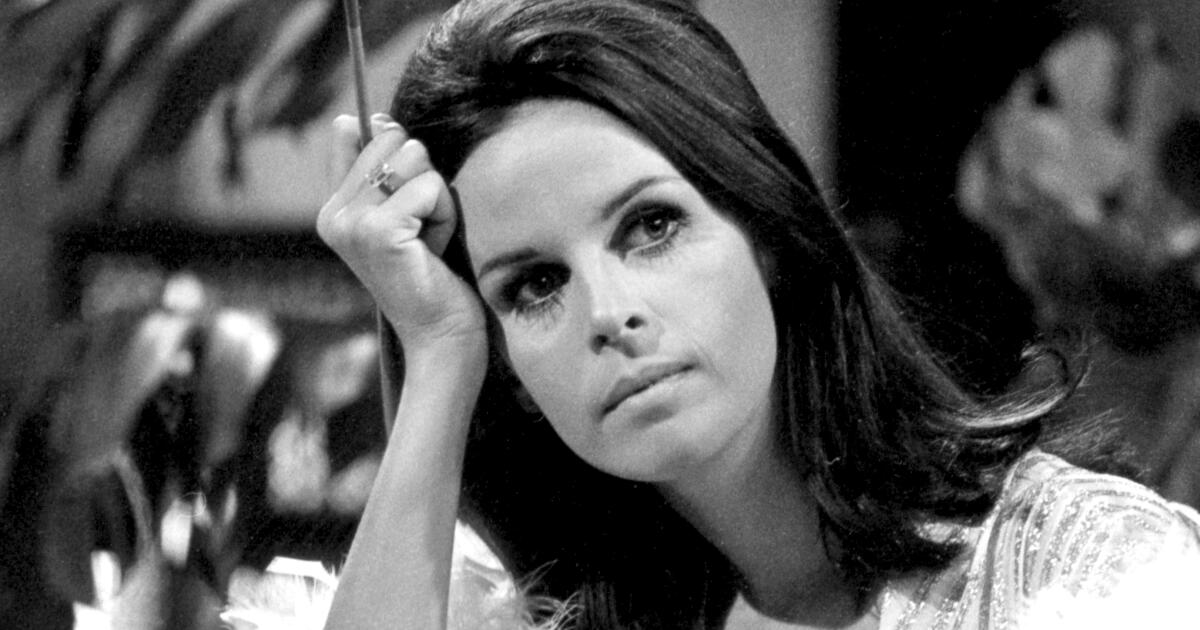
Claudine Longet, the French-born star and ex-wife of crooner Andy Williams who became notorious for the fatal shooting of Olympic skier Vladimir “Spider” Sabich, has died. She was 84.
Her death was confirmed by her nephew, Bryan Longet, who posted a social media tribute on Thursday. Translated from French by The Times, he wrote, “You have been a true inspiration in my life and you will always be. … Another star in the sky. Thank you for everything, my aunt.”
Born in Paris on Jan. 29, 1942, Longet was the daughter of a doctor and an X-ray manufacturer. From a young age, she showed a knack for singing and dancing and envisioned her name on the marquee. In 1960, when she turned 18, American impresario Lou Walters (father of Barbara Walters) saw Longet dancing on French television and hired the ingénue to join the Tropicana casino’s flashy new production. She bid Paris adieu and sashayed to Las Vegas, where she starred in the Folies Bergère revue.
While working as a showgirl in Sin City, Longet met then-fellow Vegas performer Andy Williams one evening when her car broke down on the side of the road. Williams happened to be passing by as the young dancer was pushing her car down the highway with a friend, and Williams along with his manager stopped to help and was quickly charmed. The two were married on Christmas Day the following year, in 1961.
In 1962, Williams released “Moon River,” and the crooner’s career took off. The newlyweds left Las Vegas and moved into an oceanfront mansion in Malibu where they started a family, and over the next several years welcomed daughter Noelle and sons Christian and Robert, or “Bobby,” who was named after the couple’s close friend Robert F. Kennedy. Also in 1962, Williams’ eponymous variety show debuted and quickly became a hit. Longet was a regular on the show, and the family-oriented Christmas TV specials, often featuring the entire Williams clan, were a ratings juggernaut.
In addition to her regular appearances on “The Andy Williams Show,” Longet acted in television and film. Notably, the chanteuse captivated audiences singing Henry Mancini and Don Black’s “Nothing to Lose” in the 1968 comedy “The Party,” in which she played an aspiring actress. From 1967 to 1972, she released seven studio albums, five with A&M Records, including her debut single and album titled “Claudine,” and two with Barnaby Records. Her music was known for its breathy, lounge-pop quality, and she sang in both English and French.
By 1970, Williams and Longet’s marriage was on the rocks, and the pair separated. They officially divorced in 1975. The Emmy-winning host chalked it up to the pair growing apart. He told CBS’ “This Morning” during a 2009 appearance that he was never home. “It was all my fault, and I just didn’t take care of my marriage,” he said, noting that he regretted the split. The two stayed friendly afterward, and Williams stood by Longet when tragedy and scandal struck a year later, in 1976.
Longet met Olympian skier Sabich in Bear Valley at a celebrity skiing exhibition in 1972. There was an instant attraction between the two, and Longet relocated to Aspen, Colo., and ultimately moved into the pro skier’s ritzy Starwood chalet around 1975. On March 21, 1976, Longet shot Sabich in the abdomen with an imitation World War II .22-caliber German‐made pistol. Her daughter, Noelle, who was in the house at the time, testified that she heard Sabich yell out, “Claudine! Claudine!”
According to The Times’ archives, Longet told authorities that she found the handgun and asked Sabich how to use it. During Longet’s trial, Aspen Det. David Garms testified that Longet insisted the shooting was an accident. Garms said that Longet told him she’d pointed the gun at Sabich and then “jokingly said ‘bang, bang.’” She told investigators she thought the safety was on, and a ballistics expert said the safety did not work.
Longet was with Sabich in the ambulance when he died en route to the Aspen hospital. The “Love Is Blue” singer was subsequently questioned by investigators and charged with felony reckless manslaughter weeks later. She initially faced up to 10 years in prison. But in January 1977, after four days of testimony and 3½ hours of deliberations, Longet was acquitted of the felony charge and convicted of a misdemeanor charge of negligent homicide.
Ex-husband Williams accompanied Longet to her trial and told “This Morning” years later that he supported his ex-wife because he believed in her innocence.
“I did because I thought it was unfair,” he said. “I thought she was innocent. I thought it was an accident.”
During the trial, she testified in her signature French accent that she and Sabich were the “best of friends.”
“There were times over the four years that we would disagree. … [T]here would be times he would be a little bit offended by the attention I got and I would be a little bit offended by the attention he got, but we were the best of friends and we loved each other very much,” she told the court, per The Times’ archives.
Longet was sentenced to serve 30 days in jail “at a time of her own choosing.”
“There is not really much to say,” she told reporters outside the courtroom, per The Times’ archives. “Only that I have too much respect for living things to do that. I’m not guilty.”
The parents of Sabich filed a $1.3-million civil suit against Longet later the same year, but the case was settled out of court two years later. Longet was reportedly forbidden from speaking or writing about the shooting. As for her career in show business, she was finished.
The Sabich case became an absolute sensation in the media, not just in America but also globally, and Longet was internationally labeled Aspen’s femme fatale. Pop culture had its way with the incident as well. The Rolling Stones’ song “Claudine” was withheld from their 1978 album, “Some Girls,” because of legal considerations but was featured on the 2011 reissue of the album.
“You’re the prettiest girl I ever seen / I want to see you on the movie screen / I hope you never try to make a sacrifice of me, Claudine,” belted Mick Jagger in what may have been considered a diss track or a tribute, depending on whom you ask. “Nah ah / Don’t get, don’t get trigger happy with me, Claudine.”
In an April 1976 episode, “Saturday Night Live” also took aim at the deadly affair with a sketch titled “The Claudine Longet Invitational,” in which Chevy Chase and Jane Curtin play sports commentators who offer a play-by-play of a competition in which male skiers are “accidentally” shot by Longet as they race down the slopes.
The producers read an apology on air the following week.
Aspen attorney Ron Austin, who was on Longet’s defense team, left his wife shortly after the trial concluded to be with the embattled starlet. The two married in 1985 and remained in Aspen afterLonget’s conviction but also spent time at their second home in Hawaii. In 2023, the pair listed her $60-million Red Mountain Ranch estate, according to Robb Report.
Longet’s last known public appearance was in 2003 on the A&E channel’s Andy Williams “Biography” documentary, in which she recorded only voice-over. “To this day people stop me in the street and say how much they loved the Christmas show.”
Movie Reviews
‘Parallel Tales’ Review: Isabelle Huppert Is a French Novelist Spying on the Apartment Across the Street in Asghar Farhadi’s Weirdly Muddled Voyeuristic Head Game

Sylvie (Isabelle Huppert), the pivotal figure in Asghar Farhadi’s “Parallel Tales,” is a French novelist whose better days are behind her. She lives in a stately old Paris apartment that’s starting to fray at the seams, and her whole vibe is that of an analog crank. When she goes into writing mode, she lights up a cigarette, puts on her stodgy spectacles and sits down at her ancient Olivetti electric typewriter, which is clearly the same machine she’s been using for decades.
As she starts the writing process, she pecks at the typewriter a few letters at a time. It’s doubtful, however, that a veteran writer would sound like that — instead, the keys would be flying. It’s a minor but telling detail, since Farhadi is generally a stickler for authenticity. But in “Parallel Tales,” Isabelle Huppert, putting on overdone grouchy airs, seems to be playing less a real-world novelist than a stylized cornball-movie version of a Venerable French Author. The character seems not so much drawn from experience as plucked from a vat of pulp cliché. And that’s mostly true of the rest of the movie as well.
“Parallel Tales” is a very different sort of Farhadi film. It’s not the first project the fabled Iranian director has shot in France — that would be “The Past” (2013), which he made on the heels of his international breakthrough with “A Separation.” But though he had already begun the painful process of parting ways with Iran (in 2024, Farhadi vowed not to shoot another movie there until the ban against depicting women without headscarves was lifted), “The Past” was every inch a Farhadi film. It had his domestic psychodramatic intensity, and his flowing ingenuity.
The new movie, by contrast, is an inflated meditation on fiction and reality. It’s all about people spying on each other, which can be a good jumping-off point for a movie. And no one is saying that Farhadi has to stick to his familiar and often starkly artful mode of neorealist drama. But “Parallel Tales,” it’s my grim duty to report, is a meandering and rather amorphous mess. It’s a far-out parable of voyeurism and imagination, loosely based on the sixth episode of Krzysztof Kieślowki’s “Dekalog,” which was about a young man spying on a woman across the street and falling in love with her. But “Dekalog: Six” had suspense; “Parallel Tales” has longueurs.
As Sylvie starts peering through her small telescope at the fifth-floor apartment directly across from her, what takes place behind those windows is not what we expect. The place is a sound-effects recording studio, with three sound designers creating and dubbing aural effects — footsteps on a sandy beach, flapping bird wings — onto pieces of film footage. But the three are also involved in a love triangle: the curly-brown-haired Anna (Virginie Efira), who is romantic partners with the older head of production (Vincent Cassel), is seeing her younger co-worker (Pierre Niney) on the sly. We watch this and think: Okay, so what? But it turns out that the triangle we’re observing is already Sylvie’s fictionalized version of what she saw through the telescope.
Since Sylvie hasn’t exactly been taking good care of herself, her niece, Céline (India Hair), who owns half the apartment, sets her up with a young drifter, Adam (Adam Bess), who rescued Céline from a subway pickpocket. The doleful, scruffy Adam cleans the apartment (though he also shepherds a family of mice), and he then takes Sylvie’s abandoned manuscript — the fictional scenario we’ve been watching — and palms it off as his own. He gives it to a woman named Nita (also played by Virginie Efira, now blonde), who he meets at a coffeeshop. He wants her to read the manuscript, even as the film now segues into showing us the real version of what’s been going on in that apartment. (It’s less racy, though it still involves a lurch toward adultery.) Are we having brain spasms yet?
The most baffling dimension of “Parallel Tales” is how little life there is to the characters outside of these fiction-vs.-reality gambits. It’s not that the actors are bad. Vincent Cassel invests Pierre with a no-longer-young sense of regret, and Virginie Efira, in her double role, makes you feel the sharpness of Nita’s pain in contrast to Anna’s more libertine ‘tude. Yet none of this comes to much. When Nita rebuffs the advances of the lightweight cad Christophe (who’s Pierre’s brother), that’s the one focused emotion in the movie — a woman rejecting workplace harassment. No problem there, but it feels like a different film.
In an abstract way, Farhadi is looking back to films like “Rear Window” and “Blow-Up” and “The Conversation,” as well as De Palma’s “Blow Out” and “Body Double.” But those movies, in different ways, were about trickery and deceit, about drawing the audience into a head game of perception. (“Blow-Up,” 60 years ago, was one of the movies that made art cinema fun, while “Body Double,” preposterous as it is, is vintage guilty-pleasure De Palma.) In “Parallel Tales,” Farhadi doesn’t play the audience so much as stymie it with the obliqueness of his storytelling. The movie manages to be rigorously muddled despite not being all that complicated. Maybe that’s because the tales it tells are parallel, all right. It feels like they’re competing to underwhelm you.
-

 Kentucky2 minutes ago
Former Kentucky education commissioner to leave California superintendent job
-

 Louisiana8 minutes ago
Oil donors cling to Cassidy in Louisiana primary
-

 Maine14 minutes ago
A Maine couple known for restoring cabins on TV is opening an inn of their own – The Boston Globe
-

 Maryland20 minutes ago
Prominent immigrant rights group endorses Ferguson to remain as Senate president
-

 Michigan26 minutes ago
Michigan State roster reset: All eyes on Jeremy Fears Jr.’s return
-

 Massachusetts32 minutes ago
Hacky sack is suddenly cool again – The Boston Globe
-

 Minnesota38 minutes ago
Support from DC for Michele Tafoya’s Senate run splits Minnesota GOP
-

 Mississippi44 minutes ago
Your Mississippi forecast for Friday, May 15 – SuperTalk Mississippi