Entertainment
Culver City’s Wende Museum of the Cold War announces major expansion in Hawthorne
The Wende Museum of the Cold War announced on Saturday that it plans to build a $16-million expansion in Hawthorne.
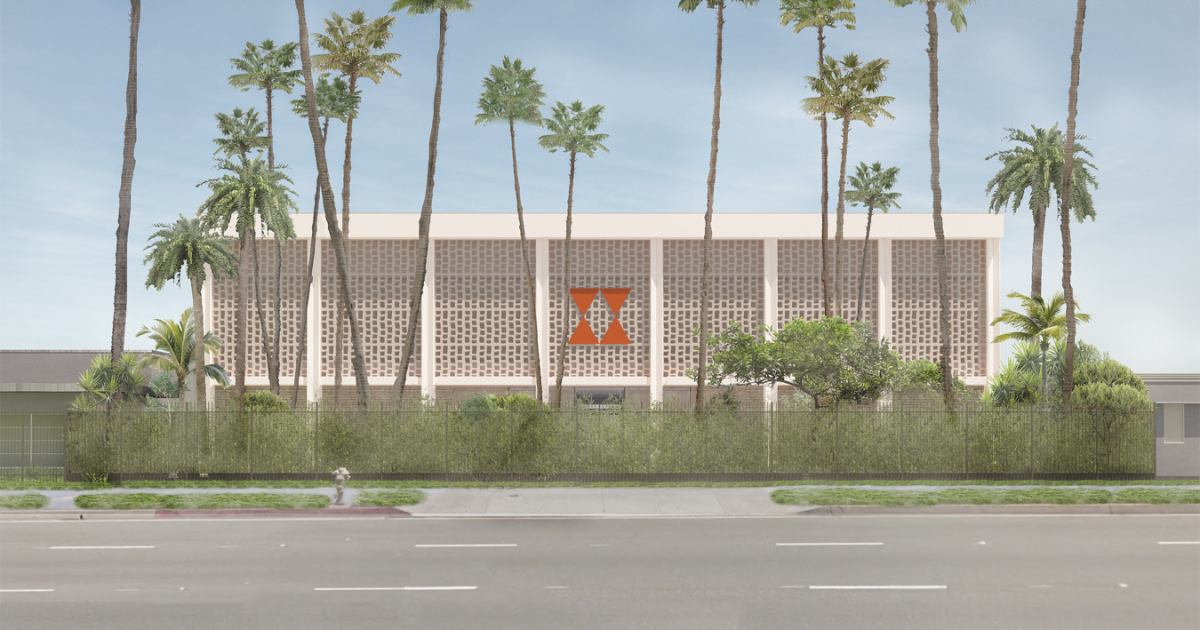
The Culver City museum has purchased a historically significant midcentury modern building in Hawthorne, which it plans to transform into a research institute and interactive storage facility for its collections — a “living archive,” as it’s calling the facility.
The Wende plans to debut the space in spring 2028.
“In the museum world, there’s typically public space and storage space — meaning dead storage,” Wende founder and Executive Director Justin Jampol said in an interview. “And this living archive is a hybrid that combines both. It houses the collections and makes them accessible for discovery.”
The 24,000-square-foot building was erected in 1965 by shopping mall pioneer and developer Ernest Hahn to serve as his corporate headquarters. It was designed by movie theater architect George Nowak, who also designed the Writers Guild Theater.
The Wende plans to renovate the building, adding a 7,000-square-foot extension, with flexibility to further expand in the future. The facility will include state-of-the-art, climate-controlled storage for the museum’s more than 250,000-object collection of paintings, sculptures, photographs, tapestries and Cold War-era ephemera from the Soviet Union, East Bloc, China and other countries.
Interactivity, however, is the goal: so there will be spaces for “respite and inspiration,” Jampol said, such as a “scholar’s garden,” reading rooms and a library with a community learning lab and free coffee for visitors.
“The idea is to make it as engaging and comfortable as possible,” Jampol said. “Most archives are places that are very uncomfortable and uninspiring — think fluorescent lights blinking in a basement. The idea here is to open this up in a way that makes people want to be here. And focus on the content and not the space itself. We’re trying to create an experience that makes visitors want to go on an adventure.”
The Glorya Kaufman Community Center at the Wende Museum debuted this past fall.
(Stella Kalinina / For The Times)
The Wende’s Collections Department will be headquartered in the new building. The facility will also house a conservation center for endangered objects and paper archives, and will feature a digitization and imaging lab that will make the collections available online, free of charge.
It will also include reading rooms and research offices for up to 100 visiting scholars or artist fellows annually.
“The collections, instead of being hidden in a box, will be on full view,” Jampol said. “When you walk through, you won’t see boxes. You’ll see vases, tapestries, ceramics and more.”
Construction on the building, at 2311 W. El Segundo Blvd., starts May 15. Funds for the project came from the Arcadia Fund, the Kaufman Foundation and the Ralph M. Parsons Foundation, among other capital supporters.
The Wende Museum in Culver City opened its doors in 2017 inside a former 1949 atomic bomb shelter. It now draws about 25,000 visitors annually, who come to take in four exhibitions and more than 60 public programs. Admission is free.
Rapid expansion has been a hallmark of the Wende of late.
In September, it debuted a $17-million culture and wellness center offering free yoga, meditation, sound baths and therapy. The 7,500-square-foot facility was made possible with funding from the late philanthropist Glorya Kaufman who died a month before the building opened to the public. It’s called the Glorya Kaufman Community Center.
The Wende’s Glorya Kaufman Community Center includes a century old A-frame theater, an old MGM prop house, for free culture and wellness events.
(Stella Kalinina / For The Times)
In February, the Wende bought a three-bedroom house built in the 1940s adjacent to the museum’s campus that will be used as a live-work space for photographers in residence. It will include a community space for photography workshops and a post-production studio. The Nikita Foundation and the Victor Family Foundation provided funding.
It debuted a tiny home on its campus last fall, nicknamed “The Stevie” after donor Steve Markoff. It’s used for cross-disciplinary artist residencies.
A facility for interactive museum storage and research is not a new concept in Los Angeles.
The Autry Museum of the American West — after merging with the Southwest Museum of the American Indian in 2003 and since stewarding its collection of Indigenous art and artifacts — debuted a $32-million, 100,000-square-foot facility in Burbank in October 2022.
The so-called “Resources Center” was built to house, conserve and care for both museums’ collections in a state-of-the-art, climate-controlled and fire-safe environment. It also serves as a research destination for scholars, artists, tribal representatives and others to study the collections.
Jampol said that the project will enable the Wende to serve a wider swath of visitors, from specialists to the general public, and to venture outside of Culver City to engage other communities.
“It’s about making the collections both safe and accessible,” he said. “We looked to the Autry for inspiration alongside the V&A East in London — they both invite people in from the community, alongside scholars, to explore the collections. It’s the democratization of art — I love the ethos and spirit of that.”
Movie Reviews
‘Mortal Kombat II’ is an Entertaining Mess of a Film – Review
We went to see Mortal Kombat II in theaters and wow do we have thoughts about it.
*warning: minor spoilers below for Mortal Kombat II
I’ll freely admit that I was excited to see the sequel to Mortal Kombat (2021). That movie was pure dumb fun from start to finish, and most agreed that as long as a sequel kept that same tone, it would likely be equally fun to watch.
Well…I have good news and bad news.
The good news is: Mortal Kombat II is indeed filled with a lot of dumb fun.
The bad news: the parts that aren’t dumb fun are really, really bad and awkward.
Mortal Kombat II
Directed by: Simon McQuoid
Starring: Karl Urban, Adeline Rudolph, Jessica McNamee, Josh Lawson, Ludi Lin, Mehcad Brooks
Release Date: May 8, 2026
Mortal Kombat II is set up sometime after the events of the 2021 film, with the evil Shao Kahn set to call for the final Mortal Kombat tournament that will decide the fate of Earthrealm, as one more defeat means Shao Kahn and Outworld will gain total control. Lord Raiden, meanwhile, is in search of the last champion Earthrealm needs to compete in the tournament and has just located him: Johnny Cage, a washed up actor and martial artist who is way past his prime and very cynical about everything.
Let me just start by saying that as much fun as this film is for the most part, Mortal Kombat II could’ve been so much better. The 2021 film proved that it’s possible. Tell a coherent plot, throw in a heavy amount of fighting scenes that pay homage to the video games, and you really can’t go wrong.
Where Mortal Kombat II fails, for the most part, is in trying to tell a coherent plot. Whereas the first film took the time to introduce us to Cole Young and his struggles, this film barely introduces Johnny Cage before we are tossed headlong into the tournament portion of the story. It genuinely felt like about an hour of exposition was missing, exposition that could have better rounded out Johnny’s character and how he feels about being suddenly responsible for the fate of Earthrealm. There are hints of some of these things, but it always feels like something is missing.

Speaking of Cole Young, this sequel, to put it bluntly, did him dirty. Given his suspicious absence from most of the promo materials, it was heavily suspected Cole’s story was not going to end well, but for goodness’ sake it didn’t have to go like that. I genuinely liked Cole by the end of the 2021 film and here he was barely more than a glorified extra. I don’t know what the film writers were thinking, but treating the main protagonist of the previous film in this way is not a good look.
Then there’s the downright uneven tone of the story. The portions with Shao Kahn are, quite rightly, dark and deadly serious. Shao Kahn is set up as an absolute monster and you feel that every second he’s on the screen. But the problem is the film will cut from a moment of brutality to a moment of awkward humor that feels very out of place. Most of these come from Josh Lawson, who is back as Kano in a manner that could’ve been epic but feels like it was thrown together just because the writers could.

I’m not saying a Mortal Kombat film can’t be funny or have moments that are funny, but the humor here just felt…off…or just downright awkward.
It wasn’t all bad. Mortal Kombat II had a number of things that were done right and kept this film from being a complete disaster. The most important of these were, as you might expect, the fighting scenes. As in the prior film, Mortal Kombat II paid homage to the video game with a number of combat scenes that felt like they came right out of the video game, right down to the way the camera panned around to show the two combatants squaring up to each other.

All of the fight scenes were great, but my two favorites had to be the scenes with Kitana and Shao Kahn respectively. Shao Kahn, as mentioned before, is set up as this terrifying being whose evil knows no bounds. He feels like he stepped right out of the video game and I couldn’t have asked for a better interpretation.
I’m equally thrilled with how Kitana’s story is presented. Kitana has been my favorite Mortal Kombat character for years and Adeline Rudolph plays her to perfection. The film made sure to give Kitana her iconic fan weapons and I love how they were used. Forgive the minor spoiler but those fans are responsible for some of the most brutal deaths in the film.
At the end of the day, you’ll likely leave the theater feeling entertained by Mortal Kombat II. The fight scenes alone are worth the price of admission, and Kitana’s story is very well told. Just…don’t think too hard about the rest of it.
Movie Reviews
Mortal Kombat 2 Movie Review: Simon McQuoid’s Latest Is A Breezy, Bloody, Sometimes Baffling Time
Warner Bros. has a new movie to put in the ring. Mortal Kombat II, the sequel to the action-filled 2021 video game adaptation that at the very least got the gore right, is here. It’s a breezy, bloody entry that leans heavily on video game characters and logic, a move that should satisfy franchise fans, even if the actual narrative is too weak to win over new converts.
We’re in an era of regular, variably solid video game adaptations. Series like The Last of Us and Fallout, and films such as Sonic the Hedgehog and Werewolves Within, are exemplary, with stories that capture much of what works about the games. On the other hand, adaptations like Borderlands show that it’s still possible to get one wrong. The stakes remain high.
When director Simon McQuoid’s Mortal Kombat graced the screens and HBO Max, it was received with a sizable difference between fans (currently 85% on Rotten Tomatoes with over 5,000 verified ratings) and critics (55% with 299 factored in). It was refreshing to have fights that didn’t skimp on the game series’ violence, but some muddled plotting, a failure to fully capture the game’s feel, and centering the film on an original character (rather than a fan-favorite from the games) were ill-received.
Mortal Kombat II is a bigger and more faithful adaptation in many ways. The tournament actually feels deadly, and many of the fight sequences are sufficiently bloody to accurately reflect the games. The actual narrative falls apart somewhat when you think too hard about it, but it largely works, and certain characters (Kano, Johnny Cage) steal every scene they’re in. If you like your movies bloody with a side of silly, you’re in luck.
Mortal Kombat 2 Has Stellar New Additions
Mortal Kombat II doesn’t waste time in setting the stakes, with an opening fight between Eternia’s King Jerrod and Shao Kahn (Martyn Ford). The helmeted tyrant Kahn’s violent victory allows him to raise Jerrod’s daughter, Kitana, as he comes to rule Eternia thanks to his tournament victories. That backstory sets up the complex journey of adult Kitana (Adeline Rudolph), who fights for Kahn alongside longtime friend Jade (Tati Gabrielle), but has understandable reservations.
Another major element of this iteration is the addition of washed-up action star Johnny Cage (Karl Urban), who is recruited to fight for Earthrealm despite lacking powers. Cage has to fight under the tutelage of Lord Raiden (Tadanobu Asano), alongside mainstays including Sonya Blade (Jessica McNamee), Jax (Mehcad Brooks), Cole Young (Lewis Tan), and Liu Kang (Ludi Lin). Our heroes have to defeat Shao Khan’s warriors to save Earth, all the while preventing him from acquiring an amulet that would render him immortal.
Urban is a stellar addition to the series, with a huge and charismatic personality that fits Johnny Cage and is fun to watch onscreen. Josh Lawson’s dirtbag mercenary Kano gets some fantastic scenes here, and the two add a lot of charm that some other characters may lack. Adeline Rudolph is empathetic and believably tactical as Kitana. Gabrielle’s Jade isn’t given enough key scenes to shine, but there’s clear potential for the character in future iterations.
Baraka (CJ Bloomfield) isn’t the deepest character, but Bloomfield makes him memorable, and his relationship with Johnny Cage is always a fun watch. While Tan’s Cole Young has something to do in Mortal Kombat II, he’s much less of a focus here, as are returning favorites like Hiroyuki Sanada and Joe Taslim’s Bi-Han.
There are new characters, many moving parts, and a narrative that’s more a string of battles than a traditional Hollywood tale, leaving some favorites underutilized. Because of the need to introduce new characters, most of the existing ones are relatively one-note. Kitana and Johnny Cage get ample screen time, even character arcs, and Kano, Baraka, and some others do get standout moments. Most characters, however, remain one-note figures.
Mortal Kombat II Doesn’t Fully Make Sense, but It Mostly Hits Hard
While Mortal Kombat 2 doesn’t have the biggest fights you’ll see this year (that would be The Furious), it does have quite a few memorable ones with great finishers. The final fight with Shao Kahn has a solid ending, and many get standout moments as the movie proceeds. Kitana, Baraka, Liu Kang, Hanzo Hasashi/Scorpion, and Kung Lao all get particularly unforgettable moments.
A more faithful structure also makes this round’s fights feel a bit more like one is playing an actual Mortal Kombat game, which is welcome. Most are well-paced, though a few could use tighter editing. Unfortunately, the story is more than a little muddled. Shao Kahn wants a Maguffin to be unkillable, sure, but if the tournament rules allow an invasion of Earthrealm if and only if Earth’s champions defeat Outworld’s five times, isn’t an immortality-granting amulet the equivalent of steroid use? Where are the referees?
Some characters (like Jade) change allegiances almost at random, with no consistency. There are several moments when characters make choices that don’t make sense, or at least we don’t have enough information to understand them.
Altogether, Mortal Kombat II learned from quite a few of the issues the first film had. It swapped out protagonists for one with a flashier personality, better replicated the game’s elements and structure, and had kills to boot. That’s largely enough to succeed for the kind of film it is, but it still has issues.
There are too many characters to develop in any interesting way, the tournament rules and character plans don’t make total sense, and the pacing is quick in some moments and slow in others. Nonetheless, it’s a delightful outing and feels just like a big ol’ violent video game (complimentary).
Final Rating: 7/10
Mortal Kombat 2 is playing in theaters.
Entertainment
FCC drops trove of viewer complaints over Bad Bunny’s ‘disgusting’ Super Bowl halftime show
Bad Bunny’s halftime show at this year’s Super Bowl was largely embraced as a milestone for Latin music and Puerto Rican culture on America’s most prominent pop-cultural stage.
Not everyone thought so, though.
The Federal Communications Commission has released a massive trove of viewer complaints against the musician, the show’s broadcast partner NBC, and the NFL.
Many of them expressed outrage at the supposed bawdiness of Bad Bunny’s Spanish-language lyrics and dancing on a broadcast watched by children.
“That was the most disgusting inappropriate show. I had to make all of my children go into the next room!” wrote one traumatized Las Vegas viewer. “The none use [sic] of inappropriate language should stand no matter what language it’s in. This is the most disturbing thing I’ve witnessed on live TV in a long time.”
“NFL halftime show showed 2 men in act of intercourse while behind a pickup truck door,” wrote one aghast Ohioan. “The ratings for NFL [sic] made it safe for my children to watch but they witnessed this and became disturbed.”
Another viewer from Charlotte, N.C., who, to their credit, seemed familiar with Bad Bunny’s catalog, wrote that they “take issue with the vocal performances of ‘Safaera,’ which is a track widely known for explicit sexual references and graphic lyrical content, and ‘Yo Perreo Sola,’ which had choreography featuring overtly sexualized movements, including widespread twerking, grinding, pelvic thrusts and other sexually suggestive conduct.”
Those viewers were probably not sated by the FCC’s February review of the performance, which found that the songs’ lyrics had been appropriately altered for the broadcast.
Rep. Randy Fine (R-Fla.) had called for the FCC to investigate the broadcast. ”What Americans witnessed during the Super Bowl halftime show with Bad Bunny was despicable and never should be allowed to be shown on television again,” Fine told the New York Post.
Many of the viewer complaints mirror President Trump’s post-show social media criticism, calling the performance “one of the worst EVER!”
“Nobody understands a word this guy is saying, and the dancing is disgusting, especially for young children that are watching from throughout the U.S.A., and all over the World,” the president wrote at the time.
Just before the Super Bowl, Bad Bunny had won the Grammy for best album with “Debí Tirar Más Fotos,” and joined a wave of artists speaking out against violent ICE raids in speeches at the ceremony. The superstar demurred on performing in the continental U.S. because of the raids, instead performing a lengthy Puerto Rican residency.
-
Wisconsin2 minutes agoHow many homes could be built in Northeast Wisconsin in 2026?
-
West Virginia8 minutes agoWest Virginians weigh in on two races for unexpired terms to state Supreme Court – WV MetroNews
-
Wyoming14 minutes agoWyoming People: ‘Man Of The Century’ John Wold Pioneered Modern U.S. Mining
-
Crypto20 minutes agoCLARITY Act Poll: 52% Support, 70% Say US Should Have Passed Crypto Legislation
-
Finance24 minutes ago
WHO says its finances are stable, but uncertainties loom – Geneva Solutions
-
Fitness32 minutes agoTry the windmill exercise and thank me later – it ‘targets your obliques from every angle’ and improves core strength more than Russian twists
-
Movie Reviews44 minutes ago‘Mortal Kombat II’ is an Entertaining Mess of a Film – Review
-
World56 minutes agoTucker Carlson on ‘SNL’ Critiques the Met Gala and Slams the ‘Michael’ Movie for Ignoring ‘The Part When He Was a White Man’