Business
Commentary: Why isn’t the stock market freaking out more over the Iran war? Here’s why


Since the end of February, the three major stock market indices — the Standard & Poor’s 500, the Dow Jones industrials and the Nasdaq composite — have fallen by a few percentage points.
One might ask: That’s all? Doesn’t the market know there’s a war on?
Yes, the stock market knows. It just doesn’t care as much as you might think it should.
It feels like this drawdown should be worse than this given everything going on in the world.
— Ben Carlson
History tells us that we shouldn’t be all that surprised. Although geopolitical events like the launch of military actions tend to rattle the securities markets in the short term, investors eventually shift to the long view, assuming that these conflicts will eventually be resolved and the door reopened to bullish sentiment.
The major downturns of the past, such as the crashes of 1929, 2000 and 2008, have been caused less by external events than by business and investment internals, such as threats to economic structure — over-leveraging in the first, the dot-com crash in the second and the housing crash in the third. Those were genuine crashes, not short-term downturns.
The Iran war hasn’t yet taken on the coloration of an economic threat, although that bulks large on the horizon if the disruption of oil supplies created by the closing of the Strait of Hormuz continues or tightens or the Middle East energy infrastructure sustains more damage.
Indeed, two of the most severe downturns of recent times are associated with oil — the Arab oil embargo of 1973, following the Yom Kippur War, which brought the S&P 500 down by more than 16% over a period of about six weeks, and Iraq’s seizure of Kuwaiti oilfields in 1990, which caused a 16% drop in the S&P over about two months.
Let’s take a look at the condition of the stock market since the U.S. attacks on Iran began on Feb. 28, and then place it in the context of market behavior after other major events, dating back to the start of World War II.
From Feb. 28 through Thursday’s trading close, the S&P lost 4.31%, the Dow, 5.05% and the Nasdaq, 3.57%. Those declines feel ugly, in part because they’ve occurred over a short time frame of about five weeks. But in the grand scheme of things, they’re modest.
“It feels like this drawdown should be worse than this given everything going on in the world,” Ben Carlson of Ritholtz Wealth Management posted last week. But Carlson observed that 5% pullbacks are common, in good times and bad — only three years since 1990 have gone without one.
There were two each in 2023, 2024 and 2025, which all ultimately delivered double-digit S&P returns. None, obviously, came close to the 10% pullback known as a correction, which by Carlson’s reckoning occurs on average every 1.8 years.
The latest pullbacks have come with the stock market percolating along at historically generous valuations. This year, the S&P’s price-earnings multiple has hovered around 30x, well above its historical average of less than 20x. That alone should have had investors bracing for a reversal or even a correction.
When similar events occur during bull markets, external events are often a trigger rather than a cause. Investors look for reasons to take profits, even though the rationales may have nothing to do with the market action.
To place things in a longer perspective, let’s review how the stock market has reacted to great global events of the past. (Thanks to Ryan Detrick of the financial advisory firm Carson Group for compiling these statistics.)
The Pearl Harbor attack of Dec. 7, 1941, brought the S&P down by 11% over the following three months — but one year later the market was up by 4.3%. One month after Richard Nixon’s resignation on Aug. 9, 1974, the market was down by 14.4%; one year later it was up by 6.4%. The market entirely shrugged off the Cuban missile crisis, the Kennedy assassination, the Hamas attack on Israel on Oct. 7, 2023, and Russia’s 2014 annexation of Crimea and its 2022 invasion of Ukraine; none was associated with a market decline over the following month.
Even when events did precede a market decline, stocks often recovered within weeks or months. North Korea’s invasion of the South in 1950, launching the Korean War, took the market down 12.9% over the next two weeks, but as Kelly Bogdanova of RBC Wealth Management documents, it made up the loss over the next 56 trading days. Similarly, the Russian invasion of Ukraine in February 2022 is blamed for a 7.4% decline over the following two weeks, but the market broke even 27 trading days later.
Bogdanova notes that after the 1990 Kuwait invasion, which knocked the market down by 16% over seven weeks, the market didn’t break even for an additional four months. But that was oil talking.
The current market environment may be unique, because it’s entirely in the hands of one reckless individual. As the late Michael Metz of Oppenheimer & Co. taught me, the stock market typically rises in times of economic growth and economic downturns, as long as investors know where things stand on the turn of the wheel.
What they hate is uncertainty, and no one revels in squeezing uncertainty until it screams for mercy like Trump. Consider how the market got whipsawed by his announcement of “Liberation Day” tariffs, a faux-protectionist stunt that took place on April 2, 2025, and therefore marked its one-year anniversary Thursday.
The draconian tariffs were announced, amended, partially withdrawn, reimposed, etc., etc., until investors got queasy on the merry-go-round. The Supreme Court finally put a stop to the shenanigans on Feb. 20.
One month after the initial announcement, investors still didn’t know what to make of it. The S&P was virtually flat, the Dow had lost 2.15% and the Nasdaq was up 2.1%. Since then, investors have learned enough about Trump’s decision-making to disregard the chatter. (This is the TACO trade, for “Trump Always Chickens Out,” in action.) As of Thursday, the S&P had gained 13.7% since Liberation Day, the Dow was up 9.1% and the Nasdaq was up 19.3%.
The Iran war is driving a whipsaw all its own. The market has been rising and falling in accordance with whether investors buy into Trump’s optimism or grow downcast at the absence of any endgame, a judgment that can change minute by minute. But it has remained in a tight range of 3 to 5 percentage points.
The latest week provides a good illustration: Tuesday saw shares turn in their best day in months, with the Dow gaining 1,125 points, or 2.49%, and the other indices roughly matching its performance.
But on Thursday, the stock index futures markets plummeted after Trump’s vacuous address to the nation, ostensibly due to disappointment that he didn’t provide an ending date or show that he knows what he’s doing. Yet investors didn’t show the same anxiety once trading started, sending the indices into a sort of fugue state. The S&P gained a meager 7.37 points, or 0.11%, the Dow lost 61.07 (0.13%) and the Nasdaq gained 38.23 points (0.18%), all on volume a fraction of what it has been in recent weeks. The trading range held.
It’s possible, of course, that the market will be stirred out of its slumber by a major development. A ceasefire, say, or something bad. Or that the Iran war will transition to a new phase that makes it resemble the oil embargos of the past rather than a transitory disruption of the status quo. We won’t know until it happens.
Until then, the average investor’s choice is between moving everything into cash, or strapping in for the ride.



One of Los Angeles’ most influential home builders, KB Home, is relocating its headquarters out of state, becoming the latest high-profile firm to do so.
The company, which has been based in Los Angeles since 1963 and helped build its sprawling suburbs, is moving its main office to the Phoenix metropolitan area by spring 2027, in part to reduce costs and place its employees in a more affordable housing market.
KB Home touted Arizona’s business-friendly environment as a reason for the move, but said it still plans to maintain six operating divisions in California.
The move to Arizona will help accelerate KB Home’s growth and streamline operations, Robert McGibney, president and chief executive of KB Home, said in a news release last week.
“This move brings our teams together in a more collaborative environment, and Phoenix is the right place to do it,” McGibney said.
The company has deep ties to California, with more than 100 projects and tens of thousands of homes across the state. KB Home has opened nine housing communities in Southern California in the last six months and plans to open 10 more by the end of 2026.
The company’s shares, which have been falling this year amid concern about the property market, have climbed around 1% since it made the announcement late Wednesday. They closed little changed Tuesday at $51.93.
KB Home got its start in Detroit in the 1950s and briefly shifted operations to Arizona before settling in California by 1963. The company, which gets its name from the last names of its founders, Donald Bruce Kaufman and Eli Broad, rode the boom and helped shape the growth of Southern California.
KB Home quickly emerged as one of the top builders of affordable homes in the country, starting in the post-World War II boom, when growing families across the country were leaving crowded cities for the promise of rapidly emerging suburban neighborhoods such as the San Fernando Valley in Los Angeles.
With first-time buyers as their intended customers, the company’s innovations included lowering prices by building homes on slabs, instead of digging costly basements. It pioneered providing financing for buyers and 10-year limited warranties on their homes.
Broad became one of LA.’s most influential civic leaders, using his multibillion-dollar fortune, political clout and forceful personality to spur advancements in the public sphere, particularly in the arts.
Eli Broad stands inside the Broad, a contemporary art museum on Grand Avenue in Los Angeles, in 2015.
(Genaro Molina / Los Angeles Times)
He helped guide the redevelopment of Bunker Hill in downtown Los Angeles after it was cleared for urban renewal, and it was there that he built perhaps his greatest legacy: his namesake Broad Museum, which houses the extensive private contemporary art collection that he and his wife, Edythe, accumulated.
As a downtown booster, he and then-Mayor Richard Riordan were widely credited with getting the Walt Disney Concert Hall completed in 2003, raising more than $200 million to get the stalled Frank Gehry-designed project back on track.
In the late 1970s, he became the founding chairman of the Museum of Contemporary Art, and he bailed it out of a financial scandal three decades later with a $30-million grant.
KB Home’s California exit is the latest in a corporate exodus from the state. Some companies have relocated to avoid high taxes and strict regulations that complicate doing business in the state. The move has often been done to cut costs and improve profitability.
Two other California-bred companies connected to real estate, Realtor.com and Public Storage, announced similar moves to Texas in February.
Realtor.com, a real estate services company, was drawn to the Lone Star State for its unparalleled housing growth and affordable living, according to a news release. Public Storage, the largest self-storage business in the country, announced a similar move, citing interest in Texas’ growing talent and innovation.
The Golden State has remained the fourth-largest economy in the world, even as steep taxes and stringent environmental regulations push some firms to leave. Powerful companies across business sectors have expressed discontent with the state’s business environment.
Tesla and financial services firm Charles Schwab left the San Francisco Bay Area in 2021. Elon Musk’s SpaceX and X exited the state in 2024, along with Chevron, the oil giant that was started in California.
California has also lost residents, who are fleeing high housing costs for more affordable states such as Arizona, Nevada, Oregon, Washington and Texas.
California has led the nation in net out-migration for six consecutive years, according to U-Haul data. Los Angeles County lost 54,000 residents from 2024 to 2025, partially due to continued out-migration to other states.

Waze and Waymo are teaming up to help combat Los Angeles’ growing pothole problem.
The companies announced a program that will use Waymo’s self-driving cars to better detect potholes in the city. The data will be available to city officials through Waze’s traffic data-sharing platform, according to a news release last week.
The number of potholes in L.A. jumped early this year after an intense rainy season soaked the city. Residents reported over 6,700 potholes in January and nearly 5,000 reports were submitted in February and again in March, according to data from the city’s 311 tip line analyzed by the nonprofit newsroom Crosstown L.A.
The partnership is the most recent effort in Waymo’s long-standing commitment to making roads safer, Arielle Fleisher, the company’s policy development and research manager, said in the release.
The Waze navigation app will also use the data to warn users as they approach a pothole, the company said.
Drivers will then be able to verify the Waymo-identified pothole in real time.
L.A. has been slow to repair pavement issues on its 23,000 miles of streets in recent years.
The city repaired 310 miles of road in fiscal year 2025, which ended in June — a nosedive from the 850 miles it paved a decade before in 2015, according to Crosstown. Only 216 miles of street lanes were paved in fiscal year 2024.
The Bureau of Street Services, the department in charge of paving the city’s streets, is in communication with Waymo regarding the pilot program, said Dan Halden, a spokesperson for the city department.
“The bureau proactively manages the city’s streets, ensuring roadways are treated not only for repair but also to strengthen the street network and prevent future potholes,” he said.
Many cities, including L.A., rely on residents to report potholes through the nonemergency 311 service. The process provides an incomplete picture of road health, according to Waymo and Waze.
The pilot program intends to fill in reporting gaps and was developed based on feedback from city officials.
“We want to build on the safety benefits of our service by partnering with organizations and city officials to help improve the infrastructure we all depend on,” Fleisher said
The pilot program is running in five cities, including San Francisco, and has already identified 500 potholes. The program is also underway in the metropolitan areas of Phoenix; Austin, Texas; and Atlanta.
The companies plan to expand into cities with colder weather, which can worsen the pothole problem.
“Working together helps our community and makes our roads better for everyone,” Andrew Stober, the strategic partner manager at Waze, said in the release.
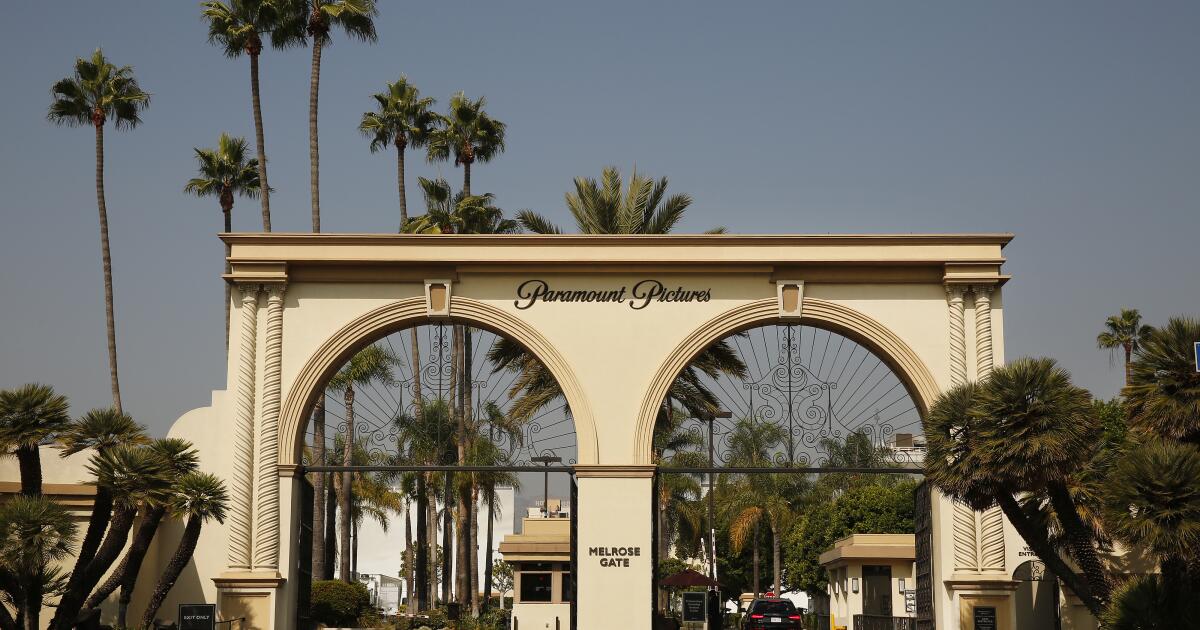
A constellation of stars are lining up against Paramount’s proposed takeover of Warner Bros. Discovery, expressing fears the blockbuster merger would devastate the industry and shrink production jobs.
The letter was signed by nearly 1,000 artists and movie creators, including such big names as Ben Stiller, Bryan Cranston, Noah Wyle, Joaquin Phoenix, Kristen Stewart and Jane Fonda, whose Committee for the First Amendment helped organize the campaign.
“This transaction would further consolidate an already concentrated media landscape, reducing competition at a moment when our industries — and the audiences we serve — can least afford it,” according to the letter. “The result will be fewer opportunities for creators, fewer jobs across the production ecosystem, higher costs, and less choice for audiences in the United States and around the world.”
Paramount, in a statement, pushed back against the artists’ concerns. Tech scion David Ellison and his team believes the blockbuster deal makes sense — particularly because of turmoil in the entertainment business, the company said.
“This is also a moment when the industry has been facing significant disruption—and the need for strong, creative-first and well-capitalized companies that can continue to invest in storytelling has never been greater,” Paramount said.
The Hollywood workforce has shrunk by more than 42,000 jobs between 2022 and 2024, according to a recent study. The economy has not bounced back following shutdowns due to the COVID-19 pandemic, followed by the twin labor strikes three years ago.
Thousands of film workers have been searching for work — but many of the big opportunities have moved abroad.
The strikes prompted studio executives to reset their output after previously spending big to build streaming services to compete with Netflix.
Two other consolidations led to widespread cutbacks: Walt Disney Co.’s acquisition of Fox entertainment assets in 2019, and Discovery’s takeover of AT&T’s WarnerMedia four years ago.
The resulting entity — Warner Bros. Discovery, led by David Zaslav — instituted deep cost cuts and thousands of layoffs to cut expenses because the firm was nearly drowning in deal debt — $43 billion — from the day Zaslav took the helm.
Paramount’s proposed takeover of Warner Bros. would result in a significantly higher debt load, $79 billion in debt, prompting concerns from the group and others about further downsizing.
Ellison, the 43-year-old son of billionaire Oracle co-founder Larry Ellison, is leading the effort to buy Warner Bros. Discovery to prop up Paramount, which the family acquired in August.
In late February, Ellison’s Paramount Skydance prevailed in a nearly six-month bidding war after Netflix unexpectedly bowed out when the elder Ellison agreed to financially back his son’s $111-billion deal.
“We have been clear in our commitments to do just that: increasing output to a minimum of 30 high-quality feature films annually with full theatrical releases, continuing to license content, and preserving iconic brands with independent creative leadership,” Paramount said, adding that such promises should ensure that “creators have more avenues for their work, not fewer.”
Warner shareholders will be asked to approve the merger April 23.
Ellison is pushing to wrap the deal up this summer.
“We are deeply concerned by indications of support for this merger that prioritize the interests of a small group of powerful stakeholders over the broader public good,” the letter said. “The integrity, independence, and diversity of our industry would be grievously compromised. Competition is essential for a healthy economy and a healthy democracy. So is thoughtful regulation and enforcement.”
The group urged California Atty. Gen. Rob Bonta and his fellow state attorneys general to sue to block the transaction.
Bonta has told The Times that his office is reviewing the transaction to see if it violates antitrust rules. Two historic movie studios, several streaming services and dozens of cable channels would be brought under one roof.
“Media consolidation has already weakened one of America’s most vital global industries,” the group said, “one that has long shaped culture and connected people around the world.”
Bonta’s office is leading the charge against another merger, TV station giant Nexstar Media Group’s $6.2-billion takeover of Virginia-based Tegna. Eight state attorneys general, including Bonta, have sued to block that deal. A judge is expected to rule on whether to issue a preliminary injunction later this week.

Powerful storms move through SE Wisconsin

RE-PATH West Virginia announces first grant funding from Hope in the Hills

Wyoming lake’s unnerving rusty-red water persists as experts offer explanations – WyoFile

Iran’s Cryptocurrency Toll System Emerges In The Strait Of Hormuz, Posing Economic Chalenges : Analysis | Crowdfund Insider

Morgan Stanley has a blunt message on S&P 500

Florida High School Football Rankings: Top 25 teams – Oct. 21

How old is Bo Nix? What to know about Oregon quarterback ahead of 2024 NFL Draft

Cleary's 21 help Le Moyne down Central Connecticut State 69-64 in OT

99th annual Pony Swim held in Virginia

Indiana Members Credit Union announced as new anchor tenant at Bottleworks District

Dem fundraising giant in the hot seat as GOP lawmakers demand answers over dodged subpoena

Fifth woman accuses former US lawmaker Eric Swalwell of sexual misconduct

Commercial Ships Transit Strait of Hormuz as U.S. Blockades Iran’s Ports

Video: How Stephen Miller Is Adjusting Trump’s Immigration Agenda

Biden DOJ weaponized FACE Act against pro-life Americans, 882-report alleges
-

 Atlanta, GA1 week ago
1 teenage girl killed, another injured in shooting at Piedmont Park, police say
-

 Georgia1 week ago
Georgia House Special Runoff Election 2026 Live Results
-

 Arkansas4 days ago
Arkansas TV meteorologist Melinda Mayo retires after nearly four decades on air
-

 Pennsylvania1 week ago
Parents charged after toddler injured by wolf at Pennsylvania zoo
-
 Milwaukee, WI1 week ago
Potawatomi Casino Hotel evacuated after fire breaks out in rooftop HVAC system
-

 Ohio11 hours ago
‘Little Rascals’ star Bug Hall arrested in Ohio
-

 Austin, TX7 days ago
ABC Kite Fest Returns to Austin for Annual Celebration – Austin Today
-

 World1 week ago
Zelenskyy warns US-Iran war could divert critical aid from Ukraine