Seattle, WA
Why the potential return of the Sonics to Seattle has never felt closer


SEATTLE — October 25, 2006. April 18, 2008. May 15, 2013.
March 25, 2026?
Those dates on the calendar — three in the past, one still yet to come — represent four seminal moments in the history of NBA franchise stability as it relates to Seattle.
The first three are dates fans of the green and gold would rather forget.
The first was the day Clay Bennett’s purchase of the SuperSonics was approved by NBA owners. The second, the day his relocation request to move the franchise from Seattle to Oklahoma City was given the OK, prior to the lawsuit and subsequent settlement that finally allowed the organization to bolt.
And the last was the day Chris Hansen’s efforts to purchase and relocate the Sacramento Kings were thwarted and voted down by the league.
Three moments that went to define the opinion of the NBA in the minds of many sports fans in the Pacific Northwest.
But that last date — Wednesday — might end up being a date that gets circled and remembered in a different light. The NBA Board of Governors will wrap up two days of meetings in New York on Wednesday with the expectation that the league’s owners will give the green light to start conversations with interested ownership groups who want to bring expansion franchises to Seattle and Las Vegas.
After years of posturing, and fits and starts, the return of the NBA to Seattle has never felt closer. But there are significant questions that remain. Here’s a look at a few of them with Wednesday’s meeting on the horizon.
Is this real or just another tease?
It sure seems real.
NBA Commissioner Adam Silver set the stage for what seems likely to happen next when he unexpectedly announced at the NBA Cup that expansion was going to be addressed sometime in 2026.
What comes from the meetings Tuesday and Wednesday is expected to be a vote of approval from the league’s owners allowing Silver to start holding substantive talks with potential ownership groups in Seattle and Las Vegas that could lead to a vote for expansion approval later this year. For the initial vote and for the final approval, 23 of the league’s 30 owners must vote in favor for approval.
Industry sources have told the Seattle Times that the buzz during All-Star weekend in Los Angeles last month was momentum quickly growing behind the thought that expansion was going to take place. With word emerging earlier this week of the pending vote, it would seem highly unlikely for that kind of information to leak without an expectation that a vote of approval is coming and would allow Silver to start the real conversations.
Assuming that approval comes, the next few months will be filled with conversations and negotiations, and ultimately a final decision on whether to formally expand or not. The vote for that could come as soon as the NBA Summer League owners’ meeting that’s held in Las Vegas in July. If there are delays or hiccups in the talks, the vote on formal expansion could be pushed to the annual BOG meeting held in September. Either way, as long as the vote is sometime this year and the league gives the thumbs up, the expansion franchise should be able to start in time for the 2028-29 season.
Is this going to become a bidding war?
That is one of the significant unknowns about how many parties are going to get involved in the bidding. To date, the only group locally to express their interest in pursuing expansion once the league gives the green light is the Kraken ownership group. They have decided advantages over any other group as a stakeholder in Climate Pledge Arena and the owner of the primary tenant that uses the facility. But questions remain about who all would be involved in any sort of investment group that would put forth a bid. To date, there have been behind-the-scenes conversations, but reserved public-facing campaigning by the Kraken group in jockeying for the lead position.
That has created a little bit of that uncertainty about whether another group could swoop in and get involved. The NBA likely wouldn’t mind that. The more groups, the more demand. The more demand, the more likely the expansion fee could be pushed upward.
Does the Seahawks sale factor into all of this?
Just like with the question about the bidding war, the fact the Super Bowl champions are for sale and in the same market adds a wrinkle to the situation around the NBA. The primary figures in each situation are likely committed to staying in their lanes — the folks who will be providing most of the money in the pursuit of each franchise likely should not change. But the money that comes in on the fringes could be a little in flux. Ultimately, it’s a small piece of the much larger pie.
The higher likelihood is whoever is committed at this point to being financially involved in either potential transaction isn’t changing.
What about the Sonics history?
Should this continue in the direction it seems to be heading, yes, the history of the SuperSonics would return to the expansion franchise. That was part of the settlement agreed to when the team moved to Oklahoma City in 2008 — when a team returned to the market, the 41 years of history that accompanied the Sonics time in Seattle would be reinstated and no longer claimed by the Thunder franchise.
Many of the stars of the past — Gary Payton, Shawn Kemp to name a pair — have stated they did not want their past accomplishments in Seattle recognized by the Thunder franchise.
What’s the Vegas angle to all this?
Nine months ago, the momentum behind Las Vegas wasn’t dead, but it certainly had quieted significantly. There was uncertainty about possible ownership groups, including whether LeBron James’ longstanding want to be involved with a Vegas expansion team was still there. There were major questions about the arena situation and if T-Mobile Arena — home of the NHL’s Golden Knights — would be the home of an NBA team as well or if a new building would be in the offering.
Clearly a couple of those questions have been answered. There appear to be at least two ownership groups positioned to be involved in the bidding, although the most prominent name linked to team ownership there seems to be out. The Athletic first reported and James later confirmed that he and his partners with Fenway Sports Group would not be involved in the bidding process for a Las Vegas franchise.
The other two groups, per reporting from the Las Vegas Review-Journal, are a group that includes Magic Johnson and another that includes Golden Knights owner Bill Foley.
The arena … well that remains perhaps the biggest unknown in Sin City. The NBA has indicated upgrades to T-Mobile Arena might be good enough to satisfy needs. But the building is already home to the Golden Knights, UFC and concerts, and there are valid concerns about congestion and potentially a viable path toward a new building. Whether a building could be ready in two years should the reported 2028-29 timeline be applied to both teams is unknown.


Three robberies occurred within 30 minutes of each other on Friday in Seattle, with law enforcement believing they were connected due to the timing, proximity, and similar descriptions of the suspects.
The first of three robberies began at 4:30 a.m. in the 200 block of Highland Drive near Kerry Park, when the Seattle Police Department (SPD) received reports of two men pointing guns at a man, SPD told KIRO Newsradio.
As officers arrived on scene, they located a 32-year-old man. The victim was sitting in his car when two suspects parked their car beside his and approached him with guns. The suspects ordered the victim to exit his vehicle and give them his necklace.
The victim claimed he had nothing of value, and the suspects ultimately fled in a dark sedan, possibly west on W. Highland Drive. The suspects were described as Black males, possibly in their late teens to 20s. Each suspect wore a mask and gloves, but the victim could not accurately recall what the suspects were wearing.
Second Seattle robbery came minutes after the first, this time at a store
Two minutes later, at 4:32 a.m., dispatch received a report of a robbery at a convenience store in the 1600 block of Queen Anne Avenue N. At the scene, officers made contact with a 25-year-old man.
The victims stated that two suspects entered the store, threatened them, and took money from two of the cash register drawers.
Soon after, the suspects fled the scene in a dark colored sedan. One suspect was described as a Black male in his 20s, roughly 6 feet, 2 inches tall with a medium build, wearing a mask, gloves, and dark-colored clothing. The second suspect was described as a Black male, 6 feet tall, with a medium build, wearing a mask, gloves, and dark-colored clothing.
Final robbery targeted a Beacon Hill convenience store with two victims
At 4:51 a.m., dispatch received a third report of a robbery, this time at a convenience store in the 4800 block of Beacon Avenue S.
Officers arrived and made contact with two victims, a 55-year-old man and a 24-year-old man. The SPD investigation revealed that one of the victims was in the cooler and the other was behind the counter when the two suspects first entered the store.
The victim in the cooler exited to see what was happening, then shut the door to the employee area and stayed there until it was safe to come out.
The 24-year-old victim was behind the counter when the suspect pointed a firearm at him. The suspect forced the victim to open the cash register and took the cash while the other suspect stood by the main entry door with a handgun.
Both suspects exited the store and fled the scene in an unknown direction. The first suspect was described as a Hispanic or Black male in his 20s, with a medium build, wearing a mask, gloves, and dark clothing. The second suspect was described as a Hispanic or Black male in his 20s, wearing a mask and gloves, with light colored pants and dark shoes.
No victims reported injuries as a result of each of the three robberies, and no suspects have been apprehended as of this reporting.
SPD’s Robbery Unit has been assigned to each case.
Anyone with information is urged to contact SPD’s Violent Crimes Tip Line at (206) 233-5000.
Follow Jason Sutich on X. Send news tips here.


The Mariners have made the first move in what’s sure to be a rip-roaring Trade Deadline season, acquiring INF Buddy Kennedy from the Giants in exchange for cash considerations.
Kennedy was designated for assignment by San Francisco earlier this morning as outfielder Heliot Ramos returned from the Injured List.
Advertisement
The 5’10” infielder has spent most of the season with Triple-A Sacramento, hitting well, even for the PCL. He’s in the 78th percentile for xWOBA, has a nearly identical K% and BB% (12.6%/12.1%) and rarely whiffs. This all has come out to a .322 batting average and a 152 wRC+. He’s made just a minimal impression in the bigs this season, with 8 plate appearances in 7 games, and zero hits.
Kennedy is likely to head to Tacoma. He can play 3B and 2B in a pinch, and will likely backfill Patrick Wisdom’s role if Wisdom is called up to take over right-handed pinch hitting duties from the currently-employed Rob Refsnyder.
The 27-year-old has not found much traction in the five years since his debut with Arizona in 2022. He’s amassed less than 200 plate appearances across 74 games, with a career 50 wRC+. On the mound, Kennedy has made one appearance this season, pitching one inning and giving up four runs, all earned.

Despite some overcast skies, thousands of Seattleites showed up in rainbow colors and bright smiles to celebrate the Seattle Pride Parade on Sunday.The march kicked off at 11 a.m. along Fourth Avenue in downtown, and wrapped up around 3:00 p.m. near Seattle Center.Seattle Pride traces its roots to 1974 and has grown into one of the nation’s largest LGBTQ+ celebrations, drawing hundreds of thousands of people each year. (KOMO)
-
 Business2 minutes ago
Rocket Lab enters satellite communications market with $8-billion deal
-
 Entertainment7 minutes ago
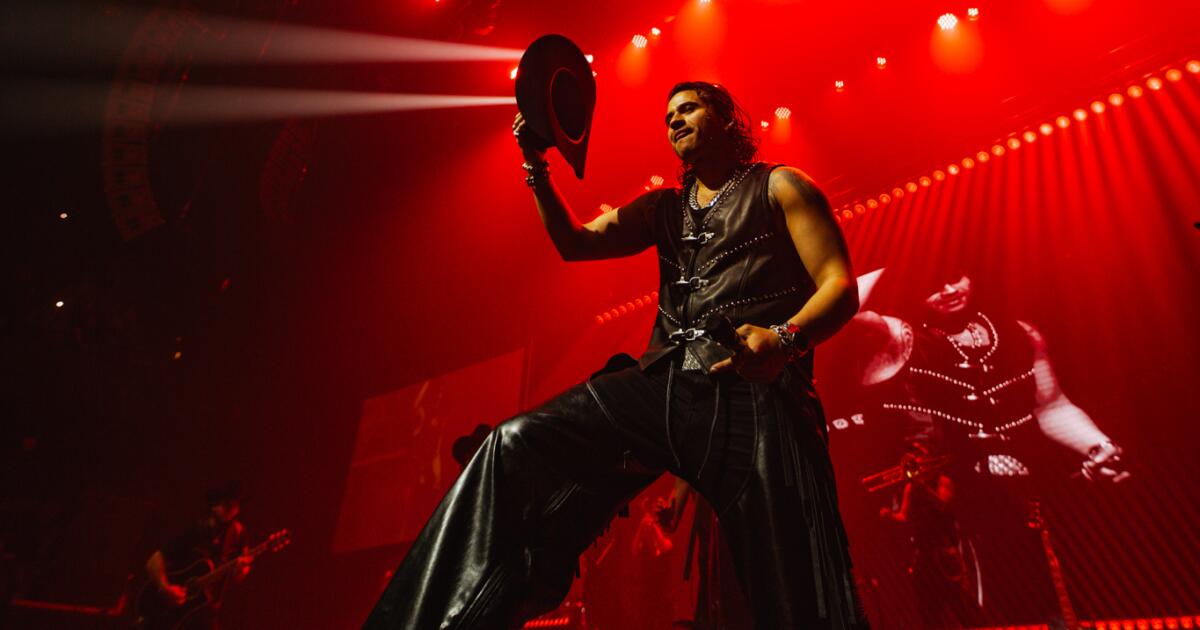
Jesús Ortiz Paz and Jimmy Humilde took their legal dispute to Instagram. Here’s the breakdown
-

 Lifestyle14 minutes ago
Inside Hearts On Fire’s Plan For a New Era of Diamond Jewellery
-
 Politics17 minutes ago
Anthropic partners with California to expand AI use by government workers
-
 Sports29 minutes ago
Lions release cornerback Terrion Arnold soon after judge sets his bond at $1 million
-

 World37 minutes ago
EU will ‘come to its senses’ on Israel, former Netanyahu adviser says
-
 News1 hour ago
Senate Ethics Committee dismisses complaint against Sen. Ruben Gallego
-

 New York2 hours ago
Read the Indictment of Malik Beasley

