West
California woman hospitalized with chemical burns after portable charger explodes while sleeping

NEWYou can now listen to Fox News articles!
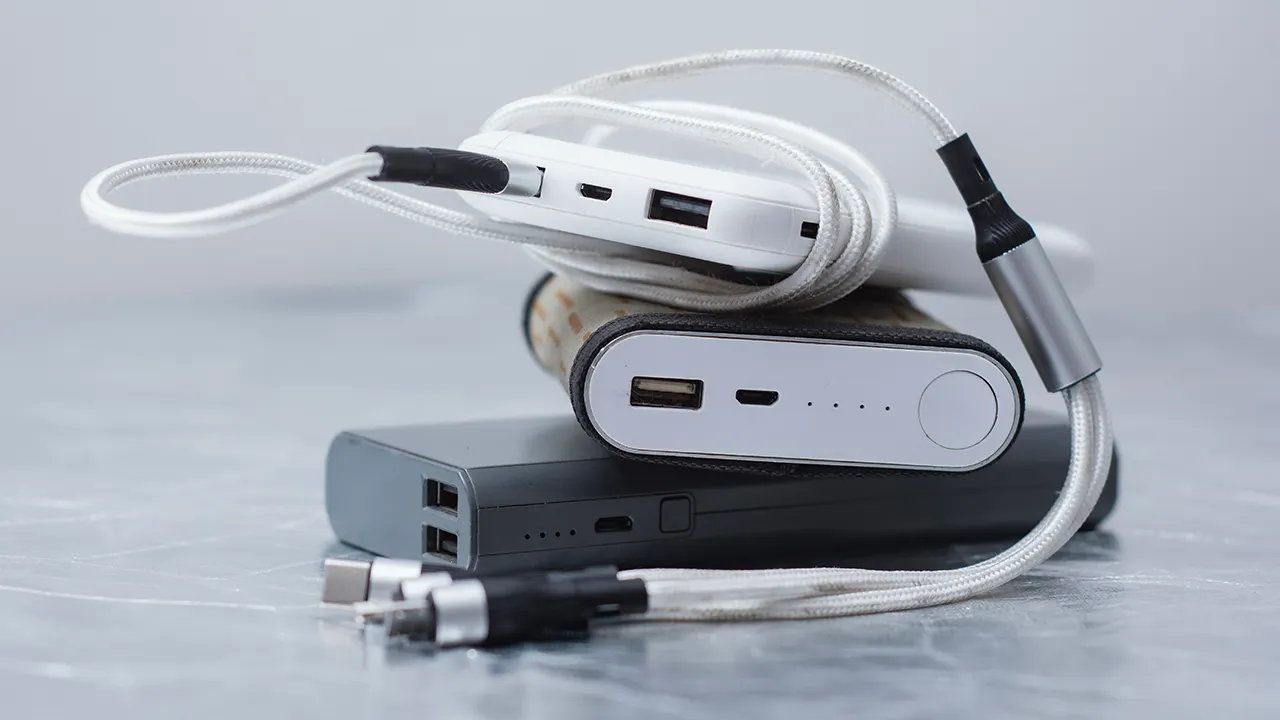
A Los Angeles-based sports reporter had a scary morning earlier this month, when her portable charger suddenly exploded while she was sleeping, leaving her with chemical burns on her arm and hair and a hole in her bed.
“PSA to anybody that uses a portable charger: don’t,” Ashley Nevel said in a video she posted to her social media on Feb. 15. “Mine literally just exploded in my bed. Everything caught on fire. My mattress — burned a hole through it. I literally have nowhere to sleep.”
She explained that she has an emergency fire blanket that was a housewarming gift from her dad, according to KCAL-TV, that she believes saved her life.
“Stop using portable chargers,” she reiterated. “I smell like smoke. My entire apartment needs to be cleaned to get the toxicity out. I can’t even stay there. It’s really bad. So, don’t use a portable charger. Make sure you have a fire blanket handy because it honestly saved my life, and I’m just grateful to be alive.”
DON’T IGNORE APPLE’S URGENT SECURITY UPDATE
A Los Angeles-based sports reporter had a scary morning earlier this month when her portable charger suddenly exploded while she was sleeping, leaving her with chemical burns on her arm and a hole in her bed. (Getty)
After she got back from the hospital, Nevel added, “Another terrifying part of all of this is my phone was charged. It was charging in the charger, and it overheated when the charger exploded, so I couldn’t call 911. I couldn’t make any phone calls.”
She said she was forced to run out on her balcony and scream for others to call 911 — all after waking up to the explosion at 5 a.m.
“Thankfully my neighbors were like, amazing,” she said, adding that emergency responders arrived within three minutes.
URGENT RECALL: 13K CHARGERS SOLD AT TJ MAXX, MARSHALLS MAY EXPLODE DURING USE
File photo of a phone charger that exploded. (Getty)
“When you’re dealing with something like that, fight or flight kicks in,” she said. “You have no f—ing idea what to do.”
Later, she also suggested that banning portable chargers on airplanes altogether might be a good idea.
“What if I was on an airplane and that happened?” she questioned. “What do you do in that situation? Like, everyone is in danger with a small little charger and I never thought that was going to happen to me.”
Damaged lithium cells from phone chargers. (Getty)
CLICK HERE TO DOWNLOAD THE FOX NEWS APP
She added that she’s been walking around with portable chargers for years.
“You never think something is going to happen to you, and I’m just more thankful it isn’t more serious than it could have been,” she continued. “Yeah, throw away your portable chargers.”
Read the full article from Here



SAN FRANCISCO (KRON) — San Francisco Supervisor Jackie Fielder hosted her first community listening session Thursday night since returning from a three-month medical leave.
Dozens of District 9 residents packed the Bernal Heights Neighborhood Center to welcome back Fielder and voice concerns about issues affecting their communities.
“We are thankful that you took time for yourself to equip yourself to be sitting here today,” one attendee told Fielder. “So I thank you and commend you for returning.”
Fielder returned to City Hall last month after taking a three-month medical leave.
“I’m just grateful for the outpouring of support that I had and glad to be back on the job,” Fielder said. “Mental health is really prevalent, and I’m not going to shy away from the fact that I had a mental health crisis. This is a challenging job, and I’m very privileged to be here.”
Fielder said she is hosting a series of town hall-style meetings to give residents an opportunity to voice their concerns.
“To me, the biggest issue locally is the homeless issue, and it’s citywide,” San Francisco resident Maggie Weis said.
Fielder was joined by members of the San Francisco Municipal Transportation Agency and San Francisco Police Department to answer questions about pedestrian safety, city budget cuts and other issues.
The supervisor said one of her priorities moving forward is expanding access to clean, well-maintained public restrooms.
“[We’re] still seeing a lot of feces around the district and city,” Fielder said. “Would love to see our city have more public bathrooms and be able to maintain them as well.”
The next listening session is scheduled for July 23 at 6 p.m. at La Fénix in the Mission.
Watch the full report from KRON4’s Sara Stinson in the video player at the top of the story.

DENVER — Denver Mayor Mike Johnston is launching a $100 million plan to boost the local economy and support 10,000 jobs over the next three years.
Johnston announced the four-part program Thursday morning, flanked by business leaders while praising downtown businesses like brunch eatery Snooze.
▶️ WATCH: Denver7’s Alex Dowd reports on the plan
Denver mayor promises to create 10K jobs in next 3 years
Snooze Co-Founder Adam Schlegel said his business benefited from a similar program when U.S. Sen. John Hickenlooper was mayor in the early 2000s.
“The city really was the one that stepped up,” Schlegel said. “We wouldn’t have started if it wouldn’t have been for the economic development office. We ended up getting an incentive from the city to open up, particularly in this space [downtown]. It was a fiscal incentive to do it, in addition to coaching.”
Both of those are offered in the new four-part Denver Jobs Agenda. With funding from the Denver Downtown Development Authority and the Office of Economic Development and Opportunity, Johnston aims to develop start-ups in the city, grow existing businesses and draw in new companies while working to advance the Denver-area workforce across industries.
At the end of the last fiscal quarter, Denver’s unemployment rate hovered around 3.6% — under the national rate of 4.2% — according to U.S. Bureau of Labor Statistics, while office vacancy sits just under 40%, according to commercial real estate broker CBRE.
Johnston and other speakers made multiple references to more jobs bringing more people downtown.
“Denver has so many things going for it, so it will come back,” Schlegel said. “It’s not coming back as fast as I want, or as much as anyone will, but will it have a long-term future? 100%. It’s things like this, though, that I think give us a lot of hope that it can happen sooner than waiting it out.”
▶️ Watch the full press conference
Press conference: Denver mayor announces Denver Jobs Agenda
Chris Berthiaume, the city’s director of workforce industry initiatives, says the three workforce development centers across Denver serve around 20,000 people each year. He’s confident this new initiative will help more of those visitors find employment.
“We want to focus on things like aerospace, cybersecurity, green construction,” Berthiaume said. “This new initiative really just tightens the focus on sectors that we know are growing. Colorado is home to a huge aerospace culture. Quantum technology is emerging and coming. Green workforce are jobs that we know drive around Denver. Construction is everywhere. We need to make sure we have a skilled workforce that’s ready to take on those jobs.”
While also finding employers to hire them and stay within the community for the long haul.
“I think the reason businesses work — certainly restaurants work — is that you are integral to the community specifically where you are,” Schlegel said. “There are so many people in our community that really believe in Denver and want to see what it can be, and so it will get there.”
It’s well on the way. Denver’s Economic Development Corporation says they’re working with 52 active prospects that could bring more than 12,000 jobs to the area.
Coloradans making a difference | Denver7 featured videos
Denver7 is committed to making a difference in our community by standing up for what’s right, listening, lending a helping hand and following through on promises. See that work in action, in the videos above.

Global entertainment company Webtoon is returning to the hallowed halls of San Diego Comic-Con with a larger-than-life slate of panels featuring top talent and fresh announcements.
They will be shining the spotlight on some of today’s most engaging webcomic creators, including Derek V. Song (Fantasy High) and Punko (Cinderella Boy).
Let’s take a look at their schedule:
Thursday, July 23 – 10am – Room 29AB
Creature Craft: Visionaries of Horror Comics Share Their Secrets
This panel features Punko, creator of Stagtown and Cinderella Boy on WEBTOON; Cullen Bunn, creator of Ripcord and Deluge for Ignition Press; and Cat Staggs, co-creator of Death Mask, and artist on Tales for a HalloweeNight for Storm King Comics. Rotem Rusak, Editor-in-Chief at Nerdist, will moderate.
Friday, July 24 – 10am – Room 32AB
Love in Every Universe: The Great Romance Trope Debate
Join ROSEOAK, creator of Not So Silent on WEBTOON, Alessandra Ferreri, Head of Content at Wattpad, E.M. Wilson, author of Situationship, and Becca Erin Title, founder of Meet Cute Romance Bookshop. The panel is moderated by Crystal Bell, the Culture Editor at Mashable.
Friday, July 24 – 1pm – Room 32AB
Adapting Fantasy High for WEBTOON with Derek V. Song
Featuring Derek V. Song, writer of Fantasy High. Fans will get a behind-the-scenes look at adapting the beloved Dimension 20 series for WEBTOON and learn more about bringing the world of Fantasy High to a new visual format.
Saturday, July 25 – 11:30am – Room 24ABC
What’s Next from WEBTOON Entertainment
Featuring Ryan Lee, Head of Content at WEBTOON; Sydney Bright, Head of Global Animation at WEBTOON Productions; Erik Kozura, Producer at WEBTOON; ROSEOAK, creator of Not So Silent; Derek V. Song, writer of Fantasy High; Punko, creator of Stagtown and Cinderella Boy; and Ucheomaaa, creator of Vibe Check! on WEBTOON. Journalist, comic critic, and 2026 Eisner judge, Tiffany Babb, will moderate. his panel will deliver a slew of announcements, exclusive first looks, and Creator appearances from its platform and entertainment businesses. Additionally, the panel will give fans a window into what’s next from WEBTOON’s most exciting stories and projects, with news from WEBTOON Originals, WEBTOON Productions, WEBTOON Unscrolled, and more.
-

 Politics34 seconds ago
WATCH: Trump’s Energy chief reveals what escalating Iran tensions could mean for gas prices
-

 Health8 minutes ago
Coffee may have powerful effect on liver health, major study suggests
-

 Sports10 minutes ago
Oba Femi vs Brock Lesnar at SummerSlam is a ‘generational matchup,’ WWE legend JBL says
-
 Business23 minutes ago
Billionaire exodus? California drew 10 times more venture capital than any other state this year
-
 Entertainment25 minutes ago
Disney Channel maximalism to pop-star glam: What fans wore to Hilary Duff’s L.A. show
-
 Lifestyle30 minutes ago
L.A. Affairs: It’s hot when a man drives to me. But would this new guy make the trek from the Valley?
-
Politics38 minutes ago
Black mold and $1 wages: Settlement forces immigrant detention centers to protect workers
-
 Science40 minutes ago
Trump administration seeks to limit federal funding that doesn’t ‘advance’ presidential policies


