West Virginia
W.Va. Senator calls for CPS reform after death of 11-year-old girl from Taylor County


CHARLESTON, W.Va. (WCHS) — A West Virginia lawmaker from Taylor County delivered a pointed speech on the Senate floor Tuesday, calling for sweeping reform of Child Protective Services following the death of 11-year-old Miana Moran — a case that has raised more questions about the state’s child welfare system.
Sen. Jay Taylor (R-Taylor) opened his remarks by holding up a photograph of Miana, urging lawmakers to see her not as a statistic or a case number, but as a child who “deserved protection.”
The child died Feb. 16, 2025. She weighed 43 pounds at her autopsy, according to investigators.
Miana Moran, 11, died Feb. 16, 2025. Her father and primary custodian have recently been indicted on murder charges after prosecutors alleged she was not provided with any medical care for years and used food deprivation as a form of punishment. (Courtesy Photo)
Her measurements were “grossly inconsistent with her chronological age,” Taylor County Deputy Chris MacQueen wrote in the court document charging Moran’s custodian, Shannon Robinson, with her murder. MacQueen said the medical examiner also noted Moran had head lice, a yellowish tint to her skin, bones “visibly protruding” because of her extreme thinness, and multiple bruises and lacerations on her body.
Last Tuesday, Robinson was indicted on charges of murder of a child by a parent, guardian, or custodian by refusal or failure to provide necessities, and child neglect resulting in death. The child’s father, Aaron Moran, was arrested on Saturday after being indicted on the same charges.
Taylor said lawmakers cannot ignore what has been publicly revealed about CPS’s involvement before the child’s death.

Taylor County Prosecuting Attoney John Bord told Eyewitness News that CPS visisted the home where Miana Moran, 11, was found dead weeks before her death in Feb. 2025. (WCHS)
Last week, Taylor County Prosecuting Attorney John Bord confirmed during an exclusive interview with Eyewitness News that CPS visited Robinson’s home, where Miana and her older sister lived, multiple times prior to the girl’s death, including within weeks of her dying.
Bord said CPS workers made physical contact with the child during the final visit, though he could not specify who made the referral or what allegations were made.
“I think the department has some responsibility in this, too,” Bord said, referring to the West Virginia Department of Human Services. “Again, we haven’t gotten anything to say that specifically, but you asked me my opinion, and it’s my opinion.”
Shannon Robinson, 51, of Grafton, is being held without bond following an arraignment hearing on Thursday. She’s accused of the murder of Miana Moran, 11. (WCHS)
“If those reports are accurate, West Virginians are right to ask an obvious and fair question,” Taylor said. “How did this happen?”
Gov. Patrick Morrisey confirmed last week that DoHS has opened an internal investigation into CPS’s handling of the case.
“That alone tells us what every West Virginian already knows,” Taylor said. “Something went wrong, and it cannot be ignored.”
He rejected early claims that Mianna was homeschooled, noting reporting from Eyewitness News that confirmed she was enrolled in a public virtual school program through Upshur County Schools.
Aaron Moran, 42, of Grafton, was arrested by West Virginia State Police on Saturday. (WVDCR)
“We owe the public the truth,” Taylor said. “Because wrong diagnosis leads to wrong reforms.”
Taylor told senators that legislation is now being drafted to overhaul CPS oversight and accountability. He said the goal is not political gain, but restoring public confidence in a system tasked with protecting vulnerable children.
“We cannot accept a system where the agency investigates itself behind closed doors and elected lawmakers are left unable to confirm that children are truly being protected,” the senator remarked.
Taylor acknowledged long-standing concerns raised by CPS officials, including staffing shortages, high caseloads, and low pay, but said those realities cannot excuse systemic failure.
“Those challenges may be real,” he said. “But they are not an acceptable excuse for failing a child.”
He criticized what he described as a culture of secrecy within CPS, arguing that while confidentiality can protect children, it can also shield the system from scrutiny.
Sen. Jay Taylor (R-Taylor) holds up a photo of Miana Moran, 11, during a speech on the Senate floor Tuesday where he called for CPS reform in light of details revealed following her death last year. (WV Legislature/Photo by Will Price)
“Secrecy without oversight does not protect children,” Taylor said. “It protects systems.”
Taylor called for meaningful legislative oversight, improved documentation, supervisory accountability, and transparency into CPS decision-making — without compromising the privacy and dignity of children.
The senator concluded by urging lawmakers to confront the reality that failures are often only revealed after a child has died.
“We have failed in our responsibility to our children,” he said. “That is hard to say, but it is necessary to say, and acknowledging that failure is the first step towards fixing it.
DoHS has not responded to a request for comment regarding the case.
Eyewitness News has filed Freedom of Information requests seeking records related to CPS involvement before and after the girl’s death. On Monday, assistant general counsel Lauren Withers said the agency was currently researching to determine any public records in its possession that are responsive to the request and not otherwise exempt by law.
“We anticipate having a final response to your request no later than February 26, 2026,” Withers said.
In 2024, Kyneddi Miller, 14, was found dead in a “skeletal state” in her Boone County home.
In 2024, Kyneddi Miller, 14, was found dead in a “skeletal state” in her Boone County home. The case marked a turning point in West Virginia, exposing widespread breakdowns in the state’s child protection system and prompting major scrutiny of how abuse and neglect cases are handled. (Family Courtesy Photo)
The case marked a turning point in West Virginia, exposing widespread breakdowns in the state’s child protection system and prompting major scrutiny of how abuse and neglect cases are handled.
Documents obtained by Eyewitness News showed child protective services knew or should have known about the teen more than a year before her death.
A Nov. 2025, a federal audit found the state did not comply with 91% of investigation requirements when responding to reports of child abuse and neglect.
The U.S. Department of Health and Human Services Office of Inspector General said news coverage of Kyneddi’s death prompted the audit that sampled 100 of 23,759 of West Virginia’s screened-in family reports of child abuse and neglect from Oct. 1, 2023, through Sept. 30, 2024.
State lawmakers have introduced bills this session attempting to bolster accountability for DoHS.
House Bill 4579 would require CPS workers to wear a body camera while investigating reports of child abuse and neglect. The bill was referred to the House Judiciary Committee, where it hasn’t yet been taken up for consideration.
“The time is now to reform child protective services in this state,” Taylor said. “Not with rhetoric, not with excuses, but with accountability, transparency, and responsibility worthy of the trust West Virginia’s place in us.


CLENDENIN, W.Va . (WSAZ) – Gov. Patrick Morrisey visited Clendenin West Virginia Saturday during Summerfest.
10 years ago a devastating flood swept through the community.
The governor announced $450,000 of funding for a Streetscape project during a commemoration for the June 2016 flood. The funding will go toward Clendenin’s main street – improving sidewalks, landscaping, and other pedestrian amenities.
Funding for the project comes from the Transportation Alternatives Program – a federal initiative to fund smaller scale transportation projects.
Copyright 2026 WSAZ. All rights reserved.

It was a phenomenal year for the West Virginia Mountaineers on the diamond, and even with the season having been over for over a week now, the honors continue to roll in.
On Friday, second baseman/catcher Gavin Kelly and left-handed starting pitcher Maxx Yehl were both named First-Team All-Americans by D1Baseball.com. It is the first time in program history that two Mountaineers have been recognized as First-Team All-Americans in the same season.
Gavin Kelly
Kelly was essentially everyone’s pick to have a breakout season for the Mountaineers in 2026, but I’m not sure anyone expected him to do it the way he did. He hit nearly .400 all year and went on a power surge out of nowhere toward the end of the season, becoming one of the top home run hitters in the country over the last month or so of the year.
Kelly was named a Golden Spikes Award semifinalist, the MVP of the Morgantown Regional, and is currently participating in the Team USA Collegiate National Team training camp in Cary, North Carolina. For the year, he hit .382 with 19 home runs and 63 RBI, cementing himself as a top draft prospect in 2027.
Maxx Yehl
Maxx Yehl was one of the best stories in all of college baseball that didn’t get talked about nearly enough. He was forced to sit out the 2025 season as he was recovering from Tommy John surgery, and prior to this season, Yehl worked exclusively out of the bullpen. The plan all along was to eventually stretch him out into a starter, and in his first year in the role, he was one of the best in the entire country.
Steve Sabins and Co. did a good job of playing it safe with him early, letting him only go two and four innings in his first two starts before turning him loose. There were a couple of moments where Mountaineer fans had to take a deep breath after he was removed from two starts, one of which was in the Morgantown Regional against Kentucky. He bounced back strong and two days later, pitched a gem against the Wildcats, helping the team advance to the super regionals for the third straight season.
Yehl finished the season with a 9-3 record, an ERA of 2.13, and 112 strikeouts to just 26 walks. He was also the first WVU hurler to win Big 12 Pitcher of the Year since Alek Manoah, who did it in 2019.
Add us as a preferred source on GoogleFollow
West Virginia
Justice firm’s delinquent DEP fines rise past $1.6M amid DOJ criminal liability relief

-
 Politics7 minutes ago
Costs of Iran war will linger despite conflict’s end, experts say
-
 Sports15 minutes ago
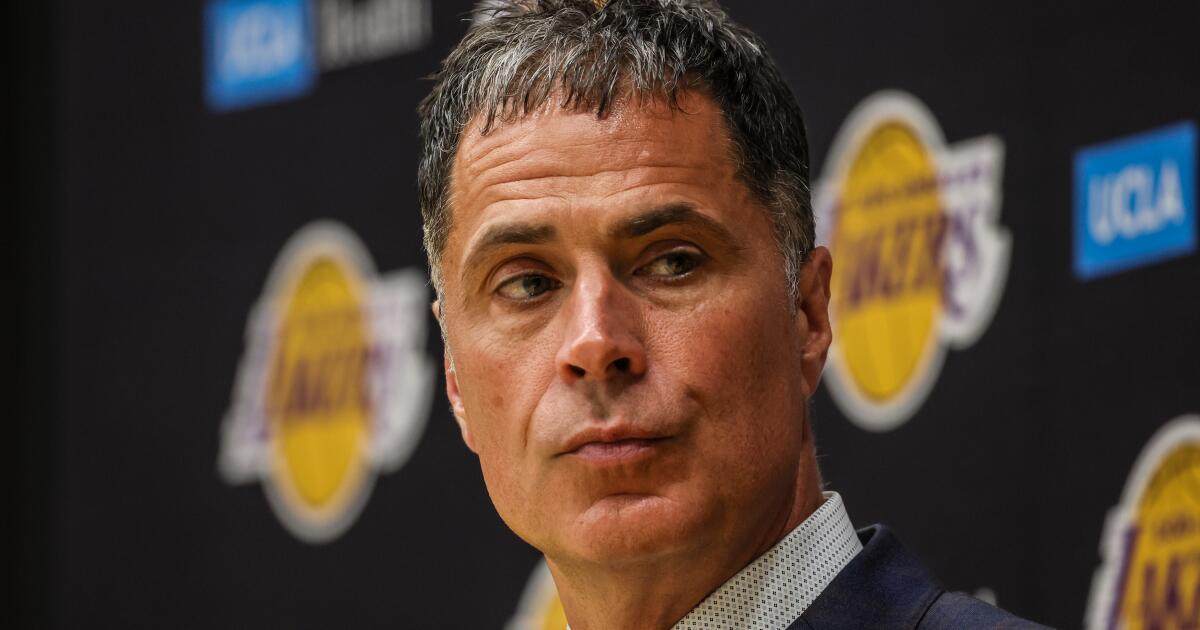
Commentary: You’re up, Rob Pelinka. To avoid Ned Colletti’s fate, the Lakers’ GM has to deliver this offseason
-

 World25 minutes ago
Q&A: Why humanitarian aid is crucial to stopping the Ebola outbreak
-
 News52 minutes ago
Three firefighters killed on Colorado-Utah border as wildfires intensify
-

 Los Angeles, Ca2 hours ago
6 members of suspected South American burglary crew arrested by Irvine police
-

 Detroit, MI2 hours ago
Detroit Tigers seek split in home series vs Houston Astros on Sunday
-

 San Francisco, CA3 hours ago
People’s Budget Coalition Claims Victory After San Francisco Budget Restores Most Proposed Service Cuts – Davis Vanguard
-

 Dallas, TX3 hours ago
Dallas weather: June 28 morning forecast

