North Carolina
North Carolina Christmas tree farmers are optimistic after Hurricane Helene


Christmas tree farmers in western North Carolina are still rebuilding from last year’s devastating Hurricane Helene, but growers are optimistic about business and the overall strength of their industry in the region.
“There’s still a lot of recovery that needs to happen, but we’re in much better shape than we were this time last year … sales are good,” Kevin Gray, owner of Hickory Creek Farm Christmas Trees in Greensboro, said earlier this month, while the buying season was in full swing.
North Carolina is the nation’s second-largest Christmas tree producer, harvesting about 4m trees, mainly Fraser firs, annually, most grown in the western part of the state. As people all over the nation thrill to the twinkling lights and accumulating gifts under the boughs this festive season, few who buy a real tree may spare a thought for where it came from.
In October, 2024, Helene tore through the region, killing at least 95 people and causing widespread damage to homes, farms, roads, land and infrastructure. Officials estimated that the storm, at one stage a category 4, caused about $125m in losses of ornamental nurseries and Christmas trees alone.
A year later, while full recovery for some farms is still distant, many growers said their sales before the holidays were lively.
At Avery Farms, a 200-year-old family operation in Avery county, Helene ripped out about 80,000 of their Christmas trees, wrecked fields, equipment and buildings, and destroyed the home of manager Graham Avery’s parents.
That fall, the family sold what they could to the customers: a limited number of trees, wreaths, boughs and improvised tabletop trees fashioned from salvaged tops.
This year has been focused on rebuilding. Avery’s parents’ home was rebuilt with help from “lots of people donating their time” and they moved back in just a month ago. The family bulldozed damaged fields, fertilized the soil and planted about 20,000 trees this spring, a long-term project to regain pre-Helene output, as Christmas trees take from six to 12 years to mature.
“It’s going to be a while, but that’s the whole game that we play doing Christmas trees. It’s a very long-term investment,” Avery said. “We are set up to do it, and we will continue to do it.”
Even with significantly reduced inventory, Avery said, this season’s sales have been “very, very good” and the farm has doubled its wreath output and is shipping them nationwide.
“With what inventory we do have, we’ve had no issue selling,” Avery said.
Jennifer Greene, executive director of the North Carolina Christmas Tree Association, said the industry remained strong despite the devastation to some growers.
The 2025 growing season also offered some relief. “We had a great spring with April rainfall,” she said, noting the trees “have actually had a great growing season”.
“We’re in the middle of a great season, we’re happy to not have a hurricane and we’ve had good weather for harvest. So things are looking good,” she said.
Dee Clark, owner of Christmas Corner and C&G Nursery in Avery county, shared similar optimism, despite retail sales plummeting last year when a road washed out and remained closed until summer.
“Early indications look promising,” Clark, 63, said, earlier in December. He added that his son had developed social-marketing efforts to boost sales.
A third-generation grower, Clark said Helene destroyed much of his farm’s infrastructure and damaged roads and culverts, triggering landslides that cost about 1,000 trees and stripped vital nutrients from the soil.
Clark, who said the storm “almost put us out of business”, has focused on repairs, replanting and restoring the land. He expects it will take years to replace lost trees, and knows many growers face a similar, long climb. But, he said: “The Christmas tree industry in western North Carolina as a whole is probably the best shape it’s ever been in as far as the supply of trees right now.”
At Cartner’s Christmas Tree Farm, owner Sam Cartner said he felt fortunate no lives or homes were lost in the flooding, but said landslides destroyed up to 10,000 trees.
“We probably won’t ever be able to plant those areas back, because the topsoil slid off,” he said. “We’ll have to find other areas to plant if we recover that number of trees.”
The Cartners worked quickly, and made enough repairs to have a “relatively normal harvest” last fall, he said, despite the major damage to roads, bridges and culverts on the property.
One of their trees was even selected last year to be displayed at the White House.
For many in the region, the Cartners’ White House tree became a symbol of resilience. Jamie Bookwalter, an extension specialist at North Carolina State University, recalled attending its send-off ceremony in Avery county.
“That Christmas tree represented a lot of people problem-solving,” she said, “which I think is what this area of the country is kind of known for: resiliency, problem-solving and self-reliance.”
Will Kohlway IV, a Christmas tree production extension specialist also at NC State, said the Cartners’ ability to harvest and deliver the tree, despite everything the region had dealt with, exemplified “the spirit of the mountains and also Christmas tree growers”.
They called the tree “Tremendous”, he said, because “it was really a tremendous effort”.
Bookwalter visited some of the hardest-hit farms immediately following the storm. “Helene was a terrible event, but farming in general is just becoming more difficult as temperatures become more unpredictable and we get wetter periods – the wetter periods are wetter, the drier periods are drier,” she said. “We’re all just kind of learning day by day.”
She said researchers are working to develop trees more resilient to the changing climate.
Kohlway said that the public’s support for the region’s growers and farms had been “humbling”.
“Buying a tree supports a North Carolina farmer,” he said. Even if purchased at a big-box store, the tree, Bookwalter added, “really represents probably a pretty small farmer”.

North Carolina
North Carolina is hot, dry, and about have fireworks everywhere. Why isn’t there a burn ban?

Right now, it’s unmissable. North Carolina, and especially the Triangle, is both very hot, and very dry. Fireworks stands are popping up, just in time for the Fourth of July. So why isn’t the state under a burn ban?
It’s a straightforward question, with a complex answer.
Both the state, through the North Carolina Forest Service, and individual counties can declare burn bans. The vast majority of the time, county fire marshals listen to the Forest Service. And right now, the Forest Service says the danger isn’t great enough – yet.
“We’re still dry, fire danger is still high, but we haven’t reached that hazardous category yet,” said Phil Jackson, a Forest Service spokesperson.
Jackson points out that the state has two fire seasons, spring and fall, and conditions right now are very different.
For one, humidity is much higher right now, and humidity “tends to bring relief to fire risk and any ongoing wildfire activity that might be happening at that moment,” said Jackson.
Leaves are also key. In spring, plants are trying to wake up from their long winter sleep. Doing that requires a lot of water, drying out the soil.
“Think of each individual root system as being a straw that is just pulling water out of the ground,” said Jackson.
In the fall, the ground is covered in lots of new dry leaves, increasing the danger again.
“When they’re in full green, like they are now, they tend to be more fire resistant,” said Jackson.
Jackson points out it’s not impossible to have a summer-time burn ban. The Forest Service is constantly monitoring conditions, and it’s possible those conditions could get worse in the coming weeks. For now, though, the fire danger, Jackson says, is “manageable.”
But while the fire risk might be manageable, that doesn’t mean people should be careless.
“We always encourage residents to avoid outdoor burning, unless it’s absolutely necessary,” said Johnston County Fire Marshal Travis Johnson.
Johnson says, especially with the Fourth of July right around the corner, anyone burning or lighting fireworks should always have a source of water nearby to douse any runaway flames. “We never want anything to happen, but want to make sure that you’re safe while using those,” said Johnson.
If a burn ban were to be implemented, it would impact Fourth of July fireworks shows. For now, though, those shows are allowed to go ahead, and remain the best option, Johnson says, for anyone who wants to see fireworks this year.
Johnson, and other fire marshals WRAL spoke with, also stressed official fireworks shows are put on by professionals, are strictly permitted and regulated, and there are always firefighters there, on standby, just in case.
“Just be safe, and enjoy the holidays,” said Johnson.

The video above is a live stream of WBTV and affiliated programming, and may not be directly related to the article below.
GRANITE FALLS, N.C. (WBTV) – A man was killed and a teenager was hurt after a head-on crash in Caldwell County on Sunday.
The deadly crash happened along Highway 321 near Glenn Ridge Drive in Granite Falls, just before 7:45 p.m. on June 28.
North Carolina state troopers said 65-year-old Marvin Wayne Anderson was driving the wrong way on Highway 321 when he crashed head-on into an 18-year-old.
Troopers said Anderson died on the highway, while the teenager was taken to a nearby hospital with minor injuries.
Highway Patrol said its initial investigation did not find speed or impairment to have been factors in the wreck. Troopers did not say why or how Anderson ended up on the wrong side of the road.
The crash reportedly shut Highway 321 down for several hours but it has since reopened.
Also Read: Mail worker killed in broad daylight in rural North Carolina, officials say
Copyright 2026 WBTV. All rights reserved.
The NC Lottery offers several draw games for those aiming to win big.
Here’s a look at Sunday, June 28, 2026 results for each game:
Winning Pick 3 numbers from June 28 drawing
Day: 2-0-8, Fireball: 7
Evening: 4-1-9, Fireball: 1
Check Pick 3 payouts and previous drawings here.
Winning Pick 4 numbers from June 28 drawing
Day: 7-7-6-5, Fireball: 4
Evening: 8-6-1-5, Fireball: 0
Check Pick 4 payouts and previous drawings here.
Winning Cash 5 numbers from June 28 drawing
06-08-11-16-37
Check Cash 5 payouts and previous drawings here.
Winning Double Play numbers from June 28 drawing
02-03-10-15-39
Winning Millionaire for Life numbers from June 28 drawing
04-11-31-54-58, Bonus: 03
Check Millionaire for Life payouts and previous drawings here.
Feeling lucky? Explore the latest lottery news & results
Are you a winner? Here’s how to claim your lottery prize
All North Carolina Lottery retailers will redeem prizes up to $599.
For prizes over $599, winners can submit winning tickets through the mail or in person at North Carolina Lottery Offices. By mail, send a prize claim form, your signed lottery ticket, copies of a government-issued photo ID and social security card to: North Carolina Education Lottery, P.O. Box 41606, Raleigh, NC 27629. Prize claims less than $600 do not require copies of photo ID or a social security card.
To submit in person, sign the back of your ticket, fill out a prize claim form and deliver the form, along with your signed lottery ticket and government-issued photo ID and social security card to any of these locations:
- Asheville Regional Office & Claim Center: 16-G Regent Park Blvd., Asheville, NC 28806, 877-625-6886 press #1. Hours: 9 a.m. to 5 p.m. Monday through Friday. This office can cash prizes up to $99,999.
- Greensboro Regional Office & Claim Center: 20A Oak Branch Drive, Greensboro, NC 27407, 877-625-6886 press #2. Hours: 9 a.m. to 5 p.m. Monday through Friday. This office can cash prizes up to $99,999.
- Charlotte Regional Office & Claim Center: 5029-A West W. T. Harris Blvd., Charlotte, NC 28269-1861, 877-625-6886 press #3. Hours: 9 a.m. to 5 p.m. Monday through Friday. This office can cash prizes up to $99,999.
- NC Lottery Headquarters: Raleigh Claim Center & Regional Office, 2728 Capital Blvd., Suite 144, Raleigh, NC 27604, 877-625-6886 press #4. Hours: 9 a.m. to 5 p.m. Monday through Friday. This office can cash prizes of any amount.
- Greenville Regional Office & Claim Center: 2790 Dickinson Avenue, Suite A, Greenville, NC 27834, 877-625-6886 press #5. Hours: 9 a.m. to 5 p.m. Monday through Friday. This office can cash prizes up to $99,999.
- Wilmington Regional Office & Claim Center: 123 North Cardinal Drive Extension, Suite 140, Wilmington, NC 28405, 877-625-6886 press #6. Hours: 9 a.m. to 5 p.m. Monday through Friday. This office can cash prizes up to $99,999.
Check previous winning numbers and payouts at https://nclottery.com/.
When are the North Carolina Lottery drawings held?
- Powerball: 10:59 p.m. Monday, Wednesday, and Saturday.
- Mega Millions: 11 p.m. Tuesday and Friday.
- Lucky for Life: 10:38 p.m. daily.
- Pick 3, 4: 3:00 p.m. and 11:22 p.m. daily.
- Cash 5: 11:22 p.m. daily.
- Millionaire for Life: 11:15 p.m. daily.
This results page was generated automatically using information from TinBu and a template written and reviewed by a Carolina Connect editor. You can send feedback using this form.
-

 Lifestyle4 seconds ago
Chanel’s Bruno Pavlovsky on Reengineering an Iconic Brand
-
 Politics3 minutes ago
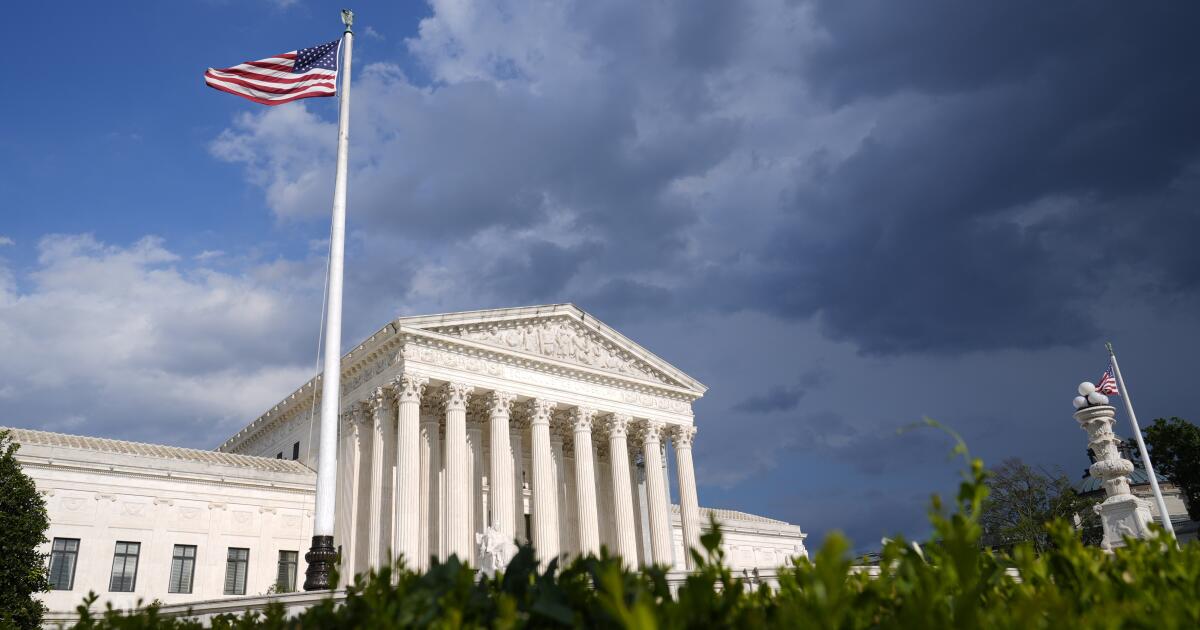
Supreme Court limits police use of cellphone data to find crime suspects
-
 Sports15 minutes ago
Teoscar Hernández returns, and Dodgers unleash 17-hit barrage in win over Athletics
-

 World23 minutes ago
DR Congo says 1,307 Ebola cases confirmed, including 377 deaths
-
 News48 minutes ago
Michigan governor threatens to pull troops from D.C. if used for Trump task force
-

 New York2 hours ago
Metropolitan Diary Challenge Day 2: How to Write Your N.Y. Story
-

 Los Angeles, Ca2 hours ago
Company has weeks to complete cleanup of Boyle Heights warehouse fire, officials announce
-

 Detroit, MI3 hours ago
18 New Kid-Friendly Places That Opened in Metro Detroit in 2026 (So Far!)

