News
End of The Line: how Saudi Arabia’s Neom dream unravelled


Executives raised myriad questions with management. From the outset, “we did a fair amount of warnings to make sure that the leadership, especially at the board level, were aware of these risks”, said the senior executive.
Where would the 9mn people due to populate The Line come from? How quickly could they be reasonably expected to arrive? Could construction and manufacturing start quickly enough? Would the levels of imports required overheat the economy? What if oil prices sank, drying up Saudi Arabia’s key source of revenue? What if the necessary materials could not be found? And did the Gulf nation really have the scientific and technical expertise to execute such a vast scheme?
Yet the pressure to deliver was relentless. The board expected the chief executive to “move things very quickly”, said the senior executive. “Dates had been given to the crown prince about what was achievable, but without the detail of knowing how it could be done,” said the senior design manager. When those dates were made public, there would be a loss of face if they weren’t met. “That’s where tensions grew.”
Staff were “being put into a position of effectively having to lie about the timescales and the cost of delivering the vision”, they added.
What remains
The Line — or at least its beginnings — can already be seen from space. Satellite imagery shows excavation and tunnelling work for the railway system, the “spine” connecting The Line to Neom International Airport, stretching for 150km — from the coast into the Hejaz mountains.
In a valley between two mountain ranges, levelling work is evident for the airport and its runways. “In true Neom fashion, there’s a mountain at the end of the runway that had to be blown up,” said the senior architect. Construction work has now stopped on both the spine and the airport. No new target for the airport has been set.
The foundations for The Line’s first modules — perhaps the largest piles ever laid by man — are also visible, waiting to support the world’s largest occupied building, if it ever arrives. The village of Qayal, which was a few kilometres from the “hidden marina”, has been razed. Fifteen members of the Huwaitat tribe who protested against their eviction were sent to prison, some for up to 50 years, and three others were sentenced to death, according to human rights observers.
At the marina, excavations by late last year had dug out 100mn cubic metres of soil, the equivalent of 40 Great Pyramids of Giza. Ships will access it via a canal leading more than a kilometre inland from the coast.
The chandelier, the upside-down office building hanging from the giant arch above the marina, remains in the plans. But Neom no longer intends to base its headquarters there. Neom’s deputy chief executive Rayan Fayez acknowledged last month that the project’s budget “evolves every day”, adding that it was a good point to “reassess what worked and what hasn’t worked”.
With the goal now to build just three of the 20 modules originally planned, the ambition for The Line’s first phase is a faint echo of what it once was. One person familiar with the project said work had effectively stopped, with efforts now focused on completing a few small buildings around the marina. Some of the earlier piling work has been covered with sand.
“I think as a thought experiment, great,” said one urban planning expert who works in Saudi Arabia. “But don’t build thought experiments.”


The maker of Canvas, the software used by thousands of schools and universities around the world, said on Monday that it had reached a deal with the hackers that recently breached its systems for the return of stolen data and the destruction of any copies.
ShinyHunters, a hacking group, had claimed responsibility for the attack on Instructure, the Salt Lake City-based company that provides Canvas to about half of all colleges and universities in North America.
The hackers said they had accessed the data of more than 275 million users at nearly 9,000 schools worldwide, including private conversations between students and teachers as well as personal identifying information such as names and email addresses. Canvas was shut down for hours after the cyberattack on Thursday.
The agreement, Instructure said in a statement, involved the return of the stolen data and confirmation that the data had been destroyed at the hackers’ end. Instructure added that it had been informed that none of its customers would face extortion as a result of the theft.
“While there is never complete certainty when dealing with cybercriminals, we believe it was important to take every step within our control to give customers additional peace of mind, to the extent possible,” the company said.
Instructure did not say what it had given the hackers in exchange for the return of the data. The company did not immediately respond to questions about the deal.
Canvas has more than 30 million active users around the world, according to Instructure. The platform is used by teachers and students for coursework management and communications. Instructure said the data compromised in the hack included usernames, email addresses, course names, enrollment information and messages.
ShinyHunters on Thursday claimed the attack in a message that appeared on students’ Canvas pages and was obtained by The New York Times. The group warned that it would leak an unspecified amount of data on May 12 if it did not receive a response from Instructure. In its May 3 ransom note, the group had threatened to leak “several billions of private messages among students and teachers.”
Not much is known about ShinyHunters, which is believed to have been formed around 2020. Its goal appears to be to obtain personal records and sell them. One of its high-profile attacks was against Ticketmaster in 2024, when the hackers said they had stolen the user information of more than 500 million customers.
Instructure said it first detected unauthorized activity in Canvas on Apr. 29, and again on May 7. The company said it took Canvas offline to investigate the breach, and also informed the F.B.I., the U.S. Cybersecurity and Infrastructure Security Agency and other international law enforcement partners.
Instructure did not immediately respond to questions about whether any law enforcement agencies were involved in its dealings with the hackers. The F.B.I. advises against paying ransom to hackers, saying it does not guarantee data security and encourages attackers to target more victims.
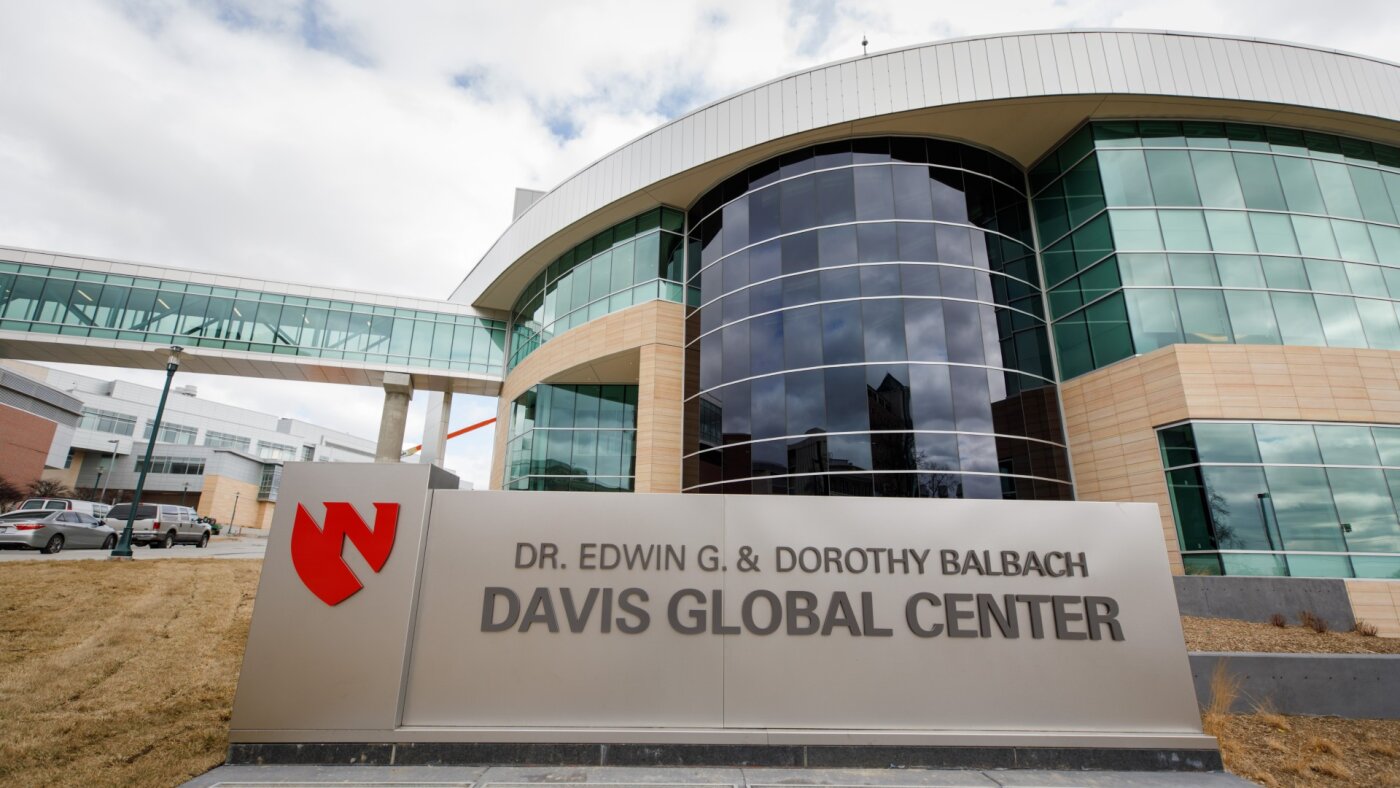
The National Quarantine Center is located at the University of Nebraska Medical Center in Omaha.
Nebraska Medicine
hide caption
toggle caption
Nebraska Medicine
Sixteen of the 18 passengers transferred to the U.S. from a cruise ship where there was an outbreak of hantavirus arrived in Omaha, Neb., on Monday for evaluation after disembarking the vessel in Spain’s Canary Islands over the weekend.

Of the 15 U.S. citizens and one dual U.S.-British citizen who arrived in Nebraska, all but one are currently being housed in the National Quarantine Unit. That patient tested positive for the virus and was being housed in the Nebraska Biocontainment Unit, officials said at a Monday news conference. The 15 people in the quarantine unit will continue to be monitored for signs of the illness.
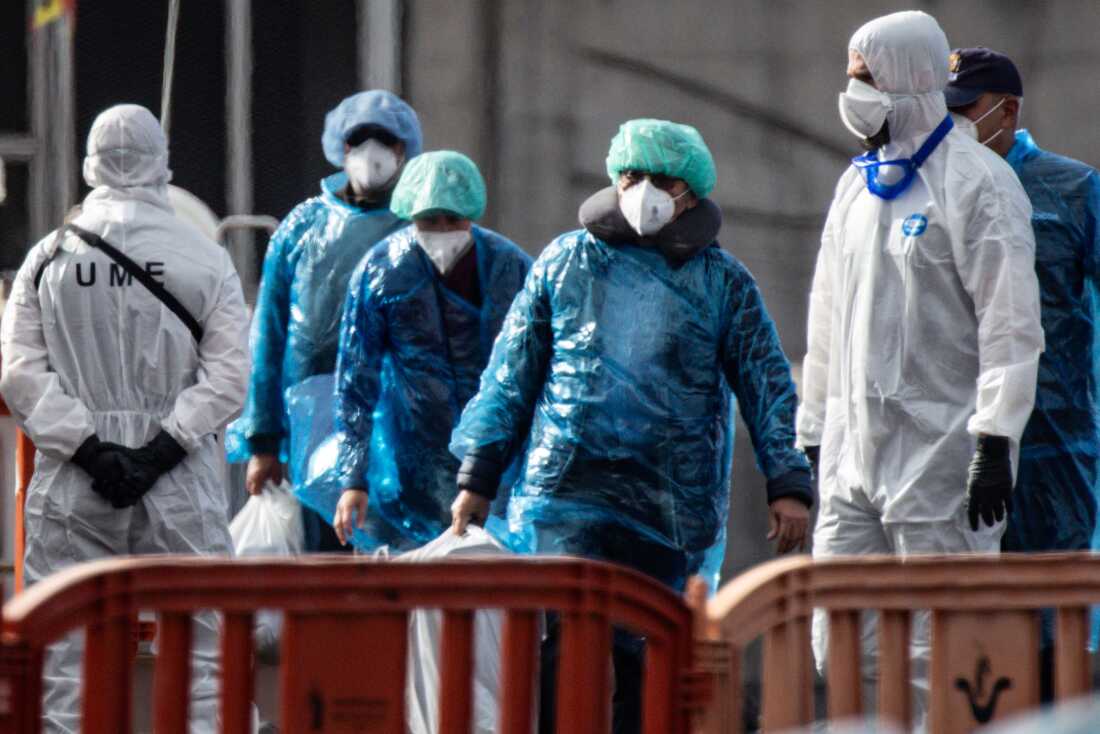
Passengers carry their belongings in plastic bags after being evacuated from the MV Hondius after docking in the Granadilla Port on Sunday in Tenerife, part of the Canary Islands, Spain.
Chris McGrath/Getty Images
hide caption
toggle caption
Chris McGrath/Getty Images
Nebraska may seem an unlikely location to process these individuals, but it is home to the National Quarantine Unit — the only federally funded quarantine unit in the U.S. — and the separate Nebraska Biocontainment Unit. They are highly specialized facilities located at the University of Nebraska Medical Center (UNMC) and widely considered among the best in the world.
The $1 million, five-room biocontainment unit was dedicated in 2005. It was a joint project with Nebraska Health and Human Services and the UNMC. It is set up to safely provide medical care for patients with highly hazardous and infectious diseases and was used in 2014 to treat two doctors infected with Ebola. The National Quarantine Unit was completed in late 2019. It cost nearly $20 million, according to the Associated Press. Both facilities were used during the COVID-19 epidemic.

“We are prepared for situations exactly like this,” Dr. Michael Ash, CEO of Nebraska Medicine, said in a statement. “Our teams have trained for decades alongside federal and state partners to make sure we can safely provide care while protecting our staff and the broader community. We are proud to support this national effort.”
Two additional U.S. passengers on the cruise ship — a couple, with one showing symptoms of hantavirus — were transferred for monitoring to Emory University Hospital, where another advanced biocontainment facility is located.
When the biocontainment unit was first dedicated more than 20 years ago, the biggest concerns were anthrax attacks and severe acute respiratory syndrome, more commonly known as SARS, Dr. Phil Smith, who spearheaded the efforts at Nebraska Medical Center to create the biocontainment unit, told the AP in 2020. Smith died last year.

A hallway leading to rooms at the Nebraska Biocontainment Unit at the University of Nebraska Medical Center.
Nebraska Medicine
hide caption
toggle caption
Nebraska Medicine
The quarantine unit features 20 negative-pressure rooms designed to keep potentially harmful particles from escaping by maintaining lower air pressure inside than outside the rooms. The single-occupancy rooms provide patients with attached bathrooms, exercise equipment and Wi-Fi, according to the medical center.
“We have protocols in the quarantine unit that provide for safe care of these of these persons, including just all the activities of daily living so that they can … have a comfortable stay but also have it in an area that’s protected and limits spread of the pathogen,” Dr. Michael Wadman, the medical director of the National Quarantine Unit, said at a Friday news conference.
The biocontainment unit, by contrast, is a patient-care space where people are able to receive medical treatment, Dr. Angela Hewlett, medical director of the biocontainment unit, told reporters Monday.
She emphasized that the facility — which has a 10-bed capacity — operates independently from the quarantine unit and has its own dedicated air-handling system. “We don’t share [it] with any of the rest of the facility,” she said, noting that the unit uses rooftop HEPA filtration and is designed “very differently” from what most people typically imagine in a hospital setting.
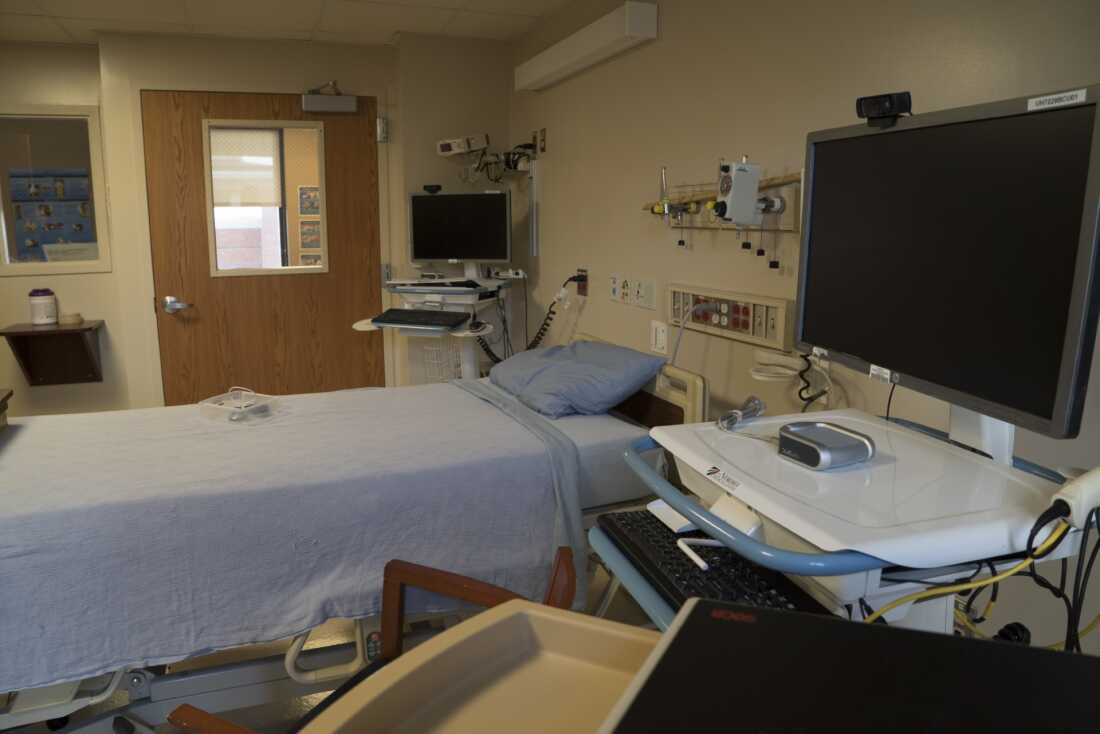
One of the rooms in the Nebraska Biocontainment Unit.
Nebraska Medicine
hide caption
toggle caption
Nebraska Medicine
Nebraska Gov. Jim Pillen, speaking at Monday’s news conference, welcomed the recently arrived patients, who are among nearly 150 people from 23 different countries who were aboard the MV Hondius when the illness most commonly transmitted to humans through contact with infected rodents broke out. As of Monday, the World Health Organization has reported at least nine cases of hantavirus, including three deaths.
“We’re glad that you’re here,” Pillen said. “We’re going to ensure that you have the best world-class care possible.”
Pillen also sought to reassure Nebraskans that the facilities are safe and secure: “We’re working diligently to ensure no one leaves the security in an unsecured way at an inappropriate time,” he said. “No one poses a risk to public health, just walking out the front door of the streets of Omaha.”

The hantavirus outbreak on the cruise ship has been identified as the Andes strain of the illness, one that can be spread, though rarely, from person-to-person, according to the Centers for Disease Control and Prevention. It can cause severe respiratory disease, with early flu-like symptoms.
“The Andes variant of this virus does not spread easily, and it requires prolonged, close contact with someone who is already symptomatic,” according to Adm. Brian Christine, the assistant secretary for health at the U.S. Department of Health and Human Services, who spoke at Monday’s news conference. “Even so, we have taken this situation very seriously from the very start.”
“The risk of hantavirus to the general public remains very, very low,” he said.
The full quarantine period for hantavirus is 42 days, Christine said, but he added that the patients would be allowed to go home if they remained asymptomatic.
“Right now, the passengers that are all in the assessment phase — they’re going to be here for at least a few days while we do assessments and the coordination on what happens next,” he said, adding that they had the option to remain in the quarantine facility for the full period, for “the safest and most effective option for them.”

new video loaded: Americans Exposed to Hantavirus on Cruise Ship Arrive in United States
transcript
transcript
Americans Exposed to Hantavirus on Cruise Ship Arrive in United States
Eighteen passengers who were aboard the MV Hondius, a cruise ship with a deadly hantavirus outbreak, landed in Omaha on a U.S. government medical flight. The passengers were being monitored at medical facilities in Nebraska and Georgia.
-
We’re working diligently to ensure no one leaves the security in an unsecured way at an inappropriate time. No one who poses a risk to public health is walking out the front door of the streets of Omaha or beyond.

By Axel Boada
May 11, 2026
-

 Maine20 seconds ago
Immigrant rights coalition reports uptick in ICE detentions across Maine
-

 Maryland6 minutes ago
Driver killed in Prince George’s Co. school bus crash identified – WTOP News
-

 Michigan12 minutes ago
Dollar General grants fund Michigan literacy programs with $280K
-

 Massachusetts18 minutes ago
Farm Bill provision threatens Massachusetts animal welfare rules – AOL
-

 Minnesota24 minutes ago
Ramsey County attorney seeks state funds to solve non-fatal shootings
-

 Mississippi30 minutes ago
Mississippi teen becomes one of youngest people ever to graduate law school
-

 Missouri36 minutes ago
American Idol Crowns Missouri Native Winner of Season 24
-
Montana42 minutes ago
Montana Lottery Powerball, Lotto America results for May 11, 2026