Culture
2025 NFL Draft matchmaker: Best fits for Cam Ward, Jaxson Dart, other top QBs


Read Dane Brugler’s 2025 ‘The Beast’ NFL Draft guide.
At least beyond Cam Ward, there is no consensus on where each of this year’s crop of quarterbacks may get drafted. After Ward presumably becomes a Tennessee Titan, the rest of the group is a complete mystery. It’s just as likely Ward is the only quarterback we see on Thursday night as it is that four quarterbacks go in the first round.
Lucky for us, we’re going to cut through all that uncertainty and play quarterback matchmaker, placing all of this year’s top quarterback prospects on the teams that make the most sense. In some cases, that has more to do with what type of quarterback the team needs; in others, it’s about finding the right environment for getting the most out of a particular skill set.
Let’s get to the lovely new couples.
Cam Ward: Tennessee Titans
All signs point to Ward being the Titans’ starting quarterback next year. It’s not even worth entertaining different possibilities for either QB or team at this point. Ward is both a good fit for the core of Brian Callahan’s offense and would bring elements that Titans’ quarterbacks last season did not.
The Titans’ 2024 offense was all about maximizing play-action opportunities and attacking down the field. Ward has the arm talent and fearlessness as a thrower to excel in that environment. However, Ward also massively improved his quick-game operation in college, and he’s much more comfortable playing from spread and empty formations than Will Levis has ever been. Ward is leaps and bounds ahead of Levis (or Mason Rudolph) as a creator outside of the pocket, too.
There are going to be growing pains with Ward’s overzealous play style early on, but they will be worth it in the long run. Ward has both a floor and ceiling worthy of being the No. 1 pick in this class.
Shedeur Sanders: New Orleans Saints
Finding Sanders’ best fit was trickier than I anticipated. Kevin Stefanski’s downfield play-action offense in Cleveland is not ideal; Brian Daboll’s quicker passing attack in New York might make sense, but that offensive line is a sieve and Sanders is not athletic enough to tap into some of the best parts of Daboll’s playbook.
The idea of Sanders being Kellen Moore’s first crack at a quarterback is intriguing, though. Sanders is at his best operating spread passing concepts, especially in the underneath area. He’s a reliable short-area passer who uses the intermediate and deeper areas of the field to keep defenses honest, rather than making those his preferred areas of attack. That’s perfectly fine for a West Coast-inspired offense.
Of course, falling to ninth overall is no guarantee. The Browns or the Giants may feel the itch of desperation and draft Sanders in the top three. If Sanders does slide a little bit, however, it wouldn’t be a shock to see the Saints stop that fall.
Jaxson Dart: Seattle Seahawks
It would be stunning if the Seahawks left the first two days of the draft without a quarterback. The deal Sam Darnold signed in March is effectively a one-year contract with team options from then on out — if that doesn’t scream “a developmental quarterback is coming,” I don’t know what does.
Seattle could go in a few directions, but Dart makes sense for their new offense under Klint Kubiak, and vice versa.
Dart reminds me a lot of Jimmy Garoppolo as a passer. The two are quite similar in build, arm talent and ability on throws over the middle of the field. A majority of Dart’s best throws on film are slants, short posts and crossers. The same was true of Garoppolo at his best in San Francisco. Neither Dart nor Garoppolo is a quarterback you want reading out a full progression very often.
In theory, Kubiak’s offense plays into all of that. It’s built off the run game, which is then parlayed into a strong play-action attack. Not only does that simplify reads for the quarterback, it also demands the QB often makes tight throws over the middle of the field, which is where Dart shines.
With a year on the bench to learn the pace of the league, maybe Dart can make it work with the Seahawks.
Tyler Shough: Cleveland Browns
The Browns’ best path to a quarterback is to take the Day 2 player most ready to start immediately. For my money, that is Shough.
Outside of Ward, Shough is the most talented thrower in the class. He has a flexible yet explosive release that works well from all platforms, in and out of the pocket. Though he’s more of a straight-line thrower than someone with fantastic touch, he still gets the job done from an accuracy perspective.
Shough is a quality processor, as well. Similar to Ryan Tannehill, he can be a hair slow coming off of reads early in the down but generally doesn’t make bizarre mistakes, and he protects the ball well.
In terms of pro readiness and arm talent, Shough just makes the most sense for Kevin Stefanski’s offense right now.
Jalen Milroe: Los Angeles Rams
If Sean McVay wants to keep the offense roughly the same in an eventual post-Matthew Stafford world, Milroe is not the answer — he’s actually the furthest thing from Stafford in this draft class (aside from the two or three bizarre misfires each QB has every game).
McVay has long flirted with the idea of a mobile quarterback, though. He was eager to give John Wolford a chance at the end of the Jared Goff saga, then held onto him as the team’s backup through the 2022 season. McVay also gave Bryce Perkins a start in 2022, a game in which Perkins carried the ball 19 times for 90 yards.
Milroe will walk into the league as one of the best athletes at the position. As a passer, he’ll need at least a year to fix his footwork and adapt to the speed of coverage at the NFL level, but that’s okay. There would be no pressure on Milroe to compete with Stafford for the job.
This would be a long play. Regardless of it being a good or realistic idea, I just so badly want to see the world in which McVay gets to re-unlock the boot-action game and dabble in a quarterback-centric rushing attack.
Riley Leonard: New York Giants
Brian Daboll’s best work over the years — outside of his time with Josh Allen — was at Alabama in 2017, with Jalen Hurts, and in 2022, with Daniel Jones.
Though different quality players, Hurts and Jones can both generally be described as sturdy, athletic quarterbacks with the arm talent to push the ball down the field a little bit. Both players added something to the offense via their mobility, and Daboll took advantage.
Aside from maybe Milroe, Leonard is Daboll’s best swing at that kind of athlete. Leonard is 6-foot-4, 218 pounds with serious wheels. He’s fairly explosive in short areas and excels when he really gets to stride out, similar to Jones. He’s clearly a weapon in the designed-run game and the red zone.
Leonard still has a lot to prove as a passer, but his athletic ability and toughness gives him a floor to work with while he figures it out.
Kyle McCord: Dallas Cowboys
It’s hard to find and hold onto good backup quarterbacks — the Cowboys were lucky to draft and retain Cooper Rush for as long as that they did. Boring as he is to watch, Rush was a perfectly competent quarterback when it came to running the offense and not playing outside of his means.
With Rush now in Baltimore, the Cowboys are in search of the next guy to fill that role. McCord is their best bet.
McCord is not an overwhelming talent. His arm is just okay, and he’s not going to scare anyone on the move. Like any good NFL backup, however, McCord can run an offense efficiently and consistently. He really learned to play within himself at Syracuse, displaying good rhythm and decision-making as a thrower.
It’s unlikely he ever ascends to anything above a very good backup, but that’s quite alright for a Cowboys team shopping for that exact kind of player.
Will Howard: Pittsburgh Steelers
They have to draft somebody, right? Even under the assumption Aaron Rodgers finally drops the charade and signs, the Steelers need to make some sort of effort to secure a young quarterback.
Howard, if nothing else, fits Arthur Smith’s offense. He is not someone who should be a high-volume passer, which already leans into Smith’s run-first approach. Additionally, Howard’s best traits are his size and arm talent, which allows him to comfortably throw down the field, as well as ample athletic ability for a player his size. Smith’s entire play-action and boot menu would be open with Howard at quarterback.
It’s hard to imagine Howard developing the down-to-down accuracy and play speed to really thrive as an NFL starter, but Smith’s offense in Pittsburgh at least would give Howard a chance to hide his weaknesses and lean into his strengths.
Dillon Gabriel: Miami Dolphins
Putting the short lefty quarterback prospect as a backup to the short lefty NFL quarterback feels like a bit, but it’s not. It makes sense when you consider each player’s strengths and the dynamics of being a left-handed vs. right-handed thrower.
Firstly, pass-catchers often talk about the flight and spin of the ball being different from lefty quarterbacks — the ball rotates in the opposite direction of 99 percent of quarterbacks, so it looks different coming into a receiver’s vision.
Gabriel, like Tua Tagovailoa, also thrives with RPOs and throws over the middle. He has a flexible and explosive release, making him perfectly equipped to manage those RPOs at a high level. And he thrives on in-breaking throws, even offering more velocity than Tagovailoa does.
The Dolphins desperately need to invest in a backup quarterback somehow. Gabriel fits.
Quinn Ewers: Buffalo Bills
Not every player or team gets their ideal match in an exercise like this. Sometimes, teams have to settle for whoever is left on the dance floor.
From the Bills’ perspective, a young backup quarterback should be on the table, because Mitchell Trubisky has just one year left on his deal. It makes some sense for the Bills to get ahead of things early and get a developmental player in the pipeline.
Ewers would bring functional athleticism and arm talent for Joe Brady. He still struggles with pocket presence and touch accuracy, especially down the field, but there’s enough talent there to mold a functional backup.
(Top photo of Jaxson Dart: Justin Ford / Getty Images)



Welcome to Lit Trivia, the Book Review’s regular quiz about books, authors and literary culture. This week’s challenge is all about an influential group of writers, editors and other creative types known as the Algonquin Round Table. In the five multiple-choice questions below, tap or click on the answer you think is correct. After the last question, you’ll find links to related books and other information about the era if you’d like to do further reading.

A strong sense of place can deeply influence a story, and in some cases, the setting can even feel like a character itself. But as it’s summer here in the Northern Hemisphere and travel adventures abound, this week’s literary geography quiz takes you on a trivia tour of notable libraries around the world. To play, just make your selection in the multiple-choice list and the correct answer will be revealed. At the end of the quiz, you’ll find links to more information if you’d like to do further reading.

Welcome to Literary Quotable Quotes, a quiz that tests your recognition of classic lines. This week’s installment highlights observations from future or alternate worlds depicted in popular science fiction. In the five multiple-choice questions below, tap or click on the answer you think is correct. After the last question, you’ll find links to the books if you’re intrigued and inspired to read more.
-
 Sports4 minutes ago
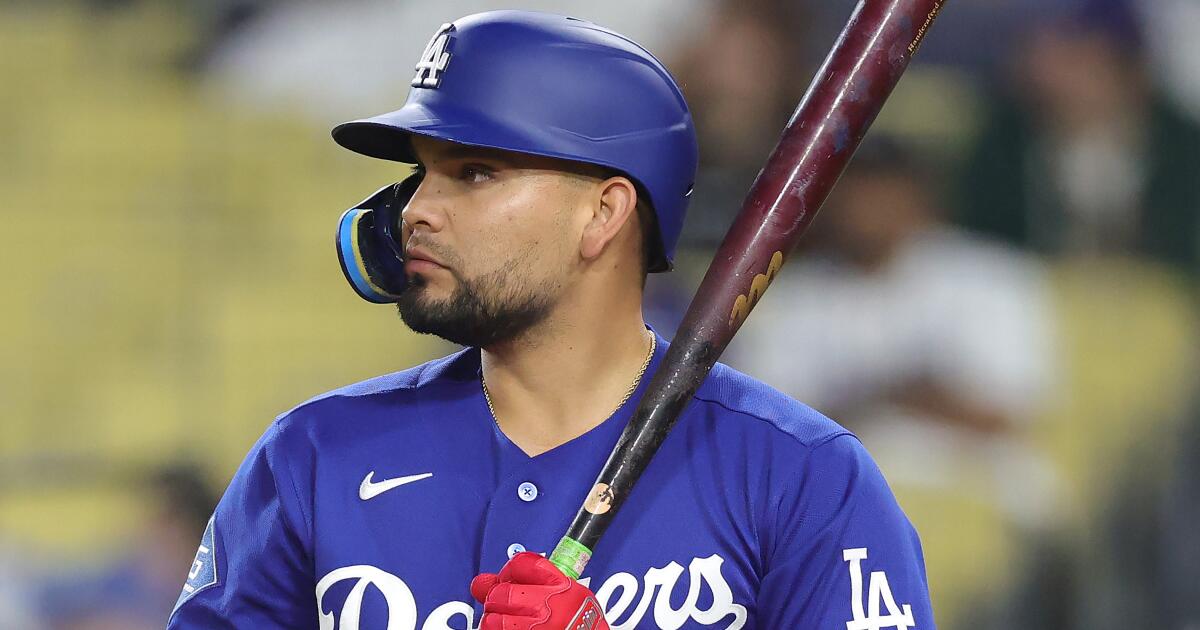
Dodgers’ Eliezer Alfonzo praying his sister and stepmother will be found in Venezuela
-

 World14 minutes ago
Reform UK’s Farage failed to disclose funds from convicted criminal: Report
-
 News41 minutes ago
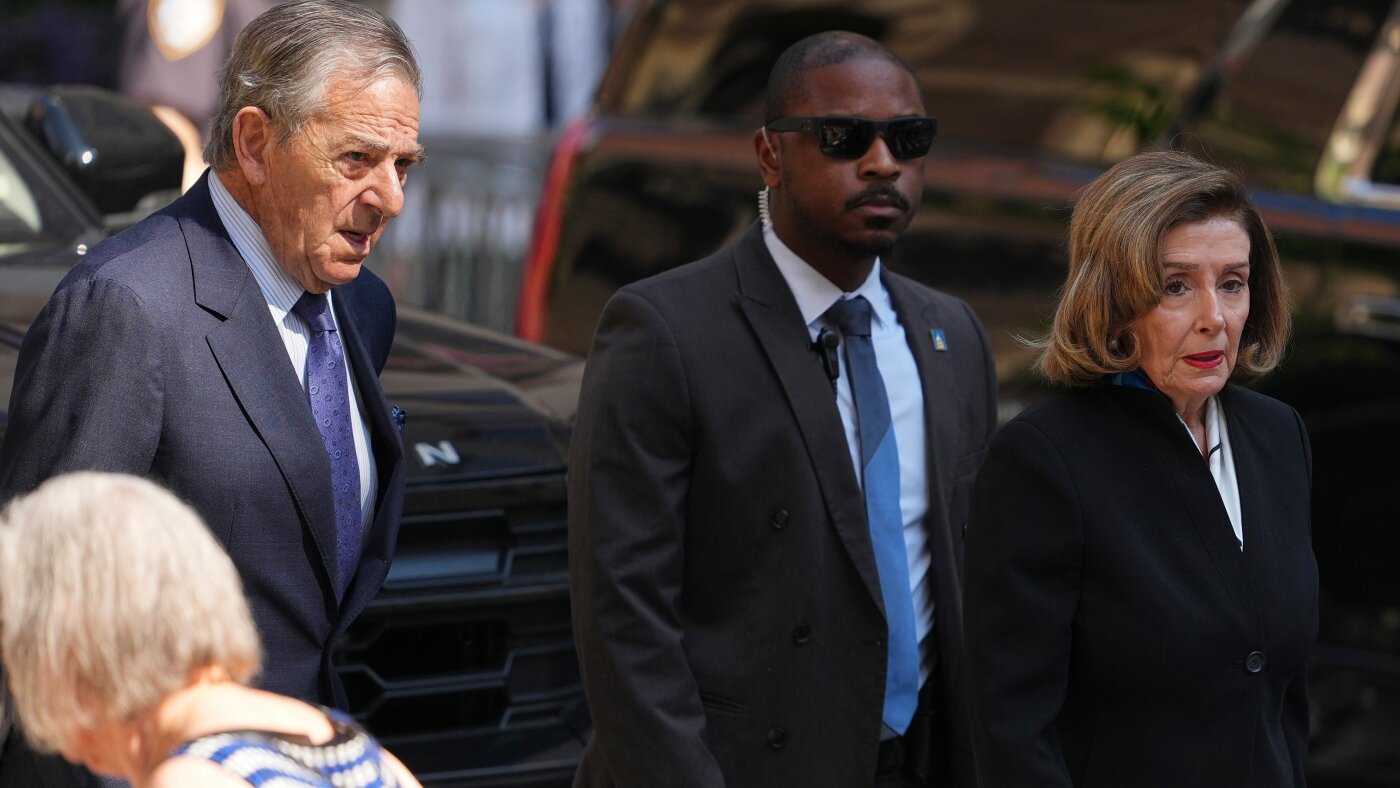
Paul Pelosi in hit-and-run in California, car left with major damage, authorities say
-

 Los Angeles, Ca2 hours ago
Firefighters battle Fourth of July blazes around Los Angeles
-

 Detroit, MI2 hours ago
Storm chances linger into the start of the week across Metro Detroit
-

 San Francisco, CA2 hours ago
Relay for America runs flag from San Francisco to D.C. in message of unity
-

 Dallas, TX3 hours ago
Cowboys newcomer already looks like a waste of money in Dallas
-

 Miami, FL3 hours ago
Police search for suspect after man is shot while on a boat near hotel in Fort Lauderdale on 4th of July

