World
Wafa Al-Udaini, Palestinian Journalist, Told Story of Gaza That Was Full of Life


Before the answers to life’s questions fit in our pocket, you used to have to turn a dial. If you were lucky, Phil Donahue would be on, ready to guide you toward enlightenment. In a stroke of deluxe good fortune, Dr. Ruth Westheimer might have stopped by to be the enlightenment. He was the search engine. She was a trusted result.
Donahue hailed from Cleveland. The windshield glasses, increasingly snowy thatch of hair, marble eyes, occasional pair of suspenders and obvious geniality said “card catalog,” “manager of the ’79 Reds,” “Stage Manager in a Chevy Motors production of ‘Our Town.’” Dr. Ruth was Donahue’s antonym, a step stool to his straight ladder. She kept her hair in a butterscotch helmet, fancied a uniform of jacket-blouse-skirt and came to our aid, via Germany, with a voice of crinkled tissue paper. Not even eight years separated them, yet so boyish was he and so seasoned was she that he read as her grandson. (She maybe reached his armpit.) Together and apart, they were public servants, American utilities.
Donahue was a journalist. His forum was the talk show, but some new strain in which the main attraction bypassed celebrities. People — every kind of them — lined up to witness other people being human, to experience Donahue’s radical conduit of edification, identification, curiosity, shock, wonder, outrage, surprise and dispute, all visible in the show’s televisual jackpot: cutaways to us, reacting, taking it all in, nodding, gasping. When a celebrity made it to the “Donahue” stage — Bill Clinton, say, La Toya Jackson, the Judds — they were expected to be human, too, to be accountable for their own humanity. From 1967 to 1996, for more than 6,000 episodes, he permitted us to be accountable to ourselves.
What Donahue knew was that we — women especially — were eager, desperate, to be understood, to learn and learn and learn. We call his job “host” when, really, the way he did it, running that microphone throughout the audience, racing up, down, around, sticking it here then here then over here, was closer to “switchboard operator.” It was “hot dog vendor at Madison Square Garden.” The man got his steps in. He let us do more of the questioning than he did — he would just edit, interpret, clarify. Egalitarianism ruled. Articulation, too. And anybody who needed the mic usually got it.
The show was about both what was on our mind and what had never once crossed it. Atheism. Naziism. Colorism. Childbirth. Prison. Rapists. AIDS. Chippendales, Chernobyl, Cher. Name a fetish, Phil Donahue tried to get to its bottom, sometimes by trying it himself. (Let us never forget the episode when he made his entrance in a long skirt, blouse and pussy bow for one of the show’s many cross-dressing studies.) Now’s the time to add that “Donahue” was a morning talk show. In Philadelphia, he arrived every weekday at 9 a.m., which meant that, in the summers, I could learn about compulsive shopping or shifting gender roles from the same kitchen TV set as my grandmother.
Sex and sexuality were the show’s prime subjects. There was so much that needed confessing, correction, corroboration, an ear lent. For that, Donahue needed an expert. Many times, the expert was Dr. Ruth, a godsend who didn’t land in this country until she was in her late 20s and didn’t land on television until she was in her 50s. Ruth Westheimer arrived to us from Germany, where she started as Karola Ruth Siegel and strapped in as her life corkscrewed, as it mocked fiction. Her family most likely perished in the Auschwitz death camps after she was whisked to the safety of a Swiss children’s home, where she was expected to clean. The twists include sniper training for one of the military outfits that would become the Israel Defense Forces, maiming by cannonball on her 20th birthday, doing research at a Planned Parenthood in Harlem, single motherhood and three husbands. She earned her doctorate from Columbia University, in education, and spent her postdoc researching human sexuality. And because her timing was perfect, she emerged at the dawn of the 1980s, an affable vector of an era’s craze for gnomic sages (Zelda Rubinstein, Linda Hunt, Yoda), masterpiece branding and the nasty.
Hers was the age of Mapplethorpe and Madonna, of Prince, Skinemax and 2 Live Crew. On her radio and television shows, in a raft of books and a Playgirl column and through her promiscuous approach to talk-show appearances, she aimed to purge sex of shame, to promote sexual literacy. Her feline accent and jolly innuendo pitched, among other stuff, the Honda Prelude, Pepsi, Sling TV and Herbal Essences. (“Hey!” she offers to a young elevator passenger. “This is where we get off.”) The instructions for Dr. Ruth’s Game of Good Sex says it can be played by up to four couples; the board is vulval and includes stops at “Yeast Infection,” “Chauvinism” and “Goose Him.”
On “Donahue,” she is direct, explicit, dispelling, humorous, clear, common-sensical, serious, vivid. A professional therapist. It was Donahue who handled the comedy. On one visit in 1987, a caller needs advice about a husband who cheats because he wants to have sex more often than she does. Dr. Ruth tells Donahue that if the caller wants to keep the marriage, and her husband wants to do it all the time, “then what she should do is to masturbate him. And it’s all right for him to masturbate himself also a few times.” The audience is hear-a-pin-drop rapt or maybe just squirmy. So Donahue reaches into his parochial-school-student war chest and pulls out the joke about the teacher who tells third-grade boys, “Don’t play with yourself, or you’ll go blind.” And Donahue raises his hand like a kid at the back of the classroom and asks, “Can I do it till I need glasses?” Westheimer giggles, maybe noticing the large pair on Donahue’s face. This was that day’s cold open.
They were children of salesmen, these two; his father was in the furniture business, hers sold what people in the garment industry call notions. They inherited a salesman’s facility for people and packaging. When a “Donahue” audience member asks Westheimer whether her own husband believes she practices what she preaches, she says this is why she never brings him anywhere. “He would tell you and Phil: ‘Do not listen to her. It’s all talk,’” which cracks the audience up.
But consider what she talked about — and consider how she said it. My favorite Dr. Ruth word was “pleasure.” From a German mouth, the word conveys what it lacks with an American tongue: sensual unfurling. She vowed to speak about sex to mass audiences using the proper terminology. Damn the euphemisms. People waited as long as a year and a half for tickets to “Donahue” so they could damn them, too. But of everything Westheimer pitched, of all the terms she precisely used, pleasure was her most cogent product, a gift she believed we could give to others, a gift she swore we owed ourselves.
I miss the talk show that Donahue reinvented. I miss the way Dr. Ruth talked about sex. It’s fitting somehow that this antidogmatic-yet-priestly Irish Catholic man would, on occasion, join forces with a carnal, lucky-to-be-alive Jew to urge the exploration of our bodies while demonstrating respect, civility, reciprocation. They believed in us, that we were all interesting, that we could be trustworthy panelists in the discourse of being alive. Trauma, triviality, tubal ligation: Let’s talk about it! Fear doesn’t seem to have occurred to them. Or if it did, it was never a deterrent. Boldly they went. — And with her encouragement, boldly we came.
Wesley Morris is a critic at large for The New York Times and a staff writer for the magazine.



NEWYou can now listen to Fox News articles!
Iran’s Islamic Revolutionary Guard Corps said Thursday it killed five members of the Democratic Party of Iranian Kurdistan, while the Kurdish opposition group told Fox News Digital that six of its Peshmerga — a term commonly used for Kurdish fighters — were killed in what it described as an Islamic Revolutionary Guard Corps ambush in northwest Iran.
The clash marks another escalation in Iran’s Kurdish-majority west after days of reported attacks and clashes involving Iranian security forces, the Islamic Revolutionary Guard Corps and Kurdish armed factions.
It also underscores the current position of Iranian Kurdish opposition groups that recently were viewed by U.S. and Israeli officials as a possible pressure point against Tehran during the U.S.-Israeli war with Iran but ultimately stayed out of the conflict amid mixed signals from Washington and pressure from both Iran and Turkey.
WAVE OF ATTACKS ON IRAN’S IRGC RAISES QUESTIONS ABOUT RENEWED KURDISH INSURGENCY
The Democratic Party of Iranian Kurdistan said six of its Peshmerga — Karo Hormuziari, Fardin Changizi, Mohammad Khaki, Abdullah Mohammadpour, Twana Osmani and Mohammad Amin Bayezidi — were killed in a clash with Iran’s Islamic Revolutionary Guard Corps near Piranshahr in Iranian Kurdistan July 1, 2026. (The Democratic Party of Iranian Kurdistan)
Majeed Gly, president of the American Kurdish Committee, told Fox News Digital the latest clashes should not be read as a full-scale uprising, but also should not be dismissed as routine border violence.
“What I’m hearing is, this is not business as usual,” Gly said. “This is not like periodic clashes on the border. This is operations, and it seems to be deep inside.”
Gly said Kurdish frustration has grown sharply after months of Iranian attacks on Kurdish areas and opposition-linked sites, including in the Kurdistan Region of Iraq. He said the region has been hit by more than 850 attacks since February, leaving at least six civilians dead and dozens more wounded.
Hejar Berenji, the U.S. representative of the Democratic Party of Iranian Kurdistan, or PDKI, confirmed to Fox News Digital that six PDKI Peshmerga were killed in a clash with IRGC forces in the Piranshahr area of Iranian Kurdistan.
Iran’s Revolutionary Guard said it had killed five members of the banned PDKI in northwest Iran, Reuters reported Thursday, citing state media. The IRGC said the group was ambushed after entering Iranian territory in mountainous border areas near Piranshahr in West Azerbaijan Province.
WAVE OF ATTACKS ON IRAN’S IRGC RAISES QUESTIONS ABOUT RENEWED KURDISH INSURGENCY
Kurdish separatists attempted an Iran crossing from Iraq amid protests. (Mustafa Ozer/AFP via Getty Images)
Berenji identified the six Peshmerga as Karo Hormuziari, Fardin Changizi, Mohammad Khaki, Abdullah Mohammadpour, Twana Osmani and Mohammad Amin Bayezidi. He said the incident took place Wednesday night in the village of Qizqapan, near Piranshahr, and said the PDKI unit was on a “political and organizational mission” when it was “ambushed by a large and heavily equipped IRGC force.”
“This should be understood in the broader context of the Islamic Republic’s continued repression in Iranian Kurdistan and its repeated attacks on Iranian Kurdish civilian camps in the Kurdistan Region of Iraq, even during ceasefire and negotiation periods,” Berenji said. “The regime has increased pressure on Kurdish communities because it understands that Iranian Kurds remain among the most organized and determined democratic forces inside Iran.”
The PDKI is one of Iran’s oldest Kurdish opposition movements. The group has been involved in decades of intermittent conflict with the Islamic Republic, while Tehran has long viewed Kurdish armed groups as separatist threats, while others describe it as a historic, centrist and nationalist Iranian Kurdish opposition group that Iran has targeted for years, including through assassinations of its leaders decades ago.
The Kurds are one of the largest stateless ethnic groups in the Middle East with communities spread across Iran, Iraq, Syria and Turkey. In Iran, many Kurds live in the country’s mountainous west and northwest, where Kurdish opposition groups have long accused Tehran of repression, executions, forced assimilation and military crackdowns. Iranian authorities view armed Kurdish factions as separatist or “terrorist threats.”
The latest clash followed several days of violence in western Iran. A similar incident near Piranshahr was reported by Iranian state media Tuesday, with the IRGC saying it had killed six members of what it called an “opposition and separatist group.”
Two IRGC members were killed and two wounded in a shooting in Kermanshah Province Monday evening, an attack claimed by a newly formed Kurdish armed group seeking retaliation for the IRGC’s role in suppressing the 2022–2023 protest movement, according to the Kurdish rights group Hengaw.
Iran also appeared to be expanding pressure on Kurdish opposition groups beyond PJAK, the Kurdistan Free Life Party, after days of clashes between PJAK and the IRGC, The Jerusalem Post reported Thursday.
Berenji said the latest clash was not a response to ongoing U.S.–Iran memorandum of understanding negotiations, which remain unresolved as talks continue without a finalized agreement.
WAVE OF ATTACKS ON IRAN’S IRGC RAISES QUESTIONS ABOUT RENEWED KURDISH INSURGENCY
Vice President JD Vance (center) speaks with Army Chief and Field Marshal Syed Asim Munir (left) and Pakistan Foreign Minister Ishaq Dar after arriving for the U.S.-Iran peace talks in Islamabad April 11, 2026. (Jacquelyn Martin/Pool/AFP via Getty Images)
“The Kurdish struggle for freedom, democracy and national rights predates the current negotiations and is not dependent on them,” Berenji said. “At the same time, any agreement that ignores the Kurdish question, the regime’s attacks on Kurdish civilians and the repression inside Iran will not bring real stability.”
Gly said Kurdish anger has been compounded by language in the U.S.–Iran memorandum of understanding that critics interpret as Washington agreeing not to interfere in Iran’s internal affairs.
KHAMENEI BODY IN COLD STORAGE AS FEARED BASIJ MOBILIZES AHEAD OF HISTORIC IRAN FUNERAL
People take part in a march in Erbil, Iraq, April 21, 2026, expressing support for the unity of Iranian Kurdish parties and condemning Iranian missile strikes and military actions against Kurdish groups in the Kurdistan Region of Iraq. (Rasul Gawhari/Middle East Images/AFP via Getty Images)
“This sentence has taken every Iranian opposition group the wrong way, especially the Kurds,” Gly said.
He argued that even during negotiations with hostile powers, the United States should not abandon its public support for freedom movements, invoking former President Ronald Reagan’s approach to the Soviet Union during the Cold War.
Gly said he does not see clear evidence that Kurdish groups have gained major new military capabilities but said the perception of Iran’s strength has changed.
“What has changed is the perception of weakness of Iran,” Gly told Fox News Digital. “They are less afraid of the regime.”
The new violence carries broader significance for Washington because Iranian Kurdish opposition groups were recently discussed as a possible ground pressure point against Tehran.
U.S. officials and Kurdish groups had discussed a potential military operation against Iranian security forces in western Iran, Reuters reported in March, while a separate report said Israel was backing Iranian Kurdish plans to seize Iranian border areas, though such an operation would likely require U.S. and Israeli support.
But those expectations quickly faltered. In April, Kurdish fighters ultimately stayed out of the war because of mixed signals from Washington and Israel and Iranian threats and strikes against Kurdish positions in Iraq. Turkish President Recep Tayyip Erdogan urged President Donald Trump during the conflict to prevent Kurdish forces from launching a ground operation inside Iran, reflecting Ankara’s longstanding opposition to Kurdish armed movements gaining ground in the region, Reuters also reported.
During the conflict, Trump told Reuters he would be “all for it” if the Kurds wanted to move against Iran and said their objective should be “to win,” but Kurdish commanders were frustrated by the lack of a clear U.S. or Israeli strategy.
Berenji said the PDKI does not seek chaos, but insisted Kurdish forces have the right to defend themselves.
CLICK HERE TO DOWNLOAD THE FOX NEWS APP
Naval units from Iran and Russia simulate the rescue of a hijacked vessel during joint drills at the Port of Bandar Abbas in Hormozgan, Iran, on Feb. 19, 2026. (Iranian Army/Handout/Anadolu via Getty Images)
“We seek a democratic, pluralistic, secular and federal Iran where all nations and communities can live with dignity and rights,” he said. “But the Kurdish people also have the right to defend themselves against repression, intimidation, and attacks by the IRGC.”
Fox News Digital has reached out to Iran’s mission to the United Nations for comment.

Pakistan has warned India over the Indus Water Treaty.
The Indus Water Treaty lays out how the river’s resources are to be shared between India and Pakistan.
Brokered in 1960, it has survived decades of conflict between the neighbours.
list of 3 itemsend of listRecommended Stories
But recently, the agreement was put to the test after New Delhi suspended its participation.
That came after an attack India said was carried out by armed groups linked to Pakistan, which it denied.
This week, Islamabad has said India cannot suspend the agreement on its own.
It says its share of the Indus River is a red line and has threatened consequences.
So, how could they avoid a further escalation?
Presenter: Mohammed Jamjoom
Guests:
Siddharth Varadarajan – Founding editor of The Wire, an independent investigative news organisation
Michael Kugelman – Senior fellow for South Asia at the Atlantic Council
Zeeshan Salahuddin – Advisory director at Tabadlab, a think tank and consultancy on geopolitics
Published On 2 Jul 2026
-

 South Dakota11 minutes ago
Pres. Trump travels to South Dakota
-
Tennessee14 minutes ago
Johnson County marks America’s 250th with Tennessee’s first Charters of Freedom display
-

 Texas19 minutes ago
What to expect on Texas roads this Fourth of July
-

 Utah26 minutes ago
Utah schools still need hundreds of teachers ahead of new school year
-

 Vermont29 minutes ago
Arizona kidnapping suspect indicted while facing separate child sex charges in Vermont
-

 Virginia34 minutes ago
Virginia nonprofit Urban Baby Beginnings to receive $5K grant for Nexstar’s ’30 Days of Giving’
-
 Washington41 minutes ago
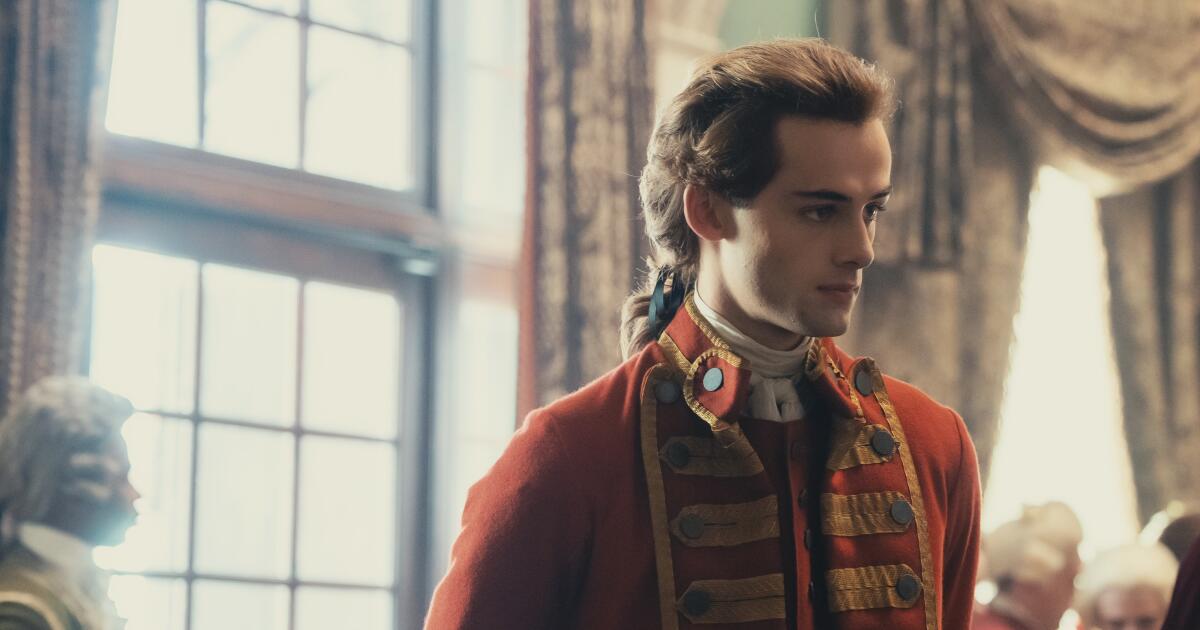
Review: Our critic cannot tell a lie: ‘Young Washington’ is the dullest of history lessons
-

 Wisconsin44 minutes ago
Swatting call caused temporary lockdown at Rice Lake, Wisconsin health clinic


