New York
She’s Riding in Five Boro Bike Tour, and She’s Happy to Wear a Helmet


Good morning. It’s Friday. We’ll meet a first-time rider in the Five Boro Bike Tour who learned the hard way that wearing a helmet matters. And on this, the 95th anniversary of the day the Empire State Building opened, we’ll find out about some of the workers who built it.
As a first-timer in the Five Boro Bike Tour on Sunday, Patricia Hochhauser will wear a helmet. It’s a must for the 32,000 entrants.
But Hochhauser has special reason to. She wasn’t wearing one a couple of years ago, when she tried out a gas-powered scooter. Her husband, Harold Hochhauser, said it had bucked and thrown her off. She sustained a traumatic brain injury.
“I live every day with the consequences of not wearing that helmet,” she said. She was checking out the scooter in a parking lot. “I was so excited about it, thinking I was going to do errands in the neighborhood — put on a backpack and throw my groceries in there,” she said. “I had all these big hopes and dreams.” She said she did not remember anything about the accident “until they were putting staples in my head” — 15 in all, she said.
The accident cost her a job opportunity, she said: She had been scheduled to start training a week later as a bus driver with the Metropolitan Transportation Authority. She had been a school bus driver and was looking forward to getting behind the wheel of one of the 1,300 buses in the M.T.A.’s fleet.
On Sunday she is looking forward to riding over the 2.6-mile-long Verrazzano-Narrows Bridge. The lower level will be closed to cars and trucks to accommodate the cyclists, who will start out at Franklin Street and Church Street in TriBeCa in Manhattan. Some avenues and major highways will also be off limits to cars and trucks at times during the tour. The City Department of Transportation’s traffic advisory is here. And the Five Boro Bike Tour does not permit scooters like the one she was riding when she had the accident. Some e-bikes are allowed. She plans to ride her regular road bike.
‘We are Gen X’
When the accident happened, Hochhauser and her husband were already practiced cyclists and owned helmets. But they never bothered with them, she said.
Why not?
“Because we are Gen X, and I grew up not having to wear a helmet,” she said. “Half the time growing up, I didn’t even have to wear a seatbelt in the car. It wasn’t like, Oh, get in the back seat and buckle up, you know?”
After the accident, she was determined to ride again. Harold Hochhauser said that their first outings were difficult. To help her maintain balance, he put training wheels on her bike — since removed, he said.
Last year they rode in the Tour de Yonkers, picking the 50-mile route, the longest of three that participants could follow. She said there were hills that she could not conquer — she had to get off and walk up.
“I’m doing it all myself this time,” she said. “I am, you know, stronger than I was then.”
Weather
Today will be bright and sunny with a high near 65. Expect increasing clouds and a chance of rain tonight, as temperatures fall near 51.
ALTERNATE-SIDE PARKING
In effect until May 14 (Solemnity of the Ascension).
QUOTE OF THE DAY
“I would probably encourage him to return the Koh-i-Noor diamond.” — Mayor Zohran Mamdani, on what he would have said to King Charles III if they had met privately during the royal visit on Wednesday. The priceless jewel is a symbol of colonial plunder.
The workers who built the Empire State Building
On another May 1 — in 1931, by coincidence also a Friday — the Empire State Building opened, and on that morning, everyone’s perspective changed. People were awed by the view of the building and the view from the building, “a new view” of New York, as The New York Times described it from 85 stories up. The ships in the Hudson River were “little more than rowboats,” the paper reported. Fifth Avenue and Broadway were “slender black ribbons.”
The Times said that 3,400 workers had “coordinated tasks to finish ahead of schedule.” Glenn Kurtz, whose father’s office was in the building, wondered who they were.
“When you look at the standard histories, the answer is always the architects, the owners and the contractors,” Kurtz told me. He wanted to know about the “people who had tools in their hands.”
“I very quickly discovered there was almost no information about them,” he said. There was no list of their names; the men in famous photographs taken by Lewis W. Hine “have invariably been referred to as ‘anonymous workers,’” Kurtz said. He spent a decade doing research for the book “Men at Work: The Empire State Building and the Untold Story of the Craftsmen Who Built It” and put names to some of the faces in Hine’s photos.
He spotted 32 names on a plaque in the lobby — for workers who were given “certificates of superior craftsmanship” — and realized that many were the men in Hine’s photographs.
But the images themselves were why the workers’ identities had been overlooked. “The photographs are iconic, they represent a generalized ideal, and we love generalized ideals,” Kurtz said. To say, ‘Oh, that’s not this magnificent, iconic image of a worker, it’s Victor Gosselin, who lived in Canada and died in a car crash’ — many people would feel it diminishes the image to know who the actual person was.”
Or, as he said a moment later, “the actual lives of these men often undermine the mythology.”
Gosselin was almost certainly a Mohawk from the Kahnawake reservation, whose territory once reached what is now upstate New York. Another, George Adams, was apparently distantly related to the second president of the United States, John Adams. Others were recent immigrants from Ireland and Italy, as well as Eastern Europe and Scandinavia. Some were sons or grandsons of German or Scottish immigrants.
In “Men at Work,” Kurtz described Neil Doherty, an ironworker Hine photographed, as one of the few “allowed to have his own voice” in newspaper articles about the construction of the huge skyscraper.
“It’s just like anything else,” Doherty was quoted as saying in one article. “A person on solid ground never has any fear of falling. That’s just the way you become, up on the girders after a while, and you have to watch yourself taking that attitude. Usually the two days off at the end of the week are enough to take away this carelessness.”
Gosselin was “the single best-known worker on the building” because he was photogenic and charismatic, Kurtz said. “And in every portrayal of him, he epitomizes the cultural ideal that has so powerfully shaped our image of the workmen who built the Empire State.“
“My real question was, What does the building stand for?” Kurtz told me. “One way to think of it is as a central symbol of America in the 20th century. If we imagine it in those terms, do we think of the five rich men who were funding it, or do we think in terms of the 10,000 mostly immigrant men who built it? The story of the five is told over and over again. I thought it would be interesting to tell the other story.”
METROPOLITAN diary
Covered up
Dear Diary:
I was walking down Clinton Street on the Lower East Side when I passed a couple of guys sitting on a bench.
“You look like you’re in a witness protection program,” one said.
“Excuse me?” I asked.
“You look like you’re in a witness protection program, for sure,” he repeated.



You made it time. If you want to look a little longer, just scroll back up and press “Continue.”
Look up.
Before you commute home to suburbs like Tarrytown and Larchmont, or race toward the next stop on your tourist map, take a minute.
Look up to see the stars.
One hundred and twenty-five feet above you are 2,500 stars and six signs of the zodiac along the ecliptic, a line that represents the path of the sun across the sky:
The signs are joined by a few others: Orion, Pegasus, Triangulum and, in the center of it all, Musca Borealis (the Northern fly, or sometimes called Apis, the bee). The Milky Way streaks across the ceiling in the opposite direction. The whole thing is ringed by intricate plaster moldings along the clerestory windows. Fifty-nine of the stars twinkle.
Who says there isn’t magic in Midtown?
The original early 1900s plan for the ceiling was to build a massive skylight so commuters could look up at the actual stars:
But time and money were short, so the architects asked the artist Paul Helleu to design a version of the sky on the ceiling instead. Helleu took inspiration from star atlases from the 1600s. His main resource was the Uranometria from 1603, a lushly illustrated volume that was the first detailed cataloging of individual stars, their positions and brightness. See how similar the figures are. This is Aries:
Here’s Taurus, the bull:
A heart balloon — one of several — had floated up the day we took this photograph, nestling between Orion’s club and Taurus’s horn (maybe an earthly sign that this heavenly hunt might finally resolve).
Converting the flat drawings of a spherical sky re-projected onto a semi-cylindrical vaulted ceiling would have been no easy task. The design work was done by a famous scenic designer and muralist, James Monroe Hewlett, and was overseen by the Columbia astronomy professor Harold Jacoby, who in 1910 assured a panicked public that Halley’s comet would not hit Earth.
Dozens of painters got to work. The terminal opened at midnight on Feb. 2, 1913. The New York Central Railroad boasted “that many school children will go to the Grand Central Terminal to study this representation of the heavens.”
Two weeks later, a commuter from New Rochelle (and a hobby astronomer) looked up at the ceiling and realized that west was east and east was west and the sky was not, actually, in a proper arrangement. Only Orion was shown in the “correct” orientation. He wrote a “wrathful” letter to the station. As The New York Times reported in 1913, officials at Grand Central “did not deny the charge that things were a bit mixed, but held that it was a pretty good ceiling for all that.”
How this happened is still a matter of debate, given Professor Jacoby’s astronomical blessing.
Michael Allison, a former NASA planetary scientist at the Goddard Institute for Space Studies (and a former adjunct in the Columbia astronomy and astrophysics department), met me last month at the great clock under the ceiling to explain his theory.
“I’ve stared at the ceiling I don’t know how many hours,” he said. “I keep hoping I can discover one more thing.”
The liberties taken, Mr. Allison said, like re-sizing the constellations to fit the space and flipping Orion (in relation to the rest), were carefully done. Ultimately, a good marriage of art and science. He thinks Jacoby was a victim of big project bureaucracy, that it was all a mixup.
Jacoby probably expected the design he approved to be projected overhead, where the result would match the plans if you held them above you. The painters put them on the floor instead. Hence, the flip.
But this “heavenly view” — the stars as if they could be seen from above, looking down — may not be a bad view at all.
“There are just so many bad things happening in the world now that I think the sky offers a perspective that can lift us above that,” Mr. Allison said.
For Deirdre Newman, the great-granddaughter of the muralist Hewlett, who painted the ceiling, the imperfection “is what art is.”
Ms. Newman, it turns out, is also a painter of murals and ceilings. But these days, if she has to flip an image, she just hits a button on the projector.
“Anytime I make a mistake painting, I’m like, this proves that it’s art,” she said. “It is not perfection, and it shouldn’t be — it would be a sad thing if it was.”
The stories that we’ve given to the stars over millenniums, some of the most retold tales in history, are hardly orderly — stories of fate, violence, betrayal, revenge, sex and punishment. Cancer helps Hera in pinching a rival’s foot. Orion, son of Poseidon, is placed in the stars by Zeus, locked in an eternal hunt. The two fish of Pisces (Aphrodite and Eros) are linked together to escape the monster-of-all-monsters, Typhon.
Or the stories are totally different if you were Babylonian or Egyptian, Greek or Roman. Today, the stars mean something else again to a devoted user of the horoscope app Co-Star, seeking reassurance after a breakup. And to a commuter standing in Grand Central, looking up while waiting for the train, the stars might just be a momentary diversion, a decorative way to pass the time. Or more.
Take what you want. Take what you need.
***
By the 1940s, the ceiling had fallen into disrepair, so they painted a whole new one on four-foot-by-eight-foot asbestos sheets over the old one. This is the version that exists today. Eventually that second ceiling, too, grew dark with grime and had to be cleaned from 1996 to 1998. The difference was stark. As you were zooming in, you may have noticed a little dark square by Cancer. They deliberately left one bit of the uncleaned ceiling here:
The best time to take all of it in — the ceiling, and the majesty of the station — might just be coming this weekend. The setting sun will line up with Manhattan’s street grid and should (pending clouds) bathe the terminal in a beautiful golden glow Saturday at 8:19 p.m. and Sunday at 8:20 p.m. I plan to be on the east balcony looking west on Sunday for that moment.
See you there.
How we took the photograph
To generate a high-resolution panorama of the ceiling, The Times captured 232 close-up images. We then used software to stitch these photos into an equirectangular projection, to approximate the curve of the ceiling. We also developed custom computer vision software to ensure consistent color blending across varying lighting conditions. To optimize for display efficiency and clarity during navigation, the image was then re-projected into the shape of a cube. We think it’s still a pretty good picture for all that.
This is an installment in our series of experiments on art and attention. If you liked this one, you may like these past exercises: a finished, unfinished portrait; a sudden rain over a bridge; a unicorn tapestry; some buckets from Home Depot; and a Whistler painting.
Sign up to be notified when new installments are published here. And let us know how this exercise made you feel in the comments.

Welcome to Day 2 of the Metropolitan Diary challenge, part of our celebration of the column’s 50th anniversary. On Day 1, we gave you tips for identifying your New York City story. Today, we’ll help you write it. (Missed Day 1? It’s not too late to start.)
What makes for a good Diary? It’s simply a good story that happens to be set in, and capture, the essential New York-ness of the city. While this isn’t a full writing course, we do have guidance on the kinds of elements that the submissions we publish include. They typically have: a beginning, middle and end; sharp details; catchy dialogue; a bit of surprise; some humor, warmth or emotion. But there is no formula, so flouting these loose rules can be worthwhile.
Don’t worry if you don’t think of yourself as a “writer.” Focus on being a “storyteller.” Pretend you are telling your story to the person who’d most appreciate it, using whatever conversational language or pacing that would hold their attention. Do it out loud if you want, maybe give that person a call and tell them your story (or tell it to them again). Then write it down.
That’s the big picture. For more tips, read on.
Here is an example of a published Diary that we (and readers) really liked, and a few thoughts on why that may help crystallize yours.
Unacceptable
Dear Diary:
I went to a new bagel store in Brooklyn Heights1 with my son.
When it was my turn to order, I asked for a cinnamon raisin bagel with whitefish salad and a slice of red onion.2
The man behind the counter looked up at me.
“I’m sorry,” he said. “I can’t do that.”3
— Richie Powers
One of this item’s best qualities is that it is short and snappy. Only 53 words! Although we will use stories of up to 300 words, many don’t need to be that long and the column doesn’t work if we don’t have a mix of long, medium and short, so we are always looking for stuff like this. Here’s another one!

At Attention
Dear Diary:
It was December 1967. I had just finished basic training at Fort Dix in New Jersey and was traveling to Boston in uniform. For reasons I no longer recall, I stopped in New York City on the way.1
Walking on the Upper East Side2 in a snowstorm, I spied another man in a uniform. He was older, and his cap bore the familiar gold band that identified him as an officer.
I rendered a snappy salute. It was not returned. 3The uniform was unfamiliar, so I guessed he was a foreign officer. Military courtesy still required me to salute.
A little farther down the street, I encountered another officer and offered another salute that went unacknowledged.4 His uniform was strange to me as well.
The third time it happened, the man I saluted ignored me while holding the door for a couple 5on their way into a large apartment building.
I realized I had been saluting doormen.6
— Stephen Salisbury
To get your storytelling muscles going, think through or jot down the answers to some of these questions.
Let’s start with setting the scene.
- When and where in the city did this happen? Is this place well-known?
- Was there anything particular about that point in your life that’s relevant?
- What did you see, hear, smell? Was there something notable about the weather?
Now, let’s move to the middle, the meat of the story.
- Did you have an exchange with someone?
- What details are important to how events unfolded, especially in setting up the ending?
And now, the end.
- What’s the resolution? Is there a punchline?
- Does the story end with a sense of shared humanity or some other warm feeling that lingers? You don’t need to name it. A good description will often allow readers to feel it too.
- Why has this experience stayed with you?
- Lines like “and that’s why I love New York” are almost always unnecessary.
That’s it. Keep your story simple and use the kind of plain language you use in conversation. You are sketching a moment in time. The details are important. Let them move the story along. Have fun and good luck.
Once you’re done, read through what you’ve got. What details are less important and can be left out? (Remember, there is a strict 300-word limit.)
Write your Metropolitan Diary however you like, on paper, on your phone or wherever! When you’re happy with what you’ve written, put your diary entry into the box below, fill out your information and submit it. You might just hear from me about including it in a future column.
This is the official submission form, so make sure to double-check your work before hitting submit.
That’s it! Submit your Metropolitan Diary.
By transmitting your submission, you grant The New York Times Company a perpetual, royalty-free license to use the submission in any medium. They may be edited, and may be republished and adapted in all media. You may reprint your story elsewhere after it appears in The Times.

65.
In or about and between December 2023 and April 2024, both dates being approximate and inclusive, within the Eastern District of New York and elsewhere, the defendants MALIK BEASLEY, also known as “Beas,” “Bease,” “MB” and “5,” WILLIAM BROWN, also known as “Willo,” EDWARD DAVIS, also known as “Ed,” “ED” and “E Davis,” ROBERT GORODETSKY, also known as “Rob,” ERNESTO PLASCENCIA, also known as “Ernie,” “Erny,” “Ernie P” and “Erny P,” and PAOLO ZAMORANO, also known as “PZ,”
together with others, did knowingly and intentionally conspire:
(a)
to conduct one or more financial transactions in and affecting
interstate commerce, which transactions in fact involved the proceeds of specified unlawful activity, to wit: (i) wire fraud, in violation of Title 18, United States Code, Section 1343 and (ii) sports bribery, in violation of Title 18, United States Code, Section 224, knowing that the property involved in the transactions represented the proceeds of some form of unlawful activity, and with the intent to promote the carrying on of the specified unlawful activity, contrary to Title 18, United States Code, Section 1956(a)(1)(A)(i);
(b)
to conduct one or more financial transactions in and affecting interstate commerce, which transactions in fact involved the proceeds of some form of unlawful activity, to wit: (i) wire fraud, in violation of Title 18, United States Code, Section 1343 and (ii) sports bribery, in violation of Title 18, United States Code, Section 224, knowing that the property involved in the transactions represented the proceeds of some form of unlawful activity, and knowing that the transactions were designed in whole and in part to conceal and disguise the
19
-
 News11 minutes ago
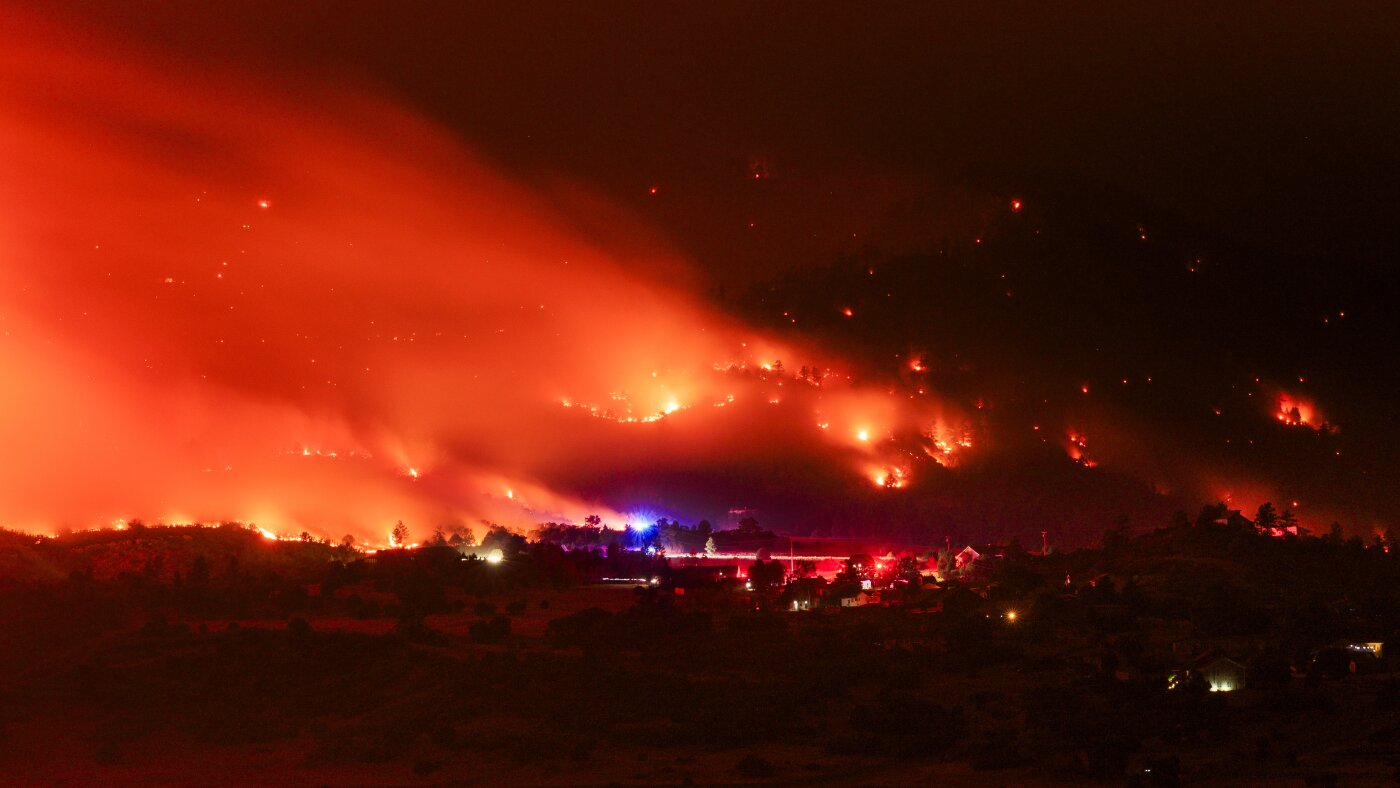
Thunderstorms, heat and wind will hamper efforts to contain Colorado wildfires
-

 New York2 hours ago
10-Minute Challenge: The Ceiling at Grand Central
-

 Los Angeles, Ca2 hours ago
1 killed, multiple people injured in Tarzana 4-car crash
-

 Detroit, MI2 hours ago
Power outage forces flaring at Marathon’s Detroit refinery; portion of Schaefer Road closed
-

 San Francisco, CA2 hours ago
San Francisco’s fireworks show ends in hours of gridlock involving Waymo cars
-

 Dallas, TX2 hours ago
FIFA Fan Fest in Dallas paused due to lighting in the area Sunday evening
-

 Miami, FL2 hours ago
Venezuelan Independence Day: Aid efforts continue after devastating earthquake
-

 Boston, MA2 hours ago
Timeline: Looking back on Jaylen Brown’s Celtics career – The Boston Globe

