Sign up for the Today newsletter
Get everything you need to know to start your day, delivered right to your inbox every morning.


No wonder Massachusetts residents voted in favor of auditing the Legislature, even if it’s not clear exactly what would be audited or whether it would make any difference. We just wanted some accountability.
Susan Clark
Brighton
My takeaway from the demise of Mayor Wu’s property tax proposal? The business and commercial property owners walked away from the negotiated settlement to share the burden of a tax increase with Boston residents and needed the Legislature to help them do it. Good lesson for voters, no matter where you live in the state: Ask your senators who they listen to when casting their votes.
Carolyn Royce
Jamaica Plain
In the article “Wu’s tax bid declared ‘dead’ on Beacon Hill,” the reporters suggest that the apparent failure of Mayor Michelle Wu’s plan to moderate property tax increases for homeowners is due to her “lack of pull in the upper chamber.” While the mayor may have foolishly thought the Massachusetts Senate would support her effort to help homeowners stay in their homes, the roadblock to the passage of her bill was one lawmaker, Nick Collins, who seems to be looking to become the Joe Manchin of the Senate, a Democrat in name only.
Collins was singlehandedly able to block a vote on the legislation, which the mayor had painstakingly and successfully negotiated until running into his power play. Collins has abandoned both homeowners and renters. His actions may be related to donations made to him recently from the real estate industry, reminding one of the frequent critique of federal and state lawmakers: that it is the best government money can buy.
Rosemary Kean
Dorchester
Re “In the end, the numbers didn’t add up for Wu” (Page A1, Dec. 12): A longtime commissioner of assessing who served under previous Boston mayors says that it was reasonable to expect property valuation numbers to change within a short period, with significant impact on the size of the increase in revenues required from Boston’s property taxes.
Therefore, some might argue that any compromise between representatives of the business community and the city regarding the bill that was reached based on estimates that proved to be incorrect should still be honored, and lawmakers should have passed the bill.
Yet strategic planning in the face of predictable uncertainty is a fact of life, not an oxymoron. Under these conditions, a responsible and competent mayoral administration should have had a fiscal plan B (and maybe even a plan C) ready to go to deal with the overall revenue shortfall the city is facing.
Such contingencies could have included choices of where to cut the budget and how to find additional revenues. These ideas were suggested by multiple parties including individuals and groups of residents, the Boston Municipal Research Bureau, and the Small Property Owners Association, with enough time for the administration to have had plans B and C at the ready. They were ignored. Now that plan A has not worked out, the administration is resorting to ad hominem attacks on those who refused to vote for it.
Martyn Roetter
Boston
The Senate’s refusal to take up Mayor Michelle Wu’s home rule petition to shift the city’s tax burden is a damning indictment of the home rule process in Massachusetts (“Wu’s defeat could put her on defensive: Tensions high with Senate, business leaders,” Page A1, Dec. 11).
Whenever a Republican Legislature in another state tries to block its liberal capital city from passing its own laws, liberals in Massachusetts are rightly outraged. But our Commonwealth beat those other states by almost half a century, reinforced repeatedly in the years since by Boston’s business class, who rallied behind Proposition 2½ in the early 1980s and against rent control in the early 1990s.
If the petitions from cities and towns to pass their own laws can’t even get a vote at the State House — and this is just one of a few examples from this session, including rejected petitions on real estate transfer fees and rent control — the fundamental mechanisms of democracy are not working.
Jonathan Cohn
Policy director
Progressive Mass
Boston


Local News
Boston Mayor Michelle Wu announced Wednesday that the city is suing social media companies — including Meta, TikTok, Snapchat and YouTube — over their alleged deliberate targeting of minors with addictive features.
The lawsuit, filed on behalf of Boston Public Schools in federal court in California, will be consolidated with more than 1,500 similar complaints from school districts around the country, Wu’s office said.
The lawsuit seeks to force the companies to remove addictive features and compensate the city for the mental health support needed by students. It alleges the companies designed addictive features specifically to keep young people engaged. These features include endless scrolling, frequent notifications, and personalized algorithms, city officials said.
In a statement, Wu said that these companies have evidence of the harm they are causing to children.
“Boston is taking legal action to protect children and youth and hold these companies accountable. Today, we are making it clear that social media companies must end exploitative practices and be accountable to standards of basic protection for children,” she said.
The move comes as more Massachusetts politicians look to rein in social media companies. The state’s House of Representatives passed a bill in April that would implement a phone ban in schools and prohibit children 14 and younger from using social media. Gov. Maura Healey followed that up by introducing legislation that would require social media companies to verify users’ ages and limit the ways in which minors are exposed to potentially addictive design features.
Just last week, the state Senate unveiled legislation that would require social media companies to automatically disable these types of features for minors.
BPS officials say that they have seen a “significant increase” in social media-fueled mental health needs over the past decade. They cited data from the Boston Public Health Commission that shows the impact on high school students. In 2015, just 26.7% of Boston public high school students reported “persistent sadness.” By 2021, that figure had risen to 43.9%.
The district says it has responded by “exponentially” expanding mental health resources. In 2007, there were six social workers and 48 school psychologists employed in the BPS system. The district now has 240 social workers and 105 school psychologists, officials said.
“We work hard to set our students on the best course for success through rigorous academics and whole-student supports, and the research is clear that social media has had a negative impact on students’ well-being while benefiting companies. We all need to do what is right for our students,” Superintendent Mary Skipper said in a statement.
In March, a jury in California found that Meta and YouTube are liable for intentionally designing addictive features and that executives failed to protect young users.
In May, Meta and other social media companies settled a lawsuit brought by a Kentucky school district in a bellwether case.
Get everything you need to know to start your day, delivered right to your inbox every morning.

There’s no way around it. To experience these sushi-focused multicourse tasting menus, you are going to splurge, at least a little. At omakase specialist O Ya, for instance, Tim and Nancy Cushman present raw fish in many creative forms over 20 to 25 bites, from oysters with watermelon pearls to hamachi with torched banana pepper to Peruvian-influenced chutoro. If the initially revelatory menu had started to feel somewhat rote, a Michelin pass-over and the restaurant’s 20th anniversary seem to have provided the spark to shake it up. Add a sake and wine pairing — a particular strength here — and the experience is going to cost more than $500 per person.
For a different creative take on omakase, head to Lexington to spend an evening at Michael Monaco’s six-seat Akame Nigiri and Sake. For $180, his 15-course tasting menu showcases premium fish from Japan alongside a freewheeling array of ingredients that might include mango, hummus, and Dorito powder; as at O Ya, Akame’s omakase includes Hokkaido uni and A5 Wagyu.
The bottom line:
O Ya: $378.78 (including taxes and fees; no gratuity required), optional beverage pairings $192-$240.
Akame Nigiri and Sake: $180, optional sake pairing $85.
O Ya, 9 East St., Boston, 617-654-9900, www.o-ya.restaurant. Akame Nigiri and Sake, 1707 Massachusetts Ave. #2, Lexington, 781-538-6581, www.akamenigiriandsake.com.

Steakhouse stakeout
Abe & Louie’s has been around since restaurateur Charlie Sarkis opened the steakhouse in 1965, and it’s still going strong. When you want old-school vibes — dark wood, white tablecloths, roaring fireplace, servers in jackets bringing you New York strips and martinis — this is your spot.

But if the Back Bay restaurant is too rich for your blood, there’s another steakhouse classic going strong, this one in Brighton: The Stockyard, opened in 1972. It’s got the fireplace, New York strips, and martinis, plus the right old-school vibe. The similarities should come as no surprise, as chef Bill Bramley and general manager Gerry Lynch both previously worked at Abe & Louie’s.
The bottom line:
Abe & Louie’s: Steaks $72-$195, martinis $18.
The Stockyard: Steaks $32-$98, martinis $14.
Abe & Louie’s, 793 Boylston St., Back Bay, Boston, 617-536-6300, www.abeandlouies.com. The Stockyard, 135 Market St., Brighton, 617-782-4700, www.stockyardrestaurant.com.

Postcards from Italy
Buzzy, swank, and Michelin-recommended, La Padrona is chef Jody Adams’s return to the Italian cuisine she was long known for at Rialto. She and executive chef Amarilys Colón draw from Liguria, Tuscany, Sicily, and beyond, applying New England ingredients to regional dishes. Come for charred cabbage with anchovy butter and risotto with lobster and uni, stay for the strong bartending.

Or head to Dorchester’s Via Cannuccia, where Italian chef Stefano Quaresima prepares dishes straight out of Rome. (The restaurant is named for the street he grew up on.) At this neighborhood favorite, you’ll find fresh, basil-laced eggplant Parmigiana; ravioli stuffed with sheep ricotta and blanketed with lamb ragu; Roman-style pizza; and porchetta with giardiniera. Weekend brunch brings beautiful pastries.
The bottom line:
La Padrona: Bucatini with red and green tomatoes, stracciatella, and basil $33; beef tenderloin $67; wine by the glass $18-$45; cocktails $22-$30.
Via Cannuccia: Fettuccine with fresh tomato, basil, and grana padano $29; short ribs $47; wine by the glass $13-$23; cocktails $16-$18.
La Padrona, 38 Trinity Place, Back Bay, Boston, 617-898-0010, www.lapadronaboston.com. Via Cannuccia, 1739 Dorchester Ave., Dorchester, 617-506-1877, www.viacannuccia.com.

Direct flights to France
For French fine dining, with a price tag to match, Mistral has been a mainstay in Boston for nearly 30 years. Come here to savor foie gras with duck confit, Dover sole meunière, and profiteroles, as well as thin-crust grilled pizza, tuna tartare, and other more-modern classics. The room is elegant and the service excellent.

For French bistro dining, with a price tag to match, there is Ma Maison. Jacky Robert’s Beacon Hill restaurant is a homier, more down-to-earth venture than Mistral, but the pâté, escargots, duck a l’orange, and souffles hit home (if home is a non-touristy arrondissement of Paris).
The bottom line:
Mistral: Escargots $21, roast duck with mushroom risotto and cranberry gastrique $54, wine by the glass $15-$40, cocktails $19-$20.
Ma Maison: Escargots $12, duck a l’orange with Brussels sprouts $31, wine by the glass $12-$18, cocktails $10-$12.
Mistral, 223 Columbus Ave., South End, Boston, 617-867-9300, www.mistralbistro.com. Ma Maison, 272 Cambridge St., Beacon Hill, Boston, 617-725-8855, www.mamaisonboston.com.

A toast to tapas
When it opened in April, Dalia took South Boston by storm. Like sister restaurants Capri and Prima, it is dressed to impress: The room is filled with wrought iron, Spanish tile, and carefully curated decorations. This eye candy is backed up by a menu of tapas, crudos, grilled meats, and more. Tapas here are only a bit more expensive than at other Spanish restaurants around town. But if you’re the type to be tempted by pricier dishes like grilled Wagyu, paella, or tuna crudo, that can start to add up.

For the original fanciful-decor-plus-tapas experience, drop an “a” off of Dalia and head to Dalí. Tchotchkes, bric-a-brac, art, and a laundry line of undergarments festoon the eye-catching Somerville institution, where tapas, paella, and drinks can be had for a little less. (The best tapas deal in town, however, might be Estragon’s $6 tapas happy hour, Mondays through Thursdays from 5-7 p.m.)
But if you want to focus on eating and drinking — because tapas were invented to accompany drinks, after all — Taberna de Haro is the best bet for your money. The Brookline restaurant is known for its Spanish wine program, and its food and hospitality are excellent too.
The bottom line:
Dalia: Average tapas price is $14.23. Paella $28-$36 half-portion, $56-$72 whole; wine by the glass $11-$20; cocktails $15-$16.
Dalí: Average tapas price is $13.80. Paella $38-$45, wine by the glass $9-$12, cocktails $14.
Taberna de Haro: Average tapas price is $13.42. Paella $42, wine by the glass $11-$15, cocktails $13-$15.
Dalia, 429 West Broadway, South Boston, 617-752-0429, www.daliaboston.com. Estragon, 700 Harrison Ave., South End, Boston, 617-266-0443, www.estragontapas.com. Dalí, 415 Washington St., Somerville, 617-661-3254, www.dalirestaurant.com. Taberna de Haro, 999 Beacon St., Brookline, 617-277-8272, www.tabernaboston.com.

Aegean idylls
Where to go when you can’t get to a Greek isle? The South End, of course. Here you’ll find Kaia, serving elegant, upscale meze, grilled fish, and more. Spanakopita goes black tie in this fine-dining iteration of the classic spinach pie, strewn with blossoms and snipped herbs, earthy with truffle vinaigrette. Tender grilled octopus comes with wild greens and dill gremolata. For a summery dessert, there’s watermelon shaved ice with pistachio powder and yogurt foam.

A half-mile away is Kava Neo-Taverna, still elegant, still serving meze and grilled fish, just a little more casual and traditional. The grilled octopus is simpler here, with olive oil, lemon, and oregano. There’s baked feta with cherry tomatoes, lamb meatballs, and Greek fries.
Whichever place you choose, there will be a wine list stocked with bottles from Greece.
The bottom line:
Kaia: Average meze price is $24.13. Whole grilled fish is market price; lavraki (Mediterranean sea bass) was recently $90. Wine by the glass $16-$32, cocktails $18.
Kava Neo-Taverna: Average meze price is $14.54. Whole grilled fish is market price; lavraki was recently $65. Wine by the glass $12-$16, cocktails $13-$16.
Kaia, 370 Harrison Ave., South End, Boston, 617-514-0700, www.kaiasouthend.com. Kava Neo-Taverna, 315 Shawmut Ave., South End, Boston, 617-356-1100, www.kavaneotaverna.com.

Choose your own tasting menu adventure
Nightshade Noodle Bar is known for next-level Vietnamese-influenced tasting menus that would stand out in the most food-forward locales. Yet here we are in Lynn, feasting on chef Rachel Miller’s innovative seven-, nine-, 14-, 21-, and 30-course meals of fermented rice cakes with crispy confit duck tongues, chilled percebes (a.k.a. goose barnacles) dipped in lime-pepper sauce, and grilled coconut sticky rice with caramelized clay-pot foie gras and Amarena cherries. A night at Nightshade is an adventure.

You won’t find anything exactly like it anywhere else. But in a similar spirit of experimentation and creativity, Brassica Kitchen + Cafe offers The Ride — a free-form tasting of dishes from on and off the menu, for two people or more. Last year, Jeremy Kean and Philip Kruta’s quirky Jamaica Plain restaurant moved a few doors down into a larger, stylish space, but their focus on fermentation and reducing waste remains the same. (And now there’s pizza.) Your meal might include tuna crudo with watermelon and miso powder; striper collar with cherries, cherry ponzu, and basil; and koji risotto with Parmesan — or anything else the chefs can dream up.
The bottom line:
Nightshade Noodle Bar: tasting menus $102-$468, optional beverage pairings $60-$220.
Brassica Kitchen + Cafe: The Ride $105, optional wine pairing $55. Both restaurants include taxes and fees in the tasting menu price; no additional gratuity required.
Nightshade Noodle Bar, 73 Exchange St., Lynn, 781-780-9470, www.nightshadenoodlebar.com. Brassica Kitchen + Cafe, 3712 Washington St., Jamaica Plain, 617-477-4519, www.brassicakitchen.com.
Devra First can be reached at devra.first@globe.com. Follow her on Instagram @devra_first.

A soaking rainstorm brought about 1 to 6 inches of rain across Southern New England, especially along the shoreline and isolated inland areas.
Hardest hit were parts of western Cape Cod and Connecticut, which saw over 5 inches of heavy rain in spots. Light to steady rain will last into Tuesday evening before tapering off overnight. Some areas might pick up an extra half inch to an inch of rain.
Here are some of the highest rainfall totals from Monday into Tuesday:
• Falmouth — 5.91 inches
• Woods Hole — 5.75 inches
• West Island (Fairhaven) — 4 inches
• Martha’s Vineyard – 3.37 inches
• Nantucket — 2.50 inches
• Coventry — 2.71 inches
• Cranston — 2.25 inches
• Warwick — 2.09 inches
• T.F. Green Airport — 1.94 inches
• South Kingstown — 1.81 inches
• Newtown — 4.95 inches
• Danbury — 4.86 inches
• Milford — 4.19 inches
• Madison — 3.40 inches
• Niantic — 3.11 inches
The map below shows rainfall totals through Tuesday morning.
Sign up here for our daily Globe Weather Forecast that will arrive straight into your inbox bright and early each weekday morning.
Ken Mahan can be reached at ken.mahan@globe.com. Follow him on Instagram @kenmahantheweatherman.


Ohio ICAC Task Force’s “Operation Guardians’ Watch” Results in 25 Individuals Arrested and Charged for Attempting to Meet with an Underage Child to Engage in Sexual Activity


Texas’ Goosby hosts camp to benefit heart research


Alabama teen charged with stabbing mom to death issued vile threat to dad — as new pic shows bloodbath left behind


Outmigration, inflation, choice schools: Alaska school closures likely to continue without changes
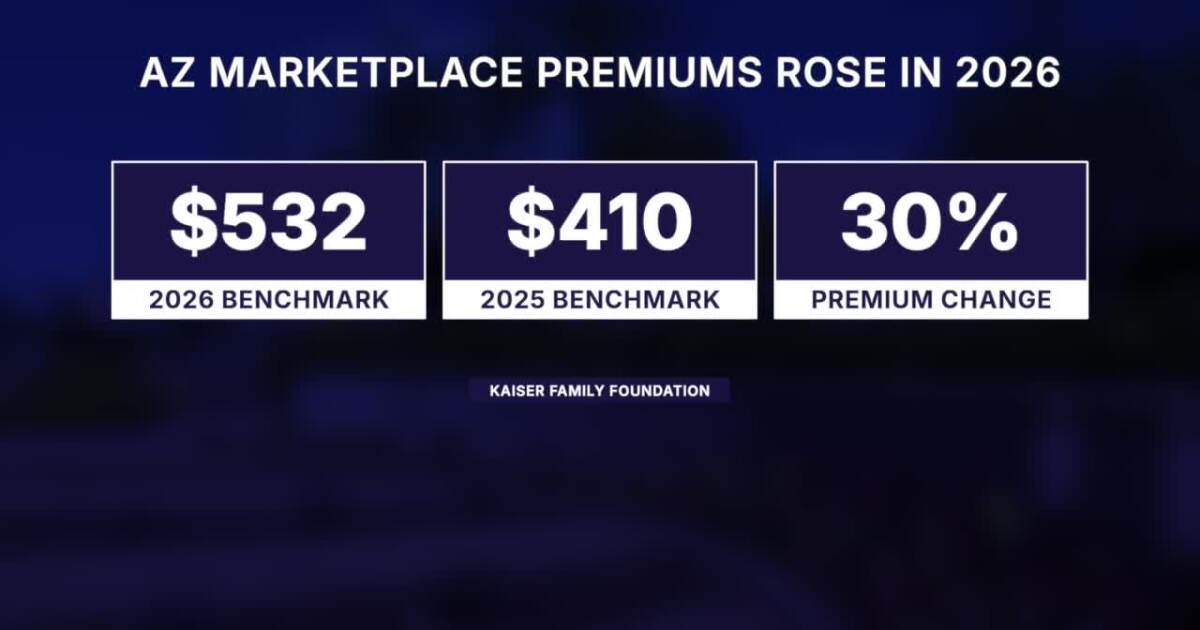
WATCH: Arizona’s health insurance marketplace is seeing dropping enrollment


ARKANSAS SIGHTSEEING: Randolph County can claim many firsts in Arkansas | Northwest Arkansas Democrat-Gazette


Toddler sustains brain injury in fall after California childcare worker threw him into the air, lawsuit says


‘Saleabration’ comes back to Colorado Springs for third year

