The Colorado Rockies (28-47) had the day off Thursday after an uneven road trip that took them from Las Vegas to Wrigley Field. They dropped two of three to the Athletics, with the lone win coming in a wild 23-9 game, then went to Chicago and again lost two of three.
Northeast
I'm Bob Casey: This is why I want Pennsylvania’s vote for Senate

NEWYou can now listen to Fox News articles!
Every day I’ve had the honor of representing the people of Pennsylvania. I’ve fought for the people of our Commonwealth – our workers, children, seniors and people with disabilities. I’ve worked to protect American workers, to make our border more secure, and to lower costs. I have fought corporate greed and supported working families. And I have always put Pennsylvania first, no matter what.
That means being willing to work across the aisle to deliver for Pennsylvanians. I have been ranked one of the most effective and bipartisan senators in Washington because of the work I have done to cap the cost of insulin at $35 a month for seniors, provide healthcare to veterans who were exposed to toxic burn pits, and help create tens of thousands of jobs in Pennsylvania.
I took on the insurance and pharmaceutical companies to cap out-of-pocket costs for those on Medicare and allowed Medicare to negotiate lower prescription drug costs for the first time ever. I also fought back against efforts to cut Social Security, Medicare, and Medicaid benefits, and I am currently working to protect and expand Social Security benefits for more than 1 million Americans.
FOX NEWS POLL: IT’S NECK-AND-NECK IN PENNSYLVANIA PRESIDENTIAL RACE
Our veterans have made the greatest sacrifices, and they deserve the highest level of care and respect, which is why I joined with Pennsylvania veterans to pass the PACT Act. It has since helped more than 32,000 veterans in Pennsylvania get access to the health care they deserve after being exposed to toxic burn pits. More than 1 million veterans across the country have taken advantage of the expanded benefits.
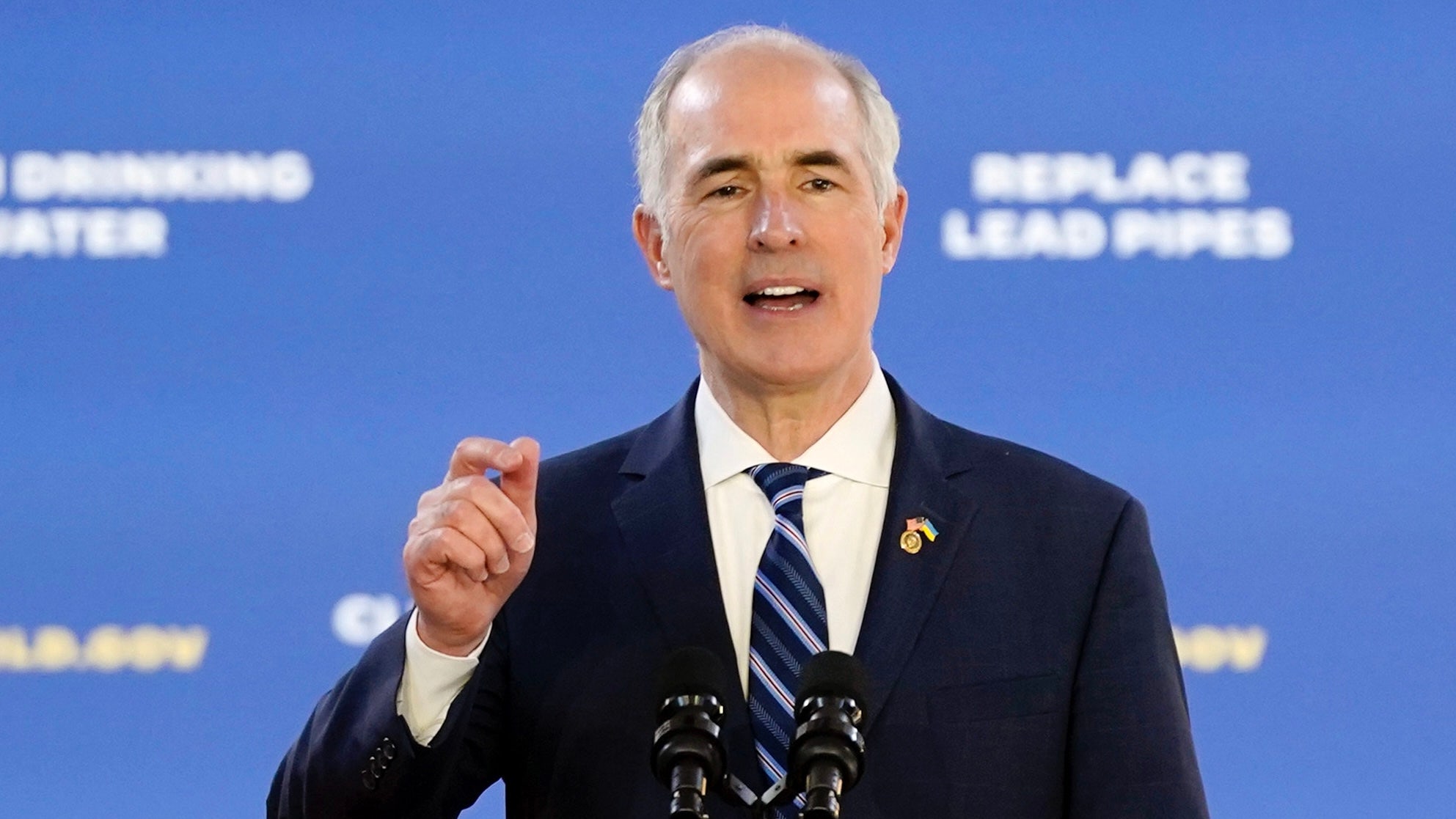
Senator Bob Casey, D-Pa., is fighting against what he calls corporate greedflation. FILE: Casey speaks before President Joe Biden about his infrastructure agenda while announcing funding to upgrade Philadelphia’s water facilities and replace lead pipes, Friday, Feb. 3, 2023, at Belmont Water Treatment Center in Philadelphia. (AP Photo/Patrick Semansky, File)
I have made sure that Pennsylvania is able to take advantage of opportunities to bring jobs to our communities. I fought against an administration plan and saved 1,200 jobs for energy workers at Cleveland Cliffs in Butler.
Now, I’m fighting for lower costs for Pennsylvania families by taking on corporate greed that has hurt working families. There is no question families are seeing higher prices at the grocery store. Big companies have been getting away with increasing the price of food and household items while raking in record profits.
For two years during the pandemic, corporate profits were up 75% – that’s five times the rate of inflation. I call it greedflation, and I’m fighting back with legislation to crack down on corporate price gouging and go after companies that deceptively shrink their products at the grocery store, making families pay more for less product.
CLICK HERE FOR MORE FOX NEWS OPINION
I am also fighting to secure the border, a critical part of keeping our country safe. I have voted more than 25 times to invest in border security, like more border patrol agents, additional fencing, and screening technology to detect fentanyl in vehicles — unlike my opponent, who opposed a bipartisan border deal that was supported by border patrol and called one of the toughest immigration laws in modern history.
I also helped pass the FEND Off Fentanyl Act this year, which hits fentanyl traffickers where it hurts — their bottom line. And I worked with Republicans to pass the bipartisan STOP Act to combat the smuggling of fentanyl and other drugs from China.
While I have been fighting for Pennsylvania, my opponent, David McCormick, has been fighting for himself and his wealthy friends. He said he lived in Pennsylvania, when in reality he was taking a private jet from Connecticut for multiple campaign events. He didn’t even vote in Pennsylvania for 15 years.
As the CEO of Bridgewater, my opponent invested millions in Chinese military companies that produced fighter jets, bombers, aircraft carriers, and missiles. He invested in China’s largest producer of fentanyl, when we know most of the fentanyl that is trafficked in Pennsylvania originates in China.
I have made sure that Pennsylvania is able to take advantage of opportunities to bring jobs to our communities. I fought against an administration plan and saved 1,200 jobs for energy workers at Cleveland Cliffs in Butler.
While he was enriching himself, he was hurting Pennsylvanians. He shorted Pennsylvania companies like U.S. Steel and bet against their success. He laid off hundreds of workers in Pittsburgh and even helped teach other companies how to outsource jobs. The contrast between my opponent and I on women’s rights is clear. My opponent called overturning Roe v. Wade a “huge victory” and said that it made him “very, very happy.” I support restoring Roe v. Wade.
“All public service is a trust, given in faith and accepted in honor.” Those are the words inscribed on the Finance Building in Harrisburg where I started my work in public service, and the words that still guide me today. The people of Pennsylvania have an important choice to make between a proven fighter for the middle class and a Connecticut hedge fund executive who has only ever fought for himself, his own bottom line, and the billionaires funding his campaign. I will continue to work to lower costs, create jobs, and bring investments to Pennsylvania communities. I respectfully ask for your vote on November 5th.
Read the full article from Here

Continue Reading

new video loaded: Fans Show Up to the Parade in Their Best Knicks-Themed Attire
transcript
transcript
Fans Show Up to the Parade in Their Best Knicks-Themed Attire
New York Knicks fans showed up in droves to a ticker-tape parade in Manhattan in their best orange and blue outfits to honor the N.B.A champions.
-
“Patrick Ewing. He didn’t get a ring. But I wear your sneakers, bro. When I was in high school, back in the ’90s, Patrick Ewing, John Starks, they were the team that I rooted for in the ’90s. They didn’t make it. So as a tribute to him because this is where I started at being a fan, Patrick Ewing. Knicks hat in denim — I’m a denim fanatic. So I love denim — Knicks hat. And yeah, that’s it.” “This is my style. I usually dress like this every day. But I did a special Knicks edition. It’s all really fun. I start with my makeup. I did really cute flames on my eyes because the Knicks are fire. I don’t really know what I’m going to do before I put it on. I just figure it out along the way. Like, this is a piece of fabric and I just layer in stuff.” “This is from my online boutique and the hat I just bought on the way to the parade because I wanted to match the jumpsuit, and that’s how I came up with the outfit.” “She was ready to go, man.” “Can you show your fingernail?” “She’s been sleeping in her Jalen Brunson jersey for the last 10 weeks. We’ve been watching all the games. You want to tell them who’s your favorite player?” “Jalen Brunson.” “I’m pretty sure this jersey was actually made for a human baby. But they’re selling them around the block. And we threw it on Chester and everyone started clapping. So — he wears it well.” “Blue and orange.” “So I did blue and orange.” “It had to be orange and blue. “Orange and blue. Orange and blue.”
New York Knicks fans showed up in droves to a ticker-tape parade in Manhattan in their best orange and blue outfits to honor the N.B.A champions.
By Meg Felling, Jeremy Raff, Ang Li and David Cheung
June 18, 2026
Boston, MA
MBTA, state transportation chief apologizes for ‘insensitive’ employee hair-pulling incident

Gov. Maura Healey’s Transportation Secretary and MBTA General Manager Phillip Eng said he has apologized “fully” to the subordinate T employee he’s been accused of pulling the hair of at a work dinner two years ago.
Eng has come under fire for the late 2024 incident this week and admits that it was a “mistake” that has forced him to reflect upon his actions.
“My goal is always to lead with respect and inclusivity,” Eng said in a statement. “I know that this was a mistake, and I own that. I have apologized to this employee fully and have reflected on my actions.
“I am committed to learning from this experience and upholding the highest standards of professionalism in all my interactions as secretary and general manager,” Eng added.
The MBTA said the incident, first reported by Contrarian Boston, occurred in November 2024 at a restaurant where T employees and their spouses were having a team dinner.
WCVB-TV reported that the MBTA employee has told people the interaction with Eng was not welcome and highly inappropriate.
The station described Eng as being accused of committing the hair-pulling faux pas while saying good-bye to the T employee after a work function at a brewery.
The MBTA confirmed that an “insensitive” interaction occurred between Eng and an employee, but downplayed the incident as occurring in the context of a larger conversation about hair from earlier in the evening that included multiple people.
Eng was poking fun at his own baldness when the alleged interaction occurred, according to the MBTA.
“The MBTA is committed to fostering a respectful, inclusive workplace environment,” MBTA spokesperson Joe Pesaturo said in a statement. “Leadership plays a critical role in that. Two years ago, General Manager Eng had an insensitive interaction with one of his direct reports. He subsequently apologized directly to this employee.
“Any claims of harassment, discrimination or retaliatory behavior are completely without merit,” Pesaturo added.
Sources have told WCVB-TV that the T employee is involved in negotiations to leave their job with the agency.
Eng is the state’s top transportation official. Healey appointed him as general manager of the MBTA in 2023, and interim transportation secretary in late 2025.
He was paid $509,114 last year, which includes a $30,000 retention payment he is eligible for each year he remains with the T, per his contract and state payroll records. He does not get additional pay for working dual roles in Massachusetts, but continues to take in a roughly $185,000 pension from New York.
Eng, former president of the Metropolitan Transportation Authority’s Long Island Rail Road, came out of retirement to work for the MBTA, but remains retired with the New York State and Local Employees’ Retirement System, which is paying him a gross monthly pension of $15,357.39, according to the New York State Comptroller’s office.
Eng, who stepped down from his MTA post in February 2022, retired from New York’s ERS the following month, March 31, 2022, the comptroller’s office said. His monthly pension equates to $184,288 in annual compensation, which he can continue to collect while working at the MBTA, where he is one of the highest-paid transit leaders in the country.
Eng has been credited by state officials for helping to get the MBTA back on track following a federal probe for a number of safety lapses that culminated with a fatality, when a 39-year-old man was dragged to death by a Red Line train in April 2022.
He is under contract with the T through April 10, 2028, with an option for a one-year extension. His base pay for 2026 is $484,206, per state payroll records.
By comparison, Eng was paid $285,254 in his final year leading the Long Island Rail Road, per the New York State Comptroller’s office.
Pittsburg, PA
Colorado Rockies vs. Pittsburgh Pirates game discussion: Bubba Chandler vs. Kyle Freeland

That leaves the Rockies at 6-9 in June with a -7 run differential. Even that number is softened by the 23-run outburst against the Athletics. Colorado has been pesky and more competitive, which is an improvement from last month, but the results are still the results: they enter tonight with the worst record in baseball — if only by a game.
Cole Carrigg has brought energy since arriving, and Sterlin Thompson is coming off a two-homer game at Wrigley. There are plenty of reasons to keep watching. The problem is that the old bad-team tropes are still there: blown leads, rocked starters, missed chances, defensive mistakes, and poor execution. The Rockies have been in more games, but they are still too often finding ways to let winnable games get away.
Now they get the Pirates at home.
The Pittsburgh Pirates (38-37) arrive at Coors Field in fourth place in the competitive NL Central — and only 1.5 games out of a wild card spot. Pittsburgh gets plenty of attention for its hyped rotation, led by Paul Skenes, but the offense has been much improved. The Pirates rank third in MLB in batting average, third in on-base percentage, fourth in OPS, fifth in runs scored, and sixth in stolen bases.
Kyle Freeland takes the mound to open the homestand for the Rox. The left-hander enters at 1-7 with a 7.98 ERA, 49 strikeouts, and a 1.70 WHIP over 58.2 innings.
The fastball has been the biggest issue. Freeland is leaving too many four-seamers over the middle of the plate, and hitters have punished it. Opponents are slugging .794 against the pitch, which is especially damaging because he still throws it roughly 27-29% of the time.
That continued in his last start, when Freeland allowed six runs on 10 hits over 5.2 innings. He gave up 12 hard-hit balls, with both the cutter and four-seamer taking damage. The cutter was his most-used pitch in that outing, but it did not solve the contact problem. His sweeper has been his best pitch, holding hitters to a .171 batting average and .371 slugging percentage with a 32.8% whiff rate.
The Rockies do not need Freeland to be perfect tonight, but they need him to avoid the middle-middle mistakes that have turned innings quickly this season.
Pittsburgh will counter with Bubba Chandler, a 23-year-old right-hander who enters at 2-7 with a 4.76 ERA, 68 strikeouts, and a 1.38 WHIP over 68.0 innings.
The record is not pretty, but the stuff is real. Chandler averages 98.5 mph with his four-seam fastball and topped out over 101 mph in his last start. He has used the fastball nearly half the time this season, pairing it most often with a changeup and slider.
The slider has been his best bat-missing pitch, generating a 37.9% whiff rate on the season. The changeup has also been effective, holding hitters to a .186 batting average and .288 slugging percentage. Chandler has walked 43 batters, so the Rockies’ best chance may be making him work instead of chasing their way out of innings.
Kyle Karros has been swinging it well lately, hitting .370/.442/.565 over his last 15 games and raising his season wRC+ to 90. Willi Castro has two home runs, nine RBI, and a .680 slugging percentage over his last seven games, while T.J. Rumfield is hitting .321 with a .750 slugging percentage and two home runs in his last seven games.
For Pittsburgh, Bryan Reynolds has been especially hot, hitting .414/.469/.828 with three home runs over his last seven games. Brandon Lowe leads the team with 18 home runs and 49 RBI while slugging .511, and Endy Rodríguez has played well from behind the plate while posting a 149 wRC+ in 76 plate appearances since returning to the lineup in mid-May.
For Colorado, the task is straightforward: get a steadier start from Freeland, make Chandler throw strikes, and turn the recent flashes from the lineup into enough sustained pressure to win a winnable game.
First Pitch: 6:40 p.m. MDT
Radio: KOA 850 AM/94.1 FM; KNRV 1150
Pirates SB Nation Site: Bucs Dugout
- Fewer ads
- Create community posts
- Comment on articles, community posts
- Rec comments, community posts
- New, improved notifications system!
Please keep in mind our Purple Row Community Guidelines when you’re commenting. Thanks!
-

 Health2 minutes ago
Measles-infected traveler may have exposed passengers at LAX and nearby hotel, health officials warn
-

 Sports9 minutes ago
World Cup Red Cards: 2026 Has More Red Cards Than Each Of Last 2 World Cups
-

 Technology12 minutes ago
China’s brain chip breakthrough raises big questions
-
 Business17 minutes ago
Ranch lovers can soon travel with a TSA-friendly kit of the popular American dressing
-
 Entertainment24 minutes ago
At the Fonda, Jane Remover’s violent yearning heralds a new kind of stardom
-
 Lifestyle27 minutes ago
Beer, with a twist? SoCal dads find solidarity through an unexpected activity
-
 Politics32 minutes ago
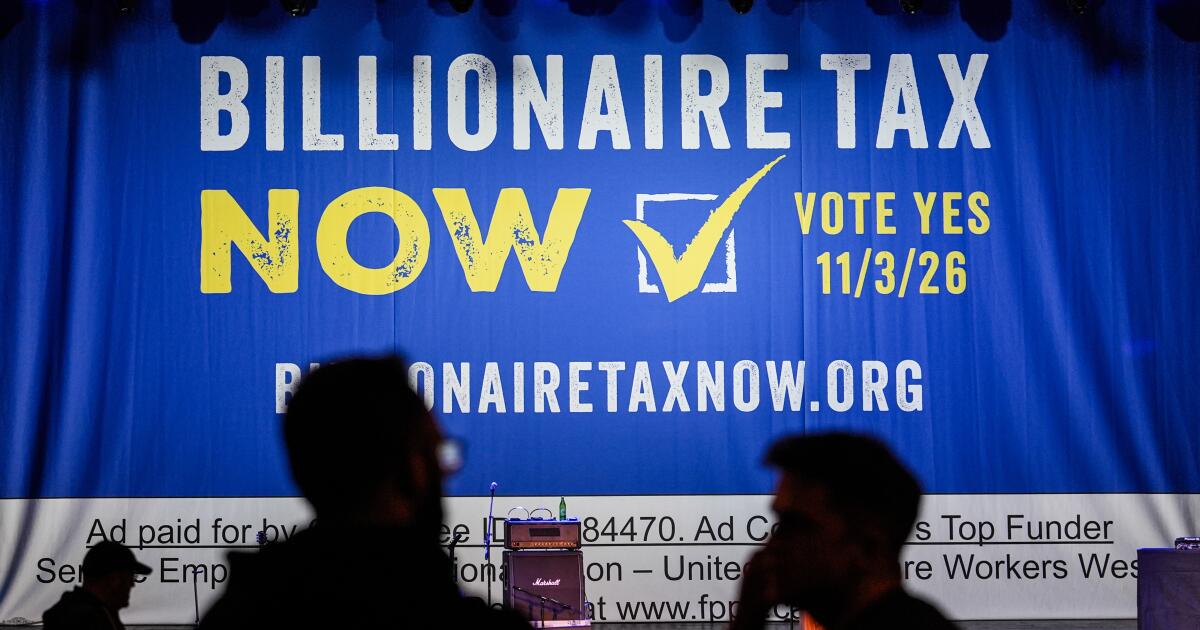
Billionaire tax proposal faces hurdles as it moves closer to November ballot
-
 Science39 minutes ago
Here’s why the Lincoln Memorial Reflecting Pool went green so fast

