Connect with us

Northeast

Trump agrees to debate Kamala Harris on Fox News

Published

on

Trump agrees to debate Kamala Harris on Fox News

Former President Trump announced Friday night that he has agreed to Fox News’ proposal for a debate against Vice President Kamala Harris.

Trump said the debate would be held on Sept. 4 in Pennsylvania, although the location of the event has not yet been determined.

The former president also noted that an ABC News debate previously scheduled against President Biden before he suspended his re-election campaign had been canceled, citing his lawsuit against that network and one of its hosts, George Stephanopoulos.

“I have agreed with FoxNews to debate Kamala Harris on Wednesday, September 4th,” Trump wrote on his social media platform Truth Social. “The Debate was previously scheduled against Sleepy Joe Biden on ABC, but has been terminated in that Biden will no longer be a participant, and I am in litigation against ABC Network and George Slopadopoulos, thereby creating a conflict of interest.”

TRUMP SHOOTING: TIMELINE OF ASSASSINATION ATTEMPT RAISES QUESTIONS ABOUT HOW GUNMAN EVADED SECURITY

Advertisement

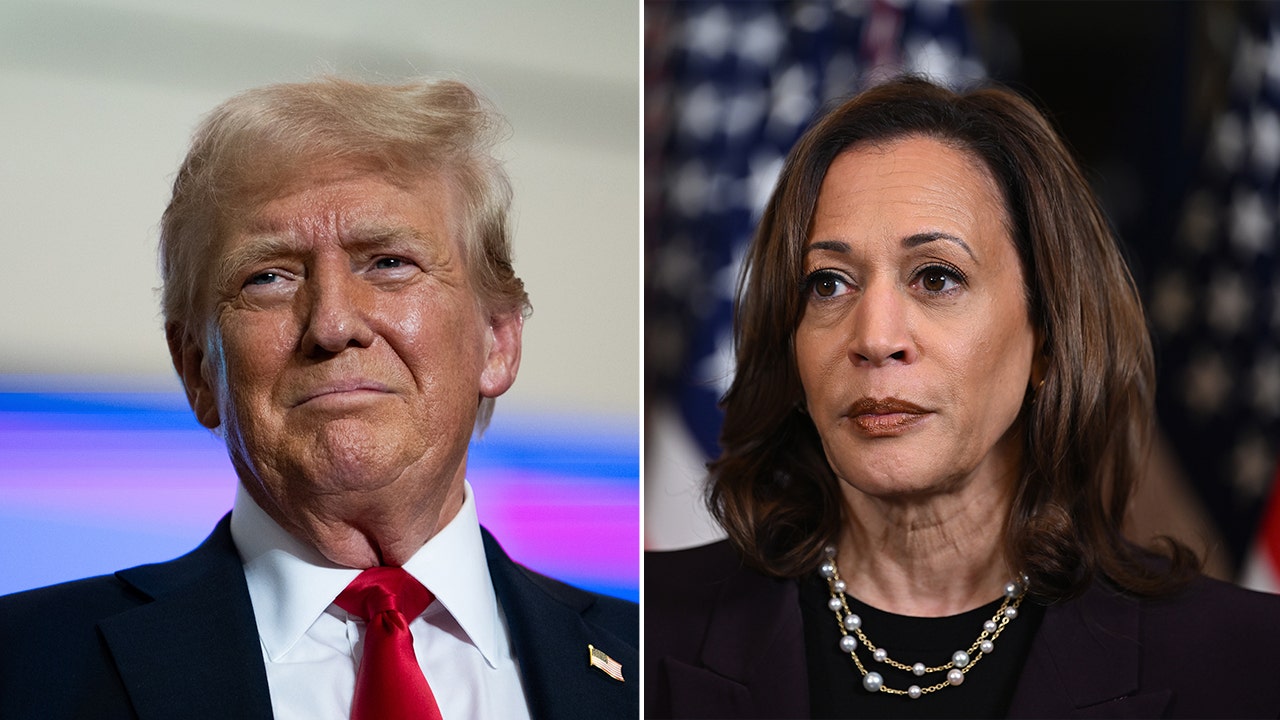
Former President Trump said he has agreed to a debate against Vice President Kamala Harris on Fox News. (AP Photo/Andrew Harnik, File)

The moderators of the debate will be Fox News anchors Bret Baier and Martha MacCallum.

The debate rules will be similar to the rules of the June 27 CNN debate against Biden, who Trump wrote “has been treated horribly by his Party.” But unlike the CNN debate, which did not have an audience, the Fox News debate will have spectators.

Fox News had invited Trump and Harris to participate in a debate in Pennsylvania on Sept. 17.

Harris said last month that she was “ready” to debate the former president and accused him of backpedaling away from the previous agreement to debate on ABC News on Sept. 10.

Advertisement

This comes after Harris became the Democratic Party’s nominee for president after Biden announced he was dropping his re-election campaign.

Trump previously said he would not debate Harris because she was not the party’s official candidate after Biden dropped out of the race. But on Friday, the vice president secured enough delegates to officially become the party’s nominee.

IT’S OFFICIAL: VICE PRESIDENT KAMALA HARRIS GOES OVER THE TOP AND CLINCHES DEMOCRATIC PRESIDENTIAL NOMINATION

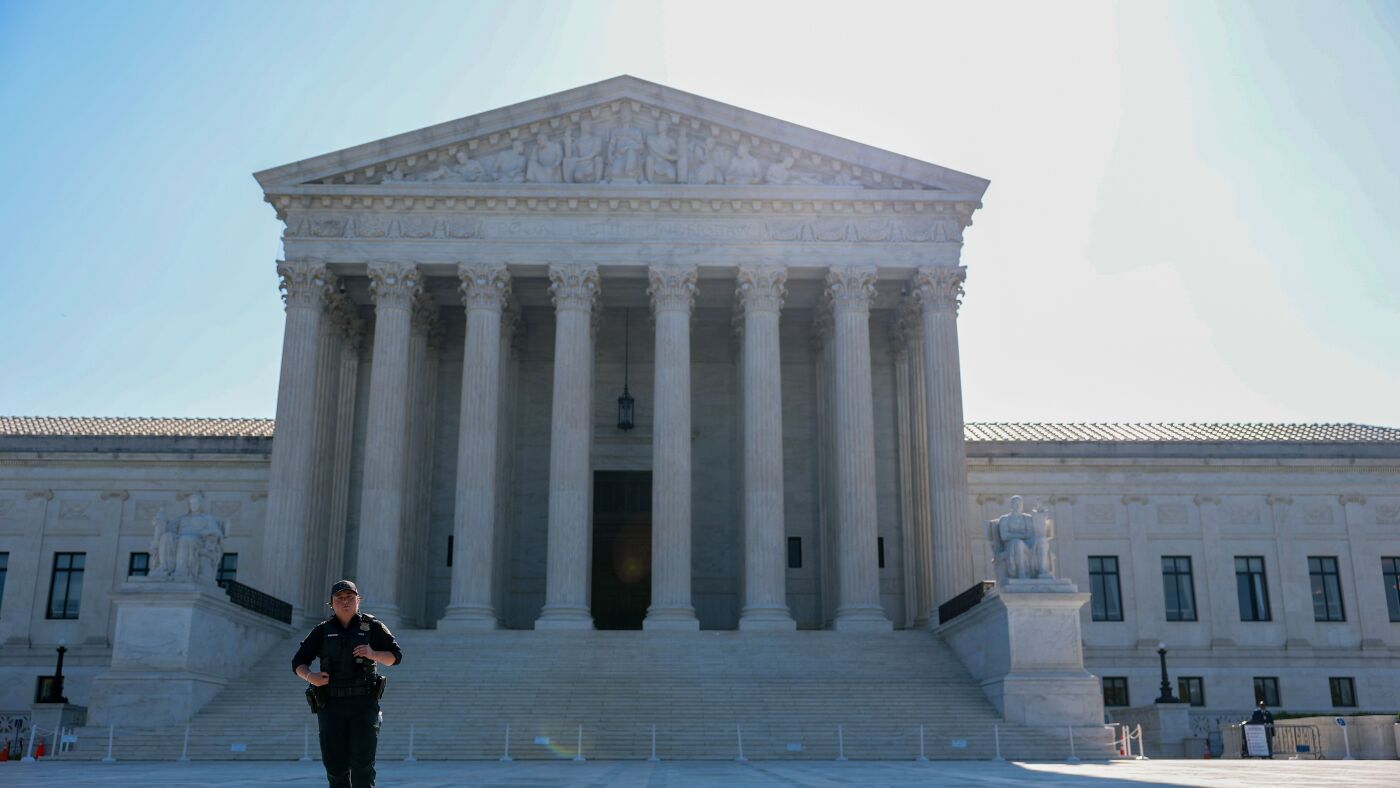
Fox News had invited Trump and Harris to participate in a debate in Pennsylvania. (ALLISON JOYCE/AFP via Getty Images)

Advertisement

“As everyone knows, the Democrats have Unconstitutionally taken a Candidate, who was acknowledged to be defeated, and unceremoniously replaced him with a new Candidate,” Trump wrote. “This has never been done before, and is a Threat to Democracy, but I am totally prepared to accept the results of this ‘coup,’ and replace Joe on the Debate stage with Crazy Kamala Harris.”

“I spent Hundreds of Millions of Dollars, Time, and Effort fighting Joe, and when I won the Debate, they threw a new Candidate into the ring. Not fair, but it is what it is!” he continued. “Nevertheless, different Candidate or not, their bad Policies are the same, and this will be strongly revealed at the September 4th Debate. I look forward to meeting and debating Kamala Harris on September 4th. This date is convenient and appropriate in that it is just prior to the September 6th start of Early Voting in the 2024 Presidential Election. I look forward to seeing everyone on September 4th, in the Great Commonwealth of Pennsylvania!”

Trump also survived an assassination attempt at a campaign rally in Pennsylvania on July 13.

Read the full article from Here

Advertisement
Continue Reading
Click to comment

Leave a Reply

Your email address will not be published. Required fields are marked *

This site uses Akismet to reduce spam. Learn how your comment data is processed.

Boston, MA

Lawsuit that alleges Boston is inflating commercial property taxes goes to court this week

Published

on

Lawsuit that alleges Boston is inflating commercial property taxes goes to court this week


A lawsuit that alleges the City of Boston is inflating the assessed value, and taxes, for commercial properties that file abatements will be taken up by Suffolk Superior Court on Wednesday.

The alleged practice has been slammed as retaliatory and unlawful by the Pioneer New England Legal Foundation, a watchdog group that filed the class-action lawsuit on behalf of a commercial property owner last December. The property is 148 State St., a Seaport office building.

The city filed a motion to dismiss the lawsuit in February, arguing that the case does not qualify as one that should be considered by Superior Court, given that the plaintiff “has an adequate legal remedy at the (state) Appellate Tax Board.”

City Hall attorneys will be asking the court to grant the motion at Wednesday’s 2 p.m. hearing.

Advertisement

“Plaintiff failed to exhaust its mandatory administrative remedies; indeed, plaintiff and the city are involved in a pending administrative action that will address some of the excessive valuation claims raised in its complaint,” the city’s motion states. “Plaintiff chose not to appeal the remaining excessive valuation claims raised in its complaint.

“Contrary to its argument, plaintiff’s claims do not fit into the exceedingly narrow exception that would permit the Superior Court to hear its claims for declaratory and injunctive relief under extraordinary circumstances,” the city’s motion states. “As a result, the court is without jurisdiction to entertain the complaint, and it must be dismissed as a matter of law.”

The Pioneer New England Legal Foundation filed an opposition to the city’s motion to dismiss last month that argues against what it sees as the “essence” of the the motion, which is that “the court must decline to hear the case because the statutory abatement and Appellate Tax Board process is mandatory and exclusive.”

“Defendant’s framing baldly misstates what the complaint actually pleads and what this action seeks to remedy,” the Pioneer filing states. “Contrary to the premise of the city’s motion, this action is not a routine dispute over the valuation of a single parcel.

“Plaintiff alleges a deliberate, systemwide retaliatory practice: when a taxpayer exercised the right to petition by pursuing an ATB appeal, the city used an add-back or override methodology to inflate the property assessment at issue artificially, and ostensibly to ‘stabilize’ the taxpayer’s value at prior-year levels.

Advertisement

“Similarly-situated taxpayers without ATB appeals did not receive the same treatment. Plaintiff further alleges that this practice is reflected in the city’s own property record cards and operated as a hidden penalty on protected petitioning activity,” the Pioneer filing states.

Pioneer’s attorneys added, “At the pleading stage, those well-plead allegations must be credited as true, and the city cannot obtain dismissal by trying to recast the complaint as nothing more than an ordinary overvaluation claim.”

The lawsuit is seeking restitution, for the city to repay the plaintiff commercial taxpayer, along with others who may join the filing, the amount they were overcharged in property taxes, due to the city’s alleged overvaluation.

Despite reportedly agreeing privately to stop the alleged overassessment practice as part of settlement negotiations, the city has publicly dismissed Pioneer’s allegations as “baseless and full of misinformation,” per a prior statement from Mayor Michelle Wu’s office.

Frank Bailey, Pioneer’s president and a retired judge of the U.S. Bankruptcy Court in Massachusetts, has said Pioneer estimates as many as 200 commercial properties have been overtaxed by the city practice.

Advertisement

If the suit is successful, those properties could be owed restitution at a time when the city’s finances are hampered by declining commercial property values tied to vacant office space that one City Hall watchdog has projected may lead to a $1-2 billion budget shortfall over the next five years.


Source link

Advertisement
Continue Reading

Pittsburg, PA

Wetherholt’s full-circle moment in Pittsburgh, now in Cardinals red

Published

on

Wetherholt’s full-circle moment in Pittsburgh, now in Cardinals red


PITTSBURGH — JJ Wetherholt has been to PNC Park plenty of times.
Growing up in the northern Pittsburgh suburb of Mars, Pa., Wetherholt was a big Pirates fan and idolized outfielder Andrew McCutchen. There was also a time, as a child, when Wetherholt was late to his own party at


Source link

Continue Reading

Connecticut

Opinion: When getting care means going into debt

Published

on

Opinion: When getting care means going into debt


The email is sitting in my inbox like a countdown clock: $5,000 due to secure my surgery date. Another $7,000 required on the day of the procedure. Before even getting there, I had already paid $800 just for a consultation and thousands more from emergency room visits, trying to manage the pain.

As a college student in a single-parent household, these costs are not just overwhelming; they are destabilizing. For my family, this isn’t just a medical decision; it’s a financial crisis that affects bills, groceries, and basic stability. 

This isn’t an unusual story; it’s what accessing healthcare looks like for too many people in Connecticut today. When the cost of care becomes this overwhelming, patients are forced to make impossible choices: delay treatment, go into debt, or simply go without. 

This is why Connecticut lawmakers must pass SB3: An Act Concerning Health Care Affordability. The bill directly addresses one of the most urgent public health issues in our state: the rising cost of healthcare and the barriers it creates for everyday citizens. SB3 is not just a general attempt to “lower costs.” It proposes specific, actionable solutions.

Advertisement

The bill would establish a Connecticut Affordable Health Care Trust Fund to stabilize costs and protect residents from rising premiums, particularly as federal subsidies become uncertain. It also includes a “Connecticut Option” program designed to expand access to more affordable insurance coverage and, in the short term, replace federal premium subsidies for many residents earning up to 600% of the federal poverty level. 

Healthcare affordability is not just an economic issue; it is a public health crisis. According to a report from theKaiser Family Foundation, nearly half of U.S. adults report difficulty affording healthcare, and many delay or skip necessary services as a result. These delays can lead to worsening conditions, more emergency visits, and higher long-term costs for both patients and the healthcare system. In my case, postponing treatment for endometriosis only led to repeated ER visits, each one adding to the financial and physical burden.  

Ella Nocera-DeJulio

Connecticut is not immune to these trends. Reports show that residents across the state, especially those with low and moderate incomes, struggle with high premiums, deductibles, and out-of-pocket costs. Even those with insurance often face significant financial barriers when seeking care. This reality contradicts the very purpose of a healthcare system: to provide timely, effective treatment without causing financial harm.

Some critics argue that bills like SB3 could increase government spending or place additional strain on healthcare providers. Others question whether it goes far enough, pointing out gaps in coverage, such as limited inclusion of certain populations. These concerns deserve attention, but they do not outweigh the urgency of the problem. In fact, SB3 is designed as both a short-term solution to stabilize costs and a long-term framework to explore broader reforms.

Passing SB3 would help more than just individual patients. When people can afford regular checkups and early treatment, long-term illnesses are easier to manage, fewer people end up in the emergency room, and healthcare costs go down overall. This leads to healthier communities and a better-functioning healthcare system. In simpler terms, making healthcare more affordable isn’t just the right thing to do; it’s also a smart decision.

Advertisement

My experience is just one example, but it reflects a much larger issue affecting communities across Connecticut. No one should have to delay a necessary surgery or accumulate thousands of dollars in debt just to receive basic medical care. Healthcare shouldn’t be something only available to people who can afford it, but a basic right supported by strong and effective policies.

Connecticut has a real chance to fix a system that is clearly not working for many people. Passing SB3 would help lower costs and make it easier for residents to get the care they need without financial stress. It’s time for lawmakers to take action and make healthcare more affordable and accessible for everyone. 

Ella Nocera-DeJulio is a sophomore at Sacred Heart University, majoring in Health Sciences, concentrating in Occupational Therapy.


Advertisement


Source link

Continue Reading
Advertisement

Trending