Missouri
Missouri and Arkansas governors to join other Republican governors at U.S./Mexico border


JEFFERSON CITY, Mo. (WGEM) – Missouri Governor Mike Parson’s office announced he will travel to Texas on Sunday to participate in an event branded as a “security briefing” hosted by Gov. Greg Abbott, that state’s National Guard, Department of Public Safety and its Border Czar.
The governors of Arkansas, Georgia, Idaho, Indiana, Iowa, Louisiana, Mississippi, Montana, Nebraska, New Hampshire, South Dakota, Tennessee, and Utah – all Republicans – are also planning to participate in the event.
Parson has been critical of the Biden administration and the federal government for a “crisis” at the U.S./Mexico border.
While hundreds of thousands of border encounters are reported each month, U.S. Customs and Border Protection reports encounters saw a decrease in the first two weeks of January.
“CBP’s total encounters along the southwest border in December were 302,034,” the agency reported. “Consistent with historical trends and enhanced enforcement, the first two weeks of January saw an over 50% decrease in southwest border encounters between ports of entry according to preliminary figures.”
Parson and other Republican officials have largely tied the concern at the southern U.S. border to the rising rates of deaths related to Fentanyl, an extremely powerful and potent opioid.
“Children dying from fentanyl is 100% preventable,” Parson said in his recent State of the State Address. “And while President Biden and the federal government failed to do their jobs by securing our southern border, Missouri will act.”
In 2021, 86.3% of convicted fentanyl drug traffickers were U.S. Citizens, according to the United States Sentencing Commission, which was ten times greater than convictions of illegal immigrants for the same offense.
Furthermore, over 90% of fentanyl seizures happen at legal crossing points or vehicle checkpoints, not on illegal migration routes, according to U.S. Customs and Border Protection.
Missouri state Senate Minority Leader John Rizzo, D-Independence, said the trip by Republican Governors to the southern border is nothing more than a political stunt which aims to district from a chaotic presidential primary and a tenuous, ineffective Republican majority in the House.
“It’s a show,” Rizzo said. “Just because Donald Trump wants to run on immigration, and the Republican Party wants to run on immigration in the next election, they have to blow it up, because the Supreme Leader said so.”
A Bipartisan Solution
A group of Republican and Democratic U.S. senators has been negotiating a piece of legislation which, according to those familiar with the bill, would end the “catch and release” practice of allowing asylum-seeking migrants to wait in the U.S. for their claim to be processed.
Under the proposal, migrants who try to cross the border illegally would be immediately arrested and would have to wait for their claim to be processed while in detention.
If their claim to asylum is rejected, the migrant would be removed within 15 days.
A new “removal authority program” would be created to conduct initial asylum interviews within 90 days with migrants who come to the U.S. border at official ports of entry. Notably, though, those migrants would not be released into the U.S., but instead, detained under government watch. If that initial claim fails, those migrants would be removed immediately, but if they pass, it would extend their stay by 90 days as the rest of their claim process plays out.
Successful cases would eventually qualify for citizenship.
Former President Donald Trump, and many of his devout followers in Congress, have publicly opposed the bipartisan deal – with many accusing the 2024 Republican front-runner of stalling a solution in order to preserve the crisis as campaign fuel.
“As the leader of our party, there is zero chance I will support this horrible open borders, betrayal of America,” Trump said in a recent rally in Las Vegas. “A lot of the senators are trying to say respectfully, they’re blaming it on me.’ I said, ‘that’s ok. Please blame it on me, please.’ Because they were getting ready to pass a very bad bill and I’ll tell you what a bad bill is– I’d rather have no bill than a bad bill.”
Sen. Josh Hawley, R-Missouri, admitted he places a greater priority on denying President Biden a ‘win,’ than addressing the situation at the southern border.
The first-term Missouri Senator, who is running for reelection in November, was asked in a recent Fox News interview if he believes the bipartisan border deal is ‘dead.’
“I hope so,” Hawley responded. “It should be. If it’s not dead yet it should be dead. There is absolutely no reason to agree to policies that would further enable Joe Biden.”
Sen. Eric Schmitt, R-Missouri, said he opposes the deal because he believes Pres. Biden has authority to take action, rendering legislative action unnecessary.
“My contention is, you don’t need new language for Joe Biden to continue to ignore He’s ignoring existing law,” Schmitt said.
President Biden does not have the authority to unilaterally change U.S. asylum law. Recent restrictions at the U.S. border, made under the Trump administration and continued under the Biden administration for multiple years, were imposed as an emergency response to the COVID-19 pandemic. Those restrictions have since been lifted.
“A bipartisan bill would be good for America and help fix our broken immigration system and allow speedy access for those who deserve to be here, and Congress needs to get it done,” Pres. Biden said on January 27. “It’ll also give me, as president, the emergency authority to shut down the border until it could get back under control. If that bill were the law today, I’d shut down the border right now and fix it quickly.”
The drafted language of the border legislation has not yet been released to the public.
Copyright 2024 WGEM. All rights reserved.


KANSAS CITY, Mo. (KCTV) – The Missouri State Highway Patrol is investigating a shooting involving a Kansas City Police officer.
MSHP said the shooting occurred near 27th St. and Jackson Avenue.
Authorities said an officer on a motorcycle was stopped at a stop sign at the intersection of Spruce and 27th.
It’s unclear why, but police said the suspect had a rifle and started shooting at the officer. The officer returned shots and the suspect ran into the woods, where officers arrested him.
MSHP said the weapon had yet to be located, as of 4:20 p.m.
Authorities said neither the officer nor the suspect were injured and the suspect was taken into custody.
This is a breaking news story. KCTV5 will update as more information becomes available.
Copyright 2026 KCTV. All rights reserved.
The Missouri Lottery offers several draw games for those aiming to win big.
Here’s a look at June 24, 2026, results for each game:
Winning Powerball numbers from June 24 drawing
13-14-16-21-38, Powerball: 14, Power Play: 2
Check Powerball payouts and previous drawings here.
Winning Pick 3 numbers from June 24 drawing
Midday: 3-0-3
Midday Wild: 2
Evening: 8-4-8
Evening Wild: 0
Check Pick 3 payouts and previous drawings here.
Winning Pick 4 numbers from June 24 drawing
Midday: 7-5-8-5
Midday Wild: 9
Evening: 7-4-7-6
Evening Wild: 9
Check Pick 4 payouts and previous drawings here.
Winning Cash Pop numbers from June 24 drawing
Early Bird: 06
Morning: 13
Matinee: 03
Prime Time: 14
Night Owl: 02
Check Cash Pop payouts and previous drawings here.
Winning Show Me Cash numbers from June 24 drawing
16-17-19-26-35
Check Show Me Cash payouts and previous drawings here.
Winning Powerball Double Play numbers from June 24 drawing
03-11-20-31-65, Powerball: 05
Check Powerball Double Play payouts and previous drawings here.
Feeling lucky? Explore the latest lottery news & results
Are you a winner? Here’s how to claim your lottery prize
All Missouri Lottery retailers can redeem prizes up to $600. For prizes over $600, winners have the option to submit their claim by mail or in person at one of Missouri Lottery’s regional offices, by appointment only.
To claim by mail, complete a Missouri Lottery winner claim form, sign your winning ticket, and include a copy of your government-issued photo ID along with a completed IRS Form W-9. Ensure your name, address, telephone number and signature are on the back of your ticket. Claims should be mailed to:
Ticket Redemption
Missouri Lottery
P.O. Box 7777
Jefferson City, MO 65102-7777
For in-person claims, visit the Missouri Lottery Headquarters in Jefferson City or one of the regional offices in Kansas City, Springfield or St. Louis. Be sure to call ahead to verify hours and check if an appointment is required.
For additional instructions or to download the claim form, visit the Missouri Lottery prize claim page.
When are the Missouri Lottery drawings held?
- Powerball: 9:59 p.m. Monday, Wednesday and Saturday.
- Mega Millions: 10 p.m. Tuesday and Friday.
- Pick 3: 12:45 p.m. (Midday) and 8:59 p.m. (Evening) daily.
- Pick 4: 12:45 p.m. (Midday) and 8:59 p.m. (Evening) daily.
- Cash4Life: 8 p.m. daily.
- Cash Pop: 8 a.m. (Early Bird), 11 a.m. (Late Morning), 3 p.m. (Matinee), 7 p.m. (Prime Time) and 11 p.m. (Night Owl) daily.
- Show Me Cash: 8:59 p.m. daily.
- Lotto: 8:59 p.m. Wednesday and Saturday.
- Powerball Double Play: 9:59 p.m. Monday, Wednesday and Saturday.
This results page was generated automatically using information from TinBu and a template written and reviewed by a Missouri editor. You can send feedback using this form.

JACKSON COUNTY, Mo. (KFVS) – Four years after the U.S. Supreme Court overturned Roe v. Wade and Missouri became the first state to ban abortion, Planned Parenthood is once again offering abortions.
Medication abortions are returning, too, after a Jackson County Circuit Court ruling. However, the state’s legal battle continues with court cases and a new ballot measure.
The past four years
Four years ago, Missouri politicians used a 2019 trigger law to ban abortion within 20 minutes of the Supreme Court’s decision in Dobbs v. Jackson Women’s Health Organization, which overturned the limited federal abortion protections of Roe v. Wade and Planned Parenthood v. Casey.
Abortion was put on the ballot in 2024 by an initiative petition that collected more than 380,000 signatures. Missouri became the first state to end an abortion ban by a vote of the people in 2024 and established the Right to Reproductive Freedom in the state constitution.
Another vote this year
This year will mark the second time Missourians vote on abortion. In November, Missourians will once again vote on abortion on the new Amendment Three. A “yes” vote is to ban abortions.
The new ballot measure has limited exceptions for rape, incest and medical emergencies, only if performed before the 12-week gestational period. It’s set to be on the statewide ballot for the November 2026 midterm election.
Bonnie Lee with 40 Days for Life said she hopes Missourians vote in favor of new restrictions in November.
“Missouri is waking up, and we will make a difference in November,” Lee said.
Missourians will see this question on their ballot:
“Shall the Missouri Constitution be amended to:
Repeal the 2024 voter-approved Amendment providing reproductive healthcare rights, including abortion through fetal viability;
Allow abortions for rape and incest (under twelve-weeks’ gestation), emergencies, and fetal anomalies;
Allow legislation regulating abortion;
Ensure parental consent for minors’ abortions;
Prohibit gender transition procedures for minors?”
A “yes” vote would essentially repeal the Amendment Three passed in November 2024. But this language may not be final. If lawyers appeal again, it can go to the Missouri Supreme Court.”
“I think voters are now seeing they didn’t know what they were voting on [in 2024]. There was a lot of misinformation, a lot of hidden information, a lot of legalese,” Lee said.
Maggie Olivia with Abortion Action Missouri said she wants the opposite outcome at the ballot box.
“I feel all the more invigorated having seen the consequences of abortion bans to do whatever it takes to stop this new abortion ban,” Olivia said.
Olivia called the new Amendment Three an overreach by Missouri politicians.
“There are some politicians in Jefferson City who don’t like the decision we just made in 2024, so they think they can muddy the waters, change the rules,” Olivia said.
Ongoing lawsuit
This month, a Jackson County Circuit Court judge issued a permanent injunction striking down several state abortion restrictions.
Planned Parenthood said the decision also clears the way for medication abortion to be available in Missouri for the first time since 2018 and allows Planned Parenthood to resume providing it.
“For too long, politicians forced patients to leave the state for an evidence-based and trusted form of abortion care. Now that care is coming home,” said Emily Wales, president and CEO of Comprehensive Health of Planned Parenthood Great Plains.
Attorney General Catherine Hanaway criticized the ruling and said she plans to appeal to the Missouri Supreme Court.
“This radical decision gives abortion providers a free pass to police themselves,” Hanaway said in a statement. “My office will expeditiously appeal this dangerous decision to the Missouri Supreme Court.”
Copyright 2026 KFVS. All rights reserved.
-
 Politics12 minutes ago
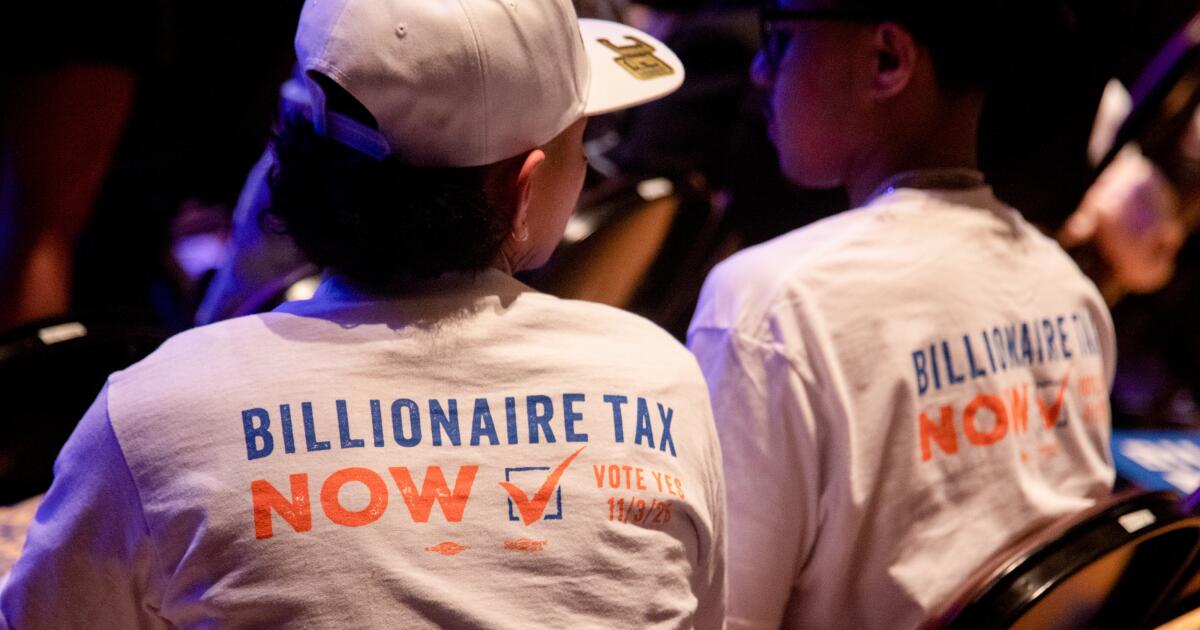
Controversial billionaire tax proposal will appear on November ballot
-
 Sports20 minutes ago
Shohei Ohtani is the first Dodger to be named 2026 All-Star
-

 World30 minutes ago
Who will control Africa’s AI infrastructure and at what cost
-
 News57 minutes ago
The Supreme Court says the U.S. can turn away asylum seekers at the border
-

 Los Angeles, Ca2 hours ago
Jury says it is deadlocked in trial of man accused in Palisades Fire
-

 Detroit, MI3 hours ago
Scene active as police shoot, kill man on Detroit’s west side
-

 San Francisco, CA3 hours ago
Civil grand jury report warns of wildfire risk at SF’s Glen Canyon Park
-

 Dallas, TX3 hours ago
Ivory Coast advances at World Cup, how to buy Ivory Coast tickets

