Montana
Montana to start trucking grizzlies into Yellowstone region


Mike Koshmrl
(WyoFile) Fresh grizzly bear bloodlines are expected to arrive in the Greater Yellowstone Ecosystem this summer, adding genetic diversity to a population of animals that’s been isolated for a century.
The infusion of genetics will come from the North Continental Divide Ecosystem, and it will roll down the highway in the form of a slumbering grizzly or two.
Why truck in grizzly bears to a population last estimated at nearly 1,000 animals?
Montana and Wyoming — which have hashed out an agreement — are translocating bears as part of the effort to convince the federal government that they’re responsible stewards of a large carnivore species, which the states contend no longer requires Endangered Species Act protections.
“We’re trying to demonstrate to everybody, the courts included, that connectivity isn’t an issue that should impede delisting,” said Ken McDonald, wildlife division chief for Montana Fish, Wildlife and Parks. “Until it’s happening regularly, naturally, we can cover this with human-assisted movements.”
The two grizzly bear populations aren’t far from each other — the leading edges are just 35 miles apart — but there’s never been a documented case of a Northern Continental Divide Ecosystem grizzly traveling to the Yellowstone Ecosystem and procreating. Grizzlies have gone the other direction, trekking north well into Montana, but that doesn’t accomplish the goal of creating gene flow into the isolated population.
Firm plans are in place to force the issue as soon as this summer. Montana Fish, Wildlife and Parks has staffed up, adding two employees who will be used during the summer and fall to assist with the grizzly translocation project, McDonald said. Those expert grizzly trappers will be targeting animals with specific attributes.
“Ideally, it’d be a bear that has no history of any conflict,” McDonald said. “And ideally, a younger aged female.”
Two conflict-free females
Wildlife officials intend to move the bears as soon as mid-June, but no later than mid-August. “We don’t want to move them too late, when they’re not ready to den,” McDonald said. “So it’s a pretty finite window.”
Other parameters of the genetic augmentation pilot project are described in an appendix of Montana’s draft grizzly bear management plan. That document estimates the frequency of translocating grizzlies at two to four animals every decade.
The grizzly-moving operation in the absence of a natural dispersal is also a commitment included in the tri-state memorandum of agreement that Wyoming, Montana and Idaho struck to guide management of the Greater Yellowstone Ecosystem’s grizzly bears.
“In the tri-state MOA, we’re committed to translocating at least two grizzly bears from outside by 2025,” Wyoming Game and Fish Department large carnivore supervisor Dan Thompson told WyoFile.
Neither Thompson nor McDonald identified exactly where the Glacier-region grizzlies would be released, but there are some requirements and goals. It will need to be within the “demographic monitoring area,” which is a 19,278-square-mile zone in the Greater Yellowstone region’s core where bear numbers are estimated.
Ideally, McDonald said, the release site will be in a low-density grizzly bear habitat. Translocating the grizzly farther south — possibly into Wyoming — is another ideal, he said, because it’s farther geographically from where the bear will have been captured in Montana, and it’ll make the animal more likely to stay.
“We’ve been working with Wyoming on potential places,” McDonald told members of the Interagency Grizzly Bear Committee’s subcommittee for the Yellowstone Ecosystem, which met in Jackson in November.
Although state wildlife managers have committed to translocating grizzlies into the Greater Yellowstone Ecosystem, the current level of genetic diversity is not “in dire straits,” Interagency Grizzly Bear Study Team Leader Frank van Manen said.
“We have a little bit lower genetic diversity than other populations, but it’s not declining further,” he said. “It’s moderate genetic diversity, is how I would classify it.”
The genetic augmentation appendix of Montana’s draft grizzly bear management plan calls the ecosystem’s genetic isolation a “long-term conservation concern.”
“The rate of inbreeding has been very low (0.2% over 25 years),” the document states, “and no inbreeding effects have been detected.”
Genetic concerns?
Nevertheless, U.S. District Court Judge Dana Christensen sided with environmental groups in 2018 on the question of genetic diversity, ending a short stint where the Northern Rockies states had jurisdiction over their Ursus arctos horribilis populations.
Thompson pointed out that genetic diversity was an issue decades ago when the Yellowstone region population was much lower and “bottlenecked,” but nowadays, with many times more bears, it isn’t much of a concern, he said.
“We’ve demonstrated it is not an issue anymore,” Thompson said, “but (translocation) is another way to address the issues that some people have.”
Thompson made a “Star Wars” analogy out of environmental groups leveraging genetic diversity during the last round of litigation over grizzly delisting.
“It was the thermal exhaust port in the Death Star,” he said. “Opponents of delisting look for weaknesses and try to exploit them. We don’t feel that genetics are a weakness, but (translocation) is just another thing that we can do.”
There are indications that trucking animals into the Yellowstone region won’t placate groups opposed to the states having control over — and potentially hunting — their grizzly bear populations.
“My perspective would be that it undermines their claim of recovery, if they have to translocate bears,” said Matthew Bishop, a senior attorney with the Western Environmental Law Center who argued the last delisting litigation for WildEarth Guardians. “The goal should really be to get bears back in the Bitterroot (recovery area), and get some connectivity between subpopulations. Then maybe start thinking about delisting and recovery, but I don’t think we’re there yet.”
To address some parties’ concerns about genetic diversity, wildlife managers aren’t waiting for a grizzly bear from the Glacier National Park region, like this bruin pictured in Lunch Creek in 2017, to disperse to the Greater Yellowstone Ecosystem. They plan to facilitate the movement in 2024. (National Park Service)
Retired U.S. Fish and Wildlife Service grizzly recovery coordinator Chris Servheen told WyoFile he conditionally supports the step that state managers plan to take in 2024.
“I’m OK with them doing it in the interim until the bears are naturally connected,” Servheen said, “but I do not want trucking bears to be the alternative to minimizing mortality in the intervening areas. The optimum is for the bears to naturally connect.”



BUTTE — Butte’s annual Montana Folk Festival is drawing crowds to six stages set up across Uptown Butte, bringing art, food and music — along with some high temperatures.
WATCH: Heat can’t stop the Montana Folk Festival in Butte
Montana Folk Festival brings heat along with music, food, and art
Reggae artist Prezident Brown and his band iSound are among the performers taking the heat in stride. Brown said the dry mountain climate is nothing compared to what he’s used to back home.
“I can honestly say hundred degrees in Jamaica is a whole different story.”
When asked how he’s staying cool, Brown kept it simple.
“Yeah! I just do what I do. I drink water…orange juice!”
The Legendary Ingramettes, a gospel group from Virginia, are also finding Butte’s climate agreeable.
“We have a lot of humidity, and Butte does not. So, I’m enjoying the heat! The dry air!!”
MTN NEWS
With temperatures peaking around 90 degrees, food vendors are feeling the warmth more directly. Bozeman-based vendor Vickie Backus is working over a hot grill, serving pierogies, a food originating in Eastern Europe.
I ask her how she is keeping cool.
“You know? I’m not. I’m drinking lots of water. I have sunscreen on and I’m just leaning into it.”
Festival-goers wandering between the six stages are largely dressed for the heat — big hats, long sleeves, and sunglasses. At least one person is going barefoot —first-time festival attendee Sean Villere from Missoula says the pavement doesn’t phase him.
MTN NEWS
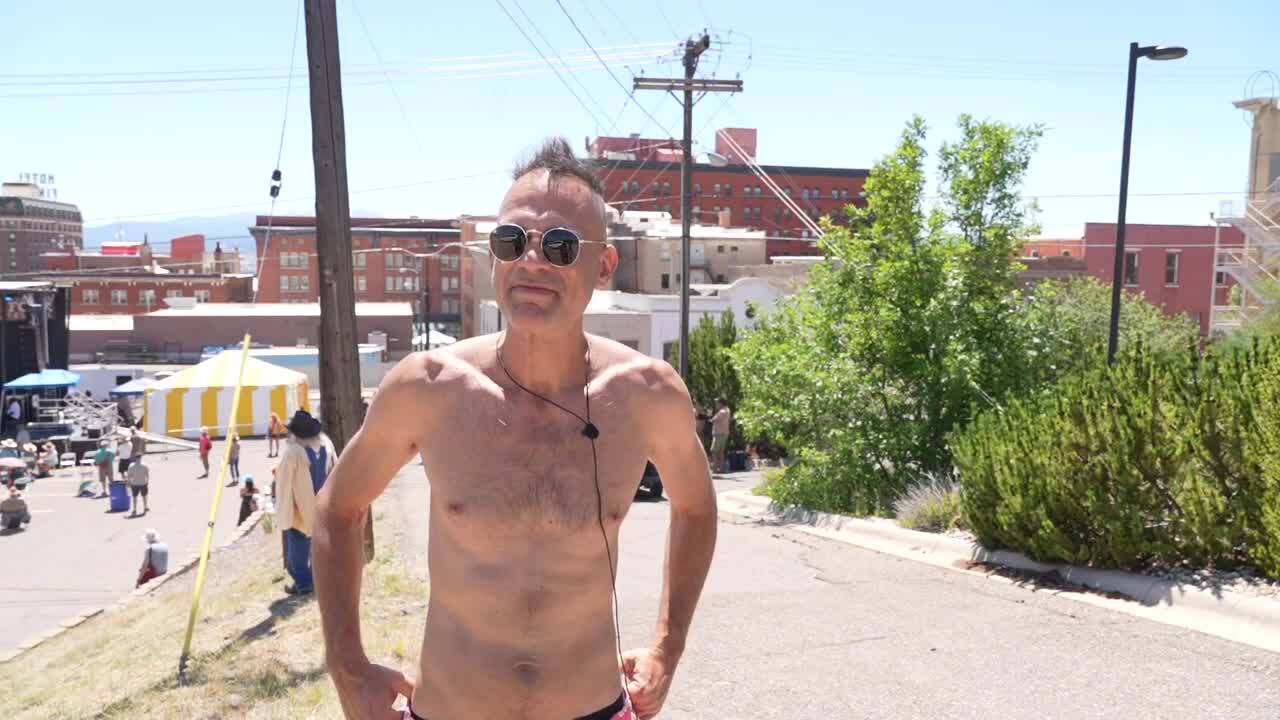
“It’s not that hot yet. I think it might get hotter, but it’s okay right now.”
Villere said he hasn’t worn shoes in a couple of years, including through two winters, and the callouses he’s built up protect his feet from the hot pavement.
Over the years, extreme weather has impacted festival attendance, but this year most people seem comfortable with the conditions.
This story was reported on-air by a journalist and has been converted to this platform with the assistance of AI. Our editorial team verifies all reporting on all platforms for fairness and accuracy.
The Montana Lottery offers multiple draw games for those aiming to win big.
Here’s a look at July 10, 2026, results for each game:
Winning Mega Millions numbers from July 10 drawing
02-39-44-46-56, Mega Ball: 23
Check Mega Millions payouts and previous drawings here.
Winning Big Sky Bonus numbers from July 10 drawing
10-13-23-30, Bonus: 02
Check Big Sky Bonus payouts and previous drawings here.
Winning Millionaire for Life numbers from July 10 drawing
14-42-46-47-57, Bonus: 05
Check Millionaire for Life payouts and previous drawings here.
Feeling lucky? Explore the latest lottery news & results
When are the Montana Lottery drawings held?
- Powerball: 8:59 p.m. MT on Monday, Wednesday, and Saturday.
- Mega Millions: 9 p.m. MT on Tuesday and Friday.
- Lucky For Life: 8:38 p.m. MT daily.
- Lotto America: 9 p.m. MT on Monday, Wednesday and Saturday.
- Big Sky Bonus: 7:30 p.m. MT daily.
- Powerball Double Play: 8:59 p.m. MT on Monday, Wednesday, and Saturday.
- Montana Cash: 8 p.m. MT on Wednesday and Saturday.
- Millionaire for Life: 9:15 p.m. MT daily.
Missed a draw? Peek at the past week’s winning numbers.
This results page was generated automatically using information from TinBu and a template written and reviewed by a Great Falls Tribune editor. You can send feedback using this form.
-

 Technology7 seconds ago
Rescue robot of tomorrow may be a cockroach in scuba suit
-
 Business3 minutes ago
L.A. cardrooms applaud court ruling to allow blackjack
-
 Entertainment8 minutes ago
Dan Finnerty profaned Bonnie Tyler’s hit in ‘Old School.’ He regrets the f-bombs at her shows
-
 Lifestyle15 minutes ago
Welcome to the summer of hot store openings and must-see art shows in L.A.
-
 Politics18 minutes ago
On birthright citizenship, the Supreme Court ‘originalists’ split on history and Trump
-
 Sports30 minutes ago
Dearica Hamby’s relentless effort and loyalty helped her retain key role with Sparks
-

 World38 minutes ago
‘Coalition of the Willing’ leaders to meet in Paris on Monday
-

 News1 hour ago
Mexico-US relations are already strained, but experts say they’re about to get worse | CNN

