Pierre-Antoine Capton, Elsa Keslassy, Ellise Shafer (copyright: Marcel Hartmann)
World
Taiwan to pick new president as China ramps up threats: 'choice between war and peace'


KAOHSIUNG, Taiwan – Beijing and Washington, D.C., will be watching closely as Taiwan goes to the polls on Jan. 13 to elect a new president amid rising fears of armed conflict.
“The potential winner could further cement moves toward what could be called ‘de jure Taiwan independence.’ This will significantly increase the possibility of a war between the two sides; a war in which the U.S. will almost certainly be involved in, either proactively or reluctantly,” Taipei’s National Cheng Chi University Professor of Diplomacy Huang Kwei-bo told Fox News Digital.
The frontrunner is the current Vice President William Lai of the Democratic Progressive Party (DPP), which is loathed by Beijing. Once unabashedly pro-Taiwan independence, the DPP has softened its position. Under current President Tsai Ing-wen, a new DPP policy crystalized, with Tsai telling the BBC after her landslide re-election in 2020 that Taiwan had no need to declare independence as “We are an independent country already, and we call ourselves the Republic of China (Taiwan).”
CHINA TELLS TAIWAN TO VOTE ON ‘RIGHT SIDE OF HISTORY’ IN ELECTION THAT COULD DETERMINE CROSS-STRAIT RELATIONS
Taiwan holds presidential and legislative elections on Jan. 13 that will help shape U.S.-China relations for years to come. (Photographer: An Rong Xu/Bloomberg via Getty Images)
The 64-year-old Lai has pledged to follow Tsai’s lead if elected and maintain the status quo. That is not good enough for Chinese President Xi Jinping, the all-powerful leader of the People’s Republic of China (PRC), nor the Chinese Communist Party (CPP). They vow to settle for no less than complete capitulation, although they have “generously” offered Taiwan the same deal as Hong Kong, the so-called “one country, two systems” policy.
Hong Kong was promised 50 years of uninterrupted freedoms they enjoyed as a British colony after the handover in 1997, but in 2020, China backtracked, imposed a Draconian National Security Law, and then quickly charged people in the pro-democracy camp with newly-created crimes that carry heavy sentences, including up to life in prison.
Lai’s main opponent for the presidency of Taiwan is New Taipei Mayor Hou Yu-ih of the Kuomintang or Chinese Nationalist Party (KMT). Hou, 66, was once the island’s top police officer and is now the mayor of Taiwan’s most populous city.
Taiwanese presidential candidate William Lai, from the ruling Democratic Progressive Party, is greeted by supporters while visiting the Luzhou Lee Family Historic Estate as part of an election campaign in New Taipei City on Jan. 3, 2024. (Photo by SAM YEH/AFP via Getty Images)
Ho Yu-ih and the KMT accept a controversial concept known as “the 1992 Consensus,” which boils down to the idea that, yes, there is only one China, but each side is free to interpret what this means. The DPP rejects the “1992 Consensus,” and it has never been put to a public vote or codified into law.
In recent years, President Tsai and her party have minimized the use of the formal name, Republic of China. The DPP accepts the ROC as the island’s official title but promotes the name “Taiwan” instead whenever possible. China refuses to even talk to DPP representatives, claiming they are “separatists;” one of the milder pejoratives the Chinese communists is bombastically fond of using. Hou and the KMT deny they are “pro-China,” just as the DPP denies it is “anti-China.” However, Beijing has a preference, with a KMT win being the “lesser of two evils” in its eyes.
Kuomintang presidential candidate Hou Yu-ih salutes supporters during an election campaign on Jan. 4, 2024 in New Taipei City, Taiwan. ((Photo by Annabelle Chih/Getty Images))
All major parties in Taiwan agree that Taiwan has never been a part of the People’s Republic of China and reject PRC claims of sovereignty over the island. What they disagree on is the way forward. The DPP is pushing for closer official links with the U.S. and her democratic allies, and promoting the use of Taiwan in the name of overseas representative offices that are de facto embassies.
The KMT would return the ROC title to prominence, work to get Chinese tourists returning to Taiwan, enact pacts allowing Chinese companies entry to sectors of Taiwan’s economy from which they are currently banned, and in general, adopt a more conciliatory relationship with Beijing.
CHINESE WAR PLANES, WARSHIPS SPOTTED NEAR TAIWAN AHEAD OF CRUCIAL PRESIDENTIAL ELECTION
Campaign posters in Taiwan range from large electronic billboards to posters on the pillars of buildings. Dec. 29, 2023. Kaohsiung, Taiwan. (Eryk Michael Smith/Fox News)
“We can’t let the KMT take power again. The last time they were in office, they attempted to implement pro-China policies that most people in Taiwan do not support. They often prioritize short-term gains at the expense of the long-term survivability of Taiwan as a free and democratic country,” Cherry Tang, a DPP city councilperson representing several districts in southern Taiwan’s largest city, Kaohsiung, which is home to around 2.7 million people, told Fox News Digital.
She continued, “While I have many KMT friends and occasionally collaborate with KMT colleagues, I sincerely disagree with many of their policies. I urge the people of Taiwan to continue supporting the DPP, as we are still on the road to advocating for a pro-Taiwan agenda in the years ahead.”
Chinese President Xi Jinping waves at an event to introduce new members of the Politburo Standing Committee at the Great Hall of the People in Beijing on Oct. 23, 2022. (AP Photo/Andy Wong, File)
The KMT says voting for them will bring better communication and trade links with China. The value of Taiwan-China trade in 2022 was worth some $205 billion, despite the DPP being the ruling party. However, China has recently warned in clear language that trade will be affected by a 2024 DPP win. Reuters reported Chen Binhua, spokesperson for China’s Taiwan Affairs Office, using near-religious terms at a news briefing in Beijing on Dec. 27, saying “If the DPP authorities … stubbornly adhere to their Taiwan independence position, and refuse to repent, we support the relevant departments taking further measures….”
While TV and internet ads flood Taiwan during elections, small trucks with campaign posters and a loudspeaker play recordings urging people to vote for various candidates have been a staple of Taiwanese politics for decades.
Beijing’s attempts to sway Taiwanese elections go back to Taiwan’s first democratic presidential vote held in 1996, when China conducted pre-election “missile tests,” prompting then-President Clinton to send the U.S. Seventh Fleet into the area.
However, since then, those threats have become more ominous now that Beijing has the realistic ability to make good on them. On Dec. 26, 2023, a near-holy day for the CCP as it marked the 130th birthday of their original demi-god Mao Zedong, Xi said, “The complete reunification of our motherland is an overall trend, a righteous cause, and the common aspiration of the people. Our motherland must be reunified, and it will surely be reunified. [We] firmly oppose anyone using any means to separate Taiwan from China.”
Campaign posters for various legislative member candidates in Taipei, Taiwan, on Wednesday, Dec. 27, 2023. Taiwan is set to hold its presidential and legislative elections on Jan. 13 that will help shape U.S.-China relations for years to come. (An Rong Xu/Bloomberg via Getty Images)
China’s supreme leader spoke that day from the Great Hall of the People in Beijing, but his remarks were not just meant for a domestic audience. Dean Karalekas, editor-at-large of Strategic Vision, an English-language security journal published in Taiwan, told Fox News Digital that while the PRC likes to saber-rattle, their bark is not without a potential bite. “Certain camps in this campaign have framed the election as being a choice between war and peace, and while that might sound like the usual election-year fear-mongering, Beijing has been tacitly undertaking to make good on that claim,” Karalekas said.
‘TRUMP-LIKE’ BILLIONAIRE PRESIDENTIAL CANDIDATE IN TAIWAN PROMISES ’50 YEARS OF PEACE’ WITH CHINA
Supporters attend a Kuomintang campaign rally ahead of Taiwan’s presidential election in Taipei on Dec. 23, 2023. (Photo by I-HWA CHENG/AFP via Getty Images)
Another resident of Kaohsiung, Chiang, says she would prefer to see a change in the ruling party. Her business, selling jade jewelry, took a severe hit since massive numbers of Chinese tourists stopped coming to Taiwan around the time DPP’s President Tsai took office. Chiang told Fox New Digital, “All I want is peace. Yes, it would be nice for my business if more Chinese tourists came, but more important is peace. My only son is 15. I don’t want him, or any other young people, to have to go to war or experience the hardships that my father and my grandfather endured because of military conflicts.”
The DPP’s William Lai is ahead in the polls but not by an insurmountable margin. On a recent campaign stump, Lai asked what has become of the 104-year-old KMT’s anti-Communist credentials and claimed the KMT’s embrace of “one China” is not only divisive but also potentially “deadly” to Taiwan’s sovereignty. Opposition leader Hou says the other side deliberately misrepresents his positions on China and that Lai and the DPP are the real threat to peace.
Chinese President Xi Jinping shakes hands with delegates attending the first People’s Liberation Army (PLA) Rocket Force Party congress during his inspection of the PLA Rocket Force, in Beijing on Sept. 26, 2016. (Xinhua/Li Gang via Getty Images)
The Chinese leader, who wields more power than any emperor ever did, addressed the communist party on New Year’s Eve and – as usual – brought up the “Taiwan question.” Xi’s comments were similar to previous statements, saying, “The unification of China is a historical inevitability … Compatriots on both sides of the Taiwan Strait should be bound by a common sense of purpose and share in the glory of the rejuvenation of the Chinese nation.”
Not long after, Taiwan’s outgoing President Tsai Ing-wen refuted Xi’s “common sense” comments in a lengthy speech, in which she again said that only the Taiwanese people, using democratic procedures, can determine the future of Taiwan. Tsai also said she has confidence in the wisdom of the people of Taiwan and does not believe they will be swayed by cognitive warfare or manipulation from Beijing.
Taiwan’s military staged a live-fire drill on Aug. 9 simulating the defense of the island following days of Chinese live-fire drills in waters near the island. (Annabelle Chih/Getty Images)
Whichever candidate ends up victorious will continue to face a hostile China. Beijing might prefer the KMT, but the KMT is not open to entertaining “one country, two systems” or any other formula that puts Beijing in charge of Taiwan.
So, democratic Taiwan will continue to be an irritant to Beijing and a potential global conflict flashpoint in 2024 and beyond. Not due to the actions of the citizens of Taiwan, but wholly because of manufactured Chinese “tensions” intended to bully Taiwan and convince the U.S. and other democracies of the world to sit back and allow the island to be swallowed by the Chinese Communist Party.
A third candidate in the race for president is former Taipei City mayor Ko Wen-je from the Taiwan People’s Party, who has been trailing with some 20%. How many of Ko’s supporters stick with him and how many switch to one of the leading candidates could be a deciding factor. Results of the presidential race should be known on the evening of January 13th.


NEWYou can now listen to Fox News articles!
Iran’s Islamic Revolutionary Guard Corps said Thursday it killed five members of the Democratic Party of Iranian Kurdistan, while the Kurdish opposition group told Fox News Digital that six of its Peshmerga — a term commonly used for Kurdish fighters — were killed in what it described as an Islamic Revolutionary Guard Corps ambush in northwest Iran.
The clash marks another escalation in Iran’s Kurdish-majority west after days of reported attacks and clashes involving Iranian security forces, the Islamic Revolutionary Guard Corps and Kurdish armed factions.
It also underscores the current position of Iranian Kurdish opposition groups that recently were viewed by U.S. and Israeli officials as a possible pressure point against Tehran during the U.S.-Israeli war with Iran but ultimately stayed out of the conflict amid mixed signals from Washington and pressure from both Iran and Turkey.
WAVE OF ATTACKS ON IRAN’S IRGC RAISES QUESTIONS ABOUT RENEWED KURDISH INSURGENCY
The Democratic Party of Iranian Kurdistan said six of its Peshmerga — Karo Hormuziari, Fardin Changizi, Mohammad Khaki, Abdullah Mohammadpour, Twana Osmani and Mohammad Amin Bayezidi — were killed in a clash with Iran’s Islamic Revolutionary Guard Corps near Piranshahr in Iranian Kurdistan July 1, 2026. (The Democratic Party of Iranian Kurdistan)
Majeed Gly, president of the American Kurdish Committee, told Fox News Digital the latest clashes should not be read as a full-scale uprising, but also should not be dismissed as routine border violence.
“What I’m hearing is, this is not business as usual,” Gly said. “This is not like periodic clashes on the border. This is operations, and it seems to be deep inside.”
Gly said Kurdish frustration has grown sharply after months of Iranian attacks on Kurdish areas and opposition-linked sites, including in the Kurdistan Region of Iraq. He said the region has been hit by more than 850 attacks since February, leaving at least six civilians dead and dozens more wounded.
Hejar Berenji, the U.S. representative of the Democratic Party of Iranian Kurdistan, or PDKI, confirmed to Fox News Digital that six PDKI Peshmerga were killed in a clash with IRGC forces in the Piranshahr area of Iranian Kurdistan.
Iran’s Revolutionary Guard said it had killed five members of the banned PDKI in northwest Iran, Reuters reported Thursday, citing state media. The IRGC said the group was ambushed after entering Iranian territory in mountainous border areas near Piranshahr in West Azerbaijan Province.
WAVE OF ATTACKS ON IRAN’S IRGC RAISES QUESTIONS ABOUT RENEWED KURDISH INSURGENCY
Kurdish separatists attempted an Iran crossing from Iraq amid protests. (Mustafa Ozer/AFP via Getty Images)
Berenji identified the six Peshmerga as Karo Hormuziari, Fardin Changizi, Mohammad Khaki, Abdullah Mohammadpour, Twana Osmani and Mohammad Amin Bayezidi. He said the incident took place Wednesday night in the village of Qizqapan, near Piranshahr, and said the PDKI unit was on a “political and organizational mission” when it was “ambushed by a large and heavily equipped IRGC force.”
“This should be understood in the broader context of the Islamic Republic’s continued repression in Iranian Kurdistan and its repeated attacks on Iranian Kurdish civilian camps in the Kurdistan Region of Iraq, even during ceasefire and negotiation periods,” Berenji said. “The regime has increased pressure on Kurdish communities because it understands that Iranian Kurds remain among the most organized and determined democratic forces inside Iran.”
The PDKI is one of Iran’s oldest Kurdish opposition movements. The group has been involved in decades of intermittent conflict with the Islamic Republic, while Tehran has long viewed Kurdish armed groups as separatist threats, while others describe it as a historic, centrist and nationalist Iranian Kurdish opposition group that Iran has targeted for years, including through assassinations of its leaders decades ago.
The Kurds are one of the largest stateless ethnic groups in the Middle East with communities spread across Iran, Iraq, Syria and Turkey. In Iran, many Kurds live in the country’s mountainous west and northwest, where Kurdish opposition groups have long accused Tehran of repression, executions, forced assimilation and military crackdowns. Iranian authorities view armed Kurdish factions as separatist or “terrorist threats.”
The latest clash followed several days of violence in western Iran. A similar incident near Piranshahr was reported by Iranian state media Tuesday, with the IRGC saying it had killed six members of what it called an “opposition and separatist group.”
Two IRGC members were killed and two wounded in a shooting in Kermanshah Province Monday evening, an attack claimed by a newly formed Kurdish armed group seeking retaliation for the IRGC’s role in suppressing the 2022–2023 protest movement, according to the Kurdish rights group Hengaw.
Iran also appeared to be expanding pressure on Kurdish opposition groups beyond PJAK, the Kurdistan Free Life Party, after days of clashes between PJAK and the IRGC, The Jerusalem Post reported Thursday.
Berenji said the latest clash was not a response to ongoing U.S.–Iran memorandum of understanding negotiations, which remain unresolved as talks continue without a finalized agreement.
WAVE OF ATTACKS ON IRAN’S IRGC RAISES QUESTIONS ABOUT RENEWED KURDISH INSURGENCY
Vice President JD Vance (center) speaks with Army Chief and Field Marshal Syed Asim Munir (left) and Pakistan Foreign Minister Ishaq Dar after arriving for the U.S.-Iran peace talks in Islamabad April 11, 2026. (Jacquelyn Martin/Pool/AFP via Getty Images)
“The Kurdish struggle for freedom, democracy and national rights predates the current negotiations and is not dependent on them,” Berenji said. “At the same time, any agreement that ignores the Kurdish question, the regime’s attacks on Kurdish civilians and the repression inside Iran will not bring real stability.”
Gly said Kurdish anger has been compounded by language in the U.S.–Iran memorandum of understanding that critics interpret as Washington agreeing not to interfere in Iran’s internal affairs.
KHAMENEI BODY IN COLD STORAGE AS FEARED BASIJ MOBILIZES AHEAD OF HISTORIC IRAN FUNERAL
People take part in a march in Erbil, Iraq, April 21, 2026, expressing support for the unity of Iranian Kurdish parties and condemning Iranian missile strikes and military actions against Kurdish groups in the Kurdistan Region of Iraq. (Rasul Gawhari/Middle East Images/AFP via Getty Images)
“This sentence has taken every Iranian opposition group the wrong way, especially the Kurds,” Gly said.
He argued that even during negotiations with hostile powers, the United States should not abandon its public support for freedom movements, invoking former President Ronald Reagan’s approach to the Soviet Union during the Cold War.
Gly said he does not see clear evidence that Kurdish groups have gained major new military capabilities but said the perception of Iran’s strength has changed.
“What has changed is the perception of weakness of Iran,” Gly told Fox News Digital. “They are less afraid of the regime.”
The new violence carries broader significance for Washington because Iranian Kurdish opposition groups were recently discussed as a possible ground pressure point against Tehran.
U.S. officials and Kurdish groups had discussed a potential military operation against Iranian security forces in western Iran, Reuters reported in March, while a separate report said Israel was backing Iranian Kurdish plans to seize Iranian border areas, though such an operation would likely require U.S. and Israeli support.
But those expectations quickly faltered. In April, Kurdish fighters ultimately stayed out of the war because of mixed signals from Washington and Israel and Iranian threats and strikes against Kurdish positions in Iraq. Turkish President Recep Tayyip Erdogan urged President Donald Trump during the conflict to prevent Kurdish forces from launching a ground operation inside Iran, reflecting Ankara’s longstanding opposition to Kurdish armed movements gaining ground in the region, Reuters also reported.
During the conflict, Trump told Reuters he would be “all for it” if the Kurds wanted to move against Iran and said their objective should be “to win,” but Kurdish commanders were frustrated by the lack of a clear U.S. or Israeli strategy.
Berenji said the PDKI does not seek chaos, but insisted Kurdish forces have the right to defend themselves.
CLICK HERE TO DOWNLOAD THE FOX NEWS APP
Naval units from Iran and Russia simulate the rescue of a hijacked vessel during joint drills at the Port of Bandar Abbas in Hormozgan, Iran, on Feb. 19, 2026. (Iranian Army/Handout/Anadolu via Getty Images)
“We seek a democratic, pluralistic, secular and federal Iran where all nations and communities can live with dignity and rights,” he said. “But the Kurdish people also have the right to defend themselves against repression, intimidation, and attacks by the IRGC.”
Fox News Digital has reached out to Iran’s mission to the United Nations for comment.

Pakistan has warned India over the Indus Water Treaty.
The Indus Water Treaty lays out how the river’s resources are to be shared between India and Pakistan.
Brokered in 1960, it has survived decades of conflict between the neighbours.
list of 3 itemsend of listRecommended Stories
But recently, the agreement was put to the test after New Delhi suspended its participation.
That came after an attack India said was carried out by armed groups linked to Pakistan, which it denied.
This week, Islamabad has said India cannot suspend the agreement on its own.
It says its share of the Indus River is a red line and has threatened consequences.
So, how could they avoid a further escalation?
Presenter: Mohammed Jamjoom
Guests:
Siddharth Varadarajan – Founding editor of The Wire, an independent investigative news organisation
Michael Kugelman – Senior fellow for South Asia at the Atlantic Council
Zeeshan Salahuddin – Advisory director at Tabadlab, a think tank and consultancy on geopolitics
Published On 2 Jul 2026
World
Variety Toasts French Cinema With Post-Cannes Summer Dinner at Paris’ Laperouse With Thierry Fremaux, Guillaume Canet, Pierre-Antoine Capton, Rebecca Zlotowski and Anamaria Vartolomei

Variety gathered leading figures from the French film industry for its fourth dinner at Lapérouse in Paris, a post-Cannes and summer celebration bringing together Cannes Film Festival director Thierry Frémaux, Mediawan boss Pierre-Antoine Capton, MK2 Films co-CEO Nathanaël Karmitz and Pathé Films president Ardavan Safaee, as well as actors and filmmakers Anamaria Vartolomei, Rebecca Zlotowski, Guillaume Canet, Marina Foïs, Géraldine Nakache and Elsa Zylberstein, among others.
Hosted at the iconic Paris restaurant with the support of co-owners Émilie and Benjamin Patou, the evening toasted the global reach of French cinema after a Cannes edition that showcased a wide range of local and international talent. It also underscored Variety’s longstanding ties with the French movie business and its unique position as a U.S. publication with a strong international and Francophile footprint.
The event was organized by Variety’s international editor Elsa Keslassy, with support from entertainment lawyer Elsa Huisman of Cabinet 111 and awards strategist Sébastien Cauchon of Cinema Collectors. Variety’s deputy international editor Ellise Shafer traveled from London to attend.
The celebration unfolded in one of Lapérouse’s intimate salons, L’Astrolabe, where the table was dressed in a romantic, candlelit style that matched the post-Cannes mood. A pink patterned tablecloth, white candelabras, low votive candles and small bouquets of summer flowers ran down the center, while gilded mirrors, textured wallpaper, draped windows and a chandelier gave the room an old-world Parisian glow.
Guests dined on a classic Lapérouse menu featuring smoked Norwegian salmon with blinis and dill cream, duck pâté en croûte with foie gras and thyme and the restaurant’s signature truffled croque-royal with comté cheese. Main courses ranged from chicken suprême with morel cream and mashed potatoes to pearly cod with beurre blanc, followed by Lapérouse vanilla cake and a minute-cut seasonal fruit turban.
Frémaux, who just marked his 25th year at the helm of Cannes, was joined by Zlotowski, who originated the idea for “La Vénus électrique,” which played on opening night of this year’s festival; Canet, whose thriller “Karma,” starring Marion Cotillard, played out of competition; and actor-turned-director Nakache, who presented “Think Good” at Cannes Première. Also on hand were Marina Foïs, who was at the festival with Rodrigo Sorogoyen’s “The Beloved,” and Vartolomei, who stars in Pathé’s ambitious two-part historical epic “De Gaulle.” The first installment premiered in Cannes and has since enjoyed a strong rebound at the French box office. She was joined by Safaee, president of Pathé Films, which produced the “De Gaulle” diptych.

Elisha Karmitz, Elisabeth d’Arvieu, Elsa Huisman, Elsa Keslassy, Pierre-Antoine Capton, Thierry Fremaux, Nathanael Karmitz, Ardavan Safaee (copyright: Marcel Hartmann)
The gathering also spotlighted several major French production and distribution players. Nathanaël Karmitz, Elisha Karmitz and Fionnuala Jamison represented the MK2 group, which had 11 films at Cannes this year and won four prizes, including the Grand Prix for Andrey Zvyagintsev’s “Minotaur,” the Caméra d’Or and FIPRESCI prize for Marie-Clémentine Dusabejambo’s “Ben’Imana” in Un Certain Regard, and the Grand Prix Ami Paris at Critics’ Week for Marine Atlan’s “La Gradiva.”
Capton, who celebrated Mediawan’s 10th anniversary last month, has just finalized the company’s acquisition of North Road, whose current hit “Backrooms” has grossed more than $331 million worldwide. He was accompanied by Élisabeth d’Arvieu, CEO of Mediawan Pictures. The company was behind nine films at Cannes.

Elisabeth d’Arvieu, Elsa Huisman, Elsa Zylberstein (copyright: Marcel Hartmann)
Jérôme Levy, co-founder of Vuelta, was also present after the group’s labels brought more than a dozen films to Cannes, including “La Vénus électrique,” Nakache’s “Think Good” and “A Woman’s Life.”
Top producer Juliette Schrameck, whose credits include Joachim Trier’s “Sentimental Value,” attended following a strong Cannes that included Lucas Dhont’s “Coward,” which won the acting prize for its two leads, Emmanuel Macchia and Valentin Campagne, as well as Leïla Marrakchi’s “Les Fraises” in Un Certain Regard.

Dimitri Rassam, Wassim Beji (copyright: Marcel Hartmann)
Rassam, producer of “The Count of Monte Cristo,” also attended after producing Paweł Pawlikowski’s Cannes prizewinner “Fatherland” through his banner Chapter 2. He is currently wrapping production on Ladj Ly’s upcoming “Dumas,” which he is making with Srab Films and Pathé Films. Kim Chapiron joined the dinner as he prepares his next film, a thriller set in the clandestine world of beauty. He came with producers Gary Farkas, Olivier Muller and Clément Lepoutre, whose banner Phantasm Group has joined luxury and lifestyle powerhouse The Independents and was at Cannes with James Gray’s “Paper Tiger” and Quentin Dupieux’s “Full Phil.”

Rosa Attab, Olivier Muller, Thierry Fremaux, Rebecca Zlotowski, Frederic Jouve (copyright: Marcel Hartmann)
Other guests included CNC president Gaëtan Bruel; Grégoire Chertok, a high-profile investment banker and cinephile who was awarded the Légion d’honneur; Cécile Felsenberg, co-founder of UBBA, who attended with several of the agency’s talents, including Canet and Foïs; and Melita Toscan du Plantier, president of the Marrakech Film Festival and producer of “Homebound,” which was shortlisted for the Oscars this year.

Guillaume Canet, Thierry Fremaux (copyright: Marcel Hartmann)
Also present were producers Rosa Attab, whose company January Films has upcoming projects including Chris Andrews’ “Cavendish,” with Sophie Thatcher and Joe Alwyn attached to star; Sophie Mas, who runs the banner MountainA with Natalie Portman and is in post-production on Lena Dunham’s “Good Sex”; Wassim Beji, who recently delivered Yann Gozlan’s box office hit “Guru”; actor Elsa Zylberstein, who is developing several international projects as a producer, including a Simone de Beauvoir film written by Christopher Hampton and set to be directed by Anne Fontaine; and photographer Marcel Hartmann.

Anamaria Vartolomei, Gregoire Chertok, Marina Fois, Jerome Levy, Wassim Beji (copyright: Marcel Hartmann)
The evening also welcomed international guests, notably Dylan Leiner, executive VP of acquisitions, production and business affairs at Sony Pictures Classics; and Ama Ampadu, senior production and development executive at the BFI Filmmaking Fund.
Owned by Patou and Antoine Arnault, Lapérouse first opened its doors in 1766 and became a favorite refuge for the Parisian intelligentsia, drawing philosophers, novelists, artists and, later, filmmakers to its salons, lushly decorated with red velvet, paintings, ornate moldings and crystal chandeliers. Tastefully revamped a few years ago by Dior Maison head Cordelia de Castellane, Lapérouse was mentioned by Marcel Proust in “In Search of Lost Time” and served as a backdrop in Woody Allen’s “Midnight in Paris.”

Anamaria Vartolomei (copyright: Marcel Hartmann)
-

 Health4 minutes ago
She Ate High-Protein Ice Cream Daily and Lost 193 Lbs—Her Keys to Success
-
 Lifestyle19 minutes ago
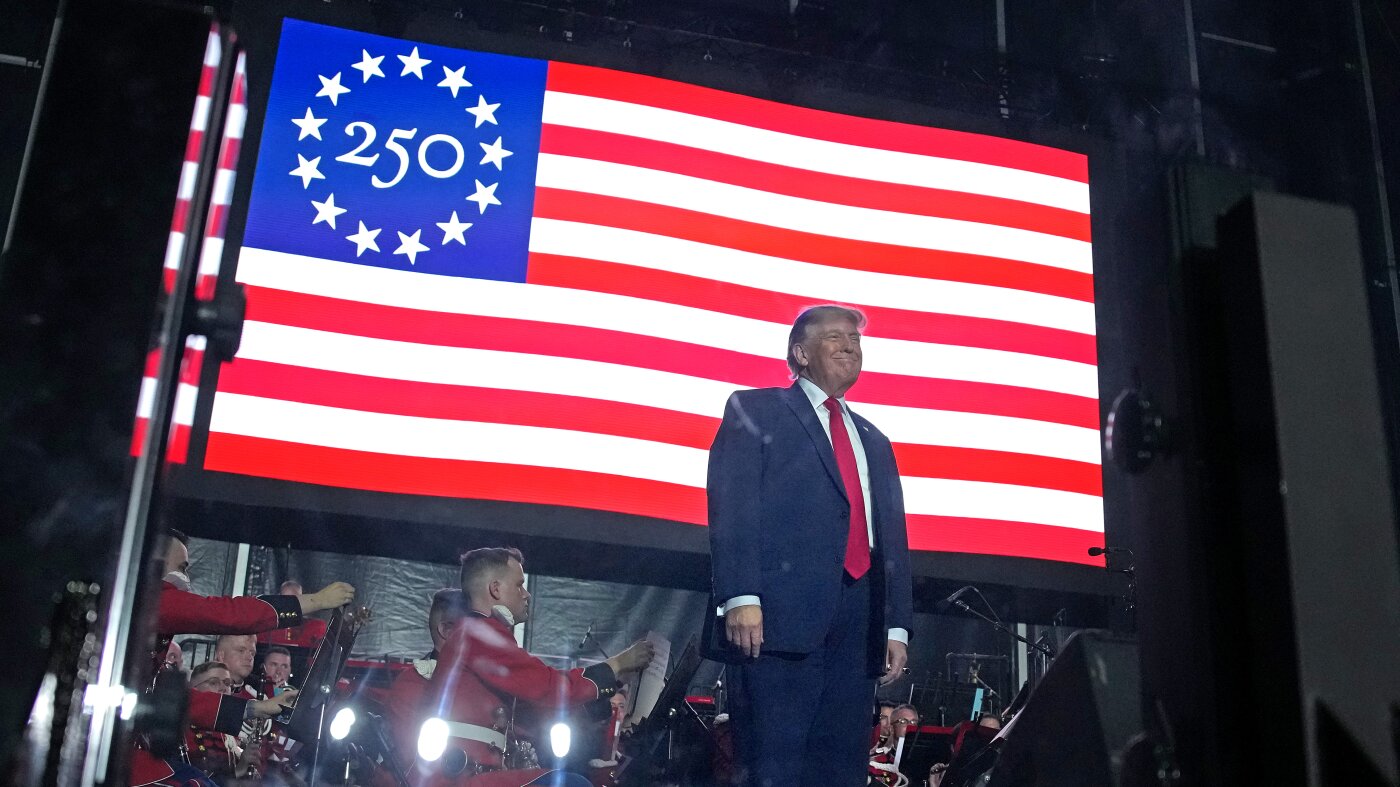
House Democrats accuse Trump of ‘hijacking’ America’s 250th birthday for his own gain
-

 Technology31 minutes ago
Tesla driver faces manslaughter charges over Texas crash that killed a woman inside her home
-

 World34 minutes ago
Six Kurdish fighters killed in IRGC ambush as clashes spread across western Iran
-

 Politics39 minutes ago
Sanctuary county refused 615 ICE transfer requests, turned over just 11 illegal immigrants, records show
-

 Health45 minutes ago
Mystery parasite leaves Americans battling ‘explosive’ illness as CDC investigates
-

 Sports49 minutes ago
2026 World Cup Round Of 16 Odds: Who’s Favored To Advance?
-

 Technology58 minutes ago
Fox News AI Newsletter: American manufacturer says AI is creating jobs, not replacing them

