


- Top Ukrainian negotiator says talks to continue at Davos conference
- Gives no indication that Florida discussions produced results
- Ukraine wants clarity on Russian position on peace proposals
World
Three Is Best: How China’s Family Planning Propaganda Has Changed


For decades, China harshly restricted the number of children couples could have, arguing that everyone would be better off with fewer mouths to feed. The government’s one-child policy was woven into the fabric of everyday life, through slogans on street banners and in popular culture and public art.
Now, faced with a shrinking and aging population, China is using many of the same propaganda channels to send the opposite message: Have more babies.
The government has also been offering financial incentives for couples to have two or three children. But the efforts have not been successful. The birthrate in China has fallen steeply, and last year was the lowest since the founding of the People’s Republic of China in 1949.
Source: National Bureau of Statistics of China
China’s annual population growth
Instead of enforcing birth limits, the government has shifted gears to promote a “pro-birth culture,” organizing beauty pageants for pregnant women and producing rap videos about the advantages of having children.
In recent years, the state broadcaster’s annual spring festival gala, one of the country’s most-watched TV events, has prominently featured public service ads promoting families with two or three children.
In one ad that aired last year, a visibly pregnant woman was shown resting her hand on her belly while her husband and son peacefully slept in bed. The caption read: “It’s getting livelier around here.”
Source: China Central Television
The propaganda effort has been met with widespread ridicule. Critics have regarded the campaign as only the latest sign that policymakers are blind to the increasing costs and other challenges people face in raising multiple children.
They have also mocked the recent messaging for the obvious regulatory whiplash after decades of limiting births with forced abortions and hefty fines. Between 1980 and 2015, the year the one-child policy officially ended, the Chinese government used extensive propaganda to warn that having more babies would hinder China’s modernization.
Today the official rhetoric depicts larger families as the cornerstone of attaining a prosperous society, known in Chinese as “xiaokang.”
Sources: “Then” photo by Marie Mathelin/Roger Viollet via Getty Images; “Now” photo by local government of Bengbu, Anhui province
For officials, imposing the one-child policy also meant they had to challenge the deep-rooted traditional belief that children, and sons in particular, provided a form of security in old age. To change this mind-set, family planning offices plastered towns and villages with slogans saying that the state would take care of older Chinese.
But China’s population is aging rapidly. By 2040, nearly a third of its people will be over 60. The state will be hard pressed to support seniors, particularly those in rural areas, who get a fraction of the pension received by urban salaried workers under the current program.
Now the official messaging has shifted dramatically, highlighting the importance of self-reliance and family support.
Under the one-child policy, local governments levied steep “social upbringing fees” on those who had more children than allowed. For some families, these penalties brought financial devastation and fractured marriages.
As recently as early 2021, people were still being fined heavily for having a third child, only to find out a few months later, in June, that the government passed a law allowing all married couples to have three children. It had also not only abolished these fees nationwide but also encouraged localities to provide extra welfare benefits and longer parental leave for families with three children.
The pivot has prompted local officials to remove visible remnants of the one-child policy. Last year, local governments across various provinces systematically erased outdated slogans on birth restrictions from public streets and walls.
In a village in Shanxi Province in northern China, government employees took down a mural with a slogan that promoted the one-child policy.
Source: Local government of Xilingjing Xiang, Shanxi Province
But the slogans that the government would like to treat as relics of a bygone era are finding new resonance with young Chinese.
On social media, many Chinese users have shared photos of one-child policy slogans as witty retorts to what they described as growing societal pressure to have larger families. Some of the posts have garnered thousands of likes and hundreds of comments.


Jan 18 (Reuters) – Ukraine’s top negotiator Rustem Umerov said on Sunday that talks with U.S. officials on a resolution of the nearly four-year-old war with Russia would continue at the World Economic Forum opening this week in the Swiss resort of Davos.
Umerov, writing on Telegram, said two days of talks in Florida with a U.S. team including envoy Steve Witkoff and Jared Kushner, President Donald Trump’s son-in-law, had focused on security guarantees and a post-war recovery plan for Ukraine.
Sign up here.
He gave no indication whether any agreements had been achieved at the meeting.
“We agreed to continue work at the team level during the next phase of consultations in Davos,” Umerov wrote.
The two sides, in the latest of a series of meetings intended to work out the details of an agreement, had “discussed in depth” the two issues, “focusing on practical mechanisms and carrying out and implementing them,” Umerov said.
He said his delegation had reported on Russian strikes last week which badly damaged Ukraine’s energy infrastructure and left hundreds of apartment buildings with no heating or electricity.
Kyiv’s team, which also included the head of President Volodymyr Zelenskiy’s office, Kyrylo Budanov, and the head of Zelenskiy’s parliamentary faction, Davyd Arakhamia, is also seeking clarity from Washington on the Russian stance toward the U.S.-backed diplomatic efforts to end the war.
Washington has pushed Ukraine to agree to a peace framework that it will then present to Moscow, while Kyiv and its European allies have sought to guard against any future attack by Russia.
Zelenskiy, speaking in his nightly video address, said it was important to outline the effects of the Russian strikes as they demonstrated that Russia was not interested in diplomacy.
“If the Russians were seriously interested in ending the war, they would have focused on diplomacy,” Zelenskiy said in his nightly video address.
RECOVERING FROM RUSSIAN STRIKES
Zelenskiy said repair crews made up of nearly 58,000 people remained engaged in restoring the heating network as night-time temperatures dip to minus 16 degrees Celsius (3 degrees Fahrenheit).
Deputy Prime Minister Oleksiy Kuleba said 30 apartment buildings in the capital Kyiv, particularly hard-hit by last week’s attacks, still had no heating.
Zelenskiy said Ukrainian intelligence had determined that Russia was conducting reconnaissance on key sites in preparation for strikes, including targets linked to nuclear power stations.
Foreign Minister Andrii Sybiha said on Saturday that there was evidence Russia was considering attacks on power substations supplying nuclear power stations.
Russian officials made no immediate response to a request for comment.
Reporting by Ron Popeski in Winnipeg; Editing by Edmund Klamann and Matthew Lewis
Our Standards: The Thomson Reuters Trust Principles.

NEWYou can now listen to Fox News articles!
Iranian protesters are facing their deadliest days yet as security forces unleash mass killings and executions in a sweeping crackdown some have labeled “genocide,” new reports say.
According to The Sunday Times, a report compiled by doctors entrenched in the region and reviewed by the outlet, estimates that security forces have killed at least 16,500 protesters and injured more than 330,000 others.
The report also described the violence as an “utter slaughter,” warning that the true toll may be even higher due to restricted access to hospitals and the near-total shutdown of communications.
POMPEO SAYS IRANIAN REGIME HAS ARRIVED AT ‘NATURAL TERMINUS’: ‘LET’S NOT WASTE THIS HISTORIC OPPORTUNITY’
A report alleges that Iranian security forces have killed at least 16,500 protesters. (Ohad Zwigenberg/AP Photo)
Most of the victims, the report says, are believed to be under the age of 30, underscoring the heavy toll on Iran’s younger generation as the regime intensifies its efforts to crush dissent.
Iran’s Supreme Leader, Ayatollah Ali Khamenei acknowledged Sunday that “several thousands” have been killed since protests erupted Dec. 28.
In a televised address, he blamed demonstrators, calling them “foot-soldiers of the U.S.” and falsely claiming protesters were armed with imported live ammunition.
Meanwhile, Human Rights Activists News Agency (HRANA) reported that as of day 22 of the protests, verified figures show 3,919 people killed, with 8,949 additional deaths under investigation, 2,109 severely injured, and 24,669 detainees.
HRANA noted that the true toll is likely far higher due to the internet shutdown.
Professor Amir Parasta, an Iranian-German eye surgeon and medical director of Munich MED, said in The Sunday Times report that doctors across Iran are “shocked and crying,” despite having experience treating war injuries.
G7 THREATENS IRAN WITH NEW SANCTIONS OVER NATIONWIDE PROTEST CRACKDOWN KILLING THOUSANDS
Eye surgeon Amir Parasta called the crackdown “a whole new level of brutality.” (UGC via AP)
“This is a whole new level of brutality,” Parasta said. He added that Starlink terminals smuggled into Iran have been the only means of communication since authorities cut internet access on Jan. 8.
Eyewitnesses who fled Iran also described snipers targeting protesters’ heads, mass shootings and systematic blinding using pellet guns.
One former Iranian resident said in the report that doctors reported more than 800 eye removals in a single night in the capital alone, with possibly more than 8,000 people blinded nationwide.
“This is genocide under the cover of digital darkness,” Parasta said.
Alongside the street killings, executions have surged dramatically, according to Ali Safavi, a senior official with the National Council of Resistance of Iran (NCRI).
Safavi told Fox News Digital that 2,200 people were executed in 2025, while 153 have already been hanged in the first 18 days of January 2026, averaging more than eight executions per day.
IRAN REGIME OPENED FIRE WITH LIVE AMMUNITION ON PROTESTERS, DOCTOR SAYS: ‘SHOOT-TO-KILL’
President Trump castigated Ayatollah Ali Khamenei over the weekend, calling him a “sick man.” (Majid Saeedi/Getty Images)
“Ali Khamenei is continuing mass executions in parallel with the killing of young protesters,” Safavi said. “Three executions in the form of hanging are now happening every hour according to our data.”
Iranian Foreign Minister Abbas Araghchi previously disputed high death tolls reported in an interview with Fox News’ Bret Baier, claiming fatalities were only in the hundreds and dismissing higher figures as “misinformation.”
CLICK HERE TO DOWNLOAD THE FOX NEWS APP
President Donald Trump sharply condemned Khamenei over the weekend, calling him a “sick man” and urging new leadership in Iran.
In an interview with Politico, Trump accused Khamenei of overseeing “the complete destruction of the country” and using “violence at levels never seen before,” adding that Iran’s leadership should “stop killing people.”

Charity says superrich 4,000 times more likely to hold political power than others, and own all social media companies, in report released to coincide with the opening of the WEF’s annual meeting in Davos.
International aid organisation Oxfam has released its annual report on rising inequality, expressing concern that billionaires are not only wealthier than ever but are also cementing their control over politics, media and social media.
The report released on Sunday also underscored the widening chasm between the haves and have-nots in a world beset by conflicts and multiplying protests.
list of 4 itemsend of listRecommended Stories
According to Oxfam’s analysis, the collective wealth of billionaires surged by $2.5 trillion in 2025, almost equivalent to the total wealth held by the bottom half of humanity, or 4.1 billion people.
Last year was also the first time that there were more than 3,000 billionaires in the world, and the first time that the world’s richest person, Elon Musk, had more than half a trillion dollars.
The charity’s annual report on rising inequality was released to coincide with the opening of the World Economic Forum’s annual meeting in Davos, Switzerland, a meeting which hosts close to 1,000 of the world’s richest people together with political leaders, alongside a handful of invited activists each year.
The theme of this year’s meeting is A Spirit of Dialogue. However, Oxfam argued in its annual report that the superrich are increasingly controlling the means of communication, including both traditional and newer forms of media.
It cited examples of Jeff Bezos, the billionaire owner of Amazon, buying The Washington Post, Musk acquiring Twitter/X, Patrick Soon-Shiong taking over the Los Angeles Times newspaper and far-right billionaire Vincent Bollore owning France’s CNews.
“The outsized influence that the superrich have over our politicians, economies and media has deepened inequality and led us far off track on tackling poverty,” said Oxfam International Executive Director Amitabh Behar.
“Governments should be listening to the needs of the people on things like quality healthcare, action on climate change and tax fairness,” Behar added.
Oxfam also estimated that billionaires are 4,000 times more likely to hold political office than common citizens and cited a World Values Survey of 66 countries, which found that almost half of all people polled say the rich often buy elections in their country.
“The widening gap between the rich and the rest is at the same time creating a political deficit that is highly dangerous and unsustainable,” Behar said.
‘Lives are becoming unaffordable and unbearable’
Oxfam also noted that there were 142 significant antigovernment protests across 68 countries last year, which it said authorities typically met with violence.
“Governments are making wrong choices to pander to the elite and defend wealth while repressing people’s rights and anger at how so many of their lives are becoming unaffordable and unbearable,” Behar said.
According to the WEF, participants at this year’s Davos meeting include “nearly 850 of the world’s top CEOs and chairpersons” alongside political leaders, including United States President Donald Trump, Canadian Prime Minister Mark Carney, and Chinese Vice Premier He Lifeng.
In addition to its political advocacy, Oxfam is also an aid organisation, delivering humanitarian assistance in countries around the world.
The group repeatedly sounded the alarm about forced starvation in Gaza under Israel’s genocidal war and was one of 37 international aid groups banned from the Palestinian enclave by Israel late last year.

Detroit, MI1 hour ago
How Detroit CBP blocks drug trafficking at border

San Francisco, CA1 hour ago
Man attacked in San Francisco dies 6 days later

Dallas, TX1 hour ago
What to know before you reupholster furniture, according to a Dallas designer

Miami, FL2 hours ago
Will Indiana or Miami win the national championship? Our experts debate

Boston, MA2 hours ago
Celtics midseason report card: Boston checked all boxes in impressive first half

Florida1 year ago
Florida High School Football Rankings: Top 25 teams – Oct. 21

Connecticut2 years ago
Cleary's 21 help Le Moyne down Central Connecticut State 69-64 in OT

Oregon2 years ago
How old is Bo Nix? What to know about Oregon quarterback ahead of 2024 NFL Draft

Virginia1 year ago
99th annual Pony Swim held in Virginia

Education2 years ago
Video: ‘It Didn’t Have to Happen This Way:’ U.Va. Faculty Call for Review of Police Response to Protests

Politics10 hours ago
Nancy Pelosi faces social media backlash over behavior at Bob Weir tribute event

World11 hours ago
Billionaires have more money and political power than ever, Oxfam says

News11 hours ago
Parts of Florida receive rare snowfall as freezing temperatures linger

News21 hours ago
Did Hunter S. Thompson Really Kill Himself?

Politics22 hours ago
Wife of former American detainee released after more than a year in Venezuelan prison
-

 Montana1 week ago
Service door of Crans-Montana bar where 40 died in fire was locked from inside, owner says
-

 Virginia1 week ago
Virginia Tech gains commitment from ACC transfer QB
-

 Montana1 week ago
‘It was apocalyptic’, woman tells Crans-Montana memorial service, as bar owner detained
-

 Minnesota1 week ago
ICE arrests in Minnesota surge include numerous convicted child rapists, killers
-
 Lifestyle4 days ago
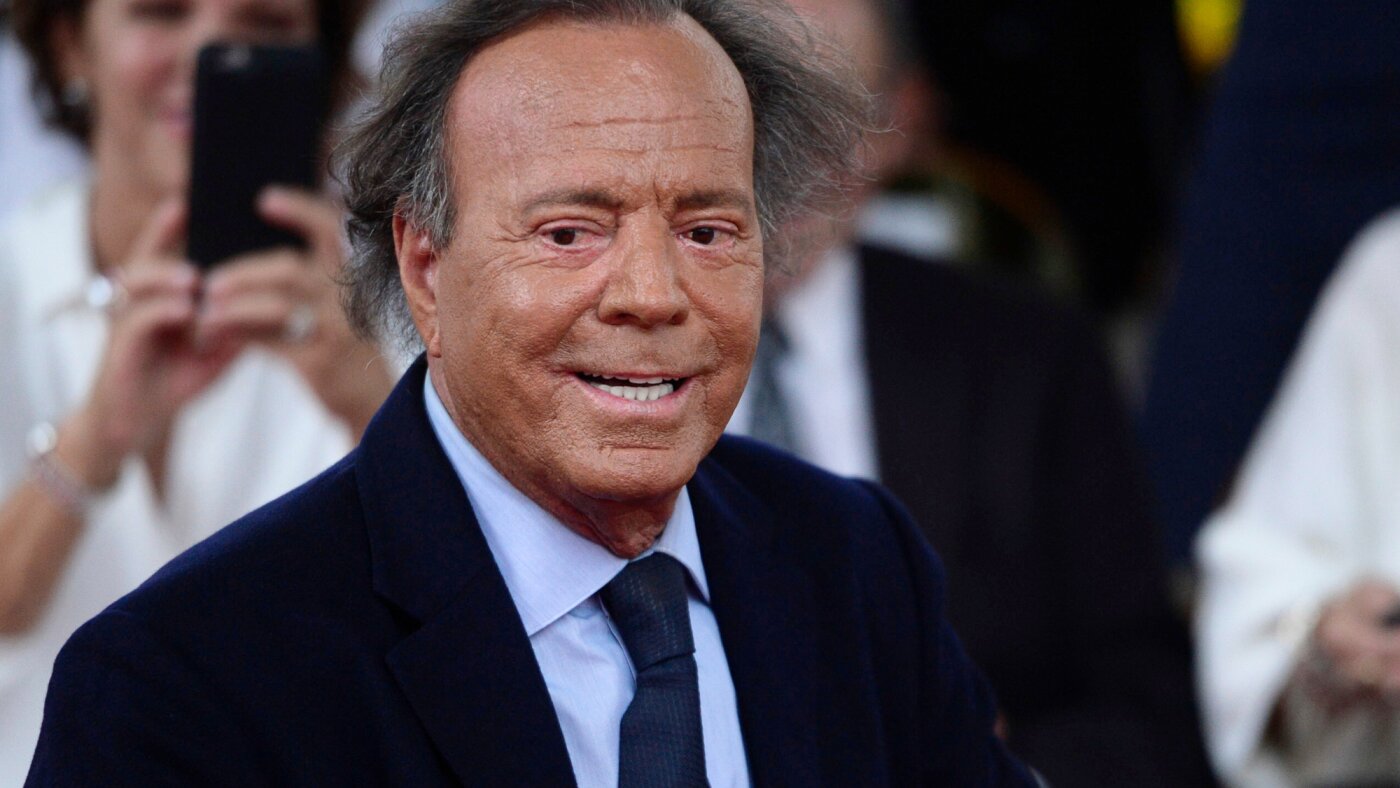
Julio Iglesias accused of sexual assault as Spanish prosecutors study the allegations
-

 Oklahoma1 week ago
Missing 12-year-old Oklahoma boy found safe
-

 Education1 week ago
Video: A Viral Beauty Test Doesn’t Hold Water
-

 Oregon1 week ago
Dan Lanning Gives Oregon Ducks Fans Reason to Believe