World
Israel rescues 4 hostages kidnapped by Hamas: 'We are overjoyed'


Israel says it safely rescued four hostages that were captured by Hamas during the Oct. 7 Hamas attacks.
The IDF said the hostages, three men and one woman, were rescued in the largest such hostage recovery operation since the war with Hamas began in Gaza.
Noa Argamani, 26, Almog Meir Jan, 22, Shlomi Ziv, 41, and Andrey Kozlov, 27, were rescued in two separate locations in a complex special daytime operation in the heart of Nuseirat in central Gaza. They had been held in captivity by the terrorist group for 246 days.
FAMILIES OF HOSTAGES TAKEN IN ISRAEL ON OCT. 7 PLEAD FOR PEACE AT INTERFAITH CONFERENCE IN NYC
Noa Argamani, 26, Almog Meir Jan, 22, Shlomi Ziv, 41, and Andrey Kozlov, 27, were rescued in two separate locations in a complex special daytime operation in the heart of Nuseirat in central Gaza. (IDF)
Argamani has been one of the most widely recognized hostages since she was abducted from a music festival in southern Israel. The video of her abduction was among the first to surface, images of her horrified face widely shared — Argamani detained between two men on a motorcycle, one arm outstretched and the other held down as she screams “Don’t kill me!”
Her mother, Liora, has stage four brain cancer and in April released a video pleading to see her daughter before she dies.
Officers of the National Police special anti-terror unit of Yamam along with Shin Bet agents simultaneously raided two Hamas buildings to pluck the hostages to safety. Argamani was rescued at one site, while Meir Jan, Kozlov, and Ziv were at the second location.
Chief Inspector Arnon Zmora was killed during the raid. (IDF)
During the operation, Chief Inspector Arnon Zmora, an officer in the special anti-terror unit of Yamam, was critically injured and later died from his injuries.
There are still 120 Israeli hostages being held by Hamas in Gaza. Forty-three of them have been declared dead and their bodies are still held by Hamas.
Israeli helicopter with 3 rescued hostages takes off from the Gaza Strip
WHAT IS ISRAEL’S FIRST LINE OF DEFENSE, THE IRON DOME?
“Noa, Almog, Andrey and Shlomi – we are overjoyed to have you home,” Minister of Defense Yoav Gallant said in a statement.
“Our troops conducted a heroic operation to rescue four hostages held by Hamas, and brought them home to Israel.”
Hostage Andrey Kozlov walking out of a helicopter after being rescued from Hamas (Gideon Markowicz/TPS-IL)
“I followed the complex operation from the command and control center – IDF, ISA and Special Forces operated with extraordinary courage under heavy fire, and succeeded in completing their mission. Israel’s defense establishment will continue fighting until 120 hostages return home.”
Gallant later described the mission as the “most heroic and extraordinary operations” he had witnessed over the course of his 47 years serving in Israel’s defense establishment.
Almog Jan Meir reunited with his family (IDF)
The Hostages Families Forum Headquarters welcomed the news and praised the Israeli government.
“The heroic operation by the IDF that freed and brought home Noa Argamani, Shlomi Ziv, Andrey Kozlov, and Almog Meir Jan is a miraculous triumph,” a statement by the group reads.
“Now, with the joy that is washing over Israel, the Israeli government must remember its commitment to bring back all 120 hostages still held by Hamas – the living for rehabilitation, the murdered for burial.”
“We continue to call upon the international community to apply the necessary pressure on Hamas to accept the proposed deal and release the other 120 hostages held in captivity; every day there is a day too far.”
Noa Argamani is seen hugging her father, whose birthday is today. (IDF)
Rear Admiral Daniel Hagari of the Israeli Defense Forces said it was a “high-risk, complex mission” to rescue the hostages, which took place at around 11 a.m. local time.
“While under fire in the buildings and under fire on the way out from Gaza our forces rescued our hostages,” Hagari said. “Israeli forces have been preparing for this rescue mission for weeks… they risked their lives to save the lives of our hostages. This is what we do in Israel.”
He said Israel will not stop until all the hostages are rescued. Hagari said the four have been taken to hospital for medical examination and will soon be reunited with their families.
“They are back home in Israel, they are alive, they are well.”
All four hostages were kidnapped from the NOVA festival.
Minister of Defense Yoav Gallant approving the operation to rescue the hostages together with IDF Chief of the General Staff Lt. Gen. Herzi Halevi, Head of the IDF’s Intelligence Directorate, Maj. Gen. Aharon Haliva and Maj. Gen. (Res.) Nitsan Alon. (Ariel Hermoni/IMoD)
Noa Argamani is from Be’er Sheva and was kidnapped along with her boyfriend Avinatan Or, who remains in Hamas captivity. She is a yoga and art enthusiast who enjoys hiking and was studying information systems management at Ben-Gurion University of the Negev at the time of her kidnapping.
Almog Meir Jan is from Or Yehuda and was expected to start a job at a large high-tech company the day after the terrorist attack.
Shlomi Ziv, of Moshav Elkosh, was working as a security guard on Oct. 7. Ziv and his wife Miren have been living in the Moshav for about 17 years.
Andrey Kozlov, is from Rishon LeZion and was also working as a security guard on the day. Kozlov is a recent immigrant to Israel, having made aliyah by himself, without his family, about a year and a half ago. Aliyah is “the act of going up” towards the Jewish holy city of Jerusalem.
The Associated Press contributed to this report.
Benjamin Netanyahu in operation room during hostage mission ( ISA (Shin Bet))


DEVELOPING STORYDEVELOPING STORY,
The attacks have triggered fires in two districts of Kyiv, according to the city’s mayor.
Published On 7 Jul 2026
Russian missile attacks have struck Kyiv in the third large-scale assault on the Ukrainian capital in less than a week.
Early on Wednesday, Kyiv Mayor Vitali Klitschko said in a statement on Telegram that the Russian strikes had triggered fires in two districts of the city.
Recommended Stories
list of 3 itemsend of list
So far, two people have been injured, with one requiring treatment in hospital.
Earlier, on Tuesday, a Russian missile strike hit the southern port of Odesa injuring ten people, regional governor Oleh Kiper said. Eight were being treated in hospital.
Moscow also launched a large-scale attack on Kyiv on Monday, killing at least 14 people and damaging at least a dozen buildings.
Both Russia and Ukraine have recently expanded their use of long-range weapons, including missiles, marking a new front in Moscow’s four-year war.
Ukraine has focused its attacks on Russian energy facilities to weaken its war efforts.
Ukraine said on Tuesday that its drones attacked a dozen tankers from Russia’s “shadow fleet” over the past two days that were delivering fuel to Moscow-occupied Crimea. Kyiv’s military said they had struck eight vessels subject to sanctions in the Sea of Azov, each with a deadweight of about 7,000 metric tonnes. Two more tankers were hit later in the day.
The Sea of Azov is a key supply route for Russian forces in Crimea and other occupied parts of southern Ukraine.
Russia annexed Crimea in 2014 – in a move that has been unrecognised internationally – eight years before launching its full-scale invasion of Ukraine.
Moscow has not publicly commented on this week’s attacks on Ukraine, which also included strikes on electrical substations, radar systems, and missile installations.
Attacks amid NATO Summit
The latest exchange of fire between Russia and Ukraine comes amid NATO’s annual summit, which began on Tuesday. The military alliance’s leaders have gathered in Turkiye’s capital, Ankara, for the two-day conference, where defence spending and Russia’s war on Ukraine are under discussion.
NATO is expected to pledge further military support for Ukraine, as President Volodymyr Zelenskyy urges the alliance to step up aid for the country’s air defences following the deadly escalation of Russian attacks on Kyiv.
Zelenskyy – who has renewed his call for Ukraine to be allowed to join the alliance – wrote on social media on Tuesday that he had signed new agreements with Estonia, the Netherlands, and Denmark in Ankara.
The deals create “new opportunities for joint production, the development of innovative defense technologies, systematic exchange of expertise, and the export of Ukrainian battlefield-proven solutions”, he said.
Further agreements are expected with Germany, Norway, Finland, and Canada.
US President Donald Trump is also expected to meet Zelenskyy on the sidelines of the summit on Wednesday, having spoken with Russian President Vladimir Putin ahead of the NATO gathering.
Asked about Russia’s war in Ukraine, Trump said he hoped it would be settled “soon”.
“I think they both want to make a deal,” Trump said.
“It’s too bad it took so long, but I think something’s going to come out.”
World
Video shows bomb rock Damascus hotel where French President Macron is staying during Syrian state visit

NEWYou can now listen to Fox News articles!
A pair of explosions rocked the Syrian capital of Damascus near the downtown Four Seasons hotel, where French President Emmanuel Macron was staying during a state visit, Syrian state media reported Tuesday.
Eighteen people, including four police officers, were injured by improvised explosive devices (IEDs) on Tuesday, Syria’s interior ministry reported through state outlet SANA.
According to the ministry, both bombs exploded after security forces had discovered them, “while preparations for the disposal operation were underway.”
BRIEF ALCOHOL BAN IN DAMASCUS SPARKS CONCERNS ABOUT PRESIDENT AL-SHARAA’S VISION FOR SYRIA
The bombs were placed inside a car and a garbage can near the hotel where Macron was staying during his visit, the first Syrian state visit by the leader of a Western country since Syrian President Ahmed al-Sharaa took over for the now-deposed former President Bashar al-Assad in 2025.
A spokesman for Élysée Palace said Macron was not in his hotel during the explosions and didn’t even hear them. He continued his visit with al-Sharaa, according to both Élysée Palace and SANA.
France’s President Emmanuel Macron shakes hands with Syrian President Ahmed Al-Sharaa at the People’s Palace in Damascus, July 7, 2026. (Reuters/Mahmoud Hassano)
While not commenting on the explosions directly, Macron posted a statement on X shortly after the incident.
ISRAEL FORTIFIES BORDER WITH JORDAN AS IRAN SEEKS NEW TERROR PATH
“Nothing can smother the aspiration of Syrian women and men to live in a fully sovereign, safe, pluralistic, and united Syria. This morning I met Syria in all its diversity. I saw dignity, courage, and determination. My visit continues,” he wrote.
Syria’s President Ahmed al-Sharaa greets supporters after meeting with President Donald Trump at the White House in Washington, D.C., NOV. 10, 2025. (Lubna Allababidi/Handout via Reuters)
Syria’s Ministry of the Interior confirmed the explosions but stressed that they were outside the security perimeter designated for Macron.
“We confirm that the explosion site is outside the security perimeter designated for the French president’s residence. It posed no direct threat to the residence or the official visit program, which is proceeding as planned,” the ministry announced through SANA.
‘PARCEL BOMB’ EXPLODES IN MONACO RESIDENTIAL AREA, LEAVING 2 CRITICALLY INJURED: REPORTS
An ambulance drives past the site where explosive devices blew up near a hotel where French President Emmanuel Macron was meant to be staying, in Damascus, Syria, July 7, 2026. (Reuters/Yamam Al Shaar)
Macron is the first Western leader to meet with al-Sharaa in Damascus since he became the country’s president in 2025. Some have criticized Western leaders, including President Donald Trump, who hosted al-Sharaa in the White House in November, for normalizing relations with al-Sharaa given his past as a fighter for the al Qaeda terrorist group.
Tuesday’s explosions in Damascus were also the second and third major blasts in Damascus in less than a week.
CLICK HERE TO DOWNLOAD THE FOX NEWS APP
On Monday, France’s government condemned what it called a “terrorist attack” after an explosive device killed at least nine people in a Damascus cafe on July 2.
Syrian authorities are still investigating the attack and have not publicly ascribed it to any group or individual, according to The Washington Post.
Fox News Digital contacted the Syrian Foreign Ministry and Élysée Palace for confirmation and further details.

Published on
NATO must become more European to reduce its long-standing reliance on the US security umbrella, Ursula von der Leyen and Mark Rutte said on Tuesday as leaders of the 77-year-old alliance gathered in Ankara, Turkey, for their annual summit.
ADVERTISEMENT

ADVERTISEMENT
“We both know how important close cooperation between the European Union and NATO is,” the European Commission president said alongside the NATO secretary general at an industrial forum ahead of the summit.
“But to make this possible, what we need is interoperability.”
Rutte echoed von der Leyen’s remarks, highlighting the “clear division of labour” between the two organisations: NATO oversees the command structure, capabilities and standards, while the EU is responsible for industry, investment and regulation.
Twenty-three of the EU’s 27 member states are also members of NATO.
“We cannot continue, as we did, being over-reliant on the United States. We need a much stronger Europe within a stronger NATO,” Rutte said, hailing an “unparalleled” transformation driven by closer EU-NATO cooperation.
“To stay transatlantic, we have to become more European.”
The Ankara summit comes after months of growing tensions across the Atlantic, fuelled by the White House’s unilateral decision to strike Iran and its gradual reduction of military assets stationed in Europe.
Rattled by the deepening fractures, Europeans are determined to show US President Donald Trump that they are pulling their weight and stepping up their defence investment at a rapid pace, a trend often described as the “Europeanisation of NATO”.
But while some nations, such as Poland, the Baltics and the Nordics, have drastically increased their military spending towards the new 5% of GDP target, others, such as Spain, Belgium, Luxembourg and the Czech Republic, still lag far behind.
On Tuesday, von der Leyen touted the financial plans that her Commission has put forward to ramp up homegrown defence capabilities: €150 billion under the SAFE loan programme and €135 billion provisionally allocated in the next EU budget.
“In this geostrategic and geopolitical environment, we need a massive surge in defence investment,” she said.
“With this taxpayers’ money, we want, of course, a return on investment. And we want good jobs in Europe. We want research and development in Europe. So that’s important for us,” she added.
Rutte said NATO requires a “huge increase” across its entire defence industrial base, on both sides of the Atlantic, to keep up with Russia’s all-consuming war machine.
“Russia has the whole of its economy now on a war footing. The car industry in Russia is producing for the war effort, and that means that we’ve got to do this also in Europe, Canada and the US,” Rutte said.
“We have to defend ourselves. It’s the first task for every government. And the threat is there. Russia are working with North Korea, Iran and China. Let’s not be naive.”
-

 Politics4 minutes ago
Abbott orders probe after Texas hospital advertises ‘birth packages’ in Mexico: ‘Citizenship is not for sale’
-

 Health12 minutes ago
Dr Oz warns Medicare scammers are stealing billions — and your personal information could be next
-

 Sports19 minutes ago
Donovan Mitchell signs massive $273M Cavaliers extension as LeBron James return speculation grows
-
 Business27 minutes ago
Waymo reports teen riders for bad behavior and delivers them to the police
-
 Entertainment34 minutes ago
Tito Double P seizes the spotlight with his latest album, ‘Acomodo’
-
 Politics49 minutes ago
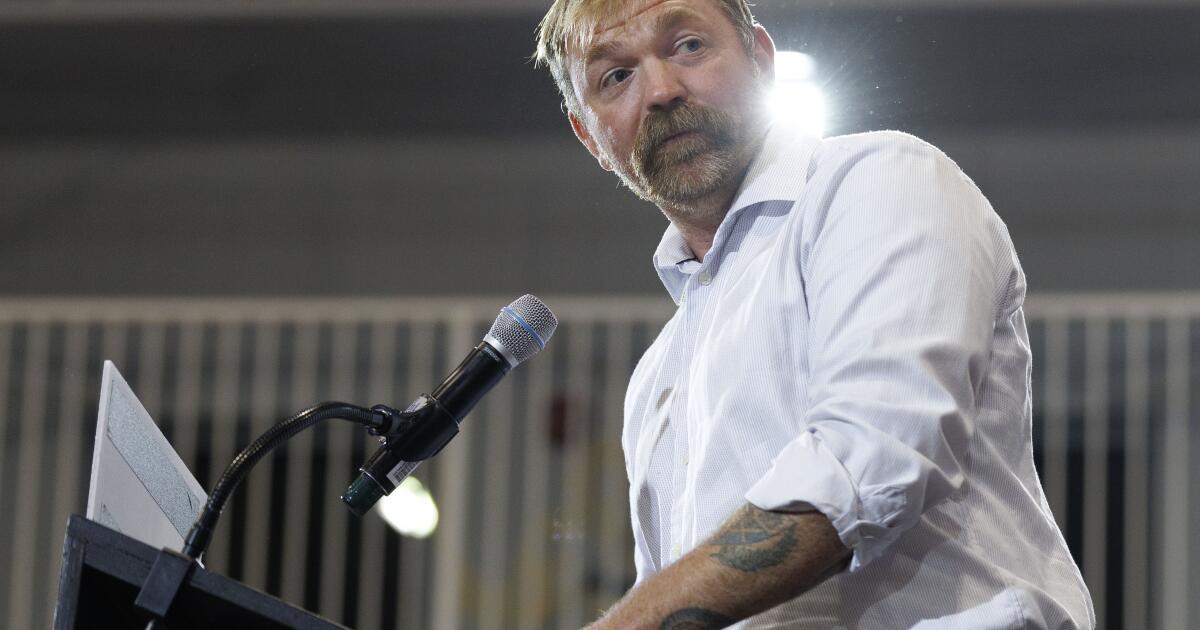
Platner’s collapsing campaign in Maine adds new midterm pressures for Democrats nationwide
-
 Science52 minutes ago
Fans slam FIFA’s cooling breaks. Why the U.S. World Cup team doctor disagrees
-
 Sports57 minutes ago
Cowboys’ Marshawn Kneeland had early-stage CTE when he died by suicide

