World
How Trump’s 2026 Iran ‘war’ script echoes and twists the 2003 Iraq playbook


In January 2003, President George W Bush stood before the United States Congress to warn of a “grave danger” from a “dictator”, a former US client in the Middle East, armed with weapons of mass destruction (WMD).
Twenty-three years later, in the same chamber, President Donald Trump used his State of the Union address to paint a strikingly similar narrative: A rogue regime, a looming nuclear threat, and a ticking clock.
list of 4 itemsend of listRecommended Stories
In a dark twist of historical irony, Iraq’s Saddam Hussein, who was armed to the teeth by the US in Iraq’s 1980-1988 war with the fledgling Islamic Republic of Iran, became Washington’s public enemy number one, surpassing Osama bin Laden. Now, that label has been seemingly applied to Iran’s Supreme Leader Ayatollah Ali Khamenei, a key leader during that ruinous war against Iraq that left a million dead.
But while the “war script” sounds familiar, the geopolitical stage has shifted dramatically.
As Washington pivots from the neoconservatives’ “preemptive” doctrine of the Bush era to what experts are calling the “preventive maintenance” of the Trump era – following the June 2025 strikes on Iran in tandem with Israel’s attack in the 12-day war – questions are mounting about the intelligence, the endgame, and the alarming lack of checks and balances.
The semiotics of fear: From clouds to tunnels
In 2003, the visual language of war was vertical: The fear of a “mushroom cloud” rising over US cities, or a biological weapon seeping into populated areas. Today, the fear has gone in the other direction: Purportedly deep underground.
“The administration is updating the visual dictionary of fear,” says Osama Abu Irshaid, a Washington-based political analyst. “They are exaggerating the nuclear threat exactly as the Bush administration did with the ‘smoking gun’ metaphor. But there is a key difference: In 2003, US intelligence was manipulated to align with the lie. In 2026, the intelligence assessments actually contradict Trump’s claims.”
While Trump asserted in his State of the Union address that Iran is “rebuilding” its nuclear programme to strike the US mainland, his own officials offer conflicting narratives. White House spokesperson Karoline Leavitt insisted Tuesday, parroting her boss, that the 2025 “Operation Midnight Hammer” had “obliterated” Iran’s facilities. Yet, days earlier, Trump envoy Steve Witkoff claimed Tehran was “a week away” from the bomb.
This “information chaos”, analysts argue, serves a specific purpose: Keeping the threat vague enough to justify perpetual military pressure.
“Bush benefitted from the post-9/11 anger to link Iraq to an existential threat,” Abu Irshaid told Al Jazeera. “Trump doesn’t have that. Iran hasn’t attacked the US homeland. So, he has to fabricate a direct threat, claiming their ballistic missiles can reach America – a claim unsupported by technical realities.”
The regime change quagmire
Perhaps the most glaring contrast with 2003 is the internal coherence of the administration.
The Bush team – Vice President Dick Cheney, Defense Secretary Donald Rumsfeld and his deputy Paul Wolfowitz – moved in ideological lockstep. Cheney famously predicted US troops would be “greeted as liberators”.
They were anything but. The made-for-television scene of a statue of Saddam Hussein being torn down in central Baghdad quickly gave way to sustained, organised fighting against the US occupation, heavy US troop losses, as well as sectarian bloodletting that forced Iraq onto the cusp of all-out civil war.
Bush declaring major combat operations over under a huge “Mission Accomplished” banner in May 2003 came back to haunt his administration and the US for years to come.
The Trump team of 2026 appears far more fractured, torn between “America First” isolationism and aggressive interventionism.
- The official line: Vice President JD Vance and Defence Secretary Pete Hegseth have publicly stated the goal is not regime change. “We are not at war with Iran, we’re at war with Iran’s nuclear programme,” Vance said Sunday.
- The president’s instinct: Trump contradicted them on social media, posting: “If the current Iranian Regime is unable to MAKE IRAN GREAT AGAIN, why wouldn’t there be a Regime change??? MIGA!!!”
“The Neocons who hijacked policy under Bush have been weakened,” notes Abu Irshaid. “But they have been replaced by figures like Stephen Miller, who holds absolute loyalty to Trump and close ties to the Israeli right. Trump is driven by instinct, not strategy. He seeks the ‘victory’ that eluded his predecessors: The total hollowing out of Iran, whether through zero-enrichment surrender or collapse.”
The lonely superpower: Coercion over coalition
In 2003, Bush and United Kingdom Prime Minister Tony Blair worked tirelessly to build a “Coalition of the Willing”. It was a diplomatic veneer, but it existed. Blair remains a much-loathed figure in the Middle East and in some quarters in the West for giving diplomatic cover to the Iraq debacle.
In 2026, the US is operating in stark isolation.
“Trump is not building a coalition; he is alienating allies,” Abu Irshaid explains. He points to a pattern of “extortion” extending from tariffs on the European Union to attempts to “buy” Greenland. “The Europeans see the coercion used against Iran and fear it could be turned against them. Unlike 2003, only Israel is fully on board.”
This isolation was highlighted when the UK reportedly refused to allow the US to use island bases for strikes on Iran, forcing B-2 bombers to fly 18-hour missions directly from the US mainland during the 2025 campaign.
The collapse of checks and balances
Following the damning intelligence failures and lies of the Iraq war, promises were made to strengthen congressional oversight. Two decades later, those guardrails appear to have vanished.
Despite efforts by US Representatives Ro Khanna (a Democrat) and Thomas Massie (a Republican) to invoke a “discharge petition” to block an unauthorised war, the political reality is grim.
“The concept of checks and balances is facing a severe test,” warns Abu Irshaid. “The Republican Party is now effectively the party of Trump. The Supreme Court leans right. Trump is operating with expanded post-9/11 powers that allow for ‘limited strikes’ – strikes that can easily spiral into the open war he claims to avoid.”
With the administration citing “32,000” protesters killed by Tehran – a figure significantly higher than independent estimates, and which Iran dismissed as “big lies” on Wednesday – the moral groundwork for escalation is being laid, bypassing the need for United Nations resolutions or congressional approval.
As US and Iranian negotiators meet in Geneva for make-or-break talks under the shadow of last year’s “Operation Midnight Hammer”, the question remains: Are the two nations with decades of enmity boiling between them on the brink of a new deal, or the prelude to a war that could ignite the entire region in flames?



World
Escaped wolf Neukgu returned to South Korean zoo after nine-day search involving thermal imaging drones

NEWYou can now listen to Fox News articles!
A wolf who escaped a South Korean zoo nine days ago, captivating international attention, has been found and safely returned.
Neukgu burrowed his way out of the O-World zoo and theme park in Daejeon, south of Seoul, April 8.
The search for Neukgu kept the country on edge, and many worried about the 2-year-old wolf eight years after a puma named Bbo-rong was shot and killed hours after it escaped from the same zoo.
Neukgu was seen several times before he was captured, including on surveillance video.
CHIMPANZEE ESCAPES FROM INDIANAPOLIS ZOO ENCLOSURE, TRIGGERING EMERGENCY LOCKDOWN
Neukgu was on the run for nine days before he was captured. (Daejeon Municipality via AP; Daejeon City Corporation/Reuters)
He was also seen near a highway nearly 3 miles from the zoo, a zoo official said.
The animal was captured just after midnight Friday after he was shot by a veterinarian using a tranquilizer gun.
His vital signs were normal after a health check, but a fishhook was removed from his stomach, zoo officials said.
Neukgu after he was captured. (Daejeon City Corporation/Reuters)
CALIFORNIA 4-YEAR-OLD BOY SURVIVES ATTACK BY COYOTE THAT BIT AND TRIED TO DRAG HIM AWAY
Neukgu, born in captivity in 2024, is part of a breeding program to bring up the numbers of the Korean wolf, which is considered extinct in the wild.
A veterinarian examines the condition of a male wolf named Neukgu at Daejeon O-World theme park in Daejeon, South Korea, April 17, 2026. (Daejeon Municipality/AP)
He is of the third generation of wolves brought to South Korea from Russia to reintroduce an animal similar to the Korean wolf, which went extinct in the 1960s.
Daejeon Mayor Lee Jang-woo expressed his gratitude to those involved in the search for bringing Neukgu back safely and pledged on Facebook to “prepare measures for animal welfare and civil safety in the process of reorganising (the zoo).”
DOG CRASHES WOMEN’S OLYMPIC TEAM SPRINT RACE, CROSSES FINISH LINE IN CHAOTIC MOMENT
The extensive search included drones with thermal image cameras.
Neukgu escaped an earlier attempt at capture when he evaded a perimeter set for him on a mountain near the zoo.
South Koreans were enthralled by Neukgu’s escape, with some calling him an “honorary ambassador for the zoo.” He even sparked an eponymous cryptocurrency meme.
Veterinarians and staff examine Neukgu at Daejeon O-World theme park in Daejeon, South Korea, April 17, 2026. (Daejeon Municipality/AP)
Fans of the wolf lit up social media after his rescue, writing, “welcome back” and “Neukgu, it’s dangerous outside the house.”
After Neukgu’s escape last week, South Korean President Lee Jae Myung wrote on X, “Currently, the police, fire services, and military are mobilizing their full resources to ensure a safe capture and return. I sincerely hope that no casualties occur, and I pray that Neukgu, too, returns safely and unharmed.”
O-World remains closed after Neukgu’s return, and it faces scrutiny after as series of animal escapes. A nearby elementary school also briefly closed after the wolf’s escape for safety reasons.
CLICK HERE TO DOWNLOAD THE FOX NEWS APP
Lee Kwan Jong, director of O-World, said Neukgu will be kept separate from the other animals until he has recovered.
Zoo officials said they aren’t sure when O-World will reopen as they review security measures, and the director added that Neukgu’s health will take precedence.
Reuters and The Associated Press contributed to this report.

The vote count continues to determine who will join conservative Keiko Fujimori in Peru’s presidential run-off in June.
Published On 17 Apr 2026
Calls to remove the head of Peru’s electoral authority have intensified as delays and alleged irregularities clouded the presidential vote count.
As of Friday, no clear challenger has emerged to face conservative frontrunner Keiko Fujimori in the June 7 run-off.
list of 3 itemsend of listRecommended Stories
The general election was held on Sunday, but an extension was granted to accommodate for the difficulties in ballot distribution.
Pressure has mounted against the head of Peru’s National Office of Electoral Processes (ONPE), Piero Corvetto. Complaints over errors and logistical problems during Sunday’s election have been compounded by a slow tally that has rattled investor confidence and heightened uncertainty.
According to the ONPE, leftist Roberto Sanchez and ultraconservative former Lima Mayor Rafael Lopez Aliaga remain locked in a close battle for second place, separated by about 13,000 votes as of Friday.
With 93.3 percent of the ballots counted, Sanchez held 12.0 percent of the vote and Lopez Aliaga 11.9 percent.
Fujimori, meanwhile, remained firmly in first place with 17 percent, positioning her for the run-off. Final results could take up to two weeks, according to local election-monitoring group Transparencia.
The vote counting has been further delayed by the roughly 5 percent of ballots that were identified for review due to missing information or errors in polling station records, according to ONPE data. Those ballots will be reviewed by a special electoral jury before being included in the final count, officials said.
Business leaders and lawmakers from across the political spectrum have called on Corvetto to step down, arguing that a replacement should oversee the second round.
“Errors this serious have consequences,” Jorge Zapata, head of business chamber CONFIEP, told local radio station RPP.
Earlier this week, Corvetto acknowledged that there had been some logistical delays that forced voting to be extended by a day, mainly in Lima. Those delays triggered fraud allegations, notably from Lopez Aliaga, who has called for counting to be suspended. Corvetto has denied that any irregularities took place.
Even so, Peru’s top electoral court, the National Jury of Elections, filed a criminal complaint with prosecutors against Corvetto, citing alleged offences, including violations of voting rights. Representatives for Corvetto did not immediately respond to a Reuters request for comment.
An investigation is also under way after materials from four polling stations were found on a public road in Lima on Thursday, the police said. ONPE said on the social media platform X that the votes from those stations had already been recorded for counting.
European Union election observers said this week that they found no evidence of fraud.
World
Australia’s most decorated veteran walks free on bail on war crimes charges related to Afghan deaths

NEWYou can now listen to Fox News articles!
MELBOURNE, Australia (AP) — Australia’s most decorated living veteran, Ben Roberts-Smith, walked free on bail from a Sydney prison on Friday, 10 days after he was charged with war crimes in the killings of five people while serving in Afghanistan.
Judge Greg Grogin granted Roberts-Smith bail in a Sydney court around five hours earlier, ruling the former Special Air Service Regiment corporal had established exceptional circumstances to justify his release from custody. Prosecutors had opposed bail and argued there was a risk that Roberts-Smith would flee Australia or interfere with witnesses and evidence.
Roberts-Smith, 47, was arrested on April 7 and charged with five counts of war crime murder involving the deaths of five Afghans in Uruzgan province in 2009 and 2012.
AUSTRALIA’S MOST DECORATED LIVING SOLDIER CHARGED AMID FIERCE DEBATE OVER WAR CRIMES ALLEGATIONS
SYDNEY, AUSTRALIA – JUNE 07: Ben Roberts-Smith departs the Federal Court of Australia in Sydney on June 07, 2021 in Sydney, Australia. Ben Roberts-Smith is suing three Fairfax newspapers for defamation over reports he committed war crimes while serving in the Australian Special Air Services in Afghanistan. Ben Roberts-Smith is Australia’s most decorated living soldier and a Victoria Cross recipient. (Sam Mooy / Getty Images)
Australian law defines war crime murder as the intentional killing in a context of armed conflict of a person who is not taking an active part in the hostilities, such as a civilian, prisoner of war or a wounded soldier.
Roberts-Smith was driven away from Sydney’s Silverwater Correctional Complex late Friday apparently wearing the same clothes he wore when police escorted him from a commercial airliner at Sydney Airport last week, news media images showed.
Roberts-Smith was awarded both the Victoria Cross and Medal of Gallantry for his service in Afghanistan and is only the second Australian veteran of the Afghanistan campaign to be charged with a war crime.
The charges follow a military report released in 2020 that found evidence elite SAS and commando regiment troops unlawfully killed 39 Afghan prisoners, farmers and other noncombatants. Around 40,000 Australian military personnel served in Afghanistan between 2001 and 2021, of whom 41 were killed.
Similar allegations against Roberts-Smith were found credible in a civil court case in 2023 when a judge rejected his claims that newspaper articles defamed him.
AUSTRALIA’S MOST DECORATED WAR VETERAN APPEALS COURT RULING THAT BLAMED HIM FOR UNLAWFUL KILLING OF AFGHANS
At that trial, Roberts-Smith testified he had never killed an unarmed Afghan and denied ever committing a war crime. He claimed he has the victim of spiteful fellow soldiers’ lies and of others’ envy of his medals.
Corporal Ben Roberts-Smith VC, MG attends a Victoria Cross and George Cross Association Reunion Service at St. Martin-in-the-Fields Church on May 30, 2012 in London, England. (Max Mumby / Indigo / Getty Images)
But while the civil court found the war crimes allegations were mostly proven on a balance of probabilities, the war crime murder charges would have to be proved in a criminal court to a higher standard of beyond reasonable doubt.
Roberts-Smith is accused of personally shooting dead two victims. He allegedly ordered subordinates to shoot the other three victims.
In opposing bail, prosecutor Simon Buchen described the charges against Roberts-Smith as “among the most serious known to the criminal law.”
Buchen said Roberts-Smith had been “on the cusp of relocating overseas” without telling authorities when he became aware that prosectors were considering charges.
Roberts-Smith had made “advanced plans to relocate overseas. Consideration was being given to moving to various destinations overseas,” Buchen told the court.
Roberts-Smith faces a potential maximum sentence of life in prison on each conviction. He has yet to enter pleas.
JUDGE RULES AUSTRALIA’S MOST DECORATED WAR VETERAN UNLAWFULLY KILLED POWS, COMMITTED WAR CRIMES IN AFGHANISTAN
Defense lawyer Slade Howell told the bail hearing Roberts-Smith’s case “may properly be described as exceptional in the sense that it is out of the ordinary.”
“The use of domestic courts to prosecute alleged war crimes committed by a highly decorated Australian soldier deployed overseas repeatedly by the Australian government to fight a war on its behalf is unprecedented and is uncharted legal territory of the common law of this country,” Howell said.
FILE – Ben Roberts-Smith arrives at the Federal Court in Sydney on June 9, 2021. Australia’s most decorated living war veteran lodged an appeal on Tuesday, July 11, 2023, against a civil court ruling that blamed him for the unlawful killings of four Afghans. (AP Photo/Rick Rycroft, File) (AP Photo/Rick Rycroft, File)
Howell also said Roberts-Smith’s “proceedings will be beset by a multitude of delays, many of which are peculiar to these proceeding.”
CLICK HERE TO DOWNLOAD THE FOX NEWS APP
Potential delays could arise if prosecutors decide to charge one or more of Roberts-Smith’s fellow veterans, some of whom now live overseas, Howell said.
Roberts-Smith took part in the bail hearing by video link from prison and spoke only when asked by the judge to confirm that he could see and hear proceedings.

OpenAI’s former Sora boss is leaving

Escaped wolf Neukgu returned to South Korean zoo after nine-day search involving thermal imaging drones

Grieving mothers scorch Dem lawmaker after he pivots during hearing to attack ‘MAGA Republicans’

RFK Jr. backs easier peptide access for wellness as doctors raise red flags

Recent UFC champion Carlos Ulberg says he lost title belt while celebrating the win

Florida High School Football Rankings: Top 25 teams – Oct. 21

How old is Bo Nix? What to know about Oregon quarterback ahead of 2024 NFL Draft

Cleary's 21 help Le Moyne down Central Connecticut State 69-64 in OT

99th annual Pony Swim held in Virginia

Indiana Members Credit Union announced as new anchor tenant at Bottleworks District
Grieving mothers scorch Dem lawmaker after he pivots during hearing to attack ‘MAGA Republicans’

Pressure mounts on Peru’s election authorities amid presidential race delay

Tornadoes touch down in Rochester area

Minnesota Republicans reveal which far-left candidate they want to challenge in open Senate race

Swedish rights groups slam ‘honest living’ criteria for migrants
-

 Ohio3 days ago
‘Little Rascals’ star Bug Hall arrested in Ohio
-

 Arkansas1 week ago
Arkansas TV meteorologist Melinda Mayo retires after nearly four decades on air
-

 Austin, TX1 week ago
ABC Kite Fest Returns to Austin for Annual Celebration – Austin Today
-

 Politics3 days ago
Dem fundraising giant in the hot seat as GOP lawmakers demand answers over dodged subpoena
-
 Science3 days ago
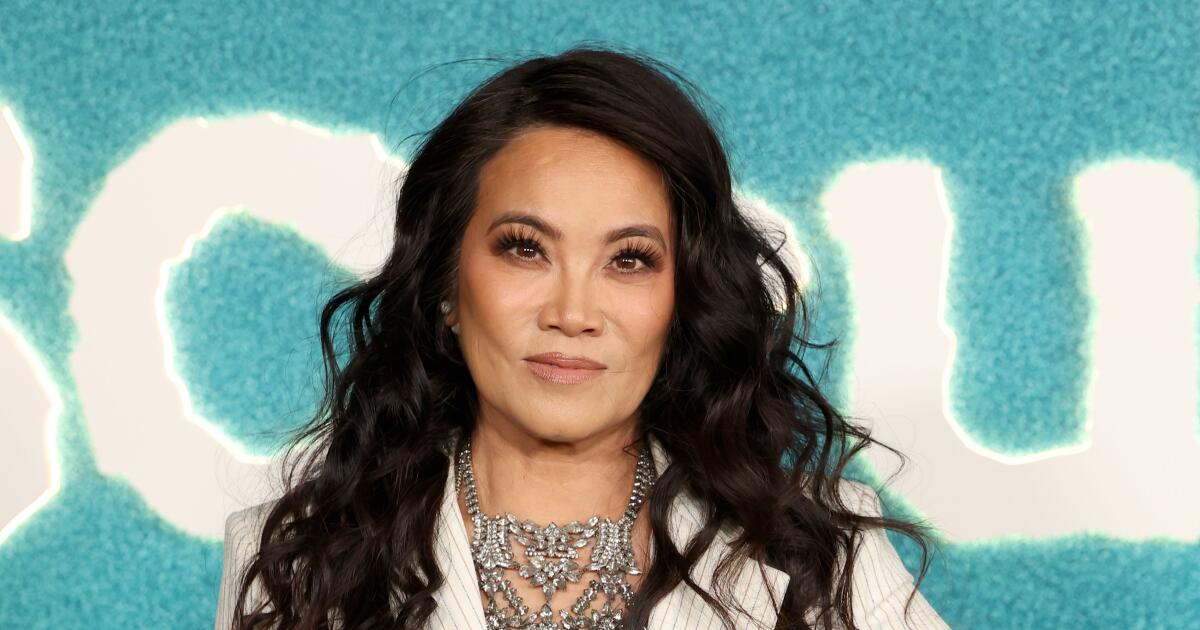
‘Dr. Pimple Popper’ Sandra Lee had a stroke last fall. Here’s how the TV doc is bouncing back
-

 Politics6 days ago
Trump blasts Spanberger ahead of Virginia meetings, says state faces tax base exodus like New York, California
-

 Health1 week ago
Woman discovers missing nose ring traveled to her lungs, causing month-long cough
-

 San Francisco, CA5 days ago
President Trump terminates Presidio Trust