Business
Jury finds Ticketmaster and Live Nation operated illegal monopoly

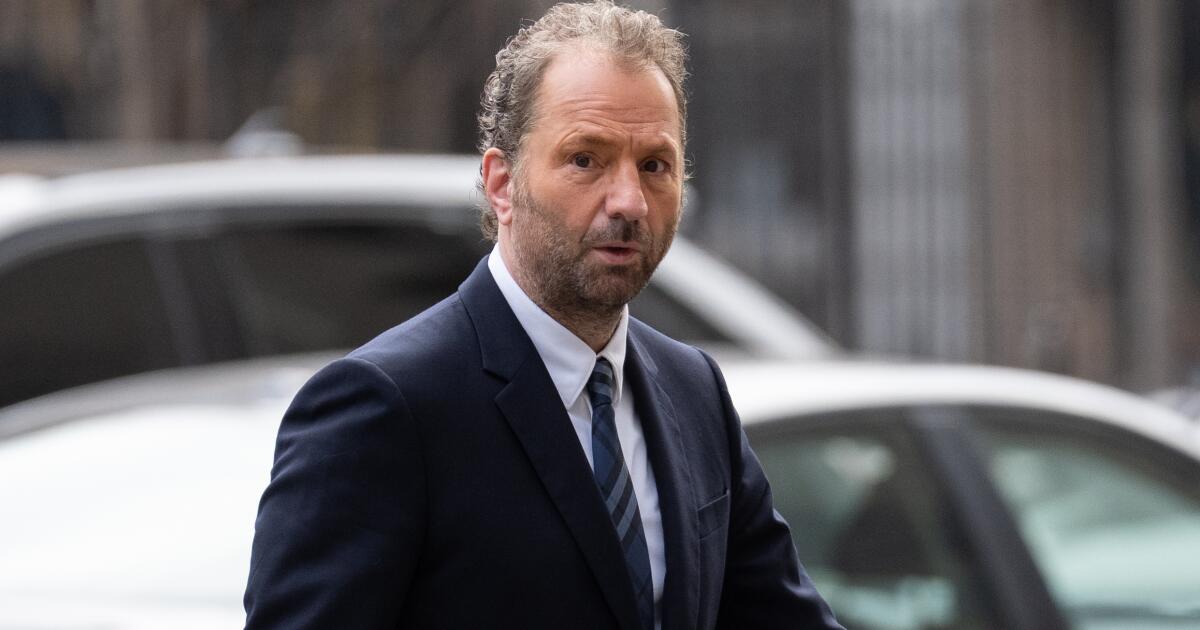
NEW YORK — Beverly Hills-based Live Nation and its Ticketmaster subsidiary faced a bruising courtroom loss Wednesday after a federal jury found that the company operated a monopoly over concert venues.
The verdict by a Manhattan, N.Y., jury came after a five-week trial and caps a closely watched case that could have far reaching effects across the music industry, potentially leading to the breakup of the companies.
Ticketmaster is the world’s largest ticket seller for live events, while Live Nation is a dominant force in the concert business.
The civil case began when the federal government alleged that Live Nation used its clout to engage in a variety of anticompetitive practices, including preventing venues from using multiple ticket sellers.
“It is time to hold them accountable,” Jeffrey Kessler, an attorney for the states, said in a closing argument. He called Live Nation a “monopolistic bully” that drove up prices for ticket buyers.
Jurors agreed. They found that Ticketmaster had overcharged consumers by $1.72 for each ticket. The judge will assess damages later.
Live Nation, which owns and operates hundreds of venues, countered that it did not violate U.S. antitrust laws, arguing that artists, sports teams and venues decide prices and ticketing practices.
“Success is not against the antitrust laws in the United States,” Live Nation attorney David Marriott said in his summation.
Live Nation said in a statement that the “jury’s verdict is not the last word on this matter,” noting the court had yet to rule on a motion it had filed to challenge its liability in the case.
The trial revealed some embarrassing internal communications, including emails from a Live Nation executive who called customers “so stupid” and said the company was “robbing them blind, baby.” The executive, Benjamin Baker, testified that the messages were “very immature and unacceptable.”
The original lawsuit, led by a cadre of interested parties including the federal government, 39 states and the District of Columbia, dates to 2024. It alleged that Live Nation and Ticketmaster monopolized various aspects of the live music industry, such as concert promotion, venue operations, artist management and ticketing services.
Live Nation manages more than 400 artists and controls more than 265 venues in North America, while Ticketmaster simultaneously controls around 80% of the primary ticket marketplace and also is increasing its involvement in the resale market, according to the lawsuit.
Last month, Live Nation secured an unexpected tentative settlement with the Department of Justice in which the company agreed to several structural changes to its business, including adjustments to ticketing deals with venues, capping service fees and paying a $280-million fine.
However, more than 30 states, including California, decided to proceed with the trial. California Atty. Gen. Rob Bonta praised these state-led efforts to protect consumers, even amid dwindling antitrust enforcement from the Trump administration, he said in a statement.
“This is a historic and resounding victory for artists, fans, and the venues that support them,” Bonta said. “We are incredibly proud of today’s outcome … this verdict shows just how far states can go to protect our residents from big corporations that are using their power to illegally raise prices and rip-off Americans.”
Though a verdict has been reached, remedies for how Live Nation will be held accountable for its actions are still being decided by the judge.
One possibility is that the companies could be split up, an outcome favored by critics.
National Independent Venue Assn. Executive Director Stephen Parker said Ticketmaster and Live Nation need to be separate for the industry to see change.
“Live Nation and Ticketmaster must be broken up now. Ticketmaster should not be permitted to participate in the ticket resale market. Live Nation should not be able to promote more than 50% of artists’ tours,” Parker said in a statement. “And the damages paid to the states should be remitted to the independent venues, promoters, festivals, and fans that have suffered under Live Nation’s monopolistic reign over the last 15 years.”
Serona Elton, attorney and interim vice dean at the University of Miami’s Frost School of Music, said that the separation of Live Nation and Ticket master seems to be “on the table,” but she said it’s too early to assess the verdict’s fallout on the music industry.
Elton said fans might notice small changes in pricing, but there are factors other than Live Nation that are contributing to high ticket prices, such as the secondary ticket market as well as supply and demand challenges.
The verdict, Elton said, “sends a message of support to music companies and professionals working in the live space who have felt like they have suffered financial consequences because of Live Nation’s behavior.”
The ruling is a small but necessary step toward achieving a balanced and competitive ticketing industry, said Hal Singer, a managing director of economic consulting firm Econ One, who specializes in antitrust and consumer protection issues.
Forcing a Ticketmaster sale probably is the only remedy that will bring real change, Singer said.
“We’re not out of the woods quite yet,” Singer said. “We’ve kind of tilted the probability.… It could change the competitive balance. But that requires that a meaningful remedy follows the liability. You need both.”
Fans and some artists have long groused about Ticketmaster, which was founded in 1976 and merged with Live Nation in 2010.
Dustin Brighton, director of government relations for the Coalition for Ticket Fairness, agreed that although the verdict is a landmark moment for fans, “it’s not the end of the road.”
“As the court considers remedies, the focus must be on restoring competition, increasing transparency, and ensuring fans have real choice,” Brighton said in a statement.
Times staff writer August Brown and the Associated Press contributed to this report.


On July 9, the Trump administration delivered a gift to Cadiz Inc., a politically well-connected firm that has been trying for decades to win approval for a scheme to pump water out of the Mojave Desert and market it to water agencies across the Southland.
The administration approved the company’s application to convert an abandoned 220-mile oil and gas pipeline crossing the desert to carry water instead. Susan Kennedy, the chief executive of Cadiz, called the approval “a pivotal milestone” that would enable the project to move into its construction stage.
Here’s betting that Kennedy’s statement was somewhat premature. The project still faces significant opposition from environmentalists, local Indian tribes and the state of California. It has been declared ready to go — and declared dead, too — so often that it could serve as a character in a zombie movie or streaming series.
I haven’t seen anything to persuade me that there’s not going to be any environmental damage.
— Ileene Anderson, Center for Biological Diversity
Indeed, this is the second time that Trump has greenlighted this project. He did so during his first term, but his decision was overturned during the Biden administration; Trump’s most recent approval overturned that action — but there’s no promising that the next president, whoever that is, won’t overturn this one.
I’ve been covering the Cadiz project for nearly 25 years, starting in 2002; I take credit for helping to put the kibosh on a proposal for the Metropolitan Water District, which supplies water to 13 million Southern California residents, to partner with Cadiz.
In fact, there’s reason to wonder whether Cadiz itself still wants to do the project, even though in the past it described it as its potential corporate lifeblood.
Last year Cadiz reported that nearly 90% of its revenue stemmed from the sale of water filtration equipment manufactured by ATEC, a Hollister firm it acquired in 2022. That segment is its only profitable operation, though the $2.5 million in operating income the unit produced in 2025 was swamped by losses in its other operations — mostly the sale of fruits and vegetables grown on its desert tract — producing an overall loss of $25.6 million. The company has never reported a profit.
Kennedy told me this week that she now sees the water treatment business as “the future of our company — an enormous market opportunity.” She said “demand for filtration is skyrocketing,” with cleansed stormwater “the biggest source of new water supply.” Cadiz has doubled its manufacturing capacity for the equipment, and “we expect to double again.” The company has also signed an agreement to produce hydrogen at its desert site by installing a solar array for power.
Meanwhile, Cadiz is taking steps to hive off the infrastructure it has planned to use for its water project, mostly two unused pipelines, into a special purpose subsidiary. These entities are typically aimed at insulating the parent company from the risks and liabilities of a speculative investment.
In this case, Kennedy told me, the idea is to open the water project more broadly to outside investors.
In practice, that means that the pipelines Cadiz proposes to use to transport desert waters to urban, industrial and agricultural users would fall into the hands of private equity firms, which haven’t been known as a class for their devotion to the public interest. Cadiz would end up with a minority stake in the pipelines, Kennedy says.
Transporting water out of the desert faces so many headwinds that it may make more sense to divest the business and shift over into less controversial enterprises, like filtering poisonous minerals out of reclaimed stormwater and producing hydrogen.
It’s worth reacquainting ourselves with the company’s discreditable history. The Cadiz project was the brainchild of British-born Keith Brackpool, who had a checkered record as an investment promoter. As I wrote in 2002, he pleaded guilty in London in 1983 to criminal charges that included dealing in securities without a license.
Brackpool’s pitch was that by stockpiling water from the Colorado River under the Cadiz sands in years when a surplus was available and delivering it during droughts, the company could assuage the supply crisis confronting Southern California.
I wrote years ago that the project boasted “a sort of shimmering authenticity” — if one didn’t look too closely. Yes, the state faces a long-term water shortage. But the problem is that there’s no surplus water in the Colorado available for California. Cadiz has never made a conclusive case that it could withdraw as much water from its desert tract as it proposed without draining its underground aquifer to a dangerous level or causing its contamination with carcinogenic minerals.
After he started pitching the project in the mid-1990s it began to look as though the company’s principal asset was political juice. Former Rep. Tony Coelho, an important Democratic Party fundraiser, served on the Cadiz board. Cadiz and Brackpool were leading campaign contributors to former Gov. Gray Davis, who was thought to be the source of pressure on the Metropolitan Water District to make a deal with Cadiz. Brackpool hobnobbed with former Los Angeles Mayor Antonio Villaraigosa, who received campaign contributions from him and Cadiz. (Brackpool is no longer associated with Cadiz.)
Kennedy herself had been associated with Cadiz since before she became chief of staff to former Gov. Arnold Schwarzenegger in 2005. Before her appointment, and while she was serving on the state Public Utilities Commission, the firm paid her $120,000 in consulting fees. In 2009, Schwarzenegger endorsed the water scheme as “a path-breaking, new, sustainable groundwater conservation and storage project.”
For years, Cadiz shares traded as a sort of plaything for water investors hoping for a big score over the horizon — what craps players call “betting on the come.” In this case the bet is on the distant prospect that government approvals would eventually make the project real.
For these players, the investments tended to be cheap compared to the potential gains. The largest shareholder of Cadiz, with a 35% stake, is Netherlands-based Heerema International Services, a global industrial infrastructure company. Its holding is worth about $115 million at the current stock price — peanuts for a company that collects revenue of about $5 billion a year.
Then there’s Trump. In March 2017, his Interior Department reversed two Obama administration rulings that had blocked Cadiz’s ability to use a 43-mile pipeline to carry water from the desert to Southern California users. Biden’s Interior Department canceled those rulings. The July 9 action applies to a separate 220-mile pipeline.
In its recent ruling, the Interior Department’s Bureau of Land Management stated that the pipeline conversion would have “no significant impact … on the quality of the human environment” and therefore no environmental impact statement was even needed.
Environmental groups and other plaintiffs who have been fighting the project are “looking at all our options” for legal challenge, says Ileene Anderson, a senior scientist at the Center for Biological Diversity, a plaintiff in lawsuits challenging the project. “I haven’t seen anything to persuade me that there’s not going to be any environmental damage,” she says.
When I spoke with Kennedy in January 2024, a few weeks after she took over as Cadiz CEO, she acknowledged that the company’s name had become a “poison pill.” Her plan was to “change the company so people think about it differently.”
At that time, this amounted to refocusing its water supply program on serving users in San Bernardino County rather than urban users throughout Southern California. The idea was to counteract what she called a “political” claim that its goal was to drain the desert to “fill swimming pools in L.A.”
Kennedy didn’t mention ATEC then, but she talks about it today with unalloyed enthusiasm. Indeed, she asserted that the water filtration and hydrogen production businesses together could use as much of the company’s available water as it would pipe miles across the desert.
Kennedy is correct to maintain that government, which once built Hoover Dam, the Central Valley Project and Glen Canyon Dam as crucial pieces of our water infrastructure, “has gotten out of the business.”
But it’s wrong to say that it’s because government can’t afford such projects. Ceding them to private equity is a choice. Given Americans’ dependence on water as a life-giving commodity, do we really want to establish private firms as toll-takers on the water highway, permitted to charge what they wish to maximize their profits? Cadiz may be beating a path to that future, but it may not be a happy journey.

Hollywood’s fascination with YouTube creators is going to the next level.
Los Angeles-based investment firm Content Partners and media entrepreneur Ed Simpson announced Tuesday that they are launching a new company, Wonderloom Media, that will acquire YouTube-creator led businesses.
Wonderloom’s first acquisition is YouTube true-crime channel Dr. Insanity, which has more than 5 million subscribers and more than 1.3 billion total views.
Content Partners owns or licenses more than 800 films and more than 3,000 hours of television content. The company co-owns the “CSI” franchise.
“This is a kind of next step evolution in the type of IP we will be acquiring,” Alphonse Lordo, a partner at Content Partners, said in an interview.
The effort comes as the film industry continues to struggle to bring more people into movie theaters and has had recent success with the YouTube creator-led films “Obsession” and “Backrooms.” As studios and TV networks have shed jobs over the years, more entertainment workers are applying their expertise at major YouTube creator-led businesses, which have continued to grow their audiences.
YouTube’s audience has shifted from smartphones to TVs, on which many U.S. consumers watch YouTube videos with their families. That in turn has attracted streamers such as Netflix to partner with YouTube creators to bring their content to the same platform that has high-budget television shows and movies.
Simpson, a former TV producer who will be Wonderloom’s chief executive, said Dr. Insanity was the “perfect first acquisition” because it had a loyal audience, proven storytelling and meaningful room to expand. “True crime is an incredibly sticky genre of programming that works just as well as it does on YouTube, as it does on Netflix and linear and cable channels,” he said in an interview.
Financial terms of the deal were not disclosed.
Wonderloom, based in L.A., also will assist entrepreneurs who started YouTube channels grow their businesses.
The new company also is eyeing possible acquisitions in food, travel and general entertainment programming, added Simpson, a former chief strategy officer at Wheelhouse, a production firm behind “America’s Sweethearts: Dallas Cowboy Cheerleaders.”
“This is about building the next generation studio, so we think of this as the beginnings of Paramount, of Warner Bros., of those great studios,” Simpson said. “We see this space following in that very same pattern right now.”
Other Hollywood companies also are getting into the creator business acquisition space. Last month, Century City-based Creative Artists Agency said it was partnering with Integrated Media Co. to form a $250-million holding company called Compound Creative Holdings that will acquire and operate a portfolio of creator economy businesses.

Netflix is going bite-sized. In a pivot toward the short-form content dominating TikTok and YouTube, the streaming giant announced it will start hosting three- to 20-minute videos from top digital publishers right on its homepage starting Aug. 3.
The streamer said U.S. customers will see “fan-favorite videos” from brands run by digital publishers, including BuzzFeed Studios, Condé Nast, Hearst Magazines, PMX (a subdivision of Penske Media), People Inc. and Tastemade. The videos will cover a variety of topics, including gardening tips, travel and celebrity profiles.
The rollout comes as Netflix competes for audience time from YouTube and social media platforms such as TikTok that have viral videos that can occupy users for hours. By bringing series such as BuzzFeed Celeb’s “30 Questions,” on which celebrities provide answers, or Vanity Fair’s “Lie Detector,” on which celebrities are hooked up to polygraph machines, Netflix users can learn more information about the people they already watch on the streamer, but in shorter videos.
“Members don’t just want to watch a show or film and move on. They want to keep exploring the stories and personalities they love long after the final credits roll,” said John Derderian, a Netflix vice president overseeing the initiative. “These partnerships help us deepen fandom and create more ways for members to carry those stories with them throughout their day.”
Netflix said it will offer licensed archival and ongoing series, including Harper’s Bazaar’s “Burning Questions,” Billboard’s “24 Hrs With” and People’s “My Life in Pictures” that provide an inside look at celebrities.
The videos from digital publishers will also be available to Netflix customers in Canada, the United Kingdom, Ireland, Australia and New Zealand on Aug. 3.
The Los Gatos, Calif., streamer over time has been expanding its library of content, adding games, live programming such as boxing matches and football games, alongside movies and TV shows.
-

 Mississippi3 minutes ago
Mississippi teen accused of killing elderly couple had worked for them before shooting: family
-
Missouri9 minutes ago
Missouri Lottery Mega Millions, Pick 3 winning numbers for July 14, 2026
-
Montana15 minutes ago
Montana Lottery Mega Millions, Big Sky Bonus results for July 14, 2026
-

 Nebraska21 minutes ago
Nebraska wants data centers to come clean about water usage
-

 Nevada27 minutes ago
Federal lawsuit alleges years of sexual abuse inside Nevada juvenile detention facilities
-

 New Hampshire33 minutes ago
Missing Berlin Motorcyclist Found Dead After Route 2 Crash: New Hampshire State Police Roundup
-

 New Jersey39 minutes ago
Morris County, Kirby Foundation award $12 million. See who benefits
-

 New Mexico45 minutes ago
New Mexico’s multi-million dollar blunder ends up a pile of rubble

