Washington
Washington DC steels itself for Trump’s ‘takeover’: ‘We’re in for a bumpy ride’


Both a senator and a pastor, Raphael Warnock reflected on being asked to give closing remarks at an annual congressional dinner in Washington. “Since we are meeting in what used to be the Trump International Hotel,” he mused, “perhaps it is an exorcism”.
That was last year, when the ghost of Donald Trump had seemingly been banished for good from the nation’s capital. But like all the best horror movies, there is going to be a sequel. Next month Trump will return to a city that he has openly disparaged – the feeling is generally mutual – when he is inaugurated as the 47th US president.
Trump lost the Republican primary election to Nikki Haley in the District of Columbia. He lost the presidential election there to Democrat Kamala Harris by 86 percentage points. Even so, he has vowed to radically overhaul the capital, threatened its political autonomy and recruited the billionaire Elon Musk to slash the federal workforce.
Sally Quinn, an author, journalist and socialite, said: “The mood is pretty grim. People are depressed. I had a dinner last night with a number of people from Washington and I would say that everyone was very subdued and there’s not a lot of gaiety or celebration. I don’t know anybody who’s in the Christmas spirit right now.”
During his first term, Trump, a New Yorker and now Florida resident, never truly embraced Washington, a city of around 700,000 people that has been home to the abolitionist Frederick Douglass, the singer Marvin Gaye and the comedian Dave Chappelle.
During his presidency, the only DC restaurant he patronised was his own, ordering a well-done steak with ketchup at BLT Prime in the Trump International Hotel, half a mile from the White House. He has since sold the hotel, and its new restaurant is run by José Andrés, a Spanish-American chef and outspoken Trump critic.
The former president snubbed Washington rituals. He was the only president never to attend the annual Kennedy Center Honors. He also skipped the annual White House Correspondents’ Association dinner. In late 2019 Trump did watch the Washington Nationals in the baseball World Series only to be met with loud boos and chants of “Lock him up!” and “Impeach Trump!”
In 2020 Washington was convulsed by the coronavirus pandemic and Black Lives Matter demonstrators. Teargas was fired against nearby peaceful protesters outside the White House before Trump staged a photo opportunity holding a Bible outside a church. DC responded by painting “Black Lives Matter” on a nearby street and creating Black Lives Matter Plaza.
Then came his defeat in the presidential election. First the city erupted in joy with people celebrating in the streets. Then it was stunned by the insurrection on 6 January 2021 at the US Capitol building, leading to five deaths. Washington was left reeling but, two weeks later, saw Trump depart the White House and assumed he was gone for good.
Quinn reflected: “This is a Democratic town. People are in a state of shock and disbelief and trying to understand: how do you get over January 6? What is it that Democrats did wrong that was so much worse than January 6? What did the Democrats do that didn’t appeal to people? You have an indicted criminal as an elected president. How is that possible?”
With the Trump hotel now under different ownership, it remains to be seen where his allies and supporters will congregate. Quinn recalls that some used to gather at Cafe Milano in Georgetown, much to the dismay of locals. “One night there were about 10 Trump people there and the buzz all around the room was such that I felt like everybody was going to stand up and start singing ‘La Marseillaise’ the way they did at Rick’s Café in Casablanca.”
Trump’s return also has huge implications for the way that DC runs itself. The district has always lacked the autonomy of state. It was granted limited self-governance by the Home Rule Act in 1973 but Congress still essentially vets all DC laws and can outright overturn them.
During his first term Trump threatened to federalise DC police, deployed the National Guard against protesters and expressed a desire to control city functions like road repair. On the campaign trail he expressed disdain for the city, raising fears about a potential escalation during his second term.
Trump repeatedly vowed to “take over” the city and usurp the authority of the local government. In August last year, when he briefly came to town to plead not guilty on charges of trying to overturn his 2020 electoral loss to Biden, Trump derided the capital on social media, calling it a “filthy and crime ridden embarrassment to our nation”. He has long condemned it as “the swamp”.
George Derek Musgrove, co-author of Chocolate City: A History of Race and Democracy in the Nation’s Capital, suggests that there are two Washingtons in Trump’s imagination. “One is the place where only lobbyists, lawyers and Hill staffers and federal regulators live. He sees those people as parasitical: if we got rid of those, we’d be able to have a much more functional democracy.
“Contradictorily, he also sees the district where actual real people live but those people are poor and Black and highly criminal. Those are two DCs that he and House Republicans have presented to the country and both of them have a national political function. They’re a way of painting the Democratic party as part of the deep state and siding with criminals over victimised law-abiding citizens.”
Trump has duly appointed Elon Musk and the entrepreneur Vivek Ramaswamy to a “Department of Government Efficiency” intended to save money by shrinking the federal government – an effort that could risk the jobs of thousands of employees in Washington and nearby Maryland and Virginia. The president-elect has also vowed to dismantle the Department of Education.
Musgrove, an associate professor of history at the University of Maryland, Baltimore county, said: “When you talk about the fear of the incoming Trump administration, it’s twofold. One is the attacks on democracy in the district. The other is this real fear that his plans to slash the federal workforce will fall disproportionately on us and cause economic pain in the district.”
Congressional Republicans have become increasingly aggressive in using their power to override DC laws, restrict its budget and target liberal policies on criminal justice, marijuana legalisation and abortion. Andrew Clyde, a Georgia congressman, has proposed completely repealing the Home Rule Act, while Andy Ogles, a Tennessee congressman, has talked publicly of abolishing the office of DC mayor.
The current mayor, Muriel Bowser, was a thorn in Trump’s side first time around. But she and other local officials are seeking ways to work with the Trump administration on issues such as bringing federal workers back to the office. Unlike Democratic state governors, who are already coordinating on how to resist Trump on issues such as immigration, the mayor’s reach is limited.
Meagan Hatcher-Mays, a senior adviser for United for Democracy, a coalition of more than 140 organisations, said: “We have a Democratic mayor but we’re not a state and so the federal government can interfere with our local politics and our local decisions in a way that they can’t with the states. Whether Trump is physically present here or not, we’re in for a bumpy ride with a lot of his policy folks and administration.”
Hatcher-Mays also warned that DC could also prove a laboratory for Project 2025, a radical policy blueprint drawn up by the Heritage Foundation, a conservative thinktank. “Pretty much everything that’s in Project 2025 that they might not be able to get through Congress to go national could become real and exclusively apply just to DC.”
Republicans’ clean sweep of the White House and both chambers of Congress was also a heavy blow to the long-running campaign for DC statehood. Advocates argue that this is the only way to ensure full democratic rights for DC residents, who pay federal taxes but lack voting representation. Republicans, however, are fiercely opposed to the idea of adding two senators likely to be Democrats.
Paul Strauss, the “shadow” senator for DC who does get a vote in the Senate chamber, admitted: “We’re on defence. Most of what I expect I’ll be doing in the next two years is defending attacks on DC autonomy without a majority in either chamber. There’s not going to be much of a chance to move a bill forward. We are going to be trying to preserve what little self-determination we have.”
The storied culture of DC includes the Washington Post, a newspaper founded in 1877 and famed for its investigation into the Watergate scandal that led to the resignation of President Richard Nixon. It spent the first Trump term locked in an old fashioned newspaper war with the New York Times over a seemingly endless series of revelations about his administration.
But since then the Post has suffered deep financial losses, job cuts and reports that its publisher, Will Lewis, tried to pressure Post staff not to report on questions of whether he was involved in covering up crimes more than a decade ago at Rupert Murdoch’s British tabloid newspapers. The paper, owned by the billionaire Jeff Bezos, declined to endorse a candidate for president, reportedly prompting more than 250,000 readers to cancel subscriptions.
Hatcher-Mays commented: “This is not a knock on any of the reporters who work at the Post. I know they’re independent and all great but it’s going to be a tough uphill climb to report out the various misdeeds of this administration when the owner of your paper is more interested playing footsie with a person who’s been impeached twice, is under indictment and has no interest in the product of democracy.”
During his first term, Trump spent many weekends at his clubs in Florida or New Jersey but, when in Washington, was often driven to his golf club in Sterling, Virginia, where he played rounds. An accompanying pool of reporters would kill time at Lucia’s, an Italian restaurant nearby.
Its owner, David Hackett, is preparing for their return after a four-year hiatus and prefers to not reveal his political allegiance. “It was definitely a nice Saturday and Sunday boost,” he said. “I’m looking forward to the journalists coming back. That might be the only plus to the whole deal for me.”


July 4 weekend is a quiet one for new indie releases, leaving the field to Angel Studios’ PG-13 wide release Young Washington on 2,700 screens.
From Angel and Wonder Project, the film, timed to the 250th anniversary of the founding of the U.S., stars British actor William Franklyn-Miller as the young man who would go on to become the nation’s first president.
Directed by Jon Erwin (I Can Only Imagine, Jesus Revolution), with Mary-Louise Parker as George’s mother, Ben Kingsley as Virginia Gov. Robert Dinwiddie, and Kelsey Grammer as wealthy nobleman Lord Fairfax. See Deadline review.
Synopsis: “Before he was the Father of a Nation, he was a soldier fighting to survive. A single misstep thrusts young George Washington into the center of a global conflict, testing his honor, loyalty, and courage. As alliances crumble and the frontier erupts into war, he must confront not only his enemies but the man he’s becoming.”
The action is set in the 1750s with Washington as a young man eager to fight, initially as a British officer in a period of complex loyalties. He enlists at 23 and leads a disastrous campaign against the French in Ohio but fights brilliantly and his career takes off.
Elsewhere this frame, Music Box Films is out with a 4K restoration of Ross McElwee’s Sherman’s March July 3-9 at Film Forum. It will lead into Venice award-winning Remake, McElwee’s new documentary, which premieres at the NYC art house July 10.
Sherman’s March, which won the Grand Jury prize at the 1986 Sundance Film Festival, was ranked as one of the highest-grossing documentary films of all time until the mid-1990s. In it, McElwee sets out to make a movie about Union Gen. William Tecumseh Sherman’s March to the Sea towards the end of the American Civil War, but keeps getting sidetracked by his own love life. He’ll appear in-person for post-screening Q&As on July 8-9.
Kino Lorber opens Sasha Waters’ Mary Oliver: Saved By the Beauty of the World, on the Pulitzer Prize-winning poet, at the IFC Center in New York today, expanding to select theaters nationwide in the coming weeks. The documentary includes new recitations of her work by fans as varied as Stephen Colbert, Lucy Dacus, Steve Buscemi and Oprah Winfrey and Helena Bonham Carter alongside stories from longtime friends like John Waters.
World premiered in March at the True/False festival in Columbia, MO, screened at DOC NYC Spring Selects, the Martha’s Vineyard Film Festival and the Miami Film Festival. Waters gained access to Oliver’s personal archives to make the film.
Citizen Kane is also back via Fathom Entertainment at about 900 theaters on July 5 and July 8. It’s for the 85th anniversary of the 1941 classic directed by and starring Orson Welles as publishing tycoon Charles Foster Kane. The rerelease includes exclusive insight from Leonard Maltin.

Washington
Review: Our critic cannot tell a lie: ‘Young Washington’ is the dullest of history lessons
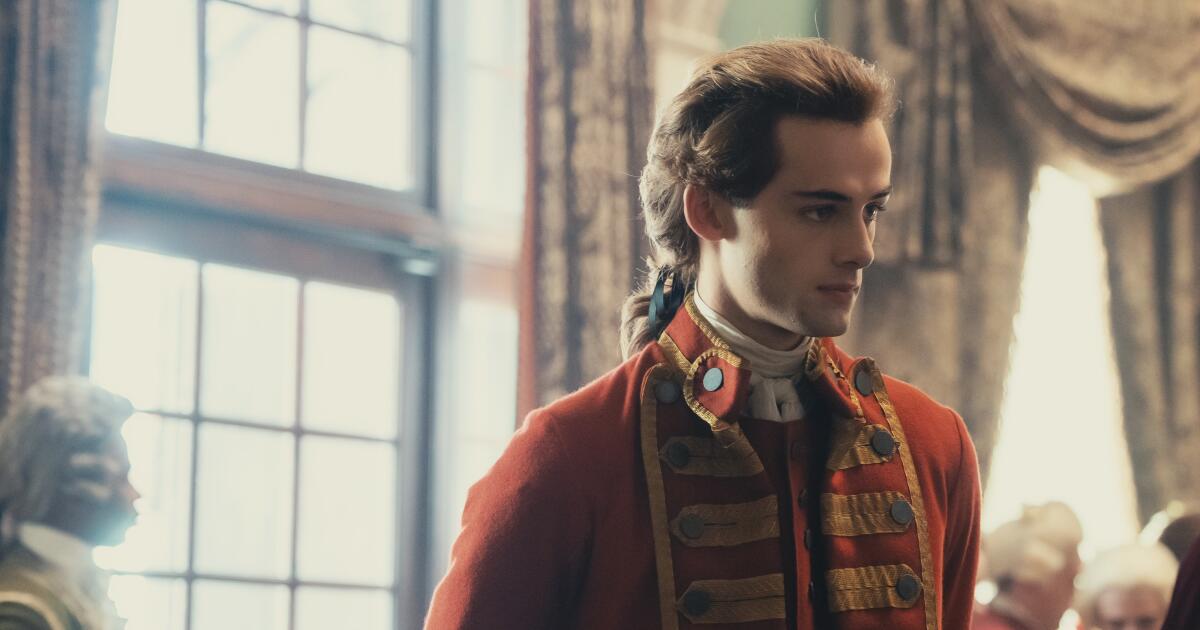
It’s the 250th birthday of the United States of America and how better to celebrate than with a big-screen hagiography of America’s first president, George Washington? “Young Washington” arrives in theaters just in time for the Fourth of July with a chiseled, hot young actor in the lead role and the sheen of a prestige HBO drama, though the result isn’t really big-screen spectacle or appointment television. It feels more like something to be watched on the AV rig in a middle school social studies class. At least there won’t be a quiz at the end.
But there could be, because the plot of “Young Washington” plays out with all the thrill of a textbook chapter. It takes place mostly around 1753-55, at the advent of the French and Indian War. We open in medias res when the 23-year-old Col. Washington (William Franklyn-Miller) lurches from a dysentery-riddled nap directly into battle in the Pennsylvania woods, his battalion on the back foot, surrounded by gore and gunpowder. Another officer describes how dire the situation is while George ponders saving his men and asks, “What could be worth the risk?” Washington steels his gaze and we cut to black. You can almost hear the eagles scream, guitars riff and engines rev.
“Young Washington” is produced and distributed by Angel Studios, the faith-based movie studio that churns out films based on true stories that either feature freak accidents, strange illnesses or, more recently, unique stories from the past in which faith in God is a factor. Apparently, our nation’s founding also falls under this umbrella.
The film is directed by Jon Erwin, one of the in-house Angel Studios mainstays, who also helmed “Jesus Revolution,” “I Still Believe” and “I Can Only Imagine.” Erwin gives the whole project a kind of gritty, visceral approach — very “Game of Thrones” in red coats. It’s violent, muddy, the contrast is high and too many drone shots soar over the forest treetops.
Though it opens with a bang, this 1755 battle framing device gives way to the George origin story, starting with his father’s death 12 years earlier, when the 11-year-old George is bereft that he’ll have to sacrifice his education in order to become a tenant farmer and provide for his family including his mother, Mary (Mary-Louise Parker, doing a bizarre accent).
His older half-brother Lawrence (John Foss) takes him under his wing and teaches him, and the young George grows into a smart, bright, ambitious young man, whose dreams of becoming a British officer are dashed because he doesn’t have formal education, a fortuitous marriage or his own land. But he’s bootstrapped himself into intelligence and with savvy networking and know-how, he becomes indispensable to the British, volunteering as a major to survey land and negotiate treaties with the Native tribes and French army. It’s all a bunch of politicking and petty disputes until it escalates into all-out war thanks to an ill-advised ambush.
Sir Ben Kingsley, Kelsey Grammar (who starred in “Jesus Revolution”) and Andy Serkis play the British officers who begrudgingly, at times, believe in George and his capabilities, though a lot of the film is about a young man getting rebuffed by snobbish British officers.
He’s the kind of character who always makes the noble choice, does and says what’s right, and sees everyone as equals (including enslaved African men and Native American allies). He inspires his brother and others that the world can change and takes inspiration from his mother, who encourages him to continue his path and do it as God’s servant.
Unfortunately, this doesn’t make for a character that’s in any way complex or interesting at all. Franklyn-Miller is certainly pretty, serving as a fine face for this story, but the screenplay (by Erwin, Diederik Hoogstraten and Tom Provost) flattens his character into a basic cookie-cutter hero. Audiences, including the middle school social studies students, deserve better and more nuanced stories about this country and the values it was built upon.
“Young Washington” is propaganda in the form of a history lesson wrapped in a summer blockbuster. If only it were even slightly entertaining — maybe they’ll tackle that in the inevitable sequel.
‘Young Washington’
Rated: PG-13, for sequences of strong war violence and some bloody images
Running time: 2 hours, 5 minutes
Playing: Opens Friday, July 3 in wide release
-

 Minnesota8 seconds ago
Hope lost: Minnesota AG closes unit that freed wrongfully convicted prisoners
-

 Mississippi3 minutes ago
Mississippi Lottery rolls out 4 new scratch-off games for July – SuperTalk Mississippi
-

 Missouri8 minutes ago
Missouri Highway Patrol investigates death of staffer at youth ranch in Reynolds County; 1 juvenile arrested
-

 Montana15 minutes ago
Montana DEQ warns of algal blooms ahead of holiday weekend
-

 Nebraska18 minutes ago
Some Nebraska communities ban fireworks in year marked by drought, wildfires
-

 Nevada23 minutes ago
How Chinese-Americans contributed to mining in Nevada
-

 New Hampshire30 minutes ago
Man From Concord Arrested On Drug Sale, Subsequent Possession Charges: Concord Police Log
-

 New Jersey33 minutes ago
Mikie Sherrill welcomes July 4 tall ships to NJ at Sandy Hook

