Members of former president Donald Trump’s Secret Service detail and his top advisers have privately questioned why they were not informed that local police were tracking a suspicious person before that person opened fire on Trump at his July 13 rally in western Pennsylvania, according to people with direct knowledge of the concerns.
Washington
Trump team complained they were not told of suspicious-person reports before shooting


Approximately 20 to 25 minutes before Thomas Matthew Crooks shot at the former president, local countersnipers noticed him behaving strangely and sent his photograph to a command center staffed by state troopers and Secret Service agents, the head of Pennsylvania State Police told a congressional committee Tuesday.
Members of the Secret Service detail that protects Trump and was with him backstage have complained to confidantes and others inside the agency that they were never made aware of that warning, said three people who spoke on the condition of anonymity to describe sensitive conversations about that day. They also said they were not aware that the local countersnipers eventually lost track of Crooks, or that another local officer — hoisted up to the roof of a building just outside the rally site’s security perimeter — saw Crooks perched there with a gun.
The Trump detail’s first warning of trouble came as gunshots began ringing out at 6:11 p.m., eight minutes after Trump took the stage, according to the three people. The assassination attempt wounded Trump, killed one rallygoer and critically wounded two others.
Some of Trump’s top advisers, in a large white tent behind the stage where Trump was speaking, thought the spray of bullets was fireworks, two people said, and did not immediately dive to the ground. According to the two people, Trump advisers said that they first learned of any issue when the shots were fired, and that they could not understand why the suspicious-person alert hadn’t been passed on to them so they could consider delaying Trump’s speech — a sentiment Trump echoed in a TV interview.
“Nobody mentioned it. Nobody said there was a problem,” the former president said in an interview that aired Monday on Fox News. “They could’ve said, ‘Let’s wait for 15 minutes, 20 minutes, five minutes, something. Nobody said — I think that was a mistake.”
Secret Service spokesman Anthony Guglielmi said Saturday the agency was declining to comment on The Washington Post’s questions about which radio communications Trump’s security detail received at the Butler rally. He repeated that the agency is examining everything about the incident, including whether there might have been a communication breakdown among its staff or other law enforcement, to determine precisely what happened.
“As it relates to communications at the rally, the Secret Service is committed to better understanding what happened before, during, and after the assassination attempt of former President Trump to ensure that never happens again,” Guglielmi said in a statement. “That includes complete cooperation with Congress, the FBI and other relevant investigations.”
A spokeswoman for Trump declined to comment.
The concerns from Trump’s security detail and his advisers come after a period in which tensions between the former president’s orbit and top Secret Service officials simmered for months — and boiled over after the July 13 assassination attempt.
Trump’s team has been at odds with Secret Service headquarters over various requests that the agency denied, including more magnetometers at events, more countersnipers at some events and other specialty teams at other events, The Post has reported. The Secret Service and Trump’s team also repeatedly clashed over security and logistics at the Republican National Convention earlier this month.
The Butler, Pa., shooting is also emblematic of what some Secret Service critics say are chronic communication problems that have dogged the agency and contributed to serious security lapses.
Members of Congress have repeatedly questioned the role that poor communication may have played in allowing 20-year-old Crooks an opportunity to shoot at Trump, an episode widely considered the worst Secret Service security failure since then-President Reagan was shot in 1981. Communication breakdowns — because of the different radio frequencies that Secret Service teams use while working together and also technical failures in communications systems — have figured into some of the agency’s other significant security lapses. When a gunman began shooting at the White House one night in November 2011, for example, President Obama’s daughter Sasha was at home with her grandmother. But an agent protecting Sasha Obama did not know about the shooter for several minutes because the agent used a different radio frequency than officers and agents stationed at the White House. and no one had alerted him to the threat outside.
At the Trump rally this month, knowledge that law enforcement officials were looking for a suspicious person just outside the security perimeter may have factored into security decisions by Trump’s team, though it is unclear whether it would have caused them to stop him from taking the stage.
Sometimes there are reports of suspicious people or activities at Trump’s rallies, and they turn out to be nothing, said one of the people who spoke to The Post, and who is in Trump’s orbit and familiar with operations at his rallies. Usually when there are reports of suspicious people, though, this person said, they are located inside the hardened Secret Service perimeter of the rally — which means they have been screened by magnetometers meant to prevent people from entering with weapons. There would have been no such comfort with Crooks, given that he was just outside the secure area.
A Secret Service official told The Post investigators are still working to determine whether anyone relayed the information about the suspicious person to Trump’s security detail or to other Secret Service operational teams.
The official, who spoke on the condition of anonymity to discuss an ongoing investigation, said reports of suspicious people are fairly commonplace at some public events and sometimes do not rise to the level of changing plans or alerting the senior official’s security detail, a team of about five to 10 agents who serve as the innermost ring of security for that person.
At a House Oversight hearing on Monday, then-Secret Service Director Kimberly Cheatle was asked why the Secret Service didn’t immediately delay the Trump speech or act more aggressively when local police reported a suspicious person. She told lawmakers that such reports were commonplace.
“At a number of our protected sites, there are suspicious individuals that are identified all the time,” she said. “It doesn’t necessarily mean that they constitute a threat.”
Cheatle told lawmakers the Secret Service was notified of a suspicious person at the Pennsylvania rally “somewhere between two and five times” and that she didn’t know when countersnipers or the “shift” — another term for Trump’s security detail — were notified of those warnings. The agency was examining whether there had been a communications breakdown that prevented an effective response, she said.
Cheatle resigned last week under intense pressure from Republican and Democratic lawmakers who were outraged at the security lapses.
Col. Christopher L. Paris, head of Pennsylvania State Police, told the House Homeland Security Committee on Tuesday that local countersnipers saw Crooks as suspicious because he was milling around just outside the rally site and not entering. Their suspicion grew when they saw him with a golf range finder, Paris said. At that point, they sent a picture of Crooks to a Pennsylvania state trooper who was stationed in a command center with Secret Service agents.
That trooper relayed the message verbally to the Secret Service in the command center. The Secret Service requested that the warning be forwarded to a different phone number, which state police understood belonged to a Secret Service “tactical asset,” Paris testified.
Several committee members asked Paris whether various law enforcement agencies had been able to communicate effectively and efficiently on the day of the Butler rally. Rep. Morgan Luttrell (R-Texas) asked whether there was one common radio channel where any law enforcement could raise a red flag in case of a threat. “If they don’t, how many people does that have to go through to get to the right actor in order to say, ‘Stop!’?”
“I don’t know,” Paris replied.
Paris said that on the day of the Butler rally, there were three different radio systems for local, state and federal law enforcement officials. State police had sought to integrate with Secret Service communications by sitting together in one command post, he said.
He added that there are disadvantages to sharing one communications channel among many law enforcement officers.
On the day of the rally, more than 100 people needed medical attention because of the heat, and officers were fielding reports of a missing 6-year-old and three other suspicious people besides Crooks, he said. “In theory, the more people you have on the same channel, if there was a medical emergency or a lost 6-year-old, and everyone keys up at once, it paralyzes your communication.”



Washington
Whoopi Goldberg, Kerry Washington and More Celebrate Opening Night of The Whoopi Monologues

Kara Young, Dominique Fishback, Kecia Lewis, Kerry Washington and Danielle Pinnock
(Photo by Sergio Villarini for Broadway.com)
The Whoopi Monologues opened on July 13 at Lincoln Center Theater’s Mitzi E. Newhouse Theater, reimagining Whoopi Goldberg’s 1984 one-woman show as an ensemble piece. The cast, which features Kerry Washington, Kara Young, Dominique Fishback, Kecia Lewis and Danielle Pinnock, assembled on opening night to serve red carpet glam. Cedric The Entertainer, Don Cheadle, Angela Bassett, Ana Navarro and Goldberg herself also turned up in their finery. Scroll down for some hot shots of the stars in attendance and check out the full gallery below!

Get Tickets to The Whoopi Monologues!
Diyar Guldogan
14 July 2026•Update: 14 July 2026
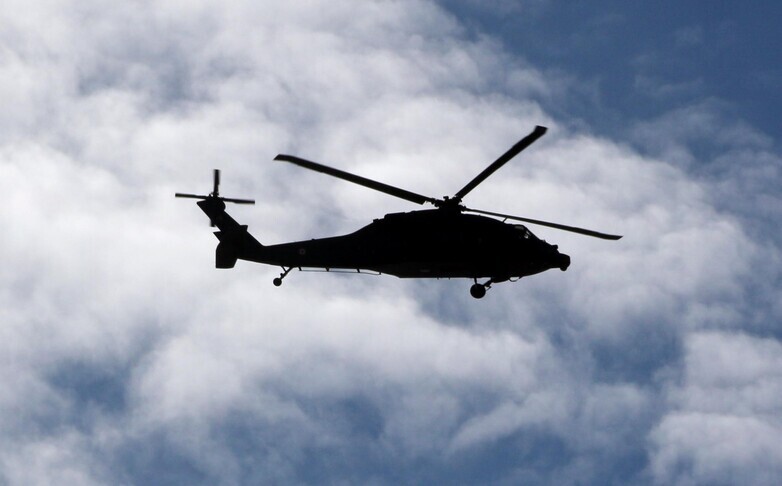
A US Air Force helicopter made a precautionary landing in northwest Washington, DC late Monday, local media reported.
The incident occurred at approximately 9.25 p.m. (0125GMT Tuesday) when a UH-1N Huey helicopter assigned to the 1st Helicopter Squadron at Joint Base Andrews, Maryland landed along Foxhall Road near Whitehaven Parkway NW, close to the Georgetown Reservoir.
All four crew members who were on board are safe, according to media reports.
Maintenance personnel and law enforcement officials remained at the scene into the early hours of Tuesday as authorities assessed the aircraft and investigated the circumstances surrounding the landing.

See what a ‘super’ El Niño could bring
USA TODAY Network reporter Brandi D. Addison breaks down what a strong El Niño could mean for weather patterns across the country.
It may be the middle of July, but the Old Farmer’s Almanac is already looking ahead to the fall with cooler temperatures ahead.
The Almanac, which has been one of the most trusted weather prediction sources for more than two centuries, recently released its fall forecast, showing a wide range of weather throughout the United States.
But what about in the Washington DC region? Here’s what the Almanac says.
What is the fall weather forecast in the Washington DC area?
DC sits along the Almanac’s Atlantic Corridor, and that region should expect a “cool, dry” fall, according to the forecast.
“Expect cooler and wetter conditions than usual this fall,” the Old Farmer’s Almanac says. “Below average temperatures are forecast, along with an uptick in precipitation over traditional averages.”
Last year, DC received 6.53 inches of rain during September, October and November — significantly lower than the city’s 30-year average of 10.50 inches, according to the National Weather Service.
September’s average temperature was 72.2 degrees, with October at 60.3 and November at 49.9 degrees. The season had an average temperature of 60.8 degrees, slightly below the 30-year average of 61.0 degrees.
What does the Farmer’s Almanac say about winter in Washington DC?
In its long-range forecast, the Almanac forecasts above average temperatures this winter in DC with snowfall below normal.
“The coldest periods will occur in mid- to late-December and early and late January,” it says. “The snowiest periods will be in late December, early January, and late February.”
The Old Farmer’s Almanac says it is 80% accurate, but a 2017 University of Illinois study found it to be just 52% accurate.
-
 Lifestyle3 minutes ago
They just completed all of L.A. Times’ 101 Best California Experiences — and we’ve got questions!
-
 Politics9 minutes ago
Blanche to face questions about his independence at attorney general confirmation hearing
-
 Sports21 minutes ago
How World Cup senior citizens like Lionel Messi have bio-hacked longer careers
-

 World33 minutes ago
Baltic presidents warn of Russian infrastructure attack plans
-
News1 hour ago
ICE should do traffic stops despite recent shootings, Trump says, seeming to oppose new suspension
-

 Los Angeles, Ca3 hours ago
Southern California hits hottest day of its extreme heat warning
-

 Detroit, MI3 hours ago
Steve Yzerman out as Detroit Red Wings GM, moves to senior advisor role
-
 San Francisco, CA3 hours ago
Supervisors urge California to expand S.F. speed-camera program

