Thomas Matthew Crooks paused shooting at former president Donald Trump after a local law enforcement officer assigned to a SWAT team returned fire, and Crooks did not shoot again before he was killed by a Secret Service countersniper, according to two officials familiar with the investigation into the assassination attempt.
Washington
Trump rally gunman stopped firing after local officer shot at him


The shot from the local officer caused the would-be assassin to temporarily recoil from his perch on a rooftop, according to the two officials and a Washington Post analysis of video evidence. Crooks’s retreat coincided with a 10-second pause in shooting, according to audio experts who examined the gunshots, a critical period that ended when the Secret Service countersniper shot and killed him.
It has been reported that a local officer fired at Crooks, but the analysis suggests that the officer may have played a more important role than previously known in responding to the attack at a July 13 rally in Pennsylvania.
One of the people who spoke to The Post, a local law enforcement officer close to the investigation, did so on the condition of anonymity because he was not authorized to speak publicly. The other, Richard Goldinger, the district attorney for Butler County, confirmed that a member of the county’s Emergency Services Unit (ESU), similar to a SWAT team, fired a shot at Crooks that prompted a reaction from the gunman.
“I don’t know if the officer actually hit Crooks and don’t believe he fired the neutralizing shot,” Goldinger, who oversees the emergency services unit, said in a text message. But Goldinger said he believed the officer’s shot caused Crooks to stop firing his weapon, buying the Secret Service snipers time to kill the gunman.
A third person familiar with the investigation, speaking on the condition of anonymity to discuss details that have not been made public, confirmed the Butler officer shot at Crooks before the Secret Service countersniper fired. The person said investigators have not found evidence that the local officer’s round struck the gunman, but witnesses said Crooks appeared to move after that shot was fired.
Ten shots were fired in the span of roughly 16 seconds, according to video recordings taken at the rally. Four audio experts consulted by The Post said the first eight shots, fired in bursts of three and five, have similar acoustic signatures and probably were fired by Crooks, who was armed with an AR-15-style rifle.
Eight spent cartridges were recovered on the roof Crooks fired from, FBI Director Christopher A. Wray told lawmakers last week. Trump’s ear was grazed by a bullet or bullet fragment, according to the FBI, and three spectators were wounded, one fatally.
Less than a second after the last of those eight shots, a ninth gunshot is heard. Then comes the 10-second pause.
The local law enforcement official close to the investigation did not know whether the local officer’s shot hit Crooks. But shortly after that shot, Crooks altered his positioning, the official said. Crooks stopped shooting at the rally site and slumped down behind the crest of the sloped roof where he was perched, the official said.
After the local police officer’s shot, “there was definitely some sort of reaction,” the official said. “Crooks slumped over, and he didn’t fire another round.”
The official credited the local officer with interrupting Crooks’s attack. “Anything that disrupts an active shooter can keep the situation from being significantly more catastrophic.”
The official’s account is supported by video taken about 100 feet west of the building from which Crooks fired. The footage was recorded by Jon Malis, a 52-year-old Pennsylvania resident who was watching the rally from that location, just outside the Secret Service security perimeter.
Crooks had roused the suspicion of local police as he milled around outside the rally with a golf range finder. They were looking for him when he crawled onto the roof of a warehouse complex and began shooting at 6:11 p.m. Malis’s video, first published by Fox News, records the sound of the eight shots from Crooks and then the sound of a ninth shot. After that ninth shot, the video captures Crooks as he turns, making his face visible to the crowd on the west side of the building, away from the rally, The Post analysis shows. He then appears to reposition himself.
The local officer who shot at Crooks was assigned to a barn behind and to the north of the rally stage, along with a counterassault and quick-reaction force team from Butler County, the local law enforcement official said.
The officer, who was not a sniper, had left the barn and was outside on the ground nearby when Crooks began firing from the rooftop about 110 yards away, the official said. The local officer saw the muzzle flashes from Crooks’s rifle, the official said, and fired his rifle at Crooks.
A rally worker told The Post they witnessed the local officer shoot at Crooks from the same location.
The worker, who spoke on the condition of anonymity because their employer had not authorized them to speak publicly, said they were standing behind the bleachers to the north of the stage when Crooks took his first shots. The worker said attendees scrambled while the local officer took aim.
“Everyone else was moving, and he wasn’t,” the worker said. “I remember thinking, ‘He’s not freaking out; he’s not yelling.’ He shot his gun, and I remember thinking, ‘We need to take cover.’”
A spokesman for the Secret Service said the FBI was best suited to answer The Post’s questions about the local police officer’s shot toward Crooks.
FBI officials confirmed that a Butler County officer fired at the gunman, and that the officer’s weapon has been taken to the FBI’s laboratory in Quantico, Va., for further analysis. Firearms experts at Quantico are also examining the gunman’s weapon, an AR-15-style rifle with a collapsible stock, and the weapon used by the Secret Service countersniper, FBI officials said.
FBI officials have said that a Secret Service countersniper fired the round that killed Crooks.
Malis’s video captures the 10th shot and Crooks’s subsequent collapse. “He’s down,” an onlooker shouted, according to Malis’s recording, which then zooms in to show Crooks’s body splayed on the roof.
The local law enforcement official told The Post that the Butler County officer was preparing to take a second shot at Crooks when the Secret Service agent shot him. The official confirmed there were a total of 10 shots: eight by Crooks, one by the Butler County officer and the last by the Secret Service.
Imogen Piper and Jon Swaine contributed to this report.

Washington
Whoopi Goldberg, Kerry Washington and More Celebrate Opening Night of The Whoopi Monologues

Kara Young, Dominique Fishback, Kecia Lewis, Kerry Washington and Danielle Pinnock
(Photo by Sergio Villarini for Broadway.com)
The Whoopi Monologues opened on July 13 at Lincoln Center Theater’s Mitzi E. Newhouse Theater, reimagining Whoopi Goldberg’s 1984 one-woman show as an ensemble piece. The cast, which features Kerry Washington, Kara Young, Dominique Fishback, Kecia Lewis and Danielle Pinnock, assembled on opening night to serve red carpet glam. Cedric The Entertainer, Don Cheadle, Angela Bassett, Ana Navarro and Goldberg herself also turned up in their finery. Scroll down for some hot shots of the stars in attendance and check out the full gallery below!

Get Tickets to The Whoopi Monologues!
Diyar Guldogan
14 July 2026•Update: 14 July 2026
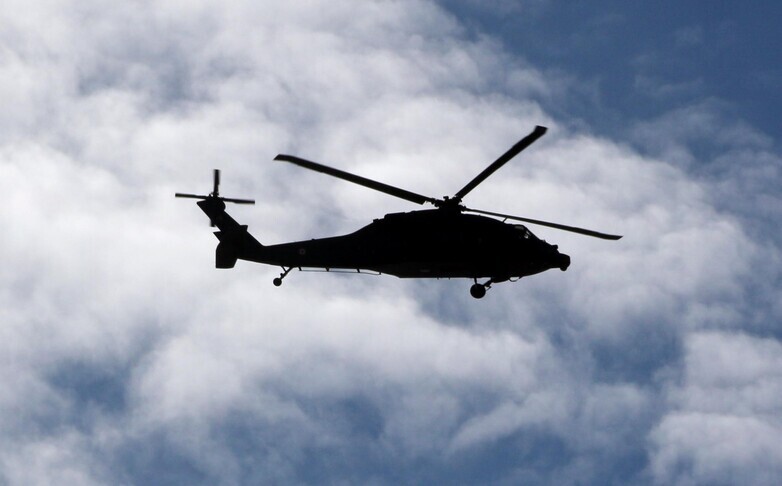
A US Air Force helicopter made a precautionary landing in northwest Washington, DC late Monday, local media reported.
The incident occurred at approximately 9.25 p.m. (0125GMT Tuesday) when a UH-1N Huey helicopter assigned to the 1st Helicopter Squadron at Joint Base Andrews, Maryland landed along Foxhall Road near Whitehaven Parkway NW, close to the Georgetown Reservoir.
All four crew members who were on board are safe, according to media reports.
Maintenance personnel and law enforcement officials remained at the scene into the early hours of Tuesday as authorities assessed the aircraft and investigated the circumstances surrounding the landing.

See what a ‘super’ El Niño could bring
USA TODAY Network reporter Brandi D. Addison breaks down what a strong El Niño could mean for weather patterns across the country.
It may be the middle of July, but the Old Farmer’s Almanac is already looking ahead to the fall with cooler temperatures ahead.
The Almanac, which has been one of the most trusted weather prediction sources for more than two centuries, recently released its fall forecast, showing a wide range of weather throughout the United States.
But what about in the Washington DC region? Here’s what the Almanac says.
What is the fall weather forecast in the Washington DC area?
DC sits along the Almanac’s Atlantic Corridor, and that region should expect a “cool, dry” fall, according to the forecast.
“Expect cooler and wetter conditions than usual this fall,” the Old Farmer’s Almanac says. “Below average temperatures are forecast, along with an uptick in precipitation over traditional averages.”
Last year, DC received 6.53 inches of rain during September, October and November — significantly lower than the city’s 30-year average of 10.50 inches, according to the National Weather Service.
September’s average temperature was 72.2 degrees, with October at 60.3 and November at 49.9 degrees. The season had an average temperature of 60.8 degrees, slightly below the 30-year average of 61.0 degrees.
What does the Farmer’s Almanac say about winter in Washington DC?
In its long-range forecast, the Almanac forecasts above average temperatures this winter in DC with snowfall below normal.
“The coldest periods will occur in mid- to late-December and early and late January,” it says. “The snowiest periods will be in late December, early January, and late February.”
The Old Farmer’s Almanac says it is 80% accurate, but a 2017 University of Illinois study found it to be just 52% accurate.
-

 South-Carolina5 minutes ago
Lindsey Graham’s sister sworn in as the South Carolina senator’s successor
-
South Dakota11 minutes ago
SD Lottery Mega Millions, Millionaire for Life winning numbers for July 14, 2026
-

 Tennessee17 minutes ago
Double rainbows spotted over Middle Tennessee — what causes them
-

 Texas23 minutes ago
Texas Makes Announcement Featuring Arch Manning
-

 Utah29 minutes ago
Legal outcomes difficult to track for hundreds of human-caused Utah wildfires
-

 Vermont35 minutes ago
Severe Thunderstorm Watch in effect for Vermont, New York & New Hampshire Tuesday night
-

 Virginia41 minutes ago
Dragas responds to accusations of having unfair advantage in quest to buy VB National
-

 Wisconsin53 minutes ago
Wisconsin Lottery Mega Millions, Pick 3 results for July 14, 2026

