Top officials at the U.S. Secret Service repeatedly denied requests for additional resources and personnel sought by Donald Trump’s security detail in the two years leading up to his attempted assassination at a rally in Pennsylvania last Saturday, according to four people familiar with the requests.
Washington
Secret Service said to have denied requests for more security at Trump events


Those rejections — in response to requests that were several times made in writing — led to long-standing tensions that pitted Trump, his top aides and his security detail against Secret Service leadership, as Trump advisers privately fretted that the vaunted security agency was not doing enough to protect the former president.
The Secret Service, after initially denying turning down requests for additional security, is now acknowledging some may have been rejected. The revelation comes as agency veterans say the organization has been forced to make difficult decisions amid competing demands, a growing list of protectees and limited funding.
A gunman was able to fire off rounds from an AR-15 style rifle from a rooftop about 150 yards of the former president at the rally last Saturday. Trump was injured as were two others; a man in the crowd was killed. The agency has been under scrutiny over security lapses at the rally.
Trump advisers’ anger deepened after an agency spokesman publicly denied that any request for additional security lodged by Trump or his detail had ever been rejected. Secret Service Director Kimberly Cheatle, who has been under pressure to resign over security lapses at the rally, repeated that denial in a meeting with Trump campaign leadership in Wisconsin on Monday, people familiar with the discussions said.
“The assertion that a member of the former president’s security team requested additional security resources that the U.S. Secret Service or the Department of Homeland Security rebuffed is absolutely false,” said Anthony Guglielmi, a spokesman for the Secret Service, in a statement on the day after the shooting.
After receiving detailed questions from The Washington Post, Guglielmi said the agency had learned new information indicating the agency’s headquarters may have in fact denied some requests for additional security from Trump’s detail and was reviewing documentation to understand the specific interactions better.
“The Secret Service has a vast, challenging, and intricate mission,” he said in a statement. “Every day we work in a dynamic threat environment to ensure our protectees are safe and secure across multiple events, travel, and other difficult environments. We execute a comprehensive and layered strategy to balance personnel, technology, and specialized operational needs.”
In response to a request for comment, a spokeswoman for the Trump campaign referred to a statement Trump posted on Truth Social praising his own Secret Service detail.
The extended tussle over safeguarding a former president who holds regular public events that draw large crowds raises new questions for the Secret Service, a long admired protection force that guards American presidents, their families and other senior officials. But it has been plagued by staffing shortages and hiring limits since 2010 and suffered a series of embarrassing security lapses during the Obama and Trump administrations.
A Secret Service official, who spoke on the condition of anonymity to candidly describe sensitive internal discussions, said the agency has finite resources and has to juggle competing demands, especially for its countersnipers, counterassault teams and the teams of uniformed division officers who help screen attendees for weapons at events using magnetometers.
The agency is currently responsible for security details for more than two dozen people, most of them requiring full-time security and a few others receiving what is informally called “door-to-door” protection from the moment they leave their homes. Protectees include the president and vice president and their families, as well as former presidents, candidates and a growing number of senior administration officials. After the Butler shooting, the agency added a protective detail to Robert F. Kennedy Jr., an independent presidential candidate, and is now protecting GOP vice-presidential nominee J.D. Vance as well.
Bill Gage, a former Secret Service agent who served on presidential protection and counterassault teams during the Bush and Obama administrations, said the agency is always drowning in far more requests and events than it can possibly handle with its hiring limits, and that leads to headquarters denying requests even more frequently during the busy campaign season.
“I hate to dumb it down this much but it is a simple case of supply and demand. The requests get turned down routinely,” Gage said. “A director has to finally come forward to say we are way understaffed and we cannot possibly continue with this zero fail mission without a significantly bigger budget.”
The Service’s Office of Protective Operations reviews security requests for events, and as part of a regular push-and-pull, it sometimes reconsiders initial denials after being persuaded the risk justifies the expense, officials have said. But it must balance the reality that each agent, countersniper or magnetometer assigned to cover one event reduces what is available for other people the Service protects.
The weekend of the Butler shooting, the Secret Service had sent multiple countersniper teams and hundreds of agents to the Republican National Convention and was also securing an event by Jill Biden and a scheduled trip by President Biden to Austin the day after the shooting.
“It’s just true — we don’t have the resources to secure him [Trump] like we did when he was president,” the official said.
None of the denied requests that The Post reviewed related to the Pennsylvania rally. But one of the denials that most concerned Trump officials came as he held a rally in South Carolina in July 2023, one of the first large-scale events of his current campaign. Trump was speaking in a downtown square in Pickens, a small town 20 miles west of Greenville, at a site surrounded by commercial and residential buildings. People familiar with the request said that Trump’s security team asked for more countersnipers to be stationed on rooftops to guard against potential shooters or other attacks.
The people said the Pickens event was one of several in which Trump’s team was denied more tactical support. Trump’s detail was told Secret Service headquarters had determined they could not provide the resources after the detail made an extensive argument for why the teams were needed, they said.
Guglielmi said the Service is still reviewing the planning for the Pickens event but said local countersnipers rather than Secret Service teams were on hand to help address the threats of potential shooters.
On multiple other occasions, Trump’s team asked for magnetometers and additional help to screen attendees for Trump to attend sporting events, particularly wrestling matches and college football games, people familiar with those requests said. They were told no because the events were not campaign events.
In one instance, the Secret Service argued the screening was unnecessary because Trump would be entering a stadium to watch a football game via a secure elevator and then be guided through a secure area to a private suite with controlled access, according to a Secret Service official who reviewed some of the security requests.
“He was not going through the general population,” the official said. “You don’t need to mag the entire stadium” in those circumstances.
But Trump advisers said he often moved through open-air concourses at the games, interacting with large swaths of the public. Some Trump advisers were repeatedly concerned about his safety at the sporting events as he moved through the areas, people familiar with the matter said.
People around Trump were also concerned by what they feared was an insufficient number of magnetometers and security personnel at rallies, they said, including one in 2023 in Macomb, Michigan, where some attendees jumped over bike racks to get past security and were restrained by local police, according to people close to Trump who witnessed the episode.
Several Trump advisers said the denials had been a frustration for more than a year.
The Secret Service extends the highest level of protection to current presidents and officials. Former presidents receive a significantly lesser degree of Secret Service protection, but Trump’s high profile and daily routines make him a different kind of security challenge than most former presidents, according to former Secret Service agents.
Trump is also the first former president in modern times to run for reelection, which carries additional security burdens, though candidates are not provided the same level of security as sitting presidents.
Other former presidents only rarely make large, public appearances, living more private lives. Trump, on the other hand, is almost always around crowds, at his clubs and golf courses, and holds frequent campaign events attended by thousands, if not tens of thousands, particularly since he announced a new run for the presidency in November 2022.
Cheatle, a veteran Secret Service agent, has called the security failure at the rally on July 13 unacceptable, as a gunman was allowed to fire from an unsecured roof around 150 yards from where Trump addressed the crowd. The gunman spotted acting suspiciously before Trump began speaking but the Secret Service did not intervene or prevent Trump from taking the stage.
The Secret Service and Trump’s orbit also argued over planning for the Republican National Convention, particularly over how large of a security perimeter the agency would impose. The relationship grew so acrimonious that senior Republicans repeatedly sought meetings with Secret Service leadership in Washington after battling with agents on the ground over security and logistics.
On Thursday, Trump senior adviser Chris LaCivita called for Cheatle to resign, as has a number of lawmakers in both parties. During the convention, several Republican senators chased Cheatle through the arena in Milwaukee, where she had traveled to brief them on the investigation. The senators screamed at her after she declined to answer questions about the attempted assassination.



SEATTLE – President Donald Trump fired a newly appointed federal prosecutor in Seattle less than an hour after he was named to the position.
What we know:
Former King County judge Roger Rogoff was assigned to take over as U.S. Attorney for the Western District of Washington on Wednesday. The seat has remained empty since Charles Neil Floyd was appointed as First Assistant U.S. Attorney back in February, though he kept running the office as western Washington’s U.S. District Attorney.
Rogoff was named to the position by Chief U.S. District Judge David G. Estudillo, but soon after the judicial order was posted, the White House blocked the move and fired Rogoff.
The backstory:
The Trump administration made similar moves in the firings of two other U.S. attorneys — Donal Kinsella of New York and Desiree Grace of New Jersey — the same day they were sworn in. Both were set to replace Trump-appointed interim judges, but were fired shortly after getting the job.
Local perspective:
Western Washington is not a typical case though, as the district hasn’t had a permanent U.S. Attorney since now-Attorney General Nick Brown left the position in 2023. Since then, there’s been several interim U.S. attorneys, which only allows them to serve for a limited time.
Rogoff was set to serve as acting U.S. Attorney for the Western District of Washington until President Trump selected a replacement. Instead, the position remains unfilled.
What they’re saying:
Acting U.S. Attorney General Todd Blanche wrote the following in response to Rogoff’s firing:
“District court judges can appoint a temporary U.S. Attorney, and POTUS can fire them. WDWA judges abandoned the time-honored process of consultation with the administration so that the selected U.S. Attorney is qualified to serve in the administration. Roger Rogoff has been fired by the President.”
However, Senator Patty Murray criticized the decision, saying Rogoff was qualified for the position and appointed legally. She issued the following statement:
“Roger Rogoff’s is eminently qualified—throughout his career, he has demonstrated an outstanding commitment to public service, and he was appointed legally by the federal judges in the Western District of Washington. He should have never been fired, but the President wants to appoint an out-of-touch extremist who will put Trump over the rule of law. This administration doesn’t want to deal with advice and consent—they just want to install cronies to carry out a corrupt political agenda. The people of Washington state deserve someone in this role who will enforce the law fairly and responsibly—not some Trump administration sock puppet. The President needs to understand that DOJ works for the American people—it’s not his personal law firm to enforce his mob-style politics.”
What’s next:
A federal lawsuit could be in order challenging Rogoff’s dismissal, however no immediate announcements were made by state leaders.
MORE NEWS FROM FOX 13 SEATTLE
Cyclosporiasis in WA: Where the state stands as national outbreak surges
WA low tides: Extreme drop brings final tide-pooling event of the season
WA braces for wildfires as incoming storm expected to bring lightning
Seattle’s most infamous parking garage sits atop forgotten landmark
Tacoma’s Point Defiance Zoo closes puffin exhibit after 3 birds die
Battle brews over Washington ‘millionaires tax’ repeal initiative
To get the best local news, weather and sports in Seattle for free, sign up for the daily FOX Seattle Newsletter.
Download the free FOX LOCAL app for mobile in the Apple App Store or Google Play Store for live Seattle news, top stories, weather updates and more local and national news.
The Source: Information in this story came from order filed in U.S. District Court in the Western District of Washington, statements from acting U.S. Attorney General Todd Blanche and Senator Patty Murray, and FOX 13 Seattle reporting.
Washington
Whoopi Goldberg, Kerry Washington and More Celebrate Opening Night of The Whoopi Monologues

Kara Young, Dominique Fishback, Kecia Lewis, Kerry Washington and Danielle Pinnock
(Photo by Sergio Villarini for Broadway.com)
The Whoopi Monologues opened on July 13 at Lincoln Center Theater’s Mitzi E. Newhouse Theater, reimagining Whoopi Goldberg’s 1984 one-woman show as an ensemble piece. The cast, which features Kerry Washington, Kara Young, Dominique Fishback, Kecia Lewis and Danielle Pinnock, assembled on opening night to serve red carpet glam. Cedric The Entertainer, Don Cheadle, Angela Bassett, Ana Navarro and Goldberg herself also turned up in their finery. Scroll down for some hot shots of the stars in attendance and check out the full gallery below!
Get Tickets to The Whoopi Monologues!
Diyar Guldogan
14 July 2026•Update: 14 July 2026
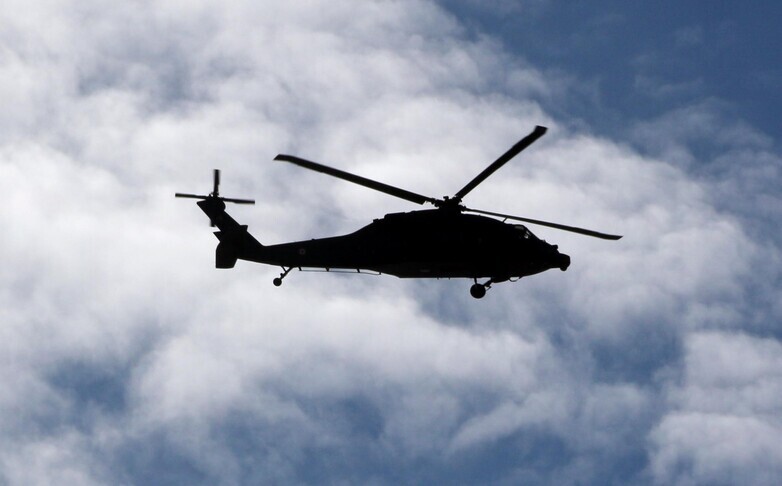
A US Air Force helicopter made a precautionary landing in northwest Washington, DC late Monday, local media reported.
The incident occurred at approximately 9.25 p.m. (0125GMT Tuesday) when a UH-1N Huey helicopter assigned to the 1st Helicopter Squadron at Joint Base Andrews, Maryland landed along Foxhall Road near Whitehaven Parkway NW, close to the Georgetown Reservoir.
All four crew members who were on board are safe, according to media reports.
Maintenance personnel and law enforcement officials remained at the scene into the early hours of Tuesday as authorities assessed the aircraft and investigated the circumstances surrounding the landing.
-

 Michigan4 minutes ago
Michigan health expert talks impact of Canadian wildfire smoke: There’s really a long list of who is at risk”
-

 Massachusetts10 minutes ago
The science behind Massachusetts’ wildfire smoke-darkened skies
-

 Minnesota16 minutes ago
Minnesota United Statement on International Friendly | Minnesota United FC
-

 Mississippi22 minutes ago
GPS data tracks boat Mississippi teen Nolan Wells was on before he went missing
-

 Missouri28 minutes ago
Missouri teen Gabbriana Boyster shot dead in home as mom makes horrifying discovery; 3 friends charged
-

 Montana34 minutes ago
Photos: Helena Senators sweep home doubleheader from Billings Royals
-

 Nebraska40 minutes ago
Omaha hospice nurse speaks out after Nebraska AG disciplinary action
-

 Nevada46 minutes ago
Sparks weekend road closures are slated

