Washington
From ‘laughingstock of IPS’ to sectional champs. Washington adds chapter to rich history.


Adrian Floyd walked down the hallway at Washington High School last week, pulled the trophy out of the glass case, then walked it back down to the gym and displayed it at midcourt.
To Floyd, the 1995 sectional championship trophy signifies more than a moment in time. At the time, he was a junior for the Continentals, who won the City tournament and were attempting to win the program’s first sectional championship in 13 years.
“I remember George (McGinnis) and Steven Downing and John Sherman Williams coming and talking to us,” Floyd said of the tournament run 29 years ago. “They were coming and checking on us and wanting to know how we felt. It was a big deal because it hadn’t been done in so long.”
Floyd, an assistant coach at Washington, represents a tangible link to past basketball glory at Washington, where banners of McGinnis, Downing, Williams, Floyd’s former teammate, Jack Owens, and many others hang on the wall above the court. The Continentals awakened the echoes of those glory years Saturday night with the program’s first sectional championship since that 1995 season with a victory Saturday over Christel House in Class 3A Sectional 28 at Beech Grove.
Floyd’s former Washington teammate, Robert Williams, texted him a photo of himself pointing at the scoreboard after the Continentals defeated host Southport for the 1995 sectional championship. The score: 67-48. The score of Saturday’s win over Christel House: 67-48.
The players on this year’s Washington team joked with Floyd he can put that 1995 trophy back in the trophy case.
“Every day he was talking about it,” Washington senior Dave Leye said with a laugh. “That’s why we had to go get our own.”
Washington (14-12) will attempt to go one step further than that 1995 team when the Continentals play last year’s state runner-up, Guerin Catholic (20-7), in a Class 3A regional at Greenfield-Central on Saturday. But even by extending the season one week further, the Continentals have already inspired memories of an era when Washington was one of the state’s most feared and historic programs.
“Truth be told,” said Washington 6-11 senior Clem Butler, “the last couple of years we were like the laughingstock of IPS. It does show what you can do when you improve as players and improve as a team.”
Back to the future
Floyd remembers the sea of purple and white. He remembers the Hinkle Fieldhouse floor shaking. “Like an earthquake,” he said.
Scott Hicks, now the athletic director at Washington, had one of the prime seats in the building as assistant athletic director at Butler, sitting at the scorer’s table. Hicks had grown up on the westside and would have gone to Washington if his parents had not sent him to Cathedral.
Washington coach Aaron Hogg was also inside Hinkle Fieldhouse that day, though his seat was much farther away from the court. Hogg was 14 years old and had recently moved from football-crazy Texas. His cousin wanted to show him what Indiana basketball was all about.
“That was the first basketball game I ever went to in Indiana,” Hogg said. “That’s when I found out basketball was a religion here like football was in Texas.”
The scene on March 11, 1995, is one treasured by the 11,000-plus standing room only crowd, players, coaches and anyone else lucky enough to see it in person. Sixth-ranked Washington, after winning the sectional championship, was matched up against westside rival and No. 1 Ben Davis. The teams had just two losses between them — Washington in double-overtime at Terre Haute North and Ben Davis to Kevin Ault and Warsaw in the championship of the Hall of Fame Classic in New Castle.
Adding to the emotion of the game was it was slated to be the final year for Washington after IPS voted in December of 1994 to close Washington and Howe to save an estimated $2.2 million. But on the basketball court, there was little that could stop the Continentals. Senior guards Owens and Williams combined for 35 points a game and the frontcourt of 6-4 junior Marcus Reedy and the 6-7 Floyd were also capable scorers. Chris Sutton, a 6-8 senior, was a strong rebounder and defender for coach Joe Pearson.
But Steve Witty’s Ben Davis’ team, a state finalist the previous year, was the considered the best team in the state. In addition to Damon Frierson, who would go on to win IndyStar Mr. Basketball after the season, the Giants featured a frontcourt of 6-6 James Patterson and 6-7 Courtney James.
“We had all been playing basketball together since junior high,” Floyd said. “The year before (in 1994), we lost in the City championship to Cathedral and in the sectional to Howe. So, when we came back the next year, it was payback time. That was our goal — win City, win the sectional. And our goal was to win state. Of course, we met Ben Davis and that last-second shot happened.”
The teams battled back and forth with the sunlight shining through the Hinkle windows. Owens made two free throws with 7 seconds remaining to give Washington a one-point lead. With Frierson covered, Ahmed Bellamy raced up the left side of the floor and let it fly from the left wing.
“It looked like an airball when he let it go,” Hicks said this week. “Then it just kind of curved at the last moment.”
Swish. Ben Davis 79, Washington 77. The Giants staved off Cathedral that night in double overtime to win the regional, then went on to win the program’s first state championship.
The Continentals, with realistic dreams of matching the 1965 and ’69 state champions with one of their own, were heartbroken.
“The biggest thing is we knew the school was closing,” Floyd said. “That made it hurt even more. Me and Reedy were juniors, but we didn’t have a chance to come back. That was it.”
Reedy and Floyd enrolled at Lawrence Central at seniors and led the Bears to a 21-3 record and No. 4 state ranking but again lost a heartbreaker, this time in an overtime upset to North Central in the sectional semifinal. With only one year, though, it was not quite the same.
“We were a family at Washington,” Floyd said. “Just some kids from the inner city who wanted to do something special.”
A little like this team.
Continentals return to relevance
The 6-6 Hogg, who played at Warren Central and Wichita State, is in his fourth year at Washington. He led the Continentals to an 18-win season two years ago, but last year’s team dropped to 6-18 and lost to Cardinal Ritter by 22 points in the sectional semifinal.
“When I first came here, I told them I didn’t want to come here and recruit a bunch of seniors and juniors, win a few games and move on,” Hogg said. “We wanted to start in the sixth grade and start building the youth programs. That’s what we’ve been building over time but also, we have kids who have come in and showed the kids what it means to work hard and do the right things. They have started this program.”
One of those players is the 6-2 Leye, perhaps an unlikely leading scorer. Leye was cut from the middle school teams at Chapel Hill and as a freshman at Ben Davis. He never gave up on his basketball dreams, though. Leye set up cones for outdoor drills, working on dribbling and shooting by himself. He transferred to Washington for his junior year to give it another shot.
“It was heartbreaking because when you love something and somebody says you can’t do it, that hurts,” Leye said. “But something about me, even though I don’t show it all the time, is that I don’t like to be told ‘no.’ When somebody tells me I can’t do something, I really want to show them I can do it. When I heard that ‘no’ something rang in my head that I can’t stop now.”
Floyd and Hogg both point to Leye’s spirit and work ethic as a major reason for Washington’s turnaround. He is averaging 11.7 points and 2.6 rebounds, but his impact goes beyond the numbers. The same goes for Butler, who was at one time cast aside as a project. Floyd got him to come out for the cross-country team as a sophomore and he lost 40 pounds. Butler now averages 9.1 points and 7.9 rebounds and is coming off a sectional championship game that saw him finish with 23 points, 23 rebounds and five blocked shots.
“When you have kids with that type of mindset,” Hogg said, “it’s a blessing. Top-level talent doesn’t matter as much if they have that A-plus mindset. Then it’s contagious and spreads through the rest of the team. That’s why we are where we are. It honestly eliminated some of the people who should be on this team and are not. They couldn’t walk that tight line. It’s hard to walk in somewhere late when you have guys in there sweating already and ready to go.”
Other key players for the Continentals are sophomore Roosevelt Franklin (11.4 ppg, 4.3 rebounds) and seniors Malique Starks (9.8 ppg, 6.0 rebounds) and Jordan Stratton (9.7 ppg, 2.8 rebounds). Washington trailed by 16 points in the first quarter of the sectional semifinal against Purdue Poly before rallying for a 63-50 win.
“We got a spark from Roosevelt and that ignited through everybody,” Leye said. “Once we were on, we really didn’t step off the pedal.”
‘It means a lot to put on that Washington jersey’
The most famous of the Continentals, McGinnis, died in December at 73. McGinnis, Mr. Basketball in 1969, led Washington to the state championship as a senior before going on to a professional career that would put him in the Naismith Memorial Basketball Hall of Fame.
The night after McGinnis died, Washington upset Tech, 59-57.
“We showed up and beat them,” Leye said. “It means a lot to put on that Washington jersey. That’s what we want to show. Instead of us being underdogs, we want people to look at us like, ‘Oh, Washington is that good.’”
Washington, seeded 11th in the City tournament, served notice again by knocking off sixth-seeded Purdue Poly by two points and taking out third-seeded Tech again in overtime in the quarterfinals. In early February, Washington lost to Saturday’s opponent, Guerin Catholic, by 21 points. But it was a three-point game at halftime. Butler fouled out and scored four points.
“My flip switched about 10:30 p.m. Saturday night,” Hogg said. “We were already watching film, getting ready for Guerin and game planning.”
Leye joked that his “flip didn’t switch quite as fast.”
“(Saturday night) felt like a lifetime moment,” he said. “Words can’t even explain it. We wanted that trophy in our hands so bad. That’s why we had so much energy after the game even though we were dead tired.”
There was no way to know 29 years ago that winning another sectional title was even possible. When the school closed at the end of the 1994-95 school year no one knew it would reopen. McGinnis watched that game in 1995 from inside Hinkle Fieldhouse.
“The memory of this game will last forever,” McGinnis told then-IndyStar columnist Bill Benner in 1995. “And that’s what the people of Washington will take with them.”
Almost 30 years later, the Continentals have another memory. And another trophy for the trophy case.
Call Star reporter Kyle Neddenriep at (317) 444-6649.



Washington
Washington State Democratic Party draws criticism over reparations, antisemitism language

OLYMPIA, Wash. — Party platforms are typically lengthy documents intended to define political values, not enact law.
But language adopted by the Washington State Democratic Party is drawing scrutiny from Republicans, some Jewish community leaders, and even some Democrats who say they were left out of the conversation.
The debate centers on two planks in the party’s newly approved platform: one supporting continued work on a state reparations study and another linking a recent rise in antisemitism, in part, to actions by the Israeli government.
Stephen Reed, a spokesperson for the Washington State Democratic Party, said the platform is developed every two years by delegates selected from communities across the state.
“They develop the platform. They write all the planks. They debate the planks,” Reed said.
Last month, the Washington State Democratic Party announced that more than 1,000 delegates at its 2026 convention in Spokane unanimously adopted language supporting reparations for descendants of victims of U.S. chattel slavery. The party described the move as the first such addition to a state Democratic Party platform.
The approved language says Democrats support “the study and implementation of reparative action, remedies and reconciliation” for descendants. The party also said Democrats had previously passed a 2024 resolution urging Washington leaders to create and fund a statewide study on reparations, which is currently underway and being managed by the Department of Commerce. A final report with recommendations is due in June 2027.
Reed said the party’s platform does not settle the question of whether Washington should provide direct payments as reparations, noting that other proposals include offering free college tuition to descendants.
But it is the platform’s language on antisemitism that has prompted criticism from both inside and outside the party. The approved platform states: “There has been a dramatic resurgence in antisemitism in recent years on all sides of the political spectrum, due in part to actions taken by the Israeli government. History shows us the dangerous repercussions suffered when collective action to combat antisemitism and promote understanding is not taken. We must ensure that the Jewish community is protected from misinformation, harassment, and violence.”
It is unclear whether the Washington State Jewish Democratic Caucus was consulted before the language was adopted. The Jewish Federation of Greater Seattle criticized the provision.
“By ascribing the rise of antisemitism in the United States, even partially, to the actions of the Israeli government, the Washington State Democratic Party has rationalized, and given cover to, the actions of antisemites rather than full-throatedly condemning them. At a time where the Jewish community, which makes up only 2% of the U.S. population, is the target of nearly 70% of religion-based hate crimes, we urge the Washington State Democratic Party to do everything in its power to reduce antisemitism rather than justify it,” Solly Kane, president and CEO of the Jewish Federation of Greater Seattle, said in a statement to KOMO News.
The State GOP, which is no stranger to incorporating national public policy into its regional platform either, criticized the Democrats.
“I read the Washington State Democratic Party platform, and it’s a banquet of trust-fund leftist nonsense,” Washington GOP Chair Jim Walsh said. “A lot of it is just not grounded in any real policy issue facing Washington families.”
Walsh said the platform contains “very little coherent stuff about tax reform or safe communities or improving K-12 schools,” while highlighting what he called “a very bizarre commitment to reparations for slavery.”
Asked why the Washington Republican Party’s 2024 platform includes language calling for limiting federal funding for programs that support critical race theory or The 1619 Project and for ending birthright citizenship, Walsh said, “We’re talking about not spending public resources. That means forcing taxpayers to pay for programs of various controversial sorts.”
“There is really no moral equivalence here,” he added.
Reed said he personally interprets the Democratic platform’s language as criticism of the Israeli government, not of Jewish people.
“I take this language personally to mean that the government of Israel is engaging in actions that are making Israel less safe, that are causing untold harm in the Palestinian community, especially among civilians,” Reed said. “That simply isn’t the right behavior for an ally of the United States.”
Reed acknowledged that the language has prompted concern and debate. He said the party has a Jewish caucus and that party officials tried to provide proposed platform language to caucuses before the convention, but he conceded the process may have fallen short.
“We did our best, and we hear that we may have come up short in those outreach efforts to give them enough time to digest everything,” Reed said. “If we fell short, we apologize to those communities.”
Reed said party platforms are designed to show voters where the party’s grassroots stand, even when the issues are complicated, controversial, or beyond the scope of state government.
“It’s a statement of values,” Reed said. “This lets Washingtonians know where the Democratic Party’s grassroots are, how they’re thinking, and the values they’re going to bring.”

Over the course of the next few weeks, we will be taking an in-depth look at the Bengals’ 2026 opponents. The Bengals play in Washington on Monday Night Football in Week 11 against the Commanders.
2025
The Commanders went 5-12 last season, finishing third in the NFC East a year after making a run to the NFC Championship Game. QB Jayden Daniels played in just seven games due to injury after winning NFC Offensive Rookie of the Year in 2024. Veteran Marcus Mariota started eight games, going 2-6, while now-Bengal Josh Johnson logged two starts under center.
Washington’s offense averaged 20.9 points per game last season, ranking 22nd in the league. Without their second overall pick quarterback, the Commanders struggled to pass the ball, averaging 184.1 passing yards per game, good for 24th in the league. The team’s top receiver Terry McLaurin played in 10 games as he too struggled with injuries. As a result, former San Francisco 49er Deebo Samuel led Washington with 72 receptions for 727 yards and five touchdowns.
The Commanders were more effective on the ground, ranking fourth in yards per carry (4.7) and yards per game (134.7). Washington primarily featured two backs: rookie Jacory Croskey-Merritt and Chris Rodriguez. Croskey-Merritt paced the team in attempts (175), yards (805) and touchdowns (eight) while Rodriguez added 112 carries for 500 yards and six scores.
On the other side of the ball, the Commanders allowed 26.5 points per game, the sixth most in the NFL, and 384.3 yards per game, the most in the league. Washington allowed the third-most rushing yards per game (141.8) and fifth-most yards per carry (4.8). The defense allowed 242.5 yards per game through the air, the fifth most. The unit struggled to force turnovers as well, notching the second-fewest takeaways in the NFL with 10.
Offseason Changes
Head coach Dan Quinn had to replace both coordinators this offseason, as the team decided to mutually part ways with former offensive coordinator Kliff Kingsbury and let go of defensive coordinator Joe Whitt Jr. The Commanders hired two first-time coordinators in David Blough (OC) and Daronte Jones (DC).
Washington overhauled its defense this offseason, starting with the defensive line. The Commanders signed former Ravens and Chargers DE Odafe Oweh to a four-year deal, former Texans DT Tim Settle Jr. to a three-year deal and former Jaguars and Patriots DE K’Lavon Chaisson to a one-year deal. They also drafted DE Joshua Josephs from Tennessee in the third round of the 2026 NFL Draft.
The team added LB Leo Chenal from the Chiefs in free agency and spent the seventh overall pick in the draft on LB Sonny Styles Jr. from Ohio State. On the back end, Washington signed S Nick Cross and CB Amik Robertson.
On the offensive side of the ball, Washington let Rodriguez walk in free agency and signed former Browns RB Jerome Ford and former Buccaneers RB Rachaad White instead. It added depth to the receiver room with one-year deals for Dyami Brown and Van Jefferson and used a second-round pick on Clemson WR Antonio Williams. The Commanders also signed TE Chig Okonkwo to a three-year contract from the Titans.

Donald Trump’s plans to build a skyline-altering arch in the nation’s capital won initial approval Thursday from a key federal commission, but its members put off a decision on whether a federal law that limits building heights should be applied to this project.
Despite overwhelming public opposition, the National Capital Planning Commission voted to approve preliminary site and building plans for the 250ft (76m) arch the Republican president wants to build on a traffic circle at the Virginia end of the Memorial Bridge from Washington.
The project, one of several being pursued by Trump in his quest to reshape parts of the nation’s capital to his liking, moved a step closer to reality with the vote.
Staff had recommended in its report on the project that the commission grant such approval and request a series of changes so the arch would comply with the Height of Buildings Act. The suggested changes included redistributing the heights among the main structure of the arch, the habitable roof, where an observation deck is planned, and the statues that would top it.
But commissioners, led by chair Will Scharf, voted to continue deliberations on whether the law indeed applies.
The staff report said the commission has long applied the law in its approval process. Scharf said the applicant, which is the interior department, had, as requested, provided a legal analysis that he said makes a “compelling argument” that the law “is not binding on the federal government”.
The interior department oversees the federal land where the arch would be built.
Eight of the 12 commissioners, including Scharf and two others appointed by Trump, voted for preliminary approval. One was against, and the remaining three commissioners voted present.
“This is a complex project,” Scharf said before the vote. He said a vote on final approval could come at the agency’s next meeting, in September.
All 12 commissioners listened to a summary of the staff report and its recommendations, and heard from several dozen people who had signed up to testify about the project.
As the commissioners met, construction continued at the White House on a $400m ballroom Trump is building there and crews draped tarps over the stone columns at the north entrance to the mansion, where work is being done to scrape off layers of paint.
Some of those who testified against Trump’s project opposed building a celebratory arch so close to Arlington national cemetery. Others suggested it would be more appropriate for a neighborhood near the Capitol and sporting venues.
Opponents say the arch is too big and would disrupt the carefully designed view between the Lincoln Memorial and Arlington national cemetery that was meant to symbolize the reunification of the north and the south after the civil war.
The arch would be more than twice as tall as the Lincoln Memorial, which is 99ft (30m) tall, and close to half the height of the Washington Monument, at about 555ft (169m) tall.
Concerns about vehicular traffic and pedestrian safety also were expressed on Thursday. Others insisted that Congress must approve the arch – a position Trump disagrees with.
The US Commission of Fine Arts, a separate federal agency, approved the design for the arch in May. The National Capital Planning Commission oversees construction on federal land in the city and began reviewing the arch plan in June.
Trump had said last year that the arch could be paid for with unused funds from the hundreds of millions of dollars he said he has raised from corporations, donors and other wealthy people to pay to build a new $400m ballroom at the White House.
But, as it turns out, some public money will be used for the ballroom project, as well as the arch. The White House has not released a cost estimate for the arch.
-

 Movie Reviews6 minutes ago
‘Only Beautiful Things to Look At’ Review: A Handsome but Muffled Portrait of State-Sanctioned Cruelty
-

 World14 minutes ago
Colombia Adds Massive Soundstage as Bogotá Audiovisual Market Attendance Soars and ‘Narcos’ Star-Led ‘Rookies’ Cleans Up in Project Prizes
-
News21 minutes ago
How a Beer Hall Keeps Up With a World Cup Crowd
-
 Lifestyle54 minutes ago
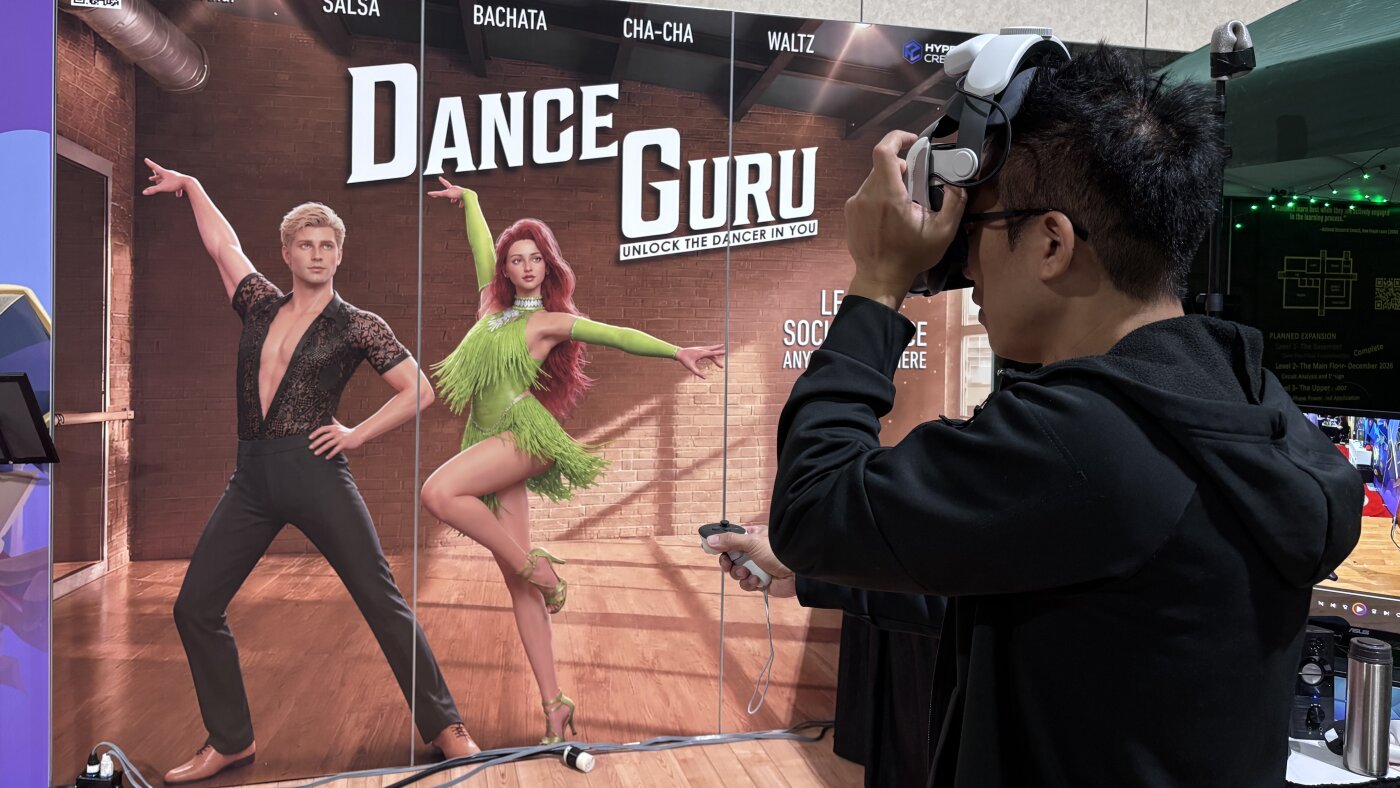
Shy on the dance floor? Virtual reality ‘partners’ aim to help you find your groove
-

 Technology1 hour ago
Are you filthy enough for a $700 portable shower?
-

 World1 hour ago
Former British MP and reality TV star Ann Widdecombe found dead; man arrested for murder
-

 Politics1 hour ago
Trump takes unusual step, lets bipartisan housing bill become law unsigned amid SAVE pressure campaign
-

 Health1 hour ago
Eating common dairy food every day may slow biological aging, study suggests

