Entertainment
Olivia Rodrigo’s babydoll dress is for the punks, not the freaks who ‘normalize pedophilia’


Some are calling the controversy over Olivia Rodrigo’s recent outfit choices babydoll-dress-gate, Olivia Rodrigo calls it “weird.”
The dress debacle kicked up in early May when Rodrigo released the music video for “Drop Dead,” in which she runs through the Palace of Versailles wearing a pink-and-blue ruffled babydoll set while singing about the intensity of a crush. Then on May 8, she wore a cottage-core pink-and-white floral babydoll dress with knee-high Dr. Martens during a live performance in Barcelona.
Rodrigo was drawing from subversive feminist and punk fashion of yore, but internet critics were quick to slam the “deja vu” singer, saying the ensemble was sexualizing child-like imagery. In an hour-and-a-half interview with the New York Times Popcast that dropped on Thursday, Rodrigo staunchly defended the dress and called the criticism disturbing.
“I have worn outfits that are maybe revealing on stage, like I’ve been on stage in a sparkly bra and little shorts — which is my right — that’s fun,” she said. “I felt cool and comfortable in that, and that wasn’t inappropriate, but me fully covered up in a dress that people deemed to be, like, childlike was inappropriate, and I think it shows how we really normalize pedophilia in our culture.”
Rodrigo further decried the criticism as rhetoric that girls are fed from a young age, “which is ‘don’t wear that, because then a man is going to sexualize your body, and it’s your fault’ — it’s so weird.”
Rodrigo said she didn’t think she looked “sexy” in the babydoll dress; she was going for a cool look à la Kathleen Hannah or like Courtney Love, musicians whom the pop star said are her heroes. Love appeared to defend Rodrigo on social media by resharing posts defending the singer-songwriter in since-expired Instagram stories.
“I just think if we start dressing in a way that’s like, ‘Oh, I don’t want some f— freak to think that I am sexy like a baby’ or some crazy thing like that, I think it’s losing the plot a little bit,” she said. “I’m very protective of younger women and girls, and I don’t ever want them to be fed that rhetoric. You shouldn’t be responsible for some guy sexualizing you in a way that was never your intention.”
Rodrigo’s third studio album, “You Seem Pretty Sad for a Girl So in Love,” which features hit singles “Drop Dead” and “The Cure,” will be released June 12.


Way back in 2017 I reviewed a film called Demon Hunter (which was recently rereleased as Taryn Barker Demon Hunter), a moody character driven horror action hybrid that I enjoyed very much. After a very long wait, a sequel, Demon Hunter: Time 2 Kill, has finally been released in the world.
Read on for my thoughts on the film
Synopsis
Taryn Barker is just your average everyday monster slaying, wise-cracking, demon hunter on the hunt for two pieces of an ancient artifact, The Necrox. Standing in her way is Elysia Cronika, the CEO of Illumini Industries and a member of the Satanic sect The Stygian.
Cronika plans to obtain the Necrox to unleash Hell on Earth. The problem is Taryn is hard to kill and with every demon sent to eliminate the demon hunter getting wiped out, she gets closer to saving the day.
As a last resort, Cronika sends Taryn through time alongside a band of innocent teenagers to the year 1987 and now Taryn needs to protect the group from a notorious summer camp slasher Lucien Krull, whilst finding the Necrox and a way back home to the present
Demon Hunter: Time 2 Kill was written and directed by Zoe Kavanagh. The film stars Niamh Hogan, Lisa Wilcox, Angel Nichole Bradford, Kevin O’Malley, Anthony Cespedes, CJ Dorsey, Valeria Arango Gomez, Jada Krueger and Desiree Xu.
After all these years, it was nice to see Taryn Barker return. She’s a little less moody and more grown up and she has a stronger sense of humor. One thing that hasn’t changed is that she’s an absolute badass. I was really impressed with the increased action, fight scenes and stunt work. Niamh Hogan does a great job as Taryn. She kills it at the fight scenes, she’s got great comedic timing and she’s just genuinely fun to watch.
I was really happy to see Kevin O’Malley return as Ethan, as I felt he was one of the strongest characters in the first film and I really enjoyed his chemistry with Taryn. He’s given a lot more to do here and that was exciting. The cast includes a lot of new additions and there was definitely some highlights.

Angel Nichole Bradford (one of my absolute favorite indie actresses) plays Deborah, a character who shares a sisterly energy with Taryn. I loved the way they looked out for each other and always had each other’s back. Enea Pagni’s Jay and Jacob Rainer’s Lawrence were 2 characters I was able to root for. I loved their friendship. Last but not least is Desiree Xu’s Azumi, a demonology expert who is also a ninja. She was definitely a badass and I loved seeing her work together with Ethan.
The story here is much different than the first film, including time travel and a strong slasher element, which I really enjoyed. It gave Demon Hunter: Time 2 Kill a unique feel and set it apart from the first film. Given the slasher elements, it’s much gorier than the original film, which is sure to please those who enjoy that sort of thing. I loved how the film ended and am curious to potentially see where the series could go from here.

Final Thoughts
Demon Hunter: Time 2 Kill is an excellent sequel that increases the action, has some well executed fight scenes and ups the body count. Demon Hunter: Time 2 Kill is supernatural slasher/action film that is well worth a checking out. Highly recommended.
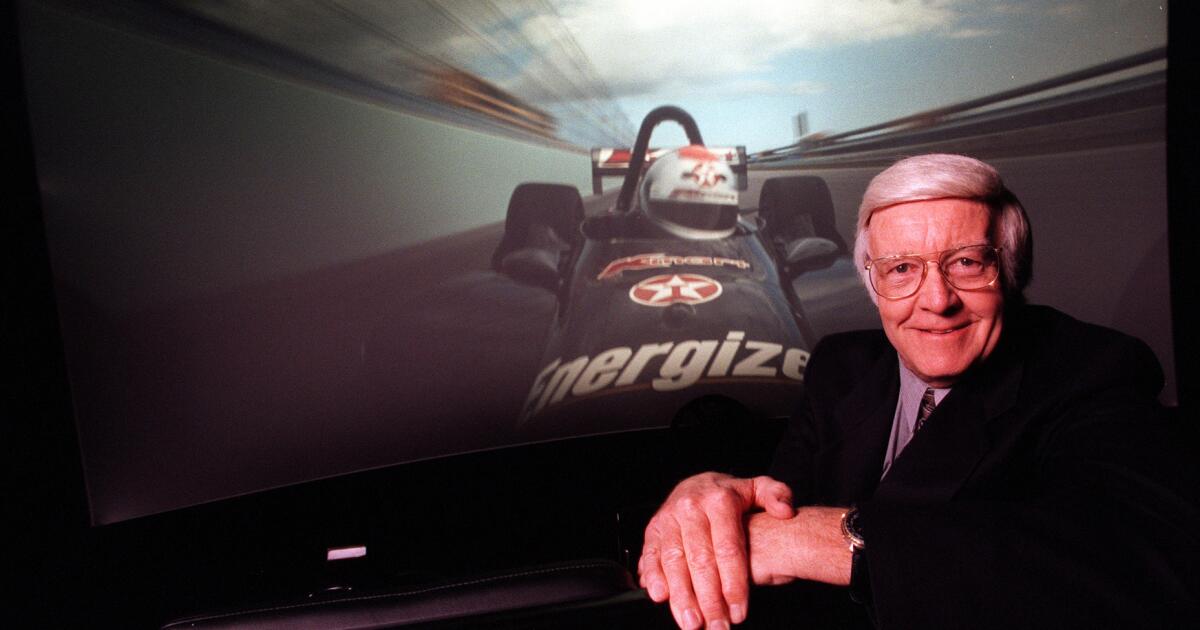
Don Iwerks, an Academy Award-winning special effects pioneer whose innovations transformed film and Disney theme parks, died peacefully Thursday at the age of 96, the Walt Disney Co. announced.
For Disney and his own studio, Iwerks Entertainment, Iwerks helped develop technologies and techniques like Circle-Vision, the 360-degree camera behind “America the Beautiful” and other early Disney attractions, and the 3-D effects used in attractions like Captain EO and the Star Tours ride.
“There was a ‘can-do’ attitude I learned from Walt and my father,” Iwerks said, according to a statement shared by the Disney Co. “Walt gave everyone a feeling that they were creating things that others had never thought of before, of being a part of history.”
Born July 24, 1929, Iwerks received his first camera at age 14 as a gift from his father, animator Ub Iwerks.
The elder Iwerks met fellow artist Walt Disney when both men were teenagers working at a Kansas City, Mo., art studio. They would go on to work together at the Disney Brothers Cartoon Studio, where Iwerks designed and animated “Plane Crazy,” the first Mickey Mouse cartoon.
After a stint at his own animation studio, Ub returned to Disney as a special effects engineer, pioneering techniques like the 360-degree motion-picture camera.
“He was absolutely my inspiration because he was technically minded. He made my childhood and formative years one of the greatest times of my life,” Don Iwerks told The Times in 1998.
The Iwerks family moved to the San Fernando Valley in 1936, where Don graduated from Van Nuys High School in 1947.
He served as a photographer in Germany during the Korean War and joined his father at Disney following his 1952 discharge from the U.S. Army. An allergic reaction to chemicals used to develop film led to his transfer to the company’s Studio Machine Shop, where he spent the next 34 years.
Don spent three months in the Bahamas manning underwater cameras for the 1954 Disney film “20,000 Leagues Under the Sea.” He then worked as the camera technician on “A Tour of the West,” an original Tomorrowland attraction at the soon-to-be opened Disneyland. The immersive 360-degree film was shot on the Circarama camera system his father invented.
Together, Don and Ub developed technologies like the “endless loop” system that enabled a single film print to run for up to 10,000 performances with minimal intervention and refinements to the photography processes used in “Mary Poppins” (his favorite of the Disney films) and other movies.
His own hands were used as the model for those of the Abraham Lincoln Audio-Animatronics figure in “Great Moments with Mr. Lincoln,” which opened at Disneyland in 1965. The “Iwerks Hands” now appear on similar figures at Disney parks around the world, according to his family.
In 1998, Don Iwerks received the Academy of Motion Pictures’ Gordon E. Sawyer Award for “technical contributions” that “brought credit to the industry.” In 1999, he received an Oscar for Scientific and Technical Achievement.
(Iwerks Family)
In 1986, he co-founded Iwerks Entertainment, which soon became a major player in the film and theme park industries. The company specialized in large-format films and created the 3-D projection system used in the Terminator rides at Universal Studios parks in Hollywood and Florida.
His innovations were honored with the Academy of Motion Picture Arts and Sciences’ honorary Gordon E. Sawyer Award and an Academy Scientific and Technical Award, among other prizes.
“It’s very obvious that computers are playing a big role in motion pictures today. The digital technology in film is able to put elements of scenes together on a film and have them look lifelike. It’s hard to know where that will go,” Iwerks said in a 1998 interview.
“My view is that technology should support a good story and add to it. Technology for technology’s sake?” he said with a shrug. “You still need good films.”
Iwerks is survived by his wife of 54 years, Betty; his sons, Larry and John; John’s wife, Chris; his daughter Leslie, and great-nephew,Mike, both of whom have also worked for Disney, according to an obituary shared by his family. His daughter Tamara preceded him in death.
“Like his father, he was a humble genius, a consummate problem solver, and delighted in sharing knowledge, encouraging others, and approaching every challenge with confidence and grace,” his family said in the statement from Conejo Mountain Funeral Home in Ventura.
Both Don and Ub Iwerks are commemorated in a storefront window on Main Street U.S.A. in Disney World’s Magic Kingdom. Located above the Main Street Bakery, the window is a lasting tribute to a family who made some of the park’s magic possible.
“Iwerks-Iwerks Stereoscopic Cameras,” the lettering reads. “No Two Exactly Alike.”

Earnest, preachy and melodramatic to a fault, “Mississippi Scholar” is exactly the sort of movie that the independent cinema was born to create.
Director and co-writer Marcus Bleecker’s film may traffic in tropes and cliches. But it has a vivid sense of place and a clear notion of the message it wants to send, and that message’s relevence.
Set in an unnamed small Mississippi city — it was filmed in Baldwyn, Saltillo and Fulton — the film is “a mind is a terrible thing to waste” in cinematic form. Our “Scholar” was born into a world of substance abuse, the racist legal traps of the country’s remaining marijuana laws and has a baby-mama-in-waiting and a drunken parent whom our teen hero is responsible for as his burdens.
But he has a world of promise that one dedicated teacher, his dead father (whom he still converses with) and even he himself can see if he can just “stay focused” and keep his eyes on this very personal prize — college and a better life beyond Ole Miss.
Shannon Brown is James, a kid with great grades and an ill-tempered mother (Gisla Stringer) who crawled into the bottle a long time ago and has no interest in crawling out.
But he’s got an ad hoc support system helping him through his senior year. His aunt (GiGi Marie Gaines) feeds him and keeps him advised of his mother’s latest tumbles. His dead dad (co-writer Obba Babatundé) passes on wisdom about his mother in fortune cookie-sized bites when father and son chat — at the cemetary or elsewhere.
“Hurt people hurt people.”
His English teacher, Mr. Keating (Sonny Marinelli) has high hopes for him, hopes he’s willing to nag the kid to achieve — “It takes only five seconds to get in trouble, and 25 years to get out of it!”
His school principal (Lance E. Nichols) expects greatness, but has learned to never get his hopes up over any Black boy at his integrated high school.
Even Ray-Ray (Jeremy Isaiah Earl), the ex-con drug dealer, takes a brotherly interest in the kid who is his “best distributor.” That money is what keeps a roof over James’ and his mother’s heads, and pays for his Jordans.
His white boy bestie (Dominic Arvielo) may act “Black,” but will he have James’ back when things get real?
And girlfriend Tammy (Aysa Branch) may be far and away the prettiest girl in school. But she’s taking the easy route, relying on her looks to achieve the limited goals the script sketches out for her.
“We’re gonna have ourselves a baby as soon as we graduate!”
Bleecker’s film covers all of the bases, all of the tropes and most of the cliches as James faces Big Choices with perils to his plan at every turn. Maybe taking him to visit the football-mad University of Mississippi isn’t the deal-maker his teacher hopes it is, as James doesn’t “see anybody who looks like me.”
Only a real civil rights hero (Dr. Donald Cole) can set him straight, relating the story of what James Meredith and generations before him did to give James this chance. Or can he?
“Mississippi Scholar” is well-crafted and an easy film to like, with relatable if “stock” characters and decent performances from all but the most amateurish (James’ classmates) cast members. But it’s entirely too predictable to surprise and too pre-digested to have an edge.
Worthy subject and novel setting aside, we’ve seen this story on the big screen and the small one too many times to count, seen this kid’s hand played out in every variation the cards have to offer.
But it makes a fine calling card for its cinematographer turned director, and let’s hope we see Bleecker’s name and hear his voice in another Deep South indie film, and soon.

Rating: TV-14, violence, profanity
Cast: Shannon Brown, Gisla Stringer, Sonny Marinelli, Jeremy Isiaah Earl, Aysa Branch and
Obba Babatundé
Credits: Directed by Marcus Bleecker, scripted by
Obba Babatundé, Marcus Bleecker and P.J. Leonard. A Narrative Distribution release on Amazon Prime.
Running time: 1:24

-

 California38 seconds ago
Should billionaires pay a wealth tax? California will be a big test.
-

 Colorado7 minutes ago
Colorado buyers gain options as Western Slope housing market rebalances
-

 Connecticut13 minutes ago
‘Serious’ crash closes Sugar Hollow Road in Danbury
-

 Delaware19 minutes ago
Can you call yourself a Delaware local? Insider things to know
-

 Florida25 minutes ago
Looking for Florida brewery, winery, distillery, cidery? Here are 17
-

 Georgia31 minutes ago
How Georgia’s economy drew the World Cup—and how the World Cup will strengthen Georgia’s economy
-

 Hawaii37 minutes ago
Magical Creatures Sanctuary looks to develop community, educational programs – West Hawaii Today
-

 Idaho43 minutes ago
Idaho Property Taxes are Here to Stay

