Washington
Attention Canadians: Why you should do the ANCA Internship in Washington, D.C.


I grew up attending ARS Armenian Private School in Toronto, where I was deeply immersed in our culture. Though I was involved in non-Armenian activities outside of school, going to university with individuals from diverse backgrounds was a new experience for me.
To maintain strong community ties, I became active in my university’s Armenian Students Association, which I now chair, and participated in an Armenian mentorship program.
But I wanted more.
I applied to the ANCA Leo Sarkisian Internship with little thought. Though I knew it was something I was interested in doing, I was unsure if spending my summer in Washington, D.C. — a place so far away from home — was a good idea. Additionally, I was uncertain of how the internship would benefit me, given that much of what I would learn would be geared toward a U.S. perspective, and I questioned how relevant it would be to a Canadian.
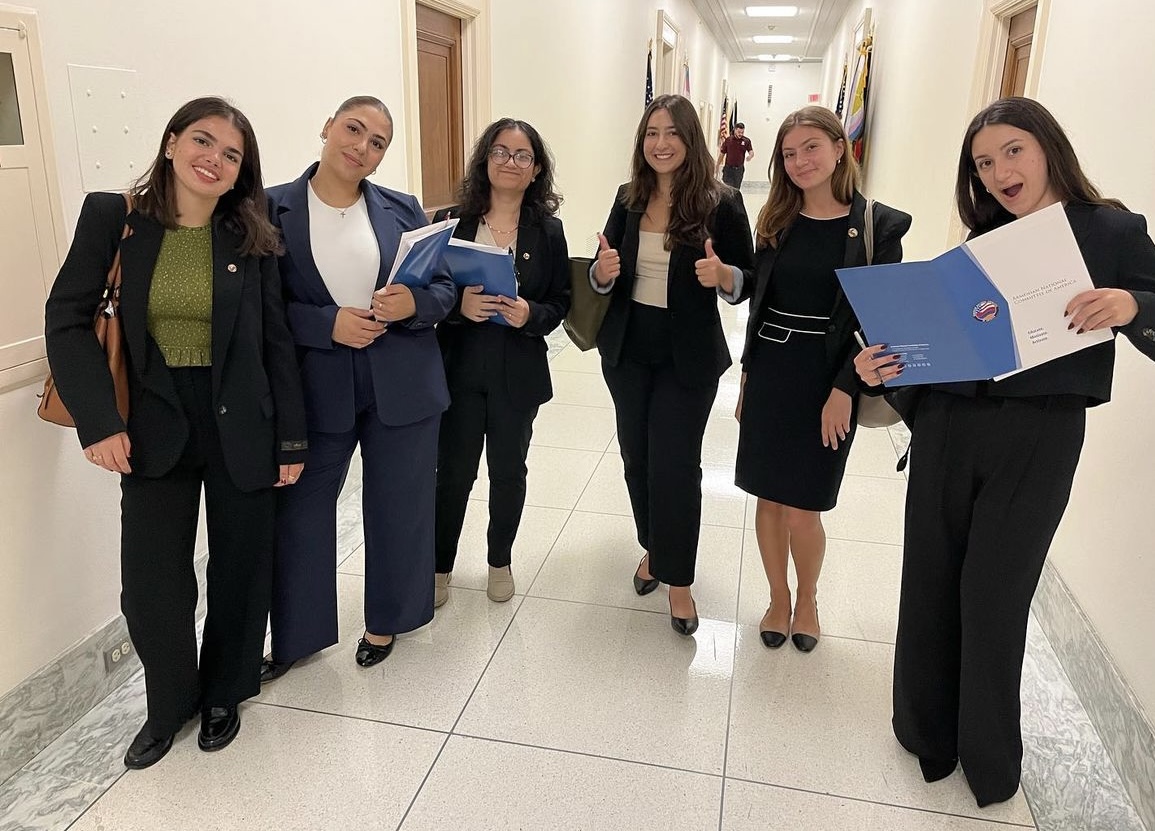
When I received the call that I had been accepted into the summer program, I was faced with a difficult decision: Should I work locally in Toronto or go to Washington?
I chose the latter.
I have completed the internship and am writing to convince other Canadians to do the same.
The internship offers many opportunities for young Armenians interested in politics, law and research. Local Armenians with high-ranking positions in political offices, museums and law firms offered us advice, and we created unique connections that can be used to advance our future careers. However, what makes this program so special is the fact that everyone we’ve met — whether lecturers or local Armenian professionals — has shown genuine interest in helping us succeed in our chosen career paths.
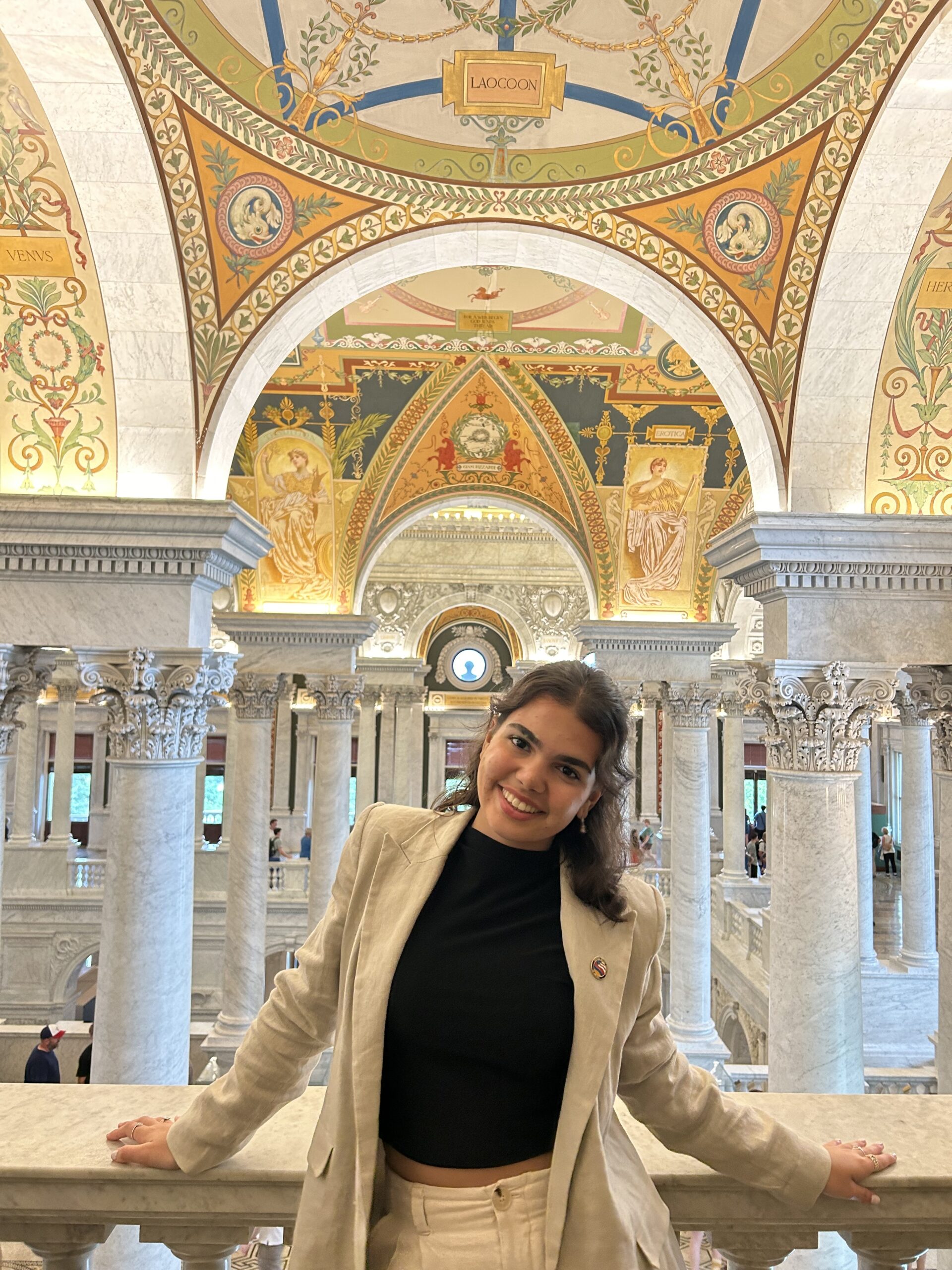
Among our most impactful lecturers was Charlie Mahtesian, the senior editor from POLITICO, who shared his personal journey in journalism, answered our political journalism questions and inspired us to consider careers in his field. Our meeting with the Library of Congress Armenian and Georgian Area Specialist Dr. Khachig Mouradian was particularly moving. His selection and care for ancient Armenian manuscripts and other texts from the Library’s vast collection inspired all of us and left me with pride knowing that someone so passionate is in charge of nurturing our nation’s rich history.
Apart from the lectures, I was also given the opportunity to learn through the routine advocacy in which we participated. While at first the concept of going to Capitol Hill and speaking to members of Congress and staff scared me, now having done it several times I no longer feel afraid to express my opinions and advance our community views among those with positions of power. Through lobbying, I had the pleasure of meeting Representatives Anna Eshoo and Adam Schiff, who advocate for Armenian issues on a global scale. They stressed the importance of youth advocacy in shaping congressional opinion on Armenian concerns.
The ANCA assigned individual projects to each intern — mine being the application of Global Magnitsky Sanctions on Azerbaijan’s genocidal leadership. We read detailed reports on Azerbaijani atrocities committed against Armenian prisoners of war and civilian detainees, submitted by the International and Comparative Law Centre NGO (ICLAW) and Armenian Legal Center for Justice and Human Rights (ALC) to the Departments of State and Treasury. By reading hundreds of pages of written testimonies and watching videos regarding the horrors and reality of what they went through, I understood the gravity of the situation many Artsakh and Armenian locals face. I also had the opportunity to write about how Canada can improve its relations and support of Armenia by stopping the import of Azerbaijani oil and encouraging Azerbaijan’s safe return of Armenian POWs and civilian captives.

Apart from the rewarding nature of the work, the internship environment was incredible. Working to advance the Armenian cause has been fulfilling and has allowed me to grow professionally. At the same time, after living at the Aramian House for six weeks, I can now say confidently that I have friends across the United States and Canada, all with true love, passion and commitment to the Armenian homeland, despite our distance from it.
So, did I make the right choice to come to Washington, D.C., this summer? Most definitely. To all those wavering in their decision to apply, drop me a note. I look forward to helping you make a decision about an experience that will impact you for a lifetime.

Sabrina Tomarci was born and raised in Toronto, Canada, where she graduated from ARS Armenian Private School. She studies political science and public law at the University of Toronto. She is the president of her university’s Armenian Students Association and is committed to aiding the Armenian cause locally and internationally. Tomarci is an alumnus of the 2024 Leo Sarkisian Internship Program.


After DSA candidates roiled traditional Democrats with wins in New York City last week, Tuesday’s primary in a Denver-centered district tested whether the left wing’s appeal could prevail elsewhere.
It turns out the democratic socialists’ reach extends well beyond New York — and it may well grow before the year is out.
Melat Kiros, backed by the national Democratic Socialists of America and Vermont Sen. Bernie Sanders, upset Rep. Diana DeGette, who has held her reliably blue seat for almost 30 years.
“What we’re seeing right now is the response to voters feeling like the party has not actually been fighting for working people,” Kiros told MS NOW last week.
The result is that Kiros, a critic of the Israeli government and high-ranking Democratic leaders, will likely be a member of Congress come next year. That happened even as DeGette cast the race as a warning, with President Donald Trump’s second term continuing to upend governance from the nation’s capital.
“Now is not the time to gamble and send somebody with no experience to Washington,” DeGette said during a recent candidate forum. “We need a strong, bold, hardened leader who will hold Trump accountable.”
The result was one of several Colorado results Tuesday to test incumbents or prominent statewide officials navigating a turbulent moment in Democratic politics — one in which voters have shown an appetite for untested fighters over familiar faces who’ve served in Washington’s halls of power.
The night’s theme wasn’t clear-cut; the three marquee races diverged on everything from ideology to questions of approach and clout. But each pitted an incumbent whose Congressional ties became fodder for a challenger.
In 2020, Democrats’ ability to woo former Gov. John Hickenlooper into the Senate race was seen as a boon for a party trying to unseat incumbent GOP Sen. Cory Gardner, one of the last Republicans left representing a blue state in the Senate. That move came after Hickenlooper’s 2020 presidential primary campaign fizzled. Even so, he faced a somewhat-competitive primary that year, taking 58.7% to his challenger’s 41.3%. Hickenlooper went on to win the seat that November by a little over nine points.

Photo by Elman Studio.
June 30, 2026 (Washington, D.C.) – The Washington Chorus (TWC), DC’s most dynamic choral ensemble, celebrates its 65th anniversary during the 2026-2027 season. Through thought-provoking pairings of classic major choral works, artistic collaborations, and groundbreaking premieres, TWC celebrates its history of providing an inclusive community where choral music connects, reflects, and inspires everyone while continuing its mission of creating transformative musical experiences that bring people together through the joy of choral music.
“Our 65th season showcases TWC’s commitment to honoring choral tradition while embracing the living voices shaping American music today,” said TWC Artistic Director Eugene Rogers. “We look forward to serving the entire D.C. community, bringing new audiences into our special anniversary celebration through this repertoire and outstanding guest artists.”
The season begins with TWC’s guest appearance with the National Symphony Orchestra for Beethoven’s Ninth Symphony, conducted by Gianandrea Noseda at Wolf Trap’s Filene Center on Friday, August 14, 2026 at 8:00 p.m. On Thursday, October 15, 2026 at 7:30 p.m. at Joseph Myerhoff Symphony Hall; Saturday, October 17, 2026 at 8:00 p.m. at Music Center at Strathmore; and Sunday, October 18, 2026 at 3:00 p.m. at Meyerhoff TWC joins Marin Alsop and the Baltimore Symphony Orchestra for John Adam’s On the Transmigration of Souls as part of the BSO’s Alsop Conducts Tchaikovsky’s Pathétique concert.
The Washington Chorus’s own season kicks off with two weekends of A Candlelight Christmas concerts in December, continuing its beloved holiday tradition now reimagined in new venues across the city. This cherished program brings together The Washington Chorus with the National Capital Brass and Percussion Ensemble, alongside award-winning music director, organist, and conductor Paul Byssainthe Jr., soprano Colleen Daly, and jazz-mezzo Christie Dashiell. The program will also feature the premiere of a new work by Evelyn Simpson-Curenton. Blending timeless carols with vibrant new voices, A Candlelight Christmas offers a warm and luminous celebration of the season – honoring tradition while embracing the rich musical spirit of our community. Venue and performance info are listed below.
In the new year, The Washington Chorus presents A Song Flung Up to Heaven: Honoring 65 Years of TWC on Sunday, February 28, 2027 at 3:00 p.m. at DAR Constitution Hall. The program juxtaposes two major works from contrasting origins – Nkeiru Okoye’s When the Caged Bird Sings and Poulenc’s Gloria – that treat sacred themes with a striking blend of reverence and theatricality. Together, these two major works meld European and American musical traditions into a powerful, life-affirming concert experience with a deep connection to spiritual rituals, while each composer’s innovation imbues them with new discoveries and uncovers mysteries of the human condition.
The centerpiece of this performance is the East Coast premiere of Dr. Nkeiru Okoye’s dramatic work When the Caged Bird Sings – a “musical ceremony” fusing many genres, including opera, musical theater, spoken word, and choral singing, and American musical styles including gospel, spirituals, traditional anthems, and jazz. Okoye’s evocative new piece celebrates the spirit of rising above expectations and transforming adversity into triumph through the milestones in the life of one Black woman. Partly in tribute to the activist and poet laureate Maya Angelou, the work celebrates and explores the transformative ability of the human spirit, commemorating those who have paved a path for future generations. The concert opens with a cornerstone of 20th-century sacred music, Francis Poulenc’s Gloria, which first premiered in 1961, the same year as TWC’s founding.
In May, TWC partners with the National Philharmonic to present Requiem and Renewal featuring Mozart’s monumental Requiem. This will be preceded by Jocelyn Hagen’s large-scale symphonic work, What the Soul Already Knows, on Saturday, May 8, 2027 at 7:30 p.m. at Music Center at Strathmore. Jointly commissioned by Pacific Chorale under the direction of Robert Istad and The Washington Chorus, the work will have its East Coast premiere as part of TWC’s 65th Anniversary Season.
Rooted in an exploration of the sacred – in both the physical world and the unseen – the work invites listeners to reflect on the deep interconnectedness of all life. At its core, What the Soul Already Knows is a meditation on our shared humanity and the potential for beauty that arises when we live in alignment with gratitude, unity, and service. The title received inspiration from the book Sacred Earth, Sacred Soul by Celtic spiritual teacher John Philip Newell, whose writings illuminate the sacred as present not only in heaven, but within the earth and all living beings. Both Hagen’s and Mozart’s works are meditations on the soul in a program that asks: What is the soul, what is sacred, and how should we live – before and beyond death?
Closing the season is a theatrical version of Giuseppe Verdi’s Requiem with the Baltimore Symphony Orchestra and conducted by its Artistic Director Jonathon Heyward on Friday, June 11, 2027 at 8:00 p.m. at Joseph Meyerhoff Symphony Hall; Saturday, June 12, 2027 at 6:00 p.m. at Music Center at Strathmore; and Sunday, June 13, 2027 at 3:00 p.m. at Joseph Meyerhoff Symphony Hall. This staged performance of Verdi’s masterpiece is our third collaboration with Heyward and the BSO’s multi-year Verdi Opera Initiative.
Performance Information
Beethoven’s Ninth Symphony
Friday, August 14, 2026 at 8:00 p.m.
Filene Center, Wolf Trap | 1551 Trap Road | Vienna, VA 22182
Tickets: $57 – $132
Link: wolftrap.org/show/26filene/081426/
Program:
Beethoven – The Consecration of the House – Overture
Beethoven – Elegiac Song, Op. 118
Beethoven – Symphony No. 9
Artists:
National Symphony Orchestra
Gianandrea Noseda, conductor
Tessa McQueen, soprano
Cecelia McKinley, alto
Demetrious Sampson, tenor
Jonathan Patton, baritone
The Washington Chorus
Eugene Rogers, artistic director
_______________________________
Alsop Conducts Tchaikovsky’s Pathétique
Thursday, October 15, 2026 at 7:30 p.m.
Joseph Meyerhoff Symphony Hall | 1212 Cathedral Street | Baltimore, MD 21201
Saturday, October 17, 2026 at 8:00 p.m.
Music Center at Strathmore | 5301 Tuckerman Lane | North Bethesda, MD 20852
Sunday, October 18, 2026 at 3:00 p.m.
Joseph Meyerhoff Symphony Hall | 1212 Cathedral Street | Baltimore, MD 21201
Tickets: Subscriptions are on sale now, with single tickets on sale August 2026
Link: my.bsomusic.org/20342/20381
Program:
Barber – Adagio for Strings
John Adams – On the Transmigration of Souls
Tchaikovsky – Symphony No. 6, “Pathétique”
Artists:
Baltimore Symphony Orchestra
Marin Alsop, conductor
The Washington Chorus
Eugene Rogers, artistic director
_______________________________
A Candlelight Christmas
Saturday, December 11, 2026 at 3:00 p.m.
Sunday, December 12, 2026 at 3:00 p.m.
Cramton Auditorium, Howard University | 2455 6th St NW | Washington, DC 20059
w/Howard University Chorale
Friday, December 18, 2026 at 7:30 p.m.
Saturday, December 19, 2026 at 11:00 a.m. & 3:00 p.m.
Lisner Auditorium, George Washington University | 730 21st St NW | Washington, DC 20052
Monday, December 21, & Tuesday, December 22, 2026 at 7:30 p.m.
Music Center at Strathmore | 5301 Tuckerman Lane | North Bethesda, MD 20852
Link: thewashingtonchorus.org/2026-27-season
Program:
Evelyn Simpson-Curenton – NEW WORK (World Premiere)
Artists:
Eugene Rogers, conductor
Christie Dashiell, soloist (Dec. 11, 12, 21 & 22)
Howard University Concert Choir (Dec. 11 & 12)
Eric Poole, conductor
National Capital Brass and Percussion Ensemble
Paul Byssainthe Jr., organ & piano (Dec. 18 -22)
Reservoir High School (Dec. 18 & 19)
Gregory Knauf, conductor
South Loudon Youth Chorale (Dec. 21 & 22)
Laura Lazarevich, conductor
_______________________________
A Song Flung Up to Heaven: Honoring 65 Years of TWC
Sunday, February 28, 2027 at 3:00 p.m.
DAR Constitution Hall | 1776 D Street NW | Washington, D.C. 20006
Link: thewashingtonchorus.org/2026-27-season
Program:
Poulenc – Gloria
Nkeiru Okoye – When the Caged Bird Sings
Artists:
Eugene Rogers, conductor
Denyce Graves, narrator
Cyrus Chestnut, piano
Angela Brown, soprano
Christie Dashiell, jazz mezzo
Issachah Savage, tenor
Michael Preacely, baritone
The Washington Chorus
Howard University Chorale
Dr. Eric Poole, director
_______________________________
Requiem and Renewal
Saturday, May 8, 2027 at 7:30 p.m.
Music Center at Strathmore | 5301 Tuckerman Lane | North Bethesda, MD 20852
Tickets: Single tickets are on sale beginning Thursday, July 23, 2026
Link: nationalphilharmonic.org/event/what-the-soul-already-knows-requiem-renewal/
Program:
Jocelyn Hagen – What the Soul Already Knows
Mozart – Requiem in D Minor
Artists:
National Philharmonic
The Washington Chorus
Eugene Rogers, conductor
Rabihah Dunn, soprano
Ashley Dixon, mezzo-soprano
Brian Giebler, tenor
Alan Williams, baritone
_______________________________
Heyward Conducts Verdi’s Requiem
Friday, June 11, 2027 at 8:00 p.m.
Joseph Meyerhoff Symphony Hall | 1212 Cathedral Street | Baltimore, MD 21201
Saturday, June 12, 2027 at 6:00 p.m.
Music Center at Strathmore | 5301 Tuckerman Lane | North Bethesda, MD 20852
Sunday, June 13, 2027 at 3:00 p.m.
Joseph Meyerhoff Symphony Hall | 1212 Cathedral Street | Baltimore, MD 21201
Tickets: Subscriptions are on sale now, with single tickets on sale August 2026
Link: my.bsomusic.org/overview/20358
Program:
Giuseppe Verdi – Requiem
Artists:
Baltimore Symphony Orchestra
Jonathon Heyward, conductor
The Washington Chorus
Eugene Rogers, artistic director
___________________________
About The Washington Chorus
The Washington Chorus (TWC) is one of the foremost symphonic choruses in the nation and a cultural leader in our nation’s capital—creating joyous and transformative choral music since 1961. TWC is noted for the superb artistry of its performances and recordings of the entire range of the choral repertoire. A three-time nominated and two-time Grammy Award-winner, the 220-voice Chorus presents performances annually across the DMV region. TWC is also a longtime artistic partner and collaborator with many of the nation’s leading organizations and artists, including the National Symphony Orchestra (NSO), National Philharmonic (NatPhil), Washington Performing Arts (WPA), and the Baltimore Symphony Orchestra (BSO). TheWashingtonChorus.org
About Eugene Rogers
Lauded for leading performances of “pure magic” (Washington Post), conductor Eugene Rogers is at the vanguard of American musicians, recognized for his musical and educational leadership around the world. Rogers is a committed conductor, teacher, arranger, and industry thought leader, championing timely new works, bringing historically overlooked music to life, and supporting next-generation talents.
Rogers is a two-time Michigan Emmy Award winner, a 2017 Sphinx Medal of Excellence recipient, and was nominated for a Grammy Award in 2015. Musical America magazine has named him one of the top music industry professionals, and his work has been profiled on CNN, PBS, and on radio stations and in print and online publications across the world.
Since 2020, Rogers has served as Artistic Director of The Washington Chorus. He is also the Founding Director for EXIGENCE, a professional vocal ensemble affiliated with the world-renowned Sphinx Organization, highlighting artistry within Black and Latinx communities. Alongside his own appearances as guest conductor for orchestra, chorus, and opera, he has also proudly acted as chorus master to leading conductors including Gianandrea Noseda, Marin Alsop, Jonathan Heyward, Joe Hisaishi, and James Conlon.
Rogers is a Professor of Music and the Director of University Choirs at the University of Michigan School of Music, Theatre, and Dance. He is a former board member of Chorus America and is the former national chair of the Diversity Initiatives Committee for the American Choral Directors Association. Rogers is also active as an arranger, with publications including the Eugene Rogers Choral Series with ECS Publishing and the EXIGENCE Choral Series for Mark Foster Publishing.


WASHINGTON (7News) — D.C. is looking forward to an economic boost from added tourists this summer.
Tourism numbers for the America 250 celebration are looking positive. Hotel bookings are up, as D.C. prepares to celebrate America’s birthday.
The National Mall is ground zero for the 4th of July festivities, with the Folklife Festival, the 4th of July Parade, fireworks and free museums. Plus, this year, there is an extra emphasis on historic and cultural exhibits. 50 million visitors are estimated to inject millions into the local economy.
SEE ALSO | ‘Packed to the brim’: Trump says 45K guests attend Great American State Fair rally
“It’s very hard right now for us to tell you exactly what the economic impact is. overall, events like this, we typically don’t know the impact until after the event has taken place,” said Elliott Ferguson, Destination DC CEO.
According to Destination DC, 27.2 million people visited D.C. in 2025, up 20,000 visitors from the year before. They spent almost $12 billion, bringing in $2.5 billion in tax revenue and creating more than 114 thousand jobs.
SEE ALSO | World Cup delivers win for America’s economy, image
International visitation declined by 4%.
This summer of 2026, hotel bookings are up. More than two dozen hotels have DC250 packages, hoping to attract overnight guests. Luxury hotels are reporting record packages.
Visitors to the District pump billions directly into the local economy, accounting for over $11.4 billion in recent annual visitor spending and generating $2.3 billion in local tax revenue. And there’s a strong demand for the July 4 period.
D.C. has also secured 18 conventions for 2026, estimated to bring in $317(m) according to Exhibitor Online. This influx saves the average D.C. household more than $3,600 in taxes.
“As we look at the events with America’s 250 and the events that this Trump administration is bringing to the city, it has been positive for the industry,” Ferguson added.
Major openings are adding to the expected summer tourism boom, including the National Geographic Museum, renovations to the Air and Space Museum, and the new Lincoln Memorial Undercroft exhibit. The Freedom 250 Grand Prix of Washington, D.C., will take place Aug.22 to 23, 2026, marking the firstever IndyCar series race on the National Mall.
These tourism dollars are critical, saving the average D.C. household more than $3,600 in taxes, as D.C. is facing headwinds from reductions to the federal workforce and commercial real estate challenges.
-

 Los Angeles, Ca1 hour ago
Man dies after violent solo crash in Sherman Oaks
-

 Detroit, MI2 hours ago
Priority Waste CEO shares progress on plan to fix disruptions, delays across Metro Detroit
-

 San Francisco, CA2 hours ago
The San Francisco Church That Holds America’s Secrets
-

 Dallas, TX2 hours ago
Crews battle large fire at Pilates studio in Uptown Dallas, officials say
-

 Miami, FL2 hours ago
alaïa clads first miami boutique in pink mosaic tiles, from interior to facade
-

 Boston, MA2 hours ago
Looking for a lodging adventure? Beat the heat at a floating B&B. – The Boston Globe
-

 Denver, CO2 hours ago
Lavender festival, Tennyson Street Fair and more free and cheap things to do in July
-

 Seattle, WA2 hours ago
Seattle’s solution for the middle-class housing squeeze: government housing | CNN Business

