Utah
These Utah school districts and charter schools put children in seclusion

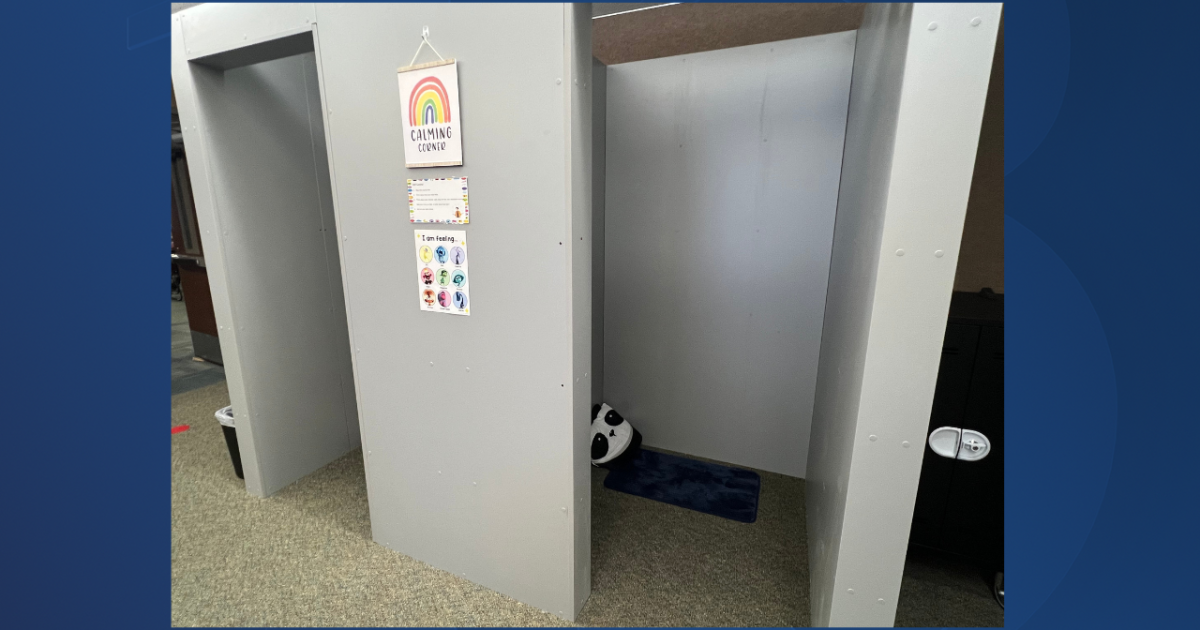
Utah students were isolated from their peers – sometimes in small, padded rooms no bigger than a closet – more than 1,300 times in the 2020-2021 school year, according to the most recent federal data available on the practice.
Seclusionary time-out is meant to be a last resort, used only when students pose an imminent threat to themselves or others. And it’s never supposed to be used to discipline or punish a student.
Fox 13 Investigates
Opponents want a timeout on forcing kids into padded rooms in Utah schools
Schools say the tactic is sometimes necessary to ensure the safety of students and staff. But opponents of the practice want to see it banned in Utah altogether, noting the disproportionate use of seclusion on students with disabilities and arguing that isolation can cause lifelong trauma for those who experience it.
“Putting a child in a room or area against their will and holding the door shut, that’s not something we should be doing in homes,” argues Guy Stephens, founder of the Alliance Against Seclusion and Restraint. “That’s not something we should be doing in schools.”
To better understand how they’re approaching seclusion, FOX 13 News reached out to all 44 of the Utah school districts and charter schools that reported at least one instance of seclusionary time out in the 2020-2021 school year.
We asked them to confirm the accuracy of the data they submitted to the federal government and to provide any policies on seclusion beyond what’s outlined by the Utah State Board of Education.
We also wanted to know whether they put students in seclusion in padded, rectangular rooms – sometimes referred to as “isolation boxes,” “seclusionary time-out rooms,” “seclusion boxes,” “calming rooms” or “quiet rooms” – and, if so, whether they would provide us with a tour of the school to see these spaces.
Some of the districts and charter schools never got back to us. A few responded with additional details about their use of seclusion, while others said their numbers – which were self-reported to the federal government – were inaccurate. Some attributed that to possible data entry errors, while others said they simply couldn’t replicate the information released as part of the federal government’s Civil Rights Data Collection survey.
None of the schools that have seclusionary time-out rooms would agree to allow FOX 13 News into the school to see them. A spokeswoman with the Utah State Board of Education provided images of the rooms and attempted to coordinate a tour of one with the school districts but ultimately said, “I think it is best to just use the photos.”
You can find details below on how many instances of seclusion each of the districts and charter schools reported to the federal government, as well as full statements from those that responded to our requests for information.
ALPINE SCHOOL DISTRICT
Federal data shows there was one instance of seclusion within the Alpine School District in the 2020-2021 school year at Thunder Ridge Elementary School.
Rich Stowell, Alpine School District’s director of communications, confirmed the accuracy of that data in an email and said Thunder Ridge has a seclusion room. He referred FOX 13 News to the Utah State Board of Education to coordinate a tour.
“When a student is placed in seclusion as part of an Emergency Safety Intervention (ESI), that is reported to a committee for review and follow up,” he wrote in an email. “The superintendent of schools receives those reports. Committee reviews help us meet the goals to provide every student the resources they need to be successful learners.”
BEAVER COUNTY SCHOOL DISTRICT
Federal data shows there were 10 instances of seclusion within the Beaver County School District in the 2020-2021 school year, all occurring at Beaver High School.
The district’s superintendent declined to respond to questions via email and required FOX 13 News to submit a public records request for any information related to its seclusionary practices.
In its response to the public records request, the county said it conducted a review “of each year of the CRDC reports for Beaver High School and found no record of a single seclusion event,” neither in the 2020-2021 school year nor in the 2021-2022 and 2022-2023 school years.
“Beaver County School District is committed to student and staff safety,” the district continued.
“The school district does not have a separate policy governing seclusion, we do not have seclusion rooms at any of our schools, and we follow current state law governing safety interventions, defined as seclusionary time out and physical restraint. We do not know where the data came from in the Civil Rights Data Collection survey for Beaver County School District in the years indicated in the GRAMA request.”
BOX ELDER SCHOOL DISTRICT
Federal data shows there were seven instances of seclusion within Box Elder School District schools in the 2020-2021 school year. One occurred at Adele C. Young Intermediate School; one at Mountain View Elementary School; three at North Park Elementary School; and two at Three Mile Creek Elementary School.
The district’s special education director did not respond to repeated requests for comment about seclusionary practices within the district.
CACHE COUNTY SCHOOL DISTRICT
Federal data shows there were 69 instances of seclusion within the Cache County School District in the 2020-2021 school year. Two occurred at Birch Creek Elementary School; one at Canyon Elementary School; one at Cedar Ridge Elementary School; one at Greenville Elementary School; one at Heritage Elementary School; 40 at Lincoln Elementary School; one at Mountainside Elementary School; one at North Park Elementary School; one at South Cache
Middle School; four at Summit Elementary School; 14 at Sunrise Elementary School; one at Wellsville Elementary School; and one at White Pine Elementary School, Jenda Nye, the district’s director of communications, did not respond to specific questions sent by email, but sent the following statement:
“Cache County School District is committed to ensuring a safe and supportive learning environment for our students and staff,” she wrote. “Seclusionary interventions are employed only as a last resort in circumstances when there is an immediate threat to the safety of any student or staff member. These interventions are implemented by highly trained staff members and adhere to the rules, regulations, and guidelines outlined by the Utah State Board of Education.”
CANYONS SCHOOL DISTRICT
Federal data shows there were two instances of seclusion within the Canyons School District in the 2020-2021 school year. Both instances occurred at Bella Vista School.
Jeff Haney, a district spokesman, said in an email that Canyons “cannot replicate the CRDC numbers you have cited for the 2020-2021 school year.”
“Our records indicate we were not asked by the Civil Rights Data Collection to provide such information for the 2020-2021 school year,” he wrote. “Perhaps the gap in a request for information was the result of the COVID-19 pandemic, but CSD IT and Special Education Departments report we did not provide information to CRDC for that year.”
DAGGETT SCHOOL DISTRICT
Federal data shows there were two instances of seclusion within the Daggett School District in the 2020-2021 school year. Both instances occurred at Manila School.
Bruce Northcott, the district’s superintendent, said in an email that he felt these numbers reflected “an error in the data.”
“Daggett School District does not use, and never has used in the 31 years I have been here, the seclusion rule in form or fashion,” he wrote. “We do not have any padded boxes. We have not had and do not have now any students who have a behavior IEP that would warrant a seclusion response.”
DAVIS SCHOOL DISTRICT
Federal data shows there were 264 instances of seclusion within the Davis School District in the 2020-2021 school year. One occurred at Bluff Ridge Elementary School; 12 at Bountiful High School; three at Creekside Elementary School; 67 at Crestview Elementary School; 70 at Eagle Bay Elementary School; 11 at Farmington Junior High School; seven at Farmington School; two at Knowlton Elementary School; three at Snow Horse Elementary School; 14 at Star Transition; three at Sunburst Elementary School; 16 at Sunset Elementary School; 24 at Syracuse School; 21 at Vae View Elementary School; four at West Point Elementary School; and six at Woods Cross School.
Christopher Williams, the district’s director of communications and operations, said in a statement that the numbers provided to the federal government were accurate.
“Davis School District is committed to student and staff safety as one of its top priorities,” he added. “It supports a proactive, teaching-focused approach to behavior. It also implements evidence-based de-escalation practices in cases of behavioral crisis to create safe learning environments.”
“Emergency safety interventions, defined as seclusionary time out and physical restraint, are measures of last resort to prevent imminent serious harm to a student or staff member,” the statement continued. “The district also works directly with parents of students when such instances take place. Addressing student behavior in accordance with state rules and regulations and within district policy allows our educators to not only support students in successfully reaching academic and social/behavior goals, but also in creating safe learning environments.”
He pointed to state code, Davis School District policy and the Utah State Board of Education’s administrative rules on seclusion and Least Restrictive Behavioral Interventions Manual for additional information on seclusionary practices.
DUCHESNE COUNTY SCHOOL DISTRICT
Federal data showed there were 14 instances of seclusion within the Duchesne School District in the 2020-2021 school year, all of them occurring at the Con Amore School.
The district’s superintendent did not respond to repeated requests from FOX 13 News about its seclusionary practices.
EARLY LIGHT ACADEMY AT DAYBREAK
Federal data shows there were nine instances of seclusion at Early Light Academy at Daybreak in the 2020-2021 school year.
The school did not respond to repeated requests for comment from FOX 13 News about its seclusionary practices.
EDITH BOWEN LABORATORY SCHOOLS
Federal data shows there were four instances of seclusion at Edith Bowen Laboratory School in the 2020-2021 school year.
Nathan Justis, the school’s director and principal, said in an email that the school does not have rooms for seclusionary purposes.
“I have looked through our records and don’t see any instances of seclusion for that year,” he added. “I also cannot recall us applying seclusion to any students over the past 6 years since I have been here. I am not certain why we would have four instances of seclusion recorded in the Civil Rights Data Collection survey.”
EMERY COUNTY SCHOOL DISTRICT
Federal data shows Emery County School District had five instances of seclusion in the 2020-2021 school year, all of which occurred at Book Cliff School.
Jim Shank, the district’s superintendent, said in an email that the data was accurate.
“Book Cliff school once had a padded seclusion room during the 20/21 school year as reported,” he added. “That room was removed and is no longer in use. The school does have a room that is not padded where children choose to enter, if they feel the need. No student is compelled to enter the room and it is not the same room used during the 20/21 school year.”
ENDEAVOR HALL
Federal data shows there was one instance of seclusion at Endeavor Hall in the 2020-2021 school year.
Simon-Peter Raubenheimer, Endeavor Hall’s principal, said in an email that the school “does not have an exclusion room, or a padded room of any sort.”
“I am not sure what you are referring to, to be honest,” he wrote. “The only thing I can think of is a time back then when a student was having a severe melt down and we removed the students from the room and the student in crisis was supervised in the general education setting by an administrator and a counselor.”
FRANKLIN DISCOVERY ACADEMY
Federal data shows there were four instances of seclusion at Franklin Discovery Academy in the 2020-2021 school year.
The school did not respond to repeated requests for comment from FOX 13 News about its seclusionary practices.
GARFIELD COUNTY SCHOOL DISTRICT
Federal data shows there were five instances of seclusion within the Garfield County School District in the 2020-2021 school year, all of which occurred at Escalante School.
The school’s superintendent and business administrator did not respond to repeated requests for comment from FOX 13 News about its seclusionary practices.
GEORGE WASHINGTON ACADEMY
Federal data shows there was one instance of seclusion at George Washington Academy in the 2020-2021 school year.
The school did not respond to repeated requests for comment from FOX 13 News about its seclusionary practices.
GOOD FOUNDATIONS ACADEMY
Federal data shows there were six instances of seclusion at Good Foundations Academy in the 2020-2021 school year.
The school did not respond to repeated requests for comment from FOX 13 News about its seclusionary practices.
GRAND COUNTY SCHOOL DISTRICT
Federal data shows there was one instance of seclusion within the Grand County School District in the 2020-2021 school year at Grand County High School.
Michael McFalls, the school’s superintendent, said in an email that the district does “not allow seclusion as it puts teachers and students at a risk.”
He said he could not find a record of the incident reported to the federal government and said his “honest opinion is that this is an error and that this was inaccurate information.” He added that the school does not have a seclusionary time-out room, which “is another reason why I think this information is inaccurate.”
He said the school’s practice is to put students with disabilities in the “least restrictive environment,” a policy that “follows State Law and is in our Policy Manual for Special Education.”
That means that “to the maximum extent appropriate, students with disabilities, including students in public or private institutions or other care facilities (e.g., nursing homes), are educated with similar-aged students who are nondisabled,” he wrote, quoting from the State Board of Education’s Special Education Rules document. “Special classes, separate schooling, or other removal of students with disabilities from the regular educational environment occurs only if the nature or severity of the disability is such that education in regular classes with the use of supplementary aids and services cannot be achieved satisfactorily.”
“In the case of a student who is deaf or hard of hearing, consideration of a special class or school may be the least restrictive environment in that it provides opportunities for direct communication and instruction in the student’s language and communication mode with professional personnel and peers,” he concluded.
GRANITE SCHOOL DISTRICT
Federal data shows there were 34 instances of seclusion within the Granite School District in the 2020-2021 school year. Thirteen were at Academy Park School; three at Arcadia School, one at Harvigsen School; eight at John C. Fremont School; four at Oakwood School; and two at Silver Hills School.
Andrea Stringham, a spokeswoman for the district, said in an email that Granite accurately reports “all instances of seclusion to the Utah State Board of Education.”
She said the district has six schools that are equipped with seclusionary time-out rooms, which are “considered a last resort when a student poses an immediate risk of harm to themselves or others.”
“When this intervention is used, we work closely with families to ensure continual communication and provide ongoing support,” she continued. “The use of this intervention is rare and for extreme cases, and only for a limited time. The percentage of students who need this type of intervention is small and those students have specific individual needs. To maintain student privacy, we are not identifying where these students are served.”
Stringham declined a request from FOX 13 for a tour of those seclusionary time-out rooms but said the district works “closely with families of students who may need this intervention to answer any questions and concerns and they have access to view these spaces.”
She said Granite School District follows rules for seclusion set by the Utah State Board of Education and recommended reaching out to the board for photos of seclusionary time-out rooms.
HIGHMARK CHARTER SCHOOL
Federal data shows there were four instances of seclusion at Highmark Charter School in the 2020-2021 school year.
The school did not respond to repeated requests for comment from FOX 13 News about its seclusionary practices.
IGNITE ENTREPRENEURSHIP ACADEMY
Federal data shows there was one instance of seclusion at Ignite Entrepreneurship Academy in the 2020-2021 school year.
Heidi Long, the school’s executive director, said in an email that the school does not have a seclusionary time-out room but has “special education classrooms for students with specialized services that require time away from their peers.”
“I want to clarify that the reported data you are referring to is in reference to one student who was enrolled at our school, who required a one on one paraprofessional due to needs specified in an Individualized Education Plan,” she wrote. “However, while the student spent the majority of his day with this one-on-one paraeducator, it was within a small classroom setting, in a special education room that was set up for learning and specialized services by our staff or related third-party providers. Otherwise, the student spent a small portion of the day, with the assigned paraeducator, in the classroom with peers, when able.”
She added that the academy “has worked diligently to implement inclusion and belonging in our school since we opened and are proud of the inclusive environment we offer.”
IRON COUNTY SCHOOL DISTRICT
Federal data shows there were two instances of seclusion within the Iron County School District in the 2020-2021 school year, both of which occurred at Southwest Educational Academy.
Shauna Lund, the district’s communications and foundation coordinator, said Iron could not confirm any instances of seclusion that year and said Southwest Educational Academy did not have a room “that would facilitate ‘seclusion.’”
“It’s possible that number may have been entered incorrectly by one of many clerks at that location as all other entries were 0 on the report,” Lund said.
She added that seclusion is used “only in extreme behavior cases and is only used as a last resort to ensure the immediate safety of all students in a classroom.”
“Our district considers safety of all students and employees a high priority,” she continued. “We strive to provide each student with a safe learning environment. ICSD complies with federal and state regulations, including required reports when emergency safety interventions are used.”
JEFFERSON ACADEMY
Federal data shows there were nine instances of seclusion at Jefferson Academy in the 2020-2021 school year.
The school did not respond to repeated requests for comment from FOX 13 News about its seclusionary practices.
Craig Merrill
JORDAN SCHOOL DISTRICT
Federal data shows there were 51 instances of seclusion within the Jordan School District in the 2020-2021 school year, all of them occurring at Kauri Sue Hamilton School.
Sandra Risegraf, the district’s director of communications, did not respond to specific questions about seclusion sent by FOX 13 News and instead released the following statement:
“Student and staff safety is the top priority in Jordan School District,” she wrote. “These spaces are very rarely used, only in extreme cases for brief amounts of time for the safety of students and staff. The spaces are used for emergency safety interventions in accordance with strict State and District requirements and only by highly trained staff.”
JUAB SCHOOL DISTRICT
There were 11 instances of seclusion within the Juab School District in the 2020-2021 school year. Two occurred at Mona Elementary School, five at Nebo View Elementary School and four at Red Cliffs Elementary School.
Kodey Hughes, the district’s superintendent, said in an email that the district does not have designated seclusionary time-out rooms.
“We have safe spaces that allow students to de-escalate in the presence and under the watchful eye of trained staff that can help coach them towards their behavior goals,” he wrote. “In most Seclusionary time outs the use of a closed room is not even necessary. While we have the need for this behavior tool and the policies, trained personnel, and facilities to perform seclusionary timeouts, we strive to utilize this tool only as a last resort.”
He said the district “has and will continue to use seclusionary time outs as deemed appropriate by our school teams and parents” in accordance with district and state standards.
“This tool will only be used in extreme situations when a student presents an immediate danger of severe physical harm to self or others and only when seclusion has been deemed appropriate as part of a larger organized Behavioral Improvement Plan that has been considered by the school team, including the student’s parents,” Hughes continued. “The implementation of this plan will only be administered by trained staff following the established procedures for each individual student.”
He said the district’s “primary goal” is to “de-escalate students’ behavior in the least restrictive environment possible and get them back to learning with their peers as quickly as possible.”
“While students are in a seclusionary timeout, they are never unsupervised by our trained staff, which means that staff members can see and hear the students at all times,” Hughes added.
“Seclusionary time out is terminated the instant the student is no longer an immediate threat to self or others, or if the time out is causing more escalation in the student’s behavior. Juab School district also never keeps a student in a seclusionary time out for more minutes than the student’s age. This is well under the maximum duration for a single instance of 30 minutes.”
LOGAN CITY SCHOOL DISTRICT
Federal data shows there were 12 instances of seclusion within the Logan City School District in the 2020-2021 school year. Two occurred at Bridger Elementary School; four at Hillcrest School; three at Logan School; two at Wilson Elementary School; and one at Woodruff Elementary School.
Shana Longhurst, the district’s director of communications and public relations, did not respond to specific questions from FOX 13 News but instead provided the following statement:
“Student and staff safety is of utmost importance in Logan City School District,” she wrote.
“Seclusion is only used when student and staff safety are at risk and for the shortest period of time possible. Seclusion is used as an emergency safety intervention in accordance with District, State and Federal requirements.”
MERIT COLLEGE PREPARATORY ACADEMY
Federal data shows there were two instances of seclusion at Merit College Preparatory Academy in the 2020-2021 school year.
Jessica Sitton, the academy’s assistant director, said in an email that the information provided to the federal government was “incorrect.”
“I was present at Merit Academy during this time, and this practice was not used in our school,” she wrote. “The administration responsible for reporting this data was misinformed about the definition of seclusionary time out, which led to the inaccurate submission. To further clarify, we do not have any designated spaces in our school that would fit the description of a seclusionary time out room, and there is no record of such a space ever existing at Merit Academy since its establishment in 2008.”
“At Merit Academy, we strictly adhere to the state policies surrounding exclusionary time out, as outlined in our Special Education Policy and Procedure Manual, which is available for public viewing on our website,” Sitton concluded. “We remain committed to following all state guidelines and ensuring that our practices align with the best interests and safety of our students.”
MURRAY CITY SCHOOL DISTRICT
Federal data shows there were 11 instances of seclusion within the Murray School District in the 2020-2021 school year. One occurred at Hillcrest Junior High; three at Horizon Elementary School; one at Longview Elementary School; one at McMillan Elementary School; and five at Parkside Elementary School.
Doug Perry, the district’s communications officer, did not respond to specific questions from FOX 13 News about seclusionary time-out practices and instead provided the following statement:
“Murray values student and employee safety as one of our highest priorities and considerations,” he said in an email. “Seclusion is highly unusual, and only used to protect students and staff. Further, we train personnel on this intervention to ensure federal, state and district laws and policies are followed.”
In response to a follow-up request for more information, Perry said, “we have nothing more to add to the data you shared. We will allow current local, state, and federal policies and laws [to] speak to the specifics of how we and other districts respond to these very individualized and safety-related situations.”
NEBO SCHOOL DISTRICT
Federal data shows there were 59 instances of seclusion within the Nebo School District in the 2020-2021 school year. Three occurred at Barnett School; 17 at Bridges Nebo Transition Center; three at East Meadows School; four at Foothills School; one at Hobble Creek School; three at Larsen School; one at Mapleton Junior High; one at Mapleton School; two at Park School; five at Salem Junior High School; four at Sierra Bonita Elementary School; two at Spring Lake School; four at Springville High School; and nine at Valley View Middle School.
Seth Sorensen, the district’s communications and community relations administrator, did not respond to specific questions from FOX 13 News and instead provided the following statement:
“Nebo School District is committed to providing a safe and supportive learning environment for all students and employees,” he wrote in an email. “Seclusionary interventions are employed only as a last resort and only when there is an immediate threat to individuals’ safety. These interventions are implemented by trained staff members and adhere strictly to all state
guidelines.”
OGDEN CITY SCHOOL DISTRICT
Federal data shows there were 36 instances of seclusion within the Ogden City School District in the 2020-2021 school year. Two occurred at Bonneville School; 14 at Heritage School; two at James Madison School; 16 at New Bridge School; and two at Shadow Valley School.
Jer Bates, the district’s director of communications, said he could not confirm that the data “as reported from the state to the federal government is not accurate” and added that the district currently has three spaces designed specifically for seclusionary time out.
“These spaces are used within compliance of state and federal guidelines for a very limited number of students,” he wrote in an email. “Because the percentage of students who may need this type of specialized intervention for the safety of themselves or others is so small, we feel it is in the best interest of these students to protect their privacy regarding this matter by limiting public exposure.”
“When a student does need this type of intervention, we work closely with the family to ensure continual communication and ongoing support,” he added. “Any parent who has an interest in this type of intervention as a potential need for their child is always welcome to collaborate with us in person.”
Bates also noted that seclusionary time out is used by “trained staff” in accordance with “federal, state and district requirements.” He said it is done “only in extreme cases” for “the safety of students and staff.”
PARK CITY SCHOOL DISTRICT
Federal data shows there were two instances of seclusion within the Park City School District in the 2020-2021 school year, both occurring at Ecker Hill Middle School.
Heidi Matthews, with the district’s Family and Community Engagement Team, did not respond to specific questions from FOX 13 about seclusionary time-out practices within the district and instead provided the following statement:
“The mission and vision of Park City School District is to ensure that each student is safe, supported, engaged, challenged, and healthy,” she wrote. “In the rare instances when emergency safety interventions are needed, we adhere to the rules, regulations, and guidelines outlined by the Utah State Board of Education.”
PIUTE COUNTY SCHOOL DISTRICT
Federal data shows there was one instance of seclusion within the Piute School District in the 2020-2021 school year at Piute High School.
Koby Willis, the district’s superintendent, said Piute High School does not have one of the seclusionary time-out rooms, “nor do our other schools.”
He said there was “possibly some inaccuracy in our reporting,” because he didn’t recall an incident of seclusion at Piute High School but said there was one at Circleville Elementary School.
Around the time this data was captured, “perhaps the year before, we had an elementary student with a unique condition that became a danger to self and others on a few occasions,” he wrote. “The procedure then was to immediately contact the parents to have them pick up the student. The parents lived more than 30 minutes from the school and so a calm down room was used until they arrived. The room was set up, used, and dismantled all in less than one year.
The following school year the student was at Piute High School, but I do not recall a seclusion incident that occurred there. Different strategies were used at the high school and more staff received training on physical restraint.”
Willis said the seclusionary time-out room at Circleville Elementary School was set up temporarily based on requests from the student’s parents and specialists but was “immediately repurposed when there was no longer a need.”
“We had never had the need before as far as I am aware,” he added, “and we haven’t had a need since.”
PROVO CITY SCHOOL DISTRICT
Federal data shows there were 136 instances of seclusion within the Provo School District in the 2020-2021 school year, all at Amelia Earhart Elementary School.
Caleb Price, the district’s director of communications, did not respond to specific questions about seclusionary practices within the district and instead provided the following statement:
“Provo City School District is committed to ensuring all students and employees are able to attend school in a safe, supportive learning environment,” he wrote. “These interventions are used only in extreme cases and are implemented by trained staff members in strict accordance with all state and district requirements.”
QUEST ACADEMY
Federal data shows there was one instance of seclusion at Quest Academy in the 2020-2021 school year.
The school did not respond to repeated requests for comment from FOX 13 News about its seclusionary practices.
RICH SCHOOL DISTRICT
Federal data shows there were two instances of seclusion within the Rich School District in the 2020-2021 school year at Rich Middle School.
Dale Lamborn, the district’s superintendent, did not respond to specific questions from FOX 13 News, writing simply in an email that “we do not use seclusionary practices.”
SEVIER SCHOOL DISTRICT
Federal data shows there were seven instances of seclusion within the Sevier School District in the 2020-2021 school year at Richfield High School.
The school’s superintendent did not respond to repeated requests for comment from FOX 13 News about its seclusionary practices.
SOUTH SANPETE SCHOOL DISTRICT
Federal data shows there were four instances of seclusion within the South Sanpete School District in the 2020-2021 school year at Gunnison Valley School.
Ralph Squire, the school’s superintendent, did not respond to specific questions about seclusionary time-out practices within the district and instead provided the following statement:
“South Sanpete School District is committed to student and staff safety as one of our top priorities,” he wrote. “South Sanpete School District supports a proactive, teaching-focused approach to behavior and implements evidence-based de-escalation practices in cases of behavioral crisis to create safe learning environments.”
“Emergency safety interventions, defined as seclusionary time out and physical restraint, are measures of last resort to prevent imminent serious harm to a student or staff member,” the statement continued. “Addressing student behavior in accordance with State rules and regulations and within District policy allows us to support students in successfully reaching
academic and social/behavior goals and also create safe learning environments.”
He also pointed to resources on seclusion including the Utah State Board of Education’s administrative rules and its Least Restrictive Behavioral Interventions Manual, as well as state code.
Utah State Board of Education
SOUTH SUMMIT SCHOOL DISTRICT
Federal data shows there was one instance of seclusion within the South Summit School District in the 2020-2021 school year at South Summit Elementary School.
Greg Maughan, the district’s superintendent, said in an email that South Summit was not able to confirm the accuracy of that data and added that the school does not have “separate rooms designated for seclusionary time out.”
“In rare and extreme cases where seclusion is deemed necessary, it is done strictly in accordance with the Utah State Board of Education (USBE) Administrative Rules,” he wrote.
“Seclusion is only used as a last resort when all other interventions have been exhausted and when it is necessary for the safety of both students and staff. These instances are brief and are closely supervised by highly trained staff.”
“Seclusionary time out is considered an Emergency Safety Intervention,” he continued. “It would only be used in extreme cases where there is an immediate and imminent threat to the student’s safety or those around them. We strongly believe in using every available tool to support student success proactively, and seclusion is only employed when no other reasonable alternatives are available to de-escalate a situation. If we were to use it, we would follow all outlined protocols and stipulations in the State Code and USBE Administrative Rules, including reporting to parents and the superintendent as required.”
SPECTRUM ACADEMY
There were 253 instances of seclusion within Spectrum Academy in the 2020-2021 school year.
Of those, 178 were at the academy’s North Salt Lake school and 75 were at its Pleasant Grove school.
Liz Banner, the school’s executive director of academics, noted in an email that Spectrum is the only charter of its size “that specializes in serving students on the autism spectrum, so our high concentration of neurodiverse students and their unique needs are quite different from any other school in the state.”
For that reason, she said, “it is impossible to compare the behavioral challenges addressed at this school to those at any other institution.”
“To illustrate this point, it’s akin to criticizing an emergency department in a hospital for tending to more patients with acute injuries and needs than other hospital departments,” Banner continued. “The educators and student support staff at Spectrum Academy bear demanding responsibilities in their work with these students and have chosen this path because of their deep affection for the students and their unwavering commitment to their well-being.”
Banner said the school has more licensed behavior analysts than any district in the state and also employs a high number of occupational therapists, speech-language pathologists and social workers “who provide individual support to our students and classrooms.” All staff are also trained on “trauma-informed and evidence-based de-escalation strategies” to address the school’s higher de-escalation needs.
“Spectrum Academy is dedicated to providing a safe, secure, and respectful learning environment for both students and staff,” she continued. “We strongly believe that all students should be able to learn in a setting that allows them to reach their full potential and supports their individual needs. To that end, we aim to provide amazing resources and tools to our specialized student body and school community.”
Banner added that Spectrum Academy “does not, under any circumstances, employ unauthorized methods of seclusion.”
Asked whether the academy would provide FOX 13 News with a tour of its seclusionary timeout rooms, Banner said its facilities “are not open to public tours in order to protect the privacy of our students.”
She said parents “have access to all information regarding our practices” and that tours are available “for prospective families to ensure they have a clear understanding of our environment, safety measures, and student support strategies.”
SYRACUSE ARTS ACADEMY
Federal data shows there were six instances of seclusion within Syracuse Arts Academy in the 2020-2021 school year, all of them at the academy’s North Elementary School.
The school’s director did not respond to repeated requests for comment from FOX 13 News about its seclusionary practices.
TOOELE COUNTY SCHOOL DISTRICT
Federal data shows there were 11 instances of seclusion within the Tooele County School District in the 2020-2021 school year. One occurred at Clarke N. Johnsen Junior High and 10 at Overlake School.
Brett Valdez, the district’s communications director, confirmed the accuracy of that data and said the district’s schools do not have seclusionary time-out rooms.
“Providing a safe and supportive learning environment is a top priority for Tooele County School District,” he wrote in an email. “Emergency Safety Interventions are only used as a last resort when immediate action is necessary to ensure the safety of all individuals involved. TCSD complies with federal and state regulations regarding the use of Emergency Safety Interventions.”
VALLEY ACADEMY
Federal data shows there were four instances of seclusion at Valley Academy in the 2020-2021 school year.
Tracy Stevens, the charter school’s executive director, said the data was correct based on the federal government’s definition of seclusion but noted that the academy does not have any dedicated time-out rooms.
Seclusion was used on “a specific student that ran away from [special education] teachers four times that year,” she wrote in an email.
“Two instances the student was running out the front door of the school and was told they cannot leave and was kept inside the front lobby until they calmed down; this was for security and safety reasons,” she continued. “The other two incidents were inside the classroom when the child became violent and the other students were sent outside to the playground while the child was kept inside the classroom until the child calmed down. No restraints or physical touch was ever used. Employees blocked the door by standing in front of it to protect the child inside and the other children outside on the playground until de-escalation occurred.”
WASATCH SCHOOL DISTRICT
Federal data shows there were 216 instances of seclusion in the Wasatch School District in the 2020-2021 school year. Of those, 99 were at J.R. Smith School and 117 occurred at Rocky Mountain Middle School.
Kirsta Albert, the district’s director of communications, did not respond to specific questions from FOX 13 News about seclusionary practices within the district and instead provided the following statement:
“Wasatch County School District (WCSD) is committed to ensuring the safety and well-being of both students and staff by fostering a secure and supportive learning environment,” she wrote.
“Seclusionary interventions, used only in rare and extreme situations, are implemented solely by trained personnel when there is an immediate threat of harm to either students or staff. WCSD strictly adheres to both Federal and state regulations in the use of such interventions, ensuring that these measures are used as a last resort.”
WASHINGTON SCHOOL DISTRICT
Federal data shows there were 14 instances of seclusion in the Washington School District in the 2020-2021 school year. Nine occurred at Hurricane Intermediate, four at Sunrise Ridge Intermediate School and one at Three Falls School.
Steven Dunham, the district’s director of communications and foundation, said the district believed the data was accurate and noted that “we are in full compliance with state law.”
He added that Washington School District does not have any designated seclusionary time-out rooms. Those were removed “from all schools approximately 10 years ago,” he said.
WEBER SCHOOL DISTRICT
Federal data shows there were 24 instances of seclusion within Weber School District in the 2020-2021 school year. Eight occurred at Canyon View School; one at Country View School; one at H. Guy Child School; one at Kanesville School; one at Midland School; one at Municipal School; two at Silver Ridge Elementary; one at South Ogden Junior High; one at Two Rivers High; one at Uintah School; three at Wahlquist Junior High; one at Weber High; one at West Haven; and one at West Weber.
Lane Findlay, the district’s public information and safety officer, said in an email that the data submitted to the state and federal government “should accurately reflect the number of cases where seclusionary interventions were implemented in our district.”
“These interventions are only implemented under extreme circumstances where a student is an immediate danger to self or others,” he added. “An emergency safety intervention is not used for disciplinary purposes. We strictly follow state guidelines and provide staff training for implementing these interventions. In relation to the thousands of interactions that take place every day in the school environment, the use of these interventions are extremely rare.”
Findlay noted that some schools in the district “do have designated spaces where students in crisis can be safely monitored” but that these are used only “in the most serious of cases, and the implementation of any emergency safety intervention is conducted in accordance with state guidelines.”
In response to a request for a tour of these rooms, he directed FOX 13 News to state officials, who he thought may be able to coordinate a tour of such rooms “since they set the guidelines.”


The Utah Jazz won their final summer league game against the Portland Trail Blazers 83-79. It was a fun game that came down to the wire, with a few Jazz players showing promise that could help the team.
The player who surprisingly didn’t help as much as you’d hope was Blake Hinson, who shot just 1/9 from three. Hinson was a sharpshooter for the Jazz last season, and it’s too bad that he couldn’t show that shooting stroke in the summer league. It’s likely not a big deal, but it would have been nice to see that shooting continue in the summer league. It does make you wonder why all the players who played for Utah last season, or will be getting regular minutes next year, didn’t shoot well in Las Vegas. Is that a trend? Or is it just a coincidence? It makes you wonder if the Jazz have been running hard practices, or if the players are tired from enjoying their time in Las Vegas? There’s no way to really know, but it’s interesting.
Utah’s strongest performer, in terms of plus-minus, was Bez Mbeng. He was a team-leading +14 and, even though he didn’t shoot the ball well either, his defense and intensity really shows on the floor. In this one, Mbeng had 4 steals and handled the ball for a lot of the game. He was also one of the top players in minutes with 20 in this one. I personally really like Mbeng and I’m rooting for him to make the team. I do think he can be a defensive-focused do-it-all player who could really contribute if he keeps improving.
Justin Harmon scored the ball well, leading the team in scoring with a team-leading 21 points. He had 6 free throws in this one and was a positive contributor overall. Harmon could be a nice addition to the training camp roster and, if he can show out, maybe he can earn himself a roster spot. He’s worth watching going forward at the very least.
And with that, the summer league is now over, and we now enter a long summer that will lead into one of the most exciting eras of Jazz basketball I can remember. It will be led by the best prospect in Jazz history to actually suit up for the Utah Jazz, and I can’t wait to see him develop into a superstar wearing the purple and blue.

Jon Anderson will be charged with moving the Orem school forward following the death of conservative commentator Charlie Kirk on campus last year.
(Bethany Baker | The Salt Lake Tribune) Incoming UVU President Jon Anderson poses for a photo with his family after an event announcing his selection at Utah Valley University in Orem on Friday, July 17, 2026.

BEAVER COUNTY, Utah — A massive community effort is underway as volunteers and Beaver County crews distribute thousands of sandbags to protect homes from the potential path of floodwaters.
After the Cottonwood Fires, residents have been waiting for weeks for relief to come in the form of rain, though officials now warn it may come all at once with an increased risk of flooding and debris flow.
Emergency Service Director Les Whitney believes that the fire has left plenty of debris to bring trouble for residents.
“We got a lot of water. We’re bringing debris with it, so tree branches, tree limbs, logs, lots of different size firewood, and that’s all in the creeks. We’re worried about that plugging up our bridges and stuff, so we have heavy equipment and excavators located in strategic places so that we can keep those bridges open,” said Whitney.
An estimated 140 homes and condominiums were spared from the flames, but remain in the paths of floodwaters.
Residents can also pick up sandbags at the Beaver County Sheriff’s Office or at the Beaver County Rodeo Fairgrounds.
-

 Kentucky3 minutes ago
Two-vehicle crash injures one in Pike County, Kentucky, troopers say
-
 Louisiana9 minutes ago
Lafayette Renaissance edge rusher Ansinneo Charles commits to Louisiana
-

 Maine15 minutes ago
Maine Trust announces 2 hires in Augusta, Waterville
-

 Maryland21 minutes ago
What Doesn’t Change in Chevy Chase, Maryland
-

 Michigan27 minutes ago
Huntington Bank to close 13 Michigan branches by the end of August — see full list here
-

 Massachusetts33 minutes ago
Massachusetts RMV under fire after illegal immigrant trucker kills state trooper
-

 Minnesota39 minutes ago
Thousands expected to attend Minnesota Yacht Club festival in St. Paul
-

 Mississippi45 minutes ago
Mississippi Lottery Mississippi Match 5, Cash 3 results for July 17, 2026

