Utah
Federal internet assistance plan winding down in Utah


For a number of years now, Congress has appropriated billions of dollars to the Affordable Connectivity Program to help internet access become more affordable for many.
The funding for the initiative is set to run out by this April, which means many people around the country and in Utah are preparing for a transition. In just two days the FCC will stop accepting new applications. Last month, a group of bipartisan congressional leaders introduced legislation to appropriate $7 billion to the program, ensuring its continuation, but no action has been taken.
Rob Roake, director of operations and programming at The Center for Economic Opportunity and Belonging, said he has found the program has been essential for Utahns.
“In Utah it is even more important than probably in some other states just because of geographically, the way that we are set up, where we have one centralized urban area and then most of our state is rural,” Roake explained. “The folks out there have a risk of less connectivity.”
Roake pointed out many Utahns would be unable to access what he calls “vital resources” and would be less informed. While Roake hopes the program continues, he encouraged Utahns to search for alternatives, such as asking to see if internet service providers have their own low-income service program. As of this week, more than 73,000 Utahns are enrolled in the Affordable Connectivity Program.
Roake stressed while he and others around the state are hopeful the program will continue, it is an opportunity for the state to think about new ways or alternatives to ensure Utahns have access to high-speed internet and do not feel reliant on the federal government for assistance.
He added while he does not know what it would look like, at least an extension of the program from the federal government would cause the least amount of disruption.
“Individual states are looking for different ways to subsidize it, that they don’t rely on federal funds,” Roake noted. “Maybe it is a statewide program or something they can offer discounts or incentives to ISPs (internet service providers) to have a ‘Utah-based ACP,’ if you will.”
Roake argued now is the time for Utah stakeholders interested in digital equity to start building up better communication networks at the statewide level, whether it’s to better coordinate future federal efforts or not. He considers having internet access a fundamental right and predicts it is only going to become more important moving forward.



After helping expose Samuel Bateman’s abuse, Christine Marie reflects on the risks, the victims and what she hopes viewers learn from “Trust Me: The False Prophet.”
(Trent Nelson | The Salt Lake Tribune) Tolga Katas photographs Christine Marie with several fundamentalist women in Colorado City, Ariz. on May 3, 2025. A photograph from the session is the poster image for the upcoming documentary “Trust Me.”

After failing to make the ballot, the loss of SD12 adds to the margin of defeat for a push to overturn Utah’s gerrymandering ban.
(Trent Nelson | The Salt Lake Tribune) A sign at the site of signature gathering to repeal Prop 4 at Linda Vista Park in Syracuse on Thursday, Feb. 5, 2026.

SALT LAKE CITY — An Oklahoma-based kratom manufacturer is suing over Utah’s new law limiting sales of the compound, saying it could cost the company more than $10 million when it takes effect next month.
Botanic Tonics LLC manufacturers, distributes and sells a dietary supplement made of kratom and noble kava root known as “feel free,” according to a lawsuit filed in federal court on March 31. The company said SB45, which lawmakers passed in the recent legislative session, would prohibit it and three other companies from selling products at more than 300 retail locations statewide.
“Immediate projected losses to plaintiffs due to the statute’s ban on combination kratom dietary supplements exceed $10,704,428,” the complaints states. “To comply with the statute, plaintiffs have notified their direct to store distributors that all kratom leaf products combined with any other ingredient must be removed from store shelves and not made available for sale as of May 6, 2026, unless action is taken by this court to enjoin implementation of the statute.”
It went on to say that the law “denies access to such products for which there is clinical trial data establishing that they do not present a significant or unreasonable risk of illness or injury.”
The lawsuit was filed against Utah Attorney General Derek Brown and several state officials: Kelly Pherson, commissioner of the Utah Department of Agriculture and Food; Amber Brown, deputy commissioner of the Utah Department of Agriculture and Food; and Bradon Forsyth, director of the Utah Specialized Product Division.
Botanic Tonics filed the suit in conjunction with the Kratom Coalition Inc., asking a judge to declare Utah’s limits on kratom sales unconstitutional and block the state from enforcing it through a preliminary injunction. The company sued Utah’s Department of Agriculture and Food in a separate state court last year, but that complaint was eventually dismissed.
Kratom comes from a tropical tree and is used by some people for pain management. Kratom products have been sold in retail shops and include powders, gummies, teas and energy drinks.
The substance has been called “gas station heroin” because it can act on the same receptors in the brain that opioids do. Synthetic products derived from kratom can lead to overdose.
SB45 takes effect May 6 and will only allow for the sale of pure leaf kratom in Utah, and only in smoke shops and similar stores. It also gives manufacturers one year to stop producing anything other than pure kratom leaf in the state.
The bill’s sponsor, Sen. Mike McKell, R-Spanish Fork, said the law was meant to protect Utahns from the product. He said based on an informal poll he took of gas station clerks, “feel free” is one of the most popular kratom products sold in Utah, and called the product “extremely potent, extremely addictive.”
“I’m not worried about it being struck down,” he said of the law. “And the lawsuit doesn’t surprise me. This company has been very aggressive. They’ve sued the state in the past. Ultimately that case was dismissed, but I am confident in our case.”
The Key Takeaways for this article were generated with the assistance of large language models and reviewed by our editorial team. The article, itself, is solely human-written.

A Utah woman helped bring down a polygamous sect leader. Now her story is on Netflix.

Can filmmakers grow VT’s movie industry?; ‘Leather Clad’ ready to try

Randolph-Macon College offers free stargazing through one of Virginia’s largest telescopes

Meet Malik Hardy ’26

Wisconsin football offensive line rebuild starts with continuity, competition

Florida High School Football Rankings: Top 25 teams – Oct. 21

How old is Bo Nix? What to know about Oregon quarterback ahead of 2024 NFL Draft

Cleary's 21 help Le Moyne down Central Connecticut State 69-64 in OT

99th annual Pony Swim held in Virginia

Indiana Members Credit Union announced as new anchor tenant at Bottleworks District

Video: The Fragile Cease-Fire in Iran

Spanberger ripped after taking credit for billions in investments secured under GOP predecessor: ‘Pathetic’

Newsletter: NATO holds amid fragile Iran ceasefire
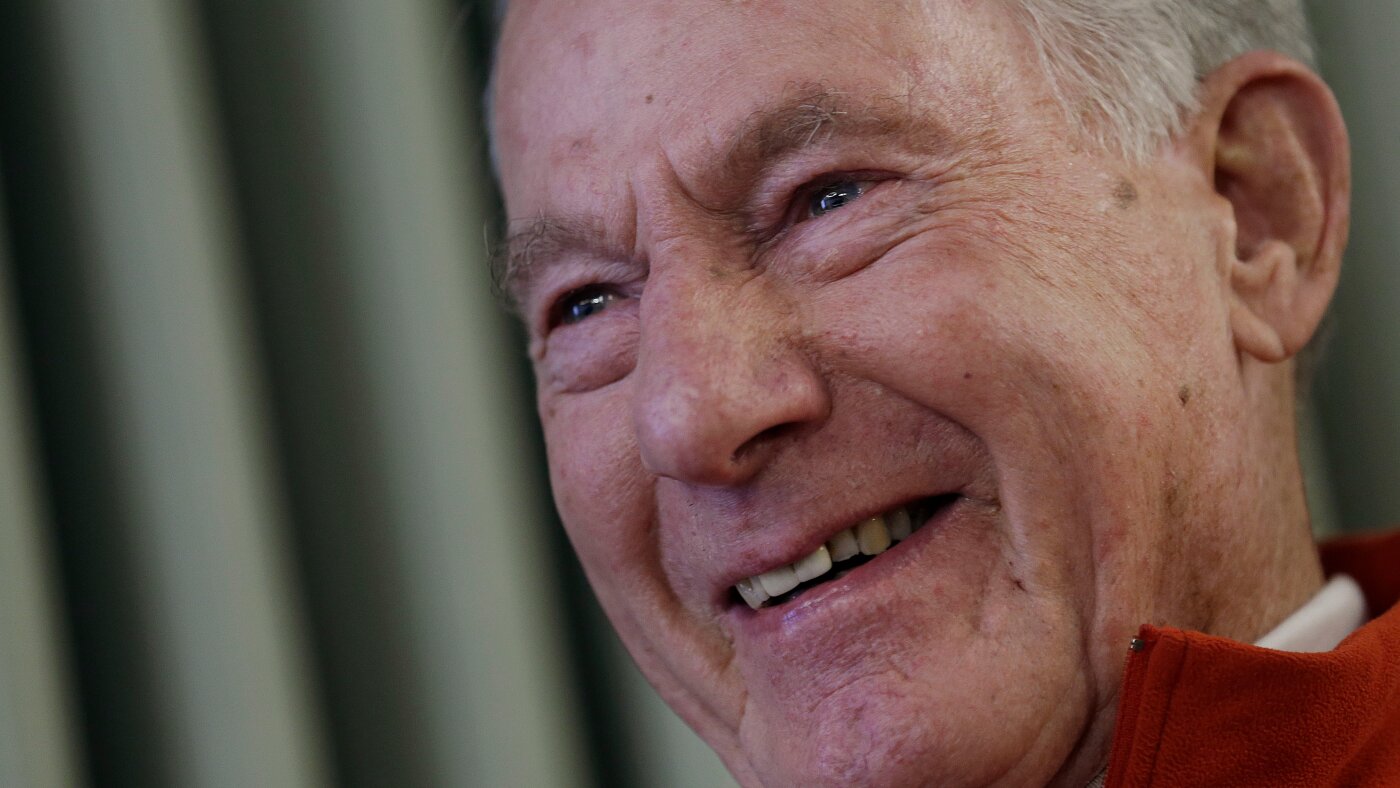
Jim Whittaker, the first American to summit Mount Everest, dies at 97

Video: Military Families Bear the Burden of War, Again
-

 Atlanta, GA4 days ago
1 teenage girl killed, another injured in shooting at Piedmont Park, police say
-

 Culture1 week ago
Do You Know Where These Famous Authors Are Buried?
-

 Movie Reviews1 week ago
Vaazha 2 first half review: Hashir anchors a lively, chaos-filled teen tale
-

 Georgia2 days ago
Georgia House Special Runoff Election 2026 Live Results
-

 Education1 week ago
Video: We Put Dyson’s $600 Vacuum to the Test
-

 Pennsylvania2 days ago
Parents charged after toddler injured by wolf at Pennsylvania zoo
-
 Milwaukee, WI3 days ago
Potawatomi Casino Hotel evacuated after fire breaks out in rooftop HVAC system
-
 Entertainment1 week ago
Inside Ye’s first comeback show at SoFi Stadium