Utah
Draft Utah ethnic studies recommendations lack specifics, conform to anti-DEI law

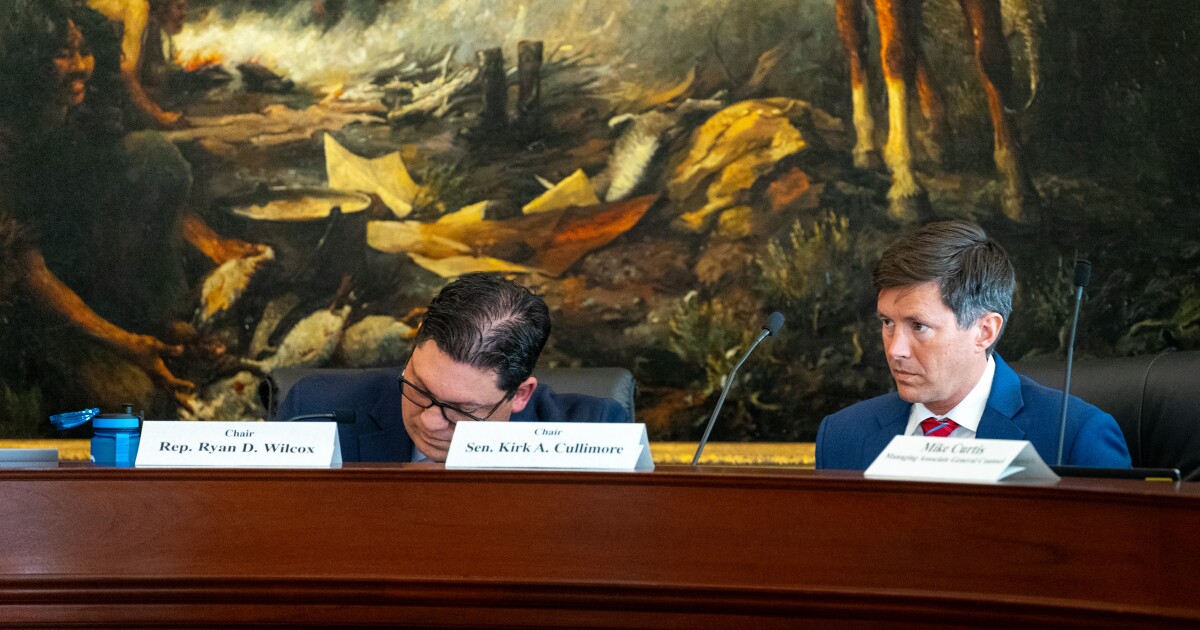
After almost two years of meetings and listening sessions, the Utah Legislature’s Ethnic Studies Commission drafted its first list of potential recommendations. The draft recommendations, however, don’t offer a lot of specifics.
Ethnic studies were required to be incorporated into Utah’s K-12 core standards by a 2022 law. However, the new proposed recommendations focus mainly on staying in line with HB 261, the state’s recent anti-diversity, equity and inclusion law. It prohibits DEI hiring practices and offices aligned with identity at state-run universities, public schools and government entities.
Beyond those impacts, it has also had a cooling effect on discussions of race and identity.
“The Utah State Board of Education should carefully consider the use of ethnic studies in core standards and curriculum to ensure a narrowly tailored incorporation of age-appropriate opportunities that naturally arise through education without pretextual effort in courses, programs, or activities where ethnic studies is not a primary focus,” reads the first suggestion to the state board, which will ultimately be in charge of incorporating ethnic studies in public school standards.
Some commission members said this means including ethnic studies in topics like history but not requiring it in subjects like math or science.
The second recommendation directs the public education system to “incorporate curriculum of people and cultures that reflect the state’s various demographics without commentary that seeks to violate the neutrality standard established in H.B. 261.”
The drafted guidance was presented at the group’s first public meeting of 2024 on Aug. 29. The commission will continue workshopping the recommendations and vote on them in the future, potentially at an October meeting.
Throughout the commission’s duration it has repeatedly struggled to cohesively define ethnic studies or a vision for how it should be incorporated in schools, and the anti-DEI law has complicated that further.
At the meeting, co-chair Republican Sen. Kirk Cullimore said the law put “parameters” on their work and “colors what those recommendations can be at this point.”
Rep. Ryan Wilcox, the other Republican co-chair, told KUER after the meeting that he doesn’t know if the law changed “what any of the recommendations would have ultimately been, because I think the commission was already headed that direction.”
Democratic commission members Reps. Angela Romero and Sandra Hollins both said they were confused by parts of the drafted list and what “neutrality” means in this context.
Wilcox said the short version is the curriculum shouldn’t say one race or ethnicity is better than another.
For Hollins, that further confused the issue, “because you’re saying that we’re not to promote one race over another. But if you have teachers who are not teaching any diversity because they are scared to, they are promoting one race over another because one race is being taught.”
Hollins said teachers are telling her “they’re scared to talk about anything, for lack of a better word, that’s not white.”
The draft was not uploaded where the public could see it before the meeting started, and while the co-chairs said the list was based on feedback from commission members, others said they hadn’t seen its full contents before the Aug. 29 meeting started.
The committee is also tasked with giving guidance to the Office of the Governor and the state Legislature, one of which suggests “The Legislature should continue to examine the neutrality standard in HB 261 to strengthen positive outcomes and address any unintended consequences.”
In 2022, Gov. Spencer Cox held a ceremonial signing to celebrate the passage of the law requiring ethnic studies to be taught in K-12 schools. The law created the committee to “consider and review” the contributions of diverse Utahns and figure out how to best incorporate ethnic studies into core standards.
School districts and charter schools had until Aug. 1, 2024, to select a curriculum for teaching ethnic studies. However, it became clear that the deadline would not be met since the state’s committee hadn’t even produced guidance to the board.
In a January email obtained by KUER through a public records request, Republican Rep. Candice Pierucci asked state school board member Jennie Earl for guidance on a new deadline.
Earl responded, “I would strike the time completely. The problem is [charter schools and school districts] are continually updating curriculum, but they may only purchase new curriculum for a specific subject every 5-7 years. We update standards every 7-10 years but never all at once. We just finished our English standards and are now starting math. Any date is unsustainable.”
In a 2024 education omnibus bill, lawmakers moved the curriculum selection deadline for districts and charters to Dec. 31, 2025.
Wilcox said they’ll adjust the timeline again in the future if necessary.


Jon Anderson will be charged with moving the Orem school forward following the death of conservative commentator Charlie Kirk on campus last year.
(Bethany Baker | The Salt Lake Tribune) Incoming UVU President Jon Anderson poses for a photo with his family after an event announcing his selection at Utah Valley University in Orem on Friday, July 17, 2026.

BEAVER COUNTY, Utah — A massive community effort is underway as volunteers and Beaver County crews distribute thousands of sandbags to protect homes from the potential path of floodwaters.
After the Cottonwood Fires, residents have been waiting for weeks for relief to come in the form of rain, though officials now warn it may come all at once with an increased risk of flooding and debris flow.
Emergency Service Director Les Whitney believes that the fire has left plenty of debris to bring trouble for residents.
“We got a lot of water. We’re bringing debris with it, so tree branches, tree limbs, logs, lots of different size firewood, and that’s all in the creeks. We’re worried about that plugging up our bridges and stuff, so we have heavy equipment and excavators located in strategic places so that we can keep those bridges open,” said Whitney.
An estimated 140 homes and condominiums were spared from the flames, but remain in the paths of floodwaters.
Residents can also pick up sandbags at the Beaver County Sheriff’s Office or at the Beaver County Rodeo Fairgrounds.

EAGLE MOUNTAIN — An Eagle Mountain man currently on pretrial release in 4th District Court who is accused of abusing his dog has been arrested again for allegedly punching the same animal.
Keith Reaves Davis, 43, was booked into the Utah County Jail on Wednesday for investigation of aggravated cruelty to an animal.
Utah County sheriff’s deputies were called Wednesday afternoon to a grocery store on a report that a man was beating his dog after it had gotten off its leash and was stopped by a bystander, according to a police booking affidavit.
“I reviewed security camera footage from the grocery store, and an individual matching the description of the suspect was seen holding the dog in the air by one paw and repeatedly striking the dog on the right hind leg area. I observed the male strike the dog several times before dropping the dog from approximately 1-2 feet. The strikes appeared to be as hard as the male could hit,” the arresting deputy wrote in the affidavit. “The dog did not cry out or whimper as if the dog was accustomed to the abuse.”
When questioned, Davis “admitted to striking the dog because it was not behaving,” the affidavit states.
An animal control officer who responded to the scene to take custody of the dog noted it was the same dog he had taken from Davis exactly three months earlier during another animal abuse investigation.
In that case, Davis was charged in 4th District Court with aggravated cruelty to an animal, a class A misdemeanor; and public intoxication, a class C misdemeanor, after deputies received a tip from a neighbor that a dog was being abused at Davis’ home, according to charging documents. When questioned, Davis “acknowledged hitting his dog as punishment,” the charges state.
Deputies also reviewed videos that the neighbor had filmed. The neighbor told investigators “there was blood from the dog on the ground of the garage and (the neighbor) can hear the dog screaming as if it’s being hurt. Deputies got the videos from the (neighbor) and you can hear very loudly the dog screaming and crying with a lot of loud banging noises. In one of the videos, you can hear the dog sounding like it is being choked by a collar and is grasping for air,” a police booking affidavit states.
Davis’ next court hearing in the April case is scheduled for July 28.
In their latest booking report, sheriff’s deputies note that they “believe further harm will be inflicted on this dog if it is released back to the male a second time,” and have recommended the dog not be returned to Davis.
The Key Takeaways for this article were generated with the assistance of large language models and reviewed by our editorial team. The article, itself, is solely human-written.
-

 Fitness1 minute ago
Widening Health Divide Among U.S. Cities Revealed in 2026 ACSM American Fitness Index® | Newswise
-

 Movie Reviews13 minutes ago
“The Odyssey” is Christopher Nolan’s Most Singular Film Yet (Movie Review)
-
World25 minutes ago
Iran War Updates: Bridges and Water Plants Hit as Strikes Stretch to 7th Straight Day
-
 Lifestyle1 hour ago
Spain could make World Cup history: The first to win men’s and women’s trophies back-to-back
-

 Technology1 hour ago
Taylor Farms pulls iceberg lettuce from the US market after cyclosporiasis outbreak
-

 World2 hours ago
Who is Andy Burnham? The Trump critic set to become the UK’s next prime minister
-

 Politics2 hours ago
Major appeals court declares New Jersey AR-15 ban unconstitutional in landmark Second Amendment ruling
-

 Health2 hours ago
First death reported in Upper East Side Legionnaires’ disease outbreak as cases rise to 67

