Utah
5 years after failure, Utah lawmakers haven’t taken another stab at tax reform. When will they? • Utah News Dispatch


Heading into the Utah Legislature’s 2025 legislative session set to convene next week, Gov. Spencer Cox and Republican legislative leaders are eager to cut taxes for a fifth year in a row, adding to their running total of more than $1.2 billion in tax cuts since 2021.
But even as they continue to chip away at the state’s income tax base — saying they eventually want to see Utah get rid of its income tax entirely — a weighty policy issue continues to loom unaddressed.
Tax reform.
Cox acknowledged it Tuesday during an annual conference hosted by the Utah Taxpayers Association, a tax watchdog group, at the Little America Hotel in Salt Lake City. He repeated a warning he issued last year, when lawmakers were gearing up for their fourth tax cut — that if they’re going to continue to cut the state’s income tax rate with the ultimate goal of eliminating the tax altogether, they need to at some point have a larger discussion to overhaul Utah’s tax system.
“Look, I said this last year and I will just say it again. We’ve got to get really serious about what our tax code looks like moving forward,” Cox said. “I feel like we’re kind of piecemealing it along, and I don’t think that’s a great way to do things.”
Utah Legislature poised to cut taxes for 5th year in a row — but how?
Cox, who this month began his second term as Utah’s governor, reiterated his call for Utah lawmakers to tackle tax reform in response to a question from an audience member about any future tax policy priorities his administration may have for his next four years. Cox has promised 2028 will be his last year as governor, saying he will not seek a third term.
Cox has, however, supported and signed all of the Legislature’s recent income tax cuts — and he said he would support another one if that’s what lawmakers opt to do.
While Cox this year is pushing to totally repeal the state’s Social Security income tax (which he reiterated is a form of an income tax cut), he said he would also support an income tax rate cut. Or both, if lawmakers find the money.
“If we can fit it in the budget, and we’ll look at what those final numbers are, I would be willing to support that,” Cox said.
But expecting a tighter budget year thanks to lower than expected revenue estimates for 2025, legislative leaders at the helm of Utah’s Republican-controlled Legislature have both signaled they have their own preferences. House Speaker Mike Schultz and Senate President Stuart Adams said they’re inclined to support another income tax rate cut and maybe a scaled-back version of Cox’s Social Security proposal, by expanding the number of Utah taxpayers eligible for the Social Security benefit tax credit rather than eliminating the tax entirely.
Cox acknowledged that lawmakers can choose to disregard his budget recommendation — but he defended his proposal to eliminate the state’s tax on Social Security benefits, saying, “I handed you a gift this year.”
“This is, I would say, easily the most popular proposal that I’ve made in the past four years judging by the interaction that we’ve had,” Cox said, jokingly adding, “I also lament what will happen to you if you don’t do it, so good luck with that.”
Cox reminds tax reform is still needed
Even though legislative leaders have said they don’t expect a broad tax reform discussion during the 2025 session, Cox said that’s something lawmakers will need to confront at some point.
“Are we going to eventually eliminate income tax? I said I would support that,” the governor said. “But we have to look at what that looks like.”
Though it may initially sound like an appealing prospect for Utah taxpayers, Cox pointed to states like Texas that don’t have an income tax, but rely on higher property taxes.
“I hear people all the time say, ‘I want to be like Texas.’ I’m like, ‘Great, let’s eliminate the income tax just like Texas,’” Cox said, though he urged Utahns to realize that would mean maybe tripling their current property tax bills. He said he asks, ‘Is that what you prefer?’ And they’re like, ‘Oh, well, maybe not.’”
“So I think it’s a mistake to just keep piecemealing things,” he said. “I think we have to decide … What is the optimal vision of that? And then let’s do it. … Let’s not just do five basis points here and 10 basis points there and keep doing this. Let’s do it. Let’s get real about it.”
Cox, however, didn’t offer specifics on how he’d like Utah to undertake tax reform.
“I have some ideas,” he said, “but I’m not a tax expert.” He welcomed the Utah Taxpayers Association and others to get involved in the discussion.
Utah State Tax Commissioner John Valentine also spoke in front of Tuesday’s conference, fielding questions from the crowd — which included a fair share of legislators.
When one audience member asked if Utah’s “three-legged stool” for tax policy is “still solid” — referring to the three most prominent taxes supporting state government and public schools (income tax, sales tax and property tax) — Valentine indicated it’s stable for now, but could reach a tipping point sometime in the future, especially if lawmakers continue to reduce income tax revenue.

“The governor is correct,” he said, “that at some point in time you’ll end up like Texas or like Florida where you have to rely on some other tax. And most of the time, they’ve gone to either a significant sales tax increase or a significant property tax increase — or both.”
Valentine said Texas’ property taxes are now four times higher than Utah’s. He added that property taxes can sometimes be problematic and challenging for homeowners when their bills fluctuate unexpectedly.
“Property taxes are particularly difficult for me,” Valentine said, adding that “property taxes are tough for people because it comes all at once. It comes as a big amount. And there’s not sometimes a reasonable relationship between the value of the property you’re in and the ability you have to pay a large property tax bill. Because the property may have increased in value, but your overall wealth and well-being and income has not.”
So Valentine cautioned against taking that approach if lawmakers opt to eventually completely repeal the state’s income tax.
“I don’t like the idea of trying to push it more on property taxes,” he said. “I agree with the governor on that one. That’s a little scary.”
Why has tax reform been tabled?
Pressed by Utah News Dispatch on the governor’s call for a larger tax reform discussion and why that debate has been tabled for another year, Schultz pointed to the Legislature’s last tax reform attempt that crashed and burned.
“Because we remember what it was like a few years ago when we had that discussion,” Schultz said, prompting some knowing chuckles from the crowd.
In 2019, the Utah Legislature passed legislation to raise sales taxes on food, gas and some other services while reducing the income tax rate from 4.95% to 4.66% — but lawmakers repealed it soon after amid backlash fueling a referendum effort that was on track to qualify for the ballot.
The list of services that would have been taxed was whittled away repeatedly as the tax reform package wound its way through the Legislature, to the point that even some supporters said they wished it was more comprehensive by the time it came to a vote in the House and Senate. In the end, it would have taxed services including Uber rides, streaming media, dating referrals, pet boarding, towing, newspaper subscriptions, and a handful of other services, the Deseret News reported.
Utah’s last tax reform attempt crashed and burned. What now?
While they have lowered income taxes over the past four — going on five — years and have now surpassed the income tax rate cut proposed in 2019, Utah lawmakers haven’t since taken another stab at such sweeping tax reform.
That’s even though pundits including former Gov. Mike Leavitt have urged them to muster up the political courage to do so in order to confront an evolving economy and a budgetary structural imbalance between sales tax revenue and income tax revenue that will eventually become impossible to ignore.
Schultz said he still stands by that 2019 effort. “What we came up with would reduce the tax burdens for the citizens of the state,” he said, but “the problem is it was so complicated the citizens of the state didn’t get it. And it was hard.”
The House speaker added “we’re not to that point yet” of needing to revisit that debate, “but you know, down the road, future legislatures will have to have that discussion.”
Schultz said for now “we don’t see anything on the horizon” to force the tax reform discussion this year, adding “we’ve got a few years before that becomes a big issue.”
“It will have to happen,” he said. “Those discussions will have to come at some point in time. But it’s not a top priority right now … there’s other things to focus on.”
Legislative proposals for 2025 — so far
Currently Utahns who receive Social Security are already eligible for a tax credit if their household income is no more than $75,000. While Cox wants to do away with that tax completely, some 2025 legislative proposals have surfaced to partially answer his call by simply increasing that income threshold to some other amount lawmakers settle on.
With recently filed HB130, Rep. Walt Brooks, R-St. George, has proposed giving a partial Social Security tax cut by increasing the income threshold to $90,000 for households, $54,000 for single filers (up from $45,000) and $45,000 for married filing separately (up from $37,500).
Meanwhile, Rep. Kay Christofferson, R-Lehi, has filed a bill, HB106, to lower the income tax rate from 4.55% to 4.45%. According to State Tax Commission estimates, that would cost the state about $160 million — the entirety of the amount the Executive Appropriations Committee already set aside in December to be used for some type of tax cut. Cox’s proposed Social Security repeal would cost roughly $143 million.
Another proposal that Valentine said will be “interesting” to watch is SB85, from Sen. Lincoln Fillmore, R-South Jordan. He’s proposing that the state use a formula to automatically reduce its income tax rate when the state’s actual revenue exceeds forecasted revenue starting in 2026.
Another income tax rate cut already has some political steam, with Schultz, R-Hooper, and Adams, R-Layton, both saying Tuesday they want to cut Utah’s income tax rate for a fifth year — “again, again, again, again, and hopefully this year again,” as Adams put it.

Schultz spent most of his speech during Tuesday’s conference talking about one of his top priorities: higher education “reform.” He has challenged leaders of Utah’s public universities to find “inefficiencies” and cut “low-performing” programs while expanding other programs like nursing, engineering and computer science to better “align” the system with workforce demands.
On taxes, however, Schultz again said he’d be supportive of reducing Social Security taxes — but only partially — while also providing another income tax rate cut.
“We have a limited amount of money. If we had all the money … I’d love to go all the way and take the Social Security tax completely off the table,” the House speaker said.
But given this year’s limited revenue, Schultz said he’d like to raise the Social Security tax income thresholds “where high-income earners continue to pay Social Security taxes. However, the rest of that money I would like to take and give every citizen of the state who pays income taxes a tax cut.”
Adams also said he’d be in favor of a partial Social Security tax cut by maybe moving the income threshold to perhaps $100,000. “But we also have young families paying income tax that need a tax break too,” he said, so “my hope is that we cut income tax for a fifth year in a row.”
Across-the-board income tax rate cuts, however, disproportionately benefit the wealthy over low-income earners. Cox has also proposed another expansion to the state’s child tax credit for families of up to four children. That would cost the state about $2.1 million.
“One of the No. 1 things we hear is the cost of inflation is hitting home with families, young families,” Schultz said. “Doing everything we can to continue to reduce their tax burden, I think, is every bit as important as reducing it for high-income earners.”
Schultz said he had “no doubt that sooner or later” lawmakers will eliminate Utah’s Social Security tax completely, but he questioned whether this year, “when we don’t have a lot of revenue, is this the right year to do it?” Still, he said he’d like to “see everybody get a tax cut.”
Elections, higher ed, immigration: 3 big issues to expect from the 2025 Utah Legislature
House Minority Leader Angela Romero, D-Salt Lake City, said she’s supportive of the governor’s Social Security tax cut proposal, but she’s opposed to another income tax rate cut, noting it would result in hardly noticeable savings for low-income earners.
“I’d like to see that money put in other spaces,” she said, pointing to issues in need of more funding including homeless and housing services.
At least one Republican lawmaker, though, isn’t keen on repealing Social Security taxes. Though he acknowledged that Cox’s proposal has “a lot of wind behind” it, Sen. Dan McCay, R-Riverton, who is also chairman of the Senate Revenue and Taxation Committee, indicated he had misgivings.
“I’ve always believed in a broader base and a lower rate,” McCay said, adding that it’s “better for the economy and better for the taxpayers and is more transparent.”
“I’ve never been one to believe that we accomplish more by carving (out) or setting aside groups and creating special tax credits,” he said. “That’s why I’m concerned, a little bit, about the push to completely withdraw the tax on Social Security.”
McCay added that he realized it’s “potentially a very politically popular idea. I get it.” But he said “the wealth accumulation for people over the age of 65 over the last 10 years has doubled, (while) wealth accumulation for those under the age of 65 has been cut by a third.”
McCay said Utah households with incomes less than $75,000 already don’t pay taxes on Social Security benefits, while noting the median salary for Utah teachers is $67,000.
“I have a hard time justifying a tax cut that is going to be paid for by teachers, or by other public employees,” he said. “So, while popular — because we would remove our name from the AARP website that says Utah is one of 13 states (that) collects (Social Security) taxes — sometimes it’s important to not only do popular things, but to do the right thing.
McCay said he will “double down” on lowering Utah’s income tax rate and advocating for “a broader tax base,” though he didn’t offer specifics.
YOU MAKE OUR WORK POSSIBLE.



Even though only some 50 men born in the state of Utah have reached the majors, there is enough talent to field a mythical dream team comprised of those who were either born in Utah or went to high school there; college MLB products are another story.
So, with a nod to the MLB All-Star game in Philadelphia next week, here is one writer’s Utah dream team, with birthplace/Utah high school and years played in the majors:
Catcher: John Buck (Taylorsville High, 2004-14) — Born in Wyoming, Buck was drafted in the seventh round out of high school by the Houston Astros in 1998. He worked his way through the minors and made his MLB debut June 25, 2004, for the Kansas City Royals after being traded there the day before.
Buck also played for the Toronto Blue Jays, Miami Marlins, New York Mets, Pittsburgh Pirates, Seattle Mariners and Los Angeles Angels. He was an All-Star in 2010 — his only season with the Blue Jays. Buck had 134 career homers with an average of .234.
First base: Chris Shelton (Salt Lake City, 2004-09) — A product of Cottonwood High, Salt Lake City Community College and the University of Utah, Shelton was drafted in the 33rd round by the Pittsburgh Pirates but still lasted several years in The Show.

Shelton had 14 hits in his first 20 at-bats and 24 in his first 51, with 13 homers. He also slugged nine homers in his first 13 games.
“I don’t regret anything. I had some moments and did some great things,” Shelton told the Society of American Baseball Research, or SABR. “It’s always exciting to be a part of people’s memories.”
He had 930 at-bats in The Show — third among Utah natives.
Second base: Glenn Hubbard (Ben Lomond High, 1978-89) — Born in Germany in a military family, Hubbard lived in California before the family moved to the Ogden area. He had 4,441 at-bats with the Atlanta Braves and Oakland A’s with a lifetime average of .244 with 70 homers.
He was an All-Star in 1983 when he hit a career-high 12 homers.
Third base: Vance Law (Provo High, 1980-91) — Born in Idaho, Law was drafted out of BYU by the Pirates — the same club that his father, Vern, pitched for in 1960, when they became World Series champs.
“Vance had a 14-year professional career, with 10 of those years in the major leagues, mostly as a second baseman and third baseman,” per SABR. “He was a regular on the 1983 White Sox who won the division, as well as the 1989 Chicago Cubs who also won a division title.”
Law was the BYU coach from 2000-12. He also coached at Provo High and was an assistant at Utah Valley State College. His son, Adam, played at Provo High and BYU, as well as in the minors for the Los Angeles Dodgers.
Shortstop: Gordon Slade (Salt Lake City, 1930-35) — Slade’s 12 career steals, while not impressive, are the most of a player born in Utah. He is second in hits with 353 while playing with the Brooklyn Robins, the St. Louis Cardinals and the Cincinnati Reds.
Slade hit .257 with eight homers. He died in California in 1974. His 1,372 at-bats in the majors place him second among Utah natives.
Left field: Duke Sims (Salt Lake City, 1964-74) — Sims went to high school in Idaho. He has the most homers (100), hits (580) and RBI (310) of any player born in the state. He spent most of his time with the Cleveland Indians and had a career-best 23 homers in 1970.
“A solid defensive catcher whose career batting average of .239 was deceiving, Sims retired with a very respectable .340 OBP — better than many ‘higher-average’ lifetime hitters. He could also play the outfield. Sims is the only major leaguer born in Utah to get over 2,000 at-bats in the majors,” according to SABR.
He mainly played catcher, but is in the outfield for our dream team purposes. He hit the last homer at old Yankee Stadium and was the catcher that day.
Center field: Bobby Mitchell (Salt Lake City, 1980-83) — Mitchell, born in Salt Lake City, played high school and college baseball in California. In the majors, he played for the Dodgers and the Minnesota Twins.
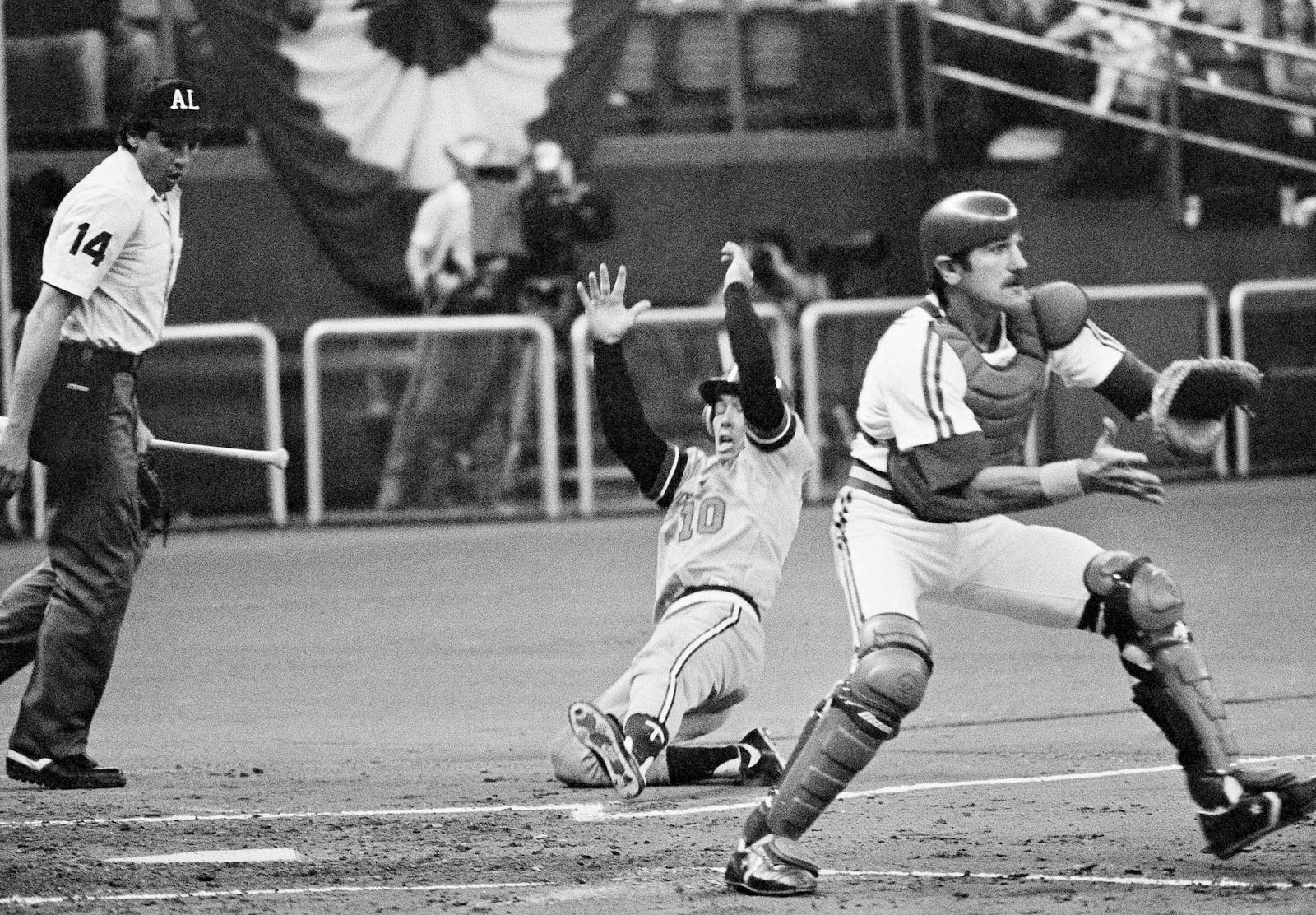
Mitchell played in the Little League World Series in 1967 with Northridge, California, and in the College World Series with USC seven years later.
Right field: Chad Hermansen (Salt Lake City, 1999-2004) — Born in Salt Lake City, Hermansen was a high school product of Nevada, who played for the Pirates, Chicago Cubs, Dodgers and Blue Jays. He had a career-high eight homers in 2002 while with the Pirates and Cubs.
His first MLB homer came in 1999 for the Pirates against the Cubs and his last two games in the majors were for Toronto against the Baltimore Orioles.
Starting pitcher: Bruce Hurst (St. George, 1980-94) — The lefty is the only MLB player born in Utah named to an MLB All-Star game, according to Baseball Reference.
His 145 wins are the most of a Utah native and Hurst was the only pitcher to win at least 10 games every season from 1983 through 1992. The lefty made two key starts in the 1986 World Series for the Red Sox against the Mets, then started Game 7 on short rest.
He’s from “a small Mojave Desert town of about 4,000 people in the southwest corner of the state, 120 miles from Las Vegas,” SABR wrote of St. George. “Called Dixie by the locals, St. George was founded by Mormon missionaries in the 19th century to develop a cotton-farming industry.”
Hurst was mentored by Kent Garrett, a former player at BYU who started American Legion baseball in St. George in the 1970s, according to Prep Baseball Report.
“For some reason Garrett saw something in me,” Hurst told SABR. “He was a stickler for fundamentals and detail. We’d get baseball magazines and cut out pictures of pitchers … and look at the positions they were in. I’d get in front of the three-way mirror and practice my windup. He gave me confidence.”
Closer: Brandon Lyon (Salt Lake City, 2001-13) — Lyon, a Taylorsville High product, had 79 saves in the majors — the most of a player born in the state — and 42 wins while pitching for several clubs. His best season may have been 2007 with the Arizona Diamondbacks, when he had an ERA of 2.68 in 73 games.

His son, Isaac, was drafted out of Grand Canyon in 2025 by the Seattle Mariners and has pitched in the Washington Nationals’ minor league system for three clubs this year, as he was promoted to Double-A Harrisburg on May 26 from Single-A Wilmington.
Other pitchers: Kelly Downs (Ogden, 1986-93); Ed Heusser (Salt Lake County, 1935-48); Brandon Duckworth (Salt Lake City, 2001-08); Fred Sanford (Garfield, 1943-51).
Downs of Viewmont High won 57 games, Heusser won 56 and Sanford recorded 37 victories.
Heusser died in Colorado in 1956 at the age of 46. He led the NL in ERA in 1944. Sanford died in 2011 in Salt Lake City. He played for the St. Louis Browns, New York Yankees and Washington Senators, and was part of two World Series winners with the Yankees.
Manager: Herman Franks (Price): A catcher in the majors, Franks is the only Utah native to manage in the majors. He guided the San Francisco Giants from 1965-68 and the Chicago Cubs from 1977-79.
Franks was a third base coach on the 1954 New York Giants squad that won the World Series over the Cleveland Indians.
He may have also aided the 1951 Giants in a unique way. Published stories report that he relayed signs to hitters from center field late in the season and he was there when Bobby Thomson hit his famous homer to beat the Dodgers for the pennant in the best-of-three playoff series.
Franks died in Utah in 2009.
Pitching coach: Hurst was the pitching coach of the Chinese national team from 2003-2007. He was also involved in the MLB academies in Europe after his playing career, and he worked in the front offices of the Boston Red Sox and Dodgers.
Coach: Mitchell coached in the minors in the systems of MLB clubs.
General manager: Franks was the general manager of Salt Lake City in the Pacific Coast League and worked in the front office of MLB clubs.
Utah notes
The only natives of Utah to make their MLB debuts in 2025 were Jack Dreyer (Salt Lake City), who grew up in Iowa and is with the Dodgers; Paxton Schultz (Orem, Utah Valley), who is in the Nationals’ farm system after breaking in with Toronto; and Jayden Murray (Vernal, Dixie State), who is with the Cubs after his 2025 debut with the Astros.
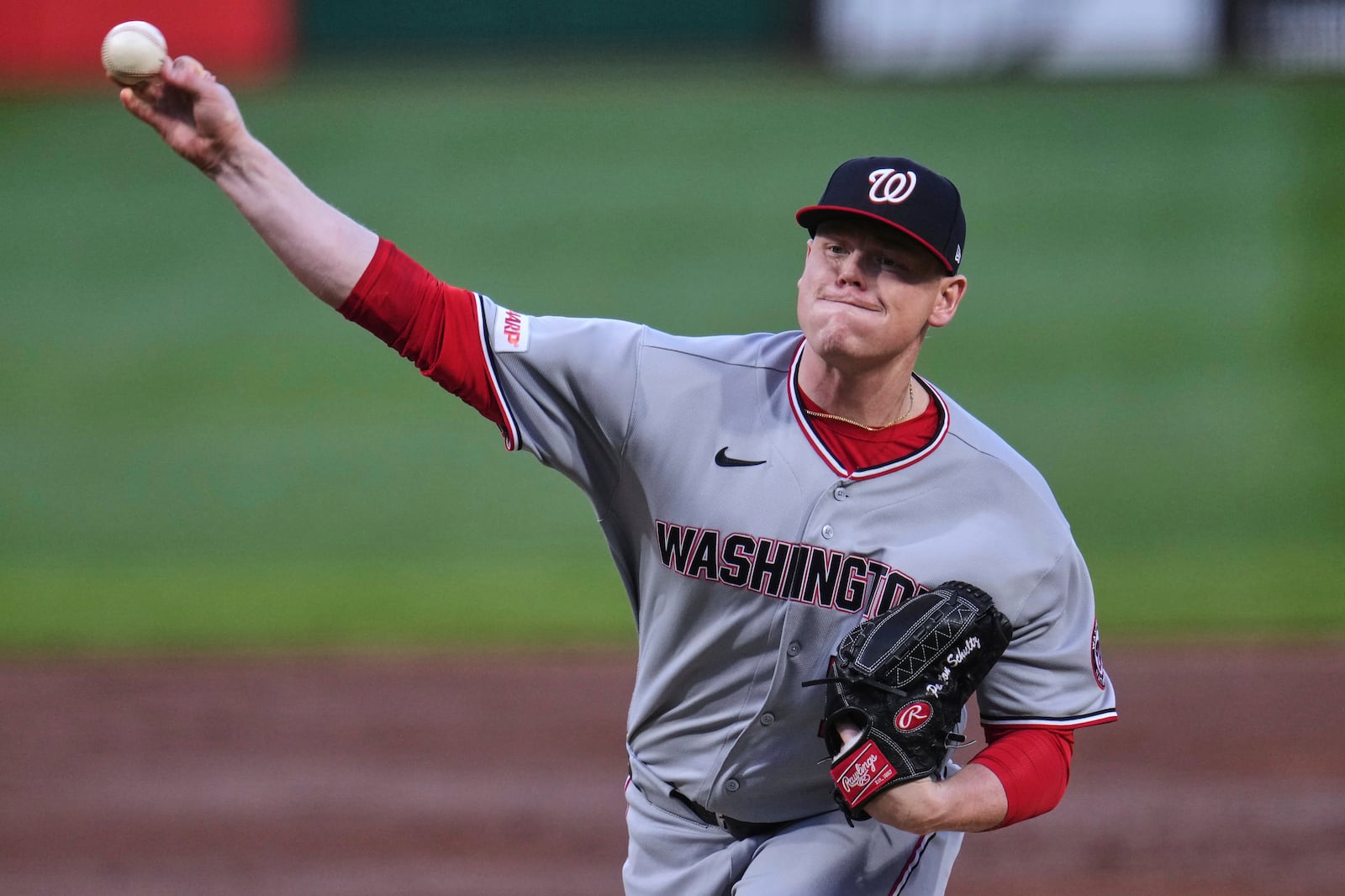
No native of Utah has made their MLB debut this season, as of the time of writing.
The first player born in Utah to make the majors was Lee Thompson (Smithfield), who pitched in four games with the White Sox in 1921. He died in California — the same day as his brother — in 1963 after holding several jobs in that state after his minor-league career.
David Driver is the co-author of “From Tidewater to the Shenandoah: Snapshots from Virginia’s Rich Baseball Legacy.” He covered the Nationals from 2013-22 for several outlets. He has interviewed Buck, Lyons and Duckworth as well as former BYU standouts Jeremy Guthrie and Jackson Cluff, who began this season at Triple-A in the Mets’ farm system. Driver is the former sports editor of papers in Baltimore and his native Harrisonburg, Virginia.

SALT LAKE CITY — A Riverton woman is proving that one moment of compassion can change a life.
On May 21, LaCinda Thackeray was flying home to Utah from Southern California after attending a family funeral when someone outside the window caught her attention.
As she waited to board her plane at John Wayne Airport, she noticed an airport worker struggling to walk across the tarmac.
“I just saw somebody who needed a little bit of support and love and kindness,” Thackeray said. “What really was hard for me was just the conditions he was in, and I didn’t even know his story at that point.”
Before her flight departed, Thackeray recorded a short video of the man and shared it on TikTok, asking if anyone knew who he was.
“Immediately when I sat on the airplane, my thought was, if anybody knew who he was, could we get him retired?” Thackeray said. “I didn’t know it was going to take off. I had no idea.”
Within a few hours, the video had been viewed more than a million times. Thousands of people shared it, and strangers from around the world began asking how they could help.
The internet soon identified the man as 64-year-old James Blair, a Navy veteran who works as a fuel injector and fuel mechanic at the airport.
By all accounts, Blair has lived a life of service. He served in the Navy from 1980 to 1990.
“We were 20 minutes from launching against Iran when the hostages were in Iran. We had all of our planes loaded with bombs and missiles on our ship and were just waiting for President Reagan to give the go-ahead,” Blair said.
After the Navy, Blair said he worked at LAX airport for 13 years and, after a three-year stint as a truck driver, returned to working on planes at John Wayne Airport.
“I’ve been at John Wayne Airport since April of 2006,” Blair said.
Though Blair turned 64 in March, retirement is not on his horizon.
“My plan was to work until I can’t work, until I physically can’t work,” he said. “I have inquiries out about getting knee operations; I’m working on that right now.”
Despite ongoing knee problems, Blair said his priority is his elderly mother, whom he lives with.
Thackeray said much of Blair’s income goes toward her hospice care.
“She has her good days, and she has her bad days,” Blair said.
Encouraged by people online, Thackeray started a GoFundMe campaign. She said donations quickly poured in.
“At one point, I remember telling my husband, ‘What did I do?’” Thackeray said. “When we needed to get him the money, that is when we were a little panicky, but then it changed really fast.”
The overwhelming support, Thackeray said, presented an exciting opportunity but also some challenges in ensuring that Blair would receive the money.
Until recently, Blair didn’t have a smartphone or social media accounts.
His boss volunteered to drive 1.5 hours to his home to help him set up a GoFundMe account so that he could receive the funds as a beneficiary.
“When his boss went out there, it eased so much anxiety,” Thackeray said.
Recently, Thackeray returned to California to personally deliver a $174,000 check to Blair.
For Blair, the support from complete strangers has restored his faith in humanity.
“Not in a million years,” Blair said when asked if he ever imagined something like this would happen.
“I’m just a person trying to do a job, trying to survive, and the way people give their own money. I have a hard time working to pay bills, so other people probably have the same problems. When they’re giving money they really can’t spare, that amazes me. I’m just blown away.”
Thackeray said the generosity extended far beyond the United States.
“I was speechless because I felt like the world showed up, and I think in these times we need people like that.” She said.
“I’ve been speaking to people all over the world, and they’re just, ‘Tell James hi!’ Give him a hug for us!” she said.
Blair also reflected on how deeply the experience has affected him personally.
“I believed in God, but I didn’t really believe in God. But now, with the angel sitting next to you, it’s amazing,” Blair told Thackeray. “I can’t believe how God works in mysterious ways.”
Although Blair is still going to work, he recently used some of the funds to buy himself a bed. He continues to care for his mother.
“I mean, I don’t know what Salt Lake City living is now, but California is really expensive,” Blair said.
What began as a brief glance through an airplane window has grown into an unlikely friendship — and a powerful reminder that a single act of kindness can inspire thousands of people to make a difference.
“I’m so happy for him and that he gets to experience this,” Thackeray said.
“I told him, I’m just a little part of your story, I’m happy that I could do that, but I hope you can always remember the ones that showed up and donated.”
To date, nearly 6,000 people have donated to the fundraiser. It has raised $180,521.00 for Blair.
Thackeray’s TikTok video of Blair has been viewed more than 9 million times, garnering nearly 800,000 likes and 8,000 comments.
For more information about the fundraiser, visit: https://gofund.me/51f1c9e16
*KSL.com does not assure that the money deposited to the account will be applied for the benefit of the persons named as beneficiaries. If you are considering a deposit to the account, you should consult your own advisers and otherwise proceed at your own risk.
The Key Takeaways for this article were generated with the assistance of large language models and reviewed by our editorial team. The article, itself, is solely human-written.

Not only the Utah that we are today, but the Utah that we can choose to become.
(Rick Egan | The Salt Lake Tribune) Gabriel Meneses makes one of the limited edition flags for the United States 250th anniversary at Colonial Flag in Sandy on Monday, June 1, 2026.
-

 Detroit, MI4 minutes ago
Three dead in Metro Detroit mall shootings in eight days: What we know
-
San Francisco, CA12 minutes ago
I’m a writer who left LA for an AI startup in San Francisco. It was like stepping into a whole new world.
-

 Dallas, TX19 minutes ago
Dallas weather: Widespread thunderstorms bring flash flood risks and brief heat relief
-

 Miami, FL22 minutes ago
Why I’m Not Worried About Giannis in Miami
-

 Boston, MA27 minutes ago
Gallery: Tall ships display their splendor at Sail Boston
-

 Seattle, WA32 minutes ago
Seattle Weather: Cooler Sunday to close out weekend
-

 Denver, CO34 minutes ago
Colorado Court of Appeals reverses sanction against Denver DA for pattern of discovery violations
-

 San Diego, CA42 minutes ago
Record campaign cash was spent in San Diego’s City Council primaries. Did it pay off?


