West
Top 10 states where Trump outperformed in 2024

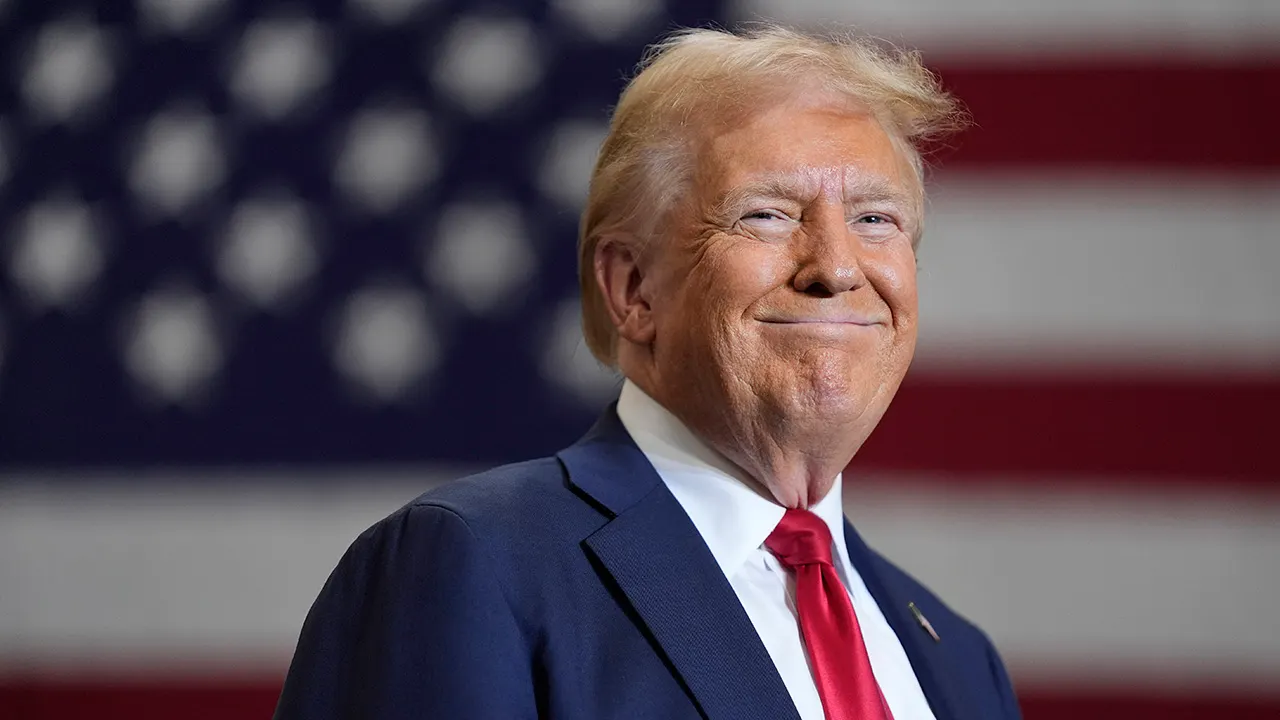
President-elect Trump flipped six highly competitive states in his election victory last week. But as a Fox News analysis showed last week, his gains with voters were not limited to the battlegrounds.
This list covers the 10 states where Trump most outperformed his 2020 margins.
Notably, conservative strongholds aren’t the only states that made the list. The top 10 also includes deeply Democrat areas. Trump didn’t win these states, but they swung to the right.
Vote counting continues in some highly populated states on this list, including California and New York.
IN ELECTION VICTORY, TRUMP’S GAINS WENT BEYOND THE BATTLEGROUNDS
Donald Trump’s gains in 2024 were not limited to battleground states. (AP Photo/Evan Vucci/File)
1. New York
Note: As of this writing, approximately 3% of ballots have not yet been counted in New York.
- 2020 Winner: Biden +23.1 points
- 2024 Winner: Harris +11.8 points
- Swing toward Trump: 11 points
So far, New York has swung 11 points toward Trump.
New York swung 11 points toward Trump, with the president-elect’s greatest gains being made on Long Island and within New York City. (Gary Hershorn/Getty Images)
The president-elect posted a 6.3-point improvement on his 2020 vote share, while his Democrat opponent, Vice President Harris, slipped by five points.
He gained across the state, with his largest swings in New York City and Long Island.
On election night, the Fox News Decision Desk projected that Harris would win the state. With 97% of the vote counted, she is winning by 12 points.
TRUMP TRAIN CHUGS PAST 2020 MARGINS, PARTICULARLY AMONG HISPANICS, URBAN NORTHEASTERNERS
2. New Jersey
Note: As of this writing, approximately 1% of ballots have not yet been counted in New Jersey.
- 2020 Winner: Biden +15.9 points
- 2024 Winner: Harris +5.9 points
- Swing toward Trump: 10 points
So far, New Jersey has swung 10 points toward Trump.
The president-elect posted a 4.7-point improvement on his 2020 vote share, while Harris slipped by 5.3 points.
New Jersey saw a 10-point swing toward the president-elect, with Passaic and Union counties, both rife with urban hot spots on New York City’s outskirts, seeing the biggest trends toward him. (iStock)
He gained across New Jersey, with his largest swings in the northeast corner of the state. Hudson and Passaic counties lead the pack.
On election night, the Fox News Decision Desk projected that Harris would win the state. With 99% of the vote counted, she is winning by six points.
3. Florida
- 2020 Winner: Trump +3.3 points
- 2024 Winner: Trump +13.1 points
- Swing toward Trump: 9.8 points
Florida swung 10 points toward Trump.
‘FASCIST’: LIBERAL CRITICS MELT DOWN AFTER FLORIDA VOTERS REJECT ABORTION RIGHTS AMENDMENT
The president-elect posted a 4.9-point improvement on his 2020 vote share; Harris slipped by the same amount.
He gained across the state. The most notable swing was in Miami-Dade County, which flipped to the GOP for the first time since 1988.
On election night, the Fox News Decision Desk projected that Trump would win the state. With the results certified, he won by 13 points.
President-elect Trump won Florida by 13.1% of the vote, flipping Miami-Dade County red among numerous others. (iStock)
4. Massachusetts
- 2020 Winner: Biden +33.6 points
- 2024 Winner: Harris +24.8 points
- Swing toward Trump: 8.8 points
Massachusetts swung nine points toward Trump.
The president-elect posted a 4.2-point improvement on his 2020 vote share and Harris slipped by 4.6 points.
ABORTION SUPPORTERS AT WOMEN’S MARCH IN BOSTON TURN OUT IN DROVES TO SUPPORT HARRIS PRESIDENCY
He gained across the state, with double-digit swings in Suffolk County, which includes Boston, and Bristol County.
On election night, the Fox News Decision Desk projected that Harris would win the state. With 99% of the vote counted, she is winning by 25 points.
5. California
Note: As of this writing, approximately 5% of ballots have not yet been counted in California.
- 2020 Winner: Biden +29.2 points
- 2024 Winner: Harris +20.6 points
- Swing toward Trump: 8.6 points
So far, California has swung nine points toward Trump.
Vice President Harris didn’t see a home-field advantage in her native California, which swung some 8.6% toward her opponent. (REUTERS/Carlos Barria)
The president-elect posted a 3.8-point improvement on his 2020 vote share as Harris slipped by 4.8 points.
He gained in many areas across the state, including the two most populated cities, Los Angeles and San Francisco.
On election night, the Fox News Decision Desk projected that Harris would win the state. With 95% of the vote counted, she is winning by 21 points.
DEMOCRAT WINS HOUSE RACE TO RETAIN SEAT IN CALIFORNIA’S 21ST DISTRICT
6. Texas
- 2020 Winner: Trump +5.6 points
- 2024 Winner: Trump +13.9 points
- Swing toward Trump: 8.3 points
Texas swung eight points toward Trump.
The president-elect posted a 4.2-point improvement on his 2020 vote share; Harris slipped by roughly the same amount.
Texans, particularly those in the Rio Grande Valley, decisively swung right in their voting habits this year, disappointing Democrats hoping for big gains in the Dallas-Fort Worth, Houston and Austin suburbs. (Callaghan OHare/Bloomberg via Getty Images)
He gained across Texas, with the largest swings concentrated in the southern parts of the state. Webb County, for example, home to Laredo, moved 25 points toward Trump. That gave Republicans their first win there in over a century.
On election night, the Fox News Decision Desk projected that Trump would win the state. With 99% of the vote counted, he is winning by 14 points.
7. Mississippi
Note: As of this writing, approximately 2% of ballots have not yet been counted in Mississippi.
- 2020 Winner: Trump +16.5 points
- 2024 Winner: Trump +24.3 points
- Swing toward Trump: 7.8 points
So far, Mississippi has swung eight points toward Trump.
The president-elect posted a four-point improvement on his 2020 vote share; Harris slipped by roughly the same amount.
EX-TRUMP OFFICIAL PREDICTS ‘ENTIRE MINDSET CHANGE’ AT SOUTHERN BORDER, HAILS ‘FANTASTIC’ PICK TO LEAD DHS
He gained across the state, including in Yazoo County, a majority-Black county that last voted for the GOP in 2004.
On election night, the Fox News Decision Desk projected that Trump would win the state. With 98% of the vote counted, he is winning by 24 points.
8. Rhode Island
- 2020 Winner: Biden +20.9 points
- 2024 Winner: Harris +13.6 points
- Swing toward Trump: 7.3 points
Rhode Island swung seven points toward Trump.
Rhode Island saw a 7.3% swing in Trump’s favor, with gains being observed across the state, including in its capital, Providence. (Visions of America/Joseph Sohm/Universal Images Group via Getty Images)
The president-elect posted a 3.3-point improvement on his 2020 vote share, while Harris slipped by four points.
He gained across the state, led by Providence, the city’s highest-populated area.
On election night, the Fox News Decision Desk projected that Harris would win the state. With 98% of the vote counted, she is winning by 14 points.
REPUBLICANS PROJECTED TO KEEP CONTROL OF HOUSE AS TRUMP PREPARES TO IMPLEMENT AGENDA
9. Tennessee
- 2020 Winner: Trump +23.2 points
- 2024 Winner: Trump +29.7 points
- Swing toward Trump: 6.5 points
Tennessee swung 6.5 points toward Trump.
The president-elect posted a 3.5-point improvement on his 2020 vote share, while Harris slipped by three points.
Tennessee swung decisively in Trump’s favor despite worrying trends for Republicans in suburban Nashville in recent years. Trousdale County, situated just outside the metro area, swung toward the president-elect by double digits. (iStock)
He gained across the state, including a double-digit swing in Trousdale County, a rural area outside the Nashville metropolitan area.
On election night, the Fox News Decision Desk projected that Trump would win the state. With 99% of the vote counted, he is winning by 30 points.
10. Illinois
Note: As of this writing, approximately 1% of ballots have not yet been counted in Illinois.
- 2020 Winner: Biden +16.9 points
- 2024 Winner: Harris +10.6 points
- Swing toward Trump: 6.3 points
So far, Illinois has swung six points toward Trump.
The president-elect posted a 3.4-point improvement on his 2020 vote share; Harris slipped by 2.9 points.
He gained across Illinois, with a notable eight-point swing in Cook County, home to Chicago.
On election night, the Fox News Decision Desk projected that Harris would win the state. With 99% of the vote counted, she is winning by 11 points.
Read the full article from Here


BOZEMAN, Mont. — The Bozeman Police Department received a report of a vehicle versus motorcycle collision on July 3 around 10 p.m.
The crash happened on Frontage Road and the westbound on ramp to Interstate 90.
Officials say officers and bystanders attempted lifesaving efforts on a motorcyclist who was seriously injured.
The motorcyclist was pronounced dead at the scene.
Preliminary findings indicate a Jeep was traveling eastbound on Frontage Road when the driver made a left-hand turn trying to enter the westbound I-90 on-ramp when the driver did not see the dirt bike.
Officials say there was no forward-facing headlamp or other lighting illuminated on the dirt bike, investigators examined the dirt bike for evidence of lighting equipment and found none.
According to a press release, there is no indication that the driver of the Jeep was impaired, and they are cooperating with the investigation.
The incident is currently under investigation.

From otherworldly red rocks to fossil beds and alpine lakes, Nevada’s state parks offer adventures far beyond the Las Vegas Strip.

Video: Visitors at Sand Harbor Beach April 29, 2020
People enjoy the warm weather at Sand Harbor Beach amid the coronavirus on April 29, 2020.
Andy Barron, RGJ
CLARK COUNTY, NV – Standing at the edge of a sea of rocks, I was transported to another world less than an hour outside Las Vegas.
Instead of water, waves of rusty red sandstone and creamy limestone crested in every direction of the Fire Canyon/Silica Dome Overlook at Nevada’s Valley of Fire State Park,
I wasn’t the only one who found it otherworldly. Park signage indicated this place portrayed the fictional planet Veridian III in the 1994 film “Star Trek: Generations.”
But Valley of Fire is very real, and it’s just one of the more than two dozen state parks offering travelers a different side of Nevada.
How many state parks are there in NV?
There are 27 state parks in Nevada.
“What’s really nice is a lot of them are pretty clumped together, so you can hit multiple of them in a few days,” said Tyler Kerver, Education and Information officer for Nevada Division of State Parks.
He said even he didn’t realize how many parks there were until he started working there.
How to choose
Kerver suggests exploring parks.nv.gov and narrowing options based on what you hope to experience.
“If I was going to hike or mountain bike, I’d probably look at the Lake Tahoe-area parks, like Spooner Lake (and Backcounty) and Van Sickle,“ he said. “Maybe you just want to relax by a lake with the family. We have a few campgrounds with reservoirs.”
On a recent RV trip, my family camped at Valley of Fire near Overton and also visited Cathedral Gorge State Park near Panaca and Kershaw-Ryan State Park in Caliente. The latter two are only about 20 minutes away from each other and roughly 2.5 hours away from Las Vegas.
“If you’re looking just to get out and explore, Cathedral Gorge is definitely a great area to set up kind of a base camp, and then you can get to not only Cathedral Gorge, but all the other parks around Cathedral Gorge, all within like a day or two,” Kerver said.
My kids enjoyed exploring Cathedral Gorge’s twisty slot canyons and taking it easy at Kershaw-Ryan, which felt like a little oasis in the desert with leisurely trails, manicured gardens, a spring-fed wading pool for young kids, and a tree-canopied picnic area, where we ate lunch.
Young explorers may enjoy Berlin-Ichthyosaur State Park near Austin, about 2.5 hours from Reno. The Smithsonian Institution describes ichthyosaurs as “extinct dolphin-shaped marine reptiles that flourished in the oceans” more than 65 millions years ago. Kerver said the park boasts the largest ichthyosaur fossil bed in the U.S.
“We do tours of the fossil house every summer, and you can walk right up to the actual fossils still laying in the ground,” he said. “Ice Age Fossils State Park is one of our newest ones in North Las Vegas, and that one is kind of similar … We have mammoth, bison, dire wolves, all kinds of cool fossils.”
One of Kerver’s personal favorites is Cave Lake State Park, near Ely. “It’s pretty cool, like Alpine summer camp,” he said.
What is the prettiest place in Nevada?
Pretty is subjective, but many people consider Lake Tahoe to be one of the state’s most beautiful areas.
Sand Harbor State Park, in Lake Tahoe, is the most visited park in the system with 1.2 million visitors a year, according to Kerver.
“Sand Harbor State Park is one of the only beaches in Lake Tahoe where you get lifeguards, an on-site restaurant, ample parking,” he said. “You can reserve your spot ahead of time, and you can’t really find that anywhere else in the Lake Tahoe Basin.”
Desert scenery is just as pretty, in a different way.
I couldn’t imagine a more spectacular campsite setting than the one we had at Valley of Fire, Nevada’s second-most visited state park. It also offers sparkling facilities.
“We get the reputation for having some of the cleanest bathrooms,” Kerver said. “We take that pretty seriously.”
How much does it cost to go to a Nevada state park?
Entry fees vary by park but are typically between $10 to $15.
Kerver said the parks pride themselves on accessibility.
“It’s not only ADA-accessible,” he said. “We’re maintaining a lower fee level than a lot of other places, so it’s still cheaper to get in … We really want to make sure that they are some of the least expensive places to visit and that they remain accessible to everyone.”
To save even more, travelers planning to visit numerous Nevada state parks or who live within driving distance may want to consider a $100 annual permit, which can be assigned to up to two vehicles.
USA TODAY reporter Eve Chen was provided access by RVshare. USA TODAY maintains editorial control of content.

By John Miller
Albuquerque Journal
ALBUQUERQUE, N.M. — Bob Rodgers once specialized in cave rescues, but since becoming resource officer for New Mexico Search and Rescue in 2011, he has shifted from navigating underground passages to analyzing data that shows, among other things, how often his teams are deployed.
The overall conclusion hasn’t changed: New Mexico’s more than 40 all-volunteer search and rescue teams are being called out less often, even as the total number of incidents requiring their services continues to rise.
| READ NEXT: Fireground fallacy: ‘Vacant’ buildings are rarely unoccupied
In 2023, for example, search and rescue teams responded to about 76% of 149 incidents involving people who were lost or injured in remote areas.
That rate has trended downward in recent years, despite a slight uptick last year: Teams responded to 50% of 187 incidents in 2024, 55% of 191 incidents in 2025 and just 40% of 75 incidents as of June 10 this year.
“Throughout the state of New Mexico, the volunteers are being called less and less to participate in search and rescue incidents,” Rodgers said. “Fire departments, county sheriffs, feel they can do it without us, and if they get into a problem, they’re waiting two or three hours, if not days, before they finally realize they needed SAR.”
As the law enforcement arm of the Department of Public Safety, New Mexico State Police can deploy search and rescue teams when circumstances require. But Rodgers said county and local law enforcement agencies, which are often first on the scene, can be reluctant to request state assistance.
He cited the case of retired Air Force Maj. Gen. William McCasland, who disappeared from his Albuquerque home in late February, as a recent example.
” The Bernalillo County Sheriff’s Office didn’t call for search and rescue until two days after his report was overdue,” Rodgers said. “We don’t know where he’s at, and by the time we’re called in, it’s too late.”
McCasland has not been found.
Rodgers said any delay in mobilizing the proper resources for a missing person search can significantly reduce the chances of a successful outcome.
Similar concerns have surfaced elsewhere in New Mexico.
In March, Taos Search and Rescue President Delinda VanneBrightyn said the Taos County Sheriff’s Office did not immediately contact the Department of Public Safety to dispatch volunteers after two teenagers became trapped at the bottom of the Rio Grande Gorge.
“We had a very hard time getting search and rescue involved,” she said.
Taos County Sheriff Steve Miera was unavailable for comment, but he has previously said he wants to train his deputies in search and rescue techniques. For years, he and his staff have overseen responses at the Rio Grande Gorge Bridge, the site of numerous suicides, as well as missing person cases in the rare instances when bodies could not be located.
Still, law enforcement can benefit from search and rescue’s specialized expertise, said VanneBrightyn, who has volunteered for more than 20 years and specializes in K-9 search and rescue.
“We should be having many more missions,” VanneBrightyn said. “The sheriffs are now doing this across the state.”
A 2025 amendment to the state Search and Rescue Act requiring first responders to notify state police when a call involves “lost, stranded, entrapped or injured persons” took effect earlier this year. But state data suggests volunteer teams continue to be underused in 2026.
In some cases, declining mission numbers have caused all-volunteer teams to lose members, as volunteers find the hours they devote to training are rarely put to use.
“It has been frustrating because the sheriff doesn’t have the resources, the trained resources that we have,” VanneBrightyn said. “They are law enforcement.”
The decline in search and rescue missions in New Mexico dates to 1996, when there were 191 missions involving 4,004 personnel and 22,602 hours in the field. Rodgers said, however, that the state’s older data is less reliable than more recent records.
Speaking to the Journal last week about the state’s ephemeral waters running dry, Grant County Search and Rescue President Russ Imler said the decline in missions may also relate to more advanced wayfinding technologies, like Garmins and smartphones.
“The electronics that people carry nowadays, people aren’t getting as lost,” he said.
Meanwhile, some studies showed that search and rescue missions rose elsewhere at the tail end of the COVID-19 pandemic. A 2021 study by a Craig Newmark Graduate School of Journalism and a 2022 story by PBS News Hour both concluded that missions were creeping upward as more Americans re-entered the outdoors.
When search and rescue services are needed in the Land of Enchantment, Rodgers said trained teams can provide expertise law enforcement agencies usually don’t have — like advanced land navigation, wilderness survival and technical rope rescue skills.
They also often save hours of overtime pay and other public expenses accrued by paid law enforcement, he added.
“It doesn’t cost the taxpayers a whole lot of money,” he said, adding, “I can put 30 people on a mountain someplace and leave them there, and we are self-sufficient. We run at least 24 hours without support from anybody, and it costs me — the state of New Mexico — about $200 to run a mission. I’m not paying salary. I’m not giving them overtime. I’m not even providing them food.”
A Clinton volunteer firefighter aboard his personal boat safely removed all occupants from a smoking 42-foot vessel south of Duck Island

Retired Baltimore County Fire Capt. Jhett Lewis has flown a large American flag in memory of a family friend killed in Vietnam and to honor those who served

Imperial Beach officials say a 25% vacancy rate and a nearly 50% increase in call volume over the past decade have forced firefighters to work up to 10 days at a time

Loveland Rural Fire Protection District President Paul Bukowski said he has no plans to resign as critics cite transparency and leadership concerns
© 2026 the Albuquerque Journal (Albuquerque, N.M.).
Visit www.abqjournal.com.
Distributed by Tribune Content Agency, LLC.

Through a new partnership with the NVFC, DripDrop Hydration will donate 200,000 electrolyte drink mix sticks to volunteer fire departments to help firefighters stay hydrated
-

 Mississippi3 minutes ago
Oldest Mississippi businesses. These institutions have survived at least a century
-

 Missouri10 minutes ago
Tracking sunnier, milder conditions returning to Mid-Missouri
-

 Montana12 minutes ago
1 dead in vehicle vs. motorcycle crash in Bozeman
-

 Nebraska18 minutes ago
Nebraska True Freshman Running Back Jamal Rule Arrives at the Right Time
-

 Nevada25 minutes ago
These Nevada state parks might be the state’s best-kept secret
-
 New Hampshire27 minutes ago
Concord celebrates 250 years of American Independence – Concord Monitor
-

 New Jersey33 minutes ago
More NJ Power Outages After 2nd Storm As More Severe Storms, Flood Threat Looms
-
New Mexico40 minutes ago
N.M. search and rescue teams face fewer missions despite increase in calls

