West
Second Amendment fight: Gun rights group sues to block New York's body armor ban

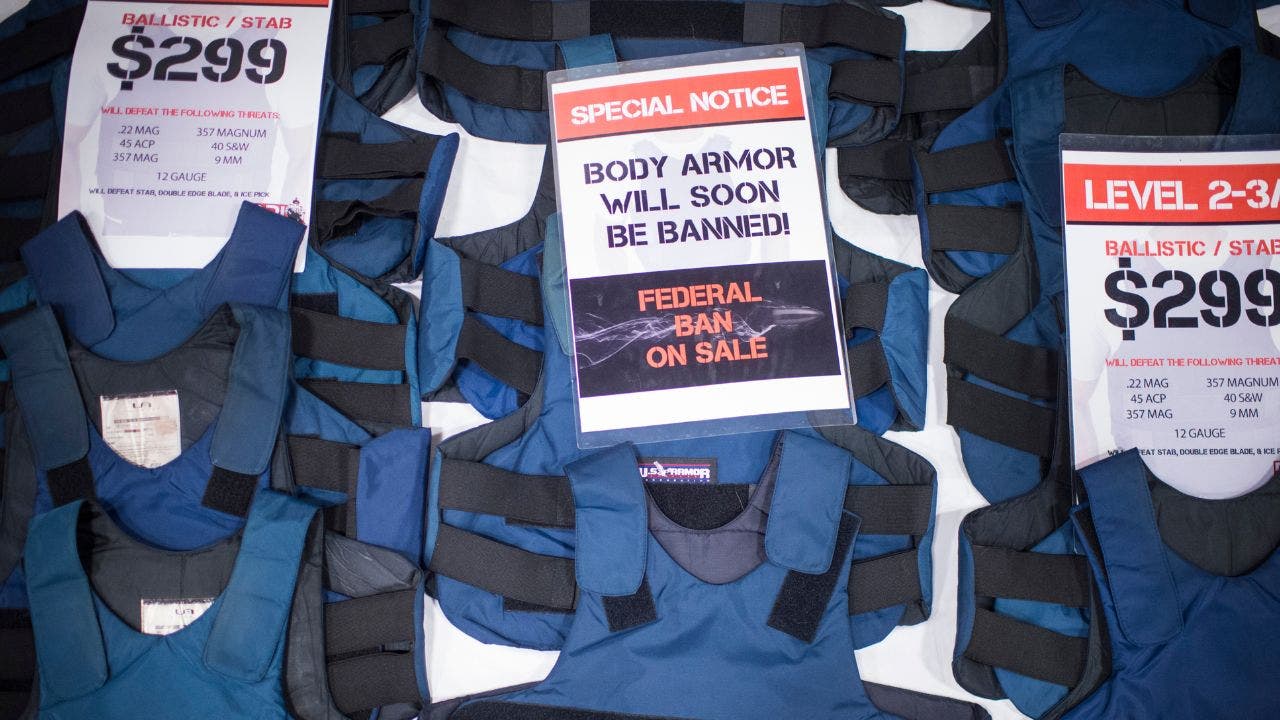
A gun-rights group is suing the state of New York in order to block the enforcement of its body armor ban.
The Firearms Policy Coalition (FPC), a California-based non-profit organization, filed its Second Amendment lawsuit in the Western District of New York on Monday, arguing the ban is unconstitutional and is seeking a declaratory judgment that New Yorkers have a fundamental right to keep and bear arms — including body armor. The group is also seeking a permanent injunction to halt the enforcement of the ban.
The law — which restricts sales of vests defined as “bullet-resistant soft body armor” — was hastily passed by state lawmakers following the Buffalo supermarket shooting in May 2022 which left 10 people dead. Shooter Payton Gendron was sentenced last year to 11 consecutive life sentences, having pleaded guilty to all state charges including murder, domestic terrorism and hate crimes. All 10 victims were Black.
GUN RIGHTS GROUP APPLAUDS AFTER FEDERAL APPEALS COURT DEALS BLOW TO NY CONCEALED CARRY LAW
A teacher puts on a bulletproof vest during a live fire training session in Thistle, Utah, on Oct. 5, 2019. (George Frey/Bloomberg via Getty Images)
New York’s ban is aimed at stopping criminals from gaining an advantage over peace officers, or security guards like Aaron Salter, who was killed trying to stop Gendron’s supermarket rampage.
During the killings, Gendron wore a steel-plated vest — armor strong enough to stop a handgun round fired by Salter, who tried to halt the shooting.
Under New York law, a person is prohibited from purchasing or taking possession of body armor if it is not being used in an eligible profession such as law enforcement or the military.
Furthermore, nobody is allowed to “sell, exchange, give or dispose of body armor…to an individual…not engaged or employed in an eligible profession,” the law states.
Violations are subject to a Class A misdemeanor for a first offense and a Class E felony for any subsequent offense.
FPC President Brandon Combs blasted the New York law while announcing the lawsuit.
JUSTICE DEPARTMENT INTENDS TO SEEK DEATH PENALTY FOR BUFFALO SUPERMARKET SHOOTER PAYTON GENDRON
Buffalo mass shooter Payton Gendron still faces federal charges in relation to the attack. (Erie County District Attorney’s Office/Scott Olson/Getty Images)
“New York’s body armor ban shows that the state’s commitment to authoritarianism has collapsed into absurdity, making it a crime to buy and use simple personal protective equipment,” Combs said in a statement. “New York’s laws have gone so far off the deep end that it would surprise exactly no one if Gov. Hochul and her goons banned safety glasses next. FPC looks forward to eliminating this unconstitutional law and teaching New York another lesson about constitutionally protected rights.”
FPC said that Americans have a deeply rooted tradition of keeping and wearing armor and says that whenever the usefulness of armor outweighed the burden of wearing it, armor was used. That tradition, combined with the lack of historical restrictions, “evinces a robust right to possess and wear body armor for self-defense,” the group said.
The case is captioned as Heeter v. James. Attorney General Letitia James, New York State Police Superintendent Steven James and Erie County Acting District Attorney Michael Keane are named as the defendants. FPC is joined in the case by Benjamin Heeter, an FPC member.
A New York law makes purchasing body armor illegal.
New York already has tough gun laws on the books and the state sought even more restrictions on gun owners following the 2022 Supreme Court ruling that declared the state’s previous concealed carry permitting requirements unconstitutional. Following that decision, New York passed the “Concealed Carry Improvement Act” (CCIA) but parts of it were struck down last year.
However, controversial parts of the law remain intact, including a requirement that applicants demonstrate good moral character and disclose household and family members on a permit application. New York is also allowed to enforce bans on concealed carry in so-called “sensitive places,” including theaters, bars, public parks and other spaces.
It’s also against the law to purchase pepper spray in New York, although using it in self-defense is legal.
Fox News’ Chris Pandolfo contributed to this report.
Read the full article from Here


Jon Anderson will be charged with moving the Orem school forward following the death of conservative commentator Charlie Kirk on campus last year.
(Bethany Baker | The Salt Lake Tribune) Incoming UVU President Jon Anderson poses for a photo with his family after an event announcing his selection at Utah Valley University in Orem on Friday, July 17, 2026.

Wyoming
Wyoming Supreme Court upholds 125- to 175-year conviction for Steven Marler after child sexual abuse trial in 2025

CASPER, Wyo. — The Wyoming Supreme Court has upheld the 2025 conviction of Steven Randall Marler, 52, who was sentenced to 125 to 175 years in prison on eight felony counts of sexually abusing two girls under his foster or adoptive care at his home on Casper Mountain. Marler was also convicted of five misdemeanor batteries and a count of child endangerment. He was found not guilty of sexual abusing another two other minors in the family, including the one who had first brought forward allegations in 2016.
The Supreme Court opinion noted that discrepancies in her testimony from previous statements were revealed at trial.
The appeal claimed that the Natrona County court where the trial was held improperly admitted testimony about physical abuse and Marler’s insistence that the children give him massages, which they said he referred to as a “daddy tax.”
The massages did not result in charges, and Wyoming courts are strict in disallowing evidence of “prior bad acts” for uncharged conduct that might color the opinion of the jury about whether the defendant is guilty of the actual charges.
The opinion released Friday and written by Justice Robert C. Jarosh noted that the Natrona Court, under Judge Kerri Johnson, had multiple hearings before the trial about whether the state should be allowed to introduce that evidence. It can only do so under specific circumstances, such as establishing a course of conduct relevant to “grooming behavior” and illustrating the power Marler held over the children and his ability and motivation in carrying out the abuse.
“The “daddy tax” massage evidence demonstrated a predictable, recurring pattern of behavior that directly illuminated Mr. Marler’s motive and systematic course of conduct,” the opinion reads. “The “daddy tax” massage evidence demonstrated a clear behavioral pattern and provided relevant context about how Mr. Marler targeted and groomed the children by exploiting his parental role and initiating abuse through seemingly innocent touching — all as a means to gratify his sexual desires.”
The opinion also noted that the jury had been properly instructed not to infer guilt based on the testimony about uncharged behavior they might find off-putting.
The appeal attorneys also argued that evidence of punishment in the form of spanking, exercise and withholding food was not relevant to the charged crimes and unfairly prejudicial to Marler.
“However, we agree with the district court this evidence was relevant to show Mr. Marler’s intent and motive to gain submission by the victims,” Friday’s opinion said.
Related
-

 Rhode Island29 seconds ago
19-Year-Old Charged With Deadly Providence Pedestrian Bridge Stabbing
-

 South-Carolina6 minutes ago
When Lindsey Graham’s funeral will be in South Carolina
-

 South Dakota13 minutes ago
Meet Mayor Christine Erickson
-

 Tennessee19 minutes ago
L.L.Bean opens first Tennessee store in Franklin. See inside
-

 Texas25 minutes ago
Texas Rangers Homestand Information for July 20-27, 2026
-

 Utah31 minutes ago
Here’s who will lead Utah Valley University as its next president
-

 Vermont37 minutes ago
Community Profile by Gordon Hayward: NYC bargeman drawn to rural life in Vermont
-

 Virginia43 minutes ago
Events canceled due to unhealthy air quality in central Virginia

