Seattle, WA
Seattle Seahawks Mock Draft Roundup: Who will be No. 16 pick?


The NFL combine kicked off this week, and that’s always a key part of the NFL Draft cycle for the Seattle Seahawks and the other 31 teams as they scout top prospects.
Before Seahawks, Macdonald was most ‘consequential’ hire at Michigan
Barring a trade up or down, the Hawks hold the No. 16 overall selection this year.
So who will be the first draft pick of the Mike Macdonald era? Here’s who some top NFL Draft analysts have the Seattle Seahawks taking in their most recent mock drafts.
ESPN’s Mel Kiper – Washington offensive lineman Troy Fautanu
Mel Kiper, who revolutionized NFL Draft coverage, has the Seahawks going local in the first round.
“OK, so guard might not be the most exciting position for a mock draft, but I can assure you that Seahawks fans should be happy with Fautanu, who could stay near where he went to college. That’s because he’s a fun offensive line prospect to watch on tape. He has excellent feet and plays hard on every snap. Fautanu started 28 games at left tackle for the Huskies, but I see his future on the interior because of his 6-foot-4 frame,” Kiper said.
Kiper noted that all three of Seattle’s Week 1 starting interior offensive linemen – center Evan Brown and guards Damien Lewis and Phil Haynes – are pending free agents.
“Seattle will have holes to fill along the interior of its line,” Kiper wrote. “And Seattle ranked 28th in rushing yards per game (92.9), surely new coordinator Ryan Grubb wants to see upgrades there. Fautanu would give this offense an instant boost.”
Fautanu to the Seahawks would mean he’d reunite with Grubb and Scott Huff, his offensive line coach at UW.
NFL.com’s Daniel Jeremiah – Texas defensive tackle Byron Murphy II
Daniel Jeremiah initially had the Seahawks selecting Fautanu in his last mock draft. This time around, he has the Hawks going with the other side of the ball in Texas defensive tackle Byron Murphy II.
“Leonard Williams is a pending free agent, but even if the Seahawks work out a deal with him, Murphy would be a nice complement on the interior defensive line,” he wrote.
NFL.com’s Bucky Brooks – Georgia tight end Brock Bowers
Jeremiah’s colleague Bucky Brooks has the Seahawks going a different route, instead drafting standout Georgia tight end Brock Bowers. Two of the Seahawks’ top tight end are pending free agents.
“Seattle needs a playmaker in the aerial attack with the potential to control the middle of the field,” Brooks said. “Bowers’ presence would create more big-play opportunities for the Seahawks’ perimeter pass catchers.”
The Ringer staff – Alabama edge rusher Dallas Turner
The fine folks at The Ringer teamed up for a mock draft this week and have the Seahawks selecting an edge rusher in Alabama’s Dallas Turner.
“Once Uchenna Nwosu went down midseason, Seattle’s lack of edge-rusher depth was sorely exposed. Now, with Mike Macdonald in place as the new head coach and defensive mind, Seattle doesn’t need elite play off the edge, but versatility would sure be welcome. Turner, who is 6-foot-4 and around 245 pounds, will need to have some value as a dropper in the league to stick. I think Macdonald would welcome his quick first step and surprising toughness against the run.”
The Athletic staff – Florida State edge rusher Jared Verse
At The Athletic, that team also has the Seahawks selecting an edge rusher, but instead of Turner, it’s Florida State’s Jared Verse.
“”First-time head coach Mike Macdonald inherits a defense that a year ago finished 28th in yards per rush and 20th in yards per pass attempt. In order to return to consistent contention in the NFC West, the Seahawks need to revitalize the side of the ball that once led them to back-to-back Super Bowls. Seattle acquired Leonard Williams from the Jets before the trade deadline, but it could still use a star edge rusher on the outside, and Verse fits the bill. In his last two years as a starter at FSU, Verse totaled 18 sacks and showed flashes of the terror he could become.”
Yahoo’s Charles McDonald and Nate Tice – Illinois defensive tackle Johnny Newton
At Yahoo Sports, Charles McDonald and Nate Tice teamed up for a mock draft and have the Seahawks taking big defensive tackle Johnny Newton from Illinois.
“Mike Macdonald will be able to cover up a lot with his knowledge and play-calling, but the Seahawks could still use a boost of talent on the interior of their defense,” they wrote. “Newton is one of the few premier interior defensive line talents in this class and would fit well.”
More on the Seattle Seahawks
• Huard: Time for Seahawks to be done with Jamal Adams
• Why Seahawks re-signing Leonard Williams is ‘real tricky’
• How does new salary cap impact Seahawks’ offseason?
• Seahawks Draft: Why J.J. McCarthy is ‘not an easy evaluation’
• Seahawks Draft: Analyst says Texas’ Byron Murphy has best D-tackle tape
• Three reasons not to worry about Seattle Seahawks coaches not attending combine



Seattle, WA
COUNTDOWN: Two days until West Seattle Fourth of July Kids’ Parade! Here’s the newest info

Just two days until hundreds of West Seattle’s youngest residents will parade through the streets of North Admiral with their families, as the Admiral Neighborhood Association again presents the West Seattle Fourth of July Kids’ Parade. We’ve checked in with parade coordinators for the newest info:
>Gina Topp (SPS School Board President, Admiral resident, and owner of Mission Cantina) will kick off the parade.
–Kavya Bhatkar (age 10), a School of Rock student, will sing the anthem.
-Title sponsors for the parade are: Neighborhood Naturopathic and Primary Care and Holy Rosary.
-Food available for purchase including:
Seattle Pops
West Seattle Grounds
Where Ya at Matt
Empanadas El Pachi
La La Lemonade
Seattle Sorbet
Hawk Dogs
Sugar & Spoon
The parade starts at 10 am Saturday from 45th SW and SW Sunset, heads west on Sunset for a bit, turns south and then east, ending at Hamilton Viewpoint Park for a post-parade celebration with sack races, activity booths, the aforementioned food/treat vendors, and if they’re not called away to an emergency, an SFD truck to see. No RSVP or registration required to be in the parade – just show up (non-motorized bikes, trikes, scooters, strollers, etc., welcome, or just walk).

(2024 reader photo of fireworks damage on Nino Cantu SW Athletic Complex turf)
Here’s the annual announcement from Seattle Parks – we’ve excised the non-local parks:
Seattle Parks and Recreation will turn on field lighting on ballfields throughout the city on the evening of Friday, July 3 and Saturday, July 4 to protect the surfaces. The ballfield lights will be turned on at approximately 9 PM.
The lights will be turned on to discourage the use of fireworks. Fireworks are illegal in the city of Seattle and will destroy the artificial turf on the fields or surrounding facilities. The approximate replacement cost for the synthetic surface based on per average full-size field (110,000 square feet) is $1.2 million. All the fields have been renovated in the past several years and benefit field users including soccer, football, baseball, ultimate frisbee and lacrosse.
The fields will be monitored from 9 PM to 3 AM
Lights at the following synthetic fields will be turned off at 3 AM on July 3 and 4:
Delridge Playfield, 4458 Delridge Way SW
Hiawatha Playfield, 2700 California Ave. SW
South Park Playfield, 8319 8th Ave S
Walt Hundley Playfield, 6920 34th Avenue SWLights will be turned off at the following grass fields at 11 PM on July 3 and 4:
West Seattle Stadium, 4432 35th Ave. SW
Comparing this to last year’s announcement, the lights will be on longer the night before the 4th, and the “monitoring” will be an hour later.

SEATTLE — Sharp divisions emerged Wednesday as Seattle residents, housing advocates and environmental activists sparred over a proposal that would dramatically reshape the city’s land-use appeals process.
At issue is legislation proposed by Seattle City Councilmember Eddie Lin. The bill would eliminate State Environmental Policy Act (SEPA) appeals to the city’s Hearing Examiner for major legislative actions, including Comprehensive Plan amendments and development regulations.
It prompted impassioned testimony at a public hearing before the Seattle City Council’s Land Use Committee, which Lin chairs.
Lin said his bill would prevent costly delays that have slowed housing production and climate-focused planning. Opponents countered that it would strip residents of one of their few affordable avenues for holding city government accountable on environmental issues before projects move forward.
Lin said that concentrating new housing in dense, walkable neighborhoods near transit reduces suburban sprawl, preserves forests and farmland, lowers greenhouse gas emissions and limits pollution harmful to salmon and orcas.
Lin said Seattle can achieve both affordable housing and a healthy urban tree canopy through thoughtful planning. However, having projects repeatedly delayed by appeals that ultimately have little legal standing is something the city cannot afford, Lin said.
Over the past several years, Washington lawmakers have expanded exemptions within SEPA specifically to reduce red tape for housing production. But Seattle’s municipal code still allows administrative appeals on many actions that state law has already exempted.
Although those appeals are frequently dismissed because of state law, city officials said the process itself can significantly delay legislation.
Under Lin’s proposal, residents could no longer file administrative SEPA appeals before the Hearing Examiner for major legislative actions. Instead, challenges would have to be brought before the Washington Growth Management Hearings Board or King County Superior Court.
During the public hearing, opponents said such a change would effectively place environmental appeals beyond the reach of many residents because pursuing litigation requires attorneys and substantially higher costs.
Several speakers warned that raising the financial barrier to appeals would disproportionately silence neighborhoods and community groups with limited resources.
Environmental advocates also argued the legislation removes an important layer of independent oversight before major decisions become law. They said appeals have historically uncovered flaws in Environmental Impact Statements, revealed previously undisclosed information and prompted improvements before projects advance.
The debate is expected to intensify as Seattle prepares for the next phase of updating its Comprehensive Plan under Mayor Katie Wilson’s administration. The forthcoming environmental review of the plan, which includes proposals for taller and denser development across the city, is likely to make the question of who can challenge environmental reviews a central issue in the coming year.
No vote was taken following Wednesday’s public hearing. The legislation will return to the City Council for further consideration.
-

 Finance4 minutes ago
New questions about Trump’s taxes after financial disclosure release
-

 Fitness7 minutes ago
Our Editors Found the Best Fitness Deals—Save Nearly 50% on Home Gym Equipment
-

 Movie Reviews19 minutes ago
Film Review: “looky loo: PART II” – MediaMikes
-

 World22 minutes ago
US Resumes Dollar Transfers to Iraq, NYT Reports
-

 Health52 minutes ago
She Ate High-Protein Ice Cream Daily and Lost 193 Lbs—Her Keys to Success
-
 Lifestyle1 hour ago
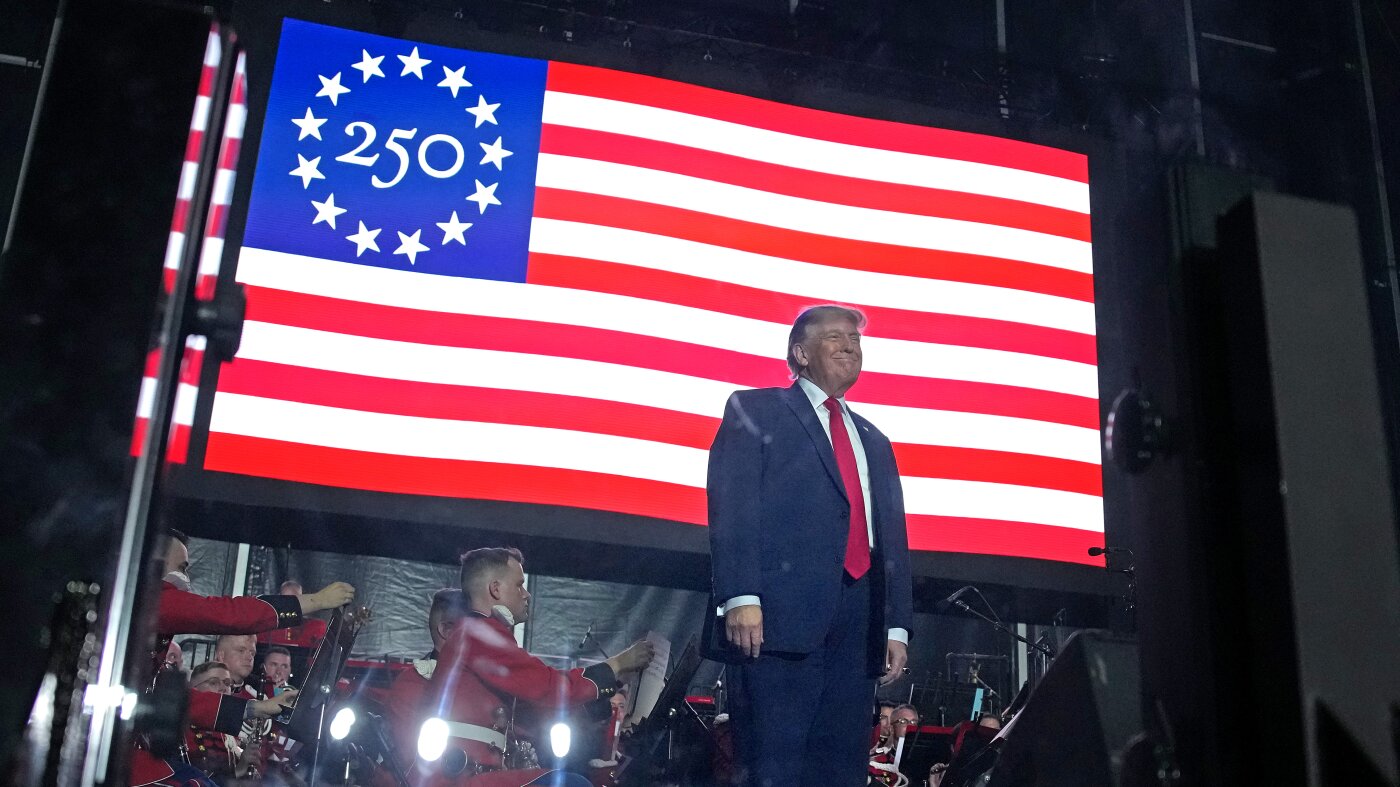
House Democrats accuse Trump of ‘hijacking’ America’s 250th birthday for his own gain
-

 Technology1 hour ago
Tesla driver faces manslaughter charges over Texas crash that killed a woman inside her home
-

 World1 hour ago
Six Kurdish fighters killed in IRGC ambush as clashes spread across western Iran

