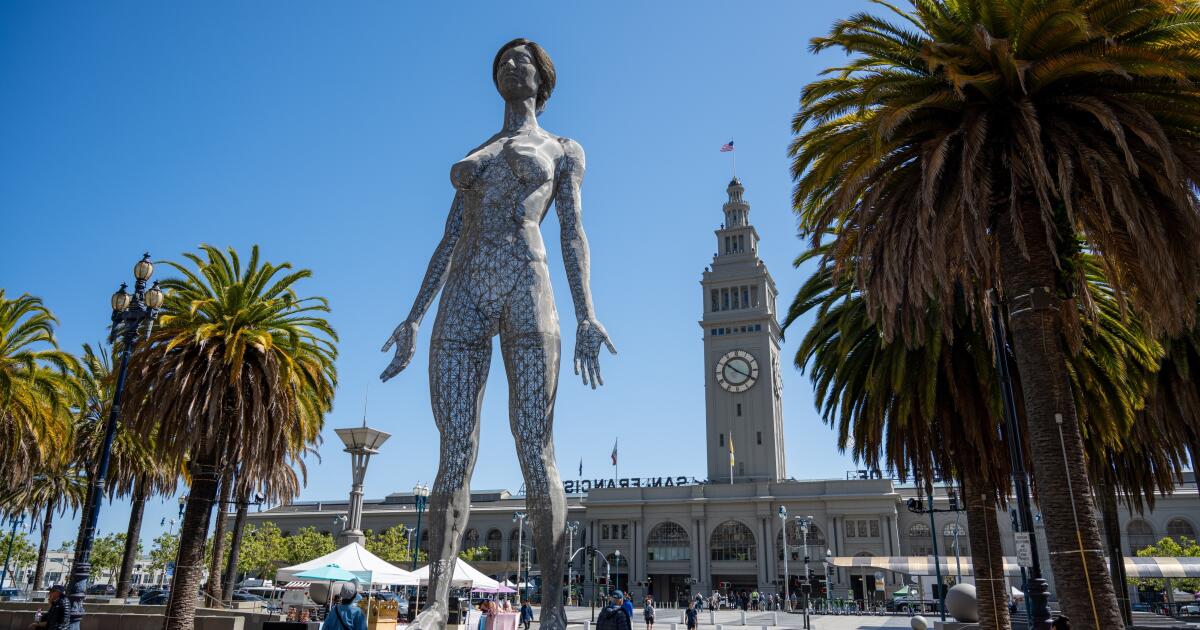
Seattle’s LGBTQ community members say they hope that this Friday’s World Cup “Pride Match” between Egypt and Iran, two countries where homosexuality is criminalized, can be an opportunity to change minds.
Seattle, WA
The Status of Fare Evasion in Washington State
During the pandemic, fares were suspended on a number of transit agencies in Washington State including Metro and Sound Transit for public health reasons. While transit was free for part of 2020, Metro and Sound Transit suspended fare enforcement until Spring 2025 and Fall 2023 respectively.
On Seattle’s buses and trains (and Snohomish’s, Spokane’s, and Vancouver’s BRTs), agencies employ a “Proof of Payment” system. Common in Northern Europe, fares are not enforced by turnstiles or bus drivers but by transit employees who randomly board transit vehicles and check that riders have proof of payment. Turnstiles prevent the possibility of unique fare media (a free bus ticket with a hotel or, as in Seattle, arena ticket) and barrier-less Youth Ride Free. They also save on capital costs associated with fare gates and operational costs by enabling shorter bus dwell times with all door boarding.
One downside of proof of payment systems is that fare enforcement is more complex. In Washington State, most agencies with off-board fare payment also have a fare enforcement program to issue fines or citations to riders who illegally boarded without paying.
Youth Ride Free
In 2022, youth began riding transit for free across Washington State. In that year’s transportation budget, Olympia began funding local transit operations for local agencies (except Sound Transit) and in return demanded agencies adopt “low-barrier, zero-fare policies for youth”. That forbids checking IDs, mandating Youth ORCA cards, or even filling out a form. WSDOT indicates that any rider who “identifies oneself as 18 years of age and under” can’t be denied service due to lack of fare media.
Youth Ride Free has been a huge win for parents and children but for transit agencies it’s added complexity to fare enforcement. Today, a large contingent of riders legally ride for free with no identification or fare media making enforcement and calculating a fare evasion rate difficult.
Outside Seattle, no tracking
Outside of Seattle, Community Transit (in Snohomish County), C-TRAN (in Vancouver), and Spokane Transit operate proof of payment BRT systems. We reached out to those agencies to understand their fare evasion rate and all three said fare evasion was not a metric they tracked. Spokane Transit does not have a fare enforcement program. Both Community Transit and C-TRAN cited Youth Ride Free as a reason why their agency is unable to track a fare evasion rate.
King County Metro
In 2019, King County Metro estimated that between 2.7% and 4.5% of riders weren’t paying on proof of payment routes (i.e RapidRides). Last month, the Urbanist broke that King County Metro issued zero citations for fare evasion in 2025 despite Metro estimating a systemwide 35% “nonpayment rate”.
With Youth Ride Free, “nonpayment” and “evasion” aren’t really synonyms anymore so we reached out to Metro for more clarity. Metro spokesperson Jeff Switzer clarified that “the systemwide non-payment rate of 35 percent does exclude youth ridership, based on our best estimates” (emphasis mine).
Coverage of this story in the Seattle Times also indicated that routes with fare enforcement (i.e. the 7, 36, 40, 106, and RapidRides A-F) now have just a 3% evasion rate, an almost 30 percentage point reduction since enforcement began. Metro clarified that they do not actually track fare evasion by route and the 3% figure cited by the Seattle Times is the percentage of fare checks in which riders had not paid, not the percentage of boardings in which riders had not paid.
Sound Transit
In 2019, fare evasion on Link was 2.4% of riders. After a brief hiatus for the pandemic, in Fall 2023 Sound Transit began enforcing fares again (with Fare Ambassadors instead of security).
In early May, staff gave an update to the Sound Transit Board on the Fare Engagement Program. Notably, only 63% of boardings have valid fare media (i.e. paid), a rate somewhat higher than the 56% in 2022. Youth (and those attesting to be youth) are included in the 37% of riders that do not pay. Before Youth Ride Free, youth represented roughly 6% of ridership.
In 2018, Fare Inspectors checked roughly 2.5M fares or 8.76% of riders. In 2025, Fare Ambassadors checked 986,304 fares, roughly 2.5% of riders and a far cry from Sound Transit’s goal of checking 10% of riders.
Of those checked by Fare Ambassadors in 2025, 15% did not have a valid fare. 7.5% were youth legally riding free. 7.8% were not youth and did not have a valid fare and of that number, 60% refused to show ID and were thus not issued a warning.

It is difficult to reconcile the discrepancy between only 63% of riders having paid but 85% of riders checked by Fare Ambassadors having a valid fare. Perhaps 20% of riders dodge the Fare Ambassadors? Or 20% of riders are on crushed trains Fare Ambassadors cannot check? Regardless, it is obvious that Fare Ambassadors are not checking a representative sample of riders.
In 2024, staff estimated that due to fare evasion, the agency lost $15M annually and is losing $30M annually now that ST2 is completed. Over the course of the 50 year ST3 program, that represents roughly $1.5 billion, or 10% of the cost overrun for the Ballard Link. The agency is now piloting “entrance inspections” (i.e. human fare gates), which do increase compliance but only when the inspections are active.
The Sound Transit board obviously sees fare evasion as a problem as they investigate fare gates. But BART, a fully gated system, had a 5% evasion rate in 2017 and has a 10% evasion rate now, both far higher than Sound Transit’s own fare gate-less 2.4% evasion rate from 2019 when over 2.5x more checks were happening.
Editor’s Note: Uncivil comments, especially those which make unsubstantiated claims about riders who do or do not pay fare, will be moderated in accordance with our Comment Policy.
Seattle, WA
Council eyes street barricades in fight against violence, sex trafficking in north Seattle
SEATTLE — The Seattle City Council is expected to vote next week on a plan that would give the Seattle Department of Transportation (SDOT) the authority to close off street access for public safety reasons.
The proposal comes after months of outcry from residents in north Seattle who say sex traffickers and sex buyers are looping through the streets surrounding Aurora Avenue North.
The street-closure proposal passed the council’s Public Safety Committee on Tuesday and is expected to be voted on by the full council next week.
“I don’t think it’s hyperbole to say the crime has gotten much worse, much more violent, and much more predator,” said District 5 councilmember Debora Juarez. “I think that we do have the authority to shut down a street for bullets flying and endangering the lives of those who live there.”
Frustrated neighbors have installed their own homemade barricades after a spate of gun violence between sex traffickers in May.
RELATED | SDOT removes street barricades near Aurora Ave; neighbors doubtful of temporary measures
Councilmember Bob Kettle says street closures will help tamp down sex buying in certain areas, but he emphasizes it must be accompanied by an increase in outreach and enforcement.
“We have to have a sustained effort,” Kettle told KOMO News. “My concern is for every action, there’s a reaction. We need to take this flex and then really attack it … because if we do just a bit and our attention wanders, we could have this conversation three months from now and we’re talking about the same thing.”
A 15-year-old boy was shot near 95th Street and Aurora Avenue North around 10:45 p.m. last night. The teen initially claimed he had been shot while walking down the street, but investigators now say he was shot by a passenger in his car.
RELATED | Seattle police say ‘drive-by’ on Aurora Ave. was actually passenger shooting teen driver
Kettle credited the city’s Real Time Crime Center cameras with helping investigators quickly piece together the events of the shooting.
“Just as important to finding out what happened, the cameras help police determine what did not happen,” Kettle said.
According to Seattle police data, reports of shootings and shots fired in the north precinct area are at their lowest levels since 2021.
Through the end of May, there were 48 total reports of shootings or shots fired, with one fatal shooting and seven nonfatal injury shootings.
That’s down from 63 total reports of shootings and shots fired – one fatal and seven injuries – in 2025; and 64 shootings or shots fired reports – one fatal and 17 injuries – in 2024.
At Tuesday’s committee meeting, councilmembers pointed out residents are calling for a new police precinct to be built on Aurora Avenue.
Ten years ago, a new North Precinct building was slated to be built at 130th Avenue and Aurora Avenue North to replace the existing precinct building, which was decades old and did not have enough space for the department’s needs.
Led by former councilmember Kshama Sawant, the “Block the Bunker” movement successfully got the North Precinct replacement project killed in city council.
Kettle said the city’s current financial issues make it essentially impossible to bring back a project similar to the one the previous council defeated.
“We have to connect the dots back,” Kettle said. “If we want to know why we are where we are today, we have to look at decisions made over the last two councils.”
Seattle, WA
Iran and Egypt to play in Seattle ‘Pride Match’ despite earlier complaints | The Jerusalem Post
Seattle revels in its reputation as a welcoming place and Pride flags are visible all over the city, all year round. Its June Pride weekend is one of the biggest in the United States.
So, ahead of December’s World Cup draw, it was only natural that local organizers designated the June 26 match to be held in the city as a “Pride Match.”
Then the draw happened — and the two teams scheduled to play the game were Egypt and Iran.
Egypt’s Football Association urged global soccer governing body FIFA to prevent any Pride-related activities, arguing such events clashed with the Muslim-majority country’s cultural and religious values. The governing body in Iran, where same-sex relations can carry the death penalty, filed an objection with FIFA.
Some in Seattle have doubts over the teams in the ‘Pride Match’
But in Seattle, there is no question that the Pride Match will go ahead as planned.
“The World Cup is going to come and go in three weeks,” Hedda McLendon, from Seattle’s local World Cup organizing committee, told Reuters. “The Pride celebration … has happened on this weekend for 50-plus years.
“It is going to happen this weekend, it is going to happen long after the World Cup.”
Some in the city’s LGBTQ community had mixed feelings given the participants, said Jon Cairns, 49, manager of local LGBTQ+ club Kremwerk.
Cairns, however, said his own view was that it provided a platform to promote acceptance that only the world’s biggest sporting event could offer.
“My reaction is let’s have them,” he told Reuters. “International sports is one of the biggest brokers historically of social change and individual rights and freedoms worldwide, including in the U.S.”
He cited black U.S. sprinter Jesse Owens’ four gold medals at the 1936 Olympic Games in Nazi Germany and Tommie Smith and John Carlos’ raised-fist protest in 1968 as moments where “only international sports could reach that big of an audience.”
“They’re not going to turn off the World Cup on state television in Iran or Egypt to block out a Pride flag in the audience,” Cairns said.
The Pride Match is “a host city initiative” and separate of FIFA, a spokesperson for soccer’s governing body told Reuters.
Seattle’s LGBTQ community sees an opportunity
Egypt and Iran’s involvement in the Pride Match is not the first time the World Cup has grappled with stark differences in attitudes between hosts and visitors.
In 2022 World Cup host Qatar, the emir said visitors should “respect our culture” when asked about gay people attending the tournament.
FIFA threatened yellow cards for captains wearing the “OneLove” armband, citing its rules against political slogans. Teams including England and the Netherlands that had been planning to wear the armbands to protest Qatar’s laws against same-sex relationships abandoned the plan.
For Ryan Webster, a 40-year-old lifestyle manager who was at Kremwerk the weekend before Pride, Seattle’s “Pride Match” was an opportunity to show solidarity with people in countries where their sexuality was outlawed.
“I’m choosing to believe that this is our moment to allow the members of the LGBTQ community that come from those countries to have the opportunity to celebrate themselves in totality that they might not have otherwise,” he said outside the club, which will host a watch party for Friday’s game.
Inside, ‘Venus Fengz’ lip-synced to Cher’s “Believe” before introducing fellow drag performers to the stage, clapped and cheered by a raucous crowd.
Fengz, who only wanted to provide their stage name, said Pride coinciding with the World Cup would bring increased visibility, anticipating perhaps some new audience members.
“I think it’s always great for us to be able to share space and share places with people who don’t have the same experiences as us,” they told Reuters.
“Sometimes you just have to be the bigger person and show grace where you can and know that everyone is a human learning (from) different experiences, but also it can get hard — because you’re on the shorter end of the stick, always trying to have to explain yourself around people who don’t grow up with the same worldview.”
Seattle, WA
NBA Commissioner says Las Vegas, Seattle remain expansion targets for 2028-29 season
LAS VEGAS (KSNV) — Las Vegas could be years away from landing an NBA expansion team, but the league’s commissioner is now offering a clearer sense of the timeline.
On Tuesday, NBA Commissioner Adam Silver told “The Dan Patrick Show” that Seattle and Las Vegas remain the cities the NBA is focused on if it expands. “If we expand, at least we’re thinking ’28-29 season,” Silver said.
Silver had previously signaled before that March meeting that Seattle and Las Vegas were at the center of the expansion discussion, while cautioning that no decision had been made.
“We will make decisions in 2026,” Silver said in February.
At the time, Silver said the league was not expected to vote in March but could emerge from those meetings ready to take the next step and begin discussions with potential ownership groups.
Las Vegas has long been viewed as Seattle’s most likely expansion partner if the NBA grows from 30 to 32 teams. Silver, however, has repeatedly said the league could expand by two teams, one team, or not at all.
The potential of an NBA Las Vegas expansion team has already drawn interest. This week, majority owner of the Vegas Golden Knights, Bill Foley, announced he is putting together a bid for the expansion team in Las Vegas.
-
Idaho2 minutes agoDorothy Moon reelected to third term as Idaho GOP chair
-
Georgia4 minutes agoThe Farmer’s Dog Partners with the University of Georgia College of Veterinary Medicine to Advance Veterinary Nutrition Training
-
Hawaii7 minutes agoSewer rate hikes proposed – West Hawaii Today
-
Illinois19 minutes agoMan buys winning $1.3 million jackpot ticket at suburban gas station
-
Indiana22 minutes ago‘Foul play’ suspected in death investigation on Indiana-Ohio state line, Wayne County officials say
-
Iowa27 minutes agoNew Iowa program aims to remove barriers to family support
-
Kentucky32 minutes ago
Can you set off fireworks in Kentucky? See laws ahead of Fourth of July
-
Louisiana42 minutes agoHistoric Gene Therapy Gives Young Louisiana Man a New Shot at Life