Entertainment
‘Michael Jackson: The Verdict’ tackles 2005 trial that estate-approved ‘Michael’ did not touch

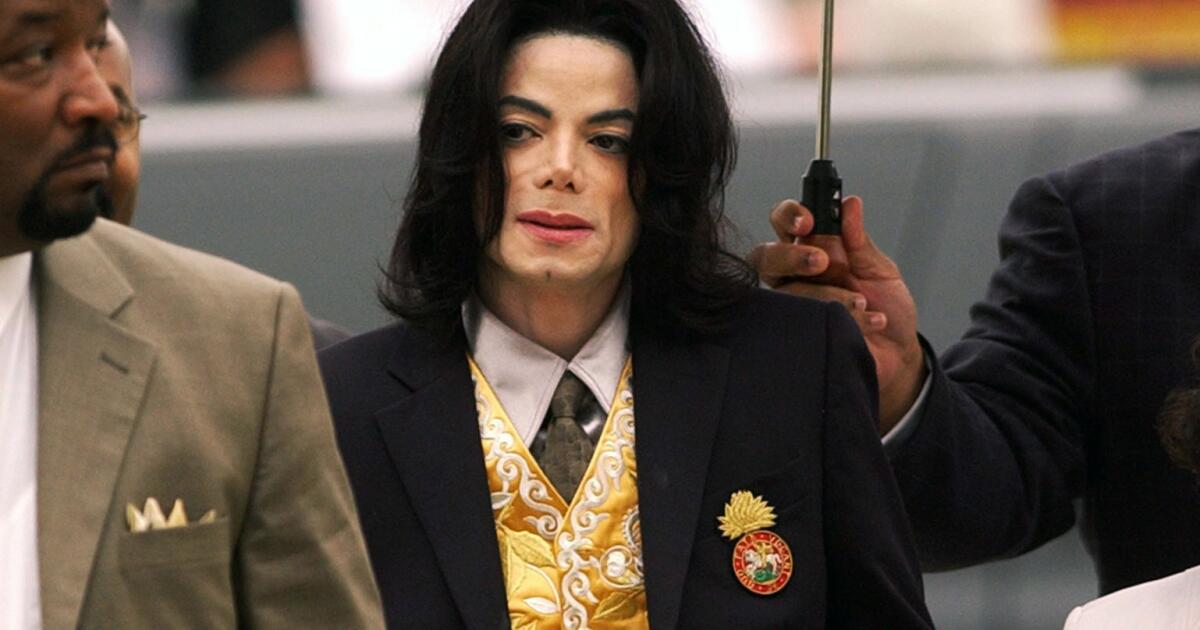
Netflix is dropping a three-part docuseries that revisits Michael Jackson’s 2005 trial in which he was acquitted on charges of child molestation.
“Michael Jackson: The Verdict” drops June 3 and features archival footage and interviews with key players involved in the trial including jurors, figures from both the defense and the prosecution, journalists who were inside the courtroom and other eyewitnesses who saw the events unfold firsthand.
“It has been 20 years since the trial of Michael Jackson in which he was found not guilty. Yet, to this day, controversy still rages,” the filmmakers said. “No cameras were allowed in court, and so the public’s view of the facts at the time were filtered by commentators and presented piecemeal. It was time to take a forensic look at the trial as a whole.
“Anyone interested in the Michael Jackson story should feel this documentary gives them a window into what was largely a closed event and a chance to feel closer to what happened.”
The Santa Barbara Superior Court trial lasted 14 weeks, and the jury, which included eight women and four men, deliberated for more than 30 hours across seven days.
Jackson was acquitted on 10 felony charges: four counts of child molestation, four counts of plying a minor with alcohol in order to molest him, one count of attempted child molestation and one count of conspiracy to hold the boy and his family captive at the Neverland Ranch. He faced more than 20 years in prison.
Produced by Candle True Stories, the production company behind Netflix’s “Untold: The Liver King,” and directed by Nick Green, “Michael Jackson: The Verdict,” comes at a time of renewed interest in the “King of Pop.”
The Jackson-estate-approved biopic “Michael” hit theaters last month, and depicts the origin story of the hitmaker from childhood through his upward trajectory to superstar status in the 1980s. Notably, the movie omitted the slew of allegations that followed Jackson from the ’90s until his death in 2009.

Movie Reviews
‘3 Weeks After’ Review: A High-School Field Trip Goes Off the Rails in a Skillful but Sadistic Serbian Shocker

The kids are not alright, or even right in the head in Serbian drama 3 Weeks After. This skillfully made but mean-spirited exercise revolves around a high-school trip to the countryside that turns extra dark when nearly everyone takes to bullying one kid among them: a boy, Zoza (Jovan Ginic), who just happens to have been the best friend of another kid they all bullied into committing suicide three weeks before, hence the title.
Imagine an especially vicious adaptation of Lord of the Flies or a remake of Gus Van Sant’s Elephant but directed by Gaspar Noé. Indeed, there’s even an extended sequence in which the teens get high and dance to techno, recalling Noé’s Climax. Unfortunately, 3 Weeks is way less fun and has a sadly deflated final stretch. More importantly, for all that director Miroslav Terzic (Redemption Street, Stitches) has talked up basing this loosely on actual events and discussing peer-on-peer violence with his young cast, the film offers an absurdly bleak portrait of Gen Z that just doesn’t ring true.
3 Weeks After
The Bottom Line Nasty beyond belief.
Venue: Karlovy Vary Film Festival
Cast: Jovan Ginic, Klara Karaulic, Andjela Alavirevic, Tihana Lazovic, Branislav Trifunovic, Andrija Markovic
Director: Miroslav Terzic
Screenwriters: Vladimir Arsenijevic, Bojan Vuletic, Miroslav Terzic
1 hour 35 minutes
The picture opens with a sledgehammer of a visual metaphor: a building on a housing estate is fully engulfed in flames, but there are no firefighters on the scene, no victims screaming from windows, and not even any gawking spectators except for Zoza. Even he seems pretty unbothered about the inferno. Seemingly having had his fill of conflagration watching, Zoza heads off with his backpack, joined en route by classmate Darija (Andjela Alavirevic), who expresses her surprise that he’s going on the school trip to Bulgaria so soon after “what happened.” This traumatic three-weeks-old inciting incident — wherein Zoza’s friend Andrija killed himself in order to escape bullying from his schoolmates — is only gradually explained as the film unfolds, with nasty little details dropped like breadcrumbs along the way.
It turns out that Zoza was also somewhat culpable for Andrija’s death, although nowhere near as much as those who actually beat and humiliated the late teen until he could bear it no longer. As the kids sit on the hired coach in little cliques and subgroups, it becomes clear that they’ve decided Zoza will be the next victim, partly because he knows what happened to Andrija and partly just because he’s quiet, a bit of a loner and not a morally benumbed sociopath like the rest of the class.
At a rest stop along the way, head sociopath Milos Bogdanovic (Andrija Markovic), who has been banned from the trip while the circumstances of Andrija’s death are investigated, sneaks aboard so he can be with his queen bee girlfriend Milica (Klara Karaulic). Somehow neither the two chaperone teachers on the trip, flighty Viktorija (Tihana Lazovic) and lumpish Markus (Branislav Trifunovic), nor the coach’s driver notice Bogdanovic’s arrival. His presence is only detected when the bus is forced to stop on the way due to a landslide-blocked route and a tire is punctured while trying to turn around on the narrow mountain road.
Perhaps that’s all also meant to be further visual metaphors. Certainly, there’s very little that’s metaphorical about the way the script, by Terzic, Vladimir Arsenijevic and Bojan Vuletic, has Viktorija and Markus negligently putting on noise-muffling headphones as they go to bed in the sprawling remote hotel the whole party has checked into. Having spent a little time griping to each other about how awful kids are these days, they both make themselves about as useful as nipples on cockroaches by electively shutting up their ears. With no adult supervision (the hotel staff is mysteriously absent too, as it’s meant to be the end of the season), the teens raid the beer supply and begin hunting down Zoza, who’s lured out by the one person he semi-trusts.
As repellent as the scenes that follow are — especially one in which a child is brutalized out of frame while Milica scrolls her phone with a blank affect, complaining that she’s bored when the atrocity is finished — there’s no denying that Terzic and his team have skills. The chase of Zoza through the forest and caves beyond the hotel is well-wrought, coherently mapped out spatially, and filmed by cinematographer Damjan Radovanovic and his team with just enough light and the right filters to allow us to work out what’s going on. That said, this probably won’t be even faintly legible on a home entertainment system, let alone the handheld gadgets that kids like the ones seen here prefer to watch entertainment on these days.
But this movie isn’t meant for teenagers, or really anyone who has more than a passing acquaintance with young people of this generation. Maybe things are worse in Serbia, which suffered a war a generation ago that left deep scars, but it rather beggars belief that this cohort could be, right down to every single child, quite this pathologically cruel and morally bereft. Likewise, it seems very farfetched that the morning after every single one of them would be so catatonically hungover, passed out in puppy piles in their clothes with not a drop of vomit in sight, that they wouldn’t wake and hear the ominous things going on. Is it another kind of metaphor that Terzic cuts abruptly to black instead of showing us the climactic combustion we’ve been set up to expect? Maybe, but really who cares?

Netflix stock plunged 9% on Friday morning to $67.74 a share, after the streamer’s second quarter earnings report renewed concerns among investors and analysts about the streamer’s future growth.
The Los Gatos-based company on Thursday narrowed its 2026 forecast to $51 billion to $51.4 billion from $50.7 billion to $51.7 billion, causing equity analysts to cut their estimates. The stock reached a new 52-week low on Friday and is down 49% from a year ago.
“This outlook likely reinforces investor concerns,” wrote analysts from Guggenheim Securities in a research note on Friday, which has a “buy” rating on the stock.
Netflix did not immediately respond to a request for comment on its declining stock price.
Investors have been skittish about the amount of time people spend on the streaming platform. Netflix’s share of TV viewing time in the U.S. has steadily declined in recent months as YouTube has gained market share, according to Nielsen data.
Investors are concerned that if people spend less time watching Netflix, it could cause people to cancel their subscriptions and make it more challenging for Netflix to raise prices in markets like the U.S.
Netflix said engagement is healthy on its platform and its programs continue to draw large audiences with popular shows like crime drama series “I Will Find You.”
Netflix said subscribers watched more than 97 billion hours on the streaming service in the first half of the year, up 2% from a year ago.
“We are increasingly concerned that younger generations are less interested in long form content as their time migrates to ‘free’ social media platforms,” wrote Jeffrey Wlodarczak, CEO of Pivotal Research Group in a report on Friday, who has a hold recommendation on Netflix stock. “We believe this will result in slower subscriber growth and attempts by the company to offset this via more aggressive price increases and investment in content.”
Netflix executives in a Thursday earnings presentation emphasized that measuring engagement at the company goes beyond hours spent watching the streaming service.
“There is not a linear relationship between view hours and revenue and profit because all hours are not created equal,” said Greg Peters, Netflix co-CEO on an earnings presentation on Thursday. “All hours don’t provide the same kind of value to the business.”
The streamer said it plans to allocate just over 5% of its content spend on live programming this year. Live content has been a key driver for subscriptions, accounting for six of the top 10 new member sign-up days over the last five years, the company said, even though it makes up roughly 1% of overall watch time this year.
The company is also diversifying the content it offers on its platform, adding live sports games and video podcasts, in addition its large library of TV shows and movies.
Netflix revenue rose 13% to $12.6 billion in the second quarter. Net income was $3.4 billion, up 9% from a year ago.
The company said its advertising business is on track to reach $3 billion in revenue this year, double the amount in 2025.

Sail we must, on Homer’s “wine dark sea” from Ithaca to Asia Minor and many points in between for the greatest story of them all, the tale of “a face, a fleet…of a war with Troy, of a man and a ‘trick’” and “Zeus’s Law, defied at mankind’s peril.
For his latest feat, Christopher Nolan takes us on the epic quest that is the cornerstone of Western literature and Western civilization, Homer’s saga of Odysseus, “hero of the Trojan War,” a trickster ready to wield his brain and his brawn in a titanic struggle not just to win that war, but the many tests that stand between himself and “home.”
And in Nolan’s telling, what makes “The Odyssey” timeless is the remorse of civilization’s unraveling, of the violence and pitiless greed that brings great epochs and empires to an end. Odysseus, played with equal parts cunning and gravitas by Matt Damon, spends his years “coming home” from The Trojan War filled with regret at what he’s seen, what he’s done and what’ he’s caused to come to pass.
His men and even he see himself as “punished” by the gods for his acts, playing god himself as he is forced to choose who lives and who dies. He pay for his hubris with more tests, more violence and more second guessing than we’ve ever seen in in a film or mini-series about him, the original “classic” hero of Western literature.
Nolan’s ancient epic is more historical and slightly grander than Wolfgang Peterson’s mythic star vehicle “Troy,” more touching than the riveting and brutally heroic “300,” and more tactile than either. We’re seeing real seas, realistic reconstructions of ancient armor, cities, galleys of war and a real dog — Argus — waiting for his master to return from decades of fighting and traveling.
Note to “Supergirl” and “Superboy” filmmakers and anybody else thinking “Let’s just digitally animate the damned dog.” Nobody cries when a digital dog dies.
If I’m honest, Nolan’s version of an oft-told tale had me from the moment I saw “the horse,” the “trick” of the tale-teller’s account of “clever” Odysseus. Troy really existed, and if there really was a “Trojan Horse,” I’ll bet it looked a lot like this — half-buried in the surf, a “Planet of the Apes” post-apocalyptic monument and tribute to the gods that had to be hauled, sans wheels, from the sand to the city whose blasphemous undoing it held hidden in its belly.
Nolan’s narrative opens with that “trick,” and tells the tale from three temporal perspectives — the war, as remembered, events back home in the Ithaca with the queen (Anne Hathaway) and son (Tom Holland) that King Odysseus left behind to fight, and the epic quest to return from that war as recalled by Odysseus in the company of his most alluring captor, Calypso (Charlize Theron).
The central conflict isn’t the war, or the murderously ruthless “suitors” for Queen Penelope, foremost among them the handsome and venomous Antinous (Robert Pattinson). It is between Odysseus and his superstitious men as he struggles with hardened warriors (Himesh Patel plays his stoic but questioning second in command) convinced their commanding officer has offended and re-offended the gods, especially Troy’s patron, Poseidon.
“You can’t live by omens and sacrifices,” Odysseus scoffs. But in this “time of apparent magic,” even our Ur-hero is given pause by Cyclops, the Sirens, the enchantress Circe (Samantha Morton) and the gigantic armored man-eaters that confront them, the Laestrygonians.
And even Odysseus has his Mount Olympus spirit guide. Zendaya plays the goddess Athena, who warns him “Your cleverness will get you into trouble.”
As indeed it does.
Damon’s “brand” as an actor has long been the intelligence he conveys in all but the silliest roles. That’s put to great use here as we see him plotting and planning this escape or that ambush. “The gods help those who help themselves,” he preaches. But his Odysseus also lets us see him second-guessing himself, a wearying and ageing man weighed down by the heartbreaking burdens of leadership.
Hathaway, in the role of the dutiful wife weaving and unraveling her tapestry while bullying suitors impose themselves on her household, shows us her own burdens. She said “Promise me you’ll come back.” And all she’s left with, decades later, is rising anger at the plight her long-absent and presumed-dead husband has placed her in. She is queen, but their overmatched son (Tom Holland) is too unsophisticated and physically weak to take the throne in the presence of entitled, murderous brutes.
Jon Bernthal brings a rough bluntness to the gruff Menelaus of Sparta, a hardnosed ruler dragged into war when Helen (Lupita Nyong’o) ran away from his brother Agamemnon (Benny Safdie) to Troy.
And John Leguizamo nimbly plays the loyal blind swineherd who tries to help Penelope and son Telemachus (Holland) cling to power as long as possible against long odds that his master, Odysseus, might return. Horror icon Mia Goth plays Penelope’s treacherous handmaiden.
Nolan’s “all-star cast” makes something of a statement in terms or the film’s intentions and modern messaging. The first character we see is played by the transgender actor Page, with a Black Helen of Troy and Black and Asian characters giving this ancient world the cosmopolitan flavor it most certainly had.
A running theme through all this is the breakdown of an old order, “Zeus’s Law” about piety, square dealing and how to treat strangers and guests and the rest of the human race, Trojans included. Nolan is talking about the “Dark Ages” to come, and the “Dark Ages” which have revisited us whenever the people lose their way and the violent and rapacious are empowered over us, often at our own doing.
Take a gander at insensate monster Cyclops and who he seems to resemble. Imagine him in a diaper if you have trouble making the connection.
This “Odyssey” is almost exactly what we’d expect from Nolan, a very good film not on a par with the unnerving novelty of “Inception,” lacking the poetry and stunning suspense of “Dunkirk” — just an epic yarn given epic treatment/
This is a filmmaker who has something to say to modern audiences, and a pretty good idea of how to say it within the context of a 3000 year old tale of “a face” that “launched” a “fleet” of “a thousand ships,” of “clever” Odysseus” and the gods and all-too-human men who bedeviled him every step of his guilt-ridden and bloody journey “home.”
Rating: R, graphic violence, nudity, profanity
Cast: Matt Damon, Anne Hathaway, Tom Holland, Lupita Nyong’o, Himesh Patel, Zendaya, Robert Pattinson, Elliot Page, John Leguizamo, Samantha Morton, James Remar, Ryan Hurst, Mia Goth, Jon Bernthal and Charlize Theron
Credits: Scripted and directed by Christopher Nolan, based on “The Odyssey” by Homer. A Universal release.
Running time: 2:52
-

 Movie Reviews8 minutes ago
‘3 Weeks After’ Review: A High-School Field Trip Goes Off the Rails in a Skillful but Sadistic Serbian Shocker
-

 World20 minutes ago
Sitges Film Festival’s Monica Garcia at the Costa Rica Media Market: ‘We’re Waiting for the Next Issa Lopez’
-
News26 minutes ago
How ICE’s Traffic Stops Led to Fatal Confrontations
-

 Science44 minutes ago
The Latest Texas Floods Tested Warning Systems. This Time, They Passed.
-
 Lifestyle1 hour ago
‘I Want You to Be Happy’ takes on modern-day dating
-

 Technology1 hour ago
Apple’s plot to crush OpenAI
-

 World1 hour ago
Leaked Iran report finds record public anger as regime focuses on holding power
-

 Politics2 hours ago
White House dishes out new election security jab over Olive Garden’s pasta pass ID policy

