Politics
Column: Obama’s strong terms curbed Iran. Trump struggles to secure even a weak deal


President Trump, it’s well known, is into gold. Every day brings new evidence that he’s thoroughly enjoying the “golden age” he pronounced in his inaugural address — as few other Americans are — with stock trades, crypto profiteering and much more, even a new taxpayer-financed slush fund to reward his allies.
As for me, I’ve gone into silver. That is, I constantly look for the silver linings in Trump’s heinous acts.
One silver lining, of course, is his cratering job-approval numbers in the polls, especially among the young and Latino voters who made his reelection possible. But here’s another: By his humiliating failure to bring Iran to heel, nearly three months after starting a war that he said would last weeks at most, Trump has brought new, more positive attention to what he again this week derided as “Barack Hussein Obama’s Iran nuclear deal.” (The emphasis on “Hussein” is Trump’s, always.)
The president, along with his Republican cheerleaders, counts his first-term abrogation of the 2015 Iran nuclear agreement, the Joint Comprehensive Plan of Action, as a signature achievement. This week, yet again, he falsely claimed that had he not done so, Iran would have a nuclear weapon. In fact, his action in 2018 taking the United States out of the multinational deal subsequently led to Iran’s rebuilding of its nuclear program, the emboldening of the Iranian hard-liners now in power and the Middle East morass in which the United States is now mired.
That quagmire has left Trump seeming desperate for a deal — almost certainly a worse deal than the one Obama struck. Call it JCPOA Lite.
If he were able to get Iran’s sign-off on the sort of detailed, restrictive agreement that Obama and other world leaders won 11 years ago, he’d be trumpeting himself as the world’s greatest dealmaker. (He does that anyway, but his record proves otherwise.) Instead, by his own failure to date, Trump has invited reconsideration of the very agreement he decried as the “worst deal ever” on his march to election and reelection.
No sooner was the 2015 deal signed than Trump and Republicans succeeded in defining it as a giveaway to Iran that assured, not hindered, its development of a nuclear weapon to threaten Israel and the world. Opponents condemned the agreement for not addressing Iran’s other threats, notably its support for militant proxies throughout the Mideast. Some Democrats, notably Senate Minority Leader Chuck Schumer of New York, were among the foes. Other Democrats, cowed by opposition to the agreement by Benjamin Netanyahu’s Israeli government and pro-Israel lobbyists, were all but mute in the pact’s defense.
Now some Democrats are belatedly finding their voice (and, post-Gaza, some willingness to defy Israel). Along with nonpartisan experts, those Democrats are drawing comparisons between the 2015 agreement, flawed yet successful, and Trump’s promised yet ever-elusive alternative. What’s ironic for Israel and Netanyahu, still implacably against negotiating with Tehran, is that they could end up, under Trump, with a nuclear deal that gives Iran more leeway than the hated JCPOA did.
As Americans are being reminded, the 2015 deal wasn’t just between Iran and Obama, as Trump has long suggested; other signatories were China, Russia, Britain, France, Germany and the 27-nation European Union. Reconstituting that group would be all but impossible today.
The pact’s 159 highly technical pages and five appendices — a far cry from the short-lived one-pager that Trump officials teased earlier this month — required Iran for 15 years to limit its nuclear program to civilian purposes, forfeit more than 97% of its enriched uranium and submit to intrusive monitoring by the International Atomic Energy Agency to ensure compliance. In return, Iran gradually got relief from some, but not all, international economic sanctions and access to Iranian funds that were frozen after the 1979 Islamic revolution. Presumably, after 15 years, the agreement would have been extended somehow.
By all accounts, including those of Trump’s first-term intelligence and national security officials, Iran was complying when he abandoned the deal. Its “breakout time” for building a nuclear weapon was about a year — time enough for the world to intervene — instead of two to three months. Now, though the president boasts he barred Iran from having that weapon by breaking the Iran nuclear deal, he incessantly tells Americans that he went to war against Iran on Feb. 28 because it was on the brink of a bomb — never mind that he also said he had “obliterated” Iran’s nuclear program last summer, a program that was in a well-monitored box until he first took office.
If you’re confused, you’re paying attention.
A month ago, Trump posted online that he was close to a deal “FAR BETTER” than the 2015 accord. “I am under no pressure whatsoever, although, it will all happen, relatively quickly!” To several reporters, he suggested he in fact had a deal and that Iran had agreed both to suspend its nuclear activities and to forfeit all of its enriched, near-weapons-grade uranium.
Preposterous claims, given Iran’s current government, and Tehran promptly denied them. It was a sign of Trump’s squandered credibility that few, if anyone, believed him in the first place. Nor have folks believed his more recent talk of imminent success; oil markets, too, have learned not to trust the president, as prices at the pumps attest.
On Tuesday at the White House, amid a noisy tour of the billion-dollar-ballroom construction site, Trump told reporters he’d been “an hour away” from striking Iran again that very day but Mideast leaders asked for more time for negotiations.
Don’t hold your breath.
But for the tragic consequences, Obama might be enjoying some justifiable schadenfreude about Trump’s travails.
“We pulled it off without firing a missile. We got 97% of the enriched uranium out,” he told Stephen Colbert in an interview last week. Both U.S. and Israeli intelligence agreed that Iran was abiding by the nuclear limits, Obama added, “and we didn’t have to kill a whole bunch of people or shut down the Strait of Hormuz.”
That sure doesn’t sound like the “worst deal ever.” It wasn’t.
Bluesky: @jackiecalmes
Threads: @jkcalmes
X: @jackiekcalmes


NEWYou can now listen to Fox News articles!
President Donald Trump accused members of the U.S. intelligence community Thursday night of operating a “shadow government” to allegedly conceal evidence of China’s efforts to influence U.S. elections, seizing on newly declassified emails that he says reveal a bitter internal dispute about how Beijing’s activities should be characterized.
Trump did not claim China changed votes or altered election results. Instead, he argued Beijing engaged in an influence campaign aimed at shaping U.S. public perceptions.
Trump claimed intelligence officials kept significant reporting out of his presidential briefings and highlighted an email in which a National Security Agency analyst allegedly wrote, “We have deliberately massaged our one pending (presidential daily brief) to avoid any direct links to the election.”
TRUMP RELEASES DECLASSIFIED ELECTION INTELLIGENCE, SAYS IT REVEALS ‘SHOCKING VULNERABILITIES’
“Those responsible for sounding the alarm instead kept the information secret and hidden,” Trump claimed. “They did not disclose (it) to me as president or to anyone else.”
Trump gives an address to the nation about elections on July 16, 2026. (Saul Loeb/Pool via Reuters)
Trump used the disclosures to press Congress to pass the SAVE America Act, casting the newly released intelligence as evidence that lawmakers must tighten federal election rules before the midterms.
“Most importantly, addressing this crisis of election security demands that Congress must pass the SAVE America Act,” Trump said. “These reforms are urgently needed to stop the vulnerabilities that I’ve mentioned.”
The SAVE America Act passed the House in February but stalled in the Senate in March, when a 53–47 vote fell short of the 60 votes needed to advance it. Trump urged Americans to call their senators and representatives and demand its passage “without delay.”
President Donald Trump used the disclosures to press Congress to pass the SAVE America Act, casting the newly released intelligence as evidence that lawmakers must tighten federal election rules before the midterms. (Kylie Cooper/Reuters )
REPUBLICAN SAYS TRUMP’S TOP ELECTION PRIORITY ‘DEAD’ IN SENATE AS GOP FRACTURES AHEAD OF MIDTERMS
The legislation would require documentary proof of citizenship to register for federal elections, photo identification to vote and ongoing state efforts to identify and remove noncitizens from voter rolls. Absentee voters would be required to submit a copy of an eligible photo ID when requesting a ballot and again when returning it.
Trump also called for eliminating mail-in voting except in cases of illness, disability, military deployment or travel. The current text of the SAVE America Act does not include that prohibition — it permits absentee voting subject to identification requirements.
Trump urged Americans to call their representatives and demand the bill’s passage “without delay.”
The newly released emails show that analysts disagreed over whether any alleged Chinese influence operations and intelligence collection should be explicitly linked to elections. After the NSA analyst described “massaging” the President’s Daily Brief, other intelligence officials questioned the decision, with one writing that “the mind boggles” and another calling the approach “highly irregular.”
Sen. Mark Warner, D-Va., said in response to the address: “Americans heard the president once again repeat claims about our elections that have been investigated for years and repeatedly rejected by the Intelligence Community.”
One official alleged the intelligence community was “deliberately avoiding mentioning a connection to elections for non-substantive reasons,” according to a November 2020 email. That official sought to reconnect the intelligence to the election-security assessment and prevent what another described as an “analytic objectivity mistake.”
The documents, however, do not establish Trump’s broader allegation of a politically motivated conspiracy. Instead, they portray competing intelligence assessments over whether China’s actions amounted to an effort to influence the presidential contest or a broader campaign focused on U.S. policies, public opinion and issues important to Beijing.
Trump went further Thursday, claiming an FBI official wrote that she was running a “shadow government” to prevent the China intelligence from becoming public.
China denied any interference in U.S. elections.
“China has all along adhered to the principle of non-interference in other’s internal affairs,” Chinese embassy spokesperson Liu Chang told Fox News Digital. “The U.S. election is an internal matter of the U.S. Its outcome is determined by the votes of the American people. China has never and will never interfere in the presidential elections of the U.S.”
Trump is still expected to meet with Chinese President Xi Jinping in September, a senior White House official told Fox News.
CLICK HERE TO DOWNLOAD THE FOX NEWS APP
Trump directed the Office of the Director of National Intelligence, Justice Department, FBI and CIA Thursday to investigate why the intelligence was withheld, fire anyone found to have participated in a cover-up and pursue criminal charges “if appropriate.”
Sen. Mark Warner, D-Va., said in response to the address: “Americans heard the president once again repeat claims about our elections that have been investigated for years and repeatedly rejected by the Intelligence Community.”
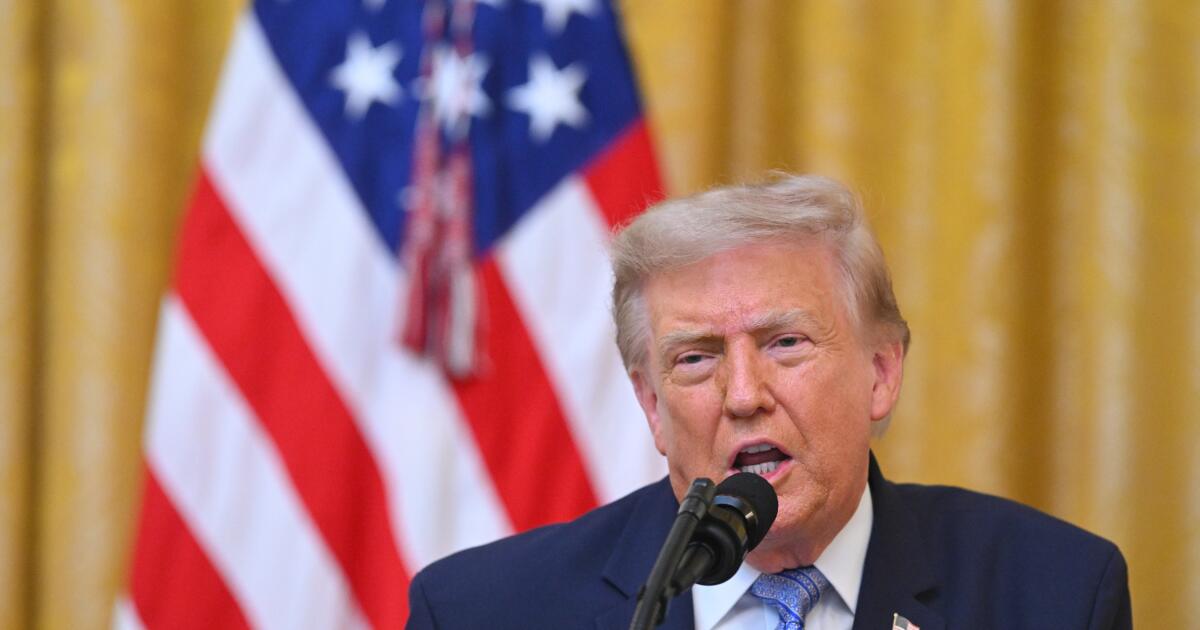
WASHINGTON — President Trump used a rare prime-time address Thursday night to renew his attacks on the security of U.S. elections, telling Americans that the nation’s voting system is “so broken” that “no one can possibly defend it,” a striking effort by a sitting president to undermine public confidence in domestic elections.
Trump asserted that the U.S. election system was “dangerously” exposed to potential foreign hacking, including by China, and said he had directed the White House to release a tranche of heavily redacted documents that purport to show “vulnerabilities” in the nation’s voting system.
But many of his claims, which echo his assertions after losing the 2020 election, have been debunked by investigations, audits or court proceedings. His warnings that the nation’s elections could be vulnerable to foreign influence have long been made by members of both parties, and he made no claims Thursday that foreign actors had changed vote counts or hacked election systems.
Trump amplified his assertions in an apparent effort to cast fresh doubt over what he said was a “stolen” and “rigged” election and renew calls for Congress to pass a federal voting law ahead of the November election.
“This evidence shows that the election system we have dangerously exposes and really exposes levels never thought possible to hacking, exploitation, and foreign interference,” Trump claimed.
The 26-minute address to the nation — a platform traditionally reserved for rare moments of national importance — comes after a series of steps by Trump in his second term to assert more federal control over elections before the November midterm elections, which are less than four months away.
Last week, Trump fired all remaining members of the bipartisan U.S. Elections Assistance Commission, a federal agency that helps states improve their voting systems and distributed election security grants to help protect state elections from foreign and domestic cyberattacks, among other things.
The Justice Department has also attempted to force states to turn over their voter rolls, an effort that more than a dozen courts have now ruled against, and said it would send election monitors to some states. Trump claimed states are refusing to turn over their voter rolls because he alleged noncitizens are registered to vote in their elections.
The president used California, a favorite target, to hint that Democrats were cheating. He cast doubt on California’s vote count in June’s primary election, saying, “It took a month to count the votes. I wonder what they were doing.”
The state’s vote count takes multiple weeks under the current system; it is not a sign of fraud.
Trump delivered the address with his approval rating stagnating at 37%, according to a Washington Post-Ipsos poll released Thursday, and with weakening enthusiasm among Republicans.
Democrats swiftly condemned Trump’s claims as baseless and a rehash of ideas that have little to do with actual election administration.
“Donald Trump is releasing unverified, meaningless documents to appease his own delusions about an election he lost resoundingly, all while continuing to withhold 3 million pages of the Epstein files,” Senate Minority Leader Chuck Schumer said on X.
Multiple reviews of the 2020 election have concluded that Joe Biden won legitimately, and election experts say there is no evidence that widespread fraud affected the outcome of the election. Trump’s own attorney general in his first term, William Barr, said at the time that his department found no evidence of widespread voter fraud that could have changed the outcome of the election.
“It’s been more than half a decade, with numerous audits, recounts, and more than 60 court cases, each finding no evidence of widespread voter fraud,” Sen. Alex Padilla (D-Calif.) said of the 2020 election in a statement. “Clearly, this is no longer about an election Donald Trump lost six years ago. It’s about him laying the groundwork to try to ‘take over the voting’ in the upcoming midterm elections.”
Sue Gordon, who served as principal deputy director of national intelligence during Trump’s first term, said most of the data Trump will release has already been assessed by the intelligence community.
“Since 2016, the intelligence community has been saying that foreign actors intended to influence our election for the purpose of undermining democracy — not undermining a president, undermining democracy,” Gordon told CNN’s Kaitlan Collins after the address.
“This is not a new threat. It was one he certainly knew of. He had an entire term to deal with it,” Gordon said, “and I don’t know how you can believe that the same community who told him about it … then somehow didn’t tell him about further attempts.”
Major broadcast networks declined to air Trump’s speech in full, instead reporting on it. Trump complained about NBC and ABC as he spoke, saying they should lose their broadcasting licenses. He falsely claimed that “they and others in the media are part of a plot” to “continue this fraud.”
In his remarks, Trump alleged China carried out what is believed to be the “largest compromise of election data history” starting during the 2020 election cycle and claimed that “members of the deep state” in the American intelligence community covered it up.
Trump said China had accessed voter data of 220 million people in 18 states, but that information is generally publicly available and does not contain information that would allow a bad actor to change votes or hack into an election system.
He directed the FBI, the director of national intelligence and other agencies led by some of his loyalists to investigate and prosecute the people responsible for the alleged cover-up.
Foreign adversaries have made known attempts to influence election outcomes, but there is no evidence that adversaries have ever breached voting systems or altered votes, something that would be extraordinarily difficult to do without notice, elections experts told The Times this week.
Trump did not mention Russia, which has made attempts to influence U.S. elections through social media or disinformation. In 2016, Russia interfered in the presidential election in an attempt to sway the contest in Trump’s favor, multiple U.S. assessments found in the years following the election.
China was not found to have interfered with election processes or infrastructure in an intelligence report released in March 2021, and the information Trump provided Thursday did not appear to contradict that.
The idea that China may have attempted to influence voters via social media or public statements is not new. In April 2020, an intelligence assessment determined that Chinese intelligence officials analyzed voter registration data from multiple states, according to a report that was declassified in 2022.
After the 2020 election, whether China attempted influence was the subject of debate. The intelligence report concluded it had only considered trying to influence voters, but the national intelligence officer for cyber issues took a “minority view” in the report, assessing that China took “at least some steps to undermine” Trump’s reelection chance.
“Trump’s shocking ‘bombshells’ about China are totally bogus,” Sen. Mark Warner (D-Va.), vice chairman of the Senate Intelligence Committee, said on X. “The fact is our intelligence agencies unanimously agreed that China did not even try to change a single vote in the 2020 election.”
Obtaining a list of voter data alone does not enable someone to change votes, said David Becker, executive director of the nonpartisan Center for Election Innovation and Research. The data are largely public and often used by campaigns and researchers; a bad actor would have to take further steps to affect an election.
“If anyone got into our voter databases and altered data on a scale that could change the election outcome, it would be obvious … because we would get reports of tens or hundreds of thousands of people having trouble voting,” Becker said.
The president also used the address to pressure Republican lawmakers to pass a voter ID law that has stalled in Congress and that voting rights advocates have warned could make it harder for millions of Americans to register to vote or cast a ballot. Democrats oppose the legislation, but it also has not gained enough support among Senate Republicans to pass.
“Addressing this crisis of elections security demands that Congress will pass the SAVE America Act,” Trump said. “How easy is that to do? Unless you want to cheat.”
Some congressional Republicans praised Trump on social media and echoed his claims to pass the legislation.
“It is more important than ever to crush foreign election interference,” Rep. Mike Lee (R-Utah) said on X. “It is more important than ever to pass the SAVE AMERICA ACT.”
Ahead of the speech, elections and democracy experts had cautioned that the president may attempt to sow doubt about the security of the nation’s election system or bolster debunked fraud claims.
Some experts said Thursday’s address could be interpreted as a sign that Trump is running out of moves in the lead-up to the midterm elections, where Republican control of the House is at stake.
“The fact that they’re throwing everything up on the walls at this point demonstrates panic,” Becker said. “They are not operating from strength right now. They are operating from weakness.”

President Trump, a former real estate mogul who knows a few things about construction projects, says there is “no harder zoning thing to get” than a helipad. But he is building one at the White House, and building it fast.
Such projects usually require a developer to navigate a complex web of zoning laws, airspace regulations and environmental impact studies, while negotiating with town councils and fighting off community pushback. Construction at the White House can often face additional hurdles.
But Mr. Trump has encountered no such difficulties as he quickly proceeds with construction of a black granite helipad on the South Lawn. He has not asked Congress or any review panel, such as the Commission of Fine Arts, to approve the project.
Past presidents have involved Congress and review panels in changes to the White House grounds, though Mr. Trump has asserted that he has the right to undertake major construction projects, such as a new 90,000-square-foot ballroom, without congressional approval. That project is currently the subject of litigation.
A White House spokesman said in an email that “operational upgrades to the White House grounds, such as the helipad installation, do not require commission reviews.”
Work on the helipad — which will be 100 feet in diameter and feature a presidential seal — started last month, shortly after a makeshift stadium built to host an Ultimate Fighting Championship fight significantly damaged the South Lawn.
Dana White, the U.F.C. president, said that his organization had set aside $700,000 to repair the lawn after the June 14 event. But Mr. Trump instead decided to forge ahead immediately with a helipad he had long wanted.
Why Trump is building a helipad
The helipad would allow Mr. Trump to use the latest generation of Sikorsky helicopters as Marine One on White House grounds — a move multiple administrations had avoided because the new, more powerful helicopters were likely to damage the South Lawn during landing.
The Navy began the search in 2010 for helicopters to replace the two models that have been used to transport the president and vice president for more than four decades — the VH-3D and the VH-60N. It purchased 23 VH-92A helicopters, including two test aircraft, at about $215 million apiece, with a total cost estimated at $5 billion, according to the Government Accountability Office.
The new helicopters are produced by Sikorsky, a subsidiary of Lockheed Martin, which is building the helipad as a donation. They joined the fleet between 2014 and 2021 and underwent a period of testing. The new generation of helicopters has occasionally been known to scorch the grass with engine exhaust while landing — an issue found during a training session in September 2018.
President Joseph R. Biden Jr. was the first president to fly on a VH-92A, on his way to the Democratic National Convention in Chicago in August 2024. But no new helicopter has yet transported a president to and from the South Lawn.
Marine One landed on the South Lawn grass for decades, and portable aluminum pads were rolled out to catch the wheels.
Mr. Trump said the new helicopters were “more powerful than the old ones. And when you land on the grass, it’s not that the grass gets discolored, it gets ripped out.”
The VH-92A has two engines with more than three times the capacity of those of the VH-3D, the current Marine One model, pushing more heat to the ground.
Lockheed Martin, a major defense contractor, is paying for the helipad project, which Mr. Trump estimated would cost between $5 million and $6 million.
“They didn’t tell us how powerful these helicopters were, and they felt a little bit guilty,” Mr. Trump said.
According to a spokesperson for Lockheed Martin, the company has a “long history of supporting projects in both the Washington, D.C., area and across the country. This specific contribution was made to the National Park Service. Our engagement with the federal government is guided by rigorous ethics and compliance standards and conducted in full accordance with all applicable laws and regulations.”
More red tape for a Mar-a-Lago helipad
Mr. Trump is also trying to build a helipad at his Mar-a-Lago resort in Palm Beach, Fla. But that project is moving much more slowly than the one at the White House.
The Mar-a-Lago project has been the subject of local historic preservation commission review, multiple public hearings, negotiations with town lawyers and votes by the Town Council.
Because Mar-a-Lago is a historic property, any changes there must be approved by the Palm Beach Landmarks Preservation Commission, said Joanne O’Connor, the town attorney for Palm Beach.
Mr. Trump had installed a helipad at the resort during his first administration, but it was dismantled after he left office.
The town is allowing Mr. Trump to build a new helipad at Mar-a-Lago but has placed limits on its use after his presidency. Any helicopter trips to or from Mar-a-Lago after he leaves office can be carried out only if approved by the Secret Service and in the event of an emergency, Ms. O’Connor said. The helipad cannot be used, for instance, to facilitate a golf outing.
“The concern was balancing the health, safety and welfare of the president with the interests of the town residents and the quiet enjoyment of their residential property,” Ms. O’Connor said.
No such review is taking place for the changes Mr. Trump is making at the White House.
Mr. Trump spoke recently about the difficulty most people encounter when trying to have helipads approved at their properties.
“I always was lucky, I always got helipads,” he said in remarks from the Oval Office. “Other people don’t. Very hard to get. The hardest thing to get is a helipad, OK?”
The South Lawn’s future
The helipad would significantly reshape the South Lawn, which has historically hosted events and ceremonies, including the annual White House Easter Egg Roll.
A White House official said events on the South Lawn would not be affected by the new helipad and would continue as usual.
“It can be used for other things when helicopters aren’t landing,” Mr. Trump said this month. “You can have other things out there like events. You could have news conferences literally on it because it’s the right size. So by doing this, we solved the problem, and we’ll be able to finally retire 45-year-old helicopters.”
Previous administrations have prioritized preservation of the White House property over permanent changes to the South Lawn. During the Biden administration, building a helipad was not high on the president’s priority list, said Andrew Bates, who served as a White House spokesman.
-

 News21 minutes ago
Where Wildfire Smoke Is The Worst Right Now—And What To Do About It
-

 Los Angeles, Ca2 hours ago
LADWP begins long-term repairs after West Hollywood water main rupture
-

 Detroit, MI2 hours ago
Livestream: Mayor Sheffield, Detroit health chief to address wildfire smoke threat
-
 San Francisco, CA3 hours ago
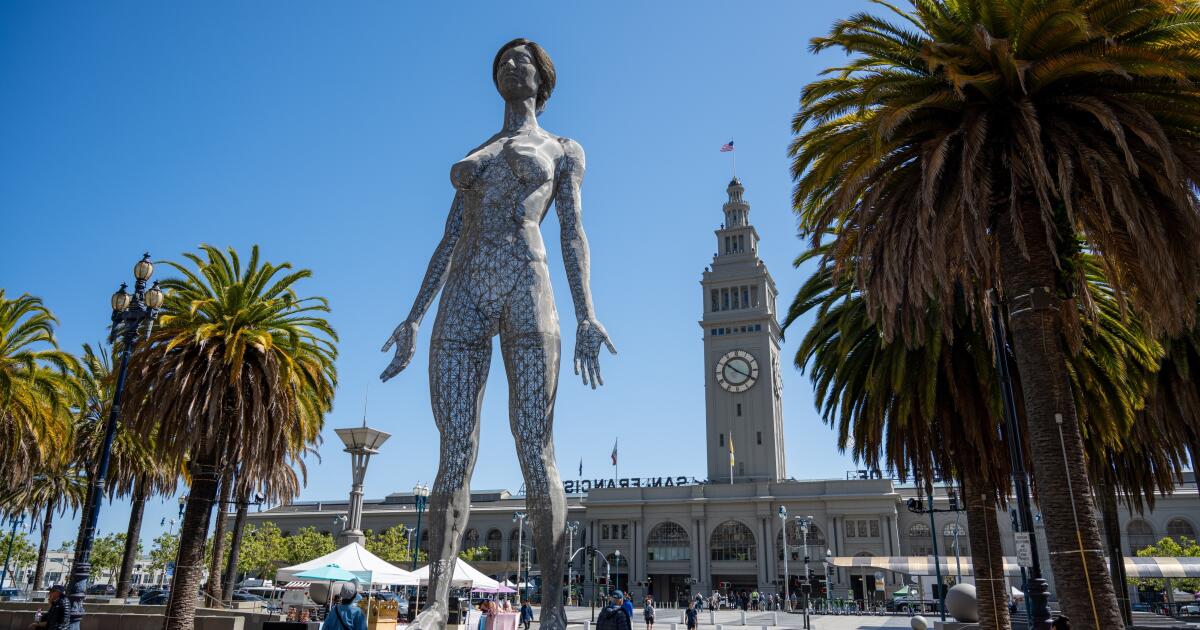
A sculpture of a giant naked woman goes on sale in San Francisco. Bring a crane
-

 Dallas, TX3 hours ago
No ‘straight answer’: Why Pioneer Cemetery is the latest battleground at City Hall
-

 Miami, FL3 hours ago
TSA hosts news conference ahead of World Cup third place match at Miami Stadium
-

 Boston, MA3 hours ago
ICE Boston arrests Barbados national during targeted operations in Attleboro
-

 Denver, CO3 hours ago
Denver Broncos training camp is 2 weeks away

