Seattle, WA
I-5 blocked near Chehalis, WA due to barricaded suspect


Standoff blocks I-5 in Chehalis
Washington State Patrol is in a standoff with a barricaded suspect that attempted to flee from troopers in Lewis County on Thursday.
CHEHALIS, Wash. – All lanes of I-5 are fully blocked near Chehalis due to a barricaded suspect on the freeway.

Washington State Patrol and law enforcement engaged in a standoff on I-5 near Chehalis. (Washington State Patrol)
What we know:
Washington State Patrol troopers are currently engaged in a standoff with a suspect that fled from Mason and Thurston County troopers.
Northbound and southbound I-5 are fully blocked just south of Chehalis, near the U.S. Route 12 interchange. Traffic is being diverted just before US-12.
The suspect’s vehicle was reportedly spiked on Rush Road in Chehalis before coming to a stop on southbound I-5. There is only one person in the vehicle, and troopers are still negotiating with the suspect.
Drivers are asked to avoid the area and expect delays.
What we don’t know:
It’s currently unknown what led up to the pursuit.
This is a developing story. Check back for updates.
MORE NEWS FROM FOX 13 SEATTLE
7 teens involved in deadly Bremerton car crash
Controversy continues to surround CCTV cameras in Seattle
Drivers navigate delays as WSDOT works to clear Bellingham, WA landslide
Budget cuts could impact access to Washington’s public lands
WA judge gives man longest big game sentence in decade for elk killing spree
To get the best local news, weather and sports in Seattle for free, sign up for the daily FOX Seattle Newsletter.
Download the free FOX LOCAL app for mobile in the Apple App Store or Google Play Store for live Seattle news, top stories, weather updates and more local and national news.
The Source: Information in this story came from the Washington State Patrol.



SEATTLE — Seattle Mayor Katie Wilson is wading into a series of high-profile Democratic primaries, backing progressive challengers against longtime state lawmakers in a move that could test both her political reach and Seattle’s relationship with Olympia.
Wilson has endorsed several local candidates, including Ron Davis in the 46th Legislative District and Hannah Sabio Howell in the 43rd District. Both are running from the left against veteran Democratic legislators, including Senate Majority Leader Jamie Pedersen.
The endorsements come as Democrats in Washington state face a series of intraparty challenges, with younger and more progressive candidates arguing that longtime lawmakers have not moved quickly enough on affordability, housing, taxation and social services.
An image of Mayor Wilson and Gov. Bob Ferguson giving an update on how the World Cup matches have played out so far in Seattle. (KOMO)
Political analyst Sandeep Kaushik called Wilson’s decision “a high-risk roll of the dice,” saying she is not only challenging veteran Seattle Democrats but also potentially putting at risk the city’s relationship with state leaders in Olympia.
“It’s definitely going to be” a test of her political influence, Kaushik said, noting that Pedersen can point to a long list of progressive credentials, including work on LGBTQ rights and the state’s new millionaires’ tax.
Wilson’s endorsements follow a national trend in which progressive candidates have tried to build momentum by challenging establishment Democrats in deeply blue areas. Kaushik said the timing did not appear coincidental, coming shortly after New York City Mayor Zohran Mamdani endorsed several candidates who went on to win their races. But he also noted a key difference: Wilson won Seattle’s mayoral race by a much narrower margin and has faced a bumpier start in office.
Davis, who is running against Rep. Gerry Pollet in the 46th District, said he entered the race after working on statewide housing legislation and deciding Olympia was a place where he could make a larger impact.
“Urgency” has been missing in Olympia, Davis said, arguing that too many lawmakers treat the job as a side role while families struggle with the cost of living. He said he wants the state to move faster on housing, transit, Sound Transit accountability, and progressive taxation.
Davis said Wilson’s endorsement matters because of her role in Seattle’s JumpStart payroll tax and broader progressive organizing.
“Katie Wilson is one of the people who has done more to bring taxation on the rich in Washington state than anyone else,” Davis said, calling JumpStart a measure that “broke the legal dam” for other forms of progressive taxation.
Davis also defended a challenge from the left after Democrats delivered the millionaires’ tax, saying internal competition is healthy and necessary.
“I think it’s needed,” Davis said. “There needs to be disagreement, and there needs to not be a cling to the status quo.”
According to a Washington Public Disclosure Commission candidate finance chart, Democrat William Dreher has raised about $258,000 in the race and spent $21,000. Davis has raised about $140,000 and spent $26,000.
Pollet has raised about $96,000 and spent $14,000.
Kaushik noted that Dreher, a prosecutor who worked on cases connected to the Jan. 6 attack on the US. Capitol, makes that race a three-way contest.
In the 43rd District, Sabio-Howell is challenging Pedersen, one of the most powerful Democrats in the Legislature. Sabio-Howell said she is running because the affordability crisis has worsened under current leadership.
“I believe in Washington’s potential to be the best place in the country to build good lives if we can afford it,” Sabio Howell said. “Status quo leaders, career politicians who have been in office as the crisis of affordability has only gotten worse, are not the people who are going to make an affordable future possible.”
Sabio Howell acknowledged the millionaires tax as a “historic win,” but argued it came only after a severe budget deficit forced lawmakers to act. She said progressive leadership from the 43rd District should have pushed for the policy earlier.
She also rejected arguments from large employers that Washington has reached a tipping point on taxes, comparing the current debate to warnings made during the fight for a $15 minimum wage. Sabio-Howell said voters have repeatedly shown support for funding social services through measures such as the capital gains tax, the Climate Commitment Act and the Long Term Care Act.
Sabio-Howell said Wilson’s endorsement aligns with her campaign’s focus on affordability, housing, schools, public transit and shifting political power away from corporate interests.
The fundraising gap in the 43rd District remains significant. The PDC chart shows Pedersen has raised about $348,000 and spent $77,000. Sabio-Howell has raised about $82,000 and spent $23,000. A third candidate, Heather-Marie P. Wilson, reported no contributions or expenditures on the chart.
Wilson did not return a request for comment.
The Washington State Labor Council also issued a statement, “Jamie Pedersen is the most progressive Senate Majority Leader we have ever had, delivering on major progressive priorities like progressive tax reform and rent stabilization when previous majority leaders couldn’t. If he is not re-elected, the next majority leader will most likely be less progressive and less willing to tackle the toughest problems. Campaigning is an extended job interview and Pedersen has demonstrated he can do the job effectively and in-line with his district’s values. Our unions and community allies should be united in fighting back against a right-wing authoritarian government, not divided against legislators like Jamie Pedersen and Gerry Pollet, who have strong progressive voting records. We have a common foe: the conservative forces in Washington seeking to take over our State Supreme Court, attack our trans community, and repeal the Millionaire Tax and force deep cuts to education and healthcare.”
His campaign also cited a statement from Katy Ozog, the Executive Director of the Washington Senate Democratic Campaign, “Jamie Pedersen is the most progressive Senate Majority Leader in state history, and the author of landmark legislation like the Millionaires Tax, a champion for affordability measures like rent stabilization, and a leader in the fight for LGBTQ+ equality. He is proud to be the only candidate in the race to have sole endorsements from labor unions and Planned Parenthood.”
Kaushik said the broader picture is a Democratic Party “at war with itself” in Washington, with younger, outsider candidates challenging incumbents they view as part of a failed establishment.
“The mayor doesn’t see herself as just another typical Democratic politician,” Kaushik said. “She very much sees herself as part of and a leader of a movement, a progressive political movement that really aims to take over and change the Democratic Party.”
Whether Wilson’s endorsement can help deliver victories for those challengers remains uncertain. Her allies see the move as part of a broader push for progressive leadership at every level of government. Her critics may view it as an unnecessary risk at a time when Seattle still depends on Olympia for housing, transportation, public safety, and budget support.
For now, the races offer a clear test of whether Wilson’s narrow mayoral victory has grown into broader political power or whether longtime Democratic incumbents can withstand a challenge from their own left flank.

The Seattle Seahawks are the defending champions, but that doesn’t mean their rookie class isn’t important.
If anything, it means the rookie class is more important because these first-year players will have to play at a very high level right from the jump in their careers. The Seahawks’ rookie class is going to be expected to help the team win a Super Bowl by replacing some key players on the roster.
“The world champion Seahawks, as I saw it, had three clear areas that became needs this offseason: running back, safety and corner, with the departures of Kenneth Walker III, Coby Bryant and Tariq Woolen,” Sports Illustrated reporter Albert Breer wrote.
“Accordingly, running back Jadarian Price, safety Bud Clark and corner Julian Neal were their first three draft picks, and all three will be guys to watch in late July and August. And another storyline, one that’ll tie back to Price, will be Zach Charbonnet’s return from a torn ACL.”
Jadarian Price
With Zach Charbonnet tearing his ACL during the divisional round game against the San Francisco 49ers back in January, first-round pick Jadarian Price will be thrown into the limelight in Week 1, assuming he gets through training camp in full health.
This will be an excellent opportunity for Price to get early reps, especially considering he was a backup in college to Jeremiyah Love, the No. 3 overall pick in the draft. He’ll compete with George Holani in training camp for the starting job against the New England Patriots on Sep. 9.
Bud Clark
Clark shouldn’t be expected to start over Julian Love and Ty Okada, but he should still have a handsome role in the secondary. Last year, the secondary proved how important depth is, and everyone in Seattle’s back line can play at a high level.
Clark is taking over for Coby Bryant, who signed with the Chicago Bears back in March. Those are tough shoes to fill, but Clark will be given an opportunity to show why he was a second-round pick.
Julian Neal
The Seahawks won’t have Riq Woolen this season after he signed with the Philadelphia Eagles. Josh Jobe and Nick Emmanwori will also need to fill in for Woolen’s absence, but third-round pick Julian Neal will have to shoulder some of the responsibility as well.
Woolen played in 78 percent of the team’s defensive snaps last season, which means Neal could hear his number early and often if he has a strong showing in training camp.
— Enjoy free coverage of the Super Bowl champions from Seattle Seahawks On SI —
Sign Up For the Seahawks Daily Digest – OnSI’s Free Seattle Seahawks Newsletter
Add us as a preferred source on GoogleFollow

PHOTOS BY OLIVER HAMLIN FOR WEST SEATTLE BLOG
Hundreds of people spent Sunday admiring and photographing the 12 gardens spotlighted on this year’s West Seattle Garden Tour. Among them was WSB contributing photojournalist Oliver Hamlin, who presents a scene from each garden (including some of the gardeners. First, at Garden A, “A Show of Northwest Natives“:
Charles Anthony, who created Garden B, “Salish Sea Sanctuary,” posed with his Japanese Maple:

Garden C, “Heron Cove,” has its namesake standing sentinel:

Below are Debra Montgomery and Lee Kelly; she bought the “Heron Cove” house 7 years ago and inherited Lee, who has been the gardener for 40 years. She said the previous homeowners sought out a buyer who wouldn’t tear down the house and would keep caring for the garden, which she and Lee both now do.

Garden D was described as “Small Spaces, Big Moments”:

Below (L-R) are the gardeners behind Garden D, Laird Applegate and Brian Pelzel:

Garden E was “From a Sprawling Lawn and One Tree to …”

Blackberries are often the bane of a gardener’s existence, but in Garden F, “Transformation,” they were beautiful:

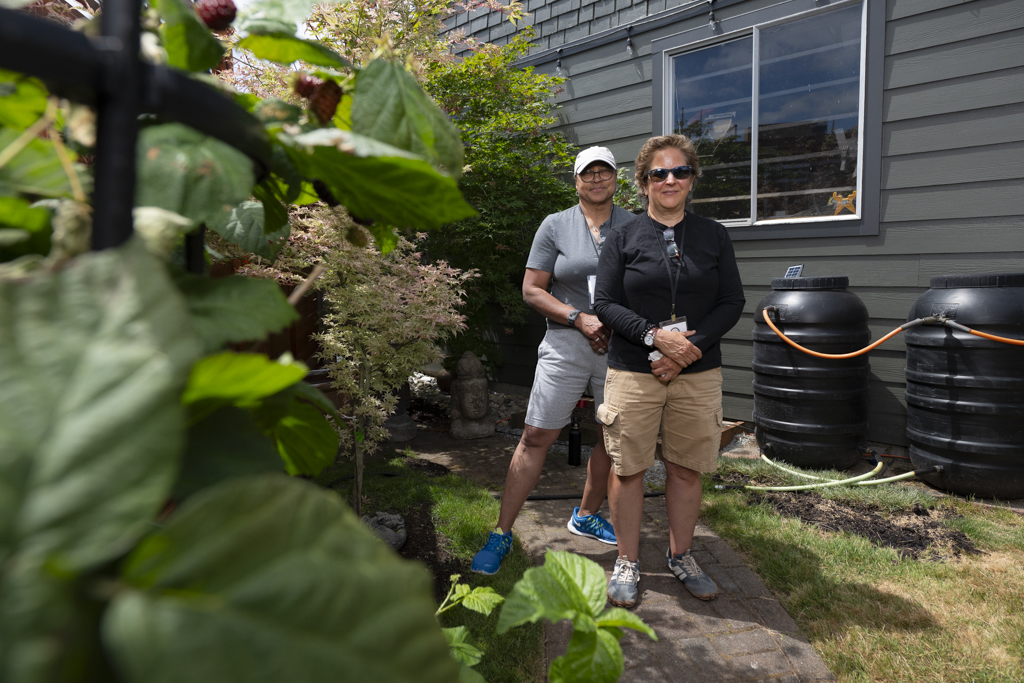
Garden F’s (L-R) Diane Elie and Raquel Gonzalez store water in 60-gallon rainbarrels and told Oliver that it fills most of their irrigation needs:
At Garden G, “Hidden Gem,” Julie Robinson-Jasper and Maple the dog are seen through a mirror surrounded by star jasmine at Garden G, “Hidden Gem”:

Another scene from Garden G:

Garden H, “Behind the Fences,” sported an arch of bittersweet nightshade:

A clawfoot bathtub graced Garden I, “A Fresh Look for A Once-Beloved Garden“:

Garden J, “Garden of Many Rooms,” was conducive to wandering:

Garden K offered onlookers “Plants from Around the World“:
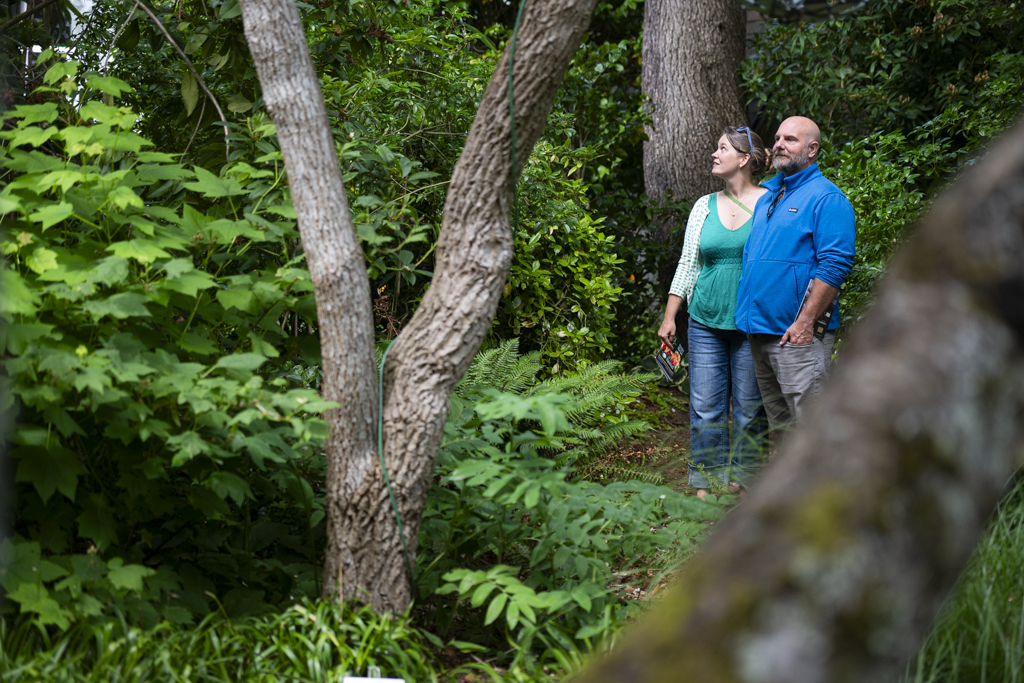
And Garden L, “Conifer Corner,” featured a 75-year-old wisteria:

(Read details of each garden here.) The West Seattle Garden Tour is organized by a nonprofit that uses the proceeds to support other nonprofits – here are this year’s grant recipients; see how to apply for one of next year’s grants by going here (July 15 is the deadline).
-

 Finance2 minutes ago
Google Cloud Pursues Financial Markets in FactSet Alliance | PYMNTS.com
-

 Fitness5 minutes ago
Boutique Fitness Is Redefining How Americans Work Out. Which Drop-In Classes Are Worth Booking?
-

 Movie Reviews17 minutes ago
‘Supergirl’ Movie Review
-

 World25 minutes ago
Map: 6.0-Magnitude Earthquake Shakes Off Mexico’s Coast
-

 News32 minutes ago
In the United States, Every World Cup Team Is a Home Team
-
 Lifestyle1 hour ago
How does the Kennedy Center board make decisions? This legal filing sheds some light
-

 Technology1 hour ago
Meta is adding ridiculous ‘rate limits’ and a soft paywall to its smart glasses
-

 World1 hour ago
Boy, 2, pulled alive from rubble six days after Venezuela’s devastating twin earthquakes

