Seattle, WA
Here’s Why Sunday’s Win Over the Houston Astros Was So Crucial For Seattle Mariners


The Seattle Mariners beat the Houston Astros 6-4 on Sunday afternoon to snap a brutal five-game losing streak. Furthermore, the win also moved the Mariners back into a virtual tie with the Astros for first place in the American League West.
But there’s another reason why the win on Sunday was so crucial: It moved the M’s one win closer to having the season-long tiebreaker with the Astros, which would be huge if the two teams finished tied in the West.
Through 10 matchups this season, the Mariners are 6-4 against the Astros. As long as they don’t get swept in the final series of the year between the two (in Houston), the M’s will finish with the tiebreaker in hand and will have a one-game grace the rest of the way.
Given how the Mariners have played over the last month – and how the Astros have played – that one game could end up being a huge difference. According to Tankathon, the Mariners still have the fifth-easiest schedule remaining for the rest of the year, so the hope is that they can exploit that and make tiebreaking scenarios not matter much.
The tiebreakers mattered as recently as last year, when the Astros and Texas Rangers both finished at 90-72. The Astros won the division based on tiebreakers, so this absolutely is a big deal moving forward.
The Mariners are 53-48 and will be back in action on Monday night when they start a three-game series at home against the Los Angeles Angels, who they just lost three of four to in LA last week.
NEW PODCAST EPISODE IS OUT: The fourth episode of the “Refuse to Lose” podcast is now out! In this episode, we discuss how the Mariners can beat the Astros, what they need to not do in the series, Andres Munoz not getting in the All-Star Game and more, including our interview with Bryant Robinson, who directed the Julio Rodriguez documentary that recently aired on FS1. CLICK HERE:
HOPING FOR JULIO: Julio Rodriguez left the game on Sunday with a scary looking ankle injury, but initial reports are good. Here’s the latest. CLICK HERE:
THANKS FOR EVERYTHING, TY: After the game on Sunday, the Mariners made a shocking decision with former All-Star Ty France. Here’s the latest, and what happens next. CLICK HERE:
Continue to follow our Inside the Mariners coverage on social media by liking us on Facebook and by following Teren Kowatsch and Brady Farkas on “X” @Teren_Kowatsch and @wdevradiobrady. You can subscribe to the “Refuse to Lose” podcast by clicking HERE:




SEATTLE – Offshore winds at the surface will warm us well into the 80s on Tuesday. This will mark the warmest day of the week with some spots warming to the upper 80s, especially in the Cascade foothills.

Offshore winds will warm many spots into the 80s on Tuesday.
What To Know:
The ridge will begin sliding to the east, opening the door for some high clouds to increase throughout the day. A disturbance will produce showers and even a few storms in Oregon. These will eventually move northward into western Washington, increasing showers and rumbles of thunder. There is also a chance for showers in Central and Eastern Washington as well.
A disturbance will push showers and even a few storms into the area beginning Tuesday night.
What’s next:
Tuesday will be the warmest day of the week. Days will quickly cool off beginning Wednesday with chances for showers through the weekend. Drier skies and mild weather will return by next Monday.
80s for Tuesday with a cooldown later in the week.
MORE NEWS FROM FOX 13 SEATTLE
UW student stabbed to death in laundry room
Seattle Vietnamese restaurant hopes for community support to stay open
Starbucks announces dozens of Seattle summer layoffs
Tacoma neighborhood on edge after man assaults teenager
2 people pulled from Sammamish apartment complex fire
To get the best local news, weather and sports in Seattle for free, sign up for the daily FOX Seattle Newsletter.
Download the free FOX LOCAL app for mobile in the Apple App Store or Google Play Store for live Seattle news, top stories, weather updates and more local and national news.
The Source: Information in this story came from the FOX 13 Seattle Weather Team and the National Weather Service.
Seattle, WA
Victim identified in deadly Seattle beer garden shooting on Lake City Way; suspect sought

SEATTLE — A north Seattle community is mourning the loss of a 25-year-old beer garden employee who was killed while closing the business Friday night.
Loved ones identified the victim as Quusaa Margarsa, known to many as “Q.” Seattle police are searching for the suspect but have not released details about the circumstances surrounding the killing, including whether investigators believe it was a robbery gone wrong or a targeted attack.
Police said Margarsa was working at The Growler Guys on Lake City Way NE on Friday night when he was killed. A co-worker discovered him the next morning.
“I want to know why. I think we all want to know why. What was the reasoning?” said Coreena Richards, a childhood friend of Margarsa.
PREVIOUS COVERAGE | Memorials, mourners honor young employee found dead at North Seattle beer garden
Throughout the weekend, friends, family members, and customers stopped by the north Seattle beer garden to leave flowers, candles, and messages at a growing memorial honoring Margarsa.
“Amazing, one of one — you’re never going to meet anybody like him,” Richards said.
Margarsa, a graduate of Nathan Hale High School, was a member of the school’s 2017 championship basketball team, according to the school’s alumni association. Friends described him as a “gentle soul” who was full of humor.
“He’s funny as hell. He was the life of the party. Very sweet, very kind,” Richards said.
Family members said Margarsa was preparing to celebrate his 26th birthday later this month and had been planning a birthday trip. Instead, his life was cut short while he was closing the beer garden where he worked. Police said Margarsa died of apparent gunshot wounds.
ALSO SEE | Seattle beer garden employee found shot to death inside workplace
“He was very sweet, very nice — a young guy with his whole life ahead of him. Very sad,” said Robert Bishop, a customer at The Growler Guys.
Days after the killing, customers continued to visit the memorial site, lighting candles and calling for answers as detectives searched for whoever was responsible.
“I’ve been on social media asking everybody, because it’s one thing for a mom to find out on Mother’s Day,” Bishop said. “Everybody in the neighborhood should be up in arms about this.”
As investigators work to solve what police say is Seattle’s 12th homicide of 2026, authorities have not said whether the attack was random or targeted. Police also have not said whether surveillance cameras at the business captured images of the suspect.
“You got nothing out of it. You gained nothing from this,” Richards said. “They took somebody very, very important to the people who knew him, loved him, and cared for him.”
Seattle police said the circumstances surrounding the killing remain under investigation. Anyone with information is urged to contact the department’s violent crimes tip line at 206-233-5000.

I have always been in love with cities. I joke with friends that I have crushes on cities the way they have crushes on good-looking strangers. Sometimes—as with Paris and London—my unrequited crush meant finding an excuse to move there. With Seattle, however, that initial attraction grew into a long-term relationship.
Liz Dunn
Phot by TRAVIS GILLETT
I arrived here as a “tech baby,” coming from Canada to work at Microsoft as a college intern. For a long time, I felt as though I were living in a bubble—until I realized I could pivot my career and work in and on the city I’d come to call home. Through my company, Dunn & Hobbes, I’ve done just that, spending more than 25 years building and renovating spaces for retail, restaurants, and creative work. I love old buildings—but what I love more is what happens inside and around them. I love making space for creative people and then watching them fully inhabit those places and thrive. I also love how a collection of structures on a block can become an economic and artistic ecosystem.
Working in real estate is not just about making deals—you’re crafting pieces of the city, and that comes with both impact and responsibility.
Small businesses are the heart and soul of any neighborhood. Research shows that locally owned businesses generate a much higher multiplier effect in the regional economy than national chains. Beyond economics, the independent shops, restaurants, and designers that comprise the core fabric of a city are the secret sauce that makes it feel unique.
Nowhere is that more evident than Capitol Hill’s Pike/Pine corridor, where I’ve conducted most of my work and lived out large chunks of my adult life. During the past 25 years, it has become a case study in what happens when you preserve character and invest in small business. The area was once filled with old auto-row buildings that had fallen into disuse. Instead of wiping the slate clean, local developers, including me, saw an opportunity for creative reuse. Those buildings turned out to be perfectly scaled for independent retailers and restaurants, creating a unique critical mass that offers a popular destination for locals and tourists alike.

What makes Pike/Pine special is its texture and grit—the layered history you feel in both the physical architecture and the spirit of the shops and restaurants. A large percentage of businesses are owned by members of the LGBTQ+ community, women, immigrants, and people of color. The density of independent retailers and studios—and the inclusive community that supports them—creates omething you can’t replicate with a formula. It evolved over decades, shaped by artists, musicians, designers and small entrepreneurs willing to take risks and plant their flags.
Today, neighborhoods like Pike/Pine face challenges that threaten the tightly woven ecosystem that makes them thrive. There’s a difference between gritty and too gritty, and during the past six years, it’s become harder to attract people. Foot traffic in neighborhood retail districts is dropping, even as downtown begins to recover with tourism. Small businesses are dealing with crushing cost pressures, many tied to public safety concerns and well-intentioned policies with unintended consequences. Public safety has been the elephant in the room—though I do believe we are starting to see improvements. At the same time, our habits have changed. Seattleites have been hibernating, whether because of repercussions from the COVID-19 pandemic or the convenience of delivery apps, streaming, and gaming.
And yet, people still deeply crave connection.
That’s why what’s happening in Pike/Pine right now is inspiring and hopeful. Many of the people who helped shape the neighborhood are still here, investing their time, money, and creativity because they care deeply about its future. We’re doubling down on what makes it special—art walks, a slate of new murals, the On The Block street fair, and Capitol Hill Block Party—all invitations for the community to come back out and re-engage.

This spring, on Saturday, May 16th, we’re launching something new: the Pike/Pine Spring Fashion Walk and Social. It’s designed to be an annual celebration that stretches across the neighborhood, anchored by a collection of activations at Melrose Market, and a runway show on the “catwalk” at Chophouse Row that will include Seattle fashion apparel leaders Glasswing, JackStraw, the Refind, the Finerie, and Flora and Henri. Neighborhood-based designer and brand activations up and down the corridor will include open studios, DJs, wine tastings, in-store pop-ups, and involvement from local college students—bringing in the next generation of designers and entrepreneurs. One of the goals is to remind everyone that Seattle still has amazing fashion “game,” offering a scene that is just as creative and diverse as anything you might find in New York or LA. At its core, this event is not about shopping. It’s about creating a reason for people to come together, to reconnect, and to experience the neighborhood as a shared space.
Because that’s the point. Cities work best when we show up—for them and for each other. Seattle’s culture is not something that exists just for us to consume; we are all participants in shaping it. So, my call to action is simple: come out. Walk around and meet your neighbors. Engage in what’s happening. It feels good—and it does good.
-

 Technology3 minutes ago
AI robot changes your tires and balances them too
-
 Business9 minutes ago
California consumers accuse popular Italian food brand of tomato fraud
-
Entertainment15 minutes ago
Is ‘Blue Dot Fever’ a real problem for the concert industry?
-
 Lifestyle21 minutes ago
What the postcards leave out: 5 moments in history that still echo along Route 66
-
 Politics27 minutes ago
Commentary: Those $1,000 Trump accounts don’t match the hype
-
Science33 minutes ago
Contributor: Fuel drug development, not Big Pharma’s profits
-
 Sports39 minutes ago
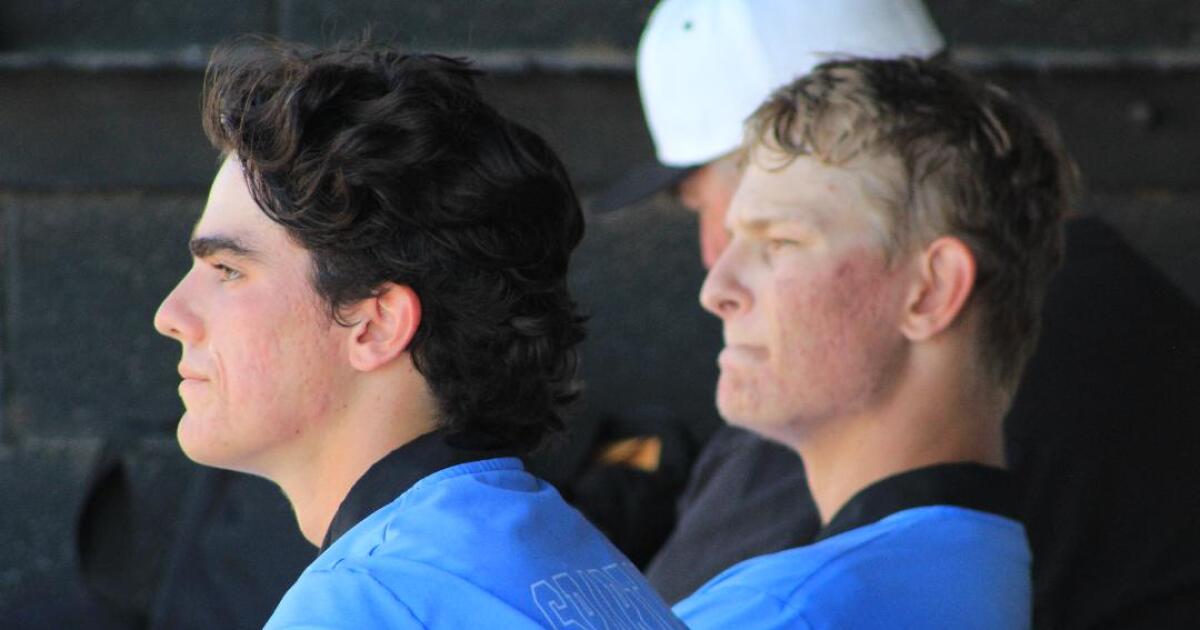
Prep talk: Villa Park pitching duo will be tough to stop in Division 2 baseball playoffs
-

 World51 minutes ago
EU countries back suspending funding for the Venice Biennale