Oregon
Old-Growth Forests and Oregon’s Healthy Ecosystems


Oregon’s forests were once full of old-growth, but today, less than 10 percent of old-growth trees still stand, environmental advocacy group Oregon Wild estimates. Despite their essential role in ecosystems and years of controversy over their loss, these forests are often still targeted for logging.
The National Old-Growth Amendment, open for public comment until Sept. 20, would restrict commercial logging of old growth in every national forest across the country, but it wouldn’t affect old growth managed by the Bureau of Land Management.
Chandra LeGue, a longtime old-growth advocate for Oregon Wild, says old growth is essential because trees store more carbon as they get older.
It takes 70 to 80 years of growth for a tree to start storing a level of carbon that’s beneficial to the environment. In the Pacific Northwest, trees are considered old growth if they are more than 150 years old, LeGue says.
“They have all this mass that is essentially carbon,” LeGue says. “It’s taken from gaseous form to wood form.”
The Northwest Forest Plan, which is currently being amended by the U.S. Forest Service, helps protect old growth in the Northwest, but there are no nationwide regulations in place.
The intended effects of the NOGA are to increase the amount and improve retention of old-growth forests, strengthen conditions that will help old growth adapt to changes in the climate, incorporate Indigenous knowledge in the management of old-growth and develop local management strategies, according to a report from the Forest Service.
The Forest Service and the BLM control 61 percent of Oregon’s forestland as public federal land, according to Oregon Forest Resources Institute, a forest products industry group.
National forests, which are managed by the Forest Service, make up 48 percent of Oregon’s total forestland. BLM manages the other significant portion of federally owned forests in Oregon.
The U.S. Forest Service is accepting comments from the public about its draft of the National Old-Growth Amendment until Sept. 20.
After the public comment period is over, the Forest Service, which manages 193 million acres of public national forests and grasslands across the county, will make adjustments and finalize the plan before 2025.
It is estimated to be implemented by Jan. 1, according to the Forest Service.
“What we need to do is look at our forest practices and logging practices, and start to line them up with the real science that has to do with climate,” says Patty Hine, president of climate action group 350 Eugene.
Hine goes out in Eugene twice a month to educate people about current climate issues.
On April 22, 2022, the Biden Administration issued an executive order requiring the Forest Service and other applicable organizations “to pursue science-based, sustainable forest and land management.”
The order urged them to conserve America’s federal-land mature and old-growth forests, support traditional Indigenous ecological knowledge and cultural and subsistence practices and respect Tribal treaty rights.
“In addition to just storing carbon, if you’ve ever walked down a shady street with trees on it, you know how much cooler it can be,” LeGue says.
Forests mitigate the temperature and cool the water within the forests that eventually come out of our tap, LeGue says.
The McKenzie River supplies Eugene with its drinking water, which originates at Clear Lake, about 85 miles northeast of Eugene, and travels through Willamette National Forest to reach Eugene.
The majority of Portland’s drinking water comes from rainfall in the Bull Run Watershed in Mount Hood National Forest, according to the city of Portland.
“Forests that have a healthy understory and rich, deep soils do a much better job of filtering water,” LeGue says. “Which can really impact municipal drinking watersheds.”
As climate change causes summers to get warmer and drought seasons to get longer, older forests will provide more water than younger ones, LeGue says.
Old-growth forests are more resilient to fire, so as climate change increases temperatures and the number of wildfires, old-growth is even more essential for ecosystems, she says.
A small percentage of timber comes from public lands, Sarah Bennett, BLM’s Oregon and Washington spokesperson says. “The vast majority of it is from private lands.”
Thirty-four percent of Oregon’s forests are privately owned.
The BLM manages 16 million acres of public land in Oregon and Washington, and 12 percent of Oregon’s forestland, but doesn’t manage national forests. The agency does its “very best” not to cut down trees that have a diameter larger than 36 inches and that originated before 1850, Bennett says.
In 2020, 14 percent of timber was harvested from federally owned forests, 76 percent of it came from private forestland and 10 percent came from state or county owned forestland, according to Oregon Forest Resources Institute.
Less than one percent of timber was harvested from Native American tribal forestland, which makes up only two percent of forestland in Oregon.
The NOGA won’t apply to land managed by the BLM because it doesn’t manage national forests, but to comply with the executive order it is creating policy for old-growth on a location-by-location basis, Bennett says.
Logging kills trees, preventing them from storing additional carbon and instead releasing carbon into the atmosphere, LeGue says.
“Letting the trees grow is really the best thing for the climate,” LeGue says.
Comments on the National Old-Growth Amendment can be submitted on the U.S. Forest Service’s NOGA project website under the “Get Connected” tab.
Related


WILSONVILLE, Ore. (CNN) – Under the cover of the night sky, a bear took a jaunt around an Oregon town. Its presumed search for a snack was interrupted by a police officer’s bright spotlight.
For the next few minutes, the officer followed the bear as it sauntered down the road, even making sure the animal didn’t dart into the road.
Eventually, video shows the officer corralled the black bear and escorted it to a nearby river where it would be safer.
Copyright 2026 CNN Newsource. All rights reserved.

PORTLAND, Ore. (KATU) — The summer solstice, which marks the astronomical beginning of Summer, is also considered the longest day of the year– meaning daytime hours are longer while nighttime hours are shorter.
WEATHER | Latest Storm Tracker 2 Forecast
This is because the summer solstice marks when the Northern Hemisphere is closest to the sun.
In Washington and Oregon, we will lose about 50 minutes by the end of July. But in the southern United States, that change is reduced.
For example, in Florida, they will lose about 20 minutes by the end of the month.
As Earth continues to orbit around the sun while rotating on its axis, the Northern Hemisphere will eventually be faced away from the sun as we approach winter solstice on December 21, 2026.
While we are losing daylight, we will not be losing any sunshine. High temperatures on Sunday will end in the lower 80s and Tuesday’s high could be closer to 90.

Start Date: July 4, 1628
Location: Approximately 1 mile West of Hole in the Ground Vista Point
Jurisdiction: Deschutes Forest Service
Fire Size: 10 acres
Cause: Under investigation
Fuels: Mixed timber and sage
Containment: 0%
Structures at risk: Nearest structure is 1/4 mile
Fire Crews/Resources: Interagency resources are suppressing fire with 2 engines, 1 dozer, 1 water tender, and one air attack.
The BLM is working with the newly established U.S. Wildland Fire Service to coordinate with Central Oregon Fire Management Service (COFMS). Visitors and locals may notice multiple agency logos posted and interagency COFMS prevention patrols by federal wildland fire apparatus throughout Central Oregon, reflecting a unified effort to suppress wildland fires.
Visit the official source for wildfire information in Central Oregon at centraloregonfire.org for wildfire updates or follow fire information on X/Twitter @CentralORfire. Call 9-1-1 to report a wildfire. For smoke and air quality information visit fire.airnow.gov.
Discover more from Central Oregon Fire Information
Subscribe to get the latest posts sent to your email.
-
 Sports3 minutes ago
‘I wish she was alive.’ Eliezer Alfonzo has emotional day as Dodgers lose to Padres
-

 World11 minutes ago
Photos: Khamenei funeral procession under way in Tehran
-
 News36 minutes ago
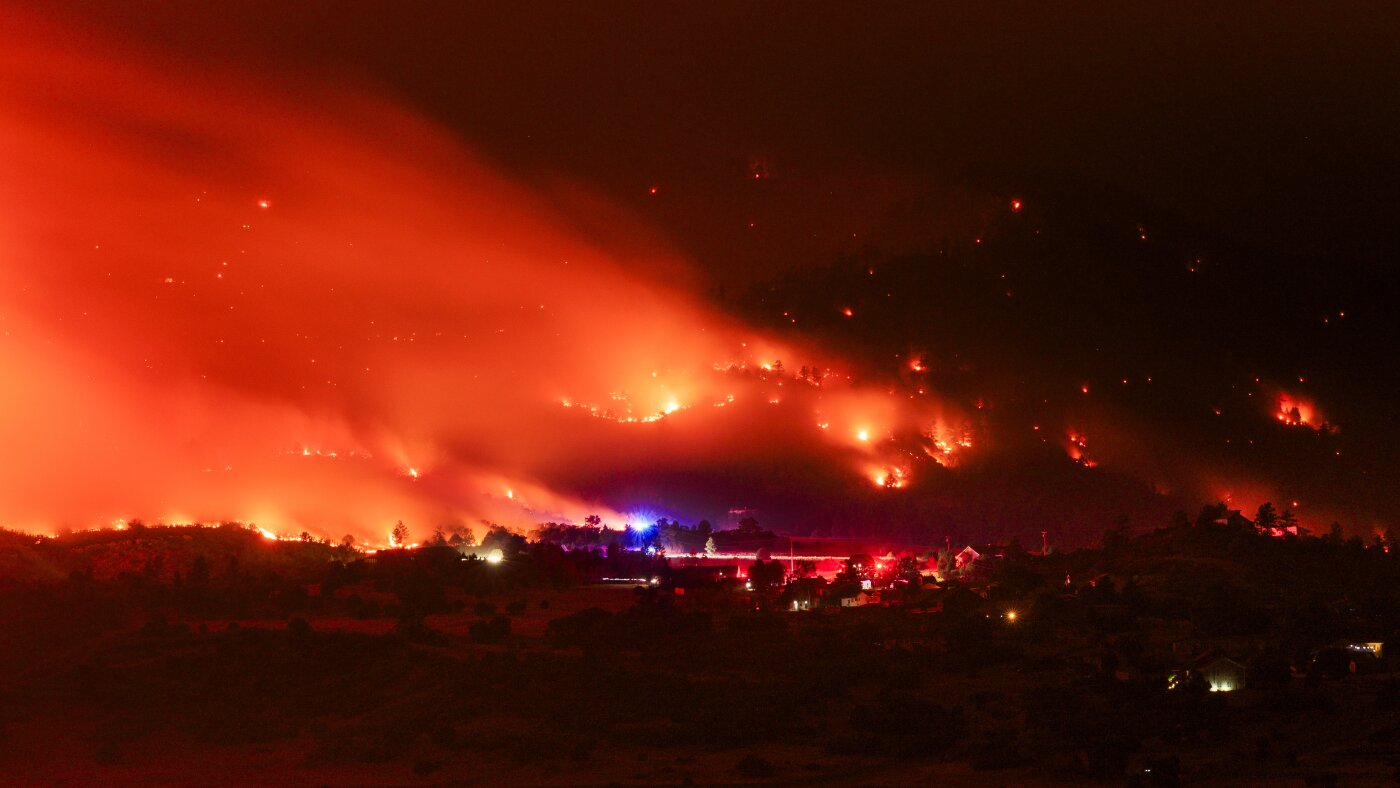
Thunderstorms, heat and wind will hamper efforts to contain Colorado wildfires
-

 New York2 hours ago
10-Minute Challenge: The Ceiling at Grand Central
-

 Los Angeles, Ca2 hours ago
1 killed, multiple people injured in Tarzana 4-car crash
-

 Detroit, MI2 hours ago
Power outage forces flaring at Marathon’s Detroit refinery; portion of Schaefer Road closed
-

 San Francisco, CA3 hours ago
San Francisco’s fireworks show ends in hours of gridlock involving Waymo cars
-

 Dallas, TX3 hours ago
FIFA Fan Fest in Dallas paused due to lighting in the area Sunday evening

