West
New threat facing homeowners whose properties are featured online

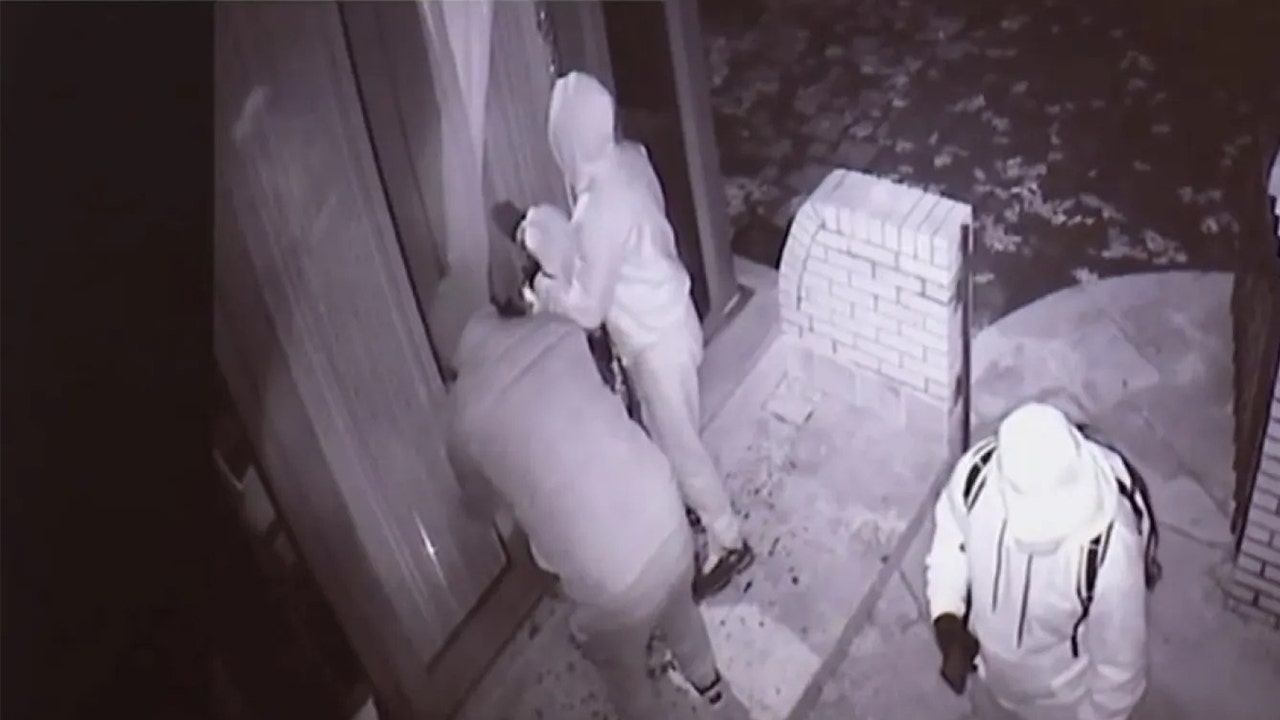
Burglars once lurked around neighborhoods and scanned obituaries to determine whom to target. Now, with free services easily available online, they can plan potential robberies from their computers or phones.
Although hard data on burglar’s methodologies is hard to come by, California’s Riverside Police Department has seen a number of criminals using these online means after they are arrested for prospective burglaries, or after completing one successfully.
The revelation comes as roving international crime gangs have victimized communities in California, Michigan and Arizona, according to Fox News Digital coverage earlier this year.
“Our detectives confiscate digital devices and things like that [after they arrest suspects] and we try to get search warrants to get into those devices,” Public Information Officer Ryan Railback told Fox News Digital. “That’s where you’re finding internet history. Our detectives have gone on their Google Maps and found that they’re searching certain addresses, that they were on Zillow or Redfin.”
Google shows high-definition aerial footage of 36 million square miles via Google Earth and Google Street View footage on 10 million miles of road worldwide, telling CNET that it has mapped out the streets in 98 percent of places where people live.
PROTECT YOUR PRIVACY: HOW TO REMOVE YOUR HOME’S PHOTOS FROM ZILLOW, REDFIN AND REALTOR.COM
Ring video shows burglars prowling in a victim’s backyard at night with flashlights.
Meanwhile, Zillow, one of the most popular real estate sites in the country, reported approximately 130 million listings in the U.S. as of July 2024. Sites like Zillow, Redfin and Realtor.com often show detailed interior photos of homes, and they stay on the website even after the home is sold in some cases.
“Right now you metaphorically case the joint out by going on these platforms with a cup of coffee in the comfort of your chair, and you gain more relevant data and intel than you ever did with [binoculars] and a vehicle outside the home,” former NYPD detective and security expert Pat Brosnan told Fox News Digital. “You really get the inside baseball.”
Brosnan said that prospective sellers can protect themselves by limiting what they include in their online home profiles.
“If you’re going to sell your home, of course you’re going to want to get your best foot forward,” he said. “The balance is to submit accurate, telling and professionally taken photos, but you don’t have to give a boatload. And I would always advise against doing a 360 video, really common with sales.”
‘BURGLARY TOURISM’ PLAGUES SOUTHERN CALIFORNIA AS UNVETTED FOREIGNERS RAID LUXE HOUSES
Sue Ellen Gutierrez Saez, 20, Johan Salvo Alacon, 21, and Manuel Eduardo Fuentes Gomez, 25, were arrested in Phoenix for allegedly committing an estimated 111 home burglaries as part of a South American criminal gang. (Maricopa County Sheriff’s Office )
Brosnan said that videos like these can be paused and enhanced, allowing criminals to “know every crack and crevice of the home, including windows, cameras and locking systems.”
“You can identify alarm systems and ways to get around them,” he said. “You can identify secondary and third points of entrance and egress.”
Sharon Polsky, president of the Privacy & Access Council of Canada, said that Google Maps imagery is also a useful tool for prospective car thieves.
“Car thieves can get a good idea of the type and number of vehicles at an address. A home with children’s toys scattered in the yard might be an unlikely place to get a high-end sports car; but a house with flags used as window coverings might be more likely to have an older vehicle — with lower value and therefore lesser criminal charges,” she told Fox News Digital.
“Anyone who steals cars to order can use Google Maps to see if a vehicle on their shopping list is in the driveways, and use that information to ensure they bring the appropriate software to be able to program blank key fobs needed to steal the vehicles,” Polsky said.
In listing photos on realty service websites, Brosnan suggested, avoid including photos of your security cameras, locks, security systems, gates, windows and doors whenever possible.
Members of a Chilean crime gang are pictured breaking into an upscale Oakland County home in Michigan. (WJBK)
He also advised against showing photos of the home at night that reveal where any motion-activated spotlights are located.
Former FBI agent and cybersecurity professional Bill Daly advised those selling their homes to make sure that any valuable furniture or artwork is stashed away before taking photos for a real estate listing.
Polsky said that when working with realtors, hopeful home sellers should “build it into the contract that the house number must not be revealed in the listing or photos.
“Doing that makes it only a bit less convenient for tire-kickers and potential renters/buyers who have to contact the realtor to get the address, giving the realtor an opportunity to talk to each person and build their own contact list). More importantly, not revealing the house number makes it a lot less convenient for thieves.”
GANG OF ILLEGAL IMMIGRANTS TARGET HIGH-END PHOENIX-AREA HOMES IN BURGLARIES, AUTHORITIES SAY
Photos on real estate websites can show entrance and egress points, camera locations and other elements that could help criminals hatch a plan to burglarize your home. (Fox News)
Railsback advised homeowners to put prominent security cameras and signage for alarm systems outside their homes, and to befriend their neighbors.
“If a criminal wants to get into my house, with all my safety measures, I want to make him at least think about the risk he may be taking,” Railsback said.
Brosnan also suggested having your home blurred on Google Maps Streetview, which can be done by finding your home on the service and clicking “Report a problem,” which gives you a short form to fill out.
A Google spokesperson told Fox News Digital that it generally takes their team about a week to blur out an address after a request, and that once an address has been blurred, the change is irreversible. The spokesperson noted that the company uses AI technology to blur license plate numbers and faces in Streetview images.
A Zillow representative also told Fox News Digital that their service makes it “quick and easy” to take ownership of home listings. The option can be accessed by finding your home on the site and clicking “More options,” which reveals the “Claim ownership” function. After proving that they own the home in question, homeowners can remove photos or the entire listing.
“We take privacy and security very seriously,” the spokesperson said. “The photos on Zillow come from sources like the multiple listing service that real estate agents use to market homes for sale. We always encourage homeowners to claim their home on Zillow, which allows them to change or remove photos and edit their home facts.”
ELITE MIGRANT CRIME RING TARGETING MICHIGAN HOMEOWNERS ON SPRING BREAK: SHERIFF
Single-family homes in a residential neighborhood in Aldie, Virginia, on Wednesday, May 22, 2024. (Nathan Howard/Bloomberg via Getty Images)
Redfin, Realtor.com and Google could not be reached for comment at press time.
Brosnan said it is also important to limit what you post online about your own whereabouts.
“Unless your social media is very private, and your followers are those that you personally know and trust, don’t post about your vacation on social media,” he said. “If I see anyone on social media, and they’re on vacation in Mexico somewhere, where are they not?
“You have to look at your settings every so often – these platforms update their settings,” he continued. “Update your settings, keep them updated, and ask your close friends or neighbors to drive by your house or give them access to your cameras when you are away. Don’t advertise when you’re not home.”
Those who must upload their vacation photos online, he said, should wait until they’ve returned home to post.
Read the full article from Here


SAN FRANCISCO (KRON) — San Francisco Supervisor Jackie Fielder hosted her first community listening session Thursday night since returning from a three-month medical leave.
Dozens of District 9 residents packed the Bernal Heights Neighborhood Center to welcome back Fielder and voice concerns about issues affecting their communities.
“We are thankful that you took time for yourself to equip yourself to be sitting here today,” one attendee told Fielder. “So I thank you and commend you for returning.”
Fielder returned to City Hall last month after taking a three-month medical leave.
“I’m just grateful for the outpouring of support that I had and glad to be back on the job,” Fielder said. “Mental health is really prevalent, and I’m not going to shy away from the fact that I had a mental health crisis. This is a challenging job, and I’m very privileged to be here.”
Fielder said she is hosting a series of town hall-style meetings to give residents an opportunity to voice their concerns.
“To me, the biggest issue locally is the homeless issue, and it’s citywide,” San Francisco resident Maggie Weis said.
Fielder was joined by members of the San Francisco Municipal Transportation Agency and San Francisco Police Department to answer questions about pedestrian safety, city budget cuts and other issues.
The supervisor said one of her priorities moving forward is expanding access to clean, well-maintained public restrooms.
“[We’re] still seeing a lot of feces around the district and city,” Fielder said. “Would love to see our city have more public bathrooms and be able to maintain them as well.”
The next listening session is scheduled for July 23 at 6 p.m. at La Fénix in the Mission.
Watch the full report from KRON4’s Sara Stinson in the video player at the top of the story.

DENVER — Denver Mayor Mike Johnston is launching a $100 million plan to boost the local economy and support 10,000 jobs over the next three years.
Johnston announced the four-part program Thursday morning, flanked by business leaders while praising downtown businesses like brunch eatery Snooze.
▶️ WATCH: Denver7’s Alex Dowd reports on the plan
Denver mayor promises to create 10K jobs in next 3 years
Snooze Co-Founder Adam Schlegel said his business benefited from a similar program when U.S. Sen. John Hickenlooper was mayor in the early 2000s.
“The city really was the one that stepped up,” Schlegel said. “We wouldn’t have started if it wouldn’t have been for the economic development office. We ended up getting an incentive from the city to open up, particularly in this space [downtown]. It was a fiscal incentive to do it, in addition to coaching.”
Both of those are offered in the new four-part Denver Jobs Agenda. With funding from the Denver Downtown Development Authority and the Office of Economic Development and Opportunity, Johnston aims to develop start-ups in the city, grow existing businesses and draw in new companies while working to advance the Denver-area workforce across industries.
At the end of the last fiscal quarter, Denver’s unemployment rate hovered around 3.6% — under the national rate of 4.2% — according to U.S. Bureau of Labor Statistics, while office vacancy sits just under 40%, according to commercial real estate broker CBRE.
Johnston and other speakers made multiple references to more jobs bringing more people downtown.
“Denver has so many things going for it, so it will come back,” Schlegel said. “It’s not coming back as fast as I want, or as much as anyone will, but will it have a long-term future? 100%. It’s things like this, though, that I think give us a lot of hope that it can happen sooner than waiting it out.”
▶️ Watch the full press conference
Press conference: Denver mayor announces Denver Jobs Agenda
Chris Berthiaume, the city’s director of workforce industry initiatives, says the three workforce development centers across Denver serve around 20,000 people each year. He’s confident this new initiative will help more of those visitors find employment.
“We want to focus on things like aerospace, cybersecurity, green construction,” Berthiaume said. “This new initiative really just tightens the focus on sectors that we know are growing. Colorado is home to a huge aerospace culture. Quantum technology is emerging and coming. Green workforce are jobs that we know drive around Denver. Construction is everywhere. We need to make sure we have a skilled workforce that’s ready to take on those jobs.”
While also finding employers to hire them and stay within the community for the long haul.
“I think the reason businesses work — certainly restaurants work — is that you are integral to the community specifically where you are,” Schlegel said. “There are so many people in our community that really believe in Denver and want to see what it can be, and so it will get there.”
It’s well on the way. Denver’s Economic Development Corporation says they’re working with 52 active prospects that could bring more than 12,000 jobs to the area.
Coloradans making a difference | Denver7 featured videos
Denver7 is committed to making a difference in our community by standing up for what’s right, listening, lending a helping hand and following through on promises. See that work in action, in the videos above.

Global entertainment company Webtoon is returning to the hallowed halls of San Diego Comic-Con with a larger-than-life slate of panels featuring top talent and fresh announcements.
They will be shining the spotlight on some of today’s most engaging webcomic creators, including Derek V. Song (Fantasy High) and Punko (Cinderella Boy).
Let’s take a look at their schedule:
Thursday, July 23 – 10am – Room 29AB
Creature Craft: Visionaries of Horror Comics Share Their Secrets
This panel features Punko, creator of Stagtown and Cinderella Boy on WEBTOON; Cullen Bunn, creator of Ripcord and Deluge for Ignition Press; and Cat Staggs, co-creator of Death Mask, and artist on Tales for a HalloweeNight for Storm King Comics. Rotem Rusak, Editor-in-Chief at Nerdist, will moderate.
Friday, July 24 – 10am – Room 32AB
Love in Every Universe: The Great Romance Trope Debate
Join ROSEOAK, creator of Not So Silent on WEBTOON, Alessandra Ferreri, Head of Content at Wattpad, E.M. Wilson, author of Situationship, and Becca Erin Title, founder of Meet Cute Romance Bookshop. The panel is moderated by Crystal Bell, the Culture Editor at Mashable.
Friday, July 24 – 1pm – Room 32AB
Adapting Fantasy High for WEBTOON with Derek V. Song
Featuring Derek V. Song, writer of Fantasy High. Fans will get a behind-the-scenes look at adapting the beloved Dimension 20 series for WEBTOON and learn more about bringing the world of Fantasy High to a new visual format.
Saturday, July 25 – 11:30am – Room 24ABC
What’s Next from WEBTOON Entertainment
Featuring Ryan Lee, Head of Content at WEBTOON; Sydney Bright, Head of Global Animation at WEBTOON Productions; Erik Kozura, Producer at WEBTOON; ROSEOAK, creator of Not So Silent; Derek V. Song, writer of Fantasy High; Punko, creator of Stagtown and Cinderella Boy; and Ucheomaaa, creator of Vibe Check! on WEBTOON. Journalist, comic critic, and 2026 Eisner judge, Tiffany Babb, will moderate. his panel will deliver a slew of announcements, exclusive first looks, and Creator appearances from its platform and entertainment businesses. Additionally, the panel will give fans a window into what’s next from WEBTOON’s most exciting stories and projects, with news from WEBTOON Originals, WEBTOON Productions, WEBTOON Unscrolled, and more.
-

 Los Angeles, Ca1 hour ago
O.C. police prep for beach, theme park ‘takeovers’ promoted on social media
-

 Detroit, MI2 hours ago
Detroit city leaders to DHS: Stop ICE pursuits which endanger the community
-

 San Francisco, CA2 hours ago
SF Supervisor Jackie Fielder hosts listening session after medical leave
-

 Dallas, TX2 hours ago
The Stewpot artists find healing, purpose and income through art in Dallas
-

 Miami, FL2 hours ago
Can Jason Marshall push for a starting spot – The Splash Zone 7/10/26
-

 Boston, MA2 hours ago
Police investigating shooting in Downtown Crossing – Boston News, Weather, Sports | WHDH 7News
-
Denver, CO2 hours ago
Denver mayor announces new $100 million plan to bring in 10,000 jobs
-

 San Diego, CA2 hours ago
WEBTOON Brings Top Creators for San Diego Comic-Con Panels

