West
Never-before-seen photos reveal WWI-era submarine 1,300 feet below surface where 19 sailors perished in 1917


NEWYou can now listen to Fox News articles!
In Dec. 1917, 19 sailors serving on a World War I-era U.S. submarine made the ultimate sacrifice during a training mission.
Perhaps fittingly, scientists have captured never-before-seen photos of its watery resting place off the California coast just ahead of Memorial Day.
The U.S. Navy submarine, USS F-1, went down after a collision with its sister ship on Dec. 17, 1917, and now sits 1,300 feet below the surface on the ocean floor off San Diego.
MYSTERIOUS 18TH-CENTURY WARSHIP UNEARTHED AT GROUND ZERO SITE GETS NEW HOME
“It was an incredibly exciting and humbling experience to visit these historically significant wrecks and to honor the sacrifice of these brave American Sailors,” Naval History and Heritage Command (NHHC) Underwater Archaeologist Brad Krueger said in a statement.
“All of us at the NHHC are grateful for this collaboration, which also enabled us to document and assess the condition of the crafts.”
In Dec. 1917, 19 sailors serving on a World War I-era U.S. submarine made the ultimate sacrifice during a training mission. Shown above, a photogrammetric reconstruction of the submarine USS F-1 on the seafloor west of San Diego. (Zoe Daheron; Woods Hole Oceanographic Institution)
The Naval History and Heritage Command’s mission is to preserve and present an accurate history of the U.S. Navy.
From Feb. 24 to March 4, researchers with the Woods Hole Oceanographic Institution (WHOI) used its human-occupied submersible Alvin, and an autonomous underwater vehicle known as Sentry belonging to the National Deep Submergence Facility, to capture close-up images of the wreck.
AMERICANS SHOULD HONOR MEMORIAL DAY IN THIS WAY, MILITARY SERVICE MEMBERS SUGGEST
“As a Navy veteran, making this dive — together with another Navy veteran and a Navy historian — was a solemn privilege,” said Office of Naval Research Program Officer Rob Sparrock, who was in the submersible as it when it surveyed the submarine.
“Lasting nearly eight hours, there was time to contemplate the risks that all mariners, past and present, face. sIt also reminded me of the importance of these training dives, which leverage the knowledge from past dives, lessons learned and sound engineering.”
A hole in the hull of USS F-1 was caused by a collision with its sister ship, USS F-3. (Bruce Strickrott; Woods Hole Oceanographic Institution)
While studying the submarine, the scientists also surveyed a Navy torpedo bomber training aircraft that went down in the same place in 1950.
“Advanced ocean technology and simple teamwork played a big part in delivering these new images,” said WHOI’s Bruce Strickrott, manager of the Alvin Group and the sub’s senior pilot who helped lead the expedition.
“It was a profound honor to visit the wreck of the F-1.”
“Once we identified the wreck and determined it was safe to dive, we were able to capture never-before-seen perspectives of the sub.
For more Lifestyle articles, visit foxnews.com/lifestyle
“As a U.S. Navy veteran, it was a profound honor to visit the wreck of the F-1 with our ONR and NHHC colleagues aboard Alvin.”
Photogrammetric reconstruction of the submarine USS F-1 shows the conning tower and collision damage that caused the sub to sink. (Zoe Daheron; Woods Hole Oceanographic Institution)
Surveying the submarine involved seven dives that were part of a planned training and engineering mission to give submersible pilots-in-training practical experience.
The team held a remembrance ceremony for the lost sailors, ringing a bell 19 times on the research vessel Atlantis directly above where the submarine lies.
While studying the submarine, the scientists also surveyed a Navy torpedo bomber training aircraft that went down in the same place in 1950. (Anna Michel; Woods Hole Oceanographic Institution)
“History and archaeology are all about people and we felt it was important to read their names aloud,” Krueger said.
“The Navy has a solemn responsibility to ensure the legacies of its lost sailors are remembered.”
Advanced imaging technology helped the team document the wreck, including multibeam sonar systems on the Atlantis and Sentry that produced detailed, high-resolution maps of the submarine.
External ship’s wheel located on the sail of USS F-1 (Bruce Strickrott, Woods Hole Oceanographic Institution)
That allowed the team to reconstruct the wreck using photogrammetry to make 3-D models.
“While these depths were well within the dive capability for Alvin and Sentry, they were technical dives requiring specialized expertise and equipment,” said Anna Michel, NDSF chief scientist and co-lead of the expedition.
“We were careful and methodical in surveying these historical sites so that we could share these stunning images, while also maintaining the reverence these sites deserve.”
Read the full article from Here



Staying safe at San Francisco’s Pride festivities
The SFPD has announced that officers from all districts, stations and specialized agencies will be positioned along the route for the Pride Parade to ensure the event is safe for attendees. The annual parade will be held this Sunday and is expected to attract hundreds of thousands of people from around the world.
San Francisco – San Francisco city and police officials said Wednesday that they want people to enjoy Pride festivities this weekend — including the popular parade on Sunday — and that they will be on the lookout for criminal activity.
“All of the leaders up here know how important this weekend is, and we are ready,” Mayor Daniel Lurie said while flanked by a host of officials at a news conference at San Francisco police headquarters.
Lurie said his message is simple: “Look out for one another. Report anything concerning and know that every first responder, city worker and volunteer has one goal: to help everyone celebrate safely.”
Hundreds of thousands expected at SF Pride Parade
What we know:
The annual Pride festivities and parade on Sunday are expected to draw hundreds of thousands of people from around the world to San Francisco. Police say they’re working with state and federal partners to monitor any potential threats while making sure people enjoy themselves.
“You’ll see many of our officers – including me – wearing Pride patches,” said Police Chief Derrick Lew, gesturing to a multicolored patch on his shoulder. “As always, we’re excited to showcase San Francisco, and our longstanding status as a safe haven for members of the LGBTQ+ community.”
No tolerance for hate, DA says
What they’re saying:
District Attorney Brooke Jenkins says she and other city leaders will have no tolerance for hate.
Just last week, she charged a man with a hate crime for allegedly spray-painting a homophobic message outside a Castro District flower shop and punching a witness.
“There will be accountability if anything like that happens here, and so as much as we want to be joyous, we also have to take this occasion very seriously,” Jenkins said.
Suzanne Ford, executive director of SF Pride agreed, saying, “I think we all have the responsibility of demonstrating that we can work together to make sure that the LGBTQ community is centered for this weekend.”
Sheriff Paul Miyamoto said those who don’t behave will go straight to jail.
“The one mode of transportation we want to make sure all of you avoid this weekend is the party buses that the sheriff’s department will have out there,” Miyamoto said.
City officials are urging everyone to celebrate responsibly, don’t drink and drive or accept drinks from strangers and to report any suspicious activity.
Henry Lee is a KTVU crime reporter. E-mail Henry at Henry.Lee@fox.com and follow him on X @henrykleeKTVU and www.facebook.com/henrykleefan
The Source: KTVU reporting, San Francisco police and sheriff, district attorney’s office

After making fans wait all through the first round only to trade back, the Denver Nuggets finally get their man as they select with the 35th pick in the draft: Trevon Brazile, the 6’9 combo forward from Arkansas.
So who is Brazile?
Trevon is a freak athlete at 6’9.5 barefoot with a wingspan of almost 7’4 and a 41″ vertical jump. He can fly, with transition dunks that amaze and helpside blocks that astound. He can also hit from behind the arc if you leave him open, and he has soft hands around the rims for lobs and finishes. He can also be a good perimeter defender using that wingspan and his quick feet to get in position and make life tough. As I said about him before the draft: “When he is playing hard and engaged, he looks like a first round talent who can spot up for 3 or kill you at the rim while hounding ball-handlers on the perimeter.”
He is 23 years old already, however, and he still hasn’t found the necessary motor to bring that explosion and game-changing play for the whole time he’s on the court. He only shoots 66% from the charity stripe and doesn’t have much of an in-between game, so if he’s not driving the hoop or taking open threes his creation bag is a little thin. He spent his freshman year at Missouri, the alma mater of both Michael Porter Jr. and Josh Kroenke, so Josh would obviously have some insight into him from early in his college career.
But Denver has been in dire need of some size and athleticism and they just got both in the same package. Brazile at his best absolutely looks the part of an NBA player who can make an impact at both ends of the floor. Whether he can grow his game in shorter bench stints early in his career is certainly going to be intriguing to watch – and the Nuggets finally have a drafted player to pour some interest and effort into themselves.
Welcome to the Nuggets, Trevon Brazile!
Seattle, WA
Council eyes street barricades in fight against violence, sex trafficking in north Seattle

SEATTLE — The Seattle City Council is expected to vote next week on a plan that would give the Seattle Department of Transportation (SDOT) the authority to close off street access for public safety reasons.
The proposal comes after months of outcry from residents in north Seattle who say sex traffickers and sex buyers are looping through the streets surrounding Aurora Avenue North.
The street-closure proposal passed the council’s Public Safety Committee on Tuesday and is expected to be voted on by the full council next week.
“I don’t think it’s hyperbole to say the crime has gotten much worse, much more violent, and much more predator,” said District 5 councilmember Debora Juarez. “I think that we do have the authority to shut down a street for bullets flying and endangering the lives of those who live there.”
Frustrated neighbors have installed their own homemade barricades after a spate of gun violence between sex traffickers in May.
RELATED | SDOT removes street barricades near Aurora Ave; neighbors doubtful of temporary measures
Councilmember Bob Kettle says street closures will help tamp down sex buying in certain areas, but he emphasizes it must be accompanied by an increase in outreach and enforcement.
“We have to have a sustained effort,” Kettle told KOMO News. “My concern is for every action, there’s a reaction. We need to take this flex and then really attack it … because if we do just a bit and our attention wanders, we could have this conversation three months from now and we’re talking about the same thing.”
A 15-year-old boy was shot near 95th Street and Aurora Avenue North around 10:45 p.m. last night. The teen initially claimed he had been shot while walking down the street, but investigators now say he was shot by a passenger in his car.
RELATED | Seattle police say ‘drive-by’ on Aurora Ave. was actually passenger shooting teen driver
Kettle credited the city’s Real Time Crime Center cameras with helping investigators quickly piece together the events of the shooting.
“Just as important to finding out what happened, the cameras help police determine what did not happen,” Kettle said.
According to Seattle police data, reports of shootings and shots fired in the north precinct area are at their lowest levels since 2021.
Through the end of May, there were 48 total reports of shootings or shots fired, with one fatal shooting and seven nonfatal injury shootings.
That’s down from 63 total reports of shootings and shots fired – one fatal and seven injuries – in 2025; and 64 shootings or shots fired reports – one fatal and 17 injuries – in 2024.
At Tuesday’s committee meeting, councilmembers pointed out residents are calling for a new police precinct to be built on Aurora Avenue.
Ten years ago, a new North Precinct building was slated to be built at 130th Avenue and Aurora Avenue North to replace the existing precinct building, which was decades old and did not have enough space for the department’s needs.
Led by former councilmember Kshama Sawant, the “Block the Bunker” movement successfully got the North Precinct replacement project killed in city council.
Kettle said the city’s current financial issues make it essentially impossible to bring back a project similar to the one the previous council defeated.
“We have to connect the dots back,” Kettle said. “If we want to know why we are where we are today, we have to look at decisions made over the last two councils.”
-
 News21 minutes ago
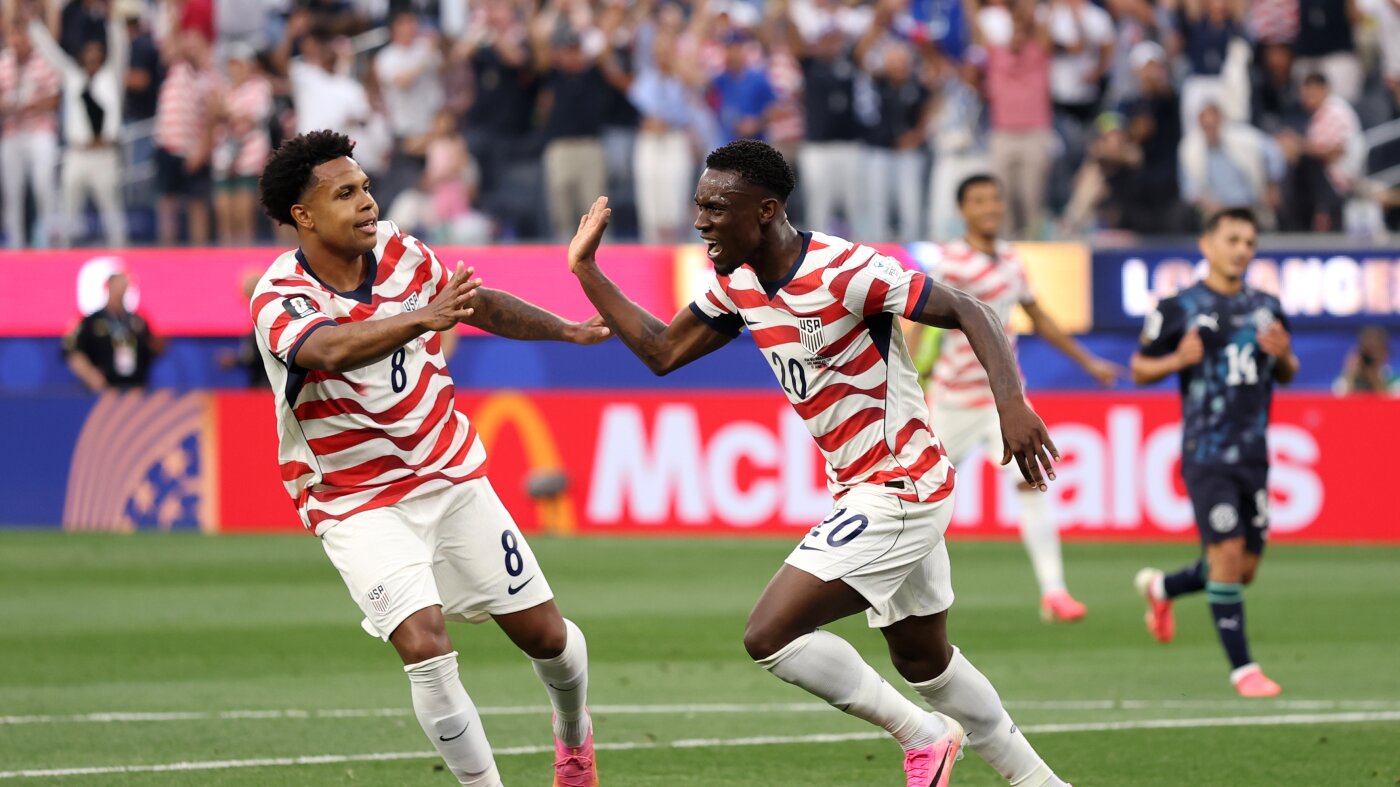
With a Round of 32 spot already clinched, the U.S. takes on Turkey in the World Cup
-

 Los Angeles, Ca2 hours ago
Hospital needs help identifying man found unconscious in downtown Los Angeles
-

 Detroit, MI2 hours ago
Large police presence for an investigation on Detroit’s west side
-

 San Francisco, CA2 hours ago
No tolerance for hate or crime at SF Pride this weekend, officials say
-

 Dallas, TX2 hours ago
Alanna Smith injury update: Dallas Wings player in concussion protocol
-

 Boston, MA2 hours ago
Boy, 13, hospitalized after being found unresponsive in swimming pool at Beverly home
-

 Denver, CO2 hours ago
Denver Nuggets draft Trevon Brazile in the second round of the NBA Draft – Denver Stiffs
-

 Seattle, WA3 hours ago
Council eyes street barricades in fight against violence, sex trafficking in north Seattle

