Nevada
New poll finds race for Nevada governor tightening


LAS VEGAS (KTNV) — A new poll finds the race for Nevada governor tightening, with incumbent Republican Joe Lombardo just slightly ahead of his chief Democratic rival, Democratic Attorney General Aaron Ford.
According to the survey by Arizona-based Noble Predictive Insights, Lombardo leads Ford 39% to 38%, with 17% undecided and 6% supporting third-party candidates.
WATCH| Steve Sebelius talks to locals their thoughts on Nevada’s gubernatorial race
New poll finds race for Nevada governor tightening
In the last Noble survey, conducted in October, Lombardo led Ford 40% to 37%, with 23% undecided.
Mike Noble, founder and CEO of Noble Predictive Insights, said governor’s contests in Nevada are historically close.
“This is why Nevada’s governor’s race is ranked in the top five most competitive races,” Noble said. “So it’s not just our polling that shows it, but also historically and everybody else looking at that. It’s going to be a tight contest. It’s going to come down to some core folks in the middle, and which way are they persuaded, towards Ford or towards Lombardo?”
A survey of past gubernatorial races dating to 1998 shows races with margins ranging from about 4 percentage points all the way up to more than 46 percentage points.
The average — 11% — is skewed by two outlier elections. One came in 2002, when then-Gov. Kenny Guinn defeated then-state Joe Neal, D-Clark County, who ran without the support of organized labor or the Democratic Party, advocating a platform of raising the state’s gross gaming tax.
The other came in 2014, when Democrats essentially ceded the race to then-incumbent Republican Brian Sandoval by running a candidate, Bob Goodman, who lost to “none of these candidates” in the Democratic primary.
But of all the races, Lombardo’s victory over Democrat Steve Sisolak in 2022 was the narrowest; just 1.51 percentage points separated the two candidates, or just more than 15,000 actual votes.
In a survey in February, Hart Research also found the race close, with 46% for Lombardo and 43% for Ford.
Favorability
The Noble survey found 40% of voters regarded Ford either very or somewhat favorably, with 33% reporting a somewhat or very unfavorable opinion of him. Another 19% had no opinion, and 8% had never heard of the attorney general.
Lombardo, meanwhile, was seen as either very or somewhat favorably by 48% of voters, with 38% saying they had a somewhat or very unfavorable opinion of the governor. Another 11% had no opinion, but only 1% had never heard of him.
Ford’s numbers may give Lombardo an opportunity to define his likely general election opponent, Noble said. Already, we have seen PAC-backed ads slamming Ford for spending time extensively outside Nevada, on trips related to his job or on vacation.
“So he [Ford] needs to get out there and define himself where Lombardo is also trying to define him,” Noble said. “So, definitely Lombardo has some advantages there. But I think the biggest advantage that Ford has in this is that he’s currently not in power, not the one making decisions.”
Ford has criticized Lombardo for vetoing bills that Ford claims would have reduced costs for Nevadans, including a bill that would have banned corporations from buying up single-family homes, a concept that even President Donald Trump later adopted in an executive order.
And Democrats frequently criticize Lombardo by trying to tie him to Trump, whose tariffs have raised costs for local businesses and whose attack on Iran has raised costs for fuel and fertilizer.
Noble said economics will be the key to this race. “And I think really from the research we’ve seen, whoever can message the best when it comes to addressing the pocketbook issues, jobs, economy, inflation, how are they going to keep more money in Nevadans’ pockets and give them some type of relief, and especially in affordable housing and other pocketbook areas. I think that is who’s going to end up ultimately winning,” he said.
Campaign reaction
Asked for a response, Ford campaign spokeswoman Prerna Jagadeesh aimed squarely at economics.
“Voters know that under Joe Lombardo, Nevada is suffering from high costs, sky-high unemployment, and an economy lagging behind the rest of the nation in job growth — all while Lombardo puts cheerleading for Trump over serving working families,” she said in a statement. “In contrast, Attorney General Aaron Ford has fought to lower costs and create new good-paying union jobs throughout his time in public service. Ford will continue to be laser-focused on making Nevada a place that Nevadans can afford to call home—and that’s why he will win in November.”
Ford served in the Nevada state Senate — rising to Senate majority leader — before he was elected attorney general in 2018.
The Lombardo campaign declined to comment on the poll results.
But in a Morning Consult survey, Lombardo had a 51%-34% approval rating. (The rest had no opinion.)
Gov. Phil Scott of Vermont was the most popular governor in the nation, with a 74%-19% approve/disapprove rating, while Gov. Kim Reynolds of Iowa was the least popular, with 49% disapproving and 43% approving.



The Nevada High School Musical Theater Awards, an annual celebration of outstanding student achievement in high school musical theater from schools throughout the state of Nevada, returns to the stage inside majestic Reynolds Hall on Sunday, May 3, 2026.
Tickets go on sale Tuesday, April 1 at 10 a.m. at TheSmithCenter.com. Discounted $10 early-bird seats will be available while supplies last.
The Nevada High School Musical Theater Awards is a regional awards program of the National High School Musical Theatre Awards, also known as the Jimmy Awards®. The Smith Center invites public, private and charter high schools throughout Nevada to participate in its NVHSMTA program.
This year’s participants will be: American Heritage Academy, Arbor View High School, Bishop Gorman High School, Bonanza High School, Boulder City High School, Carson High School, Centennial High School, Ed W. Clark High School, Coronado High School, Del Sol Academy of the Performing Arts, Desert Oasis High School, Desert Pines High School, Doral Red Rock High School, Faith Lutheran Conservatory of the Fine Arts, Foothill High School, Green Valley High School, Procter R. Hug High School, Lake Mead Christian Academy, Las Vegas Academy of the Arts, Legacy High School, Liberty High School, The Meadows School, Pahrump Valley High School, Shadow Ridge High School, Sierra Vista High School, Somerset Sky Pointe, Spring Valley High School and Western High School.
More than 20 awards will be presented during the event, in categories such as Outstanding Student Orchestra, Outstanding Costume Design and Creation, Outstanding Set Design and Construction and Outstanding Choreography Execution.
The show will also feature showcase performances from four schools, ensemble performances featuring all Lead Actor and Actress nominees and solo performances from 10 lead nominees.
In recognition of their dedication and talent, last year’s Outstanding Lead Actor and Actress – Chris Hayes from Las Vegas Academy of the Arts and Marie Muñoz from Bishop Gorman High School – received a complimentary 10-day trip to New York City, where they performed on a Broadway stage and represented Nevada in the Jimmy Awards®, named after legendary theater producer James M. Nederlander.
Hayes ultimately won the prestigious top spot for Best Performance by an Actor at the Jimmy Awards®, becoming Nevada’s first-ever male or female champion.
For more information and to purchase tickets, visit TheSmithCenter.com or call 702-749-2000. Box Office phone hours are Monday through Friday from 10 a.m. to 6 p.m. Please note that The Smith Center Box Office is open two hours prior to each performance.
Photo Credit: The Smith Center for the Performing Arts

Nevada’s leading authorities in preventing and treating problem gambling are joining state regulators and the casino industry to combat prediction markets, which, they contend, threaten to cut into the action of Nevada’s gambling enterprises and worsen the nation’s addiction to betting, especially on sports.
In less than a decade, legal sports betting, with the help of a U,S. Supreme Court ruling and the omnipresent smart phone, has morphed from a Nevada-centric novelty to a ubiquitous national pastime, with a slew of harmful side effects.
Nevada, once the only player in the legal sports betting game, has been relegated to the minor leagues in terms of revenue generated.
The American Gaming Association projects wagering on the 2026 NCAA tournament, excluding prediction market betting, which has not been officially estimated, will reach $3.3 billion, up 54% in the last three years.
Nevada’s 2025 March Madness betting was estimated at $466 million.
ESPN reports bettors wagered $1.9 billion on college basketball games in February on Kalshi alone.
In late December, the Financial Times reported trading volume on sports bets on Kalshi since its inception reached $16.8 billion, compared with $4.9 billion on other topics. By comparison, Nevada’s sports betting handle for 2025 was $8 billion, down 9% from the previous year.
Prediction platforms, critics argue, threaten to upend Nevada’s nearly 100-year history of profitable, regulated gambling.
Two betting sites, Kalshi and Crypto.com, are wrangling with Nevada gaming regulators and the Nevada Resort Association in the Ninth Circuit Court of Appeals. The platforms are challenging the constitutionality of state law, which requires that gambling enterprises have a state gaming license.
The Ninth Circuit last week denied Kalshi’s emergency motion to stop Nevada from enforcing its regulations pending the outcome of the appeal, according to Nevada Current. The ruling allowed Nevada to obtain a temporary injunction in state court prohibiting Kalshi from taking bets from gamblers in Nevada, at least until an April 3 hearing.
The Nevada Council on Problem Gambling, which specializes in prevention, and The Dr. Robert Hunter International Problem Gambling Center, a leading treatment center, filed amici, or ‘friend of the court’ briefs in the Ninth Circuit case, where a hearing is scheduled for April 16.
“Kalshi and similar prediction markets are the newest craze in sports betting and have exploded into the cultural zeitgeist,” the NCPG’s brief asserts.
The council rejects the argument that prediction platforms engage in commodity trades. “If it behaves like gambling, it should carry the same guardrails, accountability, and public health obligations — otherwise you create a parallel market with fewer protections and higher risk,” says NCPG’s Executive Director Trey Delap.
Chief among Delap’s concerns is the speed at which prediction platform gambling moves.
“It eliminates ‘friction’ — virtually eliminating any sort of time delay in accessing money and breaks in play,” Delay, a recovering problem gambler, said Thursday. “These breaks allow for a moment of awareness where one may judge the impact of their play.”
State regulators argue Kalshi is subject to Nevada law when taking bets in Nevada. Kalshi and others contend their federal regulatory status under the Commodities and Futures Trading Commission exempts them from state oversight.
The CFTC “does not propound or enforce gaming regulations, especially those related to preventing and addressing problem gambling,” NCPG’s brief argues. “To allow Kalshi’s sports betting to be regulated only by the CFTC is effectively to allow it to be unregulated with regard to problem gambling risk.”
The CFTC recognizes its regulatory limitations, the brief notes, citing a 2024 Notice of Proposed Rulemaking that would have prohibited betting on political and sporting events.
Commission regulations, the proposed rule said, are “focused on regulating financial instruments and markets, and do not include provisions aimed at protecting gambling specific risks and concerns inherent to gambling. …Gambling is a rapidly evolving field, and the Commission does not believe that it has the statutory mandate nor specialized experience to oversee it.”
The proposed rule was withdrawn in January.
“Nevada’s model works because of proximity — regulators, operators, and support systems are integrated,” says Delap. “Removing that structure weakens protections for consumers.”
Unlike casinos or sportsbooks “where the gambling nature of the activity is explicit — Kalshi downplays or omits warnings related to addiction, loss of control, or financial harm,” NCPG argues in its filing. “Instead, Kalshi famously portrays itself as intellectually rigorous, socially valuable, and skill based.”
The filing contends that “Kalshi’s slick, easy to use platform mimics traditional gambling, meaning that the risk associated with the use of the platform is high.” Without safeguards, it asserts, “the use of Kalshi in the state of Nevada is a public health crisis waiting to happen.”
Nevada gambling regulation for in-person and on-line wagering includes a number of safeguards, including age and identity verification, advertising standards, mechanisms for self-exclusion from play, and funding for problem gambling programs. Online operators are responsible for additional measures, including limits on deposits, bet amounts, and time playing.
“These safeguards do not eliminate all risk. They manage it,” says the NPGC’s brief.
Almost half of digital sports betting ads viewed in the U.S. this year are from prediction market platforms, which are not subject to responsible gambling advertising requirements that apply to state and tribal gambling operations.
Kalshi is the most visible sports betting advertiser in the U.S., with about 5.2 billion digital ad impressions this year, according to research from the American Gaming Association. The second most prolific advertiser, Fan Duel, generated 2.9 billion impressions.
In January and February, nearly half of digital sports betting ads in the U.S. were for prediction platforms, and did not include responsible gaming messaging, as required by states.
In addition to lacking safeguards, the brief notes a dearth of national policy dialogue amid the explosion of betting on prediction platforms.
Gambling disorder, it notes, is “a clinical condition that can be diagnosed in individuals. Public health policy, by contrast, focuses on population-level exposure, accessibility, and environmental risk.” Public health policy examines not only “who develops a disorder, but how many people are exposed to risk, how frequently, and under what safeguards.”
“Increased access, speed, and normalization of wagering-like products are associated with higher risk of harm at the population level,” says Delap of the NCPG.
Strange bedfellows?
Critics of the multi-state effort to rein in prediction platforms blame anticompetitive state and tribal licensees, some of which have been known to stray outside the regulatory boundaries they now seek to impose on the platforms.
Consumer protection, prediction market advocates argue, is a priority for licensees only when faced with a new form of competition, such as tribal or internet gambling.
“This isn’t about protecting consumers,” Kalshi CEO Tarek Mansour wrote on X this week of the effort to ban sports betting on prediction platforms. “It’s about protecting monopolies.”
An analysis by the National Council on Problem Gambling found that on average, states with legal gambling met only 32 of its 82 recommended player protection standards. Nevada aligned with 24 of the NCPG’s standards, landing it in the bottom tier of compliance with ten other states.
A University of Nevada Las Vegas Institute of Gaming study published last year found 15% of Nevada adults are defined as problem gamblers, meaning they’ve experienced harm from their gambling “many times” in the last year. The national average is 2%, according to the National Council.
Yet, the state’s commitment to adequately funding problem gambling prevention and treatment has long been lacking.
Problem gambling organizations in Nevada have historically declined to opine on whether betting is inherently good or bad. Their prevention and treatment efforts are often supported by casinos, financially and in other ways, such as making promotional material about problem gambling accessible to gamblers.
Delap contends the council’s brief does not signal alliance with the gaming industry.
“In informing the court on the public risk and harm, our position would be the same regardless of gaming’s position,” he said, adding that “since the harm of problem gambling is felt at the community and state level, we should have authority to protect the public.”

I was disappointed this week watching the daffodils fade already. It seemed they only lasted a week. I had expected them to bloom longer. Fortunately, the ones in the shadier areas of the yard are just coming into bloom, so I should be able to enjoy them for another couple of weeks.
My grape hyacinths are blooming, and the regular hyacinths may bloom next week. After the vole infestation of a couple of years ago, I don’t have many hyacinths left. They didn’t eat them, but their tunneling destroyed the bulbs.
The crabapples have really come into color in the last couple of days. Unfortunately, high winds are expected, and the blossoms may get blown away. The red delicious apple doesn’t seem to have any blooms at all, while the old-fashioned apple has just a few. It may be that the flower buds were pruned off when I had the trees done. Other than missing their lovely display, I really don’t mind the lack of flowers. Less flowers means less fruit, which means less work picking apples. This may also mean fewer yellowjackets on rotting fruit on the ground.

Lovely to see are the purply-blue violets taking over the lawn. They grow so low that my husband can mow right over them without hurting them. All the violets in my yard reseeded from one or two volunteer plants of many years ago. Now there are hundreds. While some people want a pristine green velvet turf, I’m not one of them; not when I can enjoy violets. I even welcome dandelions because their color is so happy.
I spent the morning trimming back the dead leaves on the crocosmia. I wait until spring before doing this to remind me where the new shoots are so I don’t step on them. After I cleaned them up, I marked their location with flags. They are still too small to see above the sedum they are growing in. I also cut off the declining daffodils.
Then, I got out my watering can and the water-soluble blue fertilizer made famous on TV, which shall remain nameless, and gave all my flowers, including the daffs, a good feed. It is definitely time to fertilize the lawn too.
With the hotter weather, I have been irrigating every other day with both the high pressure in-ground system and the low pressure drip system. I read that rain and snow may be coming, but the probability of significant precipitation is minimal.
Hurrah for Spring!
— JoAnne Skelly is an Associate Professor and Extension Educator, Emerita, University of Nevada Cooperative Extension. She can be reached at skellyj@unr.edu.
Related

Outside spending surfaces in Idaho elections — but some remains hidden

UConn Has Ruled March – But Illinois Has an Edge the Huskies Can’t Counter

Warm, windy with strong storms possible | March 31, 2026

Staind, Hoobastank and BigXthaPlug to perform at Iowa State Fair

Kentucky Wildcats News: McDonald’s All-American Gameday

Florida High School Football Rankings: Top 25 teams – Oct. 21

How old is Bo Nix? What to know about Oregon quarterback ahead of 2024 NFL Draft

Cleary's 21 help Le Moyne down Central Connecticut State 69-64 in OT

99th annual Pony Swim held in Virginia

Indiana Members Credit Union announced as new anchor tenant at Bottleworks District
Latino Republicans in South Texas Turn on Trump Over Birthright Citizenship

Fugitive illegal alien convict on the run after attempting to strike ICE officer with vehicle: DHS

EU to urge Israel to scrap death penalty bill as ‘grave regression’
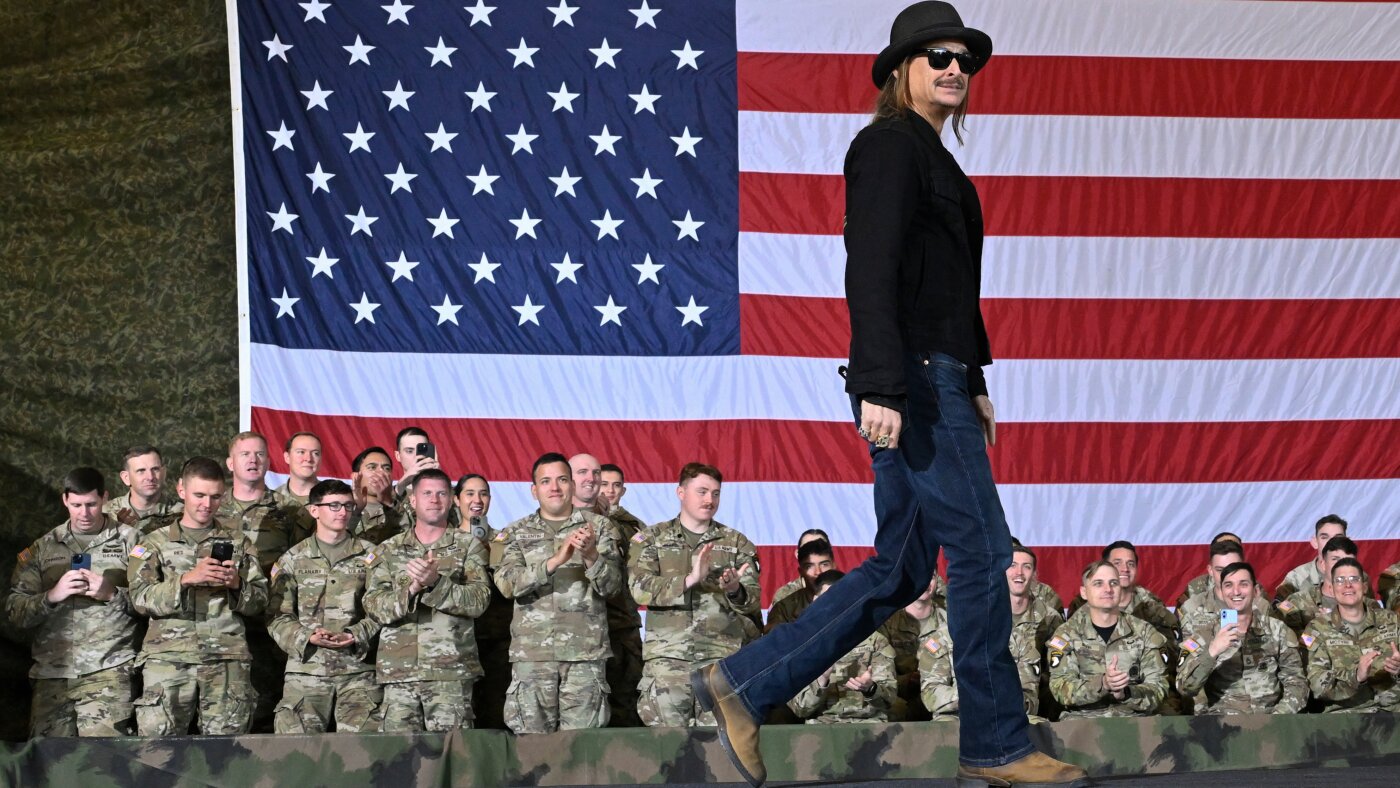
Army reviewing after helicopters hovered alongside Kid Rock’s swimming pool as he saluted

Emanuel pushes back on ‘straight White man’ question, says ideas matter most in 2028
-

 Sports1 week ago
IOC addresses execution of 19-year-old Iranian wrestler Saleh Mohammadi
-

 Miami, FL5 days ago
Jannik Sinner’s Girlfriend Laila Hasanovic Stuns in Ab-Revealing Post Amid Miami Open
-

 South-Carolina2 days ago
South Carolina vs TCU predictions for Elite Eight game in March Madness
-

 New Mexico1 week ago
Clovis shooting leaves one dead, four injured
-

 Politics1 week ago
Schumer gambit fails as DHS shutdown hits 36 days and airport lines grow
-

 Science1 week ago
Record Heat Meets a Major Snow Drought Across the West
-

 Minneapolis, MN5 days ago
Boy who shielded classmate during school shooting receives Medal of Honor
-

 Tennessee1 week ago
Tennessee Police Investigating Alleged Assault Involving ‘Reacher’ Star Alan Ritchson