Business
California farmers were already struggling. Then came the Iran war

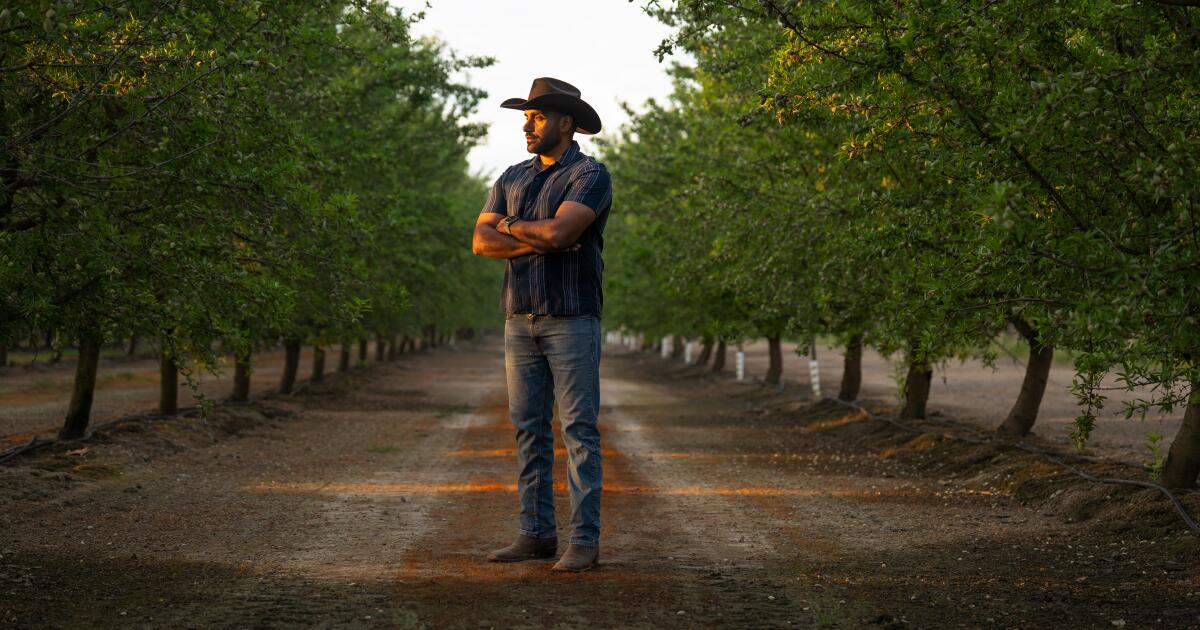
Shortly after the Iran war started four weeks ago, farming executive Bikram Hundal was beside himself.
The vice president of operations at Sequoia Nut Co. had shipped 15 containers of almonds, walnuts and pistachios from the Port of Long Beach, and he wasn’t exactly sure where they were on the high seas.
Their destination was Dubai’s Port of Jebel Ali, a major trading hub, but the jets, missiles and rockets crisscrossing Middle Eastern skies had diverted one ship to the Netherlands and another to Algeria.
Finally, the remainder of the 300 tons of California nuts worth $1.7 million was offloaded at the Port of Fujairah, also in the United Arab Emirates but on the Gulf of Oman, a bit farther from the fighting.
Now, shipping costs to the region have tripled to $7,500 per container, and Hundal is uncertain when the Tulare County company will get its money.
“They will be slow in paying for those goods, and they told us whatever goods were sold already to them [that] have not shipped, please do not ship those,” he said. “That will impact our cash flow. We have to pay the growers for them.”
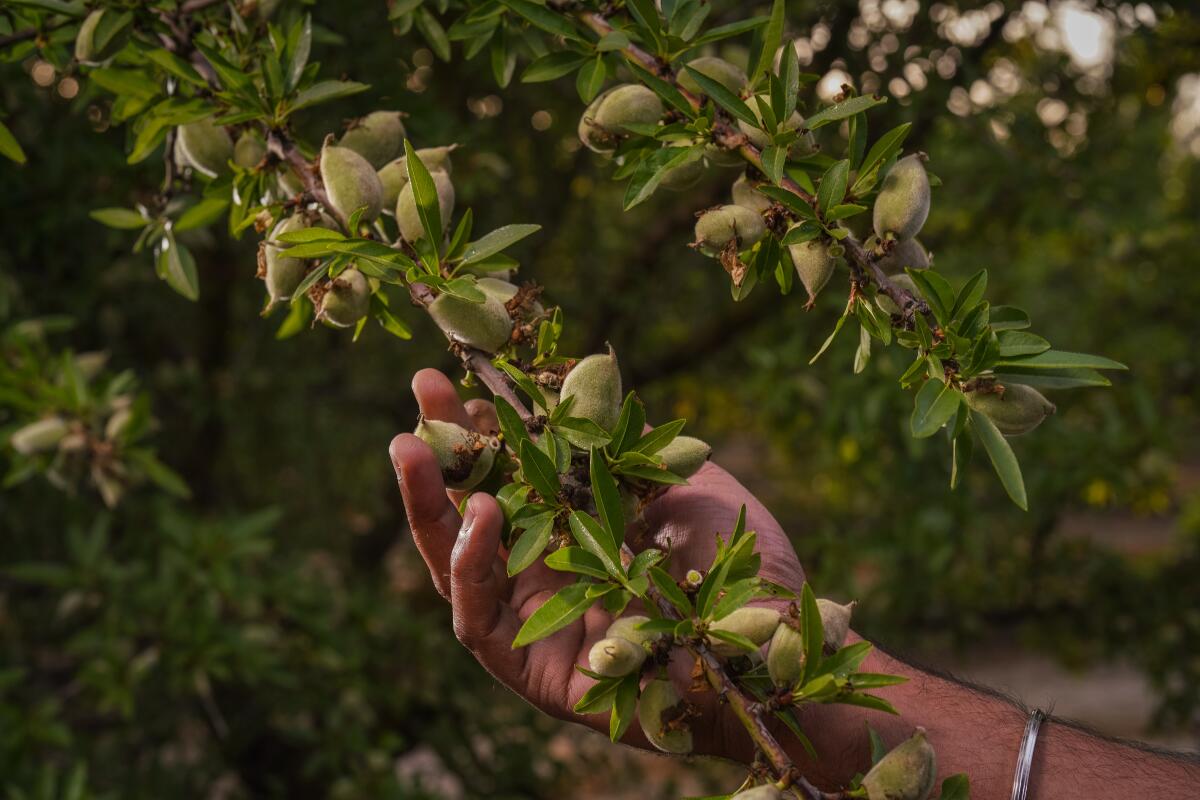
Since the start of the war, the average price of a gallon of diesel in California has hit $7.26. Fertilizer prices have risen too.
As the war unfolds in Iran, farmers like Hundal are being whiplashed by forces beyond their control, including the cutting off of key export markets and a sharp rise in the cost of doing business.
The war has driven up the price of diesel that fuels trucks and farm and ranch equipment, as well as fertilizers critical for increasing crop yields — leading to fears that if the conflict goes on much longer it could push up prices at the market.
The average price of a gallon of diesel in California has hit $7.26, up more than $2 compared with a month ago. Diesel that powers tractors and other non-road vehicles and engines is typically almost $1 cheaper as it is exempt from certain taxes.
Tara Gallegos, a spokesperson for Gov. Gavin Newsom, blamed the farm economy difficulties on President Trump’s “recklessness” in starting the war.
“California farmers are getting hit twice with higher fertilizer costs and higher fuel costs. Every American will wind up paying for that at the grocery store because these commodities are priced globally,” she said.
Trump has made conflicting statements about the rise in fuel prices, contending that it is a “small price to pay” to pursue his war aims of knocking out Iran, but also saying he wants to wrap up hostilities quickly.
Even before the war, California’s farmers were struggling due to the disruption caused last year by Trump’s tariffs, which hit farmers hard as trading partners responded with their own duties.
California is the largest agricultural state in the nation as measured by the value of its crops, which topped $60 billion for the first time in 2024 — and it was hit with corresponding big losses last year.
The value of the top 13 state agricultural products exported to China — including almonds, pistachios and dairy — fell in aggregate by 64%, or $1 billion, in 2025, according to a recent UC Davis estimate.
Faith Parum, an economist at the American Farm Bureau Federation, said the rise in fertilizer and diesel prices follows last year’s tariff-related trade disruption and several years of natural disasters, including droughts and freezes.
“How do we make sure that we keep farmers in business? Because it is a matter of national security and food security,” she said.
Parum noted that farmers who plant crops such as corn, soy, rice and cotton have experienced nationwide losses of $90 billion since 2023.

Key ingredients for some fertilizers come from the oil-and-gas-rich Middle East, where the war has unsettled markets and supply chains.
Already there are reports that some fertilizers are up by a third or more in price. The rise is taking place in California and across the U.S. even though the country produces the majority of its nitrogen-based fertilizers, which are critical to improving crop yields.
The fertilizers are typically applied by U.S. farmers either as liquid nitrogen, liquid ammonia or as pellets of urea, which is the most common nitrogen-based fertilizer in the world, said Veronica Nigh, chief economist at the Fertilizer Institute.
While the vast majority of liquid nitrogen and ammonia is domestically produced, the U.S. imports about half of its urea, making it susceptible to the Middle East supply shock.
All nitrogen fertilizers are derived from ammonia, which is made using natural gas — with half of all exportable urea supplies coming from the oil-and-gas rich Mideast, where it has to pass through the disputed Strait of Hormuz, she said.
Prices are up worldwide, with fertilizer plants closing in Bangladesh, raising the specter of an urea shortage. That could lead to food shortages first in less wealthy countries, while U.S. consumers might see higher food prices unless the war winds down quickly, Nigh said.
Food prices rose sharply after Russia invaded Ukraine in 2022, but that was largely due to the countries being major grain exporters.
“This is different than anything we’ve experienced before, in that it is not occurring in a single market, and that it is something that is a critical input to growers around the world,” she said.

Sunrise over some of the 14,000 acres of walnut and almond orchards of Sequoia Nut Company and Custom Almonds.
The war is hitting Midwest farmers just as they enter the planting season for crops such as wheat, corn and soybean, and need to apply vast quantities of fertilizer.
California grows those crops too, but the big money is in nuts, produce and other “specialty” crops, leading to a constant demand for fertilizer. “You have price and purchase exposure throughout the year,” Nigh said.
Sal Parra Jr., who helps run his family’s 1,500-acre farm in Fresno County and is operations director at the more than 10,000-acre Bowles Farming Co. in adjacent Merced County, is the kind of farmer Nigh is talking about.
The two farms plant a large variety of crops, including nuts, corn, wheat, cotton, alfalfa and fruits and vegetables — all needing a variety of fertilizers and other nutrients.
The rise in costs are bad enough, but now there are fears that a key liquid fertilizer, UAN-32 — which contains three forms of nitrogen, including liquid urea — could be in short supply.
“We actually have taken the initiative at Bowles to fill as much storage as we have available with fertilizer to try to lessen the blow,” he said, noting his family farm doesn’t have the capacity to store much fertilizer.
There are techniques to stretch supplies by more efficiently applying fertilizer, Parra noted, such as by administering soil treatments, though they are costly.


In addition to rising fuel costs, farmers in the Central Valley say they are stockpiling fertilizer and looking for otherways to fertilize their crops.
“I think that a year like this, where you see fertilizer prices moving the way they’re moving, it may justify using other methodologies,” he said. “I’m going to get very creative with with our fertilizer programs.”
At the same time, he said, the farms are having to absorb higher costs for diesel, which runs pumps, tractors and big rigs carrying crops to market.
Much of what the farms sell is on contract with prices already set, which means those costs will have to be absorbed for now, said Parra, who worries many state crops could see lower sales as prices eventually rise in markets.
“A lot of what we grow are beautiful watermelons, or carrots or tomatoes, and depending on what the price is, people may or may not buy it,” he said.
The economic shocks caused nationwide by extreme weather events, the disruption of export markets and now the war have prompted the industry, including California growers, to seek federal assistance.

A driver hauls almonds in a tractor trailer to the scales to be weighed at Sequoia Nut Company and Custom Almonds in Tulare, Calif, on Thursday.
Trump’s massive tax-cut-and-spending bill last year increased payments to farmers. In December, Trump approved $12 billion in emergency assistance, including $1 billion for the kind of produce, nuts and other specialty crops grown in California.
And just last week, the administration issued an emergency fuel waiver to allow continuing nationwide sales of E15 — a gasoline blended with 15% ethanol, nearly all of which is produced from corn grown by U.S. farmers.
“That is very helpful,” Parum said.
Typically, sales of the gas are restricted during the summer due to the volatility of ethanol and its contribution to smog, but the Farm Bureau maintains that new studies show the blend is non-polluting.
Other relief being sought includes dropping long-standing duties on countries that export fertilizer products to the U.S., such as Morocco, a supplier of phosphates.
The war also is disrupting key markets for growers like Sequoia.
While the Middle East isn’t as large an export market for California farmers and ranchers as Canada, the European Union or Mexico; the United Arab Emirates ranks in the top 10 as the nuts, strawberries and other products exported there are distributed across the region.

Eric Andrade and Bikram Hundal, Vice President of Operations at Sequoia Nut Company and Custom Almonds discuss quality control in the company offices in Tulare, Calif., on Thursday.
Along with almonds and pistachios, walnuts are a staple of the Mideastern diet — and those grown by California farmers are considered the “gold standard,” said Robert Verloop, chief executive of the California Walnut Board and Commission.
The war struck right it the middle of the holiest month on the Islamic calendar, Ramadan, which began Feb. 17 and ended March 19, when consumption is higher.
About 70,000 tons of walnuts were on their way or about to be shipped to the region in the period leading up to and including Ramadan. That accounts for roughly 10% of California’s production, expected to hit $1 billion this year.
Some ships were temporarily diverted to ports in China, India and Europe until new customers are located. Many shipments are now being canceled before being loaded on ships, creating a backlog, Verloop said.

Harpal Singh, left, an employee at Sequoia Nut Company and Custom Almonds, loads almonds into bulk bags.
The war also has closed Mideastern markets as residents fearful of rocket attacks stay home. That has been a factor in reducing consumption, forcing some nuts to be sold elsewhere at discounted prices, he said.
Also, an expected wave of orders that typically follows Ramadan has not materialized, hurting California farmers who might not be able to make up the losses, he said.
“Life is not the same, and it’s not business as usual,” Verloop said. “There an expression in the industry. If you don’t eat it in February, you don’t need twice as much in March.”


Johnny Beig may have played in a semi professional cricket league in Australia, but this summer he’s a big fan of soccer in the United States.
It’s not just because he’s rooting for the World Cup team, though.
FIFA emblems are featured on jerseys that were created by the Dioz Group and distributed for all employees at the 16 FIFA World Cup venues this summer.
(Genaro Molina / Los Angeles Times)
Last year, Beig’s Beverly Hills-based company, Dioz Group, won a $2.5 million contract with On Location, FIFA’s hospitality partner, to design, manufacture and distribute uniforms for all employees working at FIFA World Cup venues this summer.
These include the people welcoming attendees into stadiums, VIP lounge chefs, waiters and the flagbearers during the opening ceremony.
After a multi-step application process, including presentations of its planning and strategy, Dioz says it produced more than 50,000 clothing garments including suits, jackets, shirts and hats and delivered them to the 16 World Cup venues around the U.S., Canada and Mexico in June.
Thanks in part to the World Cup contract, the company’s revenue has reached $15 million so far this year, compared with $20 million last year, Beig said. He declined to disclose the company’s net income but said the business was profitable.
“We are working with larger names that we would have never imagined we would,” he said. “The FIFA World Cup is the pinnacle. Working with the largest sporting event in the world is what we’re very proud of. I don’t think it gets any bigger than that.”

Volunteers line up to prepare to display the Canadian flag before a World Cup round of 32 knock-out match between Canada and South Africa at SoFi Stadium on Sunday.
(Kelvin Kuo / Los Angeles Times)
Dioz is among the many small businesses across Los Angeles that are getting a boost from the global sporting event, said Kevin Klowden, a senior fellow at the Milken Institute.
The influx of hundreds of thousands of fans into the city has been a boon to hotels, transportation services and restaurants, in addition to those in the special events and logistics economy, Klowden said, calling the event the “equivalent of multiple Super Bowls.”
“The number of contracts that are there, it’s a big deal,” he said. “Given the fact that L.A.’s filming is only slowly recovering, having something like the World Cup is definitely a boost.”
Dioz was co-founded by Johnny, 44, and his brother Tony in 2006. The brothers were born in India and raised in Australia, where Johnny enjoyed a brief career as a semi professional cricket player.
He realized his future wasn’t as a professional athlete, but he wanted to stay connected to the sports world, so he began making uniforms for his cricket team in 2006.
He then got a referral to make uniforms for multiple teams in the area before starting an apparel company.
“I wanted to stick with something I was passionate about, which is sports,” he said.

Volunteers unravel the center field display before a World Cup round of 32 knock-out match between Canada and South Africa at SoFi Stadium on Sunday.
(Ronaldo Bolanos / Los Angeles Times)
In 2012, Beig moved to Los Angeles and established Dioz‘s Los Angeles headquarters to tap into the U.S. market. During the pandemic, the company started supplying medical apparel to hospitals and schools, and the business took off, with revenue doubling in 2020, Beig said.
Dioz now has over 150 employees, including 15 in L.A., and manufactures its apparel at factories in China, India, Bangladesh, Turkey and the Philippines. Tony runs an office in Dubai.
Before the World Cup, Dioz provided employee uniforms for events including Super Bowl LIX and Copa America, which may have given it a leg up on the FIFA contact.
Now, with a World Cup contract on their resume, Beig said he’s setting his sights on even bigger events.
“This gives us an edge over the next FIFA events worldwide as well, where we can showcase our skills and we can handle it,” Beig said. “So it gives us a good opportunity to work with sporting events like the UEFA Championship and Premier League.”
As companies get new business from the World Cup, Klowden said it’s important that they leverage their new position to continue that growth.
Companies that benefited from the World Cup might be in a position to bid on even bigger contracts, especially with the Olympics coming up in 2028, Klowden said.
“The really important part in any of these deals is that if a company ran something like this, then they are able to build off of that success,” Klowden said. “Let’s say you’re a company that did a big uniform order or a big food order, and the World Cup goes, and you invested in new manufacturing capacity, or you invested in new clothing machines, or whatever you do; suddenly you don’t have that market anymore, then you’ve just wasted all that money ramping up.”
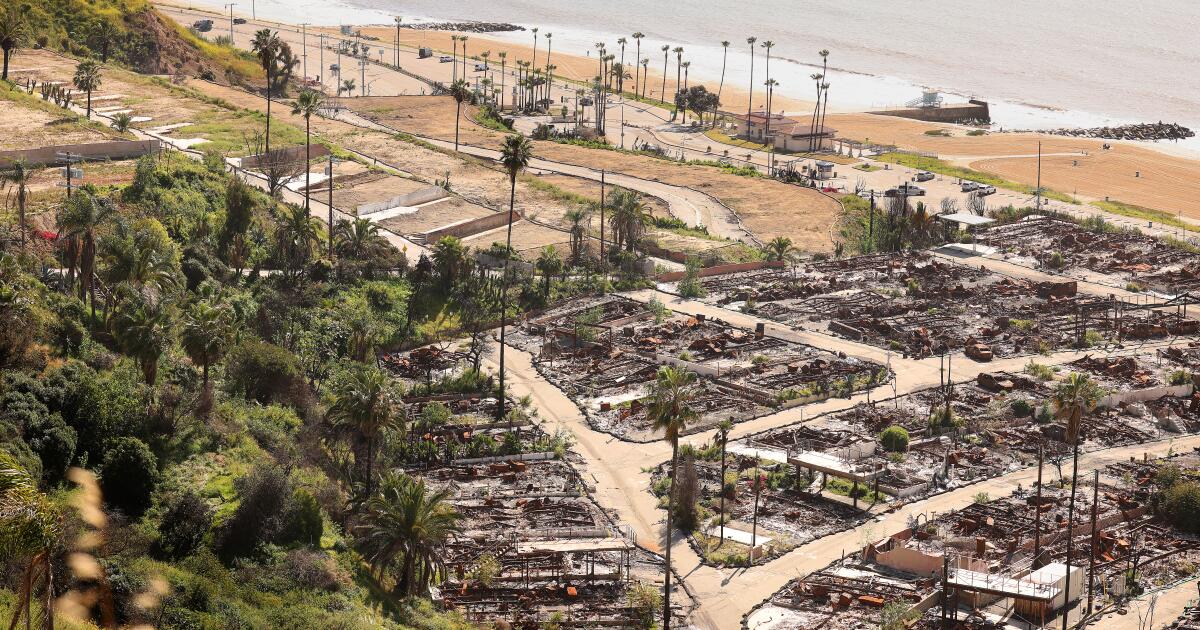
Surcharges that California homeowners have been hit with statewide by insurers defraying the costs of Los Angeles County’s wildfires were ruled legal in a decision released late Tuesday.
L.A. County Superior Court Judge Tiana Murillo turned down a petition by advocacy group Consumer Watchdog to halt the charges, which insurers began levying last year after the state’s insurer of last resort couldn’t pay all its January 2025 fire claims.
The California FAIR Plan, financially backed and operated by the state’s licensed home insurers, needed a $1-billion bailout from the insurers after it was hit with some $4 billion in claims.
Under a deal Insurance Commissioner Ricardo Lara worked out with the FAIR Plan in 2024, the insurers could seek state approval to surcharge their residential policyholders for up to half of any assessment totaling $1 billion in case the plan needed a bailout in an “extreme worst case scenario” — as it turned out it did.
A total of 105 insurers, including State Farm General — California’s largest home insurer — Farmers and Mercury sought and received approval for the surcharges.
Because the FAIR Plan assessed its member insurers based on their share of the state’s home insurance market, the policyholder surcharges were in the same ballpark. The median fee for homeowners was $28, according to the department of insurance.
The fee can be more or less according to the size of a homeowner’s premium and is split into monthly payments that insurers can spread over one or two years. Condo owners and renters on average were surcharged less.
In a court filing, Consumer Watchdog said $420 million in surcharges were approved.
In its April 2025 lawsuit filed against Lara, the Los Angeles group made a series of arguments in seeking to overturn the residential surcharges, which it deemed an industry bailout. It did not sue over related commercial surcharges.
Consumer Watchdog contended in its lawsuit that the surcharges violated Proposition 103 — the 1988 measure that governs insurer rate hikes — because the proposition does not allow for them.
It also claimed Lara did not follow regulatory protocol in promulgating the new policy.
The group further alleged that the FAIR Plan’s governing statutes do not give Lara the authority to permit the surcharges — and that the statutes require insurers to share in the plan’s profits and losses, and not shift losses to policyholders.
Murillo, and another judge who previously heard the case, turned down all of the consumer group’s arguments in separate rulings, the last of which Murillo issued Tuesday night.
Lara celebrated his legal victory over Consumer Watchdog, which has accused Lara of having close ties to insurers and sought to oust him from office. His terms ends in January.
“This victory sends a loud and clear message: The era of allowing special interests to derail consumer choice is over. We have the momentum, we have the authority, and we will continue to fight until every Californian has access to the coverage they deserve,” Lara said in a statement.
Attorney Will Pletcher, litigation director of Consumer Watchdog, said the group disagreed with the decision and would “consider all options to move this forward.”
“It’s important to try to protect California consumers from these surcharges that we think are in pretty clear conflict with both Proposition 103 and the FAIR Plan,” he said.
Hilary McLean, a spokesperson for the plan, said in a statement it did not have any position on the ruling, given the plan “does not have a role in determining how insurers manage costs associated with assessment.”
Denni Ritter, vice president of state government relations for the American Property Casualty Insurance Assn., a major industry trade group, said the decision rejected “the reckless lawsuit brought by the self-interested group Consumer Watchdog…”
“This ruling preserves a vital tool to protect the stability of the California insurance market. Blocking cost recovery would have undermined the state’s last-resort coverage option,” she said in a statement.
The 2024 policy was issued in response to the rapid growth of the plan due to a series of wildfires over the last decade that prompted multiple insurers to retreat from the state’s home insurance market.
The plan had 264,000 homeowners on its rolls in September 2022, a figure that rose to 452,0000 in the months before the fires — and its residential policyholders have since increased to 663,000 as of March.
The FAIR Plan offers policies that typically cost more than those issued by regular insurers while offering less coverage.
A Times analysis last year found that in the Palisades and Eaton fire zones, the plan’s rolls nearly doubled to 28,440 from 2020 to 2024.
That concentration of policyholders led to the plan’s large losses during the Jan. 7 wildfires, which damaged or destroyed more than 18,000 structures, killing at least 31 people.
It’s been estimated that the insured losses for the wildfires could ultimately total as much as $40 billion, exceeding any past wildfires worldwide. Ritter said that so far insurers have paid $23.7 billion in claims.
The 2025 wildfires were not the only time the FAIR Plan has needed a bailout, though it is the first time its member insurers surcharged policyholders.
In 1993, it assessed carriers after fires in Altadena and Malibu, and in 1994 it did so after the Northridge earthquake. The assessments totaled $260 million.
The plan received approval this year from the insurance department for a 29% rate increase for its homeowner dwelling policy that will take effect in October.

An electric Tesla Semi truck crashed into two vehicles in Dayton, Nev., over the weekend, killing two people and raising questions about the truck’s safety features.
The Lyon County Sheriff’s Office responded to a major collision around 7 a.m. on Sunday at the intersection of Highway 50 and Traditions Parkway about 40 miles east of Reno, the office said.
The office confirmed a semi-truck was involved in the accident, and footage of the scene shows it was a Tesla Semi.
It is the first known crash involving a Tesla Semi, an electric Class 8 truck that Tesla is building in Nevada and plans to ramp up production of. As interest in Tesla’s electric passenger vehicles wanes, the company is betting on the truck to give it a needed boost.
The trucks do not have the Full Self-Driving mode available in Tesla cars, but Tesla’s website says they come standard “with active safety features that pair with advanced motor and brake controls to deliver traction and stability in all conditions.”
According to the Lyon County Sheriff’s Office, preliminary statements obtained at the scene suggest the truck driver may have fallen asleep behind the wheel.
The crash is under investigation by the Nevada State Police Highway Patrol, which said additional information may be released next week.
The Record-Courier identified the victims as Sergio and Jennifer Villanueva, a couple who got married in 2022.
Tesla has not clarified if its semitruck has an automatic emergency braking system. Federal regulators are currently weighing a mandate for emergency braking systems in vehicles more than 10,000 pounds.
-

 Maine33 seconds ago
Maine should have participated in Great American Fair | Letter
-

 Maryland8 minutes ago
Portion of I-97 buckles under extreme heat – WTOP News
-

 Michigan11 minutes ago
Two people dead and a third injured in shooting at Michigan shopping mall
-

 Massachusetts16 minutes ago
Swimmer rescued from Houghton’s Pond in Milton
-

 Minnesota23 minutes ago
Hope lost: Minnesota AG closes unit that freed wrongfully convicted prisoners
-

 Mississippi25 minutes ago
Mississippi Lottery rolls out 4 new scratch-off games for July – SuperTalk Mississippi
-

 Missouri31 minutes ago
Missouri Highway Patrol investigates death of staffer at youth ranch in Reynolds County; 1 juvenile arrested
-

 Montana38 minutes ago
Montana DEQ warns of algal blooms ahead of holiday weekend

