Nevada
Korean students visit the University


Fourteen students from South Korea’s National University of Education (KNUE) visited the College of Education and Human Development at the University of Nevada, Reno at the start of the Spring 2026 semester. They visited several local schools and institutions to learn about the U.S. educational system and culture during the weeklong program. These students are studying in teacher preparation programs in South Korea.
During the week, the students visited several local public schools, including Doral Academy, Hug High School, Debbie Smith Academy and Herz Middle School. Students had a chance to tour each school and visit classrooms to get a firsthand look at how U.S. students learn. On the University campus, students sat in on several College of Education and Human Development courses throughout the week and visited the Child and Family Research Center. The students also visited the University’s Lake Tahoe campus.

KNUE students enjoyed s’mores at the University’s Lake Tahoe campus.
For both universities, this program gives students and faculty the opportunity to collaboratively build a global perspective on education. By learning from each other’s ideas, both cultures can strengthen and grow their own education systems. And for KNUE, building this globalized, interconnected culture is a top priority.
“I want our students to be interconnected with the University of Nevada, Reno,” said Joosang Lee, a KNUE faculty member who accompanied the students on the trip. “And then they will have an open mind about other people, other cultures and other countries.”
“I went on this trip because I wanted to learn more about diversity around the world,” said Chaeyun Lee, a student studying music education at KNUE. “I wanted to meet people from all over the world and have conversations with them. And I wanted to learn how the U.S. education system works and how students communicate with their teachers and professors.”
Cultivating connections among students has been an important part of the program. Several events throughout the week were held for both University of Nevada, Reno and KNUE students, where they had a chance to mingle while learning about each other’s cultures. The event organizers wanted to create opportunities for students to learn about each other’s broader cultures in a curious, inclusive space.
“That’s something I really admire about our environment here,” said doctoral student Hanine Haidar, who helped coordinate this year’s program. “The way we don’t minimize people to just food, or singular elements of their culture, but we maximize them by accepting them for who they are.”
The program was first established by an MOU (Memorandum of Understanding) signed between University of Nevada, Reno President Brian Sandoval and Korea National University of Education President Kim Jongwoo in late 2023, and the first visit by South Korean students was held in January 2024. Each year since, students from both universities have visited each other’s countries and institutions.
In May, several University of Nevada, Reno students will visit KNUE. This program gives an opportunity for this year’s cohort of University of Nevada, Reno students to meet the South Korean students now, so they will already have connections when they visit South Korea in March 2026.
“This program has provided excellent opportunities for our future teachers to experience diverse educational settings and cultures, enhance their understanding of different educational approaches and build friendships through interactions with pre-service teachers from two different countries,” said Hyun-Joo Jeon, Ph.D., professor of Human Development and Family Science, who developed and led the short-term exchange program.
(From left to right) Mehmet Tosun, Joosang Lee, Man Seob Lee, Mihyun Koh, Hyun-Joo Jeon, Ramya Fernandez and Dean Donald Easton-Brooks.
“It was very important for us to create events where these students would get to interact a lot over this week, so that when our students go to South Korea, they have some connections that they made from their visit here,” said Ramya Fernandez, CPA, MPH, assistant dean of operations, who helped coordinate this year’s program.


Growing DNA databases continue to unlock decades-old cold cases. How the DNA Doe Project helped to identify remains 37 years later.
© KSNV, NBC News Channel

First team
Ty Ahlstrom, Centennial – The junior had 373 digs and was a first-team 5A all-state libero for the 5A state runner-up.
Evan Ditmar, Palo Verde – The senior first-team 5A all-state outside hitter had 187 kills with a .328 hitting percentage.
Luke Hashimoto, Arbor View – The senior had 302 digs and 37 aces for the 5A state champion.
Porter Hughes, Basic – The senior had 373 kills with 218 digs and 38 aces for the 5A state semifinalist.
Lincoln Larson, Centennial – The senior was the 5A state player of the year and was second in the state with 460 kills, on a .371 hitting percentage, and added 283 digs and 72 aces for the 5A state runner-up.
Jagger Mendenhall, Palo Verde – The senior first-team 5A all-state setter had 414 assists.
Risden Miller, Arbor View – The junior led the 5A state champion with 279 kills and added 173 digs.
RJ Regalado, Centennial – The senior had 723 assists and was a first-team 5A all-state.
Max Romzek, Shadow Ridge – The junior had 152 kills on a .437 hitting percentage with 66 blocks for the 5A state semifinalist.
Mateo Salomon, Shadow Ridge – The sophomore had 169 kills with a .374 hitting percentage for the 5A state semifinalist.
Keagan Sugden, Arbor View – The junior setter led the state with 1,129 assists for the 5A state champion.
Mau Tuiaana, Centennial – The senior had 162 kills on a .397 hitting percentage, 92 blocks and 147 digs for the 5A state runner-up.
Kenyon Wickliffe, Arbor View – The senior had a .477 hitting percentage with 176 kills and 46 blocks for the 5A state champion. He is committed to Cal State Northridge.
Jacob Wienke, Desert Oasis – The senior was the 4A Mountain League player of the year led the Diamondbacks with 290 kills and 154 digs on their way to the 4A state title.
Coach of the year
Nicole Adarme, Arbor View – Guided the Aggies to the Class 5A state title, the program’s first boys volleyball title.
Second team
Graham Blanchard, Arbor View – The senior had 179 kills, 32 aces and 136 digs for the 5A state champion.
Zelworth Chavis, Liberty – The 4A Lake League player of the year had 731 assists and 64 aces for the 4A state semifinalist.
Zavier Coleman, Shadow Ridge – The senior had 139 kills and 136 digs and was a first-team 5A all-state selection.
Andrew Gutierrez, Palo Verde – The junior had 153 kills 35 aces and was a first-team 5A all-state outside hitter.
Ty Hardy, Basic – The senior had 274 kills and 257 digs for the 5A state semifinalist.
Ty Harper, Shadow Ridge – The senior had 211 digs and was a first-team 5A all-state selection for the 5A state semifinalist.
Kaleb Law, Mojave – The senior was the 4A Sky League player of the year and was second in the state with 436 kills on a .457 hitting percentage with 69 blocks, 55 aces and 249 digs to help the Rattlers reach the 4A state semifinals.
Oakland Liugalua, Cadence — The freshman had 406 kills on a .396 hitting percentage with 154 digs and 57 aces.
Gavin McColl, Centennial – The senior had 154 kills on a .333 hitting percentage with 94 blocks for the 5A state runner-up.
Brad Rappleye, Sky Pointe – The junior was the 4A Desert League player of the year and had 187 kills and 78 blocks to help the Eagles reach the 4A state title game.
Levi Randall, Boulder City – The junior had 149 kills with a .477 hitting percentage and 92 blocks for the 3A state champion.
Yeheshua Ruiz, Foothill – The senior had 157 kills with a .426 hitting percentage with 70 blocks and was a first-team 5A all-state selection.
Preston Van Beveren, Boulder City – The senior had 137 kills on a .457 hitting percentage with 99 blocks, 27 aces and 141 digs for the 3A state champion.
David Zwahlen, Boulder City – The 3A state player of the year had 232 kills with a .364 hitting percentage, with 337 digs and 70 aces.
Honorable mention
Aaron Bagalawis, Mojave
Treyden Baltazar, Coronado
Kaden Co, Liberty
Jayden Elliazar-Keiki, Shadow Ridge
Ben Fife, Palo Verde
Dallas Hashimoto, Sky Pointe
Jacob Hutchings, SLAM! Nevada
Tucker Jenkins, Sky Pointe
Makai Kelley, Sky Pointe
Gibson Lamoreaux, Boulder City
Quintrell McGee, Mojave
Zion Moore, Shadow Ridge
Hunter Perkins, Cheyenne
Gunnar Robinson, Arbor View
Thomas Rowley, Coronado
Easton Smith, Desert Oasis
Spencer Stolworthy, Moapa Valley
Cooper Swenson, Centennial
Parker Teal, Centennial
Toller Trummell, Foothill
Jordan Valdez, Liberty
Owen Wenger, Arbor View
Luke Wilkinson, Coronado
Contact Alex Wright at awright@reviewjournal.com. Follow @AlexWright1028 on X.

Marner scored 16 seconds later, when his backhanded shot from near the wall in the right face-off circle was inadvertently knocked into the net by Carolina defenseman Sean Walker, giving Vegas a 2-0 lead.
Marner made it 3-0 at 14:32, 11 seconds after he hit the right post on a breakaway. Brayden McNabb kept the puck in the zone and found Marner low behind all five Carolina skaters, where he scored off a forehand-to-backhand deke for his second goal in 3:50 and Vegas’ third in 4:06.
“‘Nabber’ just coming in on that pinch, just the patience and play he made to me to allow me to get around the net was phenomenal,” Marner said.
Marner’s third goal came off another breakaway. He got loose past Alexander Nikishin, took a pass from Hertl, skated into the right circle and made it 4-0 with a far-side slap shot that went in off Andersen’s blocker at 16:52.
Bussi stopped his penalty shot early in the third to keep it a 4-0 game.
“I’m thinking we need to score that and I’m not lying to you because they came back and scored four,” Tortorella said. “I’m thinking we need another one just to keep on going.”
Martinook made it 4-1 at 7:03, cashing in on a strong forecheck by Seth Jarvis before getting hit from behind by Cole Smith.
“I just think we needed something good to happen,” Martinook said.
Hall cut the deficit to 4-2 at 7:29. Sebastian Aho stole the puck from McNabb in the offensive zone and from below the right circle sent a backhanded pass across to Hall, who scored from the far post.
Staal made it 4-3 at 7:42, scoring from the lower part of the left circle on a deflection of Jaccob Slavin’s shot off the left-wing half-wall.
Carolina also scored three goals on consecutive shots in the third period of Game 2 on Thursday.
Svechnikov tied it 4-4 at 18:18, scoring a power-play goal with Bussi pulled for the extra skater to make it a 6-on-4 situation. After the puck went to the net and got loose, Carolina forward Nikolaj Ehlers was pushed in as Svechnikov found it in the slot and shoved it into the net.
“I’ve experienced a lot of games in playoffs. I haven’t experienced one like this,” Tortorella said. “We could do nothing wrong in the second period and probably did everything wrong in the third period.”
But the game didn’t end there. It continued for 25 minutes and 38 seconds of overtime, until Theodore did the right thing, got the bounce and the reward.
“Not how we drew it up,” Vegas forward William Karlsson said, “but we’ll take it.”
NOTES: Carolina forward William Carrier left the game in the second period with an upper-body injury and did not return. Brind’Amour did not have an update on his status. … The Hurricanes lost in overtime for the first time in the playoffs this season (6-1). … McNabb played with a full cage because of facial injuries he sustained in the first period of Game 2, when he was struck in the face by an Ehlers slap shot. The defenseman played 35:47, finished with two assists, including the setup for Theodore’s winner, and was plus-3.
-

 Culture10 minutes ago
Do You Recognize These Lines From Popular Science Fiction?
-
 Lifestyle13 minutes ago
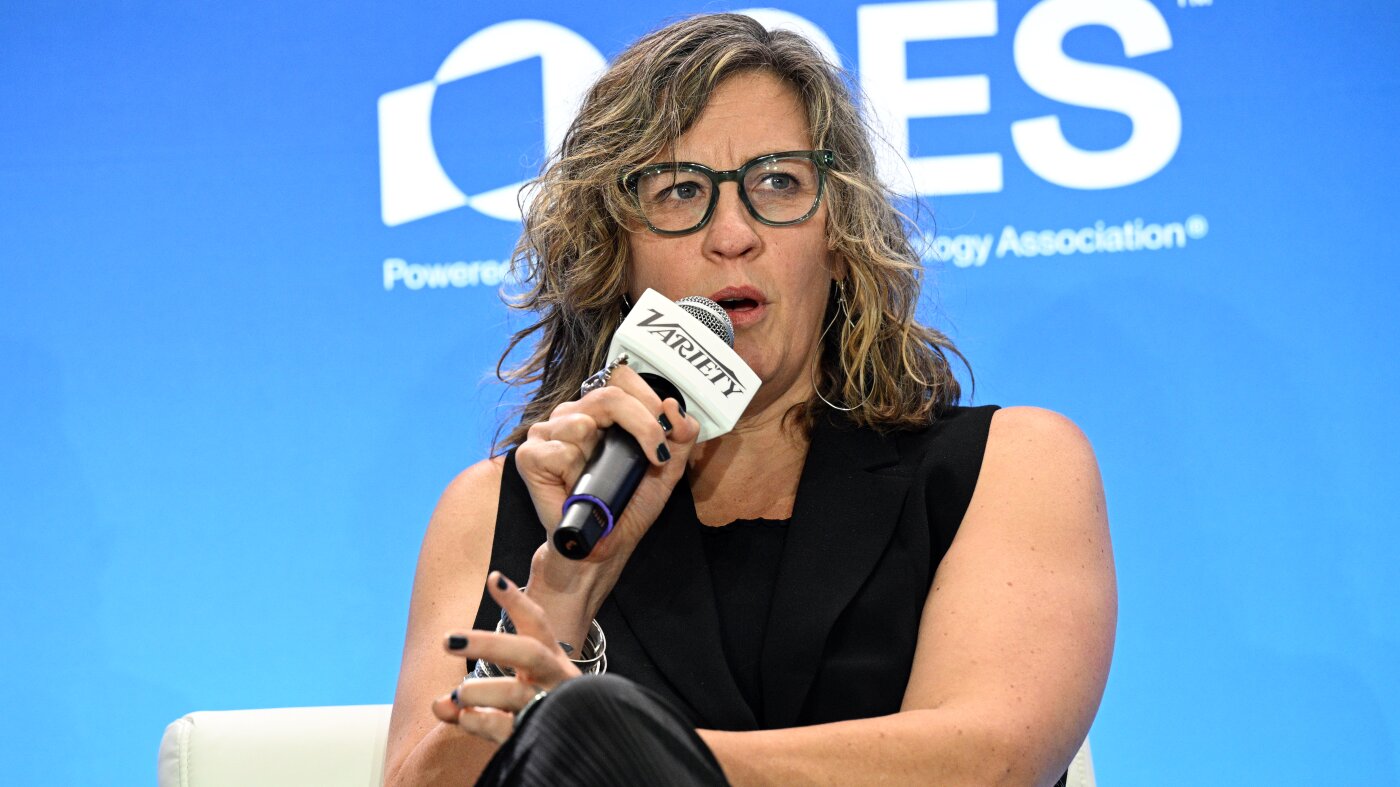
NPR’s new chief content officer: ‘I’ve been training for this job my whole life’
-

 Technology25 minutes ago
WWDC protesters want Apple to ban Elon Musk’s apps
-

 World28 minutes ago
‘You’re destroying your countries’: Is Europe finally heeding Trump’s warning on illegal immigration?
-

 Politics33 minutes ago
Platner calls Fetterman ‘a–hole’ at town hall as Democratic feud heats up
-

 Health40 minutes ago
Study reveals hidden gut factor that may make some people more susceptible to sepsis
-

 Sports43 minutes ago
2025-26 NBA Finals MVP Odds: KAT Chasing Brunson Atop Board
-

 Technology48 minutes ago
Why your VPN keeps getting blocked and the simple fix

